

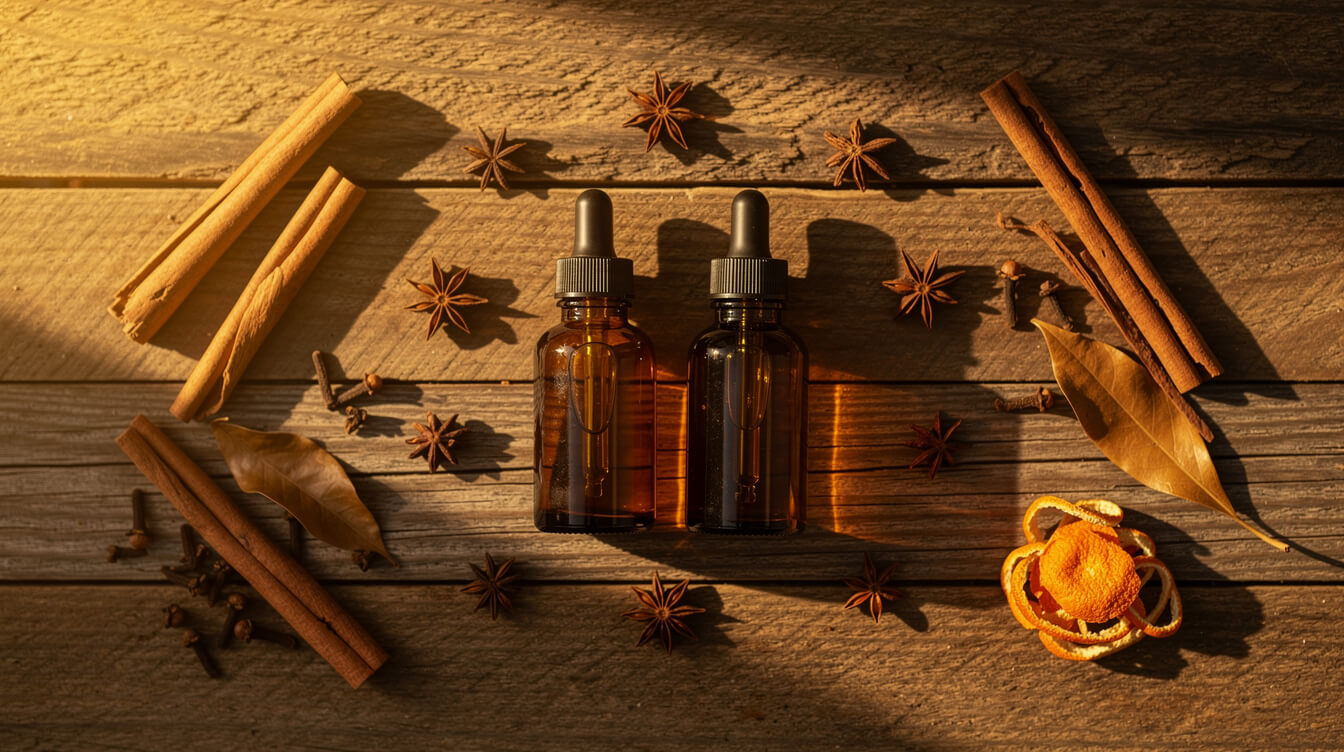
Ever picked up a bottle simply labeled "cinnamon" essential oil for a cozy autumn blend, and been caught off guard by how sharp and almost medicinal it smelled compared to the warm bakery scent you were picturing?
That surprise usually comes down to which part of the tree the oil was pressed from. Cinnamon bark oil is built around cinnamaldehyde — often 60-75% of the oil — the same fiery compound responsible for cinnamon's bite, and in a Nebulizing Diffuser® it reads hot, spicy, almost peppery. Cinnamon leaf oil, on the other hand, is mostly eugenol (typically 80-90%) — the same warm, clove-forward molecule found in clove bud oil — which is why it smells rounder and softer, closer to a spiced bun than a spice rack. Same plant, two very different personalities in the air.
If you've been reaching for "cinnamon" without checking bark vs. leaf on the label, you might be one ingredient swap away from your ideal cozy-season blend. Which do you gravitate toward — the sharper bark, or the softer leaf?
Something shifts in the second week of September. The days still carry late-summer warmth, but evenings bring that first cool air — and our noses start craving something deeper, more grounded, more anchoring than the citrus brightness of summer.
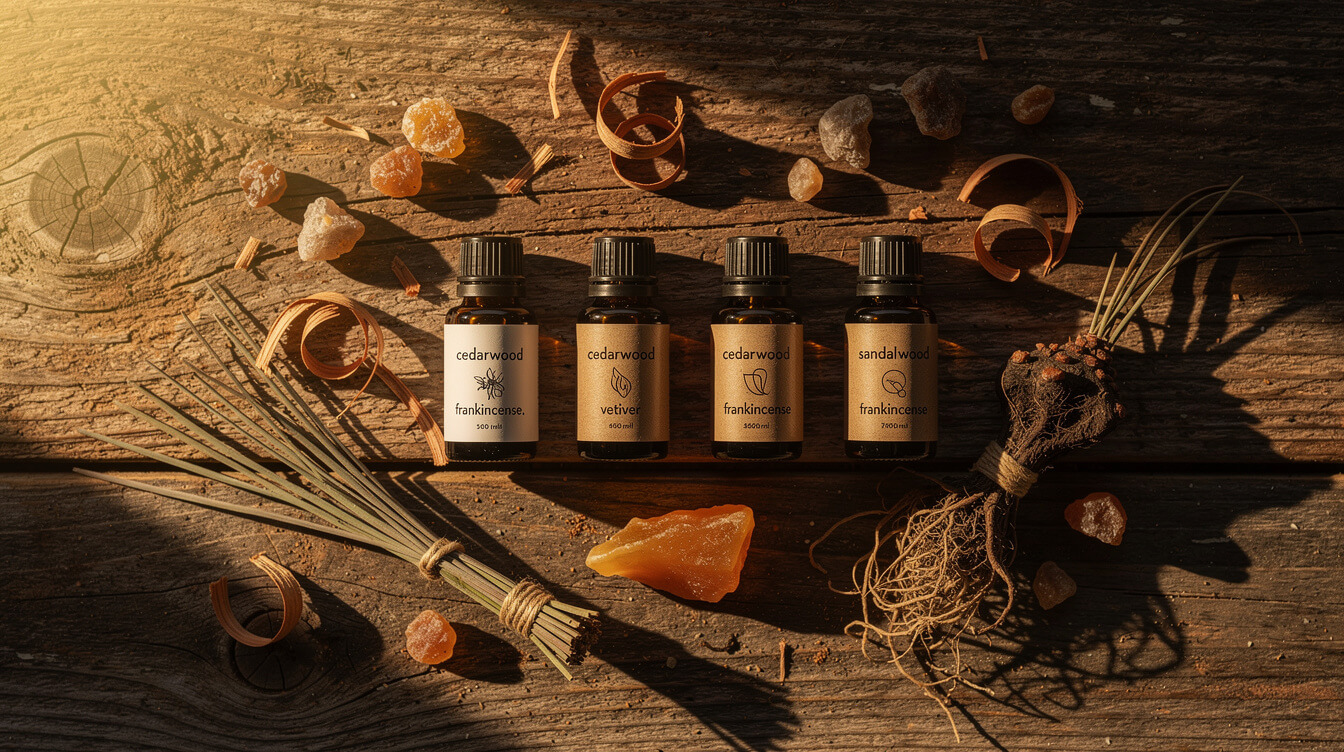
It's not just mood. There's real chemistry behind it: the heavier aromatic molecules in base note oils — sesquiterpenes like β-cedrene in cedarwood (~204 Da) — diffuse more slowly in cooler, drier autumn air than light citrus top notes do. They linger. Your living room stays wrapped in warmth for an hour on a single fill in your Nebulizing Diffuser®, instead of evaporating quickly like summer's bright top notes. No heat, no dilution — every layer of that resinous depth comes through.
The classic September base notes each bring something distinct: cedarwood grounds with warm earthiness, frankincense adds a meditative depth, vetiver brings a smoky grassiness that feels like earth after rain, sandalwood wraps everything in creamy softness, and patchouli deepens with an almost sweet earthiness.
So here's the question: which foundation oil do you reach for first when September evenings turn cool? Are you a cedarwood person? A frankincense devotee? Do you go straight for the vetiver and never look back? Share your signature oil below — and if you layer it with anything, we'd love to know the full blend!
Have you felt it yet? That first evening this week when the light went golden a little earlier, the air carried a slightly crisper edge, and bright summer citrus suddenly felt... not quite right on its own anymore.
There's actually a reason our noses start reaching for warmer scents right about now. As we slide toward the September equinox, daylight is contracting by roughly three minutes a day — the steepest part of the whole year's slide. And here's the sensory twist: cooler evening air holds heavier, grounding base notes close to us for longer, while light top notes lift and scatter faster. Warm woods and soft resins simply land better in autumn air.
Here are three transitional pairings I've been reaching for as the season turns:
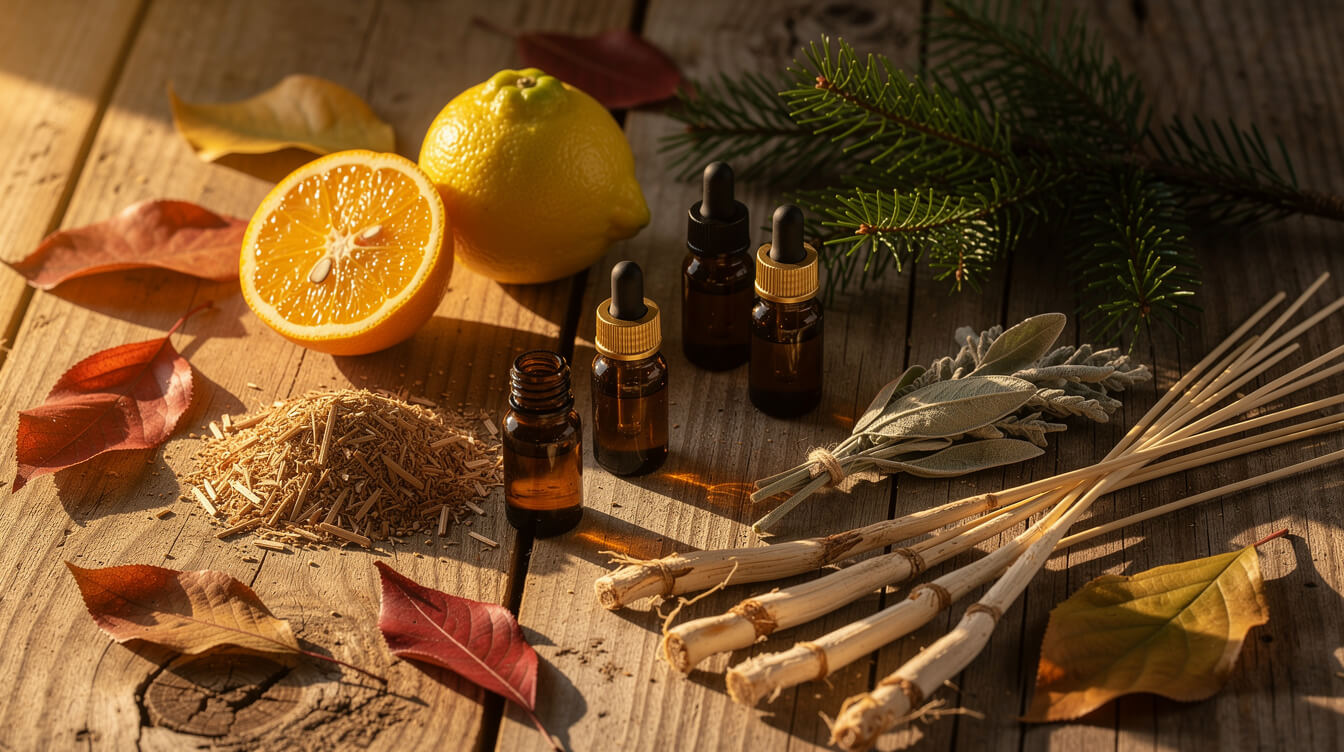
- Bergamot + Cedarwood — the last of summer's bright citrus melting into warm, grounding wood. Like watching the sky fade from gold to amber.
- Sweet Orange + Frankincense — sunny sweetness anchored by rich, resinous depth. Uplifting and centering at the same time — perfect for an early, cozy evening in.
- Clary Sage + Vetiver — herbal calm layered over deep, earthy smokiness. This one seems to settle a whole room the moment it fills the air.
Because a Nebulizing Diffuser atomizes pure oil with no heat and no water, those delicate base notes stay rich and true — nothing gets scorched or diluted, so the full warmth actually comes through.
So tell me — are you still holding onto your summer scents, or have you started easing into cozy season? What's the first blend that makes you feel like fall is on its way?
The slow, golden pace of summer has a way of melting right off the calendar, and then suddenly it's August, the inbox is full again, and your desk is quietly asking for your attention. If your focus feels a little soft after weeks of ease, you are in good company. One of the simplest ways I ease back into a working rhythm is by changing the way my workspace smells.
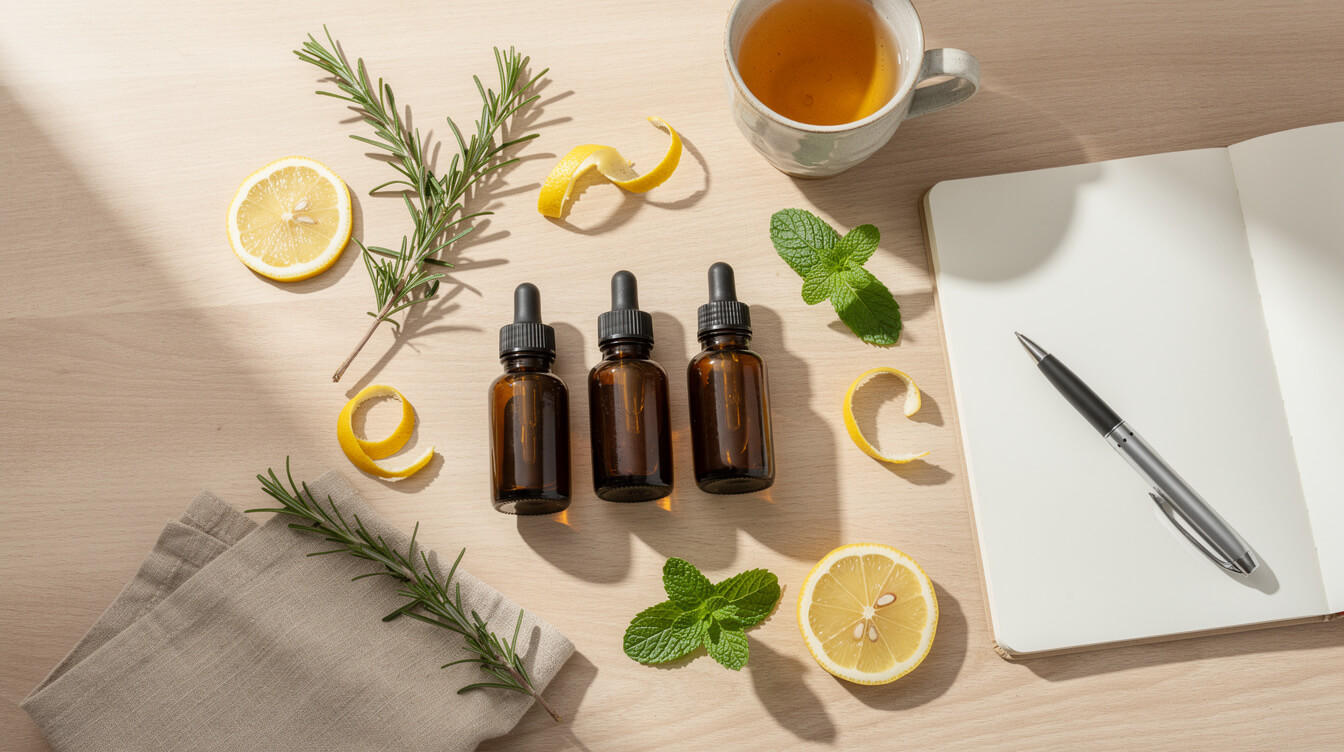
Three oils earn a permanent spot on my desk this time of year: bright, zesty Lemon, cool and clarifying Peppermint, and crisp, herbaceous Rosemary. Together they smell less like a cozy spa and more like a clean, open window on a sharp morning — green, citrusy, and wide awake.
Here is the part most people miss: rosemary's brisk, alert character is not a coincidence. Rosemary ct. cineole can run 40 to 55% 1,8-cineole — the same camphoraceous molecule that gives eucalyptus its clearing lift. It is a light, highly volatile top note, which is exactly why a Nebulizing Diffuser® shows it off so beautifully: atomizing pure, undiluted oil with no water and no heat keeps those delicate top notes intact instead of gently steaming them away.
I am curious — when you are getting back into a routine, do you reach for something bright and energizing like this, or do you go the opposite direction with something grounding to stay calm under the load? What is on your desk right now?

It's the middle of a July afternoon, the air is thick and still, and somehow one deep breath of peppermint makes the whole room feel ten degrees cooler. Here's the fascinating part: nothing about the actual temperature changed at all.
That "cool" rush is your nervous system being pleasantly fooled. Menthol — the star compound in peppermint — binds to a receptor called TRPM8, the very same one that fires when you touch something genuinely cold. Your brain reads the signal as chilly, even on the hottest day. It's one of my favorite little tricks of aromatherapy.
A few oils I reach for when the heat sets in:
- Peppermint — sharp, bright, and instantly invigorating. The quickest way to make a stuffy space feel like a cool mountain breeze.
- Eucalyptus — clean and camphorous, with an airy openness that makes every breath feel wider and lighter.
- Spearmint — softer and sweeter than peppermint, like cool mint with the edges rounded off. Lovely for afternoons when you want refreshment without the zing.
Because a Nebulizing Diffuser atomizes pure oil with no water and no heat, those crisp top notes come through vivid and undiluted — exactly where these cooling scents shine brightest.
What's your go-to scent for beating the summer heat? Do you lean minty and sharp, or something greener and softer? I'd love to hear what keeps your space feeling fresh!
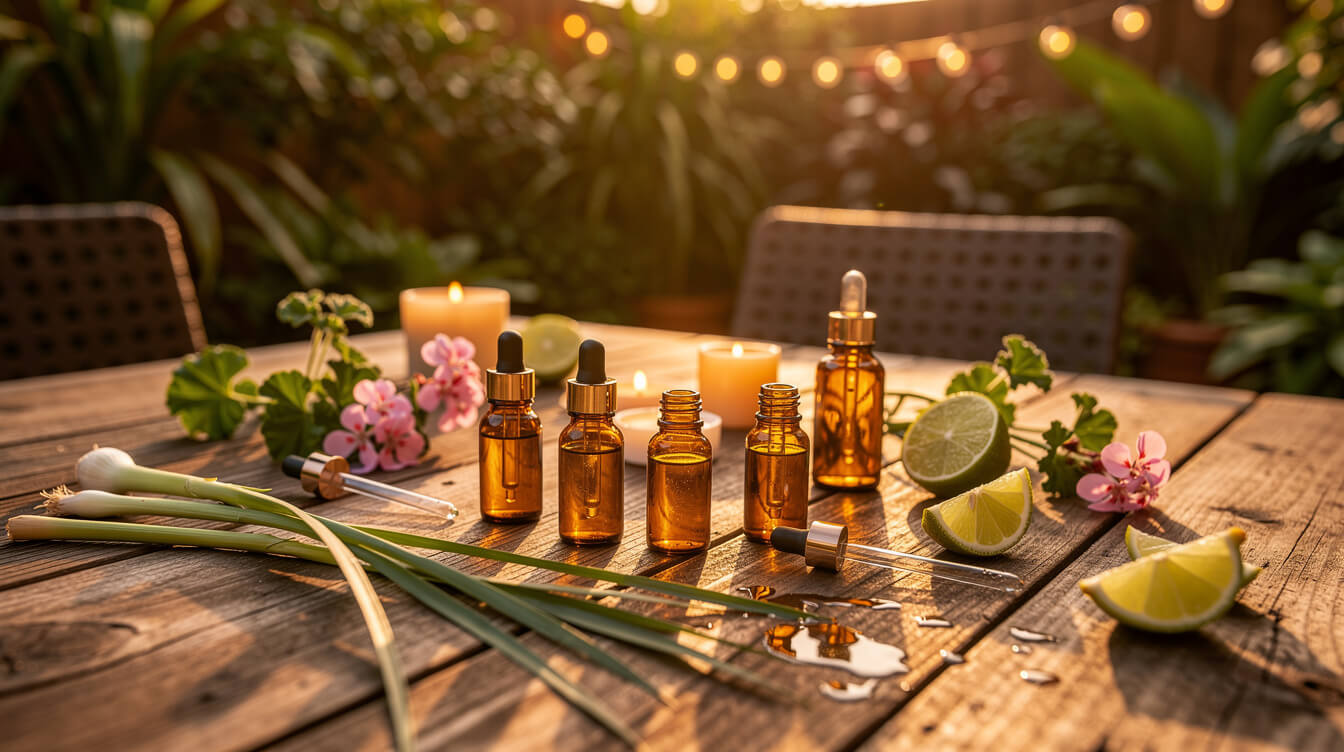
There's a particular magic to a warm July evening outdoors. The light goes golden, the air softens, and the right scent can turn an ordinary patio into somewhere you never want to leave.
A few combinations I keep coming back to for outdoor entertaining:
- Lemongrass and Cedarwood. Bright, green citrus grounded by warm wood. Fresh without being sharp, and it holds beautifully in the open evening air.
- Peppermint and Lime. Cool, crisp, and instantly refreshing on a sticky night. It makes iced drinks and good company feel even better.
- Geranium and Bergamot. Soft rosy florals lifted by sunny citrus. Elegant and welcoming, perfect for a slow dinner as the sun goes down.
Here's something I've noticed: scent behaves differently outdoors. With no walls to hold it, a light ultrasonic mist just evaporates into the breeze. A Nebulizing Diffuser works differently. It atomizes pure oil into micro-fine particles, roughly 1 to 3 microns, that stay suspended and drift on the air. The aroma actually has presence on a covered patio or porch instead of vanishing into the night.
What's the scent that says "summer evening" to you? Are you a fresh-citrus person, or do you lean into warm, woody notes when you're entertaining outdoors? I'd love to hear what's filling your porch this season.
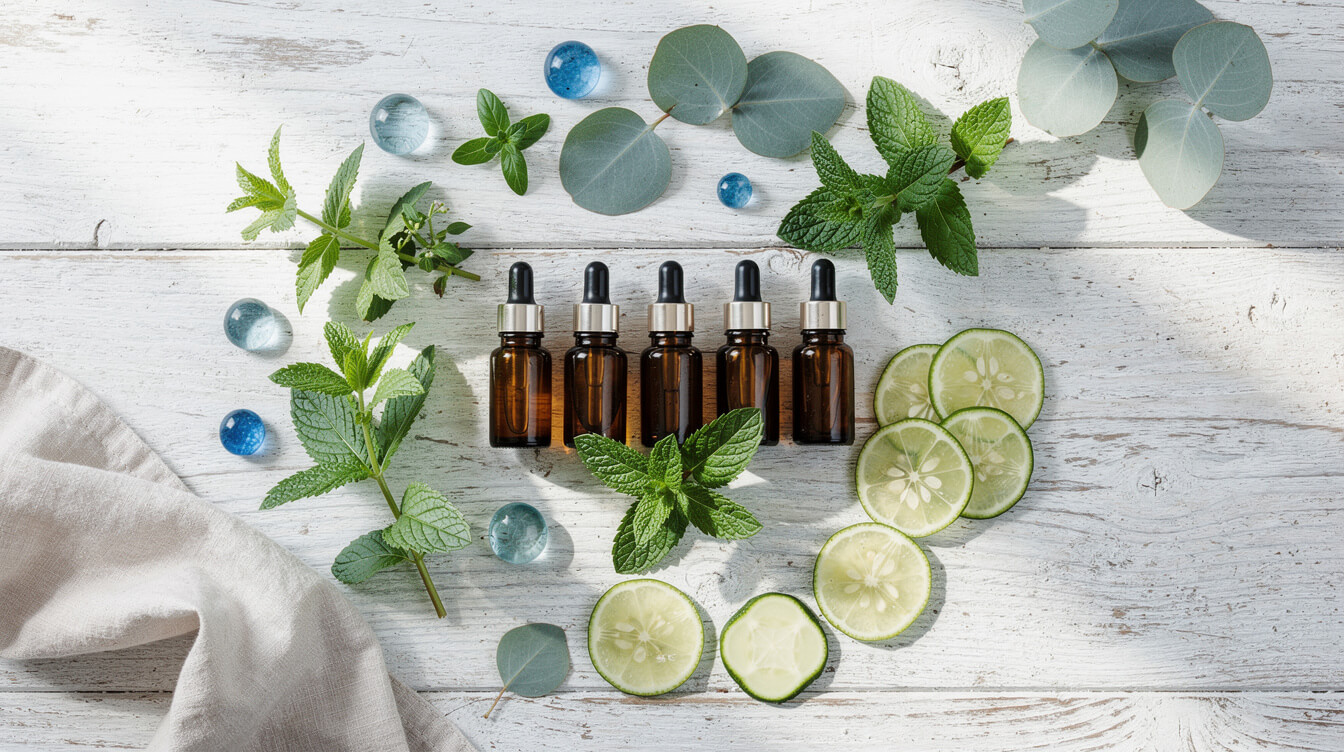
It happens every June. The warm, grounding oils that felt so cozy all winter, the cedarwoods and the patchoulis, suddenly feel a little heavy when the afternoon heat rolls in. Your nose is asking for something brighter, lighter, almost icy.
Here is the fun part: a few oils actually trick your brain into feeling cooler. Peppermint and spearmint are rich in menthol, and menthol switches on the very same cold-sensing nerve receptor (called TRPM8) that activates when you step into air conditioning. The room temperature never changes, but your brain registers a genuine wave of cool. That is real perception, not just imagination.
Three of my favorite summer-cooling oils to reach for right now:
- Peppermint, sharp and crisp, the menthol headliner that makes a stuffy room feel ten degrees fresher.
- Eucalyptus, clean and airy, like a deep breath on a breezy morning. It opens up a space beautifully.
- Spearmint, softer and sweeter than peppermint, a gentler cool for anyone who finds straight peppermint too intense.
Because a Nebulizing Diffuser atomizes pure oil with no water and no heat, these bright top notes come through crystal clear, exactly the part you want on a hot day. A short 15 to 20 minute run is usually plenty to lift the whole room.
So I am curious: what does your diffusing routine look like in summer versus winter? Do you swap your oils with the seasons, or stay loyal to a favorite year round?
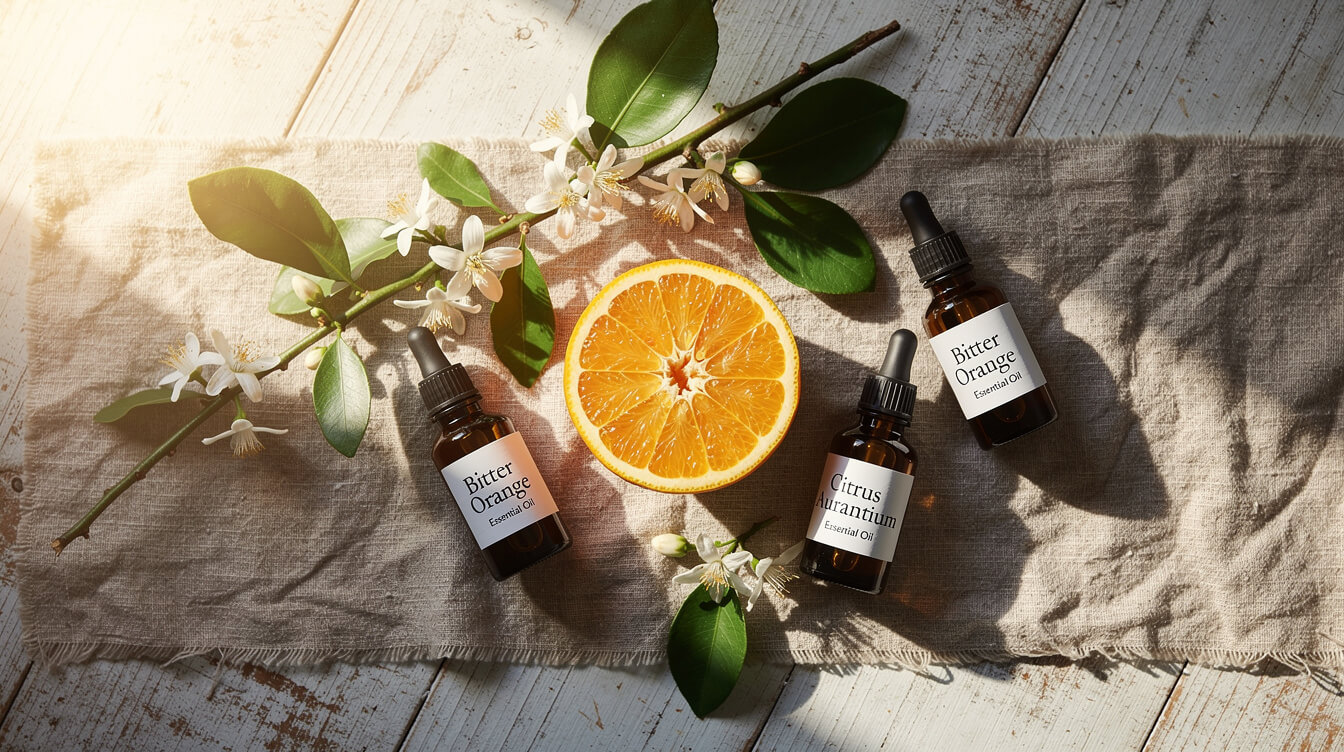
Here is a piece of essential oil trivia that catches almost everyone off guard. Three of the most beloved oils in aromatherapy all come from one tree. The humble bitter orange (Citrus aurantium) gives us neroli, petitgrain, and bitter orange peel, depending on which part of the tree gets distilled.
Each one captures a different mood of the same plant:
- Neroli (the flowers). Steam-distilled from the white blossoms. Honeyed, ethereal, almost luminous. It takes roughly one ton of orange blossoms to yield a single kilogram of oil, which is why a small bottle feels like a quiet luxury.
- Petitgrain (the leaves and twigs). Green, woody, faintly floral. The same tree captured in a more grounded register. Often called the "everyday neroli" because it carries the family resemblance at a fraction of the price.
- Bitter Orange Peel (the rind). Cold-pressed from the fruit's skin. Brighter and a touch more bitter than sweet orange, with that unmistakable sunny lift.
Run them together in your Nebulizing Diffuser and you can almost smell the whole tree at once. Neroli and petitgrain are also the floral backbone of the original eau de Cologne tradition that began with Giovanni Maria Farina in 1709, layered with bergamot and lavender.
Are you drawn more to flower oils, leaf oils, or peel oils? Sometimes the part of a plant tells you what mood you are really after.
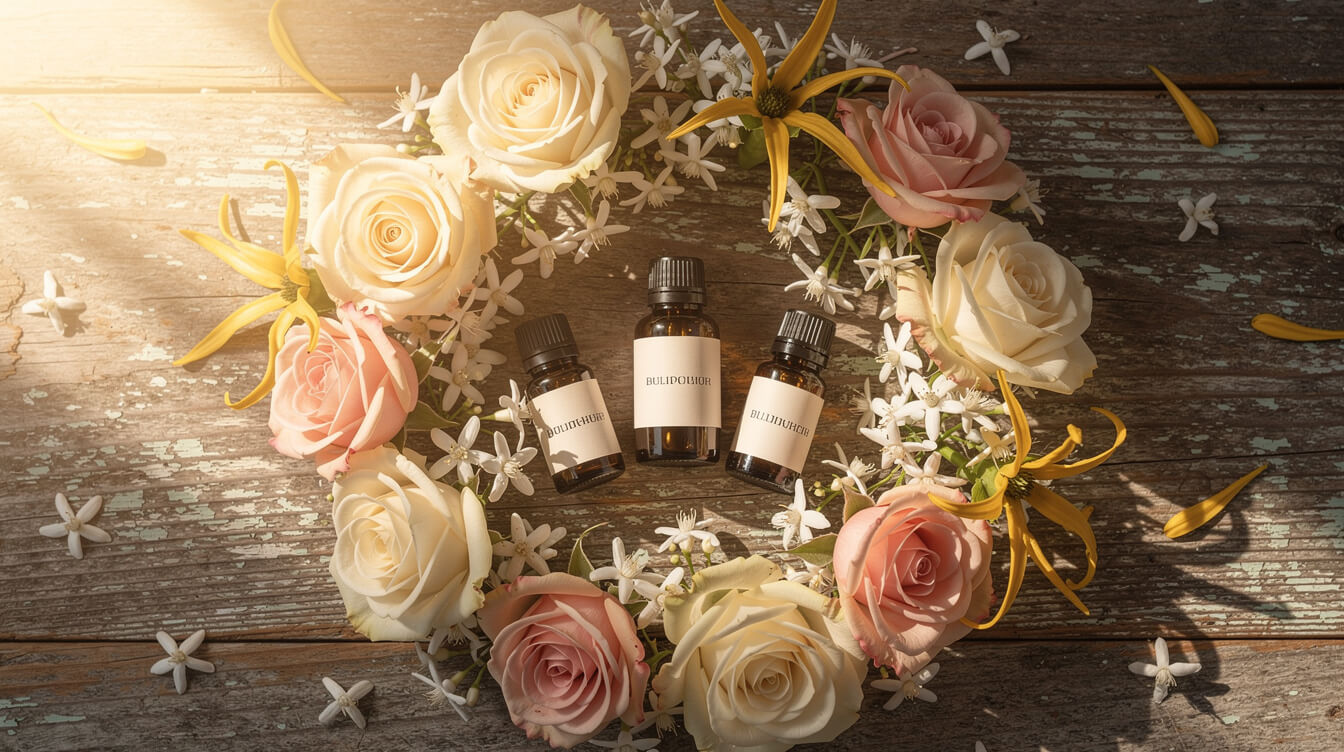
May is the month our florals really come into their own. Rose, jasmine, and ylang ylang are the kind of oils that don't shout. They invite you in, then slowly reveal themselves over the next twenty minutes.
Here are three that I keep returning to this time of year:
- Bulgarian Rose Otto. Steam-distilled, not solvent-extracted, which is why it carries that bright, slightly green top note above the deep rose heart. It takes around 3,500 kilograms of petals to produce one kilo of oil, which is why a single bottle feels like a tiny miracle. Beautiful in the evening, especially paired with sandalwood.
- Jasmine Sambac. The richer, more sensual cousin of jasmine grandiflorum. Higher in indole, which gives it that almost narcotic depth that fills a room within minutes. A little goes a very long way in your Nebulizing Diffuser.
- Ylang Ylang Extra (Grade I). The first fraction captured in the long, sequential distillation process. It's lighter and brighter than the complete oil, with more of the floral top notes and less of the heavier muskiness. Perfect for unwinding without feeling weighed down.
What I love about florals in a Nebulizing Diffuser is that you can finally smell their full complexity. The top note, the heart, and the slow base, without water muting any of it.
Which floral note feels most like "you" right now? And do you tend to wear it solo, or layered with something else?
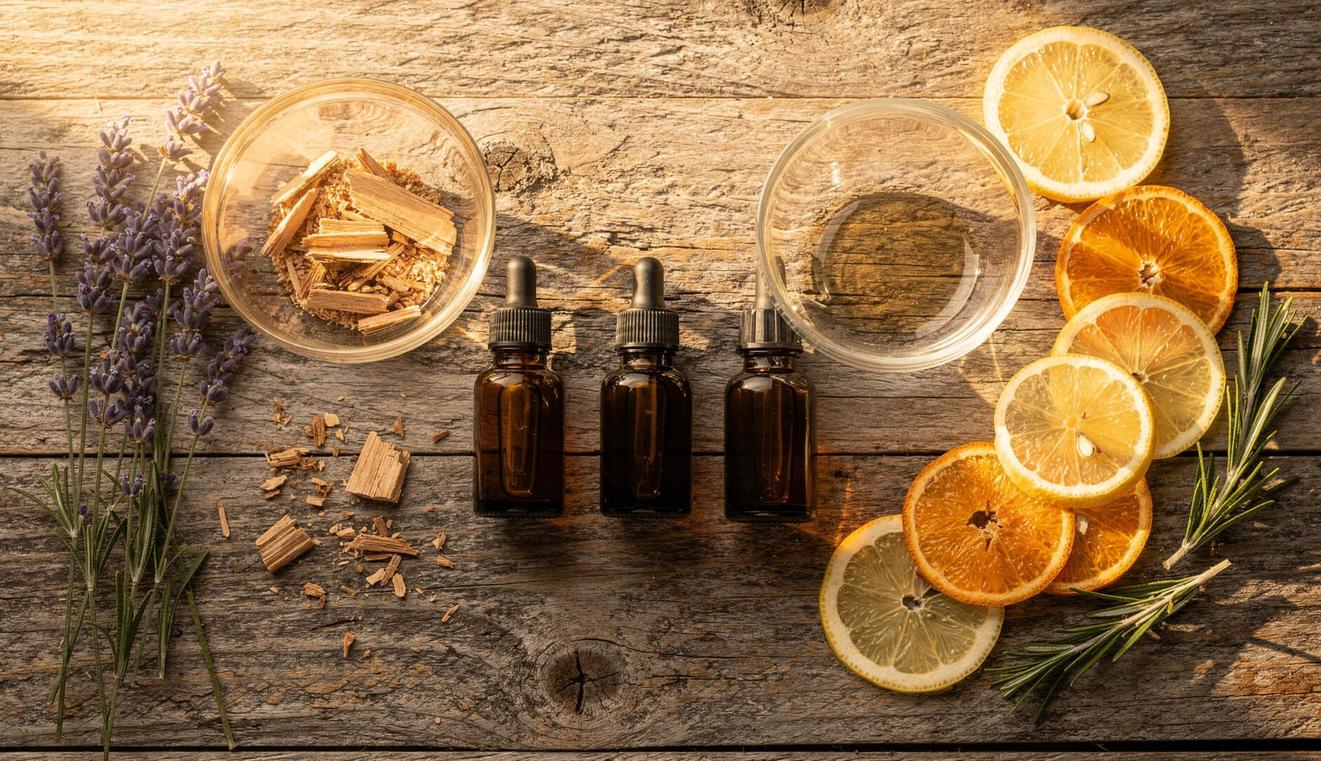
One of the most rewarding parts of aromatherapy is discovering that some essential oils completely transform when you combine them. On their own, they're lovely — but together, they create something entirely new.
Here are three pairings that never disappoint:
- Lavender + Cedarwood — Lavender's soft floral sweetness meets cedarwood's warm, woody depth. The result is incredibly grounding — like a cozy evening wrapped in a cashmere blanket. Perfect for winding down after a long day.
- Lemon + Rosemary — Bright citrus sharpness layered with rosemary's herbal crispness. This one fills a room with clean, focused energy. I love running this in my Nebulizing Diffuser during morning work sessions.
- Frankincense + Orange — The rich, resinous warmth of frankincense paired with orange's sunny sweetness creates something almost meditative. It's uplifting and centering at the same time.
The beauty of a Nebulizing Diffuser is that you get the full complexity of these blends — every note comes through because there's no water diluting the oils.
What's a combination you've tried that surprised you? Sometimes the most unexpected pairings turn out to be the best\!