

Cinnamon’s First Sales Pitch Was a Tall Tale About Giant Birds
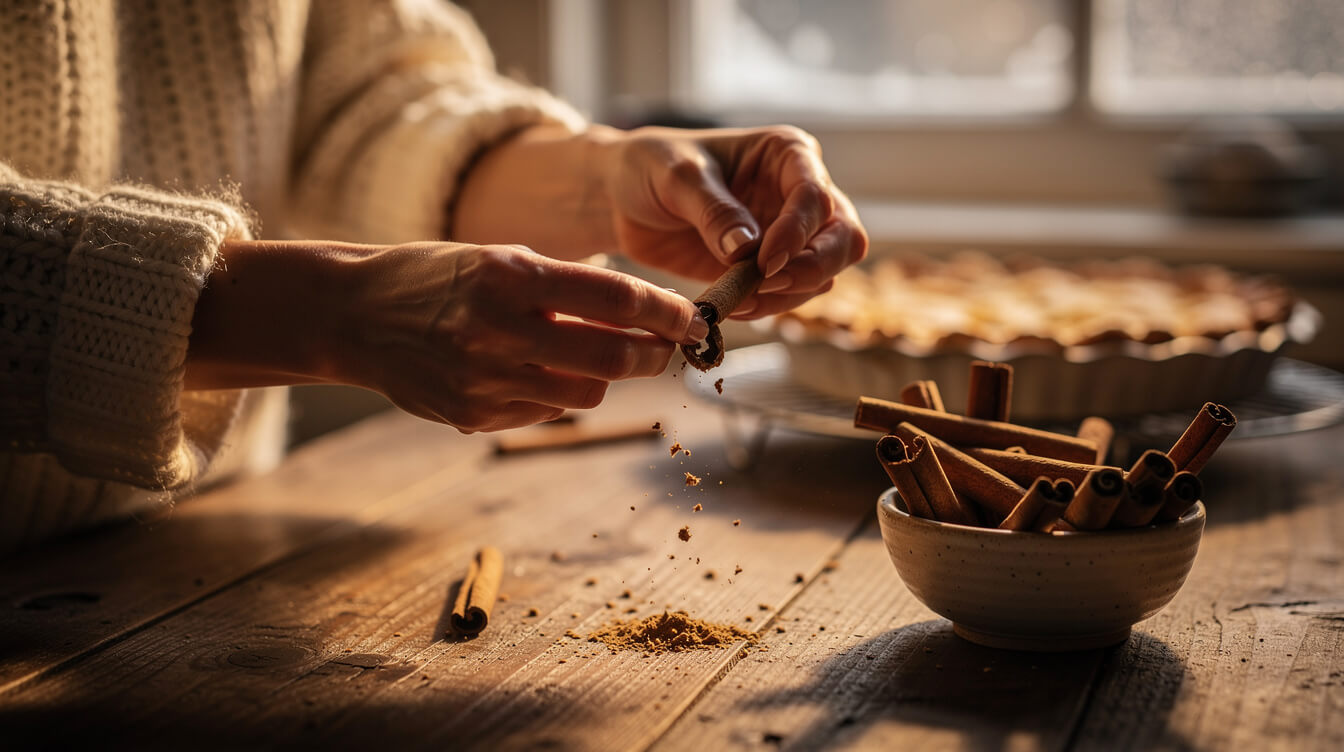
Snap a cinnamon stick and the air goes warm before your hands do: sweet, red, a little woody, the smell of every holiday kitchen you remember. Twenty-five centuries ago, the people selling that smell swore it came from the nests of giant birds.
Monday Oil of the Day: Cinnamon
Cinnamon is the inner bark of an evergreen laurel. It is peeled while the bark is still moist, and as it dries it curls into the hollow quills you keep in the spice drawer. For most of history, the West had no idea where those quills came from. The bark grew in South Asia, a very long way past the Arabian ports that sold it, and the traders in between had every reason to keep that quiet.
The jewel: cinnamon’s first sales pitch was a tall tale. Around 430 BCE, Herodotus wrote down what the Arabian merchants told him (Histories 3.111). Great birds, they said, carry the dry sticks up to nests of mud stuck to cliffs no person can climb. So the harvesters cut dead oxen and donkeys into big pieces and leave them near the cliffs. The birds carry the meat up, the nests break under the weight, and the cinnamon tumbles down to be gathered. About five hundred years later, Pliny the Elder gave his verdict in the Natural History (Book 12): the tales had been invented by the natives to raise the price of their goods. It may be the oldest marketing story we can still read. The smell needed no help, then or now. Our Cinnamon’s lab report puts cinnamaldehyde at 50.7% of the bottle. That’s the sweet, red-candy heat. Next comes cinnamyl acetate at about 7%, the softer, balsamic note that makes it smell like baking rather than chewing gum. Then eugenol at about 3.5%, the same warm molecule that dominates clove. That small share of eugenol is why cinnamon and clove feel like family in a holiday blend.
This week’s ritual: the night-before-Thanksgiving hour. On Wednesday evening, while the pie cools and you lay out plates for tomorrow, put 6 drops of Cinnamon alone in your Nebulizing Diffuser®. Set it to the lowest output and run it intermittently for ten to fifteen minutes, then switch it off and let the warmth linger. Cold-air nebulizing uses no water and no heat, so the sweet top of the bark reaches the room before the deeper woody notes. Cinnamon is a strong oil, and a little goes a long way. One reader’s low-dial cinnamon habit shows how to keep it cozy rather than loud.
One gentle note: cinnamon bark is a “hot” oil. Keep it off your skin, keep sessions short in a ventilated room, leave a door open so pets can wander off, and diffuse it away from little ones’ faces.
Sign Up to Get Your FREE
e-Book ($9.99 Value)
Here’s to a warm kitchen, a long table, and a smell that never needed a tall tale. If you’d like to start your own night-before hour, our Cinnamon is right here. Warmly, Chad