

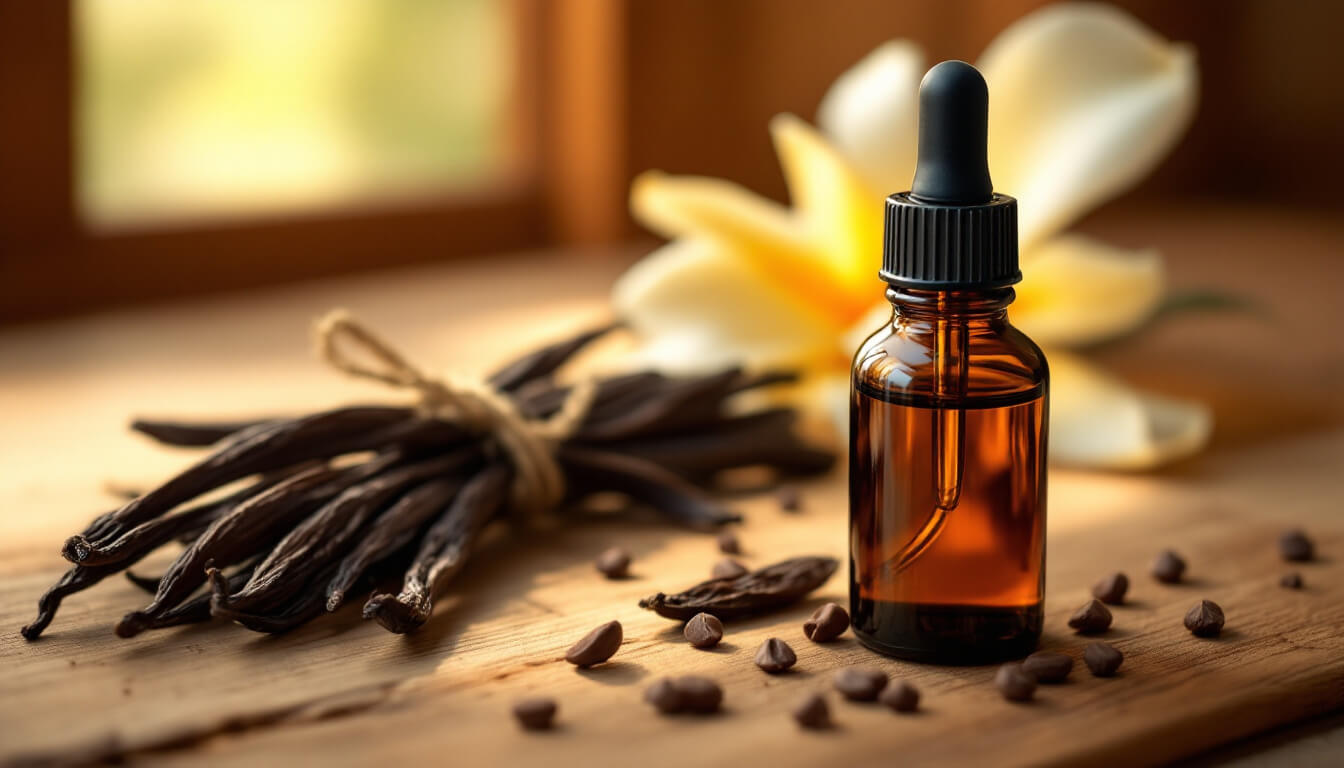
Vanilla Aromatherapy Oil: Why It’s Not a True Essential Oil (and How to Diffuse It)
Search for vanilla aromatherapy oil and you will find dozens of little amber bottles labeled “vanilla essential oil.” Here is the quiet truth the shelves rarely tell you: a true vanilla essential oil does not exist. You cannot steam-distill a vanilla bean into an essential oil, no matter how much you would love to. What you are actually buying is a vanilla absolute, an oleoresin, a CO2 extract — or, too often, a synthetic fragrance oil wearing a natural-sounding name.
That distinction is not pedantry. It changes how the oil behaves in your bottle, how it belongs (or does not belong) in a Nebulizing Diffuser®, and whether the warm, cookie-jar comfort you are chasing is real botanical vanilla or a lab-made stand-in. This guide decodes what vanilla aromatherapy oil really is, why it is one of the most expensive aromatics on earth, and — the part almost no one covers — how to actually diffuse a thick vanilla base note without gumming up your equipment.
Vanilla Aromatherapy Oil Isn’t a True Essential Oil — Here’s What It Really Is
The International Organization for Standardization (ISO 9235) draws a firm line: an essential oil is a product obtained from plant material by distillation with water or steam, or by mechanical expression (the cold-pressing used for citrus peels). Vanilla fails both tests. The aroma compounds inside a cured vanilla pod are heavy, waxy, and heat-sensitive; run steam through them and you get a weak, cooked, thoroughly disappointing result. So chemists reach for solvents instead.
That is why vanilla shows up under several different names, each describing how it was extracted:
• Vanilla absolute — the beans are first washed with a hydrocarbon solvent to make a waxy “concrete,” which is then washed with ethanol to strip out the aromatic fraction. The result is a dark, syrupy, intensely sweet liquid. This is the closest thing to a pure aromatherapy-grade vanilla.
• Vanilla oleoresin — a thick, resinous solvent extract that keeps more of the bean’s heavier fixative compounds. Deeply tenacious, and even more viscous than the absolute.
• Vanilla CO2 extract (select or total) — supercritical carbon dioxide pulls the aroma out under pressure, then evaporates away cleanly, leaving no solvent residue. CO2 “select” grades are noticeably thinner and pourable.
• Vanilla extract — the baking-aisle bottle: vanilla beans steeped in alcohol and water. Lovely in cookies, far too dilute (and too alcohol-forward) for diffusing.
• Vanilla fragrance oil — a synthetic or semi-synthetic scent, usually built around lab-made vanillin. Inexpensive, consistent, and not a botanical extract at all. There is nothing wrong with enjoying it — but know what it is. For a deeper look at how solvent extraction differs from steam distillation, see our guide to absolutes versus essential oils.
From One-Day Orchid Bloom to Cured Bean: Why Real Vanilla Is So Precious
Vanilla is the fruit of a climbing orchid, Vanilla planifolia, and it is famously difficult to grow. Each greenish-yellow blossom opens for roughly one day — a few hours, really — and outside its native Mexico it has no natural pollinator. For centuries, transplanted vines flowered beautifully and set no fruit at all.
The fix came in 1841, when a twelve-year-old enslaved boy named Edmond Albius, on the island of Réunion, worked out a fast method of hand-pollinating each flower with a sliver of bamboo and a flick of the thumb. That same technique is still used by hand, blossom by blossom, on nearly every vanilla farm in the world today. It is one of the reasons vanilla remains the second most expensive spice on earth, after saffron.
Then comes patience. After pollination the pods take about six weeks to reach full size and another nine months to mature on the vine. Picked green, they are nearly odorless — the signature vanilla scent is developed, not harvested. The beans are repeatedly sun-warmed by day and wrapped to “sweat” overnight for months, a curing ritual that shrinks them, darkens them, and triggers enzymes to release vanillin from its bound, scentless form (glucovanillin) in the fresh bean. Only after roughly half a year of curing does a vanilla pod smell like vanilla. Every drop of vanilla aromatherapy oil carries that year-plus of slow, manual labor — which is exactly why quality costs what it does.
Sign Up to Get Your FREE
e-Book Here…
Absolute, Oleoresin, CO2, or Fragrance Oil: How to Read a Vanilla Label
Because “vanilla essential oil” is a marketing shorthand rather than a real category, the useful information lives in the fine print. Here is how to tell what is actually in the bottle before it ever reaches your Nebulizing Diffuser®.
Look for the extraction method
A trustworthy seller names the process: absolute, CO2 select/total, or oleoresin. If a label just says “essential oil” with no method — and an eyebrow-raising low price — you are almost certainly looking at a fragrance oil. Natural vanilla is never cheap.
Check the viscosity and color
Real vanilla absolute and oleoresin are dark brown, thick, and pourable only slowly — think cold honey or molasses. A thin, water-clear “vanilla oil” is a tell: genuine botanical vanilla simply does not behave that way. (A pale CO2 select can be lighter, but still carries body.)
Mind the “natural” loophole
Vanillin can be produced naturally, derived from other plants, or synthesized in a lab — and all three can legally lean on soft wording. If undiluted, single-origin botanical vanilla matters to you, buy from aromatherapy suppliers who publish the botanical name and country of origin, not just a scent description. Our roundup of vanilla oleoresin benefits walks through what the genuine extract brings to a blend.
How to Diffuse Vanilla Aromatherapy Oil in a Nebulizing Diffuser®
Here is the question the product pages skip entirely: can you even diffuse this stuff? Vanilla absolute and oleoresin are gorgeous, but they are also among the thickest, stickiest aromatics in the cabinet — and viscosity is the enemy of a nebulizing diffuser.
A Nebulizing Diffuser® works on Bernoulli’s Principle: a jet of air pulls undiluted oil up a narrow glass tube and shatters it into an ultra-fine cold mist. That mechanism is a marvel with free-flowing oils — and it can choke on syrup. Poured in neat, a heavy vanilla absolute tends to cling to the glass, atomize poorly, and leave a tenacious residue behind. So the goal is not to force vanilla through the venturi on its own; it is to carry it.
Blend it, don’t solo it
Vanilla is a base note — heavy, slow, and built to anchor other scents rather than lead. Use it as a small fraction of a blend, ideally 10–20%, with brighter, thinner top and middle notes (citrus, lavender, a touch of spice) doing the flowing. The lighter oils keep the mixture mobile enough to nebulize while the vanilla lends its warm, lingering tail. This is the same logic behind our note-frequency method for building diffuser blends.
Reach for a CO2 select, or thin with a pourable oil
If you love vanilla enough to feature it, a CO2 select grade flows far better than a molasses-thick absolute and is the friendlier choice for nebulizing. Alternatively, some enthusiasts pre-dilute a heavy vanilla in a thinner carrier such as fractionated coconut oil before blending — though bear in mind any dilution slightly changes how a waterless unit performs. The same viscosity rules apply to sandalwood, vetiver, and patchouli; we cover them in our FAQ on running thick oils in a Nebulizing Diffuser®.
Never pour a fragrance oil into a pure-oil diffuser
Synthetic vanilla fragrance oils often contain carriers and fixatives that are not meant to be aerosolized in a waterless nebulizer, and they can leave films that are stubborn to clean. If you want the pure-botanical experience, keep fragrance oils out of the glass. (When residue does build up from any thick oil, our step-by-step cleaning guide restores full mist.) Prefer effortless vanilla warmth without the blending homework? Our Vanilla Food-Inspired Aroma Oil is formulated to disperse readily for cozy, dessert-like ambiance.
Sign Up to Get Your FREE Essential Oils e-Book Here
4 Warm Vanilla Blends Worth Making
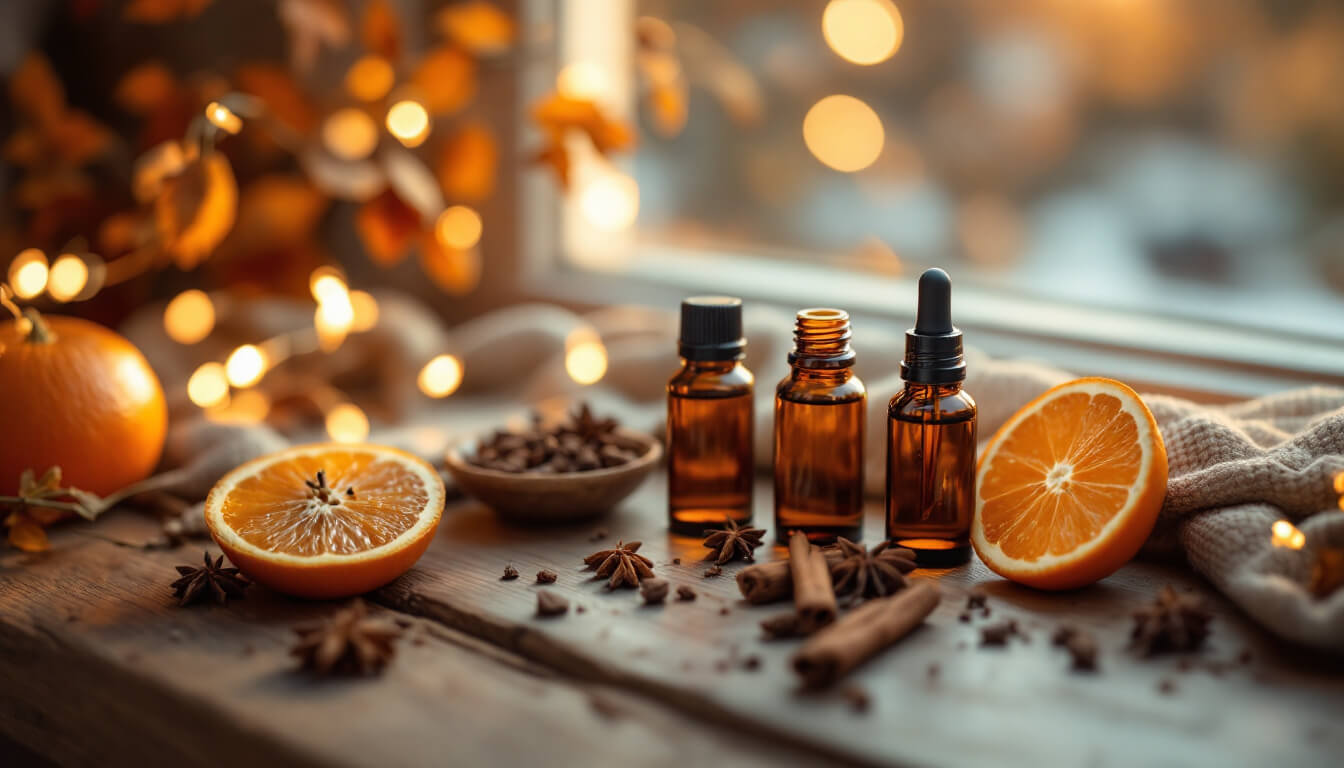
Every blend below leans on vanilla as the base note (roughly one part vanilla to three or four parts of the brighter oils), keeping the mixture light enough to nebulize while the vanilla lingers underneath. Adjust to taste, and always start with fewer drops than you think you need — vanilla is patient and pervasive.
1. Cozy Bakery (grounding & comforting)
3 drops sweet orange • 2 drops cinnamon leaf • 1 drop vanilla. The citrus lifts, the cinnamon warms, and vanilla rounds the edges into something that smells like a kitchen on a cold morning.
2. Evening Wind-Down (calm & restful)
3 drops lavender • 2 drops sweet orange • 1 drop vanilla. A gentle, low-drama blend for the last hour of the day. If lavender is your nightly go-to, see how to get the most from it in our guide to pure-oil nebulizing versus ultrasonic misting.
3. Spiced Amber (rich & enveloping)
2 drops bergamot • 2 drops cedarwood • 1 drop clove bud • 1 drop vanilla. Deeper and more grown-up — a fireside scent for slow weekends.
4. Golden Hour (soft & uplifting)
3 drops grapefruit • 1 drop ylang-ylang • 1 drop vanilla. Bright and a little floral, with vanilla keeping it from turning sharp. For more mood-matched pairings, browse our pure-oil scent guide by mood.
Give Your Warm Blends a Waterless Home
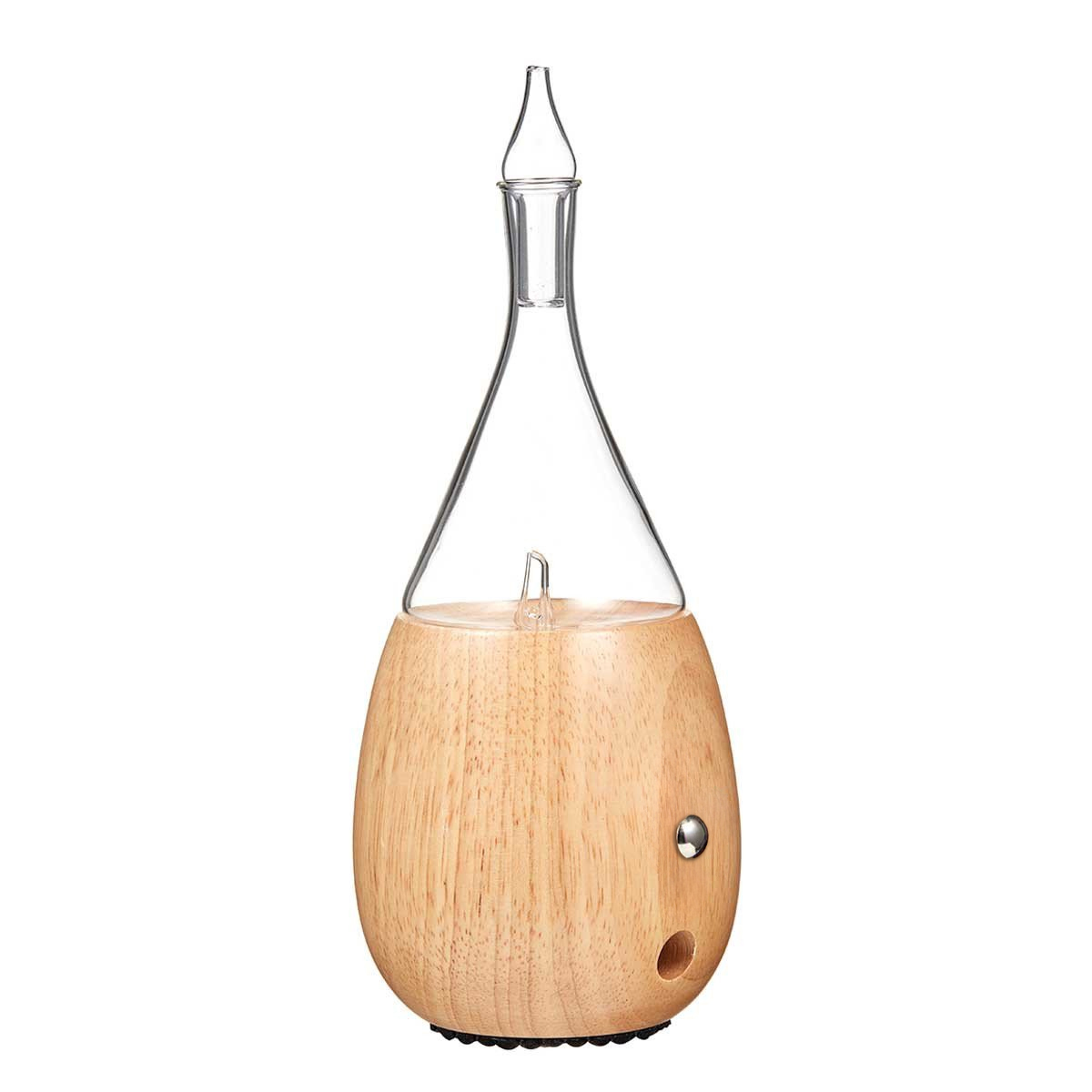
The Raindrop Smart Nebulizing Diffuser® disperses pure, undiluted oils as a cold micro-mist — no water, no heat to flatten those delicate vanilla top notes. App-controlled timing keeps a thick base note from overwhelming the room.
Vanilla Aromatherapy Oil: Frequently Asked Questions
Is vanilla aromatherapy oil safe to diffuse?
Genuine botanical vanilla absolute and CO2 extract are widely used in aromatherapy and are generally well tolerated when diffused in small amounts in a ventilated room. As with any aromatic, diffuse intermittently rather than continuously, keep it out of reach of children and pets, and stop if anyone in the room finds the scent bothersome. This is general wellness information, not medical advice.
Why won’t my vanilla oil nebulize on its own?
Because it is too thick. Vanilla absolute and oleoresin are base-note aromatics with a syrupy viscosity that resists atomization in a waterless Nebulizing Diffuser®. Blend vanilla at 10–20% with thinner top and middle notes, or choose a more pourable CO2 select grade.
Is synthetic vanilla fragrance oil the same as vanilla essential oil?
No. Fragrance oils are lab-built scents (often around synthetic vanillin) and are not botanical extracts. They can smell convincingly of vanilla, but they are not aromatherapy-grade and should not be used in a pure-oil nebulizing unit.
What’s the difference between vanilla absolute and vanilla CO2?
Both are solvent-style extractions rather than distillations. Absolute uses hydrocarbon-then-ethanol washing and tends to be darker and thicker; CO2 extraction uses pressurized carbon dioxide that evaporates residue-free, and “select” grades pour more easily — making CO2 the more diffuser-friendly option.
Does vanilla help with sleep?
Many people find vanilla’s warm, sweet aroma comforting and grounding as part of an evening wind-down ritual, which can help set a calming atmosphere. Scent is deeply personal, though, so choose what feels soothing to you rather than chasing a guaranteed effect.
Join Now and Get a Coupon for 10% Off!
Final Thoughts: Let Vanilla Be the Base Note
Vanilla rewards patience — on the vine, in the curing shed, and in your Nebulizing Diffuser®. Once you understand that vanilla aromatherapy oil is an absolute or CO2 extract rather than a true essential oil, the rest falls into place: buy for the extraction method, respect its thick, base-note nature, and let brighter oils carry it into the air. Do that, and you get the real thing — a warm, lingering sweetness with a whole orchid’s worth of story behind it.
Warm Blends, Delivered to Your Inbox
Join our community for seasonal blend recipes, pure-oil education, and quiet rituals that turn a room into a retreat — no fluff, just the good stuff.