


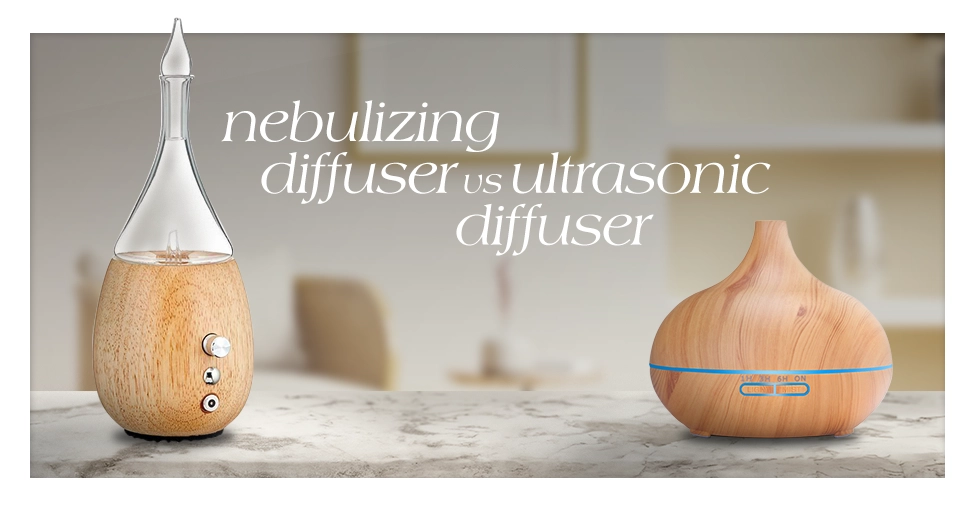
Nebulizing Diffuser vs Ultrasonic Diffuser: Which Wins for Pure Aromatherapy? (2026)
If you have ever opened the box on your first essential oil diffuser and wondered why two devices that both “diffuse oils” can feel worlds apart in scent, output, and feel of the room, you are not imagining it. A nebulizing diffuser and an ultrasonic diffuser solve the same problem with completely different physics, and that physics shapes everything that follows: how much oil you use, how the aroma actually lands in your space, how often you clean the unit, and how loyal the chemistry of your oils stays from bottle to breath.
This guide compares the two side by side, in the language a careful buyer actually wants. We go past the marketing copy and into the things competitors hand-wave: the particle size each device produces, what happens to delicate aroma compounds in a warm water reservoir, why Bernoulli’s Principle matters at all to the smell of your living room, and what 200,000+ Organic Aromas customers have told us about the moment they switched. By the end you will know which one belongs in your home, your studio, or your spa, and exactly why.
A note before we start: nothing in this guide is medical advice. Aromatherapy is about ambiance, sensory experience, and ritual. We talk about scent, atmosphere, and craft, not cures.
Quick answer: Choose a Nebulizing Diffuser® if you want pure, undiluted essential oil delivered cold and whole — full scent strength, full chemistry, full-room coverage up to 900 sq ft. Choose an ultrasonic diffuser if you want soft ambient scent, added humidity, lower oil consumption, and a gentler entry price for a small space. Most serious aromatherapy enthusiasts eventually own one of each. Everything below gives you the full picture to decide for your home.
What an Ultrasonic Diffuser Actually Does
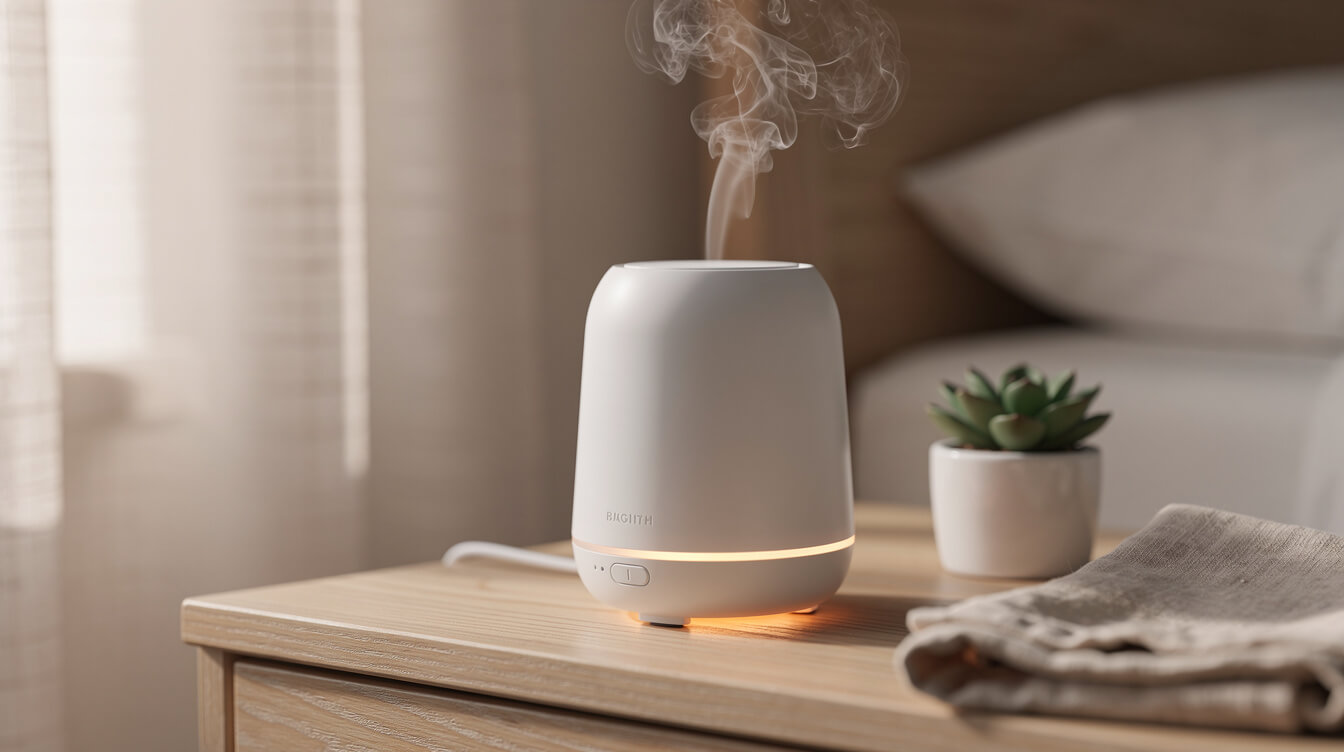
An ultrasonic diffuser is a hybrid device. Under the hood, a small ceramic disc vibrates at roughly 1.7 to 2.4 megahertz, far above what human ears can perceive. That vibration creates rapid pressure changes in a small reservoir of water, fragmenting the surface into a fine cool mist. Drop a few drops of essential oil into the water before you switch it on, and the oil sits on the surface as a thin lens of micro-droplets. When the disc fires, the mist carries a little oil with it, and that mixture is what wafts out of the top of the device.
Most ultrasonic models recommend around three to eight drops of essential oil per 100 millilitres of water. The result is a gentle, humidifier-style mist that feels cool on the skin and adds a noticeable amount of moisture to dry rooms. Coverage typically falls in the 100 to 250 square foot range, depending on the unit. Run time is long, often four to ten hours, because each pulse uses a tiny fraction of the oil you poured in.
The strengths are real. Ultrasonic units are usually quiet, modestly priced, often double as decorative LED nightlights, and they do add humidity. The trade-offs are also real. The oil you smell is heavily diluted by water vapor. The reservoir needs regular cleaning to prevent biofilm. And because oil sits on water, a single tank treats only one scent at a time, so changing blends means draining, rinsing, and refilling. If you are new to essential oil rituals, our essential oil blending chart is a friendly place to plan what to pour in.
How a Nebulizing Diffuser® Works (Bernoulli’s Principle, Briefly)
A Nebulizing Diffuser® throws out the water entirely. Inside the wooden base sits a small air pump that pushes a stream of room-temperature air through a glass venturi-style chamber. As that fast-moving air passes a narrower opening, it accelerates, and pressure across the opening drops. That pressure drop is Bernoulli’s Principle: faster air carries lower static pressure. The drop in pressure draws essential oil up a thin tube from the reservoir at the base of the glass, the rising oil meets the high-speed air at the nozzle, and the column of oil is shattered into a cold mist of micron-scale droplets that you then breathe as scent.
The droplets produced this way are roughly one to three microns. They are small enough to hang in the air for several minutes, large enough to land richly on the nose, and never carry the diluting weight of water. There is no plastic in the oil path. There is no heat. The oil you poured in is the oil you smell, full strength, full character, full top-note to base-note arc as the bottle works through. Because the mist is so fine and so concentrated, a Nebulizing Diffuser® covers a much larger room: 400 to 900 square feet is common for the wood-and-glass models we hand-finish, more for studio settings.
This is also why a nebulizing diffuser uses more oil per session than an ultrasonic one. There is no water doing half the work. The honest comparison: most people who switch to nebulizing use a smaller bottle of a higher-quality oil rather than a larger bottle of a watered-down one. The cost per usable session works out comparable, and the experience is dramatically more vivid. For a deeper tour of the technology and the craft behind it, our complete guide to nebulizing diffusion is the long-form companion to this piece.
Sign Up to Get Your FREE
e-Book Here…
Head to Head: Output, Purity, Coverage, Maintenance
Stripping the marketing away, here is what changes between the two when you actually use them at home. As of 2026, here is the side-by-side at a glance.
| Factor | Ultrasonic Diffuser | Nebulizing Diffuser® |
|---|---|---|
| How it works | Ceramic disc vibrates a water-and-oil mix into a cool mist | Pressurized air shears neat oil into micro-droplets (Bernoulli’s Principle) |
| Water needed | Yes, 100ml or more per fill | None |
| Oil per use | 3 to 8 drops | Neat oil straight from the bottle |
| Particle size | About 1 to 10 microns, mostly water | About 1 to 3 microns of pure oil |
| Coverage | 100 to 250 sq ft | 400 to 900+ sq ft |
| Scent intensity | Soft, ambient suggestion | Full, undiluted bouquet |
| Noise | Near silent | Low hum, 35 to 45 dB |
| Adds humidity | Yes, a little | No |
| Oil chemistry | Diluted and warmed, top notes oxidize sooner | Preserved, cold and dry in glass |
| Maintenance | Frequent reservoir cleaning | Occasional high-proof alcohol rinse |
| Best for | Gentle scent plus humidity in small rooms | True aromatherapy, larger rooms, spas |
- Oil ratio. Ultrasonic uses 3 to 8 drops per 100ml of water. Nebulizing uses neat essential oil straight from the bottle, no carrier and no water.
- Particle size. Ultrasonic produces a mixed mist around 1 to 10 microns, mostly water with trace oil. Nebulizing produces 1 to 3 micron droplets of pure oil.
- Coverage area. Ultrasonic covers about 100 to 250 sq ft. A nebulizing diffuser covers 400 to 900 sq ft, and larger glass tops scale further.
- Scent intensity. Ultrasonic delivers a soft, ambient suggestion of scent. Nebulizing delivers a full bouquet with top notes intact for the first ten minutes of a session.
- Noise. Ultrasonic is near silent. Nebulizing units run a small compressor and produce a low hum, typically in the 35 to 45 decibel range, similar to a quiet refrigerator.
- Maintenance. Ultrasonic reservoirs need regular cleaning to prevent biofilm and mineral scale. Nebulizing glassware needs a periodic rinse with high-proof alcohol to clear residue, but there is no water to manage.
- Humidity. Ultrasonic doubles as a small humidifier. Nebulizing adds no moisture. If you live in a dry climate and want both, you may end up with one of each.
- Oil chemistry. Ultrasonic dilutes and slightly warms the oil. Nebulizing preserves the full chemistry, because there is no heat and no aqueous mixing.
If the post you really wanted is the buying short list, our 2026 round-up of the six diffusers we make walks through each model, room size, and the lifestyle they tend to suit best.
Nebulizing Diffuser vs Ultrasonic: What Does Each Type Cost in 2026?
Price is one of the clearest differences between the two categories, and it is worth naming plainly. The gap is real but smaller than most buyers expect once you factor in how each device actually uses oil day to day.
Ultrasonic diffusers (2026 price range): Entry-level units run $15 to $40 — you can buy a basic plastic ultrasonic almost anywhere. Mid-range models with programmable timers, LED mood-lighting, and larger reservoirs land at $40 to $80. Premium designer ultrasonics from brands that focus on materials and aesthetics can reach $80 to $180, though some of those higher-end models use proprietary refill cartridges that add ongoing cost. Oil consumption is low: 3 to 8 drops per 100ml of water per session, so a 10ml bottle delivers 20 to 40+ sessions — the oil expense is genuinely modest.
Nebulizing Diffusers® (2026 price range): Generic plastic nebulizing units start around $30 to $60, but the material of the oil path matters: plastic and low-grade metals can react subtly with pure essential oils over months of use, which is why experienced aromatherapy practitioners prefer glass-and-wood construction. Handcrafted wood-and-glass models like Organic Aromas’ entry collection start around $90 to $130. Premium large-room and Smart Nebulizing Diffuser® models (app-controlled, rechargeable) run $150 to $250. Oil per session is higher — you’re running neat oil, not a water-and-oil blend — but sessions are shorter (20 to 60 minutes typical vs. four to ten hours of ultrasonic continuous running). For most daily-use patterns, monthly oil spend works out comparable between the two. If you want to compare specific models, our guide to the best Nebulizing Diffusers® in 2026 includes per-model room-size and price detail.
The honest total-cost picture. A $30 ultrasonic user and a $130 nebulizing user who both diffuse daily will spend roughly the same on oil by the end of a year — because the nebulizing sessions are shorter and the ultrasonic sessions are longer. The real difference between the two is the experience delivered, not the monthly oil budget. The choice is: do you want a quiet ambient whisper of scent running four to eight hours, or a vivid, full-character aromatherapy session running 30 to 60 minutes that fills twice the room?
Beyond the Two: Heat, Evaporative, and Reed Diffusers
Ultrasonic and nebulizing are the two electric options most buyers weigh, but they are not the only ways to scent a room. If you have been comparing “diffuser types” in general, it helps to see where the rest of the category sits. Each of the others trades away something the two leaders protect, and the trade-off almost always shows up in the same place: the lightest, most beautiful top notes of your oil.
Heat and electric-warmer diffusers. These use a tea light or a low electric element to warm a small dish of oil until it evaporates. They are quiet and inexpensive, but heat is the enemy of essential oil chemistry. Once the oil climbs much past 50°C, the volatile top notes do not just evaporate, they begin to chemically change, so a bright citrus or herb blend ends up smelling faintly cooked and one-dimensional within the session. Good for a quick burst of warm scent, poor for anyone who cares about the integrity of the oil.
Evaporative (fan) diffusers. A small fan blows room air across a pad or wick soaked in oil. There is no heat and no water, which sounds ideal, but evaporation is selective: the lightest molecules leave the pad first, the heaviest last. That means the scent profile drifts as the session runs. You get bright top notes early and a muddier, resinous dry-down later, and a carefully built blend falls apart in a predictable order rather than resolving the way the perfumer intended. The pads also need regular replacing.
Reed diffusers. Passive, powerless, and pretty, reed diffusers wick a pre-blended oil (usually thinned with a carrier or alcohol base) up porous sticks where it slowly evaporates. They are wonderful as quiet decor for a small space like a powder room, but the throw is gentle and inconsistent, the blend is fixed in the bottle, and they will never fill a living room or a studio. Think of them as scent jewelry, not an aromatherapy tool.
The pattern across all three is the same lesson the ultrasonic-versus-nebulizing question keeps teaching: the more the method dilutes, heats, or selectively evaporates the oil, the further the air drifts from what the distiller actually bottled. Only a Nebulizing Diffuser® delivers the oil neat, cold, and whole. If you want the full story on that mechanism, our complete guide to nebulizing diffusion goes deeper on the craft and the physics.
Which One Preserves Essential Oil Chemistry?
Essential oils are not single molecules. A bottle of true lavender contains roughly 30 to 45 percent linalool and another 25 to 45 percent linalyl acetate, plus dozens of trace constituents that round out the smell. Citrus oils run heavy on limonene. Bergamot brings bergaptene alongside its citrus notes. These molecules are volatile by nature, which is exactly what lets them perfume a room, and that same volatility makes them sensitive to heat, water, and time.
In an ultrasonic diffuser, the oil sits on water. Even at the low temperatures the ceramic disc generates, the constant vibration accelerates oxidation of the more delicate top notes. Linalool oxidizes faster in aqueous emulsion than in neat oil. Citrus terpenes like limonene oxidize even faster in the presence of light and moisture. A bottle of bergamot you have been splitting across a series of ultrasonic sessions will smell flatter, with a slightly soapy or sharp edge, far sooner than the same bottle dosed into a Nebulizing Diffuser®.
Nebulizing diffusion runs cold, dry, and in glass. The oil never meets water. The brass and glass internals do not catalyze breakdown the way some plastics can. The aroma your guests smell is the aroma the distiller pulled from the plant. This is why aromatherapy professionals, spa directors, and most of the boutique-hotel buyers we work with eventually settle on nebulizing for client-facing rooms. They cannot afford for the experience to vary across the day.
If you blend your own oils, this preservation difference is the entire game. A careful citrus-floral-resin blend resolves in the air in a specific order: top notes first, heart in the middle, base notes anchoring the close. Ultrasonic flattens that arc; nebulizing honors it.
A concrete way to test this at home, if you already own both styles of device: split a fresh 10ml bottle of lavender across two sessions, a week apart, on each diffuser. Use the same room. After the second week, smell the two bottles side by side. The bottle that lived in the ultrasonic reservoir will smell noticeably softer in its top notes, with a slightly hay-like quality coming forward. The bottle that fed the nebulizer will smell almost identical to a brand new bottle. Aroma chemists call this aged-versus-fresh comparison the easiest way to see oxidation without a lab; it is also the moment most of our customers describe as the point of no return back to ultrasonic for their primary room.
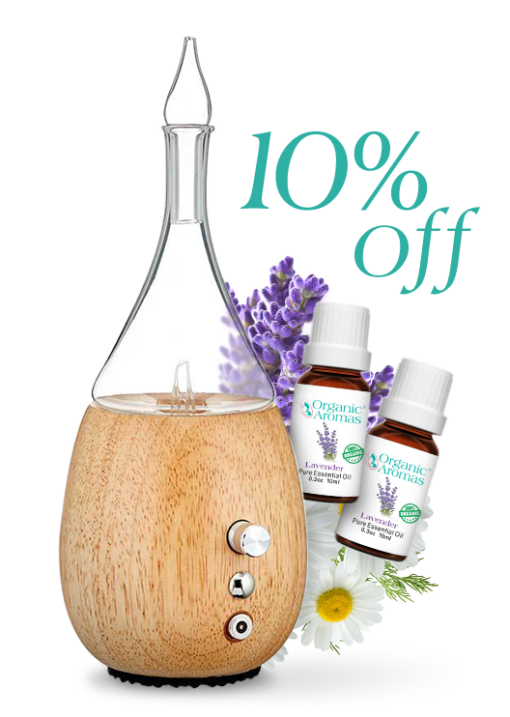
Join Now and Get a Coupon for 10% Off!
Real-World Use Cases: Where Each One Wins

There is no universal winner. There is the right tool for the room you are scenting and the ritual you are building.
- Spa, wellness center, or yoga studio. Choose nebulizing. Client-facing rooms cannot afford diluted scent, and the coverage area handles a full studio. Bonus: no water reservoir to manage between sessions.
- Bedroom. Both work. If you want a warm, faint scent that runs eight hours through the night, ultrasonic is the easier fit because of the low oil consumption. If you prefer a powerful pre-sleep ritual that you turn off after twenty minutes, nebulizing is the better match. Our overview of nebulizing benefits includes a few short bedtime patterns customers love.
- Nursery or shared kid space. A small low-output ultrasonic, used sparingly with very mild oils, is the most common choice from parents we work with. Always run it well across the room, never close to a sleeping infant, and follow your pediatrician’s guidance on which oils to use at all.
- Living room or open kitchen. Nebulizing wins here on coverage. Open-plan spaces eat ultrasonic mist; nebulizing fills the volume without you noticing the device.
- Office. Nebulizing for the energizing morning hour, then off. Most of our office-based customers run a session of citrus, peppermint, or rosemary for thirty to sixty minutes and let the room hold the scent for the rest of the morning.
- Travel. Ultrasonic still leads on raw portability, but our travel nebulizing roundup covers the rechargeable wireless options that now make pure aromatherapy genuinely portable.
- Larger room or high-ceiling great room. Nebulizing, full stop. Ultrasonic mist falls out of the air too quickly to scent a large volume.
What 200,000+ Customers Have Told Us
Organic Aromas has been making handcrafted Nebulizing Diffusers® in real wood and medical-grade Pyrex glass for over a decade. That is twelve years of customer feedback on what people actually do with these devices once they get them home. A few patterns repeat enough that they are worth sharing as part of this comparison.
The most common reason people upgrade from an ultrasonic diffuser to a nebulizing one is what they describe as “wanting to actually smell the oil.” They started with an inexpensive ultrasonic unit, enjoyed the look of the mist, and after a few months realized the scent was a faint whisper rather than the experience they had imagined. They typically try doubling the drops, then re-reading the manual, then concluding that the device design itself is the ceiling. That ceiling is real; it is the physics of water dilution.
The second pattern: blend integrity. Customers who buy small bottles of high-quality oil, especially from independent distillers, almost universally migrate to nebulizing within their first year. They have invested in the chemistry, and they want to smell that chemistry in the room without aqueous mediation. Our guide to building your own blends is a popular starting point for that journey.
The third pattern: surface life. Wood and glass age beautifully on a console table. Plastic ultrasonic shells, however carefully styled, do not. People who treat their diffuser as a piece of the room rather than a gadget tend to end up with the wood-and-Pyrex form factor.
Join Our Exclusive Member Club to get Big Discounts!
Frequently Asked Questions
Is a nebulizing diffuser louder than an ultrasonic diffuser? Yes, slightly. Ultrasonic units are nearly silent. Nebulizing units run a small air pump and produce a low hum in the 35 to 45 decibel range, similar to a quiet fridge. Most people stop noticing it within a few minutes.
Can I use the same oils in both devices? Yes. All neat, high-quality essential oils work in a Nebulizing Diffuser®, and the same oils work, in much smaller amounts, in an ultrasonic diffuser. Avoid pre-diluted oil blends in carrier oils; those are designed for skin and will gum up a nebulizing nozzle.
Will a nebulizing diffuser use more oil? Per session, yes. But because the scent is undiluted and powerful, sessions are usually shorter (20 to 60 minutes) versus several hours of continuous ultrasonic running. Over a month, most customers find the oil costs comparable.
Does an ultrasonic diffuser add humidity to the room? A little. Output is modest compared to a dedicated humidifier, but in a small dry room it does contribute. A nebulizing diffuser adds none.
How often should I clean each one? Ultrasonic: rinse the reservoir every few days and do a deeper vinegar or alcohol clean weekly. Nebulizing: rinse the glass with a few drops of high-proof alcohol every couple of weeks, or when you switch to a very different scent profile.
Is one better for pets? Both can be used in homes with pets, but always with ventilation and never enclosed in a small room with the animal. Some oils are not safe around cats, birds, or small mammals. Check with your veterinarian about specific oils before introducing any aromatherapy near pets.
Which one should I buy if I am still unsure? If your goal is true aromatherapy, the kind a spa or a thoughtful host would build a ritual around, choose a Nebulizing Diffuser®. If your goal is gentle ambient scent plus a touch of humidity in a small space, an ultrasonic diffuser is the friendlier first device. Many customers eventually own both, one for the living room and one for the bedroom.
What if I have hard water at home? Hard water is a real factor for ultrasonic owners. Minerals build up on the ceramic disc and on the inside walls of the reservoir, dampening output and eventually shortening the unit’s life. Many manufacturers recommend distilled or filtered water to slow this down. A nebulizing diffuser sidesteps the issue entirely; there is no water to deposit minerals.
Can I leave either diffuser running while I sleep? Yes for both, with sensible setup. Most modern ultrasonic units have auto-shutoff when the reservoir runs dry. Most nebulizing units include an interval timer, often two minutes on and one minute off, which keeps oil consumption reasonable and prevents over-saturation through the night. For overnight scent in particular, consider running the device for a short window before bed rather than continuously through the night.
Nebulizing diffuser vs ultrasonic — is the price difference worth it? It depends on what you are optimising for. If scent fidelity, essential oil chemistry preservation, and full-room coverage are what you want from aromatherapy, the premium for a glass-and-wood Nebulizing Diffuser® is justified. If you want gentle background scent and a touch of humidity for a small bedroom at low cost, the ultrasonic is the right tool and you should not overpay for a nebulizing unit you will underuse. Most people who try both settle on nebulizing as their primary living-room or studio device, and keep an ultrasonic for smaller or secondary spaces.
How long does a 10ml bottle of essential oil last in a nebulizing diffuser vs ultrasonic? In a Nebulizing Diffuser® run on intermittent-timer settings (2 minutes on, 1 minute off) for 30 to 60 minutes per day, a 10ml bottle typically lasts 3 to 5 weeks of regular use. In an ultrasonic diffuser using 5 drops per session for one session daily, the same 10ml bottle lasts 6 to 8 weeks. The ultrasonic stretches the bottle further, but it delivers far less aroma per millilitre of oil actually in the air. Many experienced nebulizing users keep three or four oils rotating and find the monthly spend comparable to a mid-tier ultrasonic used continuously.
Can I run a Nebulizing Diffuser® all day? Most models include an interval timer precisely for this purpose. Running continuously all day would consume oil quickly and over-saturate the air in even large rooms. The typical approach: run 20 to 30 minutes in the morning, again in the early evening, and optionally a short session before bed. For workspaces, a 30 to 60 minute midday session is common. The built-in timer (usually 2 minutes on, 1 minute off) lets you leave the unit running and let the timer manage oil use automatically. Our guide to the best aromatherapy oils for diffusing includes session-length notes by oil type and mood.



Thank you for this post, it was really helpful 🙂
Great information! I really need to invest in a nebulizer.
I own two of the Elegance Nebulizing diffusers and once you experience that, you never go back! Using high quality oils is the key to long lasting aromatherapy, and clean it with 99% alcohol. Easy!
Great article, I’ve never thought about all those different types of diffusers
Very informative!
These are gorgeous diffusers!
Thanks for another helpful and informative article.
I love my Organic Aromas diffuser! Can’t imagine using anything else, especially something that is going to add humidity to a house that already has too much of it at certain times of the year.
I only recommend your diffusers! I wish I’d have known about you years ago! These are the best!
This is so interesting, I didn’t know any of this! Thanks for sharing 🙂
I am very pleased with learning the amazing information about how awesome nebulizing diffusers truly are when it comes to preserving the benefits of essential oils. Thank you very much for breaking it all down.
I ordered my first nebulizer, i’m really excited to receive it and experience the best way of diffuse my essential oils ❤️
I absolutely love the custom carved bases!!! Buddha is calling to me! I also love the laser engraved bases! Great anniversary gift for my parent’s 50th! And, i like the idea of a logo base too. Now, to decide which to buy..
There is not going back after owning a nebulizer. HUGE difference!
I personally haven’t used my ultrasonic diffuser since I got my nebulizing one from Organic Aromas.
This is going on my gift list!!!
Love them both!
I experienced exactly what you describe with the ultrasonic diffusers. Mine stopped working within months and had to be cleaned on a regular basis.
My nebulizing diffuser fills my entire room with scent and I don’t have to worry if toxic plastic is entering my system as well.
I have wondered what the differences were. Thank you for answering my questions
I have had both kinds and definitely prefer the nebulizer. It is absolutely the best diffuser I’ve ever owned!
Sounds like the Nebulizing diffusers are the better way to go.
just ordered my 1st organic aromas deffuser can’t wait til it gets here.