


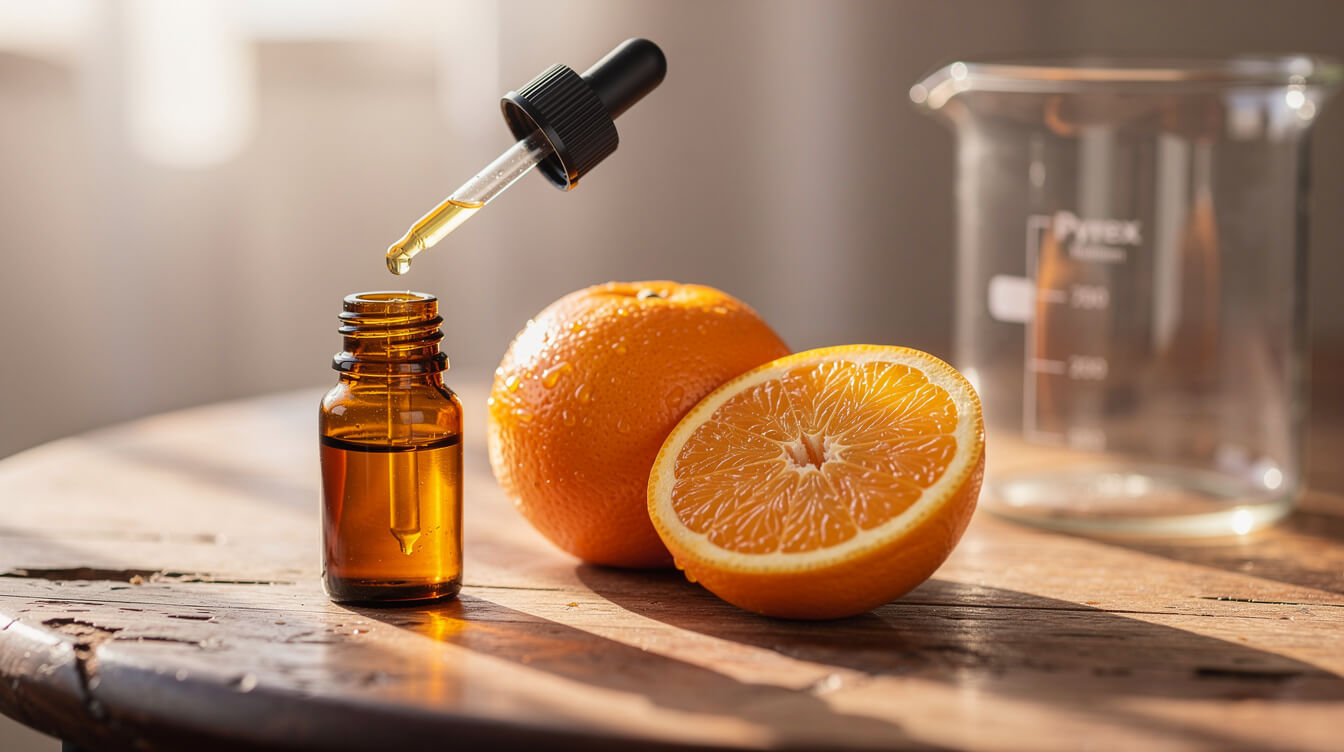
Friday Mini-FAQ: Will Citrus Essential Oils Eventually Damage My Nebulizing Diffuser®?
The Styrofoam Trick Is Real — Here’s Why
That video isn’t a myth. D-limonene, the compound that makes up roughly 90–95% of cold-pressed orange and lemon oil, is such an effective solvent that it’s sold commercially as an industrial degreaser and adhesive remover — strong enough to soften or dissolve polystyrene foam almost on contact. It’s the same reason a lemon oil-based cleaner can leave a cloudy haze on certain plastic countertops if you let it sit.
Why Your Nebulizing Diffuser® Never Meets That Fate
Here’s the detail that actually matters: in a Nebulizing Diffuser®, the oil never touches plastic, and it never touches the wood either. Bernoulli’s Principle pulls the oil up through a sealed glass tube and atomizes it inside the medical-grade Pyrex glass reservoir — the one material that every citrus terpene on earth is completely inert against. That’s not a coincidence; it’s why early diffuser makers reached for glass and real wood in the first place, decades before “BPA-free” was a label anyone needed. The wood housing is just the frame holding that glass in place, finished and sealed, with no job of containing the oil at all.
The one real care tip: if a drop ever drips down the outside of the glass onto the wood base, wipe it with a dry cloth within a day rather than letting it pool. A passing drop won’t hurt a sealed finish — it’s standing liquid left for weeks that eventually dulls any wood surface, citrus oil or not.

Sign Up to Get Your FREE
e-Book Here…
If you want the fuller mechanics of why glass and no water (or heat) changes everything about how pure an oil stays, we go deeper in Waterless Diffuser: How Bernoulli’s Principle Delivers Pure Essential Oils.
So diffuse your citrus oils without a second thought — the glass was always built to take it.
Warmly,
Chad