

What Space Smells Like, and a Blend for Leonid Meteor Shower Night
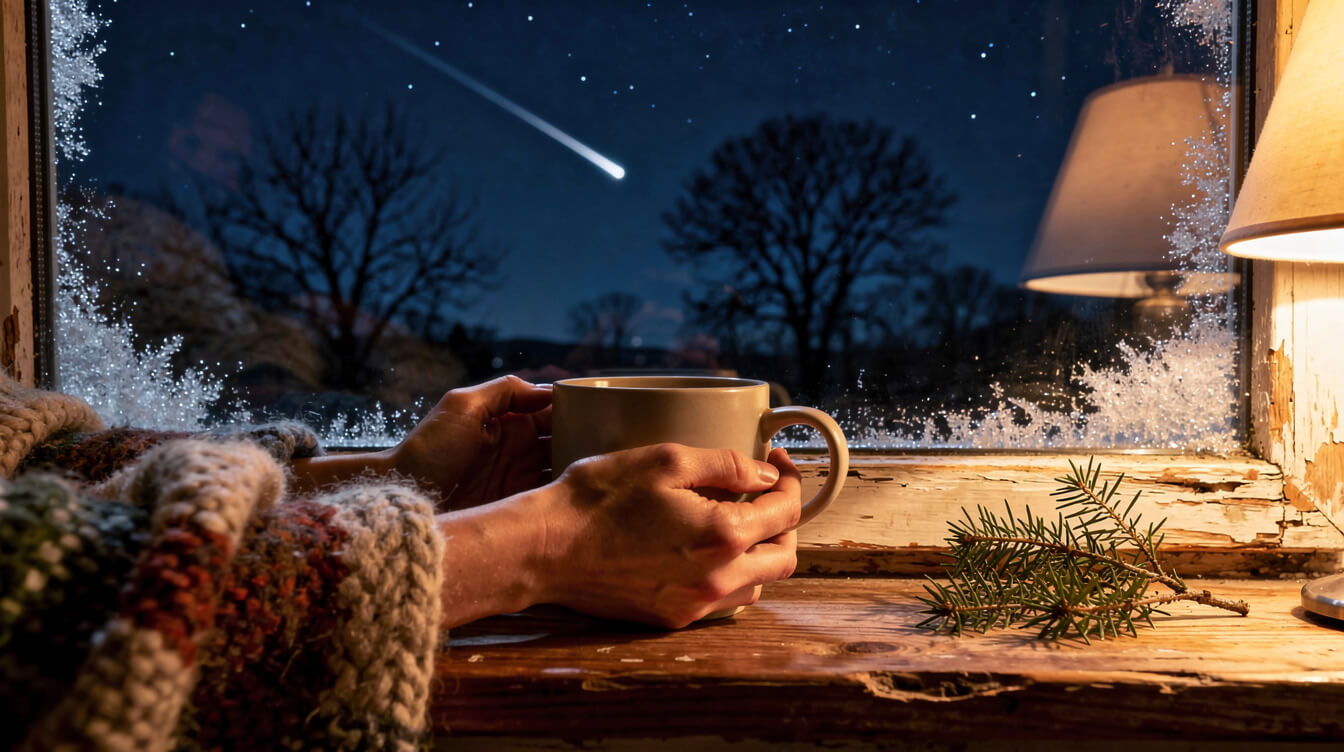
Three nights from now, the Leonids reach their peak. Grains of an old comet will hit the air at about 44 miles a second and burn up as quick white scratches across the dark. You can watch from the porch. Or, the way I like it, from inside, with the lamp turned low and something warm in your hands.
What Space Smells Like, According to the People Who’ve Been
You can’t smell anything in a vacuum. But astronauts coming in from a spacewalk keep reporting the same thing when they take their helmets off in the airlock: a smell clinging to their suits and tools. Don Pettit, writing from the International Space Station in 2003, gave the description that stuck: “metallic; a rather pleasant sweet metallic sensation.” It reminded him of college summers spent repairing logging equipment with an arc welder, and he called it “pleasant sweet smelling welding fumes.” Other crews have said seared steak and hot metal. Nobody has said cold, even though space is about as cold as it gets. The smell is warm and scorched, almost like a forge.
Leonid Night: When and Where to Look
This year the shower peaks on the night of November 17 into the 18th. The Leonids’ radiant, the point in the constellation Leo they seem to streak out from, doesn’t rise until around midnight, and the first-quarter moon sets around the same time. That makes the dark hours before dawn your window. In an ordinary year you can expect around 10 to 15 meteors an hour under a dark sky. But this shower has a famous past. On the night of November 12–13, 1833, the Leonids put on a storm of tens of thousands of meteors an hour over eastern North America, and many people who saw it thought the stars were falling. Every Leonid you catch is a speck shed by Comet Tempel-Tuttle, which comes back around the sun about once every 33 years.
A Warm-Window Blend: 3 : 2 : 1
For the hour before you head outside, or the whole night if you’re staying in, add 3 drops Juniper, 2 drops Elemi and 1 drop Black Pepper to your Nebulizing Diffuser®. Juniper is the clear, cold air on the other side of the glass. Elemi, a bright resin with a lemon-peppery edge, brings the sweet, faintly mineral note closest to Pettit’s description. One drop of Black Pepper is the warm spark. It won’t recreate space. It’s a nod to it from a warm room. Because a Nebulizing Diffuser® uses no heat and no water, Elemi’s brightest top notes stay in the air instead of cooking off the way they would on a warmer.
Sign Up to Get Your FREE
e-Book ($9.99 Value)
Before You Step Outside
Turn every inside light off about 20 minutes before you go out, so your eyes adjust while the blend fills the room. The clear, still nights that are best for meteors are also the ones when woodsmoke hangs low over the neighborhood, so expect a little of that drifting in with the cold.
Make a wish on the first one you see and keep the second for yourself.
Warmly,
Chad