


What Essential Oils Are Safe for Cats? A Science-Backed Guide for Pet Owners
As a cat lover and aromatherapy enthusiast, you’ve likely wondered: what essential oils are safe for cats? It’s a question that sparks genuine concern—and for good reason. Your feline companion’s health is precious, and the conflicting information online can feel overwhelming. Some sources claim all essential oils are toxic to cats, while others suggest certain oils can be used safely.
The truth lies somewhere in between—and understanding it requires knowing why cats are uniquely sensitive to these aromatic compounds. Unlike dogs and humans, cats process certain substances differently, making some essential oils genuinely dangerous while others may be used with proper precautions.
In this comprehensive guide, we’ll explore the science behind feline sensitivity, identify which oils to absolutely avoid, and share evidence-based guidance on how aromatherapy enthusiasts can enjoy essential oils while keeping their cats safe. Whether you’re a seasoned diffuser user or just beginning your essential oil journey, this article will help you make informed decisions for your household.
Why Cats Are More Sensitive to Essential Oils Than Other Pets
To understand what essential oils are safe for cats, we first need to understand why cats are uniquely vulnerable. The answer lies in their liver—specifically, an enzyme they lack called glucuronyl transferase.
This enzyme is responsible for metabolizing and eliminating certain compounds from the body, including phenols—organic compounds found in many essential oils. Dogs, humans, and most other mammals have this enzyme in abundance. Cats, however, are deficient in it. This means that when a cat is exposed to phenol-containing essential oils, their body cannot efficiently break down and eliminate these compounds, leading to potential buildup and toxicity.
Additionally, cats have an extraordinarily sensitive sense of smell—approximately 14 times stronger than humans. What seems like a pleasant, subtle aroma to us can be overwhelming to a cat. Their small body size also means that any exposure results in a higher concentration relative to their weight.
This biological reality doesn’t mean aromatherapy is impossible in a cat-friendly home—it means we must be thoughtful and informed about which oils we use and how we use them.
Essential Oils That Are Toxic to Cats: The Must-Avoid List
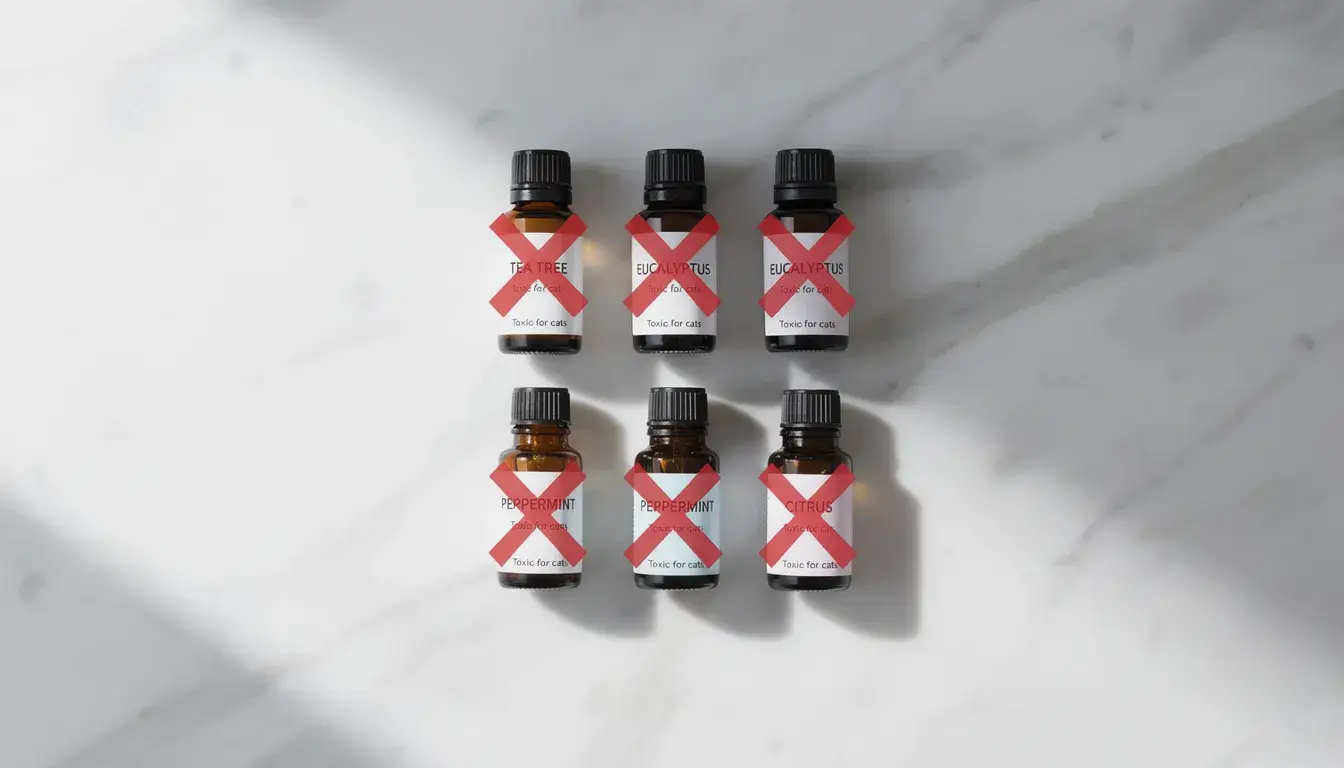
Before exploring safer options, it’s crucial to know which essential oils pose serious risks to cats. The following oils should never be used around cats, regardless of the method of application:
Tea Tree (Melaleuca) – Perhaps the most dangerous essential oil for cats. Even small amounts can cause severe toxicity, including tremors, weakness, and liver damage. According to the ASPCA Animal Poison Control Center, tea tree oil is one of the most commonly reported causes of essential oil poisoning in cats.
Eucalyptus – High in 1,8-cineole, eucalyptus can cause drooling, vomiting, and neurological symptoms in cats.
Peppermint and Spearmint – These popular oils contain menthol, which is highly toxic to cats and can cause liver damage.
Wintergreen – Contains methyl salicylate, which cats cannot metabolize safely.
Citrus Oils (Lemon, Orange, Grapefruit, Bergamot, Lime) – The limonene and linalool in citrus oils are problematic for feline livers.
Additional oils to avoid: Cinnamon (bark and leaf), Pine, Clove (high in eugenol), Thyme (contains thymol), Pennyroyal (extremely toxic), Oregano, and Ylang Ylang.
If you have any of these oils in your home, store them securely where your cat cannot access them, and avoid diffusing them in spaces where your cat spends time.

Sign Up to Get Your FREE Pets
e-Book Here…
Essential Oils That May Be Safe for Cats (With Proper Precautions)
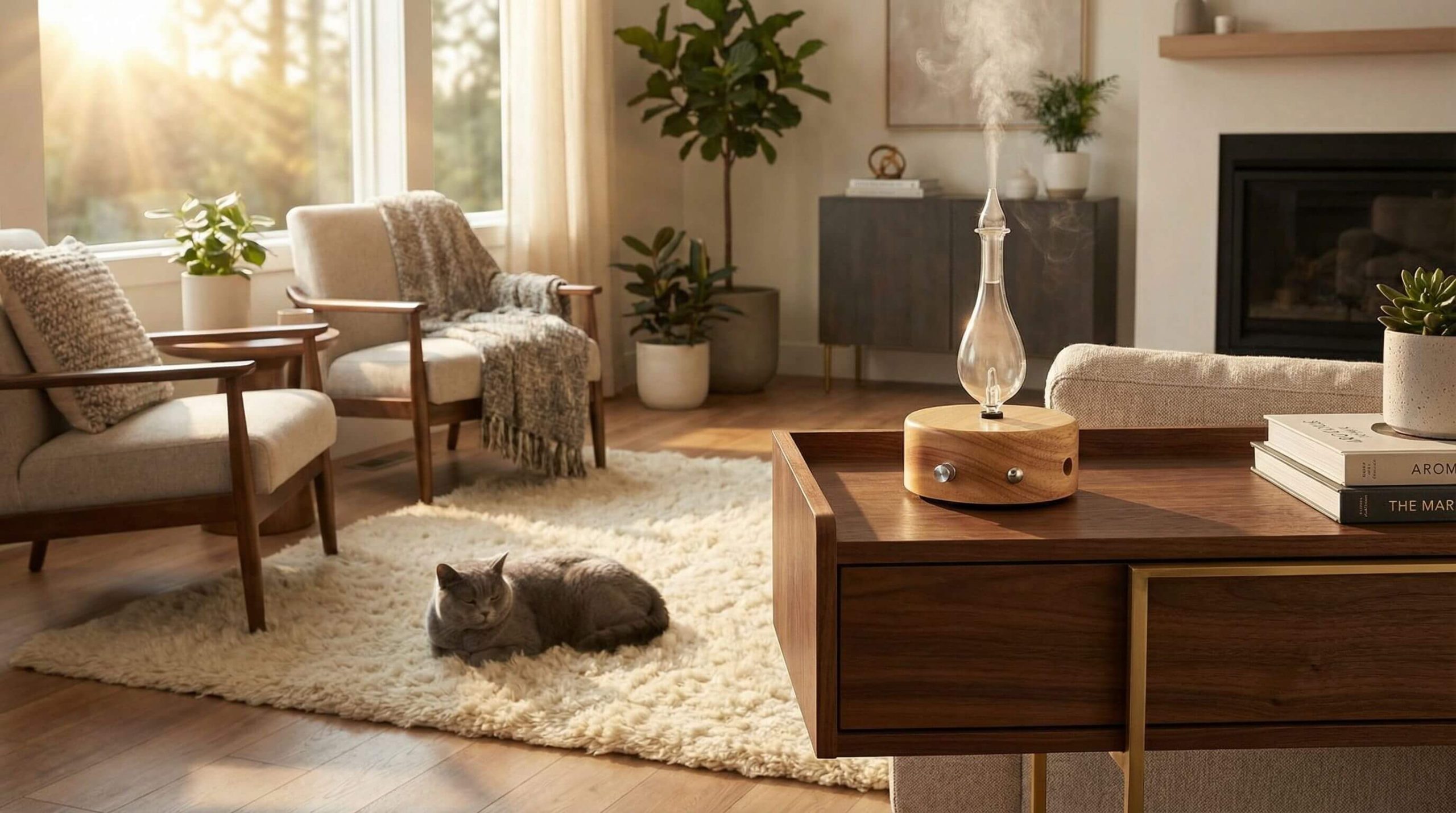
While no essential oil is completely without risk for cats, several oils are considered relatively safer when used with appropriate precautions. These oils are low in phenols and other compounds that cats struggle to metabolize.
Chamomile – Roman chamomile is generally considered one of the safer options for homes with cats. Its gentle, calming properties make it a favorite for relaxation, and it lacks the phenolic compounds that pose the greatest risk to felines.
Cedarwood – With its low phenol content and grounding woody aroma, cedarwood is often cited by holistic practitioners as a cat-friendlier option. Some pet owners even report it helps naturally deter fleas.
Frankincense – This ancient oil contains no phenolic compounds and has been used around animals for centuries. Its warm, resinous scent is beloved for meditation and spiritual practices.
Helichrysum – Known for its gentle properties, helichrysum (also called Immortelle) has no known cat toxicity when used appropriately.
Copaiba – This resin-derived oil contains no phenolic compounds and is considered one of the gentler options available.
Important: Even these “safer” oils require caution. Always ensure proper dilution, adequate ventilation, and—most critically—give your cat the ability to leave the room if they choose.
How to Safely Diffuse Essential Oils Around Cats

If you’ve decided to diffuse essential oils in a home with cats, following these safety guidelines can help minimize risk:
Rule #1: Always Provide an Escape Route – This is the most important rule. Your cat should always be able to leave the room where you’re diffusing. Never diffuse in a closed space with your cat, and never use oils in their primary sleeping or eating areas.
Rule #2: Choose the Right Diffuser – Nebulizing diffusers offer advantages for cat-friendly homes. Unlike ultrasonic diffusers that mix oils with water, nebulizing diffusers deliver pure, controlled oil delivery without creating water reservoirs that curious cats might drink from. The Raindrop 3.0 Nebulizing Diffuser® features interval settings that allow for shorter diffusion periods—ideal for homes with pets.
Rule #3: Limit Diffusion Time – Diffuse for 15-30 minutes maximum, not continuously. Shorter sessions reduce overall exposure and give the room time to air out.
Rule #4: Use Minimal Amounts – Start with just 2-3 drops of oil and observe your cat’s behavior. If they leave the room, appear agitated, or show any signs of distress, stop immediately and ventilate the area.
Rule #5: Ensure Proper Ventilation – Keep windows cracked or use the diffuser in a well-ventilated space. Place your diffuser on a high shelf or in an area your cat doesn’t frequent.

Sign Up to Get Your FREE
e-Book Here…
Signs of Essential Oil Toxicity in Cats
Knowing the signs of essential oil toxicity can help you act quickly if your cat has an adverse reaction. Watch for these symptoms:
Respiratory Signs: Difficulty breathing, wheezing, coughing, or labored breathing. Cats may also pant, which is unusual for felines.
Behavioral Changes: Excessive drooling, lethargy, lack of coordination, wobbling, or appearing “drunk.” Some cats may become unusually agitated or try to hide.
Physical Symptoms: Vomiting, diarrhea, red or irritated skin (especially around the mouth, paws, or any area that contacted oil directly).
Neurological Signs: In severe cases, tremors, seizures, or collapse may occur. These require immediate emergency veterinary care.
What to Do If You Suspect Toxicity:
1. Remove your cat from the area immediately and provide fresh air.
2. Do NOT induce vomiting unless directed by a veterinarian.
3. If oil is on their fur, gently wash with mild dish soap.
4. Call your veterinarian or the ASPCA Animal Poison Control Center at (888) 426-4435 (a consultation fee may apply).
5. Bring the essential oil bottle with you to the vet so they know exactly what your cat was exposed to.
The Controversy: Why Experts Disagree About Essential Oils and Cats

If you’ve researched this topic before, you’ve likely encountered conflicting advice. Some veterinarians take a conservative stance, advising against any essential oil use around cats. Others—particularly holistic practitioners—maintain that certain oils have been used safely around felines for decades.
Why the disagreement? Several factors contribute:
Limited Research: There simply aren’t many clinical studies specifically examining essential oil effects on cats. Much of what we know comes from case reports of toxicity rather than controlled research on safe use.
Dose Matters: The toxic dose varies significantly between oils. A few molecules dispersed from a distant diffuser is very different from concentrated oil applied directly to fur.
Individual Variation: Like humans, cats vary in their sensitivities. Some cats may tolerate incidental exposure better than others.
The American College of Healthcare Sciences, a respected aromatherapy education institution, acknowledges that certain oils (like chamomile and frankincense) have been used around cats by trained aromatherapists without incident—when proper protocols are followed.
The Bottom Line: Start with the most conservative approach. Avoid known toxic oils completely. If you choose to diffuse safer alternatives, use minimal amounts, short durations, and always prioritize your cat’s comfort and ability to leave the space. When in doubt, consult your veterinarian.

Join Our Exclusive Member Club to get Big Discounts!
Best Practices for Aromatherapy Enthusiasts with Cats

You don’t have to give up essential oils entirely to be a responsible cat parent. Here’s how to enjoy aromatherapy while keeping your feline safe:
Create a Dedicated Aromatherapy Space: Designate one room as your aromatherapy zone—perhaps a home office or bathroom your cat doesn’t frequent. Close the door while diffusing and allow time for the room to air out before letting your cat back in. The Tranquility Nebulizing Diffuser® works beautifully in a personal meditation or yoga space.
Secure Your Oils: Cats are curious and can knock over bottles. Store all essential oils in a locked cabinet or high shelf your cat cannot access. Even a small spill can be dangerous if your cat walks through it and licks their paws.
Never Apply Oils Directly: Never apply essential oils directly to your cat’s fur, skin, or paws—even “safe” oils. Cats groom themselves constantly and will ingest anything on their coat.
Wash Your Hands: After handling essential oils, wash your hands thoroughly before petting your cat. Oil residue on your skin can transfer to their fur.
Watch for Behavioral Cues: Your cat will tell you if something bothers them. If they leave the room, sneeze repeatedly, paw at their face, or seem agitated when you diffuse, respect their communication and stop.
Schedule Regular Vet Check-ups: If you’re an active diffuser user, mention this to your veterinarian during regular visits. They can monitor for any subtle signs of sensitivity.
For a broader look at pet safety across all species, check out our complete guide to essential oils and pets.
Enjoying Aromatherapy Responsibly with Your Feline Friend
Understanding what essential oils are safe for cats comes down to respecting their unique biology. Cats are more sensitive than dogs or humans, but that doesn’t mean aromatherapy lovers must abandon their practice entirely. By avoiding known toxic oils—especially tea tree, eucalyptus, and peppermint—and approaching safer alternatives like chamomile, cedarwood, and frankincense with appropriate caution, you can create a wellness-focused home that works for everyone.
The key principles to remember: always provide an escape route, diffuse for short periods only, use minimal oil amounts, ensure proper ventilation, and never apply oils directly to your cat. When you follow these guidelines with a quality nebulizing diffuser that delivers pure, controlled aromatherapy, you can enjoy the benefits of essential oils while keeping your beloved cat safe.
Your cat’s safety always comes first. When in doubt, consult your veterinarian—they can provide personalized guidance based on your cat’s health history and your specific essential oil use.