

Aromatherapy Massage: The Complete Guide to Scented Bodywork for Relaxation
Aromatherapy massage is the deceptively simple practice of pairing skilled bodywork with carefully chosen essential oils. Two pathways open at the same time: oils dissolved into a carrier glide across the skin, and the same molecules drift up to the nose with every breath. The result is bodywork that lands deeper than touch alone and an aromatic experience richer than any candle could deliver.
This guide walks you through what aromatherapy massage actually does, the oils and pairings that consistently work in real spa rooms, the dilution ratios professionals use (with three full recipes), and the part most articles skip entirely: how to set up the air in the room so the scent supports the touch. Whether you are a home enthusiast easing into self-care or a massage professional refining your space, you will leave with a practical playbook.
What Aromatherapy Massage Actually Is (and Why It Is More Than Scented Lotion)
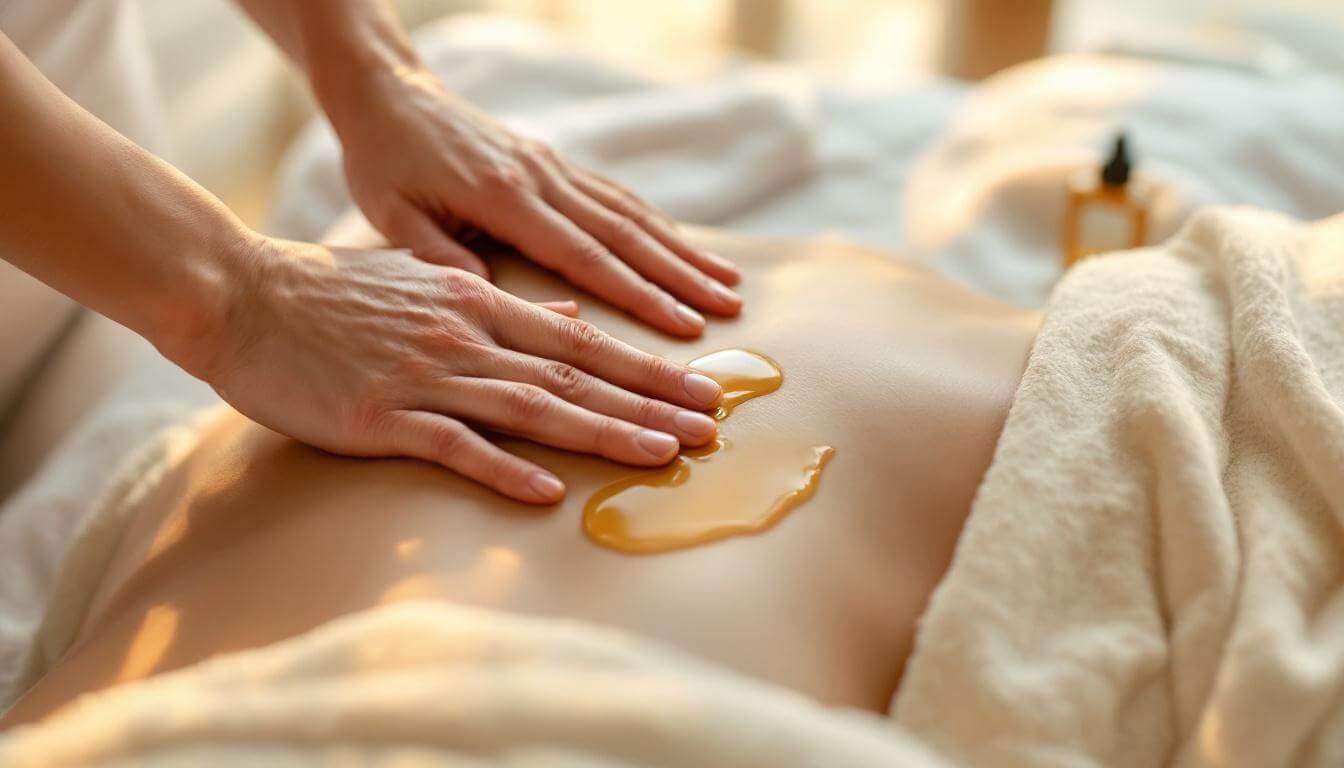
True aromatherapy massage is bodywork that uses essential oils as an active ingredient, not a fragrance. The session is typically built on Swedish or lymphatic strokes, but the strokes are paired with a custom blend of essential oils diluted into a carrier such as sweet almond, jojoba, or fractionated coconut. Those oils enter through two doors at the same time.
The first door is the skin. Many essential oil molecules are small and lipophilic, which means they slip through the lipid layers of the epidermis. Once there, a fraction is absorbed into the underlying capillary network. The carrier oil controls how slowly that absorption happens and how much glide the therapist gets across the body. The second door is the nose. Vaporized molecules travel through the nasal cavity to the olfactory bulb and from there to the limbic system, the same neural neighborhood that governs memory, mood, and the body’s alert-or-calm response. This is why aromatherapy massage feels qualitatively different from a regular massage: the touch and the scent reinforce each other in real time.
The modern technique is often traced back to French biochemist Marguerite Maury, who in the 1960s codified the idea of pairing diluted essential oils with massage strokes individualized to the client. Today, the practice spans clinical settings, day spas, yoga studios, and home rituals. If you want a primer on the broader practice, our guide to starting aromatherapy at home is a good starting point before you build a session.
The Science: How Essential Oils Reach the Body Through Massage
Researchers have spent the last two decades studying both pathways. Skin absorption depends on the size and polarity of each constituent. Small terpenes such as linalool and limonene cross the skin barrier more readily than heavier sesquiterpenes. Body heat from the massage strokes accelerates the process, which is part of why warming the oil between your palms before each pass matters more than it sounds.
The olfactory pathway, by contrast, is fast. The signal from the nose to the limbic system is one of the shortest neural routes in the body. That speed is why a calming scent settles your shoulders before the therapist’s hands have done a full pass. Studies summarized by professional bodies such as the AMTA point to measurable shifts in self-reported stress, sleep quality, and perceived fatigue when massage is paired with appropriate essential oils.
Quality matters more here than most articles let on. A single drop of true lavender essential oil typically contains a 45 to 50 percent combined fraction of linalool and linalyl acetate, the two constituents most associated with its calming sensory profile. Heat, oxidation, and time degrade those volatile compounds. That is why a fresh, properly stored oil and a delivery method that does not cook it (more on this in the room-setup section below) preserves the aromatic experience the customer paid for. If you are still building intuition about how much oil to use and when, the essential oil dilution guide covers the safety math in detail.
One non-negotiable: essential oils are concentrated plant extracts, not perfumes. Aromatherapy massage is intended for general relaxation, sensory pleasure, and creating a calming atmosphere. It is not a substitute for medical care. If you have a specific health condition, are pregnant, or are working with a child or elderly client, consult a qualified clinician before designing a session.
Sign Up to Get Your FREE
e-Book Here…
The Best Essential Oils for Aromatherapy Massage (and Their Pairings)
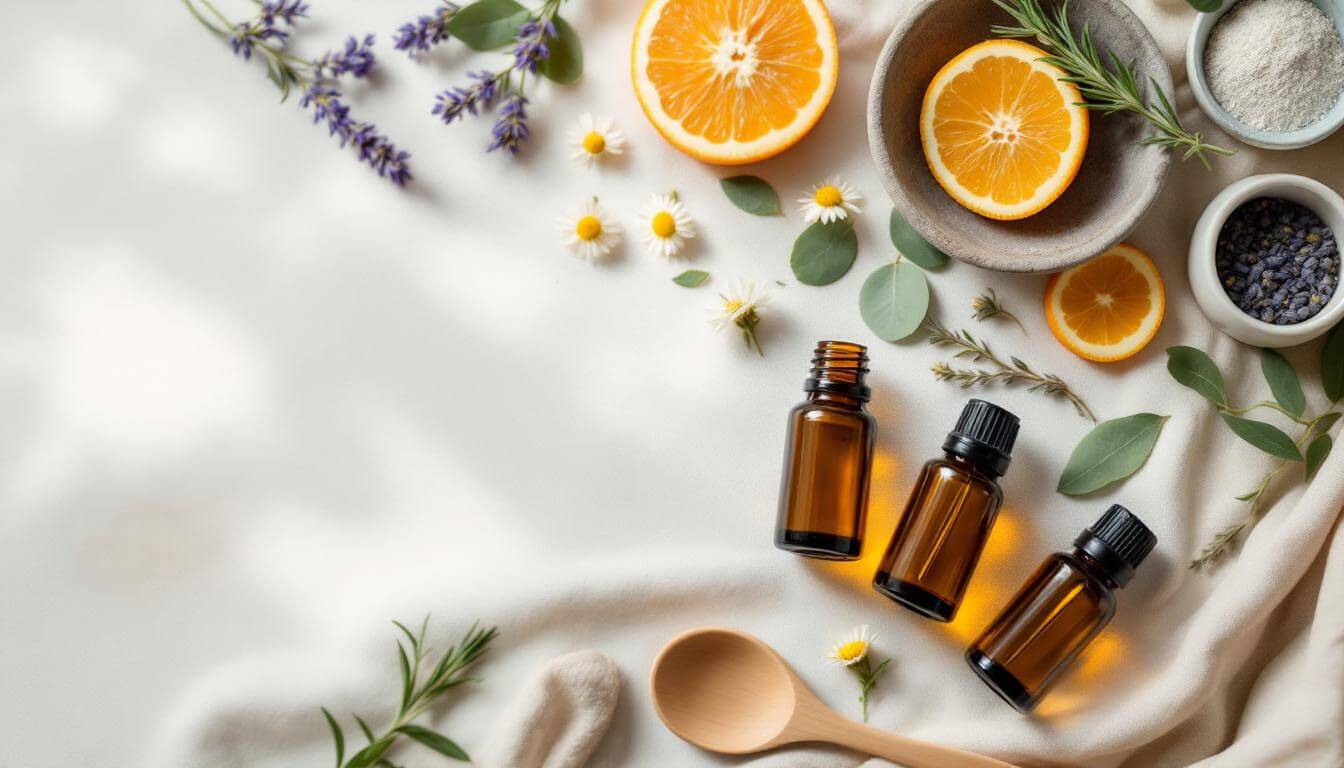
Single oils can carry a session, but pairings make it. A good pair leans on complementary chemistry: one oil sets the dominant mood, the second smooths a rough edge or extends the top notes. After more than a decade of fielding customer feedback at Organic Aromas, the same clusters keep emerging as the workhorses of aromatherapy massage.
For Deep Relaxation
Lavender + sweet orange. Lavender brings the linalool-led calm. Sweet orange brightens the top with limonene, which keeps the blend from feeling heavy or sleepy too soon. This is the most commonly requested pairing in spa-style sessions for good reason. For a deeper dive into using lavender well, see how to use lavender essential oil for sleep.
For Athletic Recovery and Sore Muscles
Peppermint + eucalyptus. Peppermint delivers a cooling sensation thanks to menthol, which can make tight areas feel less locked. Eucalyptus opens the breath and lifts the head. Add a touch of rosemary to round it out. Our peppermint aromatherapy guide covers the constituent profile in more depth.
For a Restorative, Evening Session
Frankincense + ylang ylang. Frankincense grounds the blend with warm, resinous depth. Ylang ylang adds a soft floral sweetness that reads as luxurious without becoming cloying. A small amount of bergamot lifts the opening minutes of the session.
For Mood Support
Bergamot + cedarwood. Bergamot’s bright citrus profile opens the senses while cedarwood provides a steady woody base. Note that bergamot is phototoxic in higher concentrations: keep it under 0.4 percent in any blend that will be used before sun exposure, or choose bergapten-free bergamot.
For Sensitive Skin
Roman chamomile + rose absolute. Both are gentle, both are expensive, and both deserve smaller doses. A 1 percent dilution is plenty.
Universal cautions: avoid undiluted application, patch test new blends on the inner forearm 24 hours ahead, and keep all blends away from the eyes and mucous membranes.
Setting Up the Room: Why Diffusion Doubles the Effect
Here is the gap most aromatherapy massage articles leave wide open: they cover the oil on the skin and forget the air in the room. The oils on the body are doing the topical work. The oils in the air are doing the olfactory work. If the air is plain, you are getting half the experience. This is the wedge that separates a forgettable session from one a client books again.
The room should be primed about 15 minutes before the client arrives. A short pre-session diffusion saturates the air with the dominant note of the blend you will be using on the body. The sensory association is set before the first touch. During the session, a quieter ambient maintenance keeps the scent steady without overpowering the close-quarters work. After the session, the lingering aroma carries the experience for another five to ten minutes as the client transitions back to the world.
The delivery method matters here as much as the oil. Most diffusers on the market are ultrasonic, which means they vibrate water at high frequency to create a fine mist. That is fine for casual home use, but it has three problems in a massage room. First, it adds humidity to a room where you want the therapist’s hands to grip the skin smoothly, not slip on damp air. Second, ultrasonic units produce a low constant white-noise hum that breaks the calm sound design of the session. Third, water-based misting dilutes the essential oil before it reaches the air, which means the room never quite smells the way the bottle promised.
A Nebulizing Diffuser® takes a different approach. It uses Bernoulli’s Principle: a small jet of air passing across a glass tube creates a pressure drop that pulls pure essential oil up and atomizes it into a cold, ultra-fine mist. No water. No heat. No plastic touching the oil. The scent that reaches the room is the scent of the oil itself, in the same chemical proportion the bottle promised. The handcrafted wood-and-Pyrex Nebulizing Diffusers from Organic Aromas were engineered for exactly this kind of professional-quality, whisper-quiet diffusion. The Smart Nebulizing Diffuser adds app-controlled timing intervals, which is useful for setting that 15-minutes-on, 5-minutes-off rhythm during a session.
A practical room rhythm: 15 minutes on at the start, then 5 minutes on, 10 minutes off cycles during the session, then a final 5 minutes on as the client gets dressed. Doses of 5 to 10 drops per cycle are plenty for a standard treatment room. Use the same dominant oil in the air that anchors the blend on the table, with a complementary top note for the air-only signal.
Join Now and Get a Coupon for 10% Off!
Massage Oil Recipes: Dilution Ratios That Actually Work
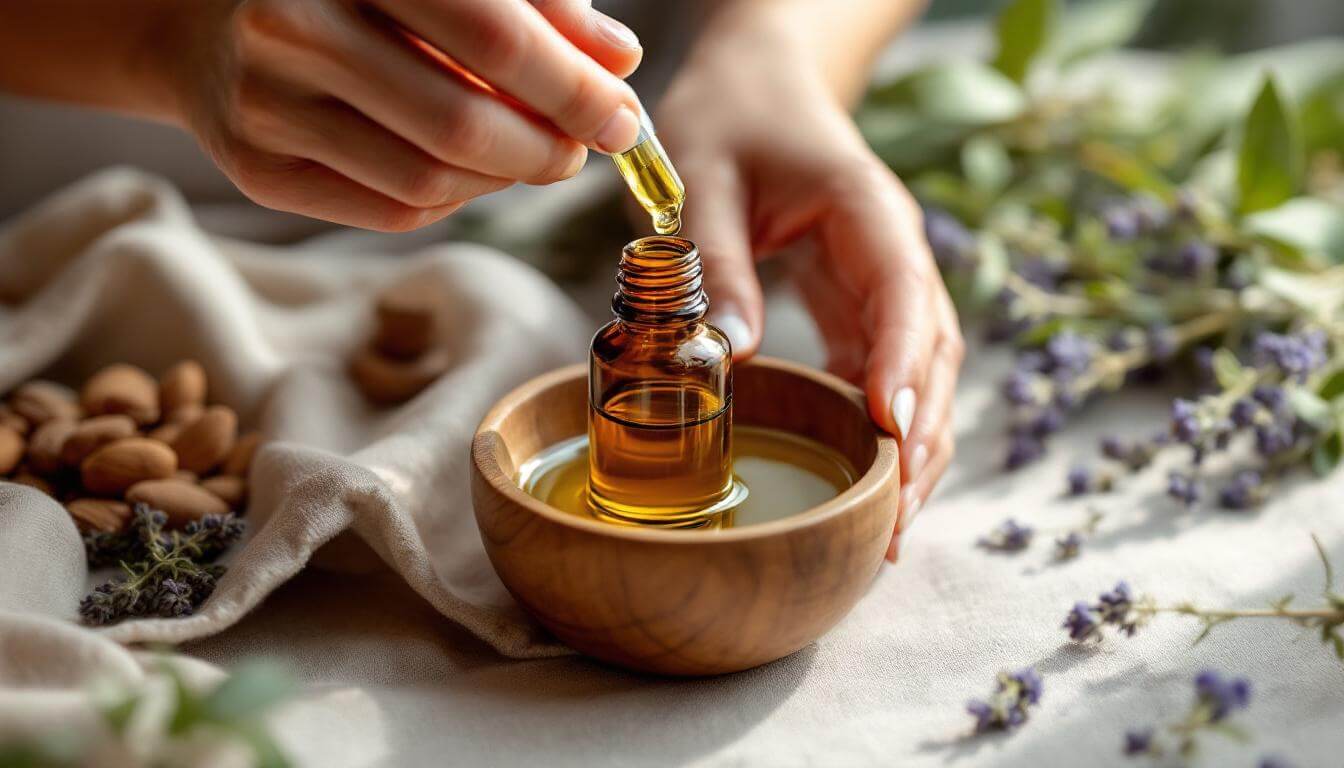
Dilution math is the most-googled, least-explained aspect of aromatherapy massage. The rule of thumb every working aromatherapist learns: about 20 drops of essential oil equals 1 ml. From that, the safe ratios are surprisingly easy.
Standard body massage: 1.5 to 2 percent dilution. In a 30 ml (1 oz) batch of carrier oil, that is 9 to 12 drops total of essential oil.
Face or sensitive skin: 0.5 to 1 percent. In a 30 ml batch, that is 3 to 6 drops total.
Spot treatment (sore muscle, single area, short duration): 2.5 to 3 percent. In a 30 ml batch, 15 to 18 drops. Do not use this strength as a full-body application.
Three full recipes that work consistently in real practice:
Calming Evening Blend (full-body, 1.7 percent)
- 30 ml sweet almond oil
- 4 drops lavender essential oil
- 4 drops sweet orange essential oil
- 2 drops Roman chamomile essential oil
Use for restorative evening sessions, post-travel decompression, or pre-sleep self-massage on shoulders, neck, and feet.
Athletic Recovery Blend (full-body, 2 percent)
- 30 ml jojoba oil
- 5 drops peppermint essential oil
- 4 drops eucalyptus essential oil
- 3 drops rosemary essential oil
Best after long runs, intense training, or for clients who carry tension in the trapezius and lower back. Skip this one before bedtime: peppermint and rosemary can read as activating.
Restorative Floral Blend (full-body, 2 percent)
- 30 ml fractionated coconut oil
- 5 drops frankincense essential oil
- 4 drops ylang ylang essential oil
- 3 drops bergamot (bergapten-free) essential oil
Ideal for ritual self-care, grief support sessions, or spa-day pampering. The bergamot note opens; frankincense and ylang ylang carry the middle and base.
Mix in a clean, dark glass bottle. Cap, label with date, store away from heat and light. Use within 6 months for best aromatic potency. If you want to expand your bench of recipes, the aromatherapy kit buying guide walks through what to stock first.
Aromatherapy Massage at Home: A 60-Minute Self-Care Ritual
You do not need a spa license to give yourself a quality aromatherapy massage. You need a quiet hour, three or four good oils, a small bottle of carrier, and a plan. Here is a 60-minute ritual built from elements that consistently work for home practitioners.
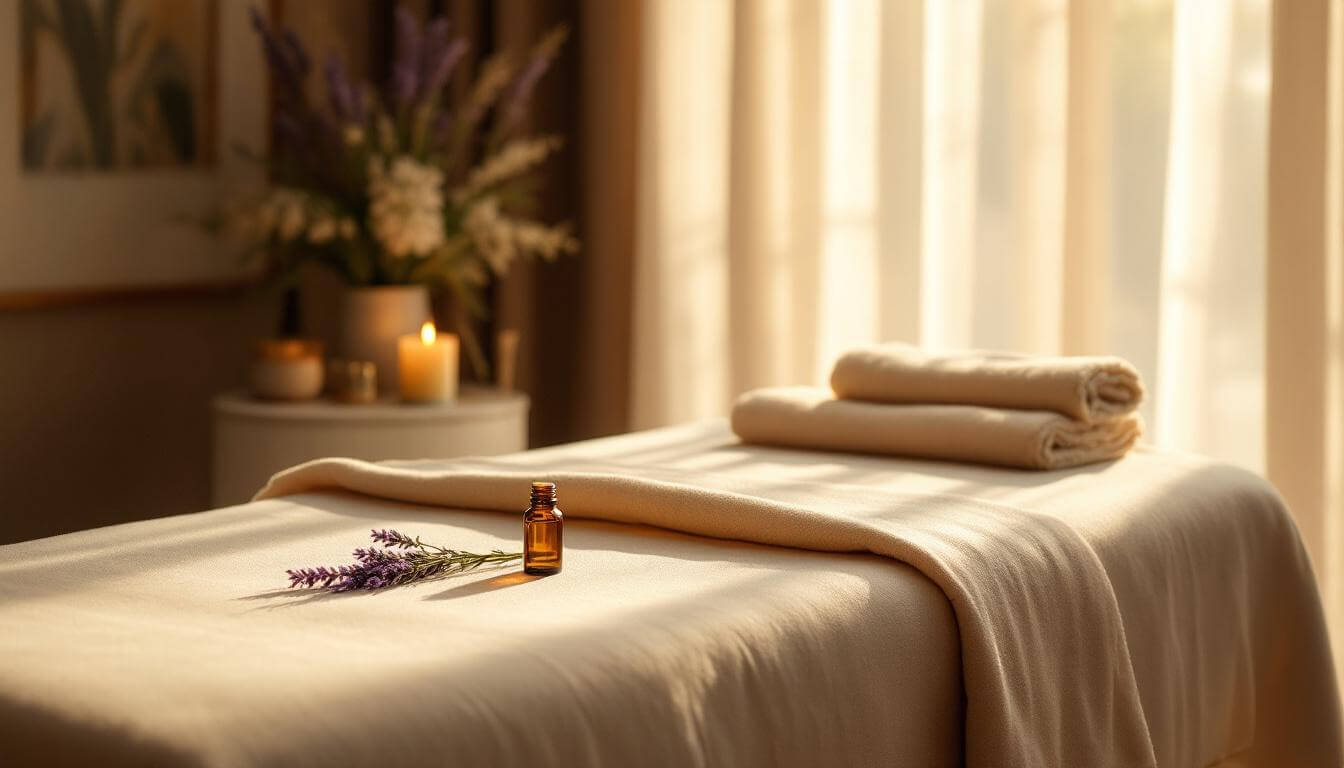
Minutes 0 to 15. Set the room. Lower the lights or switch to a single warm lamp. Lay out a clean towel on a firm surface (a yoga mat works). Start your nebulizing diffuser with 6 drops of your chosen anchor oil. Put on a quiet playlist with no lyrics, ideally 60 to 70 BPM. Make a small bottle of your blend if you have not already.
Minutes 15 to 25. Feet and lower legs. Sit comfortably. Warm a teaspoon of blend between your palms. Work in upward strokes from the ankles toward the knees. Pay extra attention to the soles of the feet, which carry tension you may not notice until you find it.
Minutes 25 to 40. Arms, hands, neck, and scalp. Apply more blend. Long strokes from wrist to shoulder, then circular work into the neck and base of the skull. End with slow finger pressure across the scalp. If your blend allows it (lavender, frankincense, chamomile), do not wash it off afterward. Let it absorb.
Minutes 40 to 55. Belly, lower back, and stillness. Switch to gentler clockwise circles on the abdomen. If you can reach, do long upward strokes on the lower back. Then sit or lie still for the final ten minutes and let the diffuser finish its cycle. The oils on the body and the oils in the air finish their work in this stillness.
Minutes 55 to 60. Close gently. Drink water. Wipe excess oil with a warm cloth if needed. Rinse off only if the recipe used phototoxic citrus and you are heading outside.
For couples, the same recipes work with a partner taking over the second half. Keep communication simple: tell the giver how much pressure you want at each stage. For a fuller spa-day version, our guide to creating a spa experience at home covers everything from lighting to playlist length.
Sign Up to Get Your FREE Essential Oils e-Book Here
For Massage Professionals: Studio-Grade Aromatherapy Best Practices
If you are running a massage practice, aromatherapy is one of the highest-leverage upgrades available. The investment is small. The perceived value to clients is large. And the operational pitfalls are mostly avoidable if you know what to watch for.
Client intake. Add three checkboxes to your intake form: scent sensitivities, current pregnancy, photosensitivity or recent sun exposure. These three rule out 90 percent of the situations where you would need to adjust or skip aromatherapy. Always offer a fragrance-free alternative as table stakes.
Olfactory fatigue. Therapists who diffuse the same blend session after session stop noticing it within days. Clients walking in fresh notice it strongly. Rotate primary oils across the week (lavender Mondays, peppermint-eucalyptus Tuesdays, citrus Wednesdays, and so on) so neither you nor your repeat clients flatten the experience.
Quality of oils. A premium nebulizing setup is wasted on a mediocre oil. Source therapeutic-grade oils with batch-specific GC/MS reports when you can. The cost-per-session of upgrading from a generic oil to a single-origin oil is usually pennies, and it shows.
The room setup as a brand signal. Clients form an opinion of your studio in the first 30 seconds. Synthetic plug-in fragrance reads as cheap. A cloud of overpowering scent reads as amateurish. A clean, ambient pure-oil scent from a handcrafted wood and glass nebulizing unit reads as premium without anyone needing to explain why. For practices that want to equip multiple rooms, Organic Aromas offers a wholesale program designed for spas, wellness centers, yoga studios, and chiropractic and massage clinics.
Client education. Walk new clients through what they will smell and why. The 30 seconds of explanation before a session sets the bar for everything that follows and turns aromatherapy from a passive amenity into a memorable choice. The spa aromatherapy benefits guide is a good resource to share with clients who want to learn more.
Final Thoughts
The most common mistake in aromatherapy massage is treating the scent as decoration on top of the bodywork. The actual practice is a duet. Oils on the body do half the work. Oils in the air do the other half. When both are dialed in (right oil, right dilution, right diffusion in the right room), the experience compounds. Touch becomes more memorable because it carries a scent. Scent becomes more meaningful because it carries the warmth of touch.
Start small. One quality blend, one quiet hour, one well-prepared room. The rest grows from there.