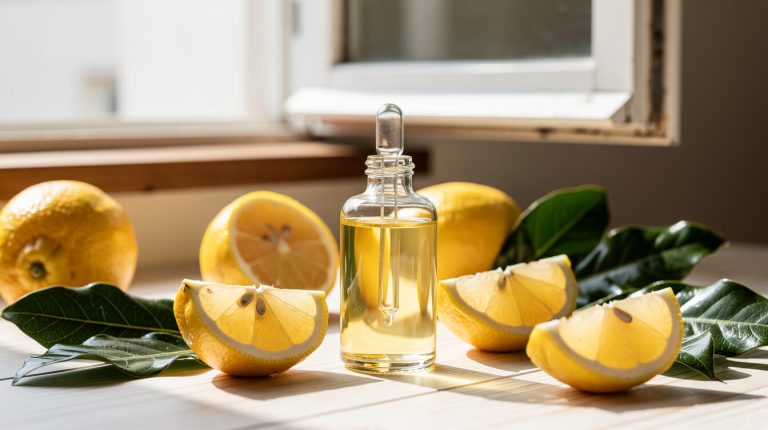



Natural Air Freshener: Why “Natural” Isn’t Always Pure (and What Actually Lasts)
You want your home to smell clean and fresh without the synthetic haze of a plug-in. So you go looking for a natural air freshener, and the internet hands you a hundred options: “all-natural” sprays, “essential-oil” plug-ins, simmer pots, baking-soda jars, vodka-and-water DIY mists. Most of them share two quiet problems. The scent fades within the hour, and the word “natural” on the label often means far less than you think.
This guide is the honest version. We will look at what “natural” legally allows a label to hide, why most homemade methods lose their scent so quickly (it comes down to physics, not effort), and how pure essential oil dispersed without water or heat gives you a clean, lasting aroma. Twelve-plus years of customer blending feedback sit behind the recipes near the end.
What a Natural Air Freshener Really Is (and the Label Loophole)
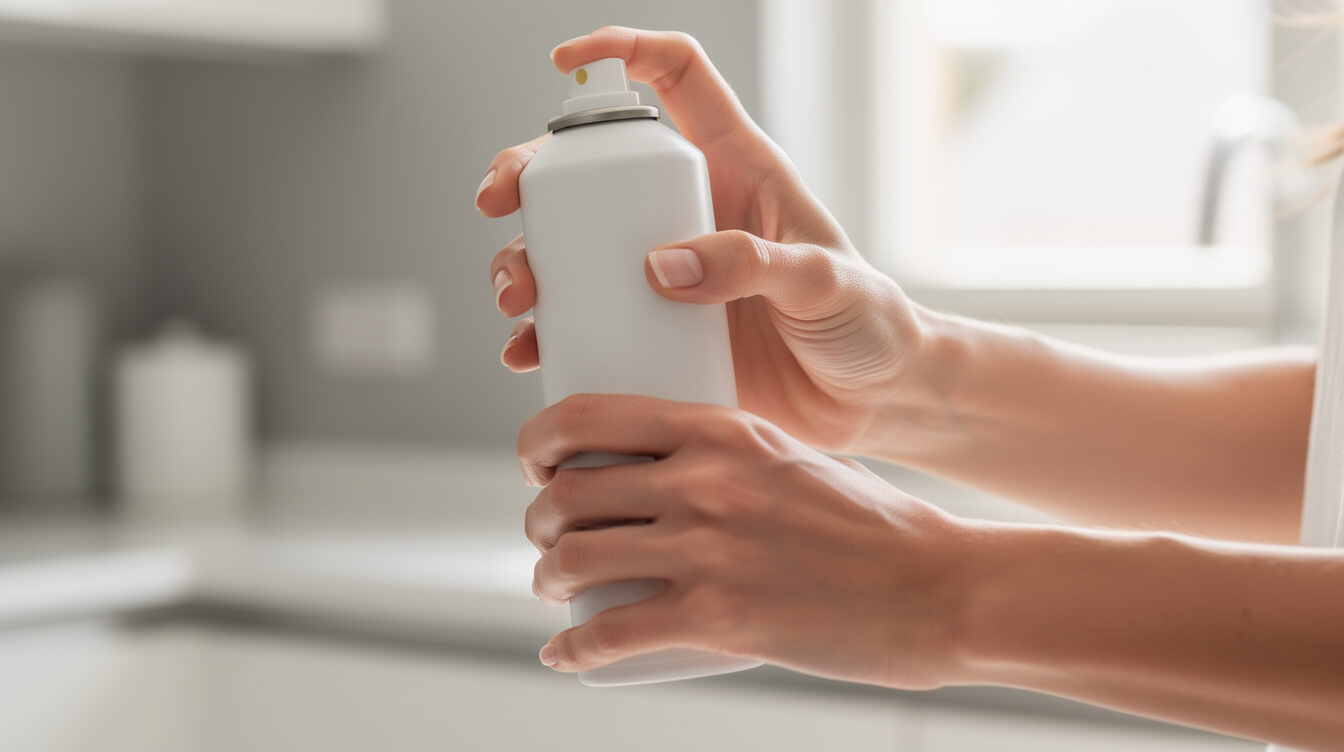
A natural air freshener should mean one thing: aroma that comes from real plant material, with nothing synthetic added. In practice, the word “natural” is one of the least regulated terms on a household label. There is no enforced legal definition for it on air-care products, so a can of spray can carry the word and still be built mostly on synthetic fragrance.
The bigger loophole is the word fragrance itself. Under United States labeling rules, a single line that reads “fragrance” or “parfum” can stand in for dozens of undisclosed ingredients, because fragrance formulas are protected as trade secrets and are not required to be itemized. So a product can advertise “essential oils” on the front and list “fragrance” on the back, and you have no way to know how much of the scent is plant-derived and how much is lab-made. Our breakdown of whether fragrance oils are safe walks through exactly what that catch-all term can conceal.
This is not a fringe worry. In its report Clearing the Air: Hidden Hazards of Air Fresheners, the Natural Resources Defense Council tested 14 common household air fresheners and detected phthalates in 12 of them, including products marketed as “all-natural” and “unscented.” Phthalates are a family of chemicals used to make scent linger; finding them in “all-natural” branded products is the clearest proof that the label alone tells you almost nothing.
The reliable signal is not a marketing word. It is the ingredient itself. A genuine pure essential oil is a single botanical, steam-distilled or cold-pressed, and named as such: Lavandula angustifolia, not “lavender fragrance.” A trustworthy label shows you the botanical name, the country of origin, and ideally the extraction method, and it does not lean on the catch-all word “fragrance” at all. If you want the deeper checklist, our guide to choosing pure, non-toxic essential oils and our piece on how essential oils outperform synthetic fragrance oils both show what to look for on a label you can actually trust.
Why Your DIY Natural Air Freshener Fades So Fast
Sign Up to Get Your FREE
e-Book Here…
Here is the frustration almost everyone hits with a homemade natural air freshener: you mix essential oil, water, and a splash of vodka in a spray bottle, you mist the room, it smells wonderful, and twenty minutes later it is gone. You assume you did not use enough oil. You did not. The problem is droplet size, and no amount of extra oil fixes it.
A trigger spray or pump mister breaks liquid into relatively coarse droplets, often in the range of tens to a few hundred microns across. Large droplets are heavy, so they fall out of the air quickly. The physics is unforgiving here: settling speed climbs sharply with droplet size, so a droplet twice as wide drops roughly four times faster. Most of your lovely mist is on the floor and furniture within minutes, not floating where your nose can find it.
Water makes it worse. When most of the droplet is water, you are scenting the room with a brief puff of evaporating water that carries a little oil along for the ride. Once that water flashes off, the scent has nowhere left to ride. This is the same reason a DIY car freshener with essential oils smells strong for the first stretch of a drive and disappears by the time you reach the highway.
Lasting scent is not about strength. It is about keeping aromatic molecules airborne long enough to spread evenly through a room. That means a much finer mist and pure oil rather than diluted oil. We dig into this exact fade-and-revive issue in our mini-FAQ on why diffuser scent fades, and the short version is simple: smaller particles, no water.
The Heat Problem: How Simmer Pots and Plug-Ins Change the Scent
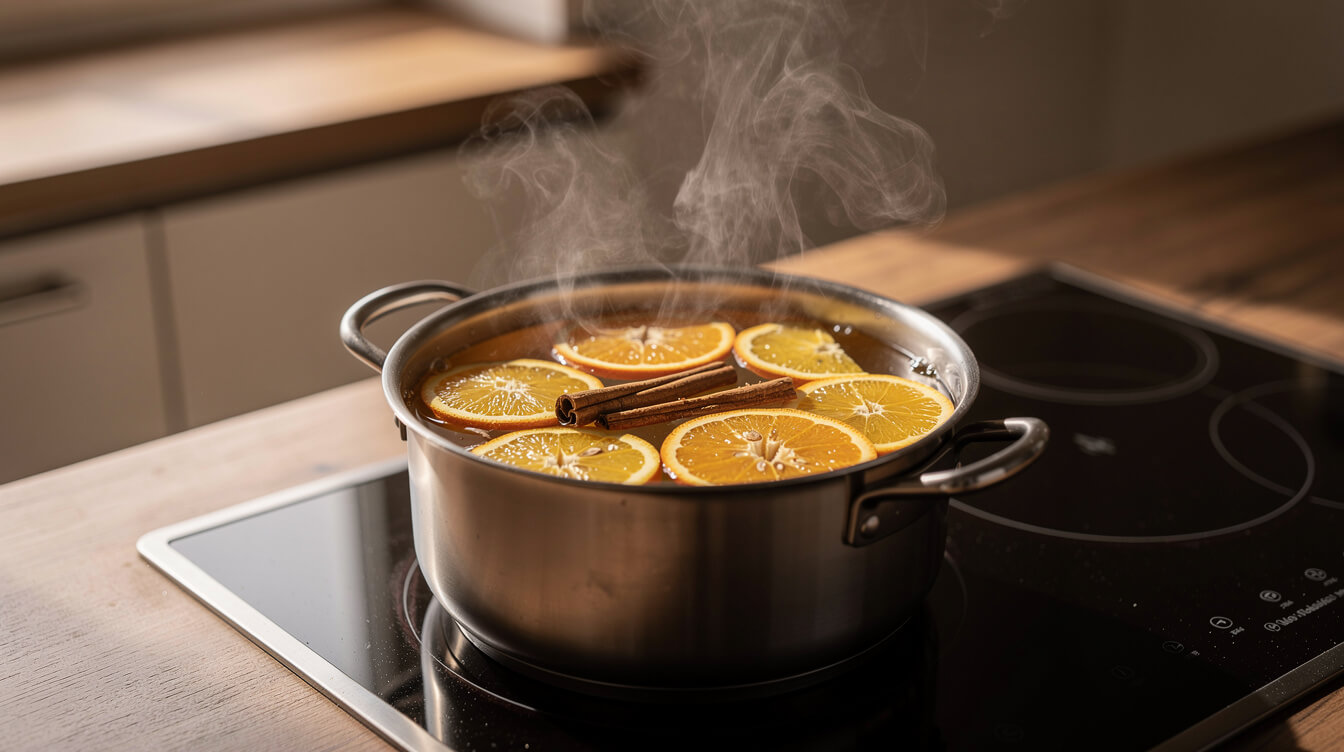
The other popular natural air freshener is heat-based: a simmer pot of citrus peel and cinnamon on the stove, or a warmed plug-in that melts a scented wick. Both smell cozy. Both also quietly rearrange the aroma you started with, because heat is hard on essential oil chemistry.
Aromas are built from notes. Top notes are the brightest, lightest molecules (think the fresh zing of citrus, largely a compound called limonene), and they are also the most volatile. Apply sustained heat and those top notes flash off first and fastest, while heat can also oxidize the oil. The result is a scent that shifts within the first half hour: the bright opening burns away and you are left with the heavier, duller base. The aroma after thirty minutes is simply not the aroma you smelled at the start.
A plug-in has the same issue with an added catch. It is warming a fragrance-loaded wick, and as we covered above, “fragrance” rarely means pure essential oil. So you get heat-altered scent built on an undisclosed blend. Reed diffusers sidestep the heat but trade it for a different fade: the oil climbs the reeds in a heavy carrier solvent, the throw is weak in anything larger than a small bathroom, and the reeds clog within weeks so the scent quietly tapers off. Every passive or heated method is fighting the same battle, just losing it in a different way. If you want clean indoor air as a broader goal, our guide to the best ways to keep the air in your home fresh covers the habits that matter more than any spray.
The takeaway is that the two most common natural methods both degrade scent: sprays through droplet size, heat methods through temperature. The fix for both is the same delivery principle, and it is worth understanding why. Our comparison of a nebulizing versus ultrasonic diffuser shows what changes when you stop using water and heat entirely.
Pure Essential Oil, Delivered by Nebulizing Diffusion
Join Now and Get a Coupon for 10% Off!
If sprays fail on droplet size and heat methods fail on temperature, the answer is a method that uses neither. That is nebulizing diffusion, and it is the most effective way we know to turn a pure essential oil into a natural air freshener that actually lasts.
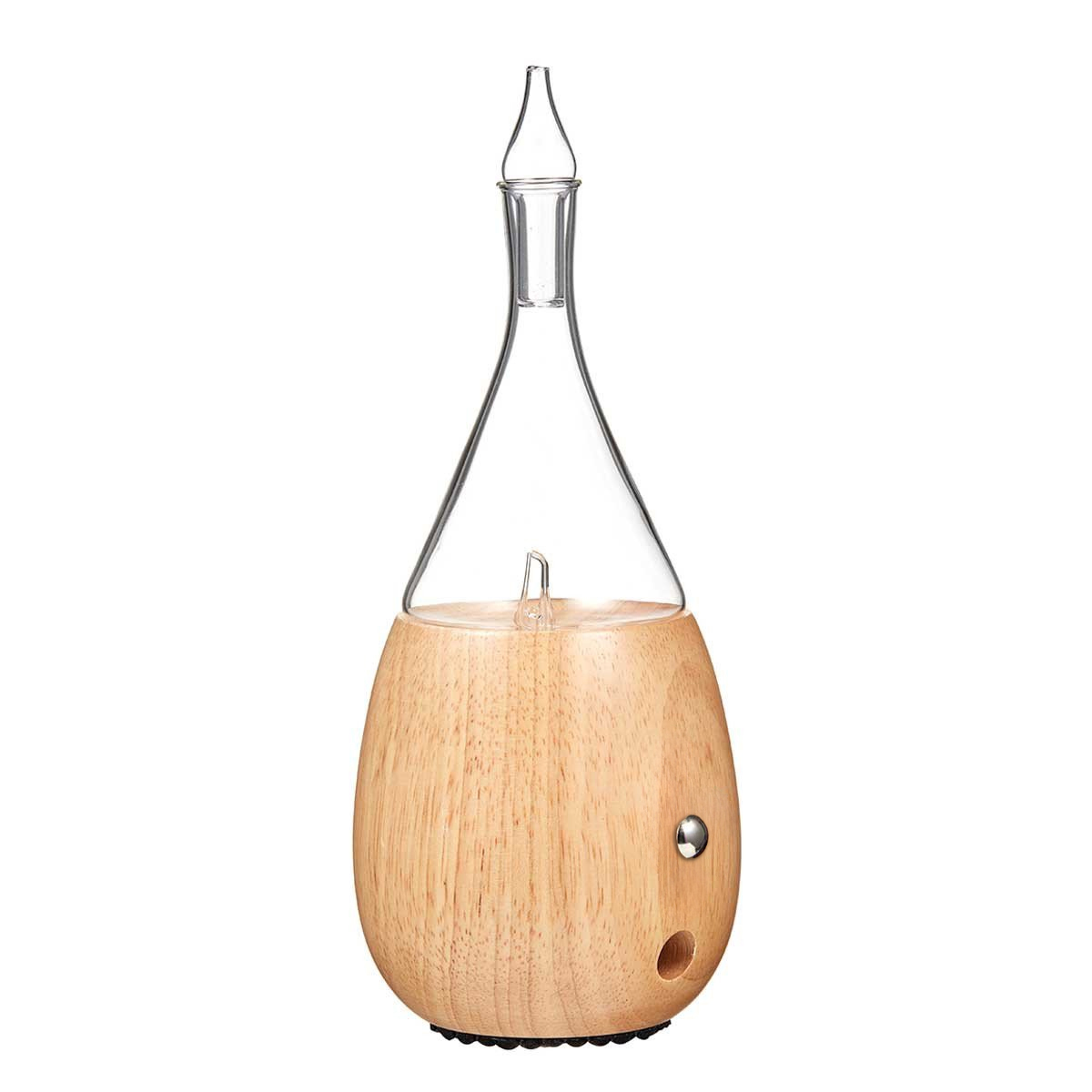
A Nebulizing Diffuser® works on Bernoulli’s principle. A stream of pressurized air moves quickly across the top of a small glass tube standing in the oil. Fast-moving air creates an area of low pressure, which draws the oil up the tube, where the air stream shears it into an extremely fine mist of micro-droplets. No water dilutes it. No heat alters it. The oil leaves the glass as pure aroma, and because the particles are so small, they stay suspended and spread through the room instead of falling to the floor. We break the mechanism down further in our explainer on how Bernoulli’s principle delivers pure essential oils.
Two things follow from that. First, the scent you smell is the true, full profile of the oil, top notes included, because nothing was heated away. Second, it lasts and travels, because micro-fine particles behave nothing like a coarse spray. That is exactly what a nebulizing diffuser like our Raindrop Smart Nebulizing Diffuser® is built to do: disperse undiluted oil evenly, then idle on a timed cycle so a few drops freshen a room for hours.
It is also the cleanest option by construction. There is no plastic cartridge, no fragrance wick, no water reservoir to grow stale. The oil never touches anything but glass and air. That is the whole point of a real natural air freshener: plant aroma, and nothing else.
Room-Freshening Blends That Actually Last
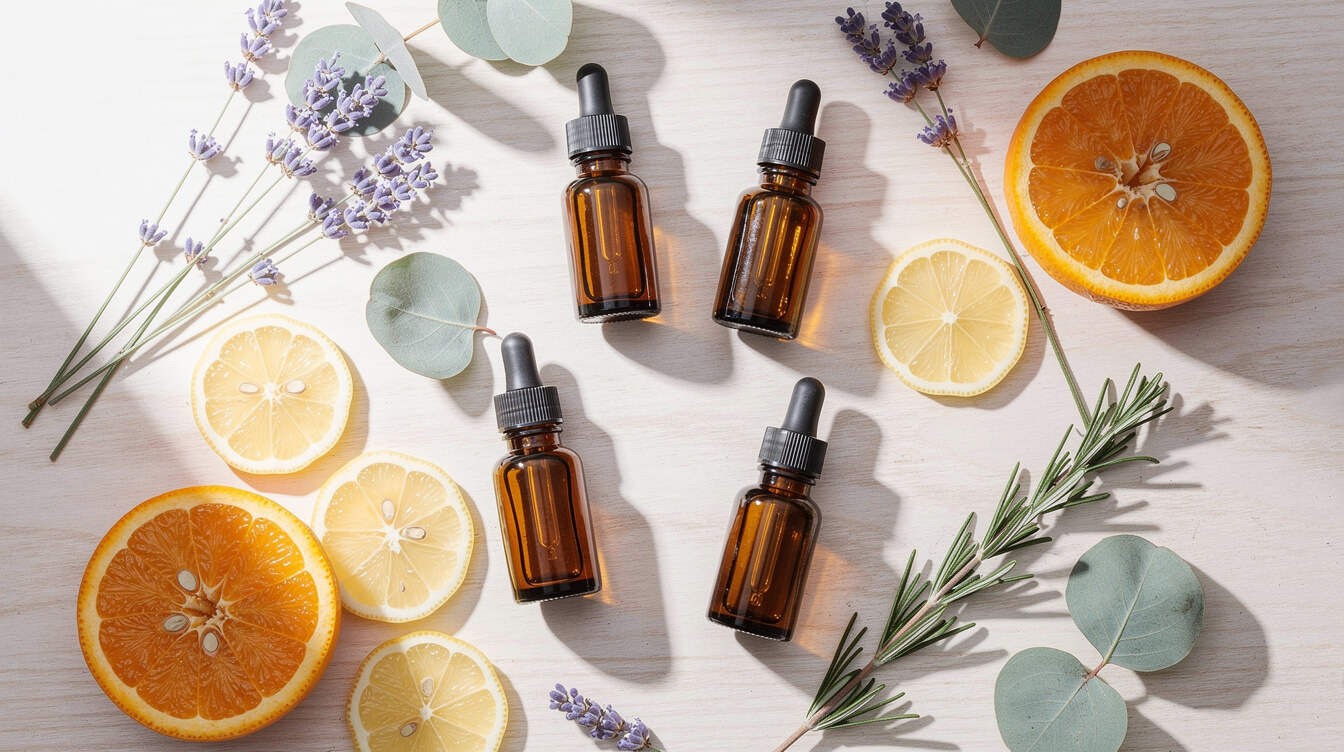
Across more than a decade of blending feedback from our customers, a clear pattern shows up for everyday room freshening. The blends people reach for again and again pair a bright top note for the instant lift you notice the moment you walk in, with a steadier middle note that holds the room after the opening settles. Citrus oils do the freshening; the supporting oil keeps it from vanishing.
Three customer-favorite combinations to load into your Nebulizing Diffuser®, by drops:
- Bright and Clean: 4 drops sweet orange, 3 drops lemon, 1 drop peppermint. The everyday “my house smells fresh” blend, ideal for kitchens and entryways.
- Fresh Garden: 3 drops bergamot, 2 drops rosemary, 2 drops lavender. Green and calm without being heavy, good for living rooms and home offices.
- Warm and Cozy: 4 drops sweet orange, 2 drops cedarwood, 1 drop clove. A cooler-weather blend that feels grounded rather than sweet.
A few rules that come straight from customer experience. Lead with citrus when you want immediate freshness, because top notes are what register first. Keep clove, peppermint, and other strong oils to a single drop, since they will dominate a blend fast. And remember that with pure oil and a fine mist, a little goes a long way: start with fewer drops than you expect to need. If you want to design your own blends with intention rather than guesswork, our note-frequency method for diffuser blends lays out how top, middle, and base notes fit together.
One more tip on freshness over time. Citrus oils are the brightest performers for an instant clean-smelling room, but they are also the first to oxidize once a bottle has been open for a while, which dulls their lift. Buy citrus oils in smaller bottles, store them cool and away from light, and use them within their best window. Because a nebulizing diffuser disperses oil straight from the bottle with no water to dilute it, the difference between a fresh, lively citrus oil and a tired one is something you will actually notice in the room.
A Natural Air Freshener That Holds Its Scent
The Raindrop Smart Nebulizing Diffuser® turns 100% pure essential oil into a fine, even mist. No water, no heat, no plastic-scented filler. Just clean botanical aroma that fills the room and lingers.
Honest Limits: What a Natural Air Freshener Can and Cannot Do

Join Our Exclusive Member Club to get Big Discounts!
A good natural air freshener makes a room smell genuinely pleasant using nothing but plant oils. That is a real, worthwhile thing. It is also worth being clear about the edges, because a lot of online guides overpromise.
Diffused essential oils are about scent and atmosphere, not disinfection. Despite claims you will read elsewhere, dispersing oil into a room does not sterilize your air or remove pathogens in any meaningful household way, and we are not going to pretend otherwise. Treat aroma as aroma. It sets a mood and freshens a space; that is the honest benefit.
Freshening also sits on top of odor, it does not erase the source. If a smell is coming from the trash, a damp corner, a litter box, or the fridge, scent layered over it only masks the problem briefly. Fix the source first, then freshen the clean room. And more is not better. A few drops fill a typical room; flooding the air just fatigues your nose until you stop noticing the scent at all. Finally, pure oils are potent, so keep pets in mind, since several oils are not suitable to diffuse around cats or dogs. Our overview of pure, non-toxic essential oils is a sensible starting point before you diffuse around the whole household.
Natural Air Freshener FAQ
What is the most natural air freshener you can use?
A single-botanical pure essential oil dispersed without water or heat. That keeps the aroma to one named plant with nothing synthetic added, and nebulizing diffusion releases it as pure mist rather than a heated or watered-down version.
Do natural air fresheners actually work?
Yes, for making a room smell fresh and pleasant. The reason so many feel like they “do not work” is that sprays and simmer methods lose their scent fast. Switch the delivery to a fine, waterless mist of pure oil from a Nebulizing Diffuser® and the same oils last far longer.
Why does my homemade air freshener fade so quickly?
Coarse spray droplets are heavy and fall out of the air within minutes, and water-based mists lose their scent as the water evaporates. A finer mist of undiluted oil stays airborne much longer, which is why a Nebulizing Diffuser® holds a room far better than a spray bottle.
How long does a natural air freshener last in a room?
A spray lasts minutes. A simmer pot lasts as long as it stays hot. A nebulizing diffuser running a few drops on a timed cycle can keep a room scented for hours, and you control the intensity with the cycle rather than by adding more oil.
Is it safe to run a natural air freshener every day?
For most households, diffusing pure essential oil in short, timed intervals is a gentle way to keep a room fresh day to day. The sensible habits are simple: use a few drops rather than flooding the air, run the diffuser in cycles rather than nonstop, give the space some ventilation, and check that the specific oils you choose are appropriate for any pets or sensitive family members in the home.
The Bottom Line on a Natural Air Freshener
A natural air freshener is only as honest as what is actually inside it and as good as how it is delivered. “Natural” on a label can hide synthetic fragrance, sprays fade because their droplets are too heavy to stay airborne, and heat methods burn off the brightest notes you bought the oil for. The version that holds up is the simplest one: a single pure botanical oil, no water, no heat, dispersed as a fine mist. Choose the oil you can name, freshen a clean room rather than a smelly one, and let a few drops do the work. That is a home that smells genuinely fresh, with nothing in the air you would not want there.