

Non-Toxic Essential Oils: How to Choose Pure, Safe Oils in 2026
If a label simply says “lavender” or “fragrance,” you have no idea what is actually inside the bottle. That gap is exactly why non toxic essential oils have become one of the most searched-for terms in natural wellness. Shoppers want the calming aroma of real plants without the synthetic fillers, undisclosed chemicals, and questionable sourcing that hide behind pretty packaging.
The good news: telling a pure oil from an adulterated one is a learnable skill. In this guide you will learn what “non-toxic” really means, the purity signals that separate honest brands from clever marketers, the red-flag ingredients to avoid, and how the way you diffuse an oil matters just as much as the oil itself. Everything here reflects what we have learned across 12+ years and 200,000+ customers at Organic Aromas.
What “Non-Toxic Essential Oils” Actually Means
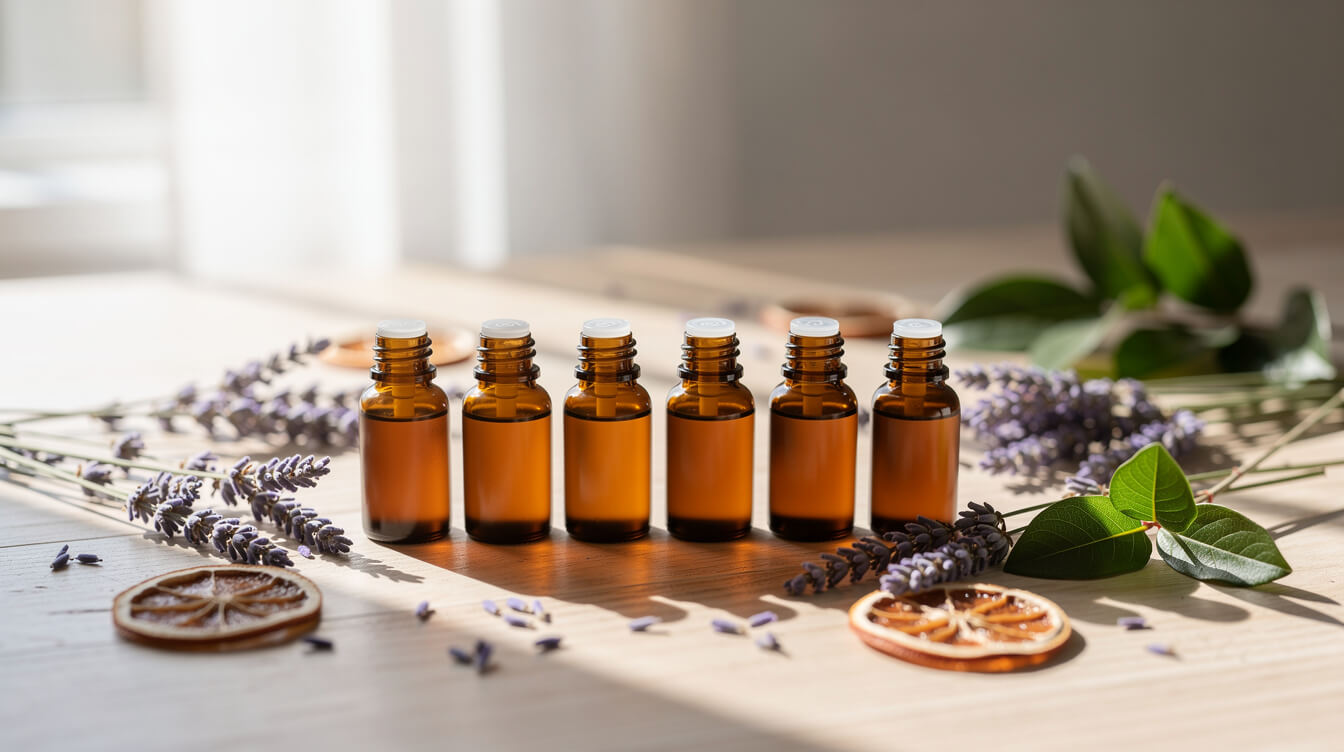
A true essential oil is the concentrated aromatic extract of a single plant, captured by steam distillation, cold-pressing, or supercritical CO2 extraction. When people search for non toxic essential oils, they are really asking for oils that are 100% pure, single-species, and free of synthetic additives. Nothing diluted in, nothing sprayed on, nothing hidden.
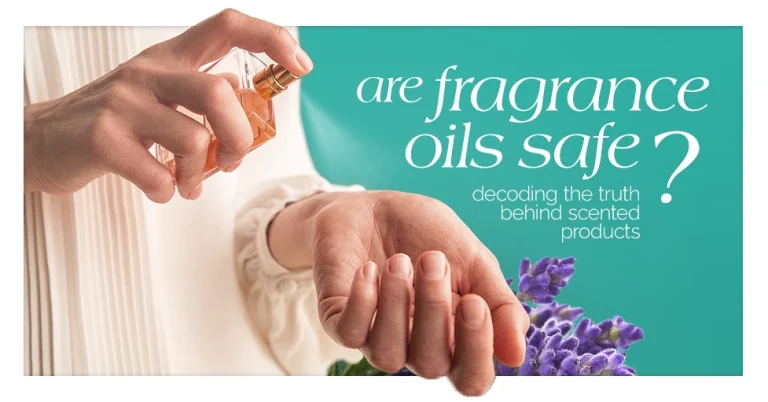
Here is the jewel most articles skip. Under United States labeling law, the words “fragrance” and “parfum” can legally conceal dozens of undisclosed ingredients, because the FDA treats fragrance formulas as protected trade secrets. That single loophole is why a “lavender” room spray and a bottle of pure Lavandula angustifolia are not remotely the same product. One can hide aroma chemicals and fixatives you never agreed to inhale. The other is just the plant.
“Non-toxic” is therefore less about a magic certification and more about transparency you can verify: a named plant species, a disclosed country of origin, a stated extraction method, and lab testing you can actually read. If you want the wider picture first, our complete guide to essential oils for aromatherapy covers the fundamentals.
It also helps to know how an oil turns “toxic” in the first place. There are really only three routes: it was adulterated with synthetic or diluting agents, it was contaminated by pesticides or solvents during farming and extraction, or a once-pure oil oxidized in heat and light until its chemistry shifted. The first two are about who made the oil; the third is about how you store and use it. We will tackle all three.
6 Purity Signals That Reveal Non Toxic Essential Oils
Marketing words like “therapeutic grade” and “pure” are not regulated, so anyone can print them. Skip the slogans and check these six verifiable signals instead.
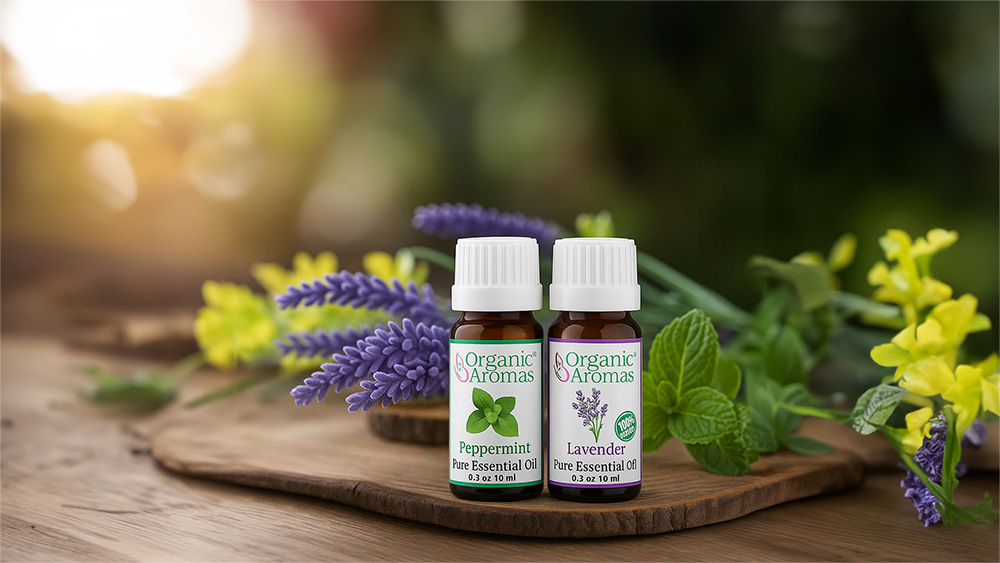
- The Latin botanical name. A pure oil lists its species, such as Mentha piperita for peppermint or Lavandula angustifolia for true lavender. A vague “lavender oil” with no species is a warning sign.
- Country of origin. Honest brands tell you where the plant was grown, because terroir changes an oil’s chemistry.
- Extraction method. Steam-distilled, cold-pressed (citrus peels), or CO2-extracted are the cleanest routes. Solvent-extracted “absolutes” can carry trace hexane and are best avoided if purity is your goal.
- Batch-specific GC/MS testing. Gas chromatography-mass spectrometry separates an oil into its individual chemical constituents. A trustworthy brand publishes a current, batch-matched GC/MS report, not a generic one.
- Packaging. Pure oils ship in amber or cobalt glass, never plastic, because concentrated oils degrade plastic over time.
- A sensible price spread. Rose and sandalwood priced the same as sweet orange is chemically impossible. Suspiciously uniform pricing usually means dilution.
Run a candidate oil through all six and the truth surfaces fast. Brands that pass tend to pass on every line; brands that fail usually fail on several at once. Of the six, the GC/MS report does the heaviest lifting, because it is the only signal a marketer cannot fake with clever wording. The report names each compound and its percentage, so a “lavender” that shows an unnatural spike in synthetic linalool, or a citrus oil padded with odorless filler, has nowhere to hide.
Sign Up to Get Your FREE
e-Book Here…
Toxic Red Flags: Adulterants and Synthetic Fillers to Avoid
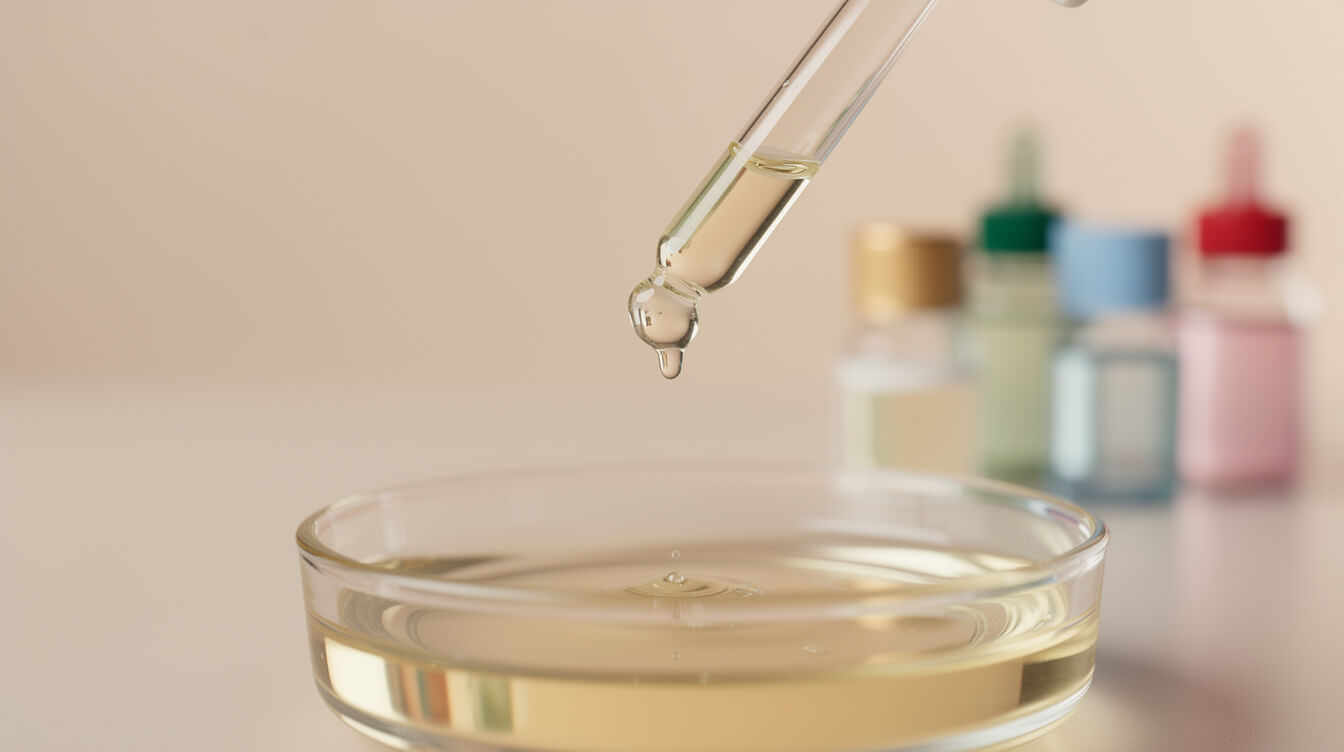
Adulteration is the quiet problem behind most “toxic” oil complaints. An oil can start pure and still be cut, stretched, or boosted before it reaches the shelf. These are the most common offenders.
- Synthetic “nature-identical” aroma chemicals. Lab-made linalool or linalyl acetate stretched into real lavender to boost yield and lower cost.
- Carrier dilution without disclosure. Odorless vegetable oil or propylene glycol added so a little oil goes a long way, sold at full-oil prices.
- Phthalate fixatives. Compounds such as diethyl phthalate (DEP) are sometimes used in fragranced products to make scent linger. They belong nowhere near a “pure” essential oil.
- “Fragrance oil” mislabeled as essential oil. Fragrance oils are synthetic scent blends. They are not essential oils, no matter how botanical the label looks.
A simple at-home check: place one drop of oil on plain paper and let it dry. A genuine essential oil (heavier base notes aside) typically evaporates without leaving a greasy, lasting ring. A noticeable oily stain can hint at carrier dilution. It is not a lab test, but it is a useful first filter while you wait on the GC/MS report. This is also why understanding how concentrated oils behave matters for safe handling.
Certifications and Sourcing: What “Organic” Really Means
Certifications are helpful shorthand, but only if you know what each one actually verifies. Here is how the common ones stack up for non toxic essential oils.
- USDA Organic / EU Organic. Confirms the plant was grown without synthetic pesticides or fertilizers. It speaks to farming, not to whether the finished oil was later diluted, so pair it with GC/MS data.
- Third-party GC/MS verification. The single most useful proof of purity, because it analyzes the actual oil in the bottle rather than the field it came from.
- Cruelty-free and sustainable-harvest claims. Important ethically, especially for at-risk species like sandalwood and rosewood, though not a direct purity measure.
The strongest signal is overlap: an organic-certified plant and a published batch GC/MS report. One without the other leaves a gap. Be wary of “greenwashing,” where a brand borrows the look and language of organic without any verifiable testing behind it.
Join Now and Get a Coupon for 10% Off!
The Diffusion Factor: Keeping Non-Toxic Oils Non-Toxic in the Air
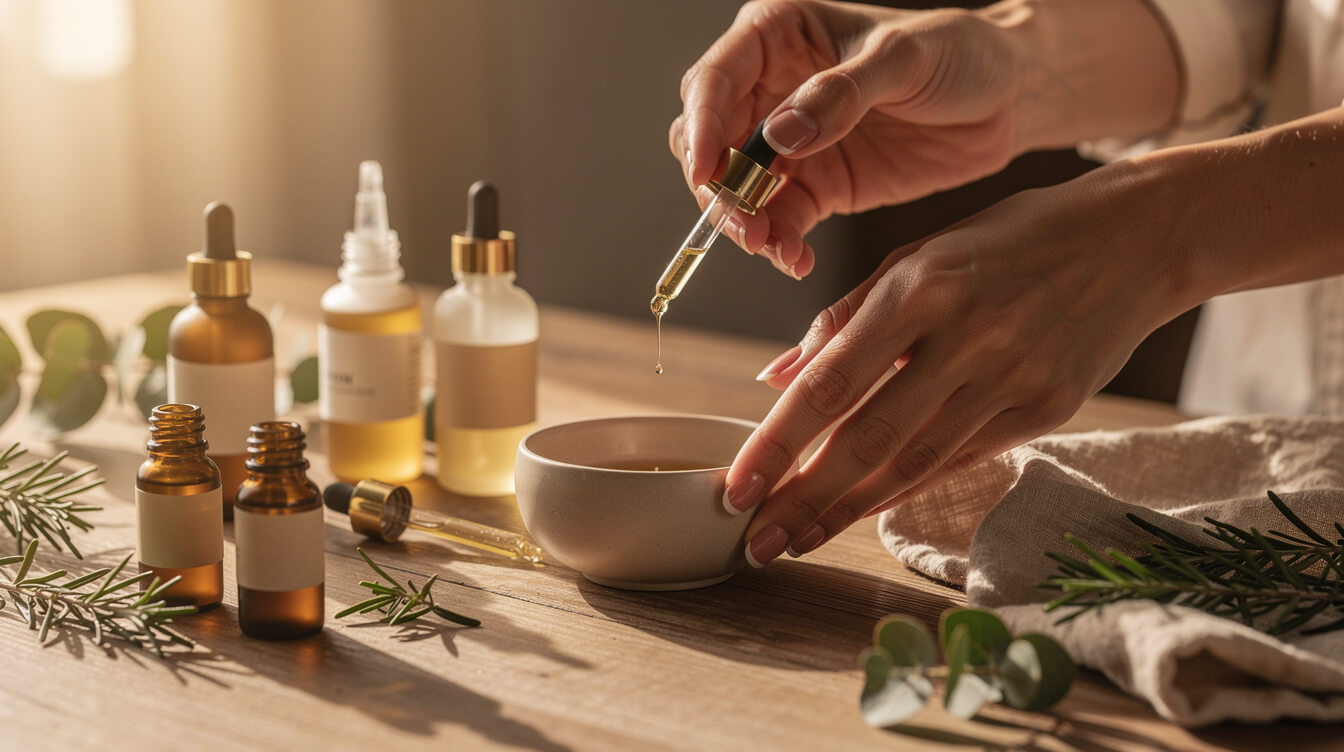
Here is the step almost every other guide forgets. You can buy the purest oil on earth and still compromise it the moment you diffuse it. The delivery method matters as much as the bottle.
Most popular devices change the oil before it reaches you. Ultrasonic units dilute oils in tap water and disperse them as a wet mist, so you are breathing whatever is in your water along with the aroma. Heat-based burners and plug-ins warm the oil, which can alter its delicate chemistry. Many of these devices also run the oil through plastic, and concentrated oils slowly break plastic down.
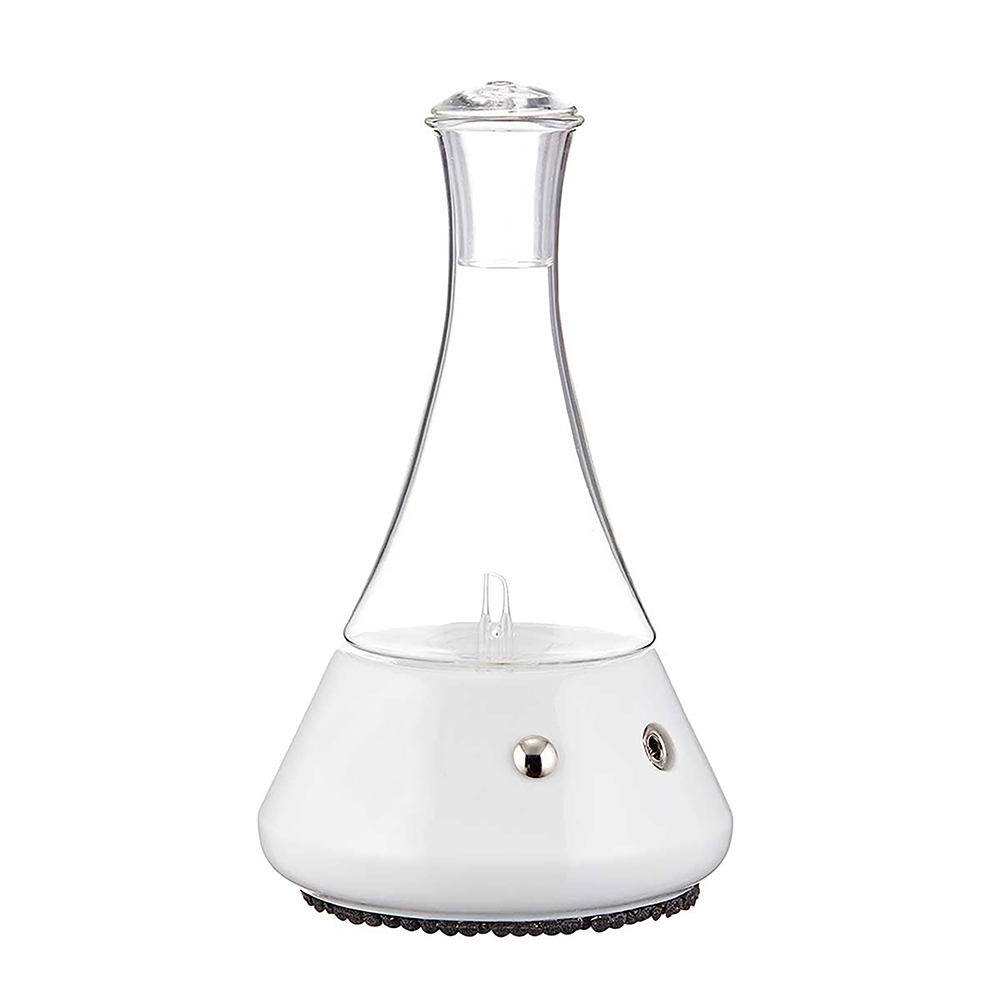
A Nebulizing Diffuser® works differently. Using Bernoulli’s Principle, a stream of air atomizes pure, undiluted oil into a dry, micro-fine mist. No water, no heat, and an oil path made of medical-grade Pyrex glass and real wood rather than plastic. The result: a non-toxic oil stays exactly that, from the bottle to the air in the room. If you are weighing your options, our look at spa-style aromatherapy at home shows why dispersion quality is worth getting right.
For a pure, app-controlled experience, the Opulence Smart Nebulizing Diffuser® delivers undiluted oil with zero water or heat, so the only thing in your air is the plant itself.
Diffuse Pure Oils the Way Nature Intended
The Smart Nebulizing Diffuser® disperses pure, undiluted essential oils with no water, no heat, and no plastic touching your oil. Handcrafted from real wood and medical-grade Pyrex glass, it keeps a non-toxic oil non-toxic from the bottle to the air you breathe.
Safe Usage: Dilution, Carrier Oils, Pets, and Storage
Pure and non-toxic still means concentrated, so a few habits keep your oils both safe and effective.
Dilution and carrier oils
For topical use, dilute. A 2% dilution (about 12 drops of essential oil per 30 ml / 1 oz of carrier oil such as jojoba or fractionated coconut) suits most adults, while a gentler 1% (about 6 drops per 30 ml) is better for sensitive skin and older adults. Our essential oil dilution chart and ratios walks through every common case.
Pets and ventilation
Animals process aromatic compounds differently than people do. Cats, for example, lack certain liver enzymes that help break down some oil constituents, so always diffuse in a well-ventilated, open space your pet can leave, and check with your veterinarian first. Our guide to essential oil safety around pets covers which oils to keep well away.
Storage
Keep oils in their amber or cobalt glass bottles, tightly capped, in a cool, dark place away from sunlight and heat. Citrus oils oxidize fastest and are generally best used within about a year, while many woods and resins last far longer. Proper storage is the cheapest purity insurance you have.
Simple Non-Toxic Aromatherapy Blends to Try at Home
Once you trust your oils, blending is where the joy begins. Diffuse these in a Nebulizing Diffuser® for a clean, water-free aroma. (Drop counts are a starting point; adjust to taste.)
- Calm Evening: 3 drops lavender (Lavandula angustifolia) + 2 drops sweet orange + 1 drop cedarwood. See more in our notes on essential oils for restful sleep.
- Morning Clarity: 3 drops peppermint + 2 drops lemon + 1 drop rosemary.
- Fresh Home: 2 drops eucalyptus + 2 drops lemon + 2 drops tea tree, a clean alternative to synthetic air fresheners.
- Cozy Comfort: 2 drops bergamot + 2 drops frankincense + 1 drop vanilla CO2.
Because each oil is pure and single-species, you control exactly what goes into the air, which is the entire point of choosing non toxic essential oils in the first place.

Join Our Exclusive Member Club to get Big Discounts!
Frequently Asked Questions About Non Toxic Essential Oils
How do I know if an essential oil is non-toxic?
Check for a Latin botanical name, a stated country of origin, an extraction method, glass packaging, and a current batch-specific GC/MS report. An oil that is transparent on all of these is almost always pure.
Are organic essential oils automatically non-toxic?
Organic certification confirms how the plant was grown, not whether the finished oil was later diluted or blended. The safest choice pairs organic sourcing with third-party GC/MS testing.
Which non-toxic essential oils are best for a diffuser?
Lavender, sweet orange, lemon, peppermint, eucalyptus, and frankincense are popular, well-tolerated choices. Diffuse pure, undiluted oil in a Nebulizing Diffuser® so no water or heat alters the aroma.
Are non-toxic essential oils safe around pets?
Use caution. Some oils are risky for cats and dogs, so diffuse only in ventilated spaces your pet can leave and consult your veterinarian. Our pet safety guide lists which oils to avoid entirely.
Why does the way I diffuse matter for non-toxic oils?
Water-based ultrasonic and heat-based diffusers can dilute or chemically alter your oil before you breathe it. A Nebulizing Diffuser® disperses pure oil with no water and no heat, preserving its integrity.
Is “therapeutic grade” a guarantee of purity?
No. “Therapeutic grade” is a marketing phrase with no governing body or standard behind it, so any company can use it. Rely on the six verifiable purity signals, especially a batch-matched GC/MS report, rather than unregulated label language.
Final Thoughts
Choosing non toxic essential oils comes down to one habit: trust verification over marketing. Read the species, the origin, the extraction method, and the GC/MS report, avoid the synthetic red flags, and then protect that purity by diffusing without water, heat, or plastic. Do that, and every breath is exactly what nature distilled, and nothing else.