

Essential Oil Diffuser vs Candle: The Combustion Chemistry and the Honest Verdict
When you want a room to smell like calm, you reach for one of two things: a flame or a fine mist. The essential oil diffuser vs candle question looks like a matter of taste, but underneath the cozy glow there is a real difference in chemistry, in what reaches your air, and in what you actually get for your money. This guide goes past the usual “candles are pretty, diffusers are healthy” summary and into the part most articles skip: what happens at the wick, why heat is the deciding factor, and where each option genuinely earns its place.
We have spent more than twelve years listening to how people scent their homes, and the pattern is consistent. Most folks love the ritual of a candle but quietly wish the scent lasted, traveled further, and did not leave a sooty film on the ceiling. So let us settle the comparison honestly, including the moments when a candle is still the right call.
Essential Oil Diffuser vs Candle: The Real Difference Is Heat
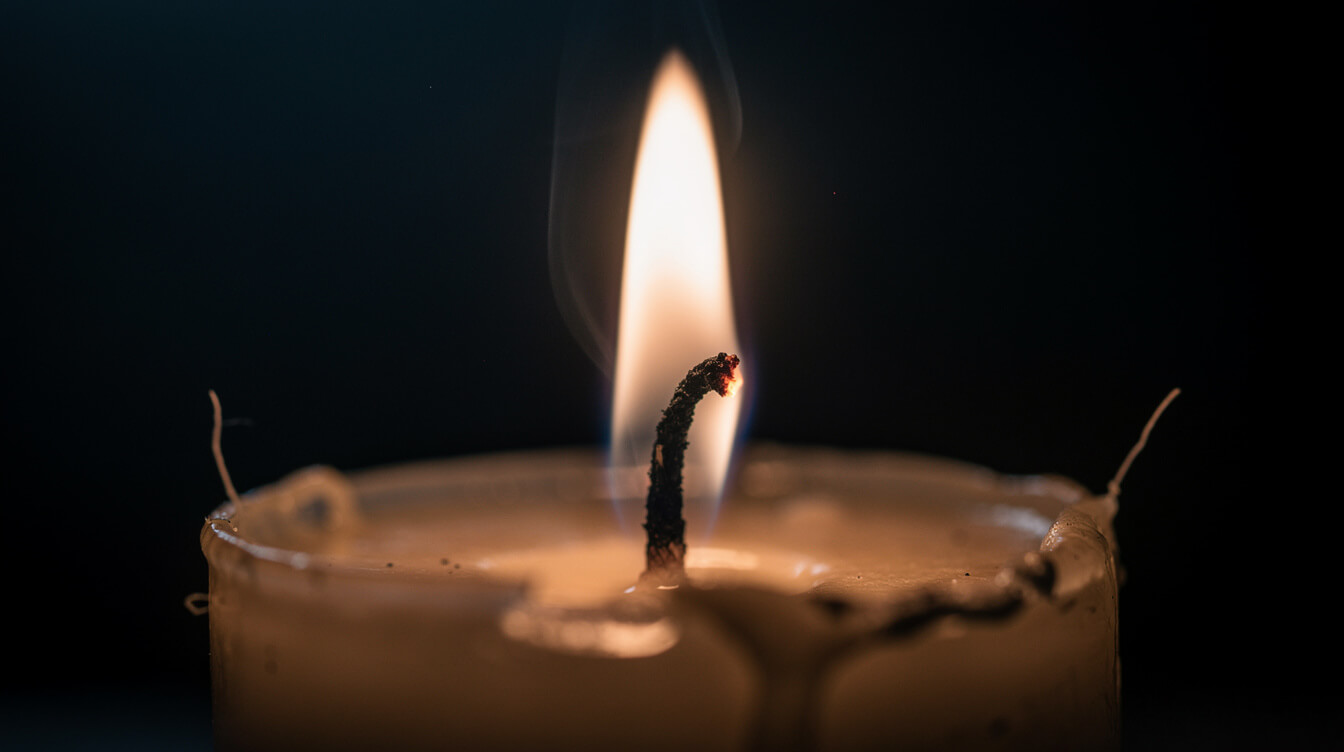
Strip away the marketing and every scent device falls into one of two camps: it either burns or heats a scent into the air, or it moves a scent into the air without heat. That single distinction drives almost everything else in this comparison.
A candle works by combustion. The flame at the wick burns hot, commonly cited in the range of 1,000 degrees Celsius, drawing up melted wax and fragrance and turning them into vapor, soot, and combustion gases. A scented candle is, by design, a small open fire releasing whatever was added to the wax.
Diffusers split into three very different methods, and lumping them together is where most buyer guides go wrong:
- Heat or warmer diffusers sit a dish of oil over a tea light or electric plate. Like a candle, they cook the oil.
- Ultrasonic diffusers drop a few drops of oil into a reservoir of water and vibrate it into a cool mist. No heat, but the oil is heavily diluted in water before it ever reaches you.
- Nebulizing Diffusers® use a pressurized stream of air to atomize pure, undiluted essential oil into a fine aromatic cloud. No water, no heat, nothing added.
That last method is the one Organic Aromas pioneered, and it is the cleanest answer to the heat problem. If the mechanism is new to you, our explainer on how Bernoulli’s Principle delivers pure oil without heat or water walks through the physics. For the comparison ahead, hold on to one idea: heat changes a scent, and a flame changes it most of all.
What Actually Burns in a Scented Candle
Candlelight feels natural, so it is easy to forget a candle is a combustion appliance. What it puts into your air depends almost entirely on what it is made of, and most mass market candles are made of the cheapest available materials.
Paraffin, fragrance, and the wick
The most common candle wax is paraffin, a byproduct of petroleum refining. When paraffin burns it can release volatile organic compounds. A frequently cited 2009 study from South Carolina State University reported that paraffin based candles gave off measurable toluene and benzene, while the vegetable based candles tested did not to the same degree. That research is not a verdict on every candle ever made, but it points at a real variable: the wax matters.
Then there is the scent itself. A great deal of candle fragrance is synthetic, and synthetic fragrance can carry phthalates used to make the aroma last and additional compounds you will never see on the label, since “fragrance” is a legal catch all. We dig into that loophole in our look at whether fragrance oils are safe. The wick deserves a glance too. Lead core wicks were banned in the United States in 2003, but inexpensive imported candles still occasionally turn up with metal cored wicks.
Soot, particles, and that gray film
Burning anything produces fine particles. Scented candles can release particulate matter small enough to stay airborne, along with soot that is responsible for the gray “ghosting” many people notice on walls, ceilings, and lampshades above a favorite candle spot. None of this means you must throw your candles away. It does mean the romantic notion that a candle is a “clean” way to scent a room deserves a second look. We unpack the health angle further in are scented candles harmful to my health.
How much is actually in the air
Indoor air studies have repeatedly measured that lighting candles pushes fine particulate matter, the PM2.5 fraction small enough to stay suspended and be inhaled, well above a room’s pre burn baseline, with the sharpest spikes coming from long untrimmed wicks and stuffy, unventilated spaces. Those particles are the product of incomplete combustion, the same process that leaves the gray ghosting film on your walls and lampshades. A no heat method adds none of it, because nothing is being burned. To be fair about it: an occasional candle in an aired room is not a crisis, but the tidy belief that a flame is a clean way to freshen a space does not survive contact with a particle counter.
Sign Up to Get Your FREE
e-Book Here…
The Essential Oil Candle Paradox: You Are Burning the Benefit
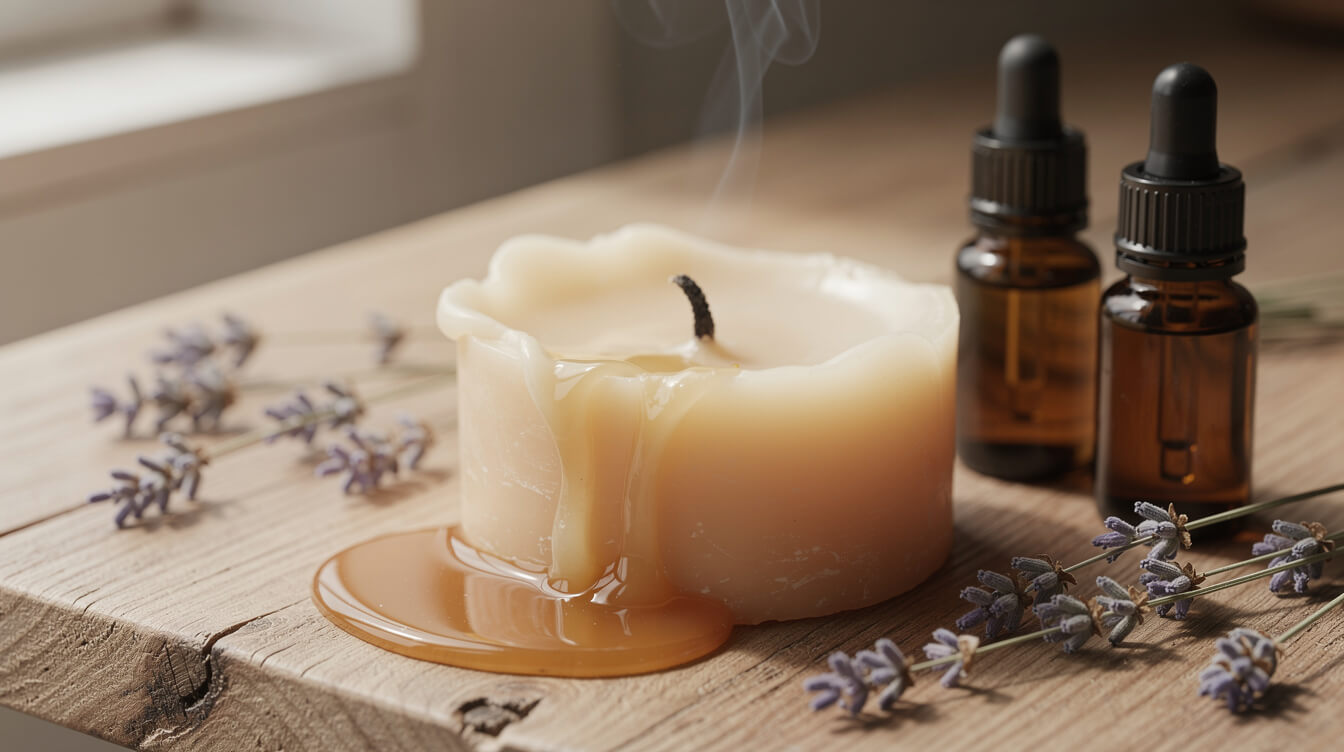
Here is the jewel most comparisons miss entirely. Many shoppers try to split the difference by buying an “essential oil candle,” assuming they get candle ambiance plus aromatherapy. The chemistry does not cooperate.
The aromatic value of an essential oil lives in its volatile compounds: molecules like linalool in lavender, limonene in citrus, or menthol in peppermint. These compounds are delicate. They evaporate and begin to break down at modest temperatures, far below the heat of a flame. A wick burning near 1,000 degrees Celsius does not gently warm those molecules into the air. It pyrolyzes them, breaking them apart before they can do the very thing you bought them to do.
The numbers make the mismatch vivid. Many of the aromatic constituents in essential oils carry flash points in the range of roughly 40 to 70 degrees Celsius, the temperature at which their vapors begin to ignite, and they start oxidizing and evaporating well below that. A candle flame sits near 1,000 degrees Celsius at its base and can top 1,400 degrees Celsius at the hottest part of the tip, something like twenty times hotter than those molecules can tolerate. Nothing gentle happens at a wick. The oil is thrown straight past evaporation into breakdown.
In other words, an essential oil candle spends most of its oil fighting the flame. A portion flashes off as scent, but much of the delicate chemistry is destroyed in combustion, and what reaches you is a thinner, heat altered version of the oil. You pay a premium for pure botanicals and then set fire to them. This is also why we keep steering readers toward choosing essential oils instead of candles with artificial scents when the goal is genuine aromatherapy rather than ambiance alone.
A no heat method sidesteps the paradox completely. When pure oil is atomized at room temperature, the linalool stays linalool. The full aromatic profile of the plant reaches your air intact, which is exactly the point of using real essential oils in the first place.
How a Nebulizing Diffuser® Delivers Pure Oil Without Heat
If heat is the problem, the solution is to move oil into the air using air itself. A Nebulizing Diffuser® does precisely that. A small pump sends a focused stream of air across the top of a glass reservoir of undiluted essential oil. Following Bernoulli’s Principle, that fast moving air creates a drop in pressure that pulls oil up a narrow tube and shatters it into a mist of microscopic droplets, often in the one to three micron range. Those droplets are light enough to hang in the air and travel across a room.
Because there is no water, the oil is never diluted. Because there is no heat, the chemistry is never cooked. You get the pure plant, dispersed and intact, in concentrations a water based mist cannot match. That is also why nebulizing scent travels so well and why a little oil goes a long way. If you have ever wondered why a diffuser’s scent can fade, the answer usually comes down to method and oil quality rather than the room.
Our handcrafted units pair real wood bases with medical grade Pyrex glass, with no plastic in the oil path. The wireless, app controlled Raindrop Smart Nebulizing Diffuser® runs in short intermittent cycles so a few drops scent a large space for hours, and you can shape the whole Nebulizing Diffuser® collection around the room you want to transform. For help choosing between models and what app control actually changes, see our smart diffuser buyer’s guide.
Join Now and Get a Coupon for 10% Off!
Scent Throw, Cost, and Cleanup, Side by Side

Mechanism aside, daily life comes down to practical questions: how far does the scent travel, what does it cost over time, and what do you clean up afterward. Here is an honest side by side.
| Factor | Scented candle | Nebulizing Diffuser® |
|---|---|---|
| Scent method | Open flame, combustion | Pressurized air, no heat |
| What reaches your air | Wax, soot, fragrance, combustion gases | Pure undiluted essential oil |
| Scent throw | Strong up close, fades with distance | Disperses evenly across a room |
| Oil chemistry | Heat altered at the wick | Intact, room temperature |
| Run cost | Consumed every burn, repurchased | One device, a few drops per session |
| Cleanup | Soot, wax drips, wall ghosting | Wipe the glass with alcohol now and then |
| Safety | Live flame, hot wax | No flame, auto shutoff cycles |
On cost, a candle is a consumable. A typical scented candle burns for roughly forty to sixty hours and then it is gone, so the spending never stops. A Nebulizing Diffuser® is a one time purchase that sips pure oil in short cycles, which is why heavy candle users are often surprised how the math shifts over a year. On cleanup, the contrast is just as clear: there is no soot to scrub and no wax to dig out, only the occasional glass rinse. And if your real goal is erasing odors rather than layering scent, a flame does little, while pure oil is a genuine tool, as we cover in removing the smell of smoke with essential oils.
The Flame Factor: The Safety Gap Between a Fire and a Fine Mist
A comparison that stops at scent skips the most concrete difference of all: one of these devices is an open flame and the other is not. The National Fire Protection Association has attributed an average of roughly 7,400 US home structure fires a year to candles in recent reporting, with the risk concentrated in December and heavily tied to candles left burning unattended, fallen asleep beside, or set too close to something that can catch. Almost all of it traces back to the same root cause, a live fire sitting in a living space.
A Nebulizing Diffuser® takes the flame out of the equation entirely. There is no wick to tip over, no pool of hot wax to spill, no ember to forget on your way to bed. Our units run in short intermittent cycles and then rest, so they are built to keep working in a bedroom, a nursery corner, a yoga room, or an office without the constant vigilance an open candle demands. It is a big part of why spas and studios that scent client spaces all day reach for flameless diffusion, as we explain in our smart diffuser buyer’s guide: it scents continuously without ever asking anyone to babysit a fire.
When a Candle Still Wins
We are not here to tell you to throw away every candle. A flame does things a mist cannot, and honesty matters more than selling you a single answer.
- A candle gives you living firelight. If the flicker itself is the point, for a dinner table or a quiet bath, nothing electric replaces it.
- A candle needs no power. During an outage or off grid, a beeswax or soy candle is light and scent in one.
- A candle is a low commitment gift or seasonal accent when you simply want a quick, temporary touch of fragrance.
If you do burn candles, you can stack the deck in your favor. Choose beeswax or clean soy over paraffin, look for cotton or wood wicks rather than metal cored ones, favor candles scented with real essential oils, keep the wick trimmed to reduce soot, and ventilate the room. None of that turns a flame into a no heat device, but it meaningfully lowers what you are breathing.
The most sensible homes we see do not pick a side at all. They keep a candle for the nights when the flame is the mood, and they run a waterless Nebulizing Diffuser® for the everyday work of filling a room with pure, lasting aroma. The flame is the occasion. The diffuser is the habit.

Join Our Exclusive Member Club to get Big Discounts!
Frequently Asked Questions
Is an essential oil diffuser better than a candle?
For everyday, lasting scent and for genuine aromatherapy, a no heat Nebulizing Diffuser® has the edge, because it disperses pure undiluted oil across a room without flame, soot, or heat altered chemistry. A candle still wins when you specifically want living firelight or a power free option.
Are essential oil candles a good compromise?
Less than you would hope. The flame burns hot enough to break down the delicate aromatic compounds in the oil, so much of what you paid for is destroyed in combustion. You get ambiance, but a thinner, heat altered scent rather than the intact plant chemistry.
Does a diffuser make a room smell as strong as a candle?
A nebulizing diffuser often smells stronger across the whole room, not just beside it, because it atomizes concentrated pure oil rather than relying on a flame to throw scent a short distance. A water based ultrasonic mist is gentler, since the oil is diluted.
Is it safe to leave a diffuser running?
A Nebulizing Diffuser® runs in short intermittent cycles and uses no flame and no hot surface, so it avoids the fire and burn risks of an open candle. As with anything, run it in a ventilated space and follow the product guidance for your model.
Which is more cost effective over time?
A candle is consumed with every burn and must be repurchased, while a diffuser is a one time device that uses only a few drops of oil per session. For people who scent their homes daily, the diffuser usually becomes the cheaper habit within the first year.
Are diffusers or candles better for indoor air quality?
A no heat Nebulizing Diffuser® adds only atomized pure essential oil to the air and burns nothing, so it produces no soot, smoke, or combustion particulate. A candle, by contrast, adds fine particles and combustion gases along with its scent. If keeping added particulate out of your air is the priority, flameless diffusion is the cleaner method, and ventilation helps either way.
How much oil does a nebulizing diffuser actually use?
Only a few drops per session. Because the oil is atomized undiluted and dispersed in short intermittent cycles rather than burned continuously, a small amount scents a large room for hours. That efficiency is the quiet reason the running cost tends to land below a daily candle habit over the course of a year.
The Verdict
The essential oil diffuser vs candle choice is really a choice about heat. A candle is a small fire that burns its scent, soot and all, and cooks away the very compounds that make essential oils worth using. A Nebulizing Diffuser® moves pure, undiluted oil into your air at room temperature, intact and even, with no flame to watch and no wax to scrub. Keep a candle for the nights you want the flicker. For the daily ritual of a home that smells alive and clean, let the air do the work.
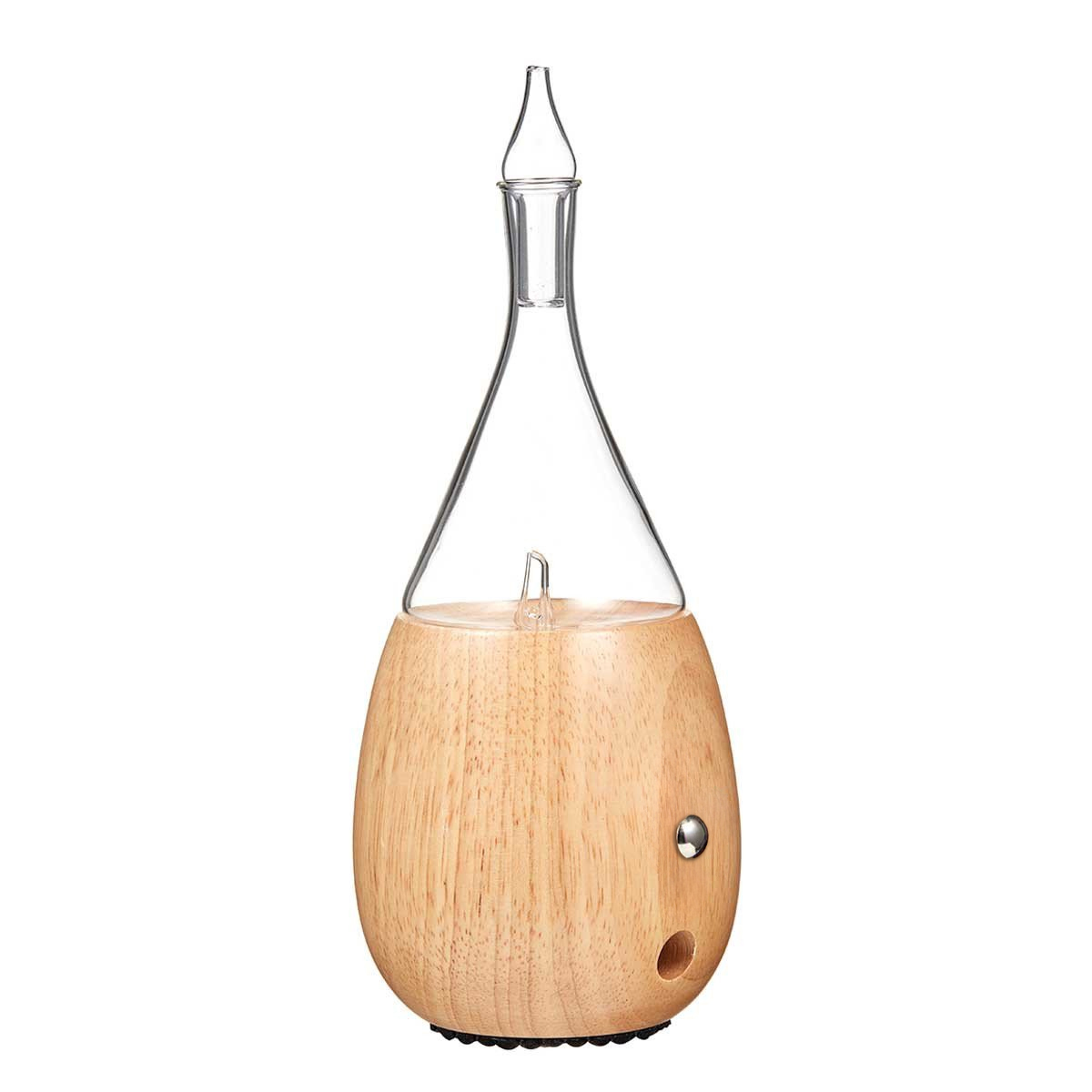
Scent Your Home Without the Flame
Handcrafted real wood and medical grade Pyrex glass. No water, no heat, no plastic in the oil path. Pure undiluted aromatherapy, dispersed across the whole room.