


How to Remove Cigarette Smoke Smell with Essential Oils (2026 Guide)
If you have ever walked into a room a week after a fire, a party, or a heavy smoker’s visit and felt that flat, stale heaviness settle on the back of your throat, you already know the problem. Learning how to remove cigarette smoke smell with essential oils is one of the most practical, non-toxic skills you can add to your home-care routine, but most of the advice online stops at “add a few drops of lemon and diffuse.” That works, sometimes, for a little while. This guide goes deeper: what smoke odor actually is, why certain oils genuinely break it down instead of covering it up, and exactly how to treat the air, your fabrics, and your car so the smell does not creep back the next morning.
We have pulled the practical recommendations here from twelve years of customer feedback across more than 200,000 Organic Aromas users, plus the basic chemistry of combustion residue that the typical SERP article skips entirely. With wildfire smoke drifting into more homes each summer and indoor air quality front of mind in 2026, these methods matter more than ever. The goal is simple. By the end you should be able to walk into a smoky room and know, step by step, how to make it smell clean again.
Why the Smell of Smoke Clings So Stubbornly

As of late 2026, cigarette smoke is still the single most common smoke-odor complaint we hear from customers — more than wildfire smoke, fireplace smoke, or cooking smoke combined. That is because cigarette smoke is not a single smell. It is a cloud of tiny, sticky, semi-volatile particles: tar, nicotine, resins, and acidic combustion byproducts that ride on microscopic droplets of oil. When that cloud cools, those droplets land on every surface they touch and bond to it. They settle into the weave of your curtains, the foam inside your couch cushions, the headliner of your car, and the paint on your walls. This sticky residue is the real culprit, and it is why an open window alone never quite finishes the job.
Researchers call this lingering layer thirdhand smoke. Long after the visible haze is gone, that film slowly releases odor molecules back into the air, and it can even react with everyday indoor pollutants to form brand-new compounds. In one widely cited 2010 study published in the Proceedings of the National Academy of Sciences, researchers found that nicotine coating indoor surfaces reacts with ordinary airborne nitrous acid to generate fresh tobacco-related compounds hours after the cigarette is out, which is precisely why a room can smell smoky again the morning after you were sure you had cleared it. In plain terms, the wall is now a slow-motion smoke machine. This is the single most important idea in odor removal and the one most quick fixes ignore: if you only treat the air, the surfaces keep re-supplying the smell. You have to do both.
It also explains why a scented candle or a plug-in air freshener feels like a failure within hours. They add a second smell on top of the first. The tar film underneath is untouched, so as soon as the fragrance fades, the smoke returns. To genuinely clean the air, you need a method that addresses the residue and disperses compounds that can chemically break it down, not just perfume the room.
Masking, Neutralizing, or Removing the Source: Three Very Different Jobs
Before you reach for any bottle, it helps to sort every odor tactic into one of three buckets. Most people fail at removing smoke smell because they use a masking tool and expect a neutralizing result.
- Masking covers one smell with a stronger one. Candles, incense, and synthetic air fresheners live here. They buy you minutes, not days.
- Neutralizing chemically alters or absorbs the odor molecules so they stop reaching your nose. Baking soda, activated charcoal, white vinegar, and certain essential oil compounds do this.
- Source removal physically takes the residue out: laundering fabrics, washing walls, replacing a saturated air filter, deep-cleaning carpets.
A complete fix uses all three in order. First remove what you can. Then neutralize what is left in soft surfaces. Finally, treat the air continuously so the room smells actively fresh rather than merely less bad. Essential oils show up in the second and third steps, and the right ones do far more than smell pleasant. Our broader guide to essential oils for cleaning walks through the same logic for general household grime.
Sign Up to Get Your FREE
e-Book Here…
The Chemistry: Why Citrus and Conifer Essential Oils Actually Cut Smoke Odor
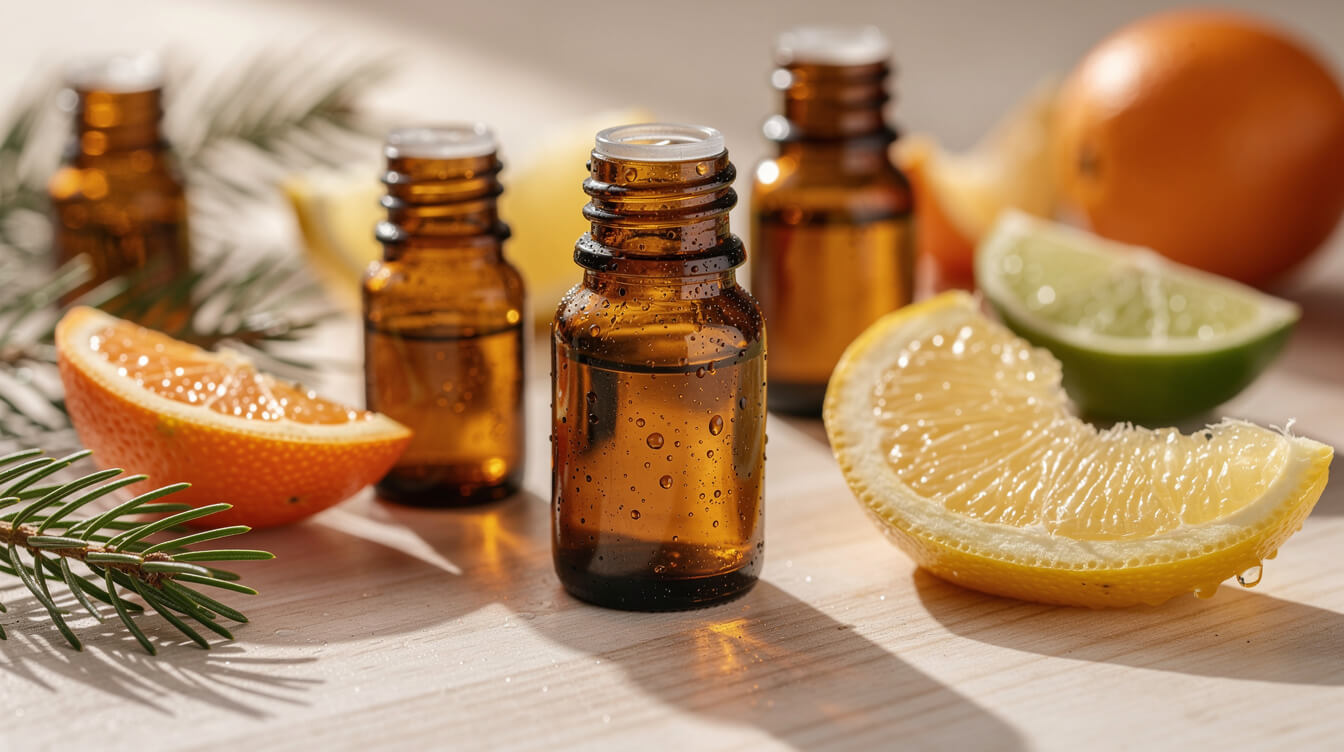
Here is the jewel almost no competing article mentions. The reason lemon, orange, and lime work so well against smoke is not their cheerful scent. It is a molecule called d-limonene, which makes up roughly 90 percent or more of cold-pressed citrus peel oil. d-Limonene is a genuine solvent. It is the same compound used as a citrus-based degreaser in industrial and household cleaners precisely because it dissolves oily, resinous films. Since smoke residue is exactly that, an oily, tar-like film, citrus oils do not just sit on top of the smell. They help cut into the very substance producing it.
Conifer and woody oils bring a second mechanism. Pine, cypress, and fir are rich in alpha-pinene, another terpene with solvent-like, deodorizing behavior and a clean forest scent that the nose reads as “outdoor air.” Tea tree and eucalyptus add terpinen-4-ol and 1,8-cineole, sharp, penetrating molecules that are excellent at refreshing stale, closed-up rooms. This is why the most effective anti-smoke blends almost always pair a citrus oil with a conifer or a sharp herbal oil. One dissolves, the others freshen and lift.
Contrast that with a synthetic “fresh linen” fragrance oil, which is engineered to smell a certain way and contains none of these active terpenes. It can only mask. When you choose pure, single-origin essential oils, you get the working chemistry, and you avoid loading more synthetic compounds into a room you are trying to clean. If purity matters to you, our notes on choosing non-toxic essential oils are worth a read before you buy.
Clearing the Air: Why a Nebulizing Diffuser® Beats Other Methods
Once the residue is handled, treating the air is what keeps a room smelling clean day after day. How you put the oil into the air decides whether you are actually dispersing those active terpenes or quietly diluting them away. This is where the delivery method matters more than the oil itself.
A Nebulizing Diffuser® uses Bernoulli’s Principle, the same physics that lets an airplane wing generate lift. A focused stream of air passes over a small glass tube, creating a pressure drop that draws pure essential oil up and shatters it into an ultra-fine mist of micro-droplets. There is no water and no heat involved. That matters for odor removal in two ways. First, the oil reaches the air at full, undiluted strength, so the d-limonene and pinene that do the deodorizing are delivered at maximum concentration. Second, nothing is boiled or watered down, so the volatile compounds you want are not degraded or trapped in a humid mist.
Compare that to an ultrasonic diffuser, which drips a few oil drops into a tank of water and uses vibration to fling a damp fog into the room. You get fragrance and added humidity, but the oil is heavily diluted, and pumping moisture into carpets and upholstery that already hold smoke residue is the opposite of what you want. We break down the full comparison in our guide to the Nebulizing Diffuser® versus ultrasonic diffuser question, and you can see why pure-oil methods to clean the air in your home consistently outperform water-based fogging for serious odor work.
For active smoke removal, a Smart Nebulizing Diffuser® is the tool we reach for first, because you can run it in short, powerful bursts that saturate the air with neat citrus and conifer oil and then rest, rather than constantly humidifying a room you are trying to dry out and freshen. Browse the full Nebulizing Diffuser® Collection to match a model to your space.

Join Now and Get a Coupon for 10% Off!
What About Ozone Generators and Ionizers?

When smoke odor feels urgent, “whole-room ozone machine” and “ionizing air purifier” are two of the most commonly searched fixes, and both are worth a closer look before you rent or buy one. The U.S. Environmental Protection Agency’s own consumer guidance on ozone generators sold as air cleaners is blunt: ozone concentrations high enough to meaningfully break down odor-causing compounds in a room also exceed public health limits and act as a lung irritant, while concentrations low enough to be safe are, per the EPA’s own testing, largely ineffective at removing the smells people buy the machines for in the first place. There is no safe-and-effective middle setting. That is a government-tested fact, not a marketing claim, and it is one most “get rid of smoke smell” articles never mention.
Ionizing purifiers work on a different principle. They give airborne particles an electric charge so they clump and fall out of the air faster, which can help with visible haze but does nothing for the sticky tar film already bonded to your walls, carpet, and furniture, the actual source feeding thirdhand smoke. Some ionizer models also generate ozone as a byproduct, quietly reintroducing the same trade-off.
Pure essential oil terpenes take a fundamentally different approach. There is no ozone and no ionized particulate, just d-limonene and alpha-pinene doing real solvent chemistry directly on the residue, delivered at full strength through a Nebulizing Diffuser® with nothing added to the air except the plant compound itself. If you want a device running continuously in an occupied room while you sleep or work, that distinction matters.
Room by Room: Removing Cigarette Smoke Smell from Clothing, Carpets, Upholstery, and Your Car
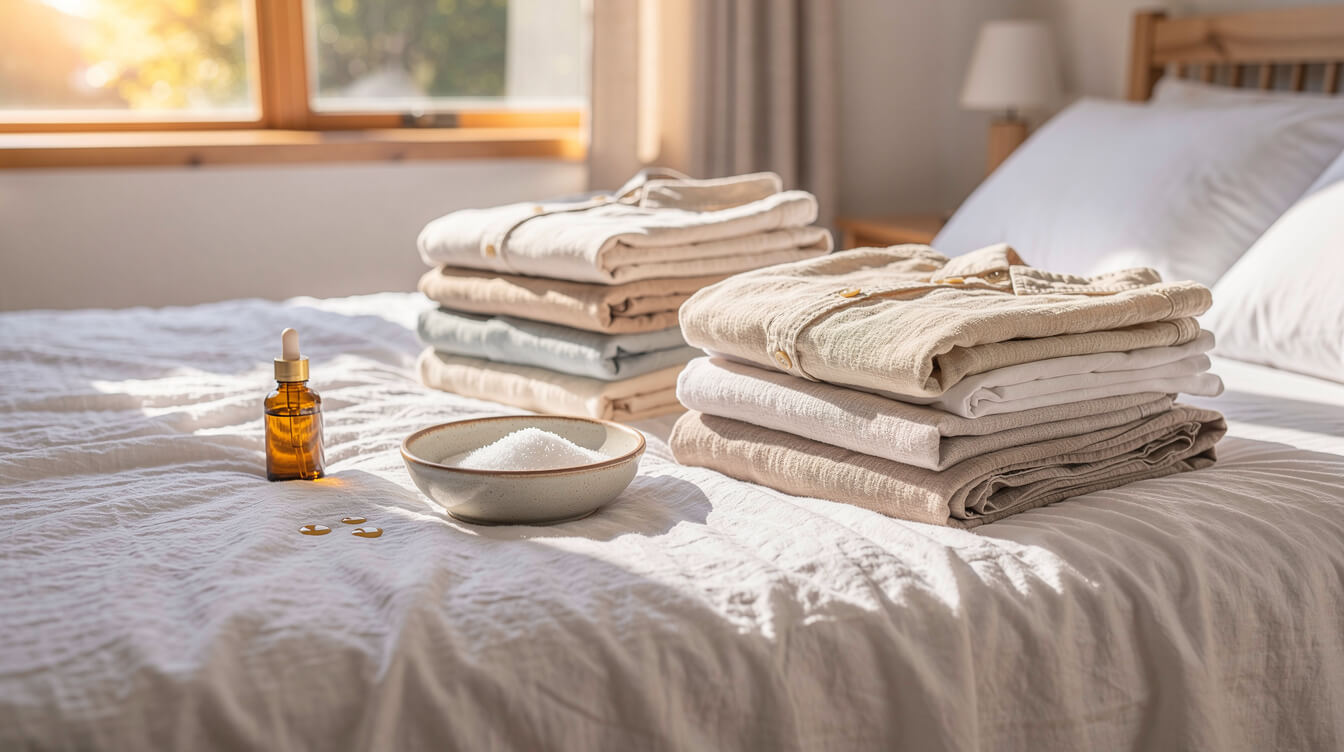
Soft surfaces hold smoke the longest, so this is where source removal and neutralizing earn their keep. Work through whichever of these apply to your situation.
Clothing and Linens
Wash as usual, but once the machine has filled with water add 5 to 10 drops of a citrus essential oil such as lemon or sweet orange directly to the drum along with your normal detergent. For stubborn items, add half a cup of white vinegar to the rinse, which neutralizes lingering odor without leaving a vinegar smell once dry. Air-dry in sunlight when you can, since UV light helps break down residual compounds.
Carpets and Rugs
Make a dry deodorizing powder: combine 1 cup of baking soda with 10 drops of pine essential oil and 10 drops of tea tree oil in a jar, seal, and shake until evenly mixed. Sprinkle generously over the carpet, then gently work it into the fibers with a soft brush. Let it sit for at least 15 minutes, or overnight for heavy odor, then vacuum thoroughly. The baking soda absorbs while the terpenes cut and freshen.
Upholstery and Soft Furniture
Use the same powder method for cushions and couches, or mix a light fabric spray: 1 cup of distilled water, 1 tablespoon of white vinegar, and 8 to 10 drops of a citrus-conifer blend in a spray bottle. Mist lightly, never soak, and let it air-dry. Test a hidden patch first for colorfastness. Our walkthrough on a homemade disinfecting cleaning spray uses the same base recipe.
Your Car
Cars trap smoke in a small, sealed volume, so they are the hardest space of all. Wipe down hard surfaces, vacuum the seats and carpet, and place an open container of baking soda with a few drops of lemon oil under a seat overnight. A small portable Nebulizing Diffuser® run for a few minutes before you drive will lift the remaining staleness far better than a hanging cardboard tree, which is pure masking.
The same principles apply to other persistent household smells. If pets are part of the picture, the techniques in our guide to removing pet odor with essential oils and removing bathroom odors layer neatly on top of your smoke routine.
Treat the Whole House: Your HVAC Filter and Central Air

Room-by-room work handles the surfaces you can reach, but there is one system quietly moving air through every space in your home at once: your heating and cooling. If you have central air, your HVAC filter and ductwork are both the fastest way to spread a fresh scent house-wide and, if you ignore them, a hidden reservoir that keeps re-circulating smoke.
Start with source removal, exactly as you did with fabrics. A furnace or air-conditioner filter that ran during or after a smoke event is now saturated with the same sticky residue coating your walls. Every time the system kicks on, that filter breathes stale smoke back into the house. Replace it before you do anything else. A fresh filter is the single highest-leverage move for whole-home odor, and it costs a few dollars.
Once a clean filter is in place, you can enlist your central air to distribute fresh terpenes. Add three or four drops of a citrus or conifer essential oil to a cotton pad and tuck it against the intake side of the return-air vent, not directly on the filter media itself, where oil can pool and gum up airflow. As the blower runs, it carries a light, clean citrus-and-pine note through every room the ducts serve. Refresh the pad every few days, and never over-apply; essential oils are concentrated, and a little genuinely goes a long way. Check your unit’s guidance first, since some high-efficiency and variable-speed systems are sensitive to anything placed near the airstream.
If your home relies on window units, space heaters, or has no ducted system at all, you get the same whole-home effect by placing a Nebulizing Diffuser® near a doorway or hallway where air naturally flows between rooms. Because it disperses pure, undiluted oil rather than a damp fog, it will not add the moisture that a smoke-stressed home does not need. Run it in short bursts and let the home’s own air currents carry the fresh, active compounds from room to room.
7 Essential Oil Blends to Banish Smoke Smell
These blends are built on the chemistry above: a citrus solvent paired with a freshening conifer or herb. Drop counts are sized for a Nebulizing Diffuser®, which uses pure, undiluted oil. For a single run, add the listed drops directly to the glass reservoir. Scale up or down to taste.
- Fresh Start: 8 drops lemon, 4 drops eucalyptus, 3 drops lavender. The everyday reset for a stale living room.
- Forest Air: 6 drops sweet orange, 4 drops pine, 3 drops cedarwood. Reads like clean outdoor air after rain.
- Citrus Cut: 7 drops lime, 4 drops lemongrass, 2 drops peppermint. The most aggressive odor-cutter for heavy smoke.
- Calm and Clear: 6 drops bergamot, 4 drops grapefruit, 3 drops clary sage. Brightens a room while it neutralizes.
- Purify: 5 drops tea tree, 5 drops lemon, 3 drops rosemary. Sharp and clean for a closed-up space.
- Spa Reset: 6 drops grapefruit, 4 drops eucalyptus, 2 drops spearmint. A lighter, brighter everyday option.
- Deep Woods: 5 drops orange, 4 drops cypress, 3 drops fir needle. Grounding and crisp for autumn and winter.
If you enjoy building your own combinations, our framework on essential oil blends for a diffuser explains how top, middle, and base notes fit together so your anti-smoke blends smell finished rather than flat.
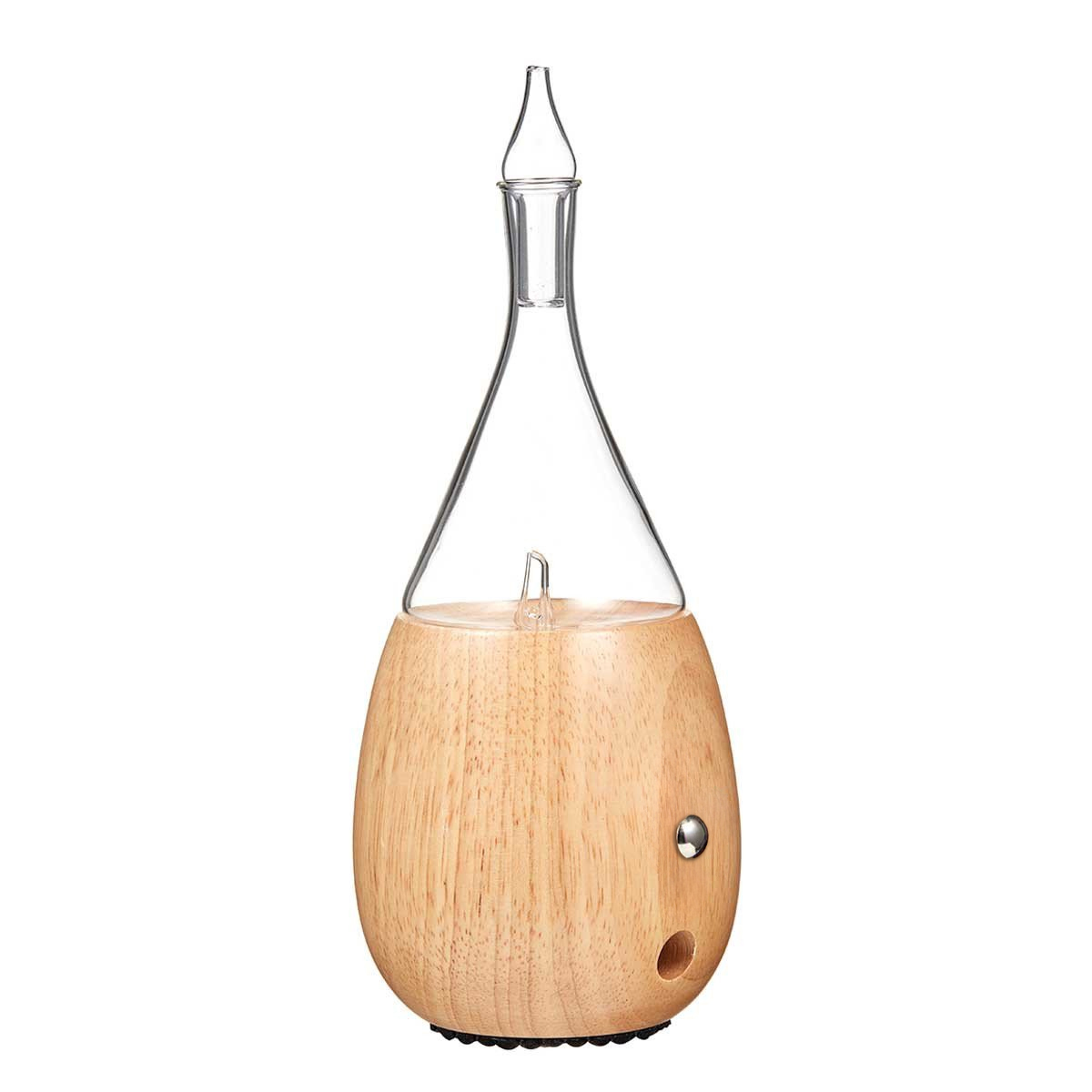
Clear the Air the Pure-Oil Way
The Raindrop Smart Nebulizing Diffuser® delivers pure, undiluted essential oil as an ultra-fine mist. No water, no heat, just full-strength citrus and conifer terpenes working on the air. App-controlled and whisper-quiet.

Join Our Exclusive Member Club to get Big Discounts!
Safety First: Pets, Ventilation, and What Not to Do
Essential oils are powerful plant compounds, and a few sensible rules keep your smoke-removal project safe and effective.
- Ventilate. Open windows while you clean and diffuse. Fresh airflow physically carries odor molecules out and prevents any compound from over-concentrating.
- Mind your pets. Many essential oils, especially citrus and tea tree, can be irritating to cats, dogs, and birds. Diffuse only in well-ventilated rooms, never in a closed space with a pet, and always give animals the freedom to leave the room. Birds are particularly sensitive and should not be near active diffusion.
- Do not soak fabrics. Excess moisture invites mildew, which trades one odor for a worse one. Mist lightly and let surfaces dry fully.
- Skip the candle reflex. Lighting a scented candle in a smoky room adds more combustion byproducts to the very air you are trying to clean. It is the most common mistake we hear about.
- Treat the source, always. No amount of diffusing will outpace a saturated couch or an unchanged furnace filter. Replace and launder first.
Used thoughtfully, pure essential oils create a clean, calming atmosphere while you work through the residue. They are a tool for a fresher home, not a substitute for cleaning the surfaces that hold the smell.
Frequently Asked Questions
What is the best essential oil to remove smoke smell? Lemon and other citrus oils are the strongest single choice because their high d-limonene content actually cuts through the oily smoke film. For best results, pair a citrus oil with a conifer such as pine or a sharp herbal oil like eucalyptus or tea tree.
Can essential oils completely get rid of cigarette smoke smell? They are a major part of the solution but not the whole answer. You must also remove the source: launder fabrics, wash hard surfaces, replace air filters, and deep-clean carpets. Essential oils then neutralize what remains in soft surfaces and keep the air actively fresh.
How many drops of essential oil should I use in a Nebulizing Diffuser® for odor? In a Nebulizing Diffuser®, which uses neat oil, 15 to 20 total drops per run is a good target for active odor work. Run it in short bursts rather than continuously.
Do essential oils just mask the smoke smell? Synthetic fragrance oils mask. Pure citrus and conifer essential oils do more, because their terpenes can chemically break down the oily residue rather than simply covering it. The delivery method matters too: a waterless Nebulizing Diffuser® disperses those active compounds at full strength.
Is it safe to diffuse essential oils around children and pets? Diffuse in well-ventilated rooms, keep runs short, and never confine a child or animal in a closed room with active diffusion. Cats and birds are especially sensitive, so give them an easy exit.
Can I use essential oils in my air conditioner or HVAC to remove smoke smell? Yes, but replace the smoke-saturated filter first, since a dirty filter re-circulates residue every time the system runs. After that, add three or four drops of citrus or conifer oil to a cotton pad placed near the return-air vent rather than directly on the filter media, use it sparingly, and check your unit’s guidance before placing anything near the airstream.
How long does it take to remove smoke smell from a room? Light, recent odor can lift in a few hours with open windows and a Nebulizing Diffuser® running in short bursts. Heavy or embedded smoke, from years of smoking or a house fire, can take days to weeks, because the pace is set by source removal, laundering fabrics, replacing filters, and deep-cleaning carpets, not by the diffusing itself.
Do essential oils help with lingering wildfire smoke smell indoors? For the smell, yes. Once outdoor air has cleared, the same residue-and-air approach applies: launder and wash the surfaces that trapped the smoke, then use citrus and conifer oils to freshen fabrics and the air. During an active smoke event, prioritize sealing up and filtering your indoor air first, then turn to essential oils for odor once the air outside is safe again.
Final Thoughts: A Genuinely Fresh Home
Removing the smell of smoke is not about finding one magic spray. It is about understanding what the odor really is, a sticky residue that keeps re-supplying the smell, and then attacking it on every front: remove the source, neutralize the soft surfaces, and treat the air with oils whose chemistry does real work. Citrus and conifer essential oils earn their place here because d-limonene and alpha-pinene cut into the residue instead of hiding it.
Choose pure oils, deliver them with a method that preserves their active compounds, and stay patient through the source-removal step. Do that and the difference is not subtle. The room stops smelling like an apology and starts smelling, simply, clean. For the wider picture, our complete guide to the most useful diffuser blends will keep your space fresh long after the last trace of smoke is gone.





Thank you for the help. My son smoked in our rental home and really need to remove the smell. This will help so much. We used Febreze in our car, but did not remove fully. This has helped perfectly to remove the smell.
Smoke stinks! Good tips, thank you.
I hate the smell of smoke, so thanks for the tips!
Thank you for the information.
Coming from a family of smokers, this is really helpful. The lingering smell is awful. We have oil diffusers, but I would have never thought to use it for getting rid of the smell of smoke.
Great advice! Thank you!
This is really great information for me. I have 2 friends who smoke and have this lingering odor when they have been visiting,
That’s a very good idea. Kind of like Febreeze but with essential oils.
I wish I knew this when we inherited my mother in laws car
Great information! Thanks for sharing!
This article is handy!
Awesome information !
Great tips! I love Bergamot and lime for air purifying!
Well written article with practical common sense advice. Thanks!
Great ideas. thanks!
Great ideas. thanks!
It’s good to know
Essential oils are awesome! There is some very useful info here. Natural ingredients are absolutely the way to go
I enjoy mixing natural cleaners very much and may be the main reason I started are the essential oils 🙂
Thank you very much. This information is very useful for me because I don’t like the smell of smoke so much!
I can use this my husband smokes inside much to my unhappiness mainly with the smell that lingers. I have citrus & lemon grass oil interesting thank you!
Thanks for the tips!
Thank you for the great info and tips for removing smoke odors. I bet these essential oils ould also work great for cooking odors!
Thanks for sharing this useful information. I did not know that.
This is great! I did not know you can use oils to get rid of smoke. Love the idea of using natural ingredients.
We camp almost every weekend and always come home smelling like smoke, I recently started putting citrus essential oil in with the laundry and it makes all the difference in the world! I also diffuse lemongrass in the camper too!
Good to know I still have a few friends that smoke
Great tips! I have a coat that has lingering campfire odor that I will try lemon and tea tree EOs with!
Interesting, never knew how hard it can be to remove the smoke.. It’s helpful if you live near forest fires too
Thanks for sharing this great article! My hubby and I used to be hard core smokers. EVERYTHING we owned smelled like smoke! No matter how many times we washed our clothes and other items, they STILL smelled like smoke! it wasn’t until we started using essential oils did the smell of smoke start to dissipate. I used a blend and made Thieve’s Oil, which as I am sure you know, has A LOT of lemon in it! It is my go to fragrance for essential oils. But FINALLY, about 3 years ago, we quit smoking! We read somewhere that it takes five YEARS for your house to no longer smell like smoke after you quit. Well, our home always smells great now, and it is mostly because we have 3 diffusers going in the den, bedroom, and extra room, so our house smells fantastic! I love using Sage to not only get rid of bad smells, but it also gets rid of bad energy. Anytime you’re feeling frustrated or blocked, or like everything in your life is just going WRONG, use a Sage rub stick and get rid of that bad juju! It works for me, and I know it’ll work for you! Thx again for all the great articles you share with us! xoxoJJ
Thank you for this wonderful article. I’m a non-smoker and sometimes just walking by a smoker in front of a store is enough to leave you smelling like smoke. It’s great to have all natural solutions to pesty problems!
The odor of stale cigarette smoke in a home can be so offensive and uninviting to guests. Thank you for these tips. Better yet: may the reader consider eliminating the habit of smoking from his/her life to restore wellness and protect health!
Baking soda and citrus essential oils are the best for home cleaning