

How to Clean an Essential Oil Diffuser: The Waterless Method Most Guides Skip
If you searched for how to clean an essential oil diffuser and the first guide told you to fill the tank with water, add a splash of vinegar, and swab it dry, there is a good chance you were reading instructions for a completely different machine than the one sitting on your shelf. Almost every top result describes an ultrasonic diffuser, which is really a small humidifier that carries a little fragrance. A waterless Nebulizing Diffuser® is cleaned in a fundamentally different way, and using the wrong method is one of the fastest ways to clog it. This guide covers both, so you can match the routine to the machine you actually own.
Organic Aromas has spent more than twelve years fielding cleaning questions from over 200,000 customers, and the pattern is remarkably consistent: a diffuser that suddenly runs weak, sounds different, or stops atomizing is almost never broken. It is dirty. Below is the exact process our support team walks people through, the specific oils most likely to cause trouble, and the handful of mistakes that quietly shorten a diffuser’s life.
Why Cleaning Your Diffuser Is About More Than a Fresh Scent
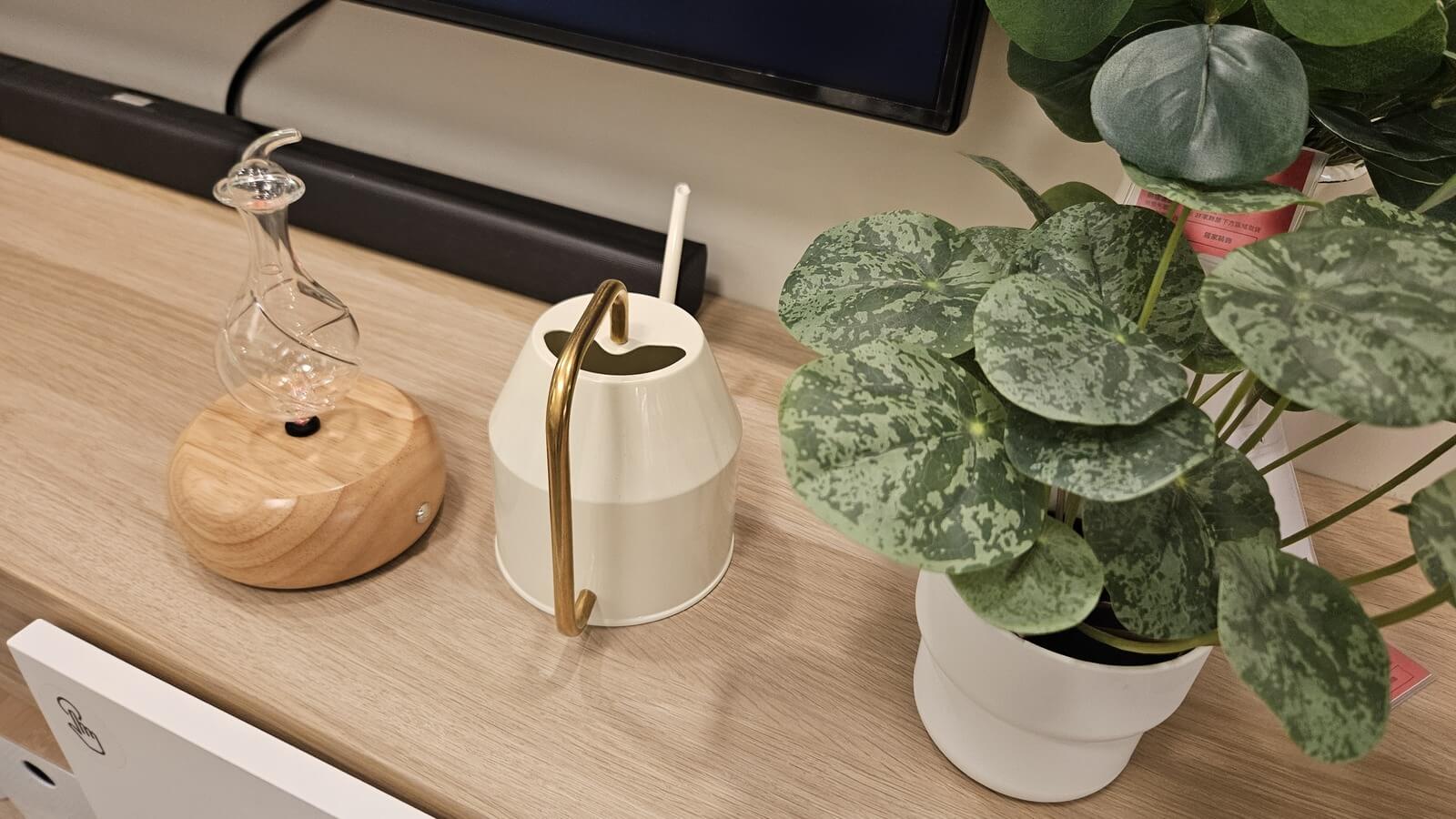
Essential oils are volatile plant compounds, and the same chemistry that makes them smell wonderful also makes them prone to oxidizing and thickening once they meet air. Every time you run a diffuser, a thin film of oil is left behind on the glass and inside the narrow channels the oil travels through. Left alone, that film builds into a sticky, resinous residue that does three things: it muddies the scent of the next oil you use, it narrows the passages the oil needs to move through, and it forces the pump to work harder than it should.
There is a time factor too. In our experience, oils older than two to three years degrade and turn noticeably sticky, and a sticky oil leaves a heavier deposit. That is why a diffuser that worked perfectly for months can seem to fail overnight: the residue finally reached the point where airflow could not push the oil through cleanly. None of this is a defect. It is maintenance that was skipped. Keeping the device clean also keeps the aroma honest, which matters if you care about the purity you paid for. If diffuser upkeep is part of a broader question about running one safely at home, our guide to essential oil diffuser safety covers the rest.
Two Machines, Two Cleaning Jobs: Nebulizing vs Ultrasonic
Before you clean anything, you need to know which kind of device you have, because the two work on opposite principles and the cleaning follows from the mechanism. An ultrasonic diffuser holds a tank of water, adds a few drops of oil to it, and vibrates a small metal plate thousands of times per second to fling a cool mist into the air. Because it runs on standing water, its enemy is the tank: mineral scale, biofilm, and in neglected units, actual mold.
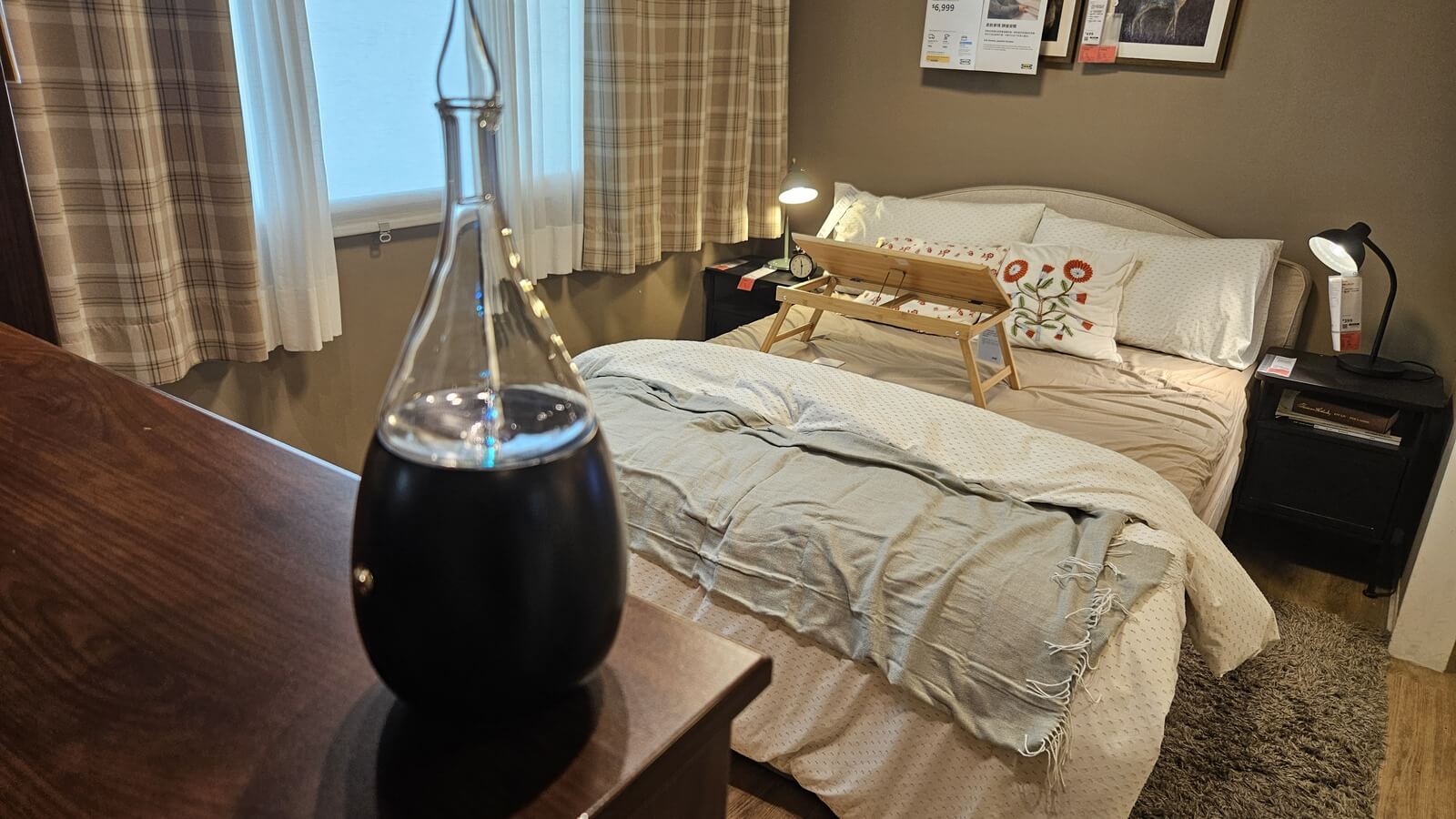
A Nebulizing Diffuser® uses no water and no heat at all. A stream of air passes over a small glass tube and, by Bernoulli’s Principle, pulls undiluted essential oil up from the reservoir and shatters it into an ultra-fine aromatic vapor. Nothing is diluted, so the scent is stronger and truer. Because there is no tank of water, there is nothing for mold to grow in, which is a quiet advantage we explain in our comparison of nebulizing versus ultrasonic diffusers. The trade is that pure oil leaves a richer residue in the glass, so a nebulizing unit needs a proper alcohol clean rather than a rinse. If you have ever wondered why so many generic cleaning tutorials do not match your device, this is why, and our breakdown of a diffuser versus a humidifier untangles the confusion further.

Sign Up to Get Your FREE
e-Book Here…
How to Clean an Essential Oil Diffuser: The Nebulizing Diffuser® Method
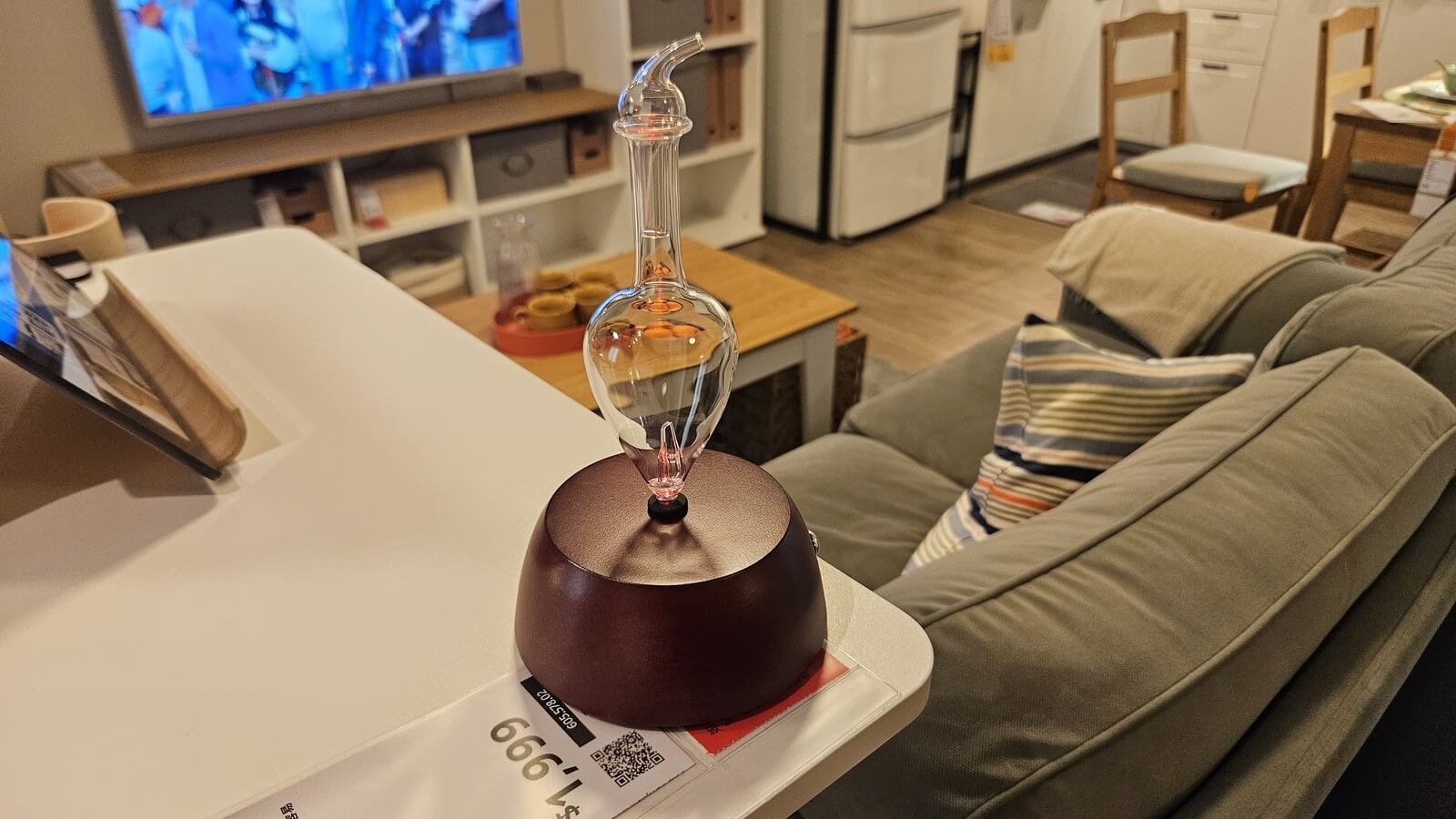
Here is the exact routine our support team recommends. It takes about five minutes, and the only supplies you need are high-concentration isopropyl (rubbing) alcohol at 70 percent or higher, the small plastic cleaning pipette that shipped with your unit, and a paper towel.
- Disassemble and empty. Lift the glass reservoir straight up off the wooden base without twisting it, then pour out any leftover oil. Never let liquid run down into the base.
- Swirl with alcohol. Pour 6 to 8 ml of isopropyl alcohol into the glass reservoir, seal the opening with your thumb, and shake and swirl vigorously up and down for about 30 seconds. Tip it out. A little alcohol may seep from the bottom opening, and that is completely normal.
- Flush the micro-tubes. Add another 6 to 8 ml of alcohol. Draw some up with the plastic pipette, place the tip directly against the straight micro-tube inside, and squeeze hard to force alcohol through the tube. Repeat several times until it flows freely. This is the step that clears the blockages a simple swirl cannot reach.
- Repeat for good measure. Do the swirl in step two once more with fresh alcohol to lift anything the flush loosened.
- Wipe the exterior. Moisten a paper towel with alcohol and wipe down the outside of the glass and the cap to remove any oily film.
- Dry completely. Let the glass air dry, wipe it with a dry cloth, or speed it along with a hairdryer. Make sure it is bone dry before you add oil again, because trapped alcohol will thin your next few minutes of aroma.
When you seat the glass back onto the base, rock it gently back and forth rather than twisting it in a circle. That single habit prevents the most common cause of cracked glassware. Because a nebulizing unit atomizes oil undiluted, clean glass translates directly into the honest, full-strength scent that pure oil is supposed to deliver, the same reason we are so particular about judging real essential oil purity in the first place.
When the Micro-Tubes Clog: The Thick-Oil Problem
If your diffuser slows down or stops atomizing even after a clean, the culprit is usually the oil itself, not the machine. Certain essential oils are naturally thick and resinous, and diffused on their own they can gum up the narrow micro-tubes faster than anything else. The usual suspects, drawn from years of customer reports, are vetiver, patchouli, myrrh, frankincense, benzoin, sandalwood, and cypress.
You do not have to give these oils up. Two habits keep them flowing. First, clean immediately after a session that used a thick oil, before the residue has time to set. Second, you can dilute sticky oils with Augeo Clean Multi, a clear coconut-derived diluent that thins the oil without leaving its own film. It also helps to avoid overfilling: keep the oil at least a quarter inch below the top of the small glass tubes at the bottom of the reservoir, so the pump is never fighting a flooded chamber. If you love building layered scents, our roundup of essential oil recipes for a diffuser flags which blends run clean and which need this extra care.
One more practical note. If your current unit is older, worn, or was a bargain-bin plastic model, a clog is often the moment people upgrade. Our Raindrop Smart Nebulizing Diffuser® is built around handcrafted wood and medical-grade Pyrex glass that comes apart easily for exactly this kind of maintenance, which is a large part of why it lasts.

Join Now and Get a Coupon for 10% Off!
How to Clean an Ultrasonic Water-Tank Diffuser
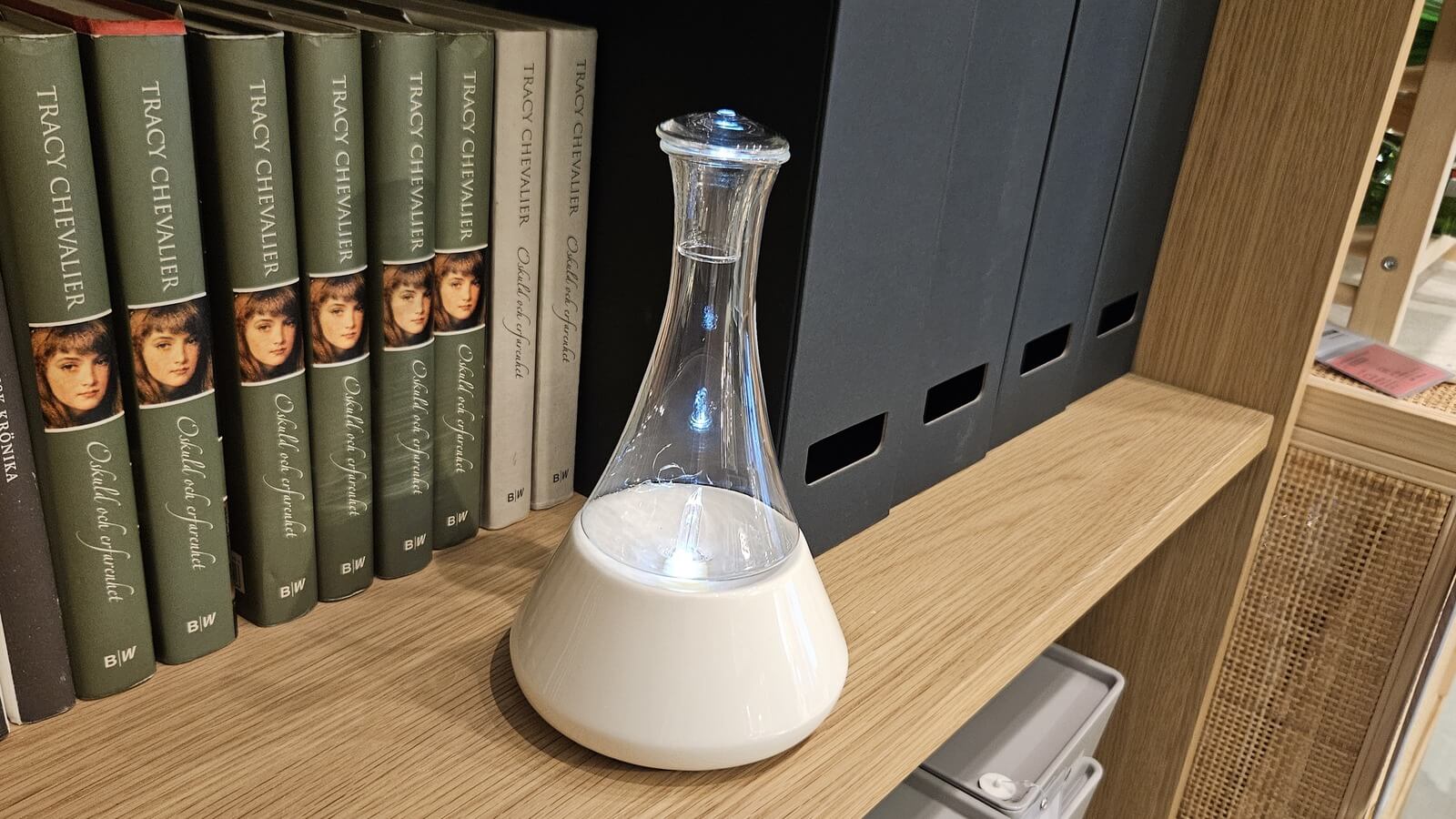
If the device you are cleaning holds water, follow this routine instead. Unplug it first, then empty the leftover water away from the vent and buttons. Fill the tank halfway with clean water, add up to ten drops of white vinegar, and run the unit for three to five minutes so the solution reaches every surface the mist touches. Pour it out, then dip a cotton swab in a little isopropyl alcohol and gently wipe the small metal or ceramic disc at the bottom, since that vibrating plate is where scale and oil film collect and dull the mist. Rinse with clean water, wipe dry, and leave the tank open to air out before storing.
The reason ultrasonic units demand this vinegar-and-swab attention is the same reason we favor waterless diffusion: standing water invites mineral scale, biofilm, and mold, and it can throw a fine white mineral dust across your furniture. A waterless Nebulizing Diffuser® sidesteps all of it because there is simply no water to spoil, a point worth weighing if you also care about choosing pure, non-toxic oils and keeping what you breathe genuinely clean.
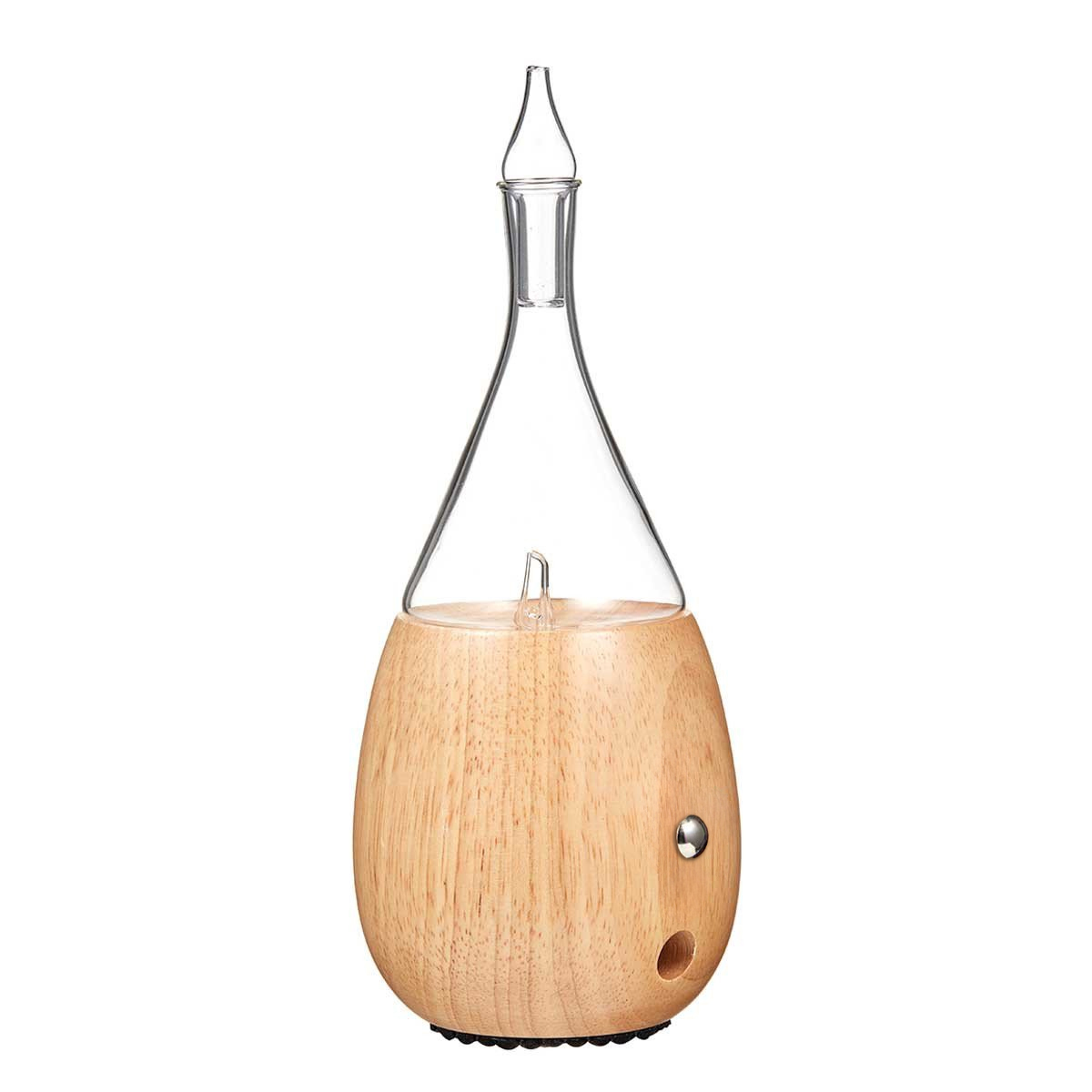
Built to Come Apart and Clean Easily
Real wood and medical-grade Pyrex glass, no water and no heat, and a reservoir that lifts off in one motion for a five-minute clean. Pure, undiluted aromatherapy that is made to last.
How Often to Clean, and the Mistakes That Shorten a Diffuser’s Life
For a Nebulizing Diffuser®, clean the glass reservoir at least once a week if you use it regularly, and ideally every two to four sessions for peak performance. Cleaning becomes more important, not less, if the unit has sat idle for more than seven days, because the oil left inside has had time to thicken. If you switch between very different scents, a quick alcohol swirl between them keeps yesterday’s blend from bleeding into today’s. A good rule of thumb: if you cannot remember the last time you cleaned it, or the aroma has quietly lost some of its punch over the past week, it is overdue.
The mistakes that cause the most damage are easy to avoid once you know them:
- Adding water. Never put water in a nebulizing unit. It runs on pure oil alone, and water will ruin both the diffusion and the scent.
- Letting liquid reach the base. Keep alcohol and oil out of the wooden base and its motor. Clean the glass detached, away from the base.
- Twisting the glass. Rock the reservoir on and off gently. Twisting it at an angle is the leading cause of cracked glass.
- Skipping the dry time. Adding oil to a reservoir still wet with alcohol thins your aroma and wastes oil.
- Using dish soap. Soap leaves its own film inside the glass. Isopropyl alcohol evaporates clean, which is why it is the only cleaner you need.
These same care habits apply whether you run a classic model or an app-controlled one, and if scheduling shorter, cleaner sessions appeals to you, our smart diffuser buyer’s guide explains how automation makes consistent upkeep almost effortless.

Join Our Exclusive Member Club to get Big Discounts!
Frequently Asked Questions
Can I use vinegar to clean a nebulizing diffuser? Vinegar is the right tool for an ultrasonic water tank, but not for a waterless Nebulizing Diffuser®. Use 70 percent or higher isopropyl alcohol instead. It dissolves oil residue and evaporates without leaving a film.
Can I put water in my nebulizing diffuser? No. A nebulizing unit atomizes pure, undiluted oil using air, so it should never contain water. Adding water disrupts the diffusion and can leave the reservoir unusable until it is fully cleaned and dried.
How do I clean between two different oils? Empty the reservoir, do one quick 30-second alcohol swirl, tip it out, and let it dry. That is enough to stop a bold oil like patchouli from tinting a delicate citrus blend.
My diffuser is weak right after cleaning. What happened? Almost always, the glass was not fully dry and a little alcohol thinned the first few minutes of output. Give it more drying time. If weakness persists, a micro-tube may still be partially clogged, so repeat the pipette flush.
Is rubbing alcohol safe to use? Yes, isopropyl alcohol at 70 percent or higher is the recommended cleaner. Just make sure the reservoir is completely dry before adding oil, and always clean the glass away from the base.
How do I know if it needs cleaning or is just low on oil? Listen and look. A soft slurping or gurgling sound, like the last of a drink through a straw, usually means the oil level is simply getting low, and topping up with 15 to 25 drops fixes it. That is normal behavior, not a clog. A true residue problem shows up differently: the aroma turns weak or muddy even with plenty of oil in the reservoir, and the output does not recover after a refill. That is your signal to run the full alcohol clean and flush the micro-tubes. Learning to tell those two apart saves a lot of unnecessary worry, because the gurgle that alarms most first-time owners is not a fault at all.
Final Thoughts
Cleaning an essential oil diffuser is not complicated once you know which machine you are holding. An ultrasonic unit needs its water tank and vibrating plate freed of scale and mold. A Nebulizing Diffuser® needs a quick alcohol swirl, a firm pipette flush of the micro-tubes, and a full dry before the next fill. Do that once a week, clean promptly after the thick oils, and rock the glass on gently rather than twisting it, and the device will keep delivering pure, full-strength aroma for years. After more than twelve years and 200,000 customers, the happiest owners are almost always the ones who treat a five-minute clean as part of the ritual, not a chore they get to later.