



Best Essential Oil Brands in 2026: How to Judge Real Purity
Search for the best essential oil brands in 2026 and you meet the same wall of identical promises. Every seller calls its oils pure, therapeutic, and the finest on earth. Almost none of them show you the one document that would prove it. Even the crowd-sourced answers — the Reddit threads and “I tried every brand” videos that now crowd the results — argue about loyalty and price while skipping the evidence entirely. That gap is exactly why this guide exists: not to repeat marketing copy, but to hand you the specific tests, certifications, and red flags that separate a genuinely premium oil from a pretty amber bottle of diluted filler.
Below you will find the quality criteria that actually matter, a plain-English walk through the lab report most buyers never request, the at-home checks that expose an adulterated oil before you spend a cent, an honest comparison of seven well-known brands (updated for 2026, including which ones now let you look up your exact batch), and one detail almost every roundup ignores: the way you diffuse a pure oil decides whether you ever smell its real quality at all. Let’s get into it.
What Actually Makes the Best Essential Oil Brands?
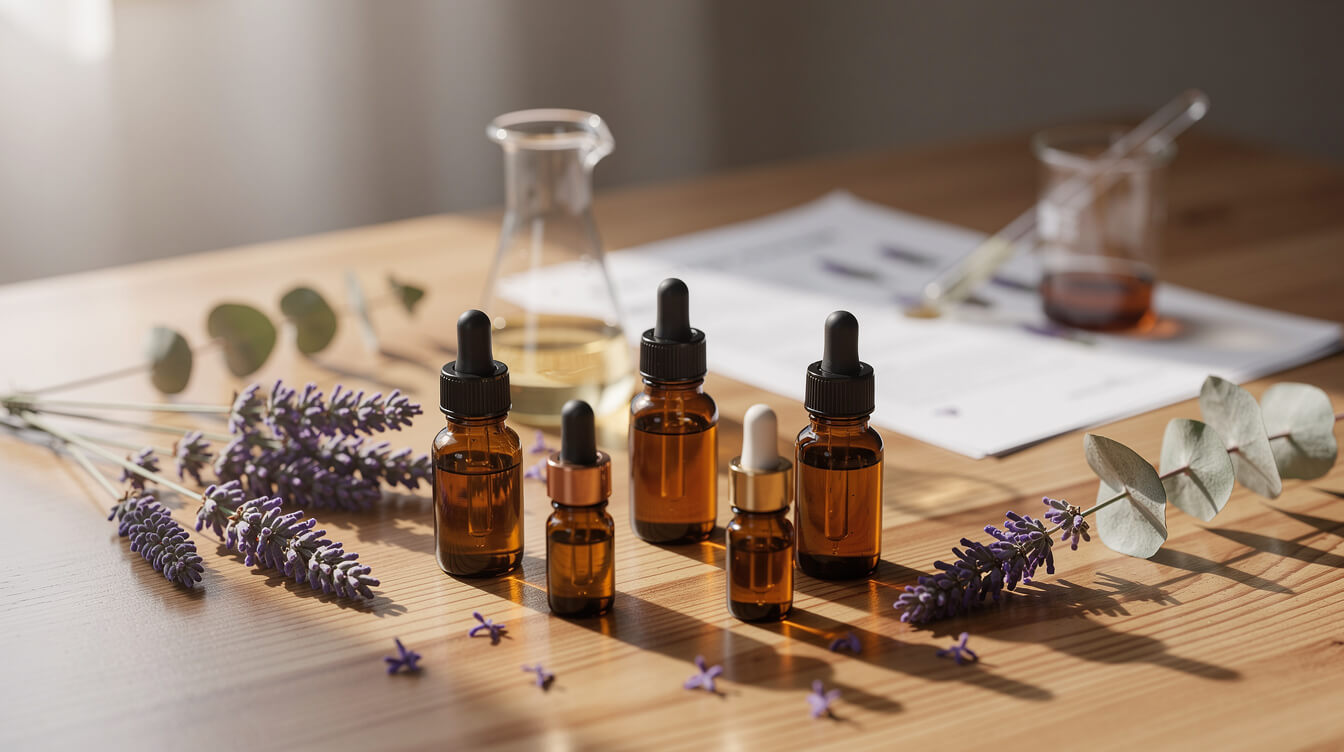
Price, packaging, and popularity tell you almost nothing about what is inside the bottle. Quality lives in the supply chain and the lab, not on the label. When we evaluate the best essential oil brands, five things carry real weight.
1. Third-party GC/MS testing (not in-house promises)
Gas Chromatography paired with Mass Spectrometry (GC/MS) is the gold-standard analysis for an essential oil. Gas chromatography separates the oil into its individual chemical constituents, and mass spectrometry identifies and measures each one. The result is a fingerprint that reveals whether an oil is genuine, and whether it has been stretched with a cheaper carrier, a synthetic aroma chemical, or a related but inferior species. The key word is third-party. A brand grading its own homework is not the same as an independent lab signing its name to the result.
2. Sourcing transparency
Plant chemistry shifts with soil, altitude, weather, harvest timing, and species. A serious brand can tell you the botanical (Latin) name, the country of origin, and the part of the plant distilled. Vague labels that say only “lavender oil” with no Lavandula angustifolia, no origin, and no distillation detail are a quiet warning sign.
3. A real certificate of analysis, on request
A certificate of analysis (COA) is the batch-level report tied to the oil you actually bought. The strongest brands publish it or send it within a day of a request — and a growing number now let you type the batch number from your bottle into their website and pull that exact lot’s GC/MS. If a company cannot connect a bottle to a batch and a batch to a test, the testing claim is decoration.
4. Honest pricing
Pure oils are agricultural products with wildly different yields. It takes roughly 27 square feet of lavender or thousands of hand-picked rose blossoms to fill small bottles, so a rose oil priced like a sweet orange oil is telling you something. Suspiciously uniform pricing across every oil in a catalog usually means standardization with fillers rather than true single-origin distillation.
5. The MSDS is the floor, not the ceiling
Most brands provide a Material Safety Data Sheet (MSDS, now often called an SDS). It is useful for shipping and handling hazards, but the seller writes it to satisfy regulators, and it says little about purity. Treat the MSDS as a baseline compliance document, and judge quality on the GC/MS instead.
How to Read a GC/MS Report (the Test Most Buyers Skip)
Here is the jewel almost no buyer’s guide hands you: how to actually read the report that defines quality. Once you can skim a GC/MS sheet, brand marketing stops mattering, because the numbers speak for themselves.
A GC/MS report lists the oil’s major chemical constituents as a percentage of the whole. For true lavender (Lavandula angustifolia), you want to see linalool and linalyl acetate as the two dominant constituents, typically a combined 60 percent or more, with linalyl acetate usually sitting in the mid-20s to high-30s by percentage. Those two molecules are most of what gives genuine lavender its soft, calming character. If a “lavender” report is heavy on camphor instead, you are likely looking at spike lavender or a lavandin hybrid, which smells sharper and more medicinal.
Three quick checks turn a confusing chart into a verdict:
- Marker compounds in range. Each oil has signature constituents at known percentages. Peppermint should be rich in menthol and menthone; tea tree should show terpinen-4-ol above roughly 30 percent and 1,8-cineole kept low. Numbers far outside the published ranges signal adulteration or a different species.
- No unexpected synthetics. Aroma chemicals or solvents that do not belong in a distilled plant oil are a clear fail.
- Batch and date match your bottle. A report from three years ago for a different lot is not evidence about what you are holding. This is why the batch-lookup tools now appearing on brand sites matter: they tie the report to your bottle, not a generic sample.
This is also why we are wary of oils sold with no report at all. If you would like the deeper science on purity and adulteration, our detailed guide to buying 100% pure essential oils and our breakdown of how to choose non-toxic, genuinely pure oils both go further.
Sign Up to Get Your FREE
e-Book Here…
How to Spot an Adulterated Oil Before You Buy
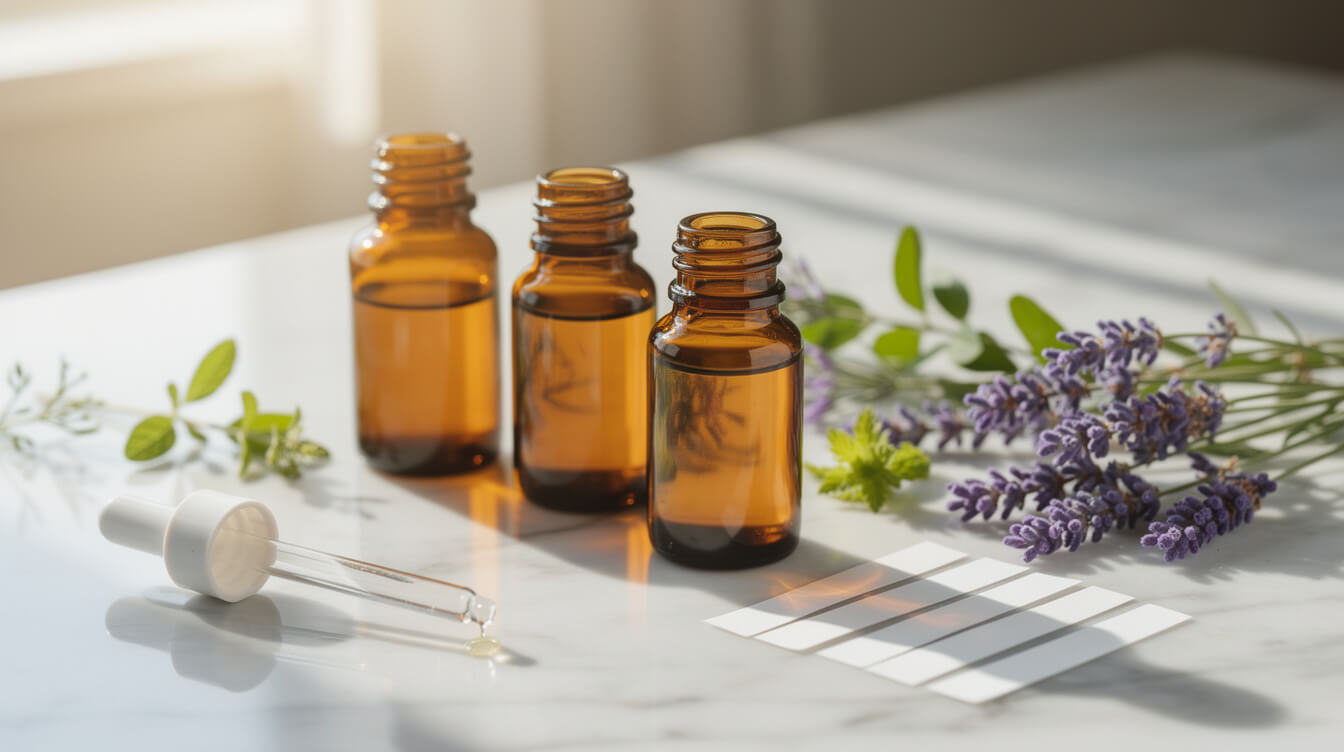
You will not always have a GC/MS report in hand at the shelf or checkout. So here are the practical tells — the label reading and the two-minute home checks — that flag a likely adulterated oil before your money leaves your pocket.
Read the label like a skeptic
- No Latin binomial, origin, or batch. A bottle that will not name the species (Lavandula angustifolia, Mentha piperita), the country, or a lot number is hiding the very details that let you verify it.
- “Fragrance oil,” “perfume oil,” or “nature identical.” These are synthetic or blended aroma products, not distilled plant oils. The word you want is essential oil, ideally with “100% pure” backed by testing.
- “Therapeutic grade” treated as a certification. There is no government body or independent authority that certifies a “therapeutic grade” of essential oil. It is a marketing phrase. Judge the oil on its report, not its adjective.
- Clear glass bottles. Light degrades essential oils, so reputable brands use amber or cobalt glass. Bright clear bottles on a lit shelf are a subtle quality tell.
The paper blotter test (a screen, not a verdict)
Place a single drop on a plain white paper strip and let it evaporate. Most lighter oils — citrus, lavender, peppermint, tea tree — should dry down without leaving a greasy, translucent ring, because a true essential oil is volatile, not fatty. A persistent oily stain often means the oil was cut with a fixed carrier like coconut or sunflower oil. One honest caveat that keeps this test fair: heavy, resinous, or absolute oils such as sandalwood, patchouli, vetiver, and myrrh naturally leave a mark, so use the blotter as a first screen on the lighter oils, not as final proof.
Do the price-per-milliliter math
This is the check that catches the most fakes and takes ten seconds. Divide the price by the volume in milliliters, then compare like species to like species. A 15 mL sweet orange oil at around $8 works out to roughly $0.50 per mL — and it should be cheap, because orange oil is cold-pressed from peel in huge volume. A genuine rose otto or sandalwood, distilled from tons of raw material, can run many dollars per mL. So when you see a “rose” or “sandalwood” priced like that orange oil, the math has already told you it is diluted or synthetic long before any lab does. Cheapness is not the crime; cheapness on an oil that is expensive to make honestly is the crime.
The 7 Best Essential Oil Brands in 2026
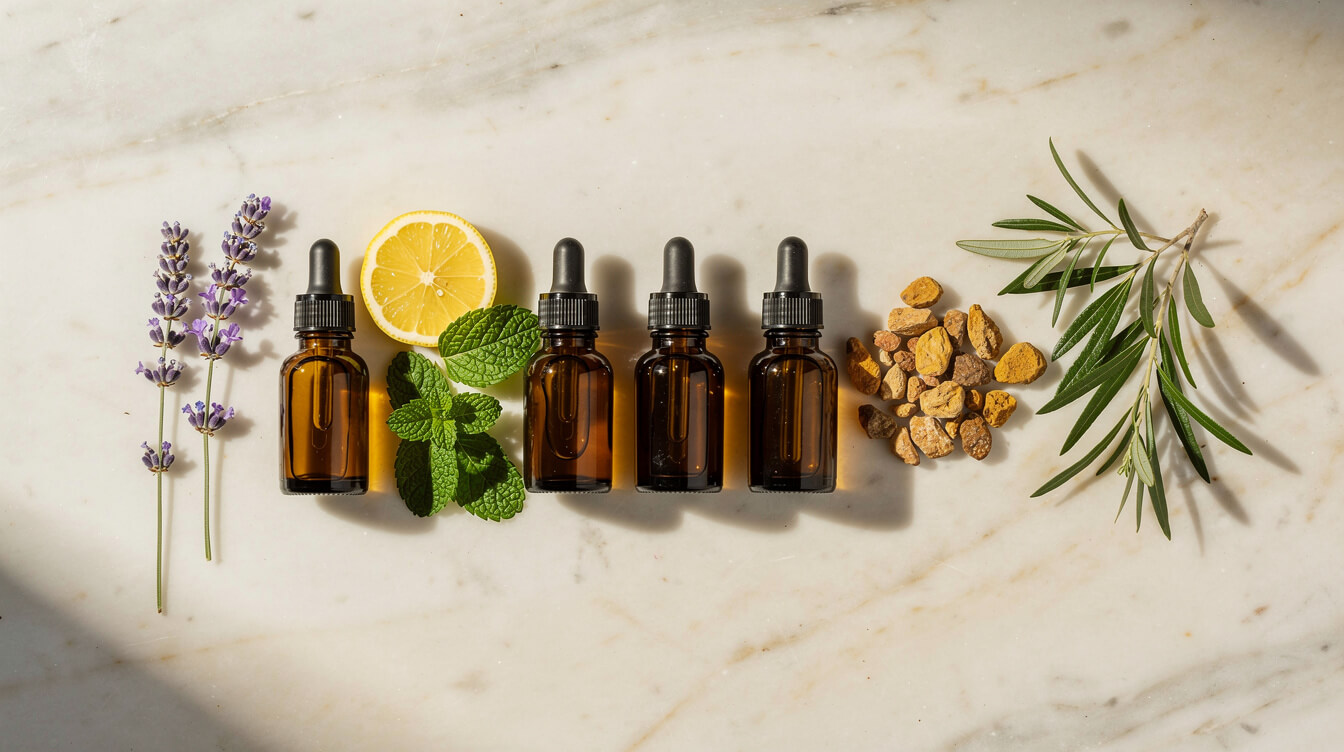
Using the criteria above, here are seven well-known names and how they stack up on testing, transparency, and sales model. No brand is perfect, and the right choice depends on what you value most. We have expanded this year’s list to include two names that consistently come up in serious buyer discussions.
1. Organic Aromas
Organic Aromas built its reputation on the Nebulizing Diffuser®, a waterless, heatless device made from recycled plantation hardwood and hand-blown glass where the oil never touches plastic. On the oil side, Organic Aromas sells pure single oils and exclusive blends, and sends its single oils for independent GC/MS testing to Phytochemia, a third-party lab in Montreal, Canada. Pricing is transparent, there is no multi-level marketing, and customer reviews from verified buyers are consistently strong. For buyers who want pure oils and a diffusion method that protects them, it is a natural fit.
2. Plant Therapy
Plant Therapy is a popular, approachable brand with a deep catalog and a strong reputation for affordability. It publishes GC/MS reports, lets you look up results by batch, and is openly oriented toward families and beginners. Pricing is fair and the brand avoids MLM. If your priority is breadth of selection at a friendly price with public, batch-searchable test results, it earns its place on this list.
3. Rocky Mountain Oils
Rocky Mountain Oils is a direct-to-consumer, non-MLM brand that leans hard into verification: every batch is third-party GC/MS tested, and you can enter the batch number from your bottle on its site to pull that lot’s report. It also runs a generous return policy. For buyers who want proof tied to the exact bottle in their hand, its batch-lookup transparency is a standout.
4. doTERRA
doTERRA is one of the most recognized names in the category, with a wide range and a large community. The brand markets its oils under a self-created standard it calls CPTG (Certified Pure Tested Grade), which is a trademark it owns rather than an independent certification, and detailed batch-level results are not broadly published. doTERRA also sells through multi-level marketing, which tends to lift the final retail price to fund commissions. The oils have many loyal users; just go in understanding the standard and the sales model.
5. Eden’s Garden
Eden’s Garden positions itself as quality without the MLM markup. Customers can request a certificate of analysis, specifications, and an SDS, and the company states its oils are third-party GC/MS tested. It also keeps certified aromatherapists on staff. For buyers who want documentation available on request and direct, non-MLM pricing, it is a solid choice.
6. Aura Cacia
Aura Cacia, a brand of the co-op Frontier Co-op, is one of the most widely available names in natural-foods stores. It publishes testing information, prints lot numbers you can cross-reference, and emphasizes ethical sourcing partnerships. Pricing is accessible and there is no MLM. For a dependable, easy-to-find oil with reasonable transparency, it is a sensible pick.
7. Young Living
Young Living is a pioneer of the modern essential oil market, known for a large catalog and its “Seed to Seal” sourcing story built on sourcing, science, and standards. Like doTERRA, it sells through multi-level marketing, and much of its internal testing detail is not published publicly. The brand has a devoted following and an enormous range; the trade-offs are price and transparency.
| Brand | Third-Party GC/MS | Batch Lookup | Sales Model | Price Tier |
|---|---|---|---|---|
| Organic Aromas | Yes (Phytochemia, Canada) | On request | Direct, no MLM | $$ |
| Plant Therapy | Yes | Yes, by batch | Direct, no MLM | $ |
| Rocky Mountain Oils | Yes | Yes, by batch | Direct, no MLM | $$ |
| doTERRA | In-house “CPTG” standard | Limited public detail | Multi-level marketing | $$$ |
| Eden’s Garden | Yes | On request (COA) | Direct, no MLM | $$ |
| Aura Cacia | Yes | Lot number on label | Direct, no MLM | $ |
| Young Living | In-house “Seed to Seal” | Limited public detail | Multi-level marketing | $$$ |
The Mistake That Wastes a Premium Oil: Your Diffusion Method
You can buy the most rigorously tested oil on this page and still smell almost none of its real quality. The reason is the device you put it in. This is the detail every brand roundup skips, and it is where a pure oil quietly lives or dies.
Most popular diffusers are ultrasonic. They drop a few drops of oil into a tank of water and use a vibrating plate to fling a cool mist into the air. The problem is dilution and chemistry: you are mostly dispersing water, and the heavier, more valuable aromatic molecules do not aerosolize evenly, so the scent profile you paid for arrives thin and lopsided. Heat-based and reed methods alter the oil in their own ways. We break the science down fully in Nebulizing Diffuser vs Ultrasonic Diffuser and in our complete guide to nebulizing diffusion.
A Nebulizing Diffuser® works differently. Using a gentle stream of air across a glass tube (an application of Bernoulli’s Principle, which we explain in our waterless diffuser guide), it pulls undiluted oil up and atomizes it into a fine cold mist. No water, no heat, no plastic. Because nothing dilutes or degrades the oil, the full chemical profile that a GC/MS report certifies is exactly what reaches the room. In other words, a premium oil deserves a delivery method that does not throw away the very constituents you bought it for.
If you have invested in genuinely pure oils, the Radiance Smart Nebulizing Diffuser® is the simplest way to experience them at full strength. It is app-controlled, rechargeable, and built from real wood and medical-grade glass.
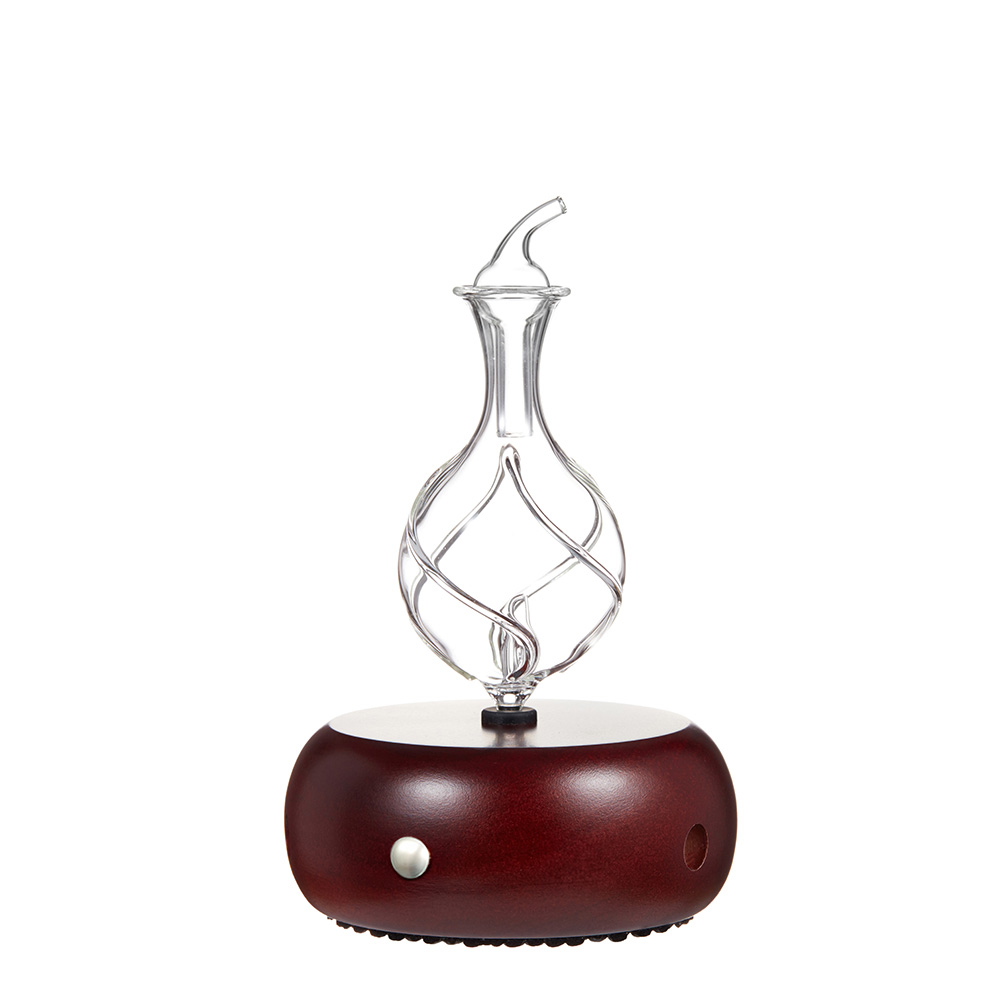
Give Your Pure Oils the Diffuser They Deserve
No water, no heat, no plastic. Handcrafted wood and medical-grade Pyrex glass deliver pure, undiluted essential oils exactly as the lab certified them.

Join Now and Get a Coupon for 10% Off!
What 12 Years of Customer Blending Data Reveals About Consistency
Lab reports tell you about one batch. Real confidence in a brand comes from consistency across many bottles, over many years. Organic Aromas has more than a decade of customer feedback on blending and diffusion, and a few patterns surface again and again.
First, the brands that publish or readily share GC/MS results are the ones customers report the fewest “this batch smells different” surprises from. Consistency of chemistry shows up as consistency of scent. Second, single-origin oils with clear botanical names blend more predictably; when a base note like sandalwood or vetiver is genuine, our customers’ blends hold together for hours rather than collapsing into the top note. Third, and most telling, the same oil consistently rated as richer and longer-lasting when run through a Nebulizing Diffuser® versus a water-based unit, which lines up exactly with the chemistry above.
The practical takeaway: pick a brand that proves its consistency, learn to balance top, middle, and base notes, and protect that investment with a diffusion method that keeps the profile intact. If you are ready to experiment, our roundup of essential oil blends for your diffuser is a good place to start.
Frequently Asked Questions About the Best Essential Oil Brands
Which essential oil brands let you look up your batch’s GC/MS report?
Several now offer a batch-lookup tool: you enter the lot number printed on your bottle and pull that exact batch’s GC/MS results. Plant Therapy and Rocky Mountain Oils are two well-known examples, and Aura Cacia prints lot numbers you can reference. This is the strongest form of testing transparency because it ties the report to your bottle rather than a generic sample. Brands that only cite an in-house “standard” without batch-level access give you less to verify.
Is Reddit a reliable place to find the best essential oil brand?
Community threads are genuinely useful for spotting patterns — repeated complaints, pushback against high-pressure MLM selling, or a brand people keep recommending unprompted. But they are anecdotal, and scent preference is personal. Treat the discussion as a shortlist generator, then cross-check any recommendation against published GC/MS, sourcing detail, and pricing before you buy.
Are more expensive essential oils always better?
Not always, but suspiciously cheap oils are a reliable warning. Genuine pure oils reflect real agricultural cost, so a rose or sandalwood priced like an orange oil is almost certainly diluted or synthetic. Judge value by the GC/MS report and sourcing detail, not by price alone.
Are MLM essential oil brands worth it?
Multi-level marketing brands can sell quality oils, but the structure adds commission layers that raise the retail price. You often pay more for the same purity you could get from a transparent, direct-to-consumer brand. If you choose an MLM oil, do it for the specific product, not the recruitment pitch.
How should I store essential oils to keep them fresh?
Keep oils in tightly closed amber or cobalt glass, away from heat and direct light, and replace caps promptly to limit oxidation. Citrus oils are the most fragile. For the full breakdown of shelf life by oil type, see our guide on whether essential oils expire.
Do I need to dilute essential oils before diffusing?
For topical use, dilution in a carrier oil is essential for safe skin contact, and our dilution guide covers the ratios. For aromatic diffusion, a Nebulizing Diffuser® uses the oil neat and simply meters how much enters the air, which is part of why the scent stays true.

Join Our Exclusive Member Club to get Big Discounts!
Final Thoughts: Choosing a Brand You Can Trust
The best essential oil brands are not the loudest; they are the most transparent. They show their work with independent GC/MS testing, increasingly let you look up your own batch, name the plant and the place, share a certificate of analysis when you ask, and price their oils in line with what it truly costs to make them. Run any brand through those filters — and the quick label-and-blotter checks above — and the field narrows fast.
Then remember the last mile. A pure oil is only as good as the air it reaches you through. Pair a brand you trust with a Nebulizing Diffuser® that delivers the oil whole, undiluted, and exactly as tested, and you will finally experience aromatherapy the way the chemistry intended. That is the standard we hold ourselves to, and the one we hope this guide helps you demand from everyone else.
Get Pure-Oil Tips in Your Inbox
Join our community for honest aromatherapy guidance, tested blends, and early access to new Nebulizing Diffuser® releases.



I learned about a few brands I hadn’t heard about. Thanks for the great information.
I discovered essential oils 15 years ago when I was ill as an alternative to add to my treatments.
Wow this is very nice! I can’t wait to try all the brands noted!!
Thank you for sharing this.
great info!!!
Very Good!
I really want to learn more
I have not heard of Plant Therapy yet so thanks for the heads up!
I have heard of a few of these brands. Good to know! Thanks!
great info thank you
Thank you for all this information
As a man, I don’t know that much about oils; learning. THANKS!
Didn’t know there were many different essential oils ou there and for different uses. Great products 👍
VERY COOL
Great information! Thanks for sharing
Awesome post. Thank you.
thanx 4 all the info
thank you, i didn’t know about this!
I use lavender. love the smell
I would love to try some of these.
Wow! Such great information. I’ve made note of the brands you’ve mentioned. Thanks for sharing!
So interesting!! Thank you
I need to look into buying organic aromas essential oils. I deserve something high quality for a change.
I have been using Doterra for years will look into this
I love lavender oils, they really relax me.
I am interesting in learning more, THanks
Thank you for all this information! I’m no fan of MLM’s, so I’ll be avoiding doTerra. I think Organic Aromas will be my go-to.
i would keep them close
Thanks for the info
LOTS of good info here
Thanks for the information. There are so many brands out there and many are just bad or using alternate products for their brand.
It’s important to get it from a good brand. Thanks for the info!
Thank you for the information, I di not know who the top companies were
I’ve been using Eden’s for awhile, didn’t have any exposure to Organic Aromas – will definitely give you an honest try. I had no idea how oils were ranked, and of course EVERY company says they’re the best so it’s nice to see some science behind your claim.
What I have learned that whichever compa
I’ve don’t know if it’s my phone but I start my comments and then it goes back to the beginning of this page. But I know that whichever product or company I use I need to feel confident in what I’m buying. And I need to make sure that they do third party lab testing. Thank you
This is a very informative article
Great info
I have to start looking into buying more quality oils rather than cheaper ones.
thanks! I will check some of these out. some i have heard of already
I always learn so much on this blog
I appreciate all this information! It’s on my list to go over all my oils and look into new ones! Thank you!
This is great information! I really appreciate how you give a little paragraph about each brand. Excited to check them out.
This was super helpful! I’m new to you guys and can’t wait to try out your essential oils! I’ve always wanted to try Doterra and Young Living but haven’t had a chance to yet!
Thanks for educating me on a wide variety of important things to know about essential oils!!
Thank you for the information.
Signature blend is tops