

Essential Oils for Cologne: Build Your Signature Natural Scent, Note by Note
Reach for a bottle of mainstream cologne and you are mostly buying synthetic aroma molecules suspended in alcohol. Learning to build essential oils for cologne flips that equation: you compose a personal fragrance from real plant distillates, control every note, and end up with a scent that is genuinely yours—no two bottles alike. It is easier than the perfume counter wants you to believe, and the raw materials are the same pure oils you may already use for aromatherapy.
This guide treats a natural cologne the way a perfumer treats a formula. We cover the note pyramid that decides how your scent unfolds over a day, a note-by-note oil palette, the exact dilution math that separates a splash from a signature, the one citrus-oil safety trap almost every DIY guide skips, and a final trick most guides miss entirely—how to wear your blend on skin and diffuse the same formula into a room. By the end you will be able to mix, wear, and troubleshoot a cologne built entirely from pure essential oils.
Why Build a Cologne from Essential Oils?
A conventional fragrance is engineered for consistency and shelf life, which is why it leans on synthetic musks, fixatives, and a long list of undisclosed “fragrance” ingredients. A cologne built from essential oils trades that uniformity for something more interesting: living complexity. A single cold-pressed bergamot carries more than three hundred aromatic compounds, and they shift subtly with the harvest. Your blend becomes a small signature of a specific place and season rather than a lab-matched formula reproduced by the million.
There is also the matter of what touches your skin. When you build your own, you know every drop that goes in, and you can insist on genuinely pure, unadulterated oils rather than “fragrance-grade” dilutions. If purity is your priority, it is worth understanding how to judge a truly pure essential oil before you spend money on a starter kit. And because you control the palette, you can lean masculine, fresh, woody, or spicy at will—our guide to masculine aromatherapy oils is a good jumping-off point for a classic barbershop direction.
The trade-off is honesty: a natural cologne will not project across a room for twelve hours the way a synthetic can, and it will evolve on your skin instead of holding one fixed accord. Most people who make the switch come to prefer exactly that. The scent feels like part of them rather than a cloud they walk around in.
The Note Pyramid: How a Natural Cologne Unfolds
Every well-built fragrance is really three fragrances layered in time. Perfumers call this the note pyramid, and it is governed by simple physics: lighter molecules evaporate first, heavier ones last. Understanding the pyramid is the difference between a cologne that tells a story and one that smells sharp for ten minutes and then vanishes.
Top notes (the first 15 minutes to 2 hours)
Top notes are the bright first impression—citrus and light herbs, built largely from small monoterpene molecules like limonene that flash off quickly. Bergamot, lemon, grapefruit, lime, and peppermint live here. They sell the scent in the opening seconds but do not stay.
Heart notes (2 to 4 hours)
The heart is the character of the fragrance—florals, herbs, and spices that emerge as the top notes burn off. Lavender, geranium, rosemary, clary sage, and cardamom sit here. For richer floral hearts, the solvent-extracted absolutes such as rose, jasmine, and osmanthus add depth that steam-distilled oils cannot.
Base notes (4 to 8+ hours)
Base notes are the memory of the scent—heavy, slow-evaporating sesquiterpene-rich oils like sandalwood, cedarwood, patchouli, vetiver, and frankincense. They do double duty as fixatives: their low volatility physically slows the evaporation of the lighter molecules layered with them, which is why a cologne without a proper base note disappears within the hour. That single fact is the most common failure mode in home fragrance, and the fix is simply adding 15–20% base note oil.
A reliable starting ratio, tested across countless perfumery formulas, is roughly 30% top, 50% heart, 20% base—a 3:5:2 balance. Start there, then nudge toward more base if your blend fades too fast or more top if it opens too heavy.
Sign Up to Get Your FREE Essential Oils e-Book Here
Your Note-by-Note Oil Palette
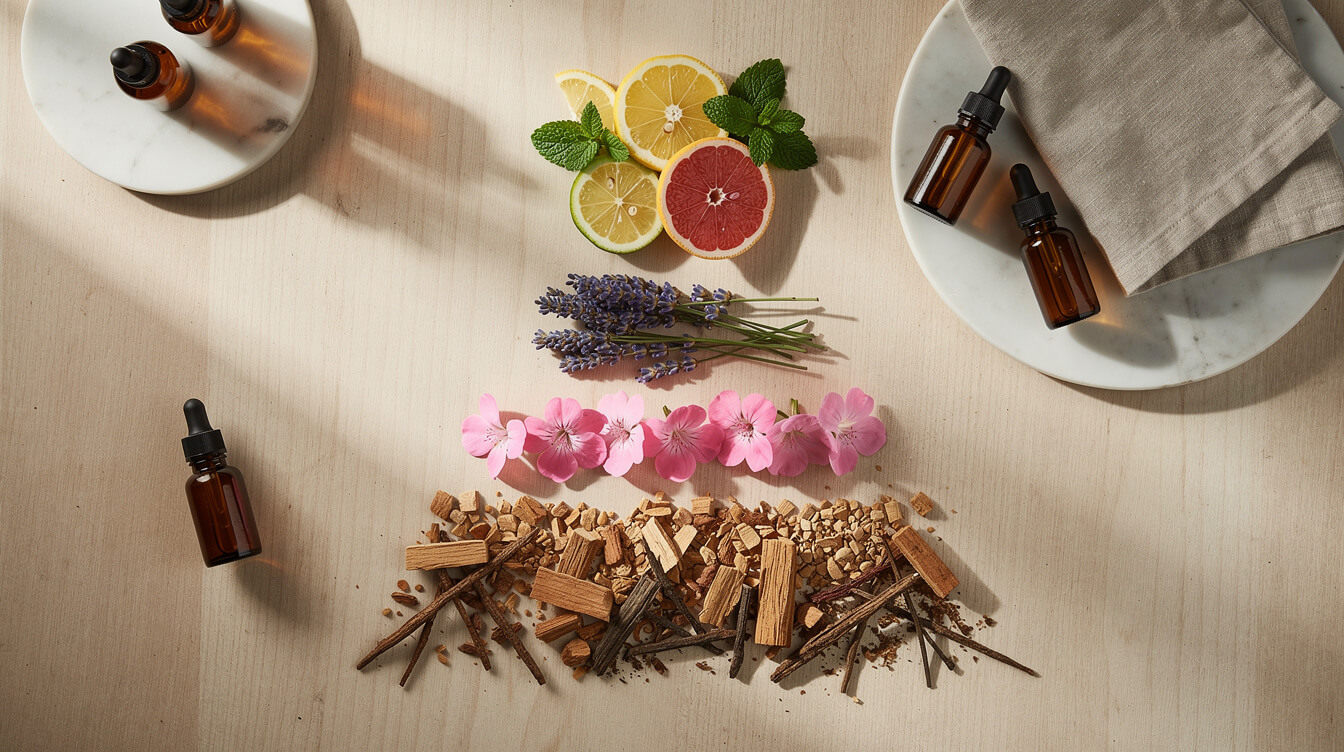
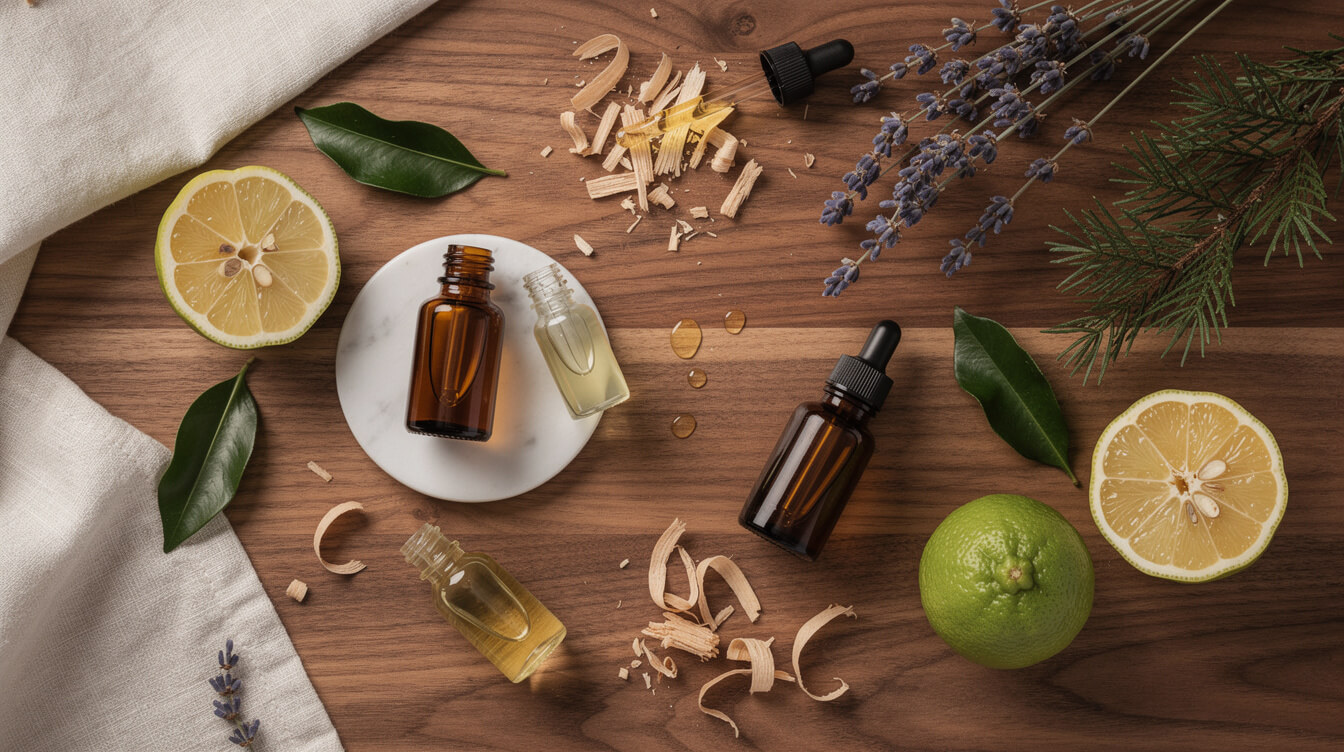
You do not need forty oils to begin. A tight palette of eight to ten, chosen across the three tiers, lets you build dozens of distinct colognes. Here is a starter palette organized by role.
Top notes to start with
- Bergamot — the classic fresh, slightly floral citrus at the heart of Eau de Cologne (mind the safety note below)
- Grapefruit — bright and modern, less phototoxic than most citrus
- Peppermint or petitgrain — a green, aromatic lift
Heart notes to start with
- Lavender — the great connector; bridges citrus tops and woody bases
- Geranium — rosy and green, a natural rose stand-in
- Clary sage or cardamom — herbaceous and warm-spicy
Base notes to start with
- Cedarwood — dry, clean, affordable, endlessly wearable
- Sandalwood — creamy and soft; a luxurious fixative
- Vetiver or patchouli — earthy anchors with serious staying power
A dependable first formula: bergamot and grapefruit on top, lavender and a whisper of cardamom in the heart, cedarwood and a drop of vetiver at the base. That is a fresh-woody cologne almost anyone can wear.
The Dilution Formula: From Splash to Signature
This is where most home blends go wrong—either so weak they evaporate before you leave the bathroom, or so strong they irritate skin. Fragrance strength is defined by the percentage of aromatic oil in the final mix, and the traditional categories give you exact targets.
- Eau de Cologne: roughly 2–5% aromatic oils — light, refreshing, reapply through the day
- Eau de Toilette: 5–15% — the everyday sweet spot
- Eau de Parfum: 15–20% — rich and long-lasting (best diluted in carrier, not sprayed)
The drop math
One milliliter of essential oil is about 20 drops. To hit a classic 5% cologne in a 30 ml (1 oz) bottle, you need roughly 1.5 ml of total essential oil—about 30 drops—topped up with your base liquid. Split those 30 drops by the 3:5:2 ratio and you get about 9 top, 15 heart, 6 base. Keep skin-applied blends at or below 5% and you stay comfortably within safe dermal limits for most oils.
Alcohol or carrier oil?
Your base liquid shapes the whole experience. High-proof perfumer’s alcohol (around 95% ethanol) “throws” the scent—it projects and flashes off cleanly, giving that crisp traditional splash. A carrier oil like fractionated coconut or jojoba sits closer to the skin: quieter projection, but longer wear, no sting, and gentler on sensitive skin. A practical compromise is a roll-on in jojoba for daily wear and an alcohol spray for occasions. Let either one rest—”macerate”—for one to two weeks in a cool, dark place so the notes marry before you judge the result.
Join Now and Get a Coupon for 10% Off!
The Bergamot Trap: Photosensitivity and Skin Safety
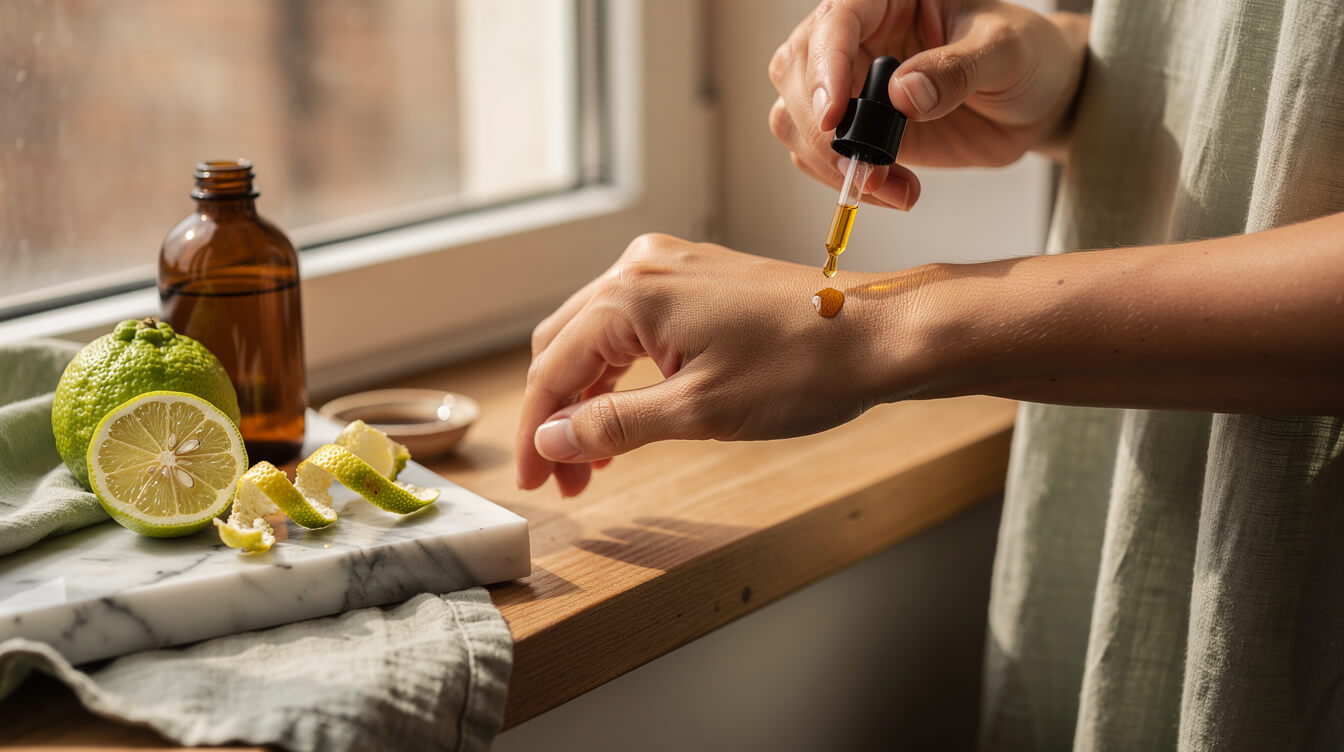
Here is the detail almost every cologne tutorial leaves out, even as it recommends bergamot in the first breath. Cold-pressed citrus oils—especially bergamot, but also lime, lemon, and bitter orange—contain furocoumarins such as bergapten (5-MOP). On skin exposed to sunlight, these compounds can trigger a phototoxic reaction: burns, blistering, and long-lasting dark patches, even hours after application.
This is not a reason to avoid citrus—it is a reason to use it correctly. The international fragrance standard limits bergapten to about 0.4% in leave-on skin products, and at typical cologne dilutions a single citrus oil usually stays well under that. Still, protect yourself with three simple habits:
- Choose FCF (furocoumarin-free) bergamot for anything worn on skin—it is distilled to remove the phototoxic compounds while keeping the aroma
- Keep total cold-pressed citrus modest in skin blends, and lean on steam-distilled citrus (like distilled lime) which is not phototoxic
- After applying a citrus-forward blend, keep treated skin out of direct sun for 12–18 hours—or wear it on clothing instead
Two more universal rules: never apply essential oils neat (undiluted) to skin, and always run a 24-hour patch test on your inner forearm before wearing a new blend. If you have sensitive skin or are pregnant, check each oil individually—clary sage and some others carry their own cautions.
From Skin to Space: Diffuse Your Signature Scent
Here is the move that turns a hobby into a signature. The same blend you wear on your wrist can become the scent of your home—but only if you release it in a way that keeps the formula intact. And that is entirely a question of method.
Heat diffusers scorch the lightest citrus molecules before they ever reach the air. Ultrasonic units crack the oil across a vibrating disc in a tank of water, diluting it and muting the fragile top notes. Both distort the careful 3:5:2 balance you just built. A Nebulizing Diffuser® takes a different path: using Bernoulli’s principle, it draws undiluted oil up a glass tube and atomizes it into a cold, micron-fine mist—no water, no heat, no solvent. Every note leaves the glass in the proportion you composed it. If you want the full physics, our complete guide to nebulizing diffusion and our breakdown of how diffusion method changes a blend go deeper.
So compose your cologne, wear a dab on your pulse points, and load a few drops of the undiluted blend into a nebulizing unit to carry that same scent through your bedroom or study. Your fragrance and your space finally speak the same language—a coherence no store-bought cologne can give you.
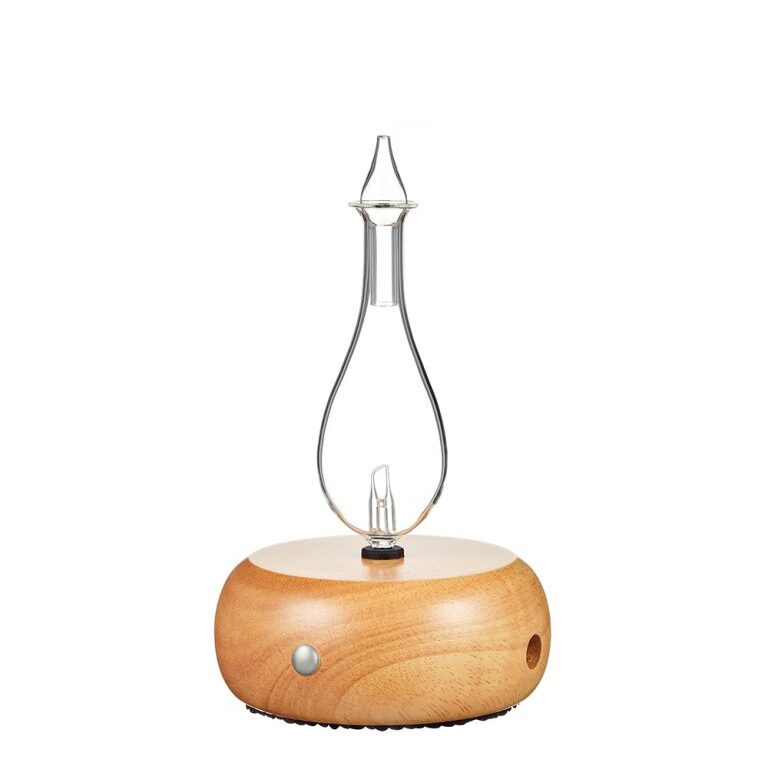
Wear It, Then Fill the Room With It
Load the very same blend you wear into a Magnificent Smart Nebulizing Diffuser®. No water, no heat, no dilution—just your signature scent, released in the exact proportion you composed it.
Sign Up to Get Your FREE
e-Book Here…
Essential Oils for Cologne: Frequently Asked Questions
How long does a homemade essential oil cologne last on skin?
Expect 2 to 5 hours, depending on your base notes and whether you used alcohol or a carrier oil. Carrier-oil blends and generous base notes (sandalwood, vetiver, patchouli) last longest. Reapplication is normal and part of the charm of natural fragrance.
Can I make cologne without alcohol?
Yes. Use a carrier oil like jojoba or fractionated coconut as a roll-on. Projection is softer and more intimate, but the wear is longer and gentler on skin—ideal for sensitive skin or office settings.
Which essential oils last the longest in a cologne?
Base-note oils: sandalwood, vetiver, patchouli, cedarwood, and frankincense. They evaporate slowly and act as natural fixatives, extending the life of the lighter notes blended with them.
Is it safe to wear citrus essential oils in the sun?
Only with care. Cold-pressed bergamot, lime, and lemon can be phototoxic. Use furocoumarin-free (FCF) versions on skin, keep citrus modest, or wear citrus-forward blends on clothing and stay out of direct sun for 12–18 hours after applying to skin.
Final Thoughts
Building a cologne from essential oils is part chemistry, part play. Master the note pyramid, respect the dilution math, sidestep the citrus-photosensitivity trap, and you can compose a fragrance no counter sells—one that shifts through top, heart, and base across your day and smells unmistakably like you. Then take the final step most people never think of: diffuse that same blend into your space so your signature scent surrounds you at home as well as on your skin. Start with a tight palette, keep notes on every batch, and let each formula rest before you judge it. Your best signature scent is a few careful drops away.