



Essential Oil for Tick Repellent: What Works, How to Diffuse It, and Pet-Safe Rules
If you have gone looking for an essential oil for tick repellent, you have probably noticed a pattern: almost every guide is about your skin. Mix this with that carrier, dab it on your ankles, reapply every two hours. Useful — but it skips the question a lot of home-and-garden readers are actually asking, which is how to make an entryway, porch, or mudroom smell of the plants ticks tend to avoid, rather than turning yourself into a walking science experiment.
This guide covers both, honestly. You will learn which oils the research and the aromatherapy field most commonly reach for, what a diffuser can and cannot realistically do against ticks, a genuinely non-obvious detail about cedarwood that most listicles get wrong, and the pet-safety rules that matter more here than with almost any other repellent topic. Throughout, the framing stays deliberately careful: these are oils traditionally used and commonly cited, not medicines, and none of this replaces a tested repellent when you are heading into genuinely high-risk tick country.
Which Essential Oils Are Most Commonly Associated With Ticks

Strip away the marketing and the same handful of botanicals keep surfacing across published screening studies and long-standing field use. A frequently cited 2017 paper in Ticks and Tick-borne Diseases screened eleven essential oils against adult ticks and found the strongest laboratory activity clustered among a few familiar plants rather than spread evenly across the shelf. In practical aromatherapy circles, the short list almost always includes cedarwood, lemon eucalyptus, geranium (and its cousin rose geranium), citronella, along with supporting players like thyme, palmarosa, and clove.
What is striking in the screening literature is how consistently the potency tracks with a few specific plant chemicals rather than with “essential oils” as a vague category. Oils rich in aromatic compounds like carvacrol and thymol (think oregano and red thyme) and in geraniol (geranium, palmarosa) tend to score highest in contact tests, while the gentler woods and grasses show up more for repellency than for knockdown. That is a useful lens: when a blend “works,” it is usually because of a couple of hard-hitting components riding alongside softer, longer-lasting ones — not because every drop is equally active.
Two caveats keep this honest. First, most of that evidence comes from petri dishes and treated fabric, not from a bottle of oil misting across your yard — laboratory contact activity does not automatically translate to real-world protection. Second, “works against ticks” is not one thing: some studies test whether an oil repels questing ticks, others whether it kills them on contact, and the results differ by tick species. So treat any single oil as one commonly-cited tool, not a guarantee. If you have already read our broader look at an essential oil for general bug repellent, you will recognize several of these names; the tick short list is simply a narrower, more consistent slice of that group.
Diffusing vs. Skin: What an Essential Oil for Tick Repellent Can and Can’t Do
Here is the distinction almost no topical guide bothers to make. Rubbing a diluted oil on your skin creates a short-range vapor barrier that travels with you — that is what you want on a hike. Diffusing does something different: it scents a defined volume of air in a fixed location. A diffuser is not going to build an invisible force field over your whole garden, and it will do essentially nothing outdoors where the aroma dissipates in seconds.
Where ambient diffusion earns its place is the transition zone — the covered porch, the screened patio, the mudroom or entryway where you peel off boots and brush down the dog after being outside. Filling that pocket of relatively still air with the scent of cedar and geranium may help make the space feel less inviting to the occasional hitchhiker and, just as usefully, keeps the whole area smelling clean and green during outdoor season. Think of it as ambience with a purpose, not a substitute for a repellent on your body. For the record, when you are heading into tall grass or wooded trails, a skin-applied option — ideally one built on the same logic as our DIY natural repellent blends — is the appropriate tool, not a machine sitting on a shelf.
The delivery method also decides how much actual oil reaches the air. Water-based ultrasonic units dilute a few drops into a large tank, throwing a cool, damp, heavily diluted mist. A waterless Nebulizing Diffuser® does the opposite: it atomizes pure, undiluted oil into fine particles using pressurized air, so the aroma is concentrated and no heat degrades the delicate plant chemistry. If you want an entryway to genuinely read as “cedar and citronella,” that concentration is the difference maker. Our guide to whether essential oil diffusers are safe walks through why the method matters as much as the oil.

Sign Up to Get Your FREE Pets
e-Book Here…
Cedarwood, Lemon Eucalyptus, Geranium & Citronella: A Quick Reference

Four oils do most of the heavy lifting in tick-oriented blends. Here is what each is traditionally reached for — and one detail per oil that the roundups tend to skip.
Cedarwood — and why the species matters
Cedarwood is the classic grounding, woody base note, and it is where the single most useful jewel in this article lives. The Tisserand Institute, drawing on a review of published research, notes that Cedarwood Virginian (Juniperus virginiana) appears more effective for ticks than Cedarwood Atlas (Cedrus atlantica) — two oils sold under the same everyday name. Grab whichever “cedarwood” is cheapest and you may be reaching for the weaker one. When ticks are the reason you are buying, look for Virginian specifically.
Lemon Eucalyptus — the one public-health agencies actually register
Here is the honest asterisk to the whole “natural repellent” conversation. The one plant-derived active that regulators such as the EPA register and public-health bodies list alongside conventional repellents is oil of lemon eucalyptus (OLE), specifically its refined component PMD (para-menthane-3,8-diol). Crucially, that recommendation is for the standardized, processed repellent product — not the raw essential oil you would drop into a diffuser, and it is generally not advised for children under three. Diffusing lemon eucalyptus is lovely and bright; just do not confuse it with the registered OLE/PMD product tested for skin protection.
Geranium and Rose Geranium — the field favorite
Geranium is arguably the most beloved oil in this niche among people who actually live in tick country. Robert Tisserand has noted that the common geranium chemotypes (including Pelargonium graveolens and rose geranium) tend to perform comparably to one another, so you do not need to hunt for an exotic variety. Its soft, green-rosy scent also blends beautifully, which is why it anchors so many recipes.
Citronella — familiar, fast, and fleeting
Citronella is the scent everyone associates with outdoor bug season, and it is a legitimate top note here. The trade-off is volatility: it flashes off quickly, which is exactly why the pros pair it with slower, heavier oils. That pairing principle is the secret to a blend that lasts, and it is the whole idea behind the routine below. If you want the same logic applied to eight-legged intruders, our piece on an essential oil for spider repellent uses the same volatility trick.
Thyme, Palmarosa and Clove — the supporting cast
Beyond the core four, a few oils earn cameo roles. Red thyme and oregano are chemically potent (that carvacrol and thymol again) but harsh, skin-sensitizing, and overpowering in the air — use them sparingly if at all. Palmarosa is the quiet standout: rich in geraniol like geranium, softly rosy, and far gentler, it makes an excellent stretcher that boosts a blend without dominating it. Clove shows up in many recipes for its punch, but it is one of the more irritating oils to diffuse and among the riskier around pets, so treat it as optional. When a formulation wants staying power and safety together, palmarosa is usually the smarter pick than clove.
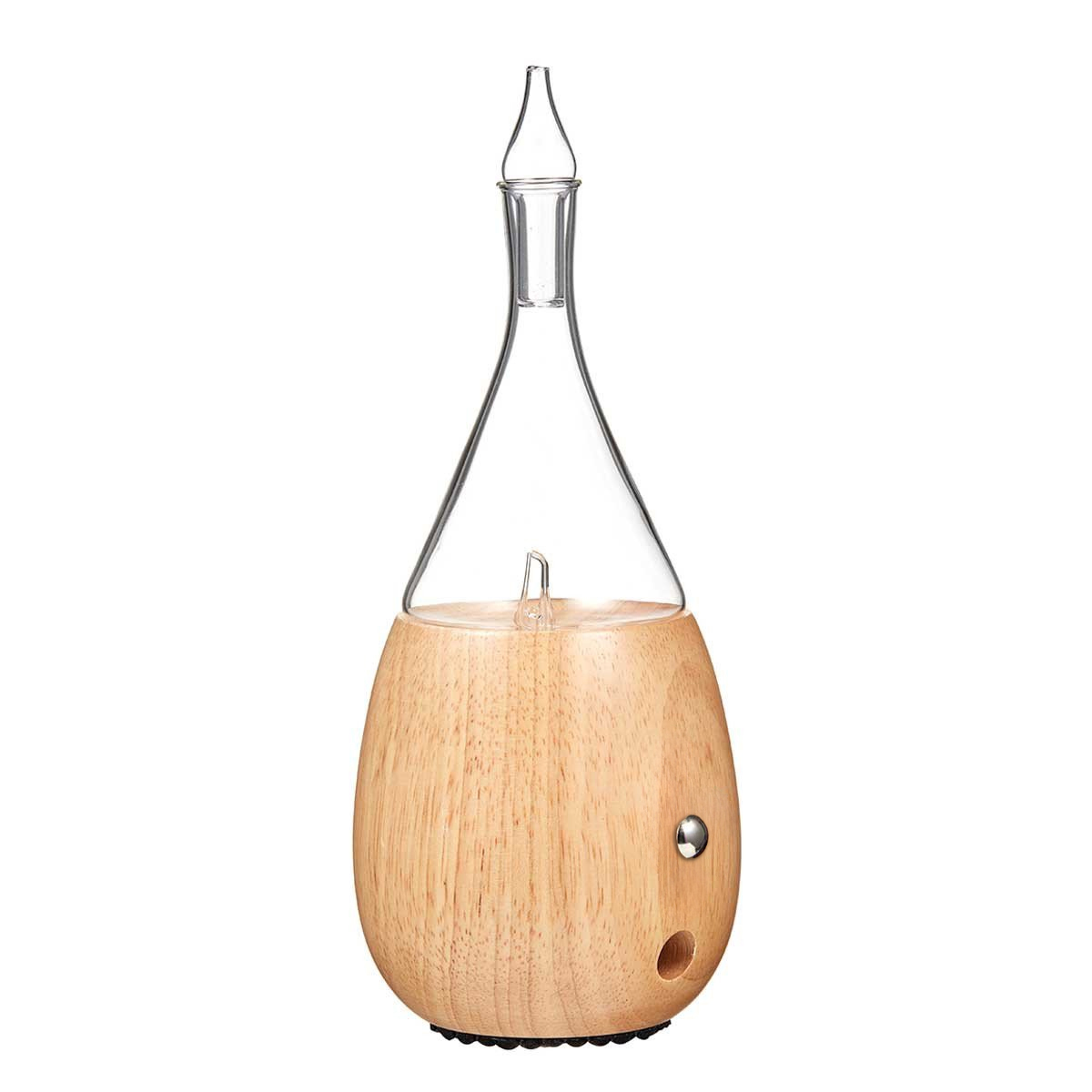
Disperse Pure Oils Into the Air — No Water, No Heat
A handcrafted Nebulizing Diffuser® sends a fine mist of undiluted essential oil into a room using nothing but pressurized air — ideal for scenting a porch, mudroom, or entryway during outdoor season.
Shop the Nebulizing Diffuser® CollectionA Porch and Entryway Diffusing Routine for Outdoor Season
The professionals who formulate tick blends follow one principle above all others: combine oils of varied volatility so the aroma unfolds and lingers instead of vanishing in twenty minutes. The Tisserand Institute’s research-based key literally builds its master blend by choosing one oil from each of three volatility tiers. You can borrow that structure for the air.
Think in three layers. A bright top note that announces itself and fades fast — citronella or lemon eucalyptus. A green middle note that carries the character — geranium or rose geranium. And a grounding base that anchors everything and lingers for hours — Cedarwood Virginian. Roughly two parts top, two parts middle, one part base is a sane starting ratio; the heavier the base, the longer the whole thing holds.
For a waterless Nebulizing Diffuser®, you are running the neat blend directly, so short, intermittent bursts are the move — two to five minutes on, then a long pause — rather than an endless stream. That keeps the scent present without overwhelming the space or burning through oil. If you run a water-based unit instead, dial the drop count to the room; our chart on how many drops of essential oil to use by room size saves a lot of guesswork. Cycle the diffuser when people are actually coming and going — early morning, late afternoon — not around the clock.
One maintenance note that specifically matters for tick blends: the woody, resinous oils that give these recipes their staying power — cedarwood especially — are also the thickest and most likely to leave residue. In a waterless unit, that means a periodic rinse with high-proof alcohol to keep the fine atomizing parts clear; in a water-based unit, it means wiping the reservoir between different blends so cedar does not haunt tomorrow’s citrus. A minute of cleaning after a heavy-base blend keeps the aroma true and the machine running the way it should.

Sign Up to Get Your FREE
e-Book Here…
Pet Safety First: Oils to Never Diffuse Around Cats and Dogs

This is the section to read twice, because the very oils most associated with ticks are also among the riskier ones for animals — and pets are exactly who is nearby when you diffuse near an entryway. The guiding rule from the Tisserand Institute is blunt and worth repeating: for dogs, a formulator might use only a drop or two of a tick oil blend on a collar or the base of the tail, and for cats, you simply do not use these oils at all.
Cats lack a key liver enzyme pathway (glucuronidation) that helps other mammals process certain plant compounds, which makes many essential oils — and undiluted diffusing in particular — a genuine hazard for them. Dogs are more tolerant but far from bulletproof, and strong, heavily volatile oils can still irritate their far more sensitive noses and airways. Our vet-informed guide to oils to avoid around dogs goes deeper, and if ants have you reaching for the diffuser too, the same cautions apply in our essential oil ant repellent guide.
Practical rules that keep it responsible: never diffuse in a small, closed room where an animal cannot leave; always give pets an open door to walk away; keep runs short and concentrations light; and if you have a cat, keep tick-oil blends out of the shared air entirely and confine them to your own outdoor gear. When in doubt, favor an unscented approach around the animals and save the aromatics for a room they do not frequent.
Blend Ideas — and When to Skip the Essential Oil for Tick Repellent Entirely
Two simple ambient blends to start with. Porch Guardian: two drops citronella, two drops geranium, one drop Cedarwood Virginian — bright, green, grounded. Woodland Entry: two drops lemon eucalyptus, one drop rose geranium, two drops Cedarwood Virginian — a little more forest, a little less citrus. Scale the ratios up while keeping the proportions, mix a small stock, and run it in the short bursts described above.
Now the honest part, because a good guide tells you when its own topic is the wrong tool. If you are walking into a known high-risk tick area — tall grass, dense woods, a region with high rates of tick-borne illness — ambient diffusing and even DIY skin blends are simply not enough. That is the moment for a tested, registered repellent (OLE/PMD or a conventional active), proper clothing coverage, and a thorough tick check afterward. Aromatherapy is for ambience and for lower-risk everyday moments; it is not a shield, and treating it as one is how people get hurt. Use the diffuser to make your porch pleasant, not to make medical decisions.

Join Now and Get a Coupon for 10% Off!
Frequently Asked Questions
Does diffusing essential oils actually keep ticks away?
Diffusing scents a fixed pocket of air; it does not create a protective zone across a yard or follow you outdoors. It may help make a porch or entryway feel less inviting and smell wonderfully green, but it is not a tested repellent and should not be relied on for protection in tick-heavy areas. For your body, a properly diluted skin blend — or a registered product — is the right tool.
What is the single best essential oil for tick repellent?
There is no one winner, but geranium (and rose geranium) is the field favorite for everyday use, while Cedarwood Virginian is the most-cited grounding base. Oil of lemon eucalyptus stands apart because its refined component, PMD, is the one plant-derived active that regulators register — though that applies to the standardized product, not the raw oil in a diffuser.
Is it safe to diffuse tick-repellent oils around dogs and cats?
Around cats, no — keep these oils out of shared air entirely, because cats process many plant compounds poorly. Around dogs, use extreme restraint: short runs, light concentrations, an open door, and never in a small closed room. See our vet-informed guide to oils to avoid around dogs before diffusing near any pet.
Cedarwood Atlas or Cedarwood Virginian for ticks?
Virginian (Juniperus virginiana). Both are sold simply as “cedarwood,” but the published-research review summarized by the Tisserand Institute indicates Cedarwood Atlas is likely less effective for ticks. If ticks are your reason for buying, choose Virginian specifically.
Can I put these oils directly on my skin?
Never undiluted. Essential oils must be diluted in a suitable carrier or a properly formulated base, and some tick oils (oregano, red thyme, clove) are notably sensitizing. When you need on-body protection for higher-risk outings, a registered repellent is the more reliable choice.
The Honest Bottom Line
An essential oil for tick repellent is best understood as two different jobs. On your skin, in the right dilution, a well-built blend gives you short-range, travels-with-you cover for lower-risk outings. In the air, a diffuser cannot patrol your yard, but it can turn the porch, patio, or mudroom into a space that smells of cedar and geranium and feels a little less hospitable to hitchhikers — while keeping your delicate plant chemistry intact if you run it waterless and heat-free.
Choose Cedarwood Virginian over Atlas, layer your oils by volatility so the scent lasts, keep cats entirely out of the equation and dogs on a very light touch, and never mistake a pleasant-smelling room for real protection in tick country. Do that, and your outdoor season smells wonderful and stays sensible. Pick two oils, mix a small stock tonight, and let the porch do its quiet work.