

Monday Oil of the Day: Frankincense — the Resin Scent Chemistry Almost Filters Out
The Chemistry Most Wellness Blogs Get Backwards
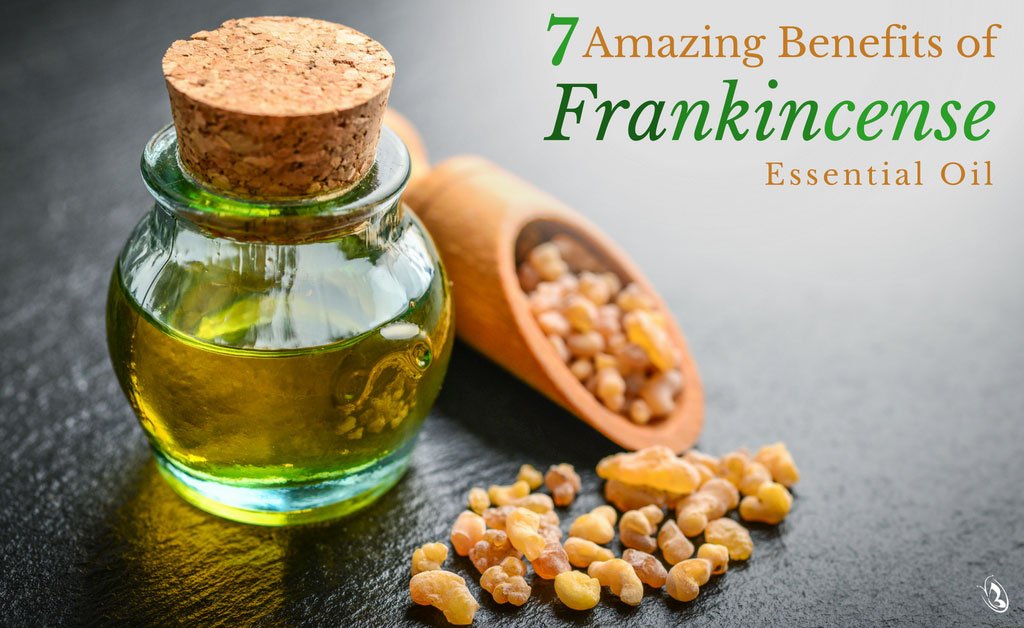
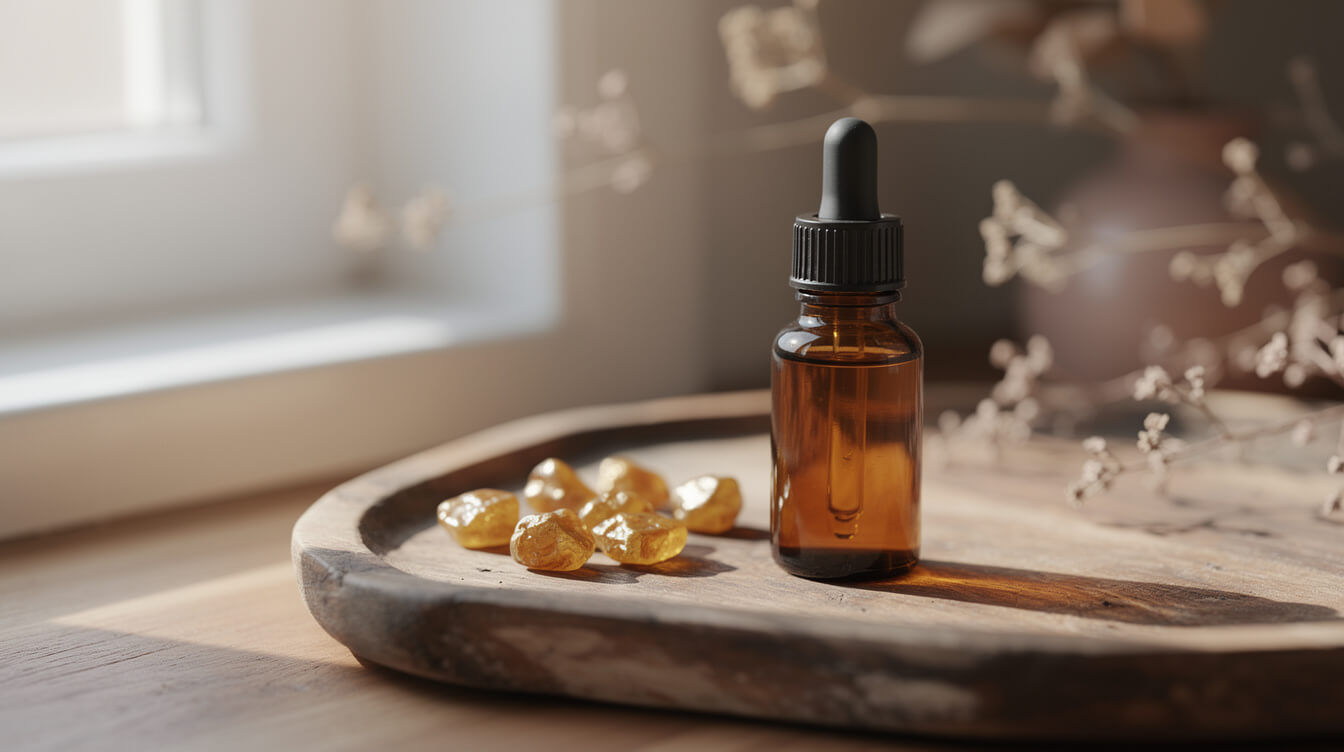
Search “frankincense benefits” and nearly every result credits the calm to boswellic acids — the anti-inflammatory compounds the resin is famous for in supplement capsules and topical salves. Here’s the part almost none of them mention: boswellic acids are large triterpenoid molecules, too heavy to survive steam distillation. They stay behind in the resin. What actually rides the steam into your bottle of frankincense essential oil is a much lighter, brighter chemistry — alpha-pinene often makes up 20–35% of it, alongside limonene and a touch of sabinene. That’s why a truly diffused frankincense reads more like a green, citrus-edged forest note than the deep, smoky church-incense memory most people expect. The oil and the resin are, chemically, almost two different substances.
This Monday’s Ritual
That pinene fraction is also the most volatile part of the oil — it’s fleeting, and heat drives it off before it ever reaches you. Add 6–8 drops of pure frankincense to your Nebulizing Diffuser® and run it for 20–30 minutes during a slow morning stretch or your first quiet stretch of work. Because nebulizing atomizes cold, with no water or heat involved, that top note arrives intact instead of being cooked away in a heated reservoir. Later in the week, once you’ve gotten to know frankincense on its own, it pairs beautifully with cedarwood for a deeper, woodier grounding blend as the season turns.
Sign Up to Get Your FREE
e-Book Here…
Wishing you a grounded start to the week.
— Chad