


12 Essential Oils for Christmas: The Complete Diffusing Guide
The best essential oils for Christmas aren’t just about smelling like a Christmas tree — the spice, resin, and citrus oils that define the season each carry a distinct chemical signature, and how you release that signature into the air changes what you actually smell. Below are 12 essential oils to use at Christmas, organized by family, plus the aromatic chemistry that explains why they pair so well together and why a Nebulizing Diffuser® gets more out of them than a candle, wax warmer, or heat-based device ever will.
The Science of Holiday Scent Memory (and Why Nebulizing Preserves It)
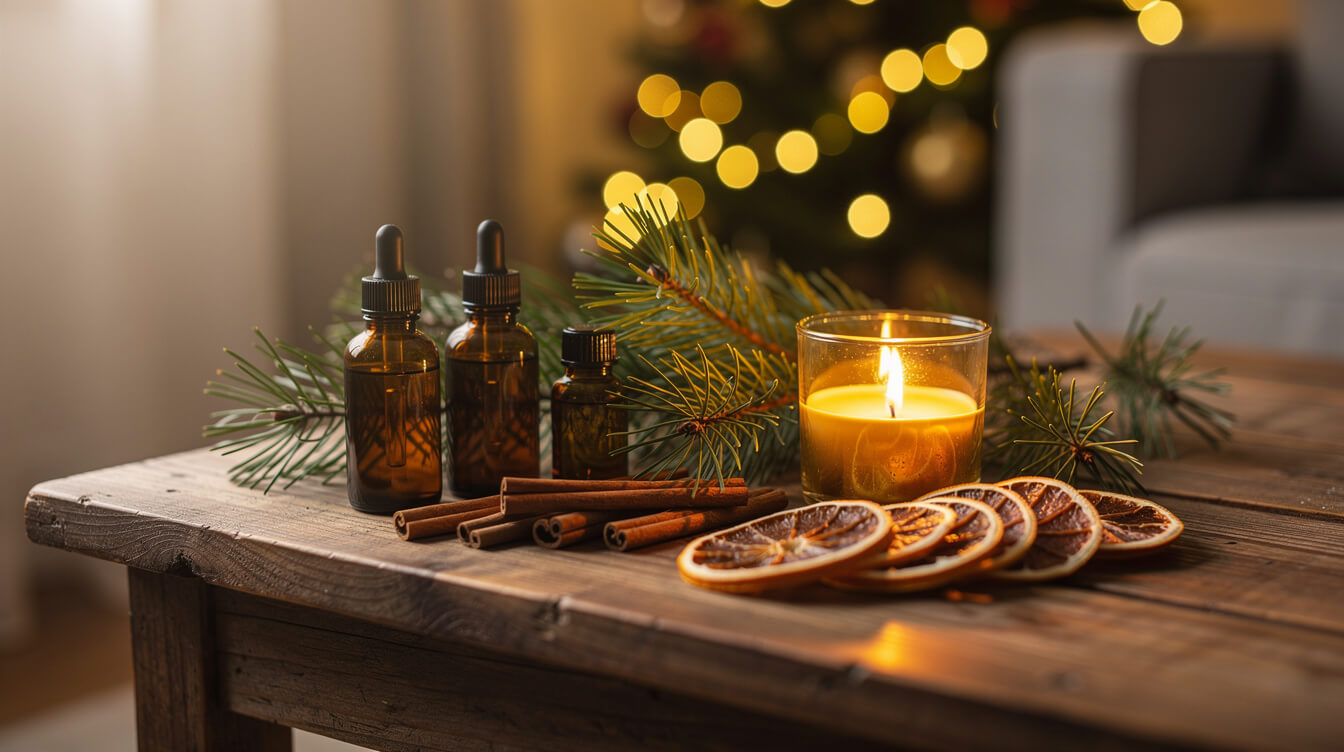
Scent is processed by the olfactory bulb, which sits next to the brain’s memory and emotion centers — it’s the reason a whiff of cinnamon or pine can instantly put you back in a childhood living room. Holiday spice and resin oils are especially good at this because their aroma comes from a handful of volatile, top-note-heavy compounds: cinnamaldehyde in cinnamon, eugenol in clove, d-limonene in sweet orange, and alpha-pinene in pine and frankincense. All four are heat-sensitive — candles, wax melts, and reed diffusers rely on combustion or slow evaporation that alters the ratio of these compounds, which is part of why a burned cinnamon candle smells more like sugar and less like actual cinnamon bark.
A Nebulizing Diffuser® works differently. It uses Bernoulli’s Principle to atomize pure, undiluted oil into a fine mist at room temperature — no heat, no water, no wax. Because nothing is burned or diluted, the oil reaches your nose in close to its original chemical ratio, which is why nebulized cinnamon smells like cinnamon bark rather than candy, and why a frankincense-and-orange blend keeps its resinous depth instead of turning flat and sugary after twenty minutes.
Perfumers talk about scent in top, middle, and base notes — top notes (citrus, peppermint) hit first and fade fastest, middle notes (spice) carry the bulk of the blend, and base notes (resins, wood) linger longest and anchor everything else. A candle or wax warmer tends to burn through top notes fastest and unevenly, so a blend can smell citrus-forward for the first ten minutes and then collapse into just the base notes for the rest of the evening. Nebulizing releases all three families at closer to their original ratio for the whole session, which is part of why blended Christmas scents built for a Nebulizing Diffuser® tend to hold their shape better over a few hours.
Warm Spice Oils for a Cozy Home: Cinnamon, Clove, Nutmeg, Ginger & Anise
These five oils are the backbone of almost every “Christmas blend” for a reason — they share overlapping spice compounds that layer well together.
1. Cinnamon
Cinnamon bark essential oil is roughly 65–75% cinnamaldehyde, the compound responsible for its warm, spicy-sweet bite. It’s a strong oil, so a drop or two goes a long way in a blend — use it as an accent note, not the base. Cinnamon leaf oil is a gentler, more affordable alternative if bark feels too intense on its own.
2. Clove
Clove bud oil runs 70–90% eugenol, giving it a rich, slightly medicinal-sweet depth that anchors mulled-wine and gingerbread-style blends. Pair it with sweet orange to soften the intensity, or with cedarwood if you want the depth without the sweetness.
3. Nutmeg
Nutmeg’s warm, slightly nutty aroma comes from myristicin and sabinene. It’s a quieter oil than cinnamon or clove, which makes it a good bridge note in a blend that needs rounding out — think of it as filling the gap between a bright citrus top note and a heavier spice base.
4. Ginger
Ginger essential oil (zingiberene-rich) brings a bright, slightly peppery lift that keeps heavier spice blends from feeling flat — it’s the oil most people notice is “missing” when a gingerbread blend smells one-dimensional. It also plays well outside the holidays, so it’s a reasonable oil to invest in beyond December.
5. Anise
Anise essential oil is unusually concentrated — often 80–90% trans-anethole — which gives it a strong licorice-like sweetness. A single drop is usually enough in a 10-drop blend; more than that and it tends to dominate everything else in the room.
A simple starting ratio for a warm spice blend in your Nebulizing Diffuser®: 3 drops sweet orange, 2 drops cinnamon bark, 2 drops clove, 1 drop ginger. For more tested combinations, see our diffuser blends for entertaining guide.
Sign Up to Get Your FREE Essential Oils e-Book Here
Evergreen & Resinous Oils: Pine, Cedarwood, Frankincense & Myrrh
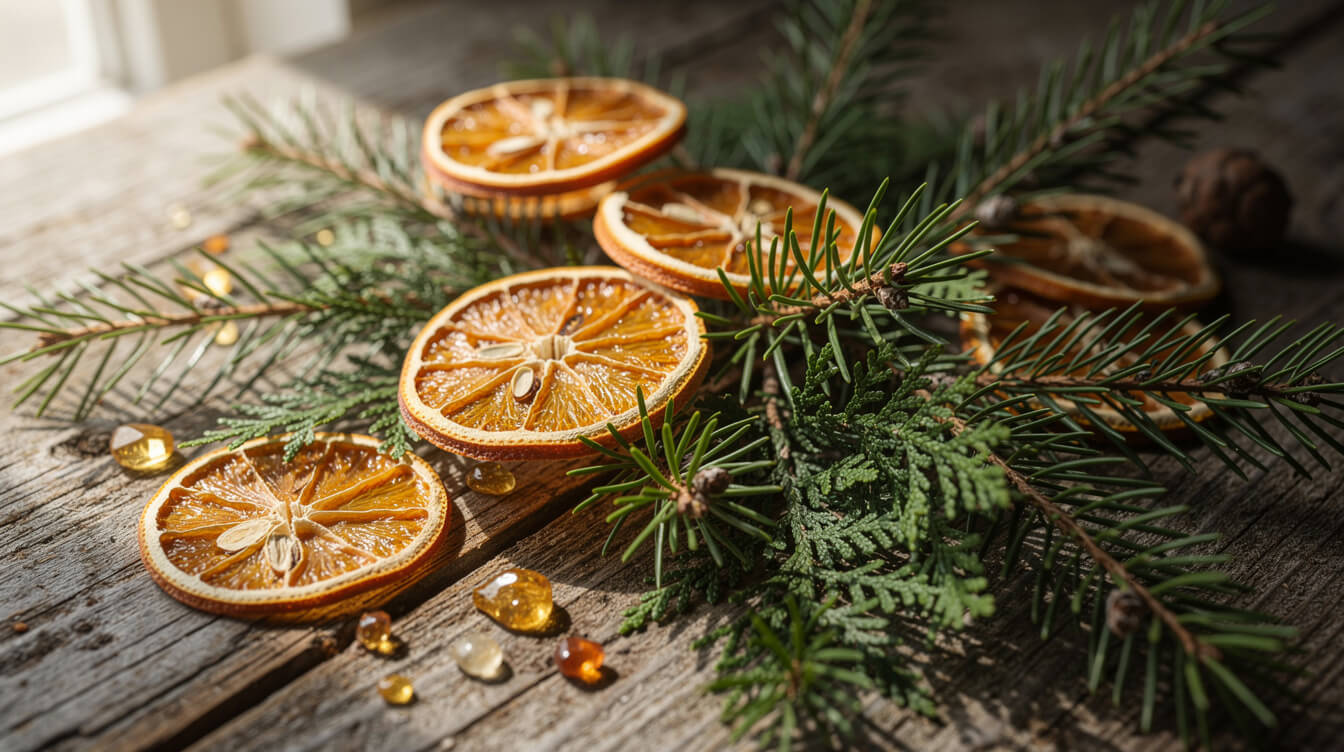
6. Pine
Pine essential oil (typically alpha- and beta-pinene plus bornyl acetate) is the most literal “Christmas tree” scent on this list — crisp, green, and slightly resinous. It works as either a top note in a spice blend or on its own for a simple, unfussy “real tree” effect if you don’t have (or want) a live one.
7. Frankincense
Frankincense (Boswellia species) has a long midwinter history — it was one of the gifts brought to the Nativity and has been burned as incense for millennia. Its aroma is built on alpha-pinene, limonene, and incensole, giving it a resinous, slightly citrusy warmth. Read more about frankincense essential oil.
8. Myrrh
Myrrh, frankincense’s traditional pairing, gets its deep, slightly smoky-sweet character from furanoeudesmadiene and curzerene. Together, frankincense and myrrh make one of the oldest documented aromatic pairings in human history, used in temple incense and burial rites long before either became associated with a single holiday.
9. Cedarwood
Cedarwood essential oil (rich in cedrol) brings a dry, woody base note that grounds brighter spice and citrus oils — it’s the same reason cedarwood shows up so often in autumn blends, and it carries over naturally into winter ones. See our full cedarwood essential oil guide.
Because pine, frankincense, and myrrh contain a meaningful share of heavier, less volatile molecules, they’re also the oils most likely to gum up or scorch in a heat-based diffuser over time — another reason this resinous family does best in a no-heat nebulizing setup.
Bright Citrus & Floral Notes: Sweet Orange, Peppermint & Lavender

10. Sweet Orange
Sweet orange is 90–95% d-limonene, which is what gives it that unmistakable fresh-peel brightness. It’s the easiest oil on this list to overuse — because it’s so concentrated in a single compound, a little genuinely goes a long way, and it blends with almost everything else on this list, which is why it appears in all three recipes below. Shop pure sweet orange essential oil.
11. Peppermint
Peppermint (roughly 30–55% menthol) is the outlier on this list — cool rather than warm — but a single drop mixed into a cinnamon-orange blend keeps it from feeling too heavy, the same way a candy cane cuts through rich holiday food. It’s also useful in a kitchen where cooking smells are already competing for attention.
12. Lavender
Lavender feels like an odd choice for a winter blend since most people associate it with summer, but its linalool and linalyl acetate content is exactly what makes late-December evenings feel calmer once the gift-wrapping and hosting are done. Diffusing it in the last hour before bed is a simple way to wind the day down. See our guide to lavender and the evening wind-down.
Join Now and Get a Coupon for 10% Off!
Three Christmas Diffuser Blend Recipes to Try
Once you’ve got a few of these oils on hand, here are three tested starting ratios — add drops to your Nebulizing Diffuser® reservoir in the order listed, adjusting to taste after the first run.
Classic Christmas Morning
3 drops sweet orange, 2 drops cinnamon bark, 1 drop clove, 1 drop pine. Bright and spiced — a good all-purpose blend for a living room while gifts are being opened.
Cozy Fireside Evening
3 drops cedarwood, 2 drops frankincense, 2 drops sweet orange, 1 drop clove. Woodier and lower-key, built for the quieter hours after guests have gone home.
Frosted Citrus
4 drops sweet orange, 2 drops peppermint, 1 drop pine. The lightest of the three — useful in a kitchen or entryway where a heavier spice blend can feel like too much alongside cooking smells.
Because a nebulizing system runs on undiluted oil rather than a water-and-oil mix, these ratios translate consistently between diffusing sessions — you’re not re-measuring water levels each time, just the drops themselves.
How to Blend and Diffuse Your Holiday Oils Safely
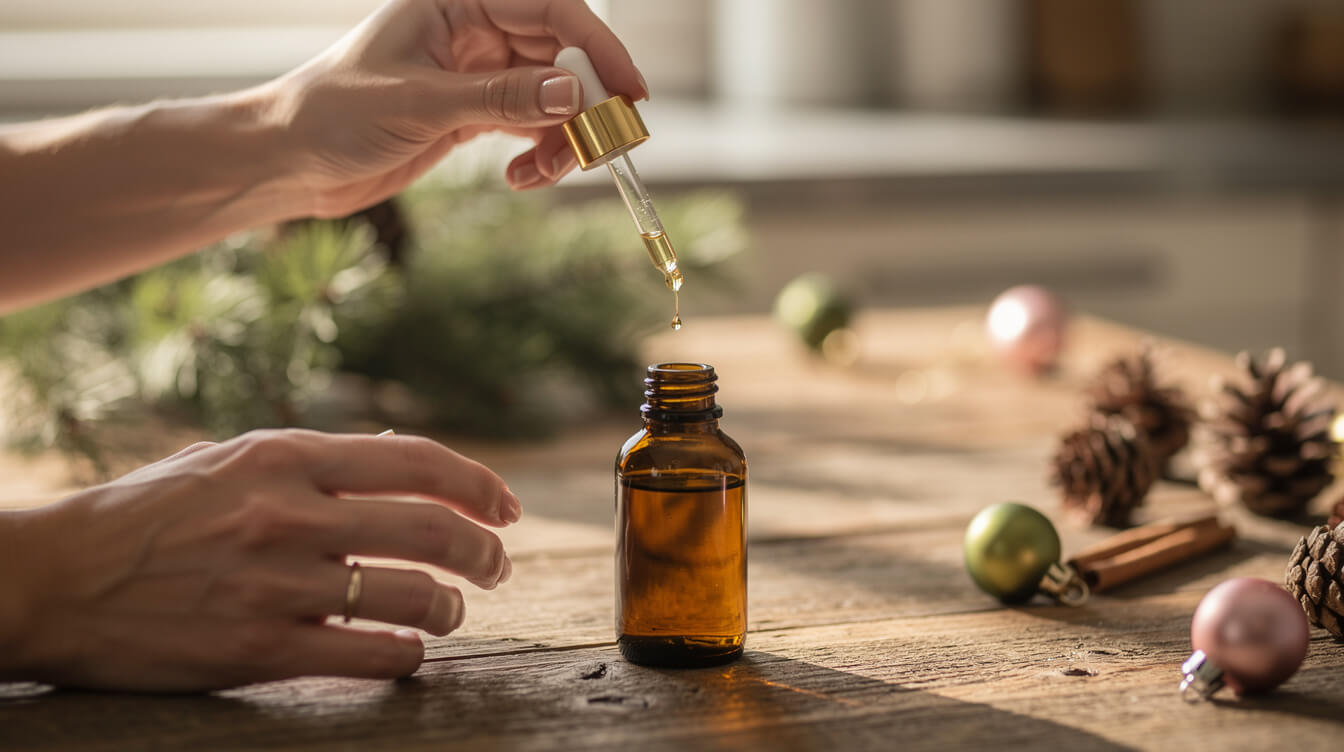
Holiday blending tends to get more ambitious than everyday diffusing — more guests, more oils on the counter, more experimenting. A few honest ground rules before you start layering spice, resin, and citrus oils together:
- Start with fewer drops than you think you need. Spice oils like cinnamon and clove are concentrated — 2–3 total drops of “hot” spice oils per blend is plenty; build the rest of the blend around citrus and wood notes.
- Ventilate the room. A closed, unventilated room can make even a well-balanced blend feel overwhelming after an hour, whatever oils you’re using.
- Keep bottles and diffusers away from young children and pets, and never apply undiluted essential oil directly to skin, especially cinnamon, clove, and peppermint, which can irritate sensitive skin at full strength.
- If you’re hosting guests who are pregnant, have asthma, or have pets in the house, ask first or choose a lighter blend — see our essential oil safety guide for pets before diffusing around animals.
- Clean your diffuser between heavy blending sessions. Resin-heavy oils like frankincense and myrrh leave more residue than citrus oils — our Nebulizing Diffuser® cleaning guide covers the full routine.
A Nebulizing Diffuser® diffuses pure oil with no water to measure and no wax to melt, which makes it easier to control exactly how much of a blend actually enters the room — useful when you’re experimenting with strong spice ratios for the first time. Browse the full Nebulizing Diffuser® collection if you’re shopping for yourself or a gift.
Frequently Asked Questions About Christmas Essential Oils
What essential oils smell like Christmas?
Pine, cinnamon, clove, orange, and frankincense are the five most commonly associated with the holiday season — between them they cover the tree, spice, and incense notes most people picture when they think of Christmas. Most “holiday blend” products on the market are built around some combination of these five.
Can I mix essential oils together for a Christmas blend?
Yes — spice, citrus, and resin oils are traditionally blended together. A simple starting formula is 2 parts citrus (orange), 1 part spice (cinnamon or clove), and 1 part resin or wood (frankincense or cedarwood).
How many drops of essential oil should I use in a diffuser?
This depends on your diffuser type and room size — check your device’s manual for its recommended range. In general, start on the lower end with concentrated spice oils like cinnamon, clove, and anise, and adjust up gradually.
Are Christmas essential oils safe to diffuse around kids and pets?
Many are fine in moderation with good ventilation, but some oils (including several on this list) need extra caution around young children and certain pets. When in doubt, diffuse for shorter periods, ensure the room isn’t sealed, and keep animals free to leave the room.
What makes a Nebulizing Diffuser® different for holiday oils?
It atomizes pure oil at room temperature instead of heating it, so resinous and spice-heavy blends keep their original aroma profile instead of degrading the way they can in a candle or heat-based diffuser over a few hours.
Which essential oils pair well with cinnamon for the holidays?
Sweet orange, clove, and cedarwood all pair naturally with cinnamon — citrus lightens it, clove deepens it, and cedarwood gives it a woody base to sit on. Peppermint works too, but use it sparingly since it competes for attention rather than blending in.
How long do Christmas essential oil blends last once diffused?
This depends on the oils, the room size, and ventilation — lighter citrus top notes fade fastest, while resins like frankincense and myrrh tend to linger longest. Running your diffuser in shorter, repeated sessions through the day generally keeps a blend feeling fresher than one long continuous run.

Join Our Exclusive Member Club to get Big Discounts!
Bringing It All Together
You don’t need all 12 of these essential oils to make your home feel like the holidays — even three or four, layered thoughtfully across the spice, resin, and citrus families above, will get you most of the way there. Start simple, note what you and your guests respond to, and build your own signature holiday blend from there. If you’re new to diffusing, the three recipes above are a reasonable place to begin before you start improvising your own ratios.
And if you’re shopping for someone who already loves a well-scented home, a set that pairs a Nebulizing Diffuser® with a handful of pure oils tends to land better than a single candle — it’s a gift they’ll keep using well past the holiday season.

Give the Gift of Nebulizing Diffusion
The Super Explorer Essential Oil Diffuser Kit pairs a handcrafted Nebulizing Diffuser® with a curated set of pure oils — an easy holiday gift for anyone on your list who loves a well-scented home.




Very interesting.
The oil that smells like Christmas is juniper berry essential oil….I’m pretty sure that’s what your thinking of😁 since none mentioned it
You forgot to mention the MOST Incredible essential oil Christmas smell. BALSAM FIR Essential Oil!
How to I register a warranty for a diffuser? No warranty card was included in the box. Please advise.
Great informative site and awesome Diffusers!