


Monday Oil of the Day: Lemon — Why the “Lemon” Is Less Than 2% of the Bottle
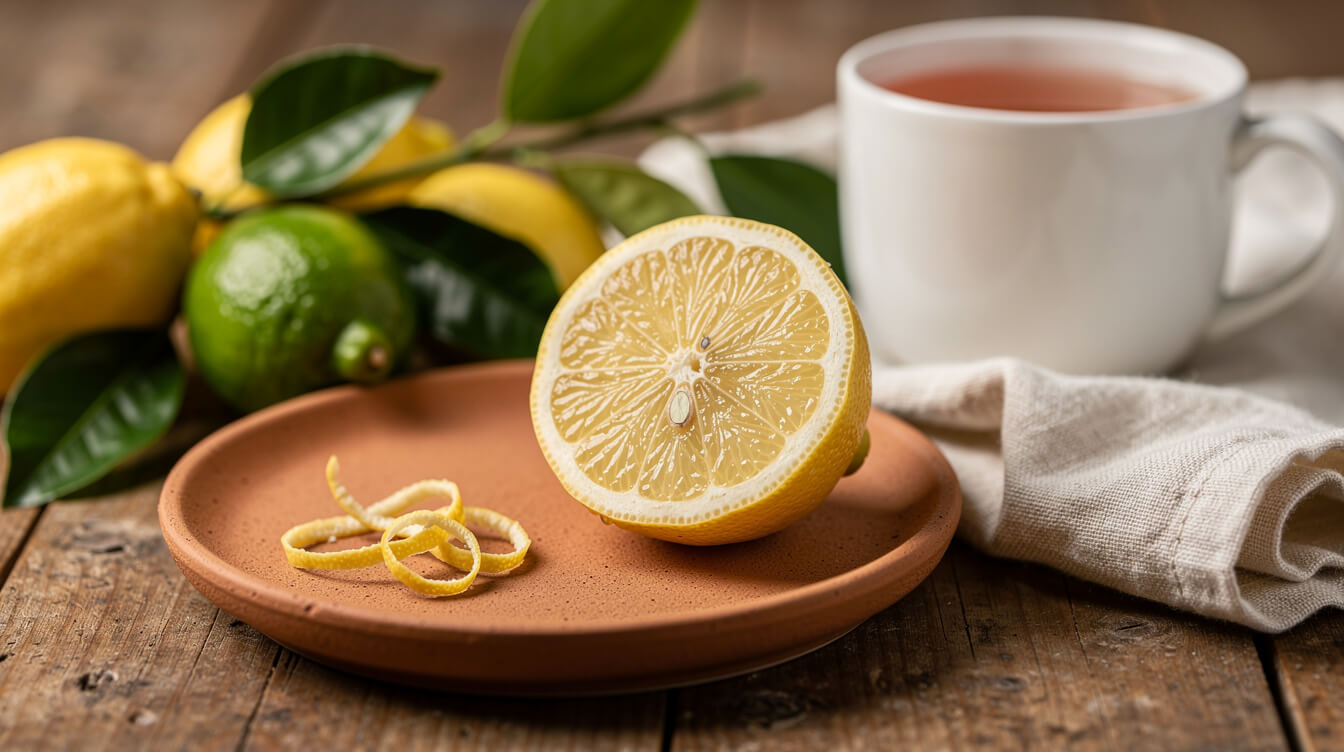
Run your thumbnail along a lemon’s peel and the room changes before you’ve even cut it: a bright, almost electric zest, sharp and clean, with something green and piney underneath. In Sicily, the first lemons of the winter crop are coming off the trees right now, some still blushed green at the shoulders.
Monday Oil of the Day: Lemon
Our lemon oil is cold-pressed from the peel of Citrus limon grown in Italy. There’s no steam and no heat involved. The oil lives in tiny glands just beneath the skin, the little dimples you can see on any lemon, and pressing the rind simply bursts them open. That’s also why lemon is a top note: light, quick to arrive, first to leave. And this is the season it all begins again. Sicilian lemon trees flower more than once a year, and the main crop, the Primofiore or “first flower” lemons, starts its harvest around October and carries on through the winter.
The jewel: the “lemon” in lemon is less than 2 percent of the bottle. When we had our Italian lemon tested by an independent GC-MS lab, about 68 percent came back as limonene. Limonene sounds like it should be the lemon, but on its own it smells soft, sweet and faintly orange (sweet orange oil is around 95 percent limonene). The sharp, unmistakable lemon zing comes from citral, a pair of aromatic aldehydes called neral and geranial. In our lot, the two together added up to just 1.75 percent. Another 11 percent or so is β-pinene, the green, slightly piney snap you catch when you scratch the rind. Here’s the twist: May Chang and lemongrass carry 70 to 85 percent citral, yet nobody mistakes either one for a lemon. They smell like lemon sherbet or cut grass. Real lemon smells like lemon precisely because its citral is a thread rather than a flood, wrapped in all that mellow limonene.
This morning’s ritual: the Monday list. A top note this bright rewards short bursts, not long runs. Before you open your inbox, put 6–8 drops of lemon alone in your Nebulizing Diffuser®, set it to low and intermittent, and run it for ten minutes while you write the week’s list by hand. Cold-air nebulizing uses no water and no heat, only a fast stream of air, so that thin citral thread reaches the room along with the limonene instead of being lost in a warm, damp mist. When the ten minutes are up, switch it off and let the scent fade with your first cup. For a rounder version, add 3 drops of frankincense. For more snap, add 2 of peppermint.
One gentle note: citrus oils age faster than most once they’re opened. Keep the cap tight and the bottle somewhere cool and dark, and plan to enjoy it within about a year.

Sign Up to Get Your FREE
e-Book Here…
Here’s to a Monday with a little Sicilian sunshine in it. If you’d like to meet this bright peel, it’s right here. — Chad