

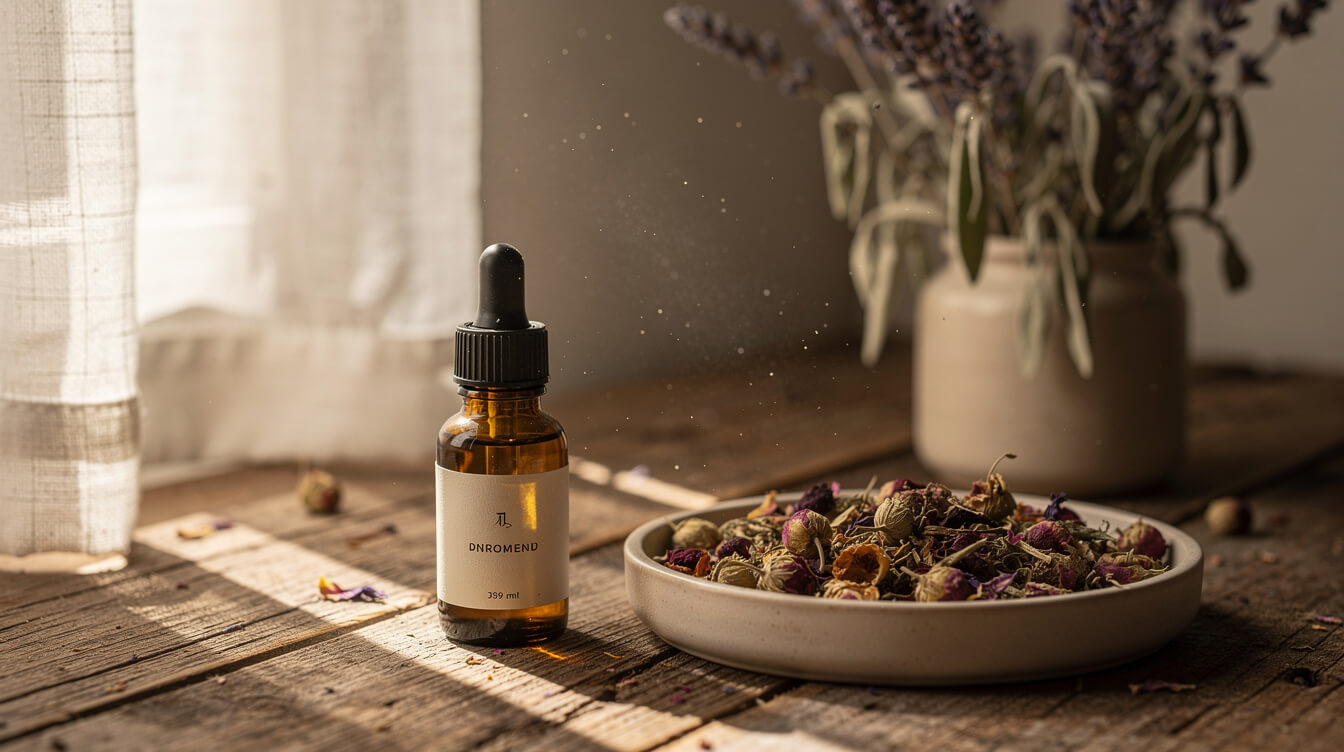
Monday Oil of the Day: Clary Sage — The High-Acetate Oil That Earns Its Own Category
That oil is clary sage (Salvia sclarea), and it earns a place of its own in any aromatherapy collection — not as lavender’s lesser cousin, but as something genuinely distinct.
Where it comes from
Clary sage is native to the Mediterranean basin and central Asia, with the finest steam-distilled oil coming from Bulgaria and France. It’s a tall, flowering herb with silvery-purple blooms that peak in late summer — making right now a particularly fitting time to encounter it.
The chemistry — the detail most guides skip
Most aromatherapy guides lump clary sage with lavender because both contain linalool. But clary sage’s dominant compound is actually linalyl acetate at 60–75% — one of the highest acetate concentrations of any common essential oil. That ester is what gives clary sage its characteristic warm, slightly nutty quality: softer than lavender’s brightness, with a musky base note that lingers long after the first exhale. Lavender typically runs 25–45% linalyl acetate; clary sage nearly doubles that ratio, which is why the two oils smell so different despite sharing a key component.
The mood it suits
End-of-day unwinding. The hour after work when you don’t quite know how you feel yet. A quiet Monday evening before the week fully asserts itself. Clary sage is particularly suited to moments of transition — mental or seasonal — which makes it a fitting companion for the last day of August.
A one-oil ritual for today
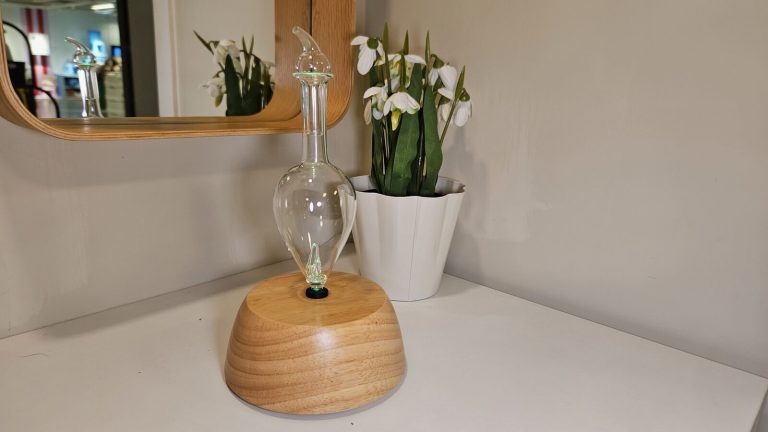
Add 4–5 drops of clary sage to your Nebulizing Diffuser® and run it for 15 minutes in a room you’re not actively using — let the scent arrive on its own terms. No blending today. Just this one oil, allowed to be fully itself. Then walk in. Notice whether your shoulders have dropped. That’s the clary sage effect.
Sign Up to Get Your FREE
e-Book Here…
Quiet, unhurried, completely its own. See you tomorrow.
— Chad