

Luxury Home Fragrance Brands, Judged by What’s Actually in the Bottle
Luxury home fragrance brands sell an experience long before you ever light a wick: the heavy glass, the hand-poured wax, the scent story written like a perfume. Every roundup of the best luxury home fragrance brands judges them by the same things, which are prestige, vessel design and notes. What almost none of them ask is the simplest question a premium buyer can ask: what is actually in the bottle?
This guide judges luxury home fragrance by three things you can check yourself: how much the brand tells you about its ingredients, how the scent gets into your air, and what an hour of scent really costs. We checked brand websites in October 2026 and quote only what they publicly say. Along the way you’ll find out why a five-star hotel lobby smells the way it does, and where a pure-oil Nebulizing Diffuser® honestly fits next to a $90 candle.
What Luxury Home Fragrance Brands Actually Sell You

Walk into any department store’s home fragrance hall and you are buying four things at once. There is the vessel: mouth-blown glass, porcelain, a lid you’ll keep long after the wax is gone. There is the composition: a fragrance brief written by a perfumer, often the same houses that make fine perfume. There is the name: heritage, a Paris address, a cult following. And there is the delivery: a flame, a reed, a plug-in or a device.
Only the last two of those touch the air you breathe, and they are the two the price tag tells you least about. A $90 candle and a $25 candle can share the same kind of wax, and a reed diffuser’s scent travels up the reeds in a solvent base that is rarely named on the box. Luxury, in other words, mostly tells you about craft and story. It doesn’t automatically tell you about ingredients.
That isn’t a criticism of the craft. Many of these houses make genuinely beautiful compositions. It is simply a reminder that if what you care about is the material itself, you have to look somewhere other than the label on the front. The good news is that, at least for one big US state, there is now a legal place to look.
The Disclosure Test: How to Read a Luxury Home Fragrance Brand’s Ingredient Page
In 2017 California passed the Cleaning Product Right to Know Act (SB 258). Most people assume it covers only cleaning sprays. It also covers air care products, which the law defines as products “labeled to indicate that the purpose of the product is to enhance or condition the indoor environment by eliminating unpleasant odors or freshening the air.” Room sprays, plug-ins, car fresheners and many reed diffusers fall squarely inside that definition.
For covered products, the law requires the maker to publish online, from January 1, 2020, every intentionally added ingredient, along with its CAS number (the chemical’s registry ID) and its function. On-package disclosure followed from January 1, 2021. Two details matter most for home fragrance:
Fragrance allergens have a hard trigger. Any of the fragrance allergens listed in the EU’s cosmetics annex must be disclosed once it reaches 0.01 percent (100 ppm) of the product, and the label must say “Contains fragrance allergen(s).” Other fragrance ingredients at 100 ppm or more must also be listed, unless the company claims them as a trade secret.
Trade secrets are allowed, but visible. A company can withhold an ingredient as confidential business information. It cannot withhold anything on the state’s designated chemical lists. So a well-made disclosure page will show you most of the formula and openly mark what is withheld.
Here is the part almost nobody mentions: the law counts allergens including their presence in essential oils. A product scented only with pure lavender oil will still trigger “contains fragrance allergens,” because lavender naturally carries linalool and limonene. So that phrase isn’t a synthetic red flag on its own. What tells you more is how complete the list is.
Run the test in five minutes
1. Search the brand’s site for “ingredients,” “Right to Know” or “SB 258.” 2. Check which product types are covered. Is it only sprays and reeds, or candles too? 3. Look for the base: the wax type for candles, the solvent that carries a reed blend, the carrier in a cartridge. 4. See whether fragrance components are named or collapsed into the single word “fragrance.” 5. Count the “withheld” lines. If you want to go further and judge the oil itself, our guide to telling pure oil from synthetic blend walks through the label and GC/MS checks.
One honest caveat: the statute never mentions candles by name. Whether a candle is covered depends on whether it is labeled as freshening the air, and some brands’ disclosure pages leave candles out entirely. That is exactly why candle disclosure varies so much, as you’ll see next.

Join Now and Get a Coupon for 10% Off!
We Checked 8 Luxury Brands’ Websites: Here’s What They Disclose
We visited each brand’s US website in October 2026 and recorded what it publicly shows about home fragrance ingredients. This is not a ranking of how anything smells, and it isn’t a safety verdict. It is simply how much each brand chooses to tell you. Websites change, so run the test yourself before you buy.
Voluspa: full Right to Know page, no candles. Voluspa publishes a dedicated Product Right to Know page covering its car diffusers, reed diffusers, room sprays and plug-ins. Each scent gets a table of ingredient, CAS number and function. For one reed diffuser scent, it names the solvent base and more than a dozen individual aroma chemicals, and it marks confidential components as “withheld.” Candles aren’t on the page.
Aera: ingredient list per scent, labeled by origin. Aera’s ingredients page lists each scent’s components and tags each one as “Botanical” or “Safe Synthetic.” Some lists note that a few fragrance ingredients are omitted to keep the recipe proprietary. Its lists include materials perfumers typically use as carriers and solvents, such as isopropyl myristate and triethyl citrate, which is worth knowing when you compare a cartridge to a bottle of pure oil.
Le Labo: allergen warning on the candle page. The Santal 26 candle page carries a safety statement naming four specific materials, including ethylene brassylate and cashmeran, with a skin-sensitization warning. The wax is described only as a custom blend.
Diptyque: hazard-label PDF. For its diffuser refills, Diptyque links to a regulatory label document naming allergens such as geraniol, citronellol and nerol rather than a full formula.
Nest New York: openly proprietary. Nest’s FAQ states that its candle wax formula is a proprietary trade secret it doesn’t publicly list, while noting it primarily uses a food-grade paraffin base. That is unusually candid: you know exactly what you aren’t being told.
Cire Trudon: notes and craft, no list. The classic candle page describes scent notes, “specific developments” in the wax and a cotton wick.
Otherland and Pura: “free-from” pages. Otherland describes a coconut and soy wax blend and a cotton wick, and lists what it leaves out. Pura’s promise page lists excluded ingredient families such as phthalates and formaldehyde. Neither is a full ingredient list.
The pattern is clear. Device and spray brands, which fall more clearly under California’s air care definition, tend to disclose the most. Heritage candle houses tend to disclose the least. If ingredients matter to you, a “free-from” list tells you what isn’t in the product, and only a full list tells you what is.
Luxury Home Fragrance Brands by Format: Candle Houses, Reed Houses and Devices
Once you stop sorting by prestige and sort by how the scent reaches the room, the luxury market falls into five families. We go deep on the chemistry of each format, including the ozone question, in our honest guide to non toxic home fragrance. Here is the short buyer’s version.
Candle houses (Diptyque, Cire Trudon, Jo Malone London, Byredo, Le Labo). Heat melts the wax and the flame drives off fragrance. That’s beautiful theatre, but heat also changes delicate top notes, and combustion adds its own byproducts. Our piece on what actually throws scent in a candle explains why bright citrus and floral notes are the first to suffer.
Reed and room-spray houses. A reed blend has to wick up rattan and evaporate for months, so most of the bottle is a solvent carrying the fragrance. A spray is mostly alcohol or water with a solubilizer. Both are pleasant and passive, and both send you more carrier than scent.
Cartridge devices (Pura, Aera and others). These are cold-air or fan-assisted systems that diffuse a pre-filled capsule on a schedule. They’re convenient, app-controlled and cheap per hour. You get the brand’s formula, carrier included, and you can’t swap in your own oil. Our cold air buyer’s guide compares pump-and-cartridge systems with true nebulizers.
Pure-oil nebulizing. A Nebulizing Diffuser® uses Bernoulli’s Principle: a jet of air passes over a fine glass tube and draws pure essential oil into a cloud of micro-droplets. There’s no water, no heat and no carrier, and you choose exactly which oil goes in. If you like scheduling, our smart buyer’s guide covers what app control changes.
DIY pure-oil sprays. The low-cost route: our room spray recipes show the solubilizer ratios that actually make oil and water mix.
Sign Up to Get Your FREE
e-Book Here…
Why Does the Ritz-Carlton Smell So Good?

It’s one of the most-searched questions in luxury home fragrance, and the honest answer has two parts: a signature scent, and a delivery system you never see.
The signature part is public. In 2022, The Ritz-Carlton announced a partnership with Diptyque for its bath amenities, choosing the fig-leaf scent Philosykos as the signature. The brand’s own shop also sells Ritz-Carlton candles, reed diffusers, room sprays and room diffuser sets, so you can buy the hotel’s mood by the bottle. Which scent fills a particular lobby, and which vendor runs it, varies by property and isn’t something the brand publishes, so we won’t guess.
The delivery part is the real secret, and it applies to most five-star hotels. Commercial scent systems don’t burn anything. The industry describes them as cold-air nebulization: filtered air shears fragrance oil into an ultra-dry micro-mist with no heat or water, often fed straight into the building’s HVAC so the scent arrives evenly through the vents. That’s why a great lobby smells consistent from the door to the elevators, never smoky, never wet, and never strong right next to a candle.
Bringing that home doesn’t take a ducted system. A tabletop Nebulizing Diffuser works on the same cold-air principle, just room by room. Three habits from hotel scenting translate directly. Pick one signature blend and stick with it in your entry and living spaces, so the scent becomes “your home.” Run it in intervals, not continuously; hotels pulse their systems, and so should you (we explain the odor math in how to make your house smell good). And scent before guests arrive, not while they’re in the room, so they walk into the atmosphere rather than the source.
For a hotel-lobby feel, try a soft, clean blend: 3 parts bergamot, 2 parts Lavender Essential Oil and 1 part cedarwood or another soft wood oil. It’s bright on entry and warm underneath, the same shape most lobby scents follow.
Price Per Hour of Scent: Candles vs Reeds vs Cartridges vs Pure Oil
Luxury is easiest to judge when you divide the price by the hours you actually get. Here is the math using each brand’s own stated figures (October 2026, US list prices). Real burn and run times vary with room, setting and habits, so treat these as approximate.
Luxury candles: about $1.60 to $1.90 per hour. A Diptyque classic 190 g candle is $90 for about 50 hours (≈$1.80/h). A Jo Malone London 200 g Home Candle is $85 for 45 hours (≈$1.89/h). A Byredo 240 g candle is $95 for 60 hours (≈$1.58/h).
Reed diffusers: hard to compare. Jo Malone’s 165 ml reed diffuser is $112 for “around 3 to 4 months,” but reeds give off scent around the clock at a level you can’t turn up or down, so there’s no honest per-hour figure. You pay for a steady background presence, not on-demand scent.
Cartridge devices: about $0.08 to $0.14 per hour. A Pura vial is $18.99 and lasts about 22 to 30 days at 6 to 8 hours a day, depending on the device. An Aera capsule is $60 and lasts about 60 days at 10 hours a day on a mid setting (≈$0.10/h). These are the cheapest per hour of anything here, which is a big part of their appeal.
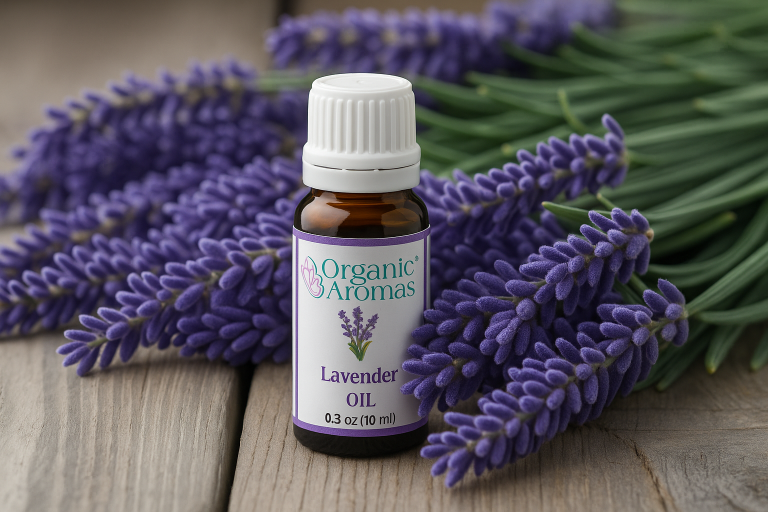
Pure essential oil in a Nebulizing Diffuser: about $0.50 to $1.50 per hour. Our customer-care data puts normal use at roughly 15 to 30 drops for 1 to 2 hours on a low setting. At about 20 drops per milliliter, that’s 0.75 to 1.5 ml per hour of continuous running. With our Lavender Essential Oil at $50 for 50 ml ($1 per ml), continuous use costs $0.75 to $1.50 an hour. Run it in the recommended interval mode (2 minutes on, 1 off) and that falls to roughly $0.50 to $1.00. A 30-minute session before guests arrive costs well under a dollar.
So which is the “best value”? Honestly, it depends on what you’re paying for. Cartridges win on cost per hour. Candles win on ritual and flame. Pure oil sits in the middle on price, and it’s the only format where every drop you pay for is the aromatic material itself, with no wax, solvent or carrier, and where you choose the oil. If that matters to you, the per-hour premium over a cartridge is the price of knowing exactly what’s in the air.

Join Our Exclusive Member Club to get Big Discounts!
Where a Pure-Oil Nebulizing Diffuser® Fits Among Luxury Home Fragrance Brands

We’re a fragrance brand too, so it’s only fair to put ourselves through the same test. Our oils are 100% pure essential oils and blends of them, with no carrier, solvent or added fragrance, so the ingredient list is the oil itself. Our Nebulizing Diffusers® are handcrafted from real wood and medical-grade Pyrex glass, with no plastic touching the oil, no water and no heat. And the price-per-hour math above uses our own retail prices, not a best case.
Where we don’t win: we’re not the cheapest per hour, and a nebulizer won’t give you the flicker of a flame. It also asks a little of you. You’ll rinse the glass now and then, and thick oils like vetiver or myrrh should be blended with a lighter oil rather than run alone.
Where we do: if you want a scent you can trace back to a plant, at full strength, switched on only when you want it, the pure-oil route is the most transparent luxury in this guide. Many of our customers keep a candle for the dinner table and a Nebulizing Diffuser for the rest of the house. If you’re curious, explore our handcrafted Nebulizing Diffusers® in real wood and medical-grade Pyrex glass, or start with our guide to the difference between essential oils and fragrance oils.
Luxury Home Fragrance Brands: Frequently Asked Questions
What are some high-end home fragrance brands?
Among candle houses, the names you’ll see most are Diptyque, Cire Trudon, Jo Malone London, Byredo and Le Labo. For devices, Pura and Aera are the best-known cartridge systems. Pure-oil Nebulizing Diffusers® sit in their own category. Rather than choosing by name alone, run the five-minute disclosure test above on any brand you’re considering.
What is the best smelling home scent?
Scent is personal, but the scents that feel most “luxury hotel” tend to share a shape: a bright top (bergamot or another citrus), a soft floral or herbal heart (lavender, geranium) and a quiet woody base. For room-by-room ideas, see our guide to the best smelling essential oils for home.
Is luxury home fragrance worth it?
It is if you value the vessel, the composition and the ritual. Judged only on cost per hour, luxury candles are the most expensive format, at roughly $1.60 to $1.90 an hour based on brand-stated burn times. If ingredient transparency matters most, look for brands with a full ingredient page or use pure essential oils, where the oil is the ingredient list.
Are candles or diffusers better for a large room?
A candle scents the space around it and is limited by its melt pool. Active systems, including cartridge devices and Nebulizing Diffusers, push scent into the air and cover more ground. For open-plan spaces, an active cold-air system in interval mode is usually the more even choice, which is exactly why hotels use one.
Does “contains fragrance allergens” mean a product is synthetic?
No. Under California’s law, allergens count even when they come from essential oils, so a product scented only with pure lavender can carry that line. A full ingredient list tells you far more than that single phrase.
The Bottom Line on Luxury Home Fragrance Brands
The most luxurious thing a home fragrance brand can give you isn’t the heaviest glass or the oldest name. It’s a clear answer to “what’s in it?” Judge luxury home fragrance brands by disclosure, delivery and price per hour, and the market sorts itself out quickly: candles for ritual, cartridges for convenience, and pure essential oil for the scent you can trace all the way back to the plant. Whichever you choose, choose it knowing what you’re breathing.