


Lavender Essential Oils for Sleep: The Linalool-Linalyl Acetate Ratio That Determines Whether It Works
Most articles about lavender essential oils for sleep stop at the same headline: lavender is calming, diffuse some, sleep better. That advice is true at the surface and useless underneath. Whether lavender actually quiets your nervous system at bedtime comes down to a number almost no one mentions, the ratio of two specific molecules inside the bottle, and whether the way you diffuse the oil preserves that ratio or destroys it.
This guide goes deeper than the SERP. You will learn the exact compound profile that defines a sleep-grade Lavandula angustifolia, the two ways most diffusers quietly degrade that profile before the aroma ever reaches your pillow, and a calm, evidence-aligned routine for getting the most out of pure lavender oil at night. No medical claims. Just chemistry, sourcing, delivery, and ritual.
Why Lavender’s Sleep Effect Lives in Two Specific Molecules

True lavender, Lavandula angustifolia, owes its calming character to two dominant volatile compounds: linalool (a monoterpene alcohol) and linalyl acetate (its acetate ester). Together they typically make up between 50 and 80 percent of a high-quality essential oil by mass. Everything below that headline number depends on how those two molecules behave once they enter your nose, your bloodstream, and your central nervous system.
Linalool is the calmer of the pair when inhaled. Pharmacology research summarized in the widely cited Koulivand et al. 2013 review in Evidence-Based Complementary and Alternative Medicine describes its activity at the GABA-A receptor, the same receptor family targeted by many sedative medicines. Linalyl acetate, the ester, contributes a softer, less stimulant top note and appears to modulate the antispasmodic, parasympathetic-leaning quality of the oil. The two together create the signature lavender impression: floral, sweet, herbaceous, and unmistakably sedating.
For a sleep-grade oil, aromatherapy reference texts and a long tail of GC-MS certificates point to a workable target range:
- Linalool: roughly 25 to 45 percent
- Linalyl acetate: roughly 25 to 45 percent
- Camphor: under 1 percent
- 1,8-cineole (eucalyptol): under 2 percent
When the camphor and 1,8-cineole columns creep up, the oil tilts stimulant and clearing rather than sedative. That is exactly what happens with lavandin, the lavender-lookalike hybrid we discuss next, and it is the single most common reason a “lavender” bottle fails to do what bedtime needs it to do.
The Lavender vs Lavandin Confusion That Costs Your Sleep
The label on the front of the bottle is almost never enough. The Latin binomial on the back is what tells you whether you are buying a sleep oil or a workout-recovery oil dressed in lavender’s clothes.
Lavandula angustifolia is true lavender, the species used in nearly every meaningful sleep and anxiety study. Lavandula x intermedia, sold as lavandin, is a hybrid bred for yield and the cleaning and laundry trade. Lavandin is more abundant, cheaper per kilogram, and frequently sold under the bare word “lavender” by brands counting on the consumer not reading the back of the bottle.
The chemistry is the giveaway. A representative lavandin GC-MS profile carries 4 to 12 percent camphor and 4 to 10 percent 1,8-cineole, against under 1 percent camphor in a quality angustifolia. Camphor and 1,8-cineole are stimulating, decongestant, and clarifying. They are excellent for athletes, sinus blends, and floor cleaners. They are the wrong neighborhood for a wind-down ritual.
Three practical rules protect you from the swap:
- Insist on the binomial. If a bottle does not display Lavandula angustifolia, treat it as lavandin until proven otherwise.
- Ask for a batch GC-MS certificate. Reputable producers publish a chromatograph for each lot. Check that camphor sits under 1 percent and linalyl acetate is at least 25 percent.
- Smell for sharpness. Real angustifolia leans sweet, herbaceous, and round. If your bottle hits with a sharp, eucalyptus-leaning brightness, that is the 1,8-cineole talking.
If you want a deeper primer on choosing high-quality oils across the board, our complete guide to what lavender essential oil is good for walks through the species and chemotype distinctions in more detail.
Sign Up to Get Your FREE
e-Book Here…
How Your Diffusion Method Decides the Outcome
This is the part no competitor article actually covers. You can buy the cleanest Lavandula angustifolia on the market and still get a mediocre result, because the delivery method between bottle and breath either preserves that ideal linalool to linalyl acetate ratio or quietly degrades it before the oil reaches you.
There are four common delivery methods, and they do not perform equally:
1. Tealight or candle diffusers. A flame heats a small water-and-oil bath to evaporate the aroma. The problem is straightforward: linalyl acetate is the more heat-sensitive of the two key molecules, and prolonged heat exposure hydrolyzes the ester back into its acid and alcohol components. The result is an oil bath that smells “more lavender” because linalool concentrates as the ester breaks down, but you have lost the calming acetate side of the ratio. Avoid.
2. Plug-in heat diffusers. A milder version of the same problem. Continuous warm-plate exposure across an evening still shifts the volatile profile, and the slow off-gassing of plastic at temperature is not what you want next to your pillow.
3. Ultrasonic diffusers. No heat, which is the headline. The catch is concentration. Ultrasonic units mix a few drops of essential oil into roughly 100 to 200 milliliters of water and atomize the mixture. The math is unforgiving: your room is now breathing perhaps a one-hundredth dilution of the original oil, with water as the bulk of the aerosol. Linalool and linalyl acetate are present, but the aromatic intensity required for a meaningful inhalation dose at the receptor level is often below the threshold described in clinical inhalation studies (where a 30-minute exposure to neat lavender vapor produced measurable calming effects). Ultrasonic is gentle, pleasant, and well-suited to scenting a living room. It is not the strongest tool for a focused sleep protocol.
4. Nebulizing Diffusion. A Nebulizing Diffuser® uses Bernoulli’s Principle, the same fluid-physics law that lifts an airplane wing, to draw pure essential oil up a glass column and atomize it into a micro-aerosol. There is no water, no heat, and no plastic touching the oil. You inhale the native compound profile of the bottle, preserved. For aromatherapy that actually depends on a specific molecular ratio, that fidelity matters. Our handcrafted Nebulizing Diffusers were built around exactly this requirement.
If you are weighing the trade-offs between ultrasonic and waterless designs in detail, our complete guide to ultrasonic diffusers lays out the comparison side by side.
How to Use Lavender Essential Oils for Sleep at Night
You have the right oil and the right delivery method. Here is how to put them together into a calm, repeatable bedtime sequence. Treat this as an outline, not a prescription. Adjust the intensity to your bedroom, your bedmate, and your nose.
Begin 60 minutes before lights-out
About an hour before you intend to be asleep, start diffusing pure Lavandula angustifolia in the bedroom. With a Nebulizing Diffuser® on a moderate setting, two minutes on and three to five minutes off through that hour is plenty. You are aiming for a soft, persistent scent floor, not a wall of aroma. If you smell it strongly when you walk into the room, it is too much. Dial back the on-cycle.
Layer a topical anchor, optional
For people who like a sensory cue at the pillow, blend 5 to 10 drops of pure lavender oil into 30 milliliters (1 ounce) of a carrier such as jojoba or fractionated coconut. That is roughly a 1 to 2 percent dilution, which sits in the safe topical range described in our guide to safe essential oil dilution ratios. Massage a thin film onto the soles of the feet or the inside of the wrists. Skip the temples for first-time users.
Pillow mist, used sparingly
A simple pillow mist is 2 to 4 drops of pure lavender oil per 60 milliliters of distilled water with a small dispersant such as a single drop of solubilizer or witch hazel. Shake hard, mist the underside of the pillowcase (not the side touching your face) once or twice. If you tend to wake in the night with sinus dryness, skip this step and stick with diffusion.
Lights down, screens off, breath slow
This is the part everyone wants to skip and the part that makes the difference. Lavender is a setting, not a switch. A consistent dim-light, low-stimulation final 30 minutes pairs with the aromatic cue and turns the smell into a learned wind-down signal over the course of two to three weeks of nightly repetition.
Join Now and Get a Coupon for 10% Off!
Lavender Pairings That Amplify the Linalool Effect
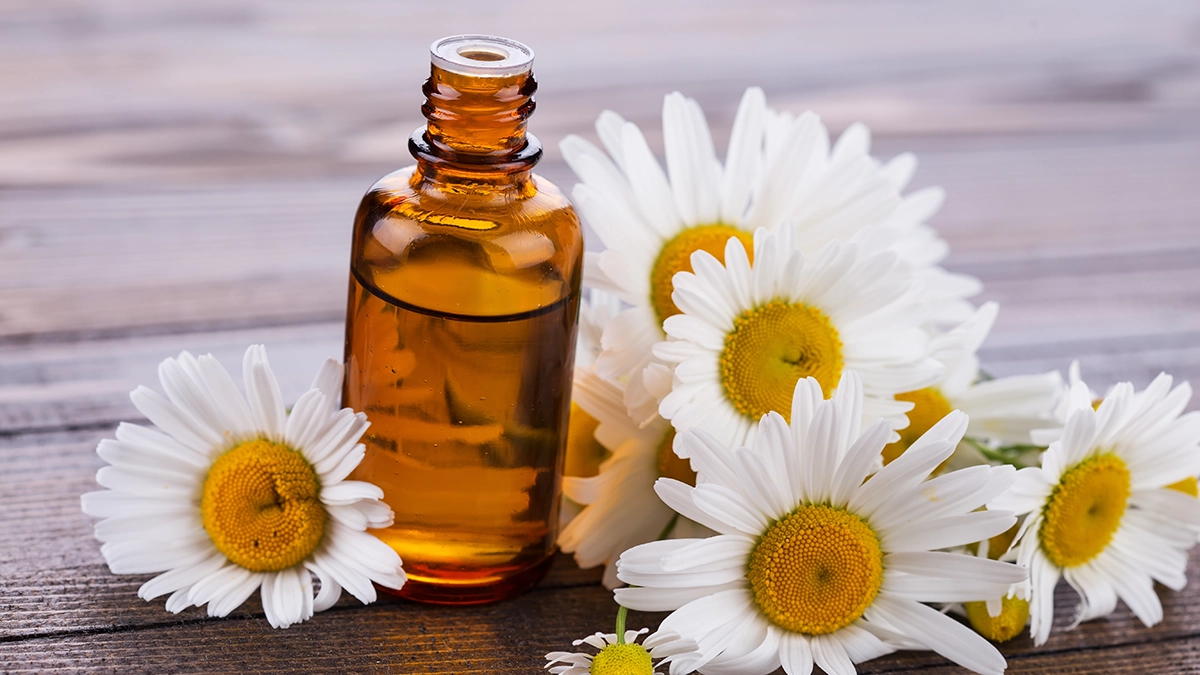
Solo lavender works. Thoughtfully blended lavender works better. The goal of a pairing is to layer constituents that reinforce, rather than compete with, the GABA-leaning quality of linalool. Three oils sit in that camp.
Roman chamomile (Anthemis nobilis). Distinct from German chamomile, Roman chamomile is rich in esters such as isobutyl angelate. The aromatic personality is soft, apple-like, and round. A 2-to-1 lavender-to-Roman-chamomile blend gives you a quiet, slightly fruity sleep aroma that reads more elegant than lavender alone.
Sweet marjoram (Origanum majorana). A high terpinen-4-ol oil with a calm, herbaceous profile that has long been part of the European bedtime tradition. Marjoram is potent and a little goes a long way. A 4-to-1 lavender-to-marjoram ratio is a sane starting point.
Cedarwood Atlas (Cedrus atlantica). The sesquiterpenes in cedarwood give the blend a grounded, woody bass note that anchors lavender’s high florals. A 1-to-1 lavender-to-cedarwood blend lands almost like a forest at dusk and is a favorite of operators who find pure floral aromas a little too sweet to fall asleep to.
Equally important is the list of oils to leave out of a bedroom blend, even though they are popular elsewhere. Peppermint, rosemary cineole, eucalyptus, and any oil heavy in 1,8-cineole or menthol is reaching for alertness and respiratory opening. They are excellent in a Monday morning blend and the wrong choice at 10 p.m. Our roundup of the best essential oils for sleep goes deeper into which oils belong in this category and which do not.
Common Mistakes That Sabotage Lavender’s Sleep Benefit
Even with the right oil and the right method, a few habits quietly cancel out the work. Watch for these.
Old or oxidized oil. Linalool oxidizes on contact with air over the course of months to years. An oxidized lavender bottle smells flatter and, more importantly, develops a higher risk of skin sensitization through compounds such as linalool hydroperoxides. If your bottle has been open for more than 12 to 18 months, treat it as a candle-side scent rather than a sleep tool.
Pre-blended “sleep oils.” A pretty label that says “sleep blend” with no listed binomials is almost always lavandin plus a citrus top note plus a fragrance modifier. Read the back, find each species, or skip the bottle. Detail matters; this is also true of safety-side concerns, which our overview of lavender essential oil side effects covers in depth.
Too many drops. Aromatherapy follows a counterintuitive dose-response curve. Below a sensory threshold, you feel nothing. Above a comfort threshold, the aroma stops feeling pleasant and starts feeling occupational, which spikes alertness rather than lowering it. The sweet spot is “I just barely notice this.” Less is more.
Diffusing all night long. Your olfactory system habituates within roughly 20 to 30 minutes of continuous exposure. A Nebulizing Diffuser® cycled on-and-off (for example, two minutes on, three to five minutes off) keeps your nose responsive and uses less oil. A continuous, hours-long burn is wasteful and less effective.
Skipping the rest of sleep hygiene. Lavender is a supporting actor. Cool room, dark room, screens out of the bed, consistent wake time, and an unrushed wind-down do the structural work. For a broader walkthrough that places lavender inside a complete sleep stack, see our step-by-step on how to use lavender essential oil for sleep.

Join Our Exclusive Member Club to get Big Discounts!
The Bottom Line on Lavender Essential Oils for Sleep
Lavender works for sleep when three things line up. The species in the bottle is Lavandula angustifolia, not a lavandin hybrid. The chemistry sits inside the sweet spot, with linalool and linalyl acetate together carrying the oil and camphor staying near the basement. And the delivery method preserves that profile through to your breath, which is what waterless, heatless Nebulizing Diffusion® was designed to do.
Bring those three together, layer them into a calm, repeatable bedtime routine, and lavender stops being a candle-scent cliché and becomes one of the most reliable wind-down tools in the aromatherapy kit. The science is straightforward. The execution is where the night gets quiet.