


Ultrasonic Diffuser for Essential Oils: The Complete 2026 Guide
If you have spent any time exploring aromatherapy, you have almost certainly met the ultrasonic diffuser for essential oils — the compact, mist-producing device that has become the default way to scent a home. It is affordable, quiet, and genuinely useful. But there is a gap between how these devices are marketed and how they actually deliver aromatherapy, and that gap is exactly what most buying guides skip over.
This guide goes deeper than the specs on the box. We will break down precisely how an ultrasonic diffuser for essential oils works at the mechanical level, where it shines, where it quietly falls short, the best oils to run in it, and how it compares to the fundamentally different technology inside a Nebulizing Diffuser®. By the end you will know which device fits your room, your oils, and your wellness routine — not just which one has the prettiest lights.
What Is an Ultrasonic Diffuser for Essential Oils and How Does It Work?
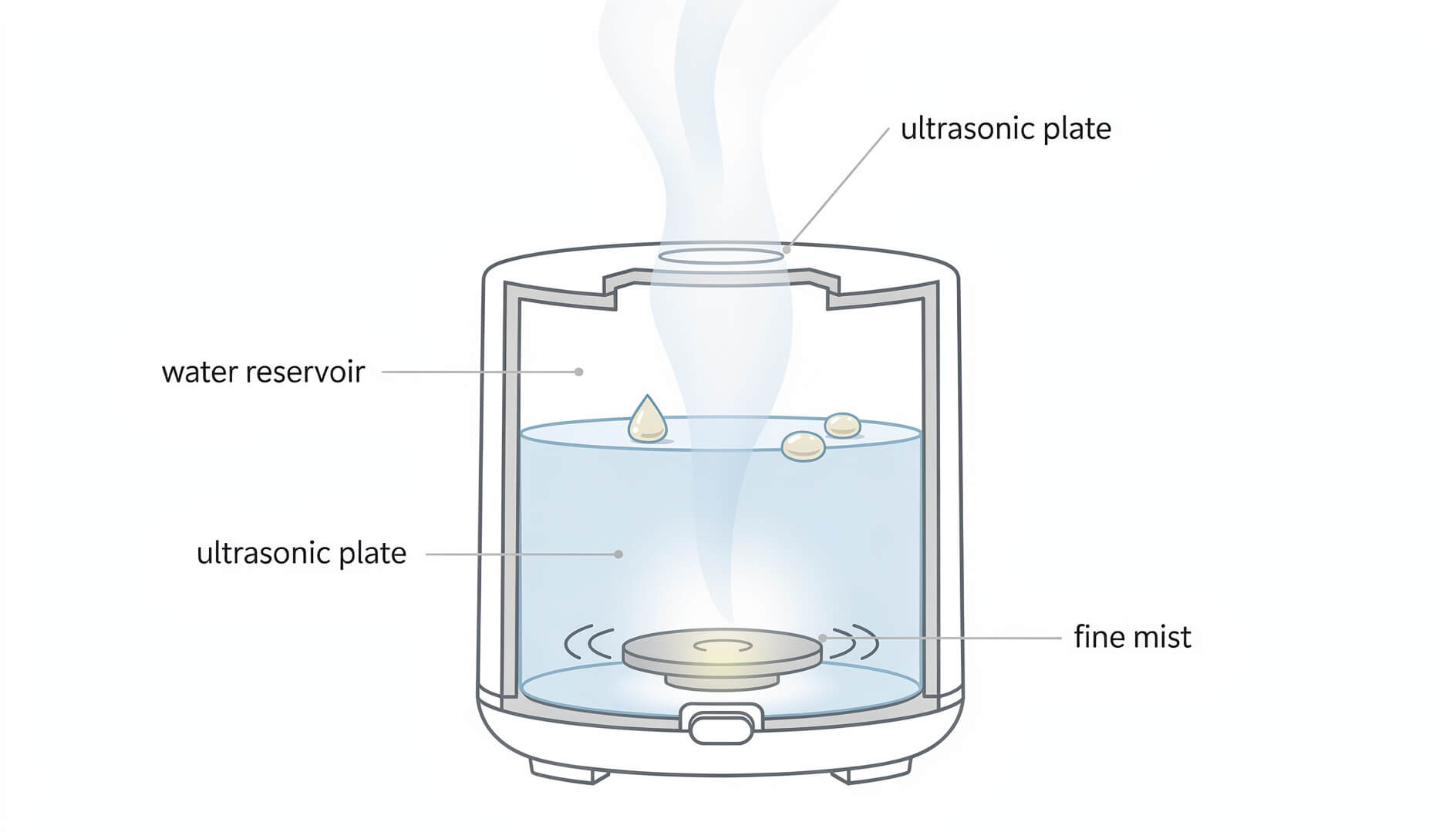
An ultrasonic diffuser for essential oils is, at its heart, a small water tank sitting on top of a ceramic or metal disc called a piezoelectric transducer. You fill the reservoir with water, add a few drops of essential oil, and switch it on. Here is the part the box rarely explains: that disc vibrates at roughly 1.7 to 2.4 megahertz — about two million oscillations every second. Those vibrations are far too fast to hear, but they are powerful enough to shear the water surface into a cool fog of droplets just 1 to 5 microns across.
Because the oil is floating on top of that water, the mist that rises is mostly humidified air carrying a very small fraction of aromatic molecules. There is no heat involved — the process is entirely mechanical, which is why the mist feels cool on your hand. That cool-mist design is the ultrasonic diffuser’s signature strength and, as we will see, also the source of its biggest limitation for serious aromatherapy. To understand why, it helps to know how different aromatherapy diffusers work at a mechanical level before you buy one.
The word “ultrasonic” simply means the disc vibrates above the range of human hearing — sound waves faster than about 20,000 cycles per second are inaudible to us, and these run at roughly a hundred times that. That is why the device can churn out a visible plume of mist while making little more than a faint hum. It also means the mist you see is not steam and is not hot; it is a cold aerosol of microscopic water droplets. Understanding this one fact clears up most of the confusion people have about what an ultrasonic diffuser for essential oils is actually putting into their air.
Benefits and Drawbacks of an Ultrasonic Diffuser for Essential Oils
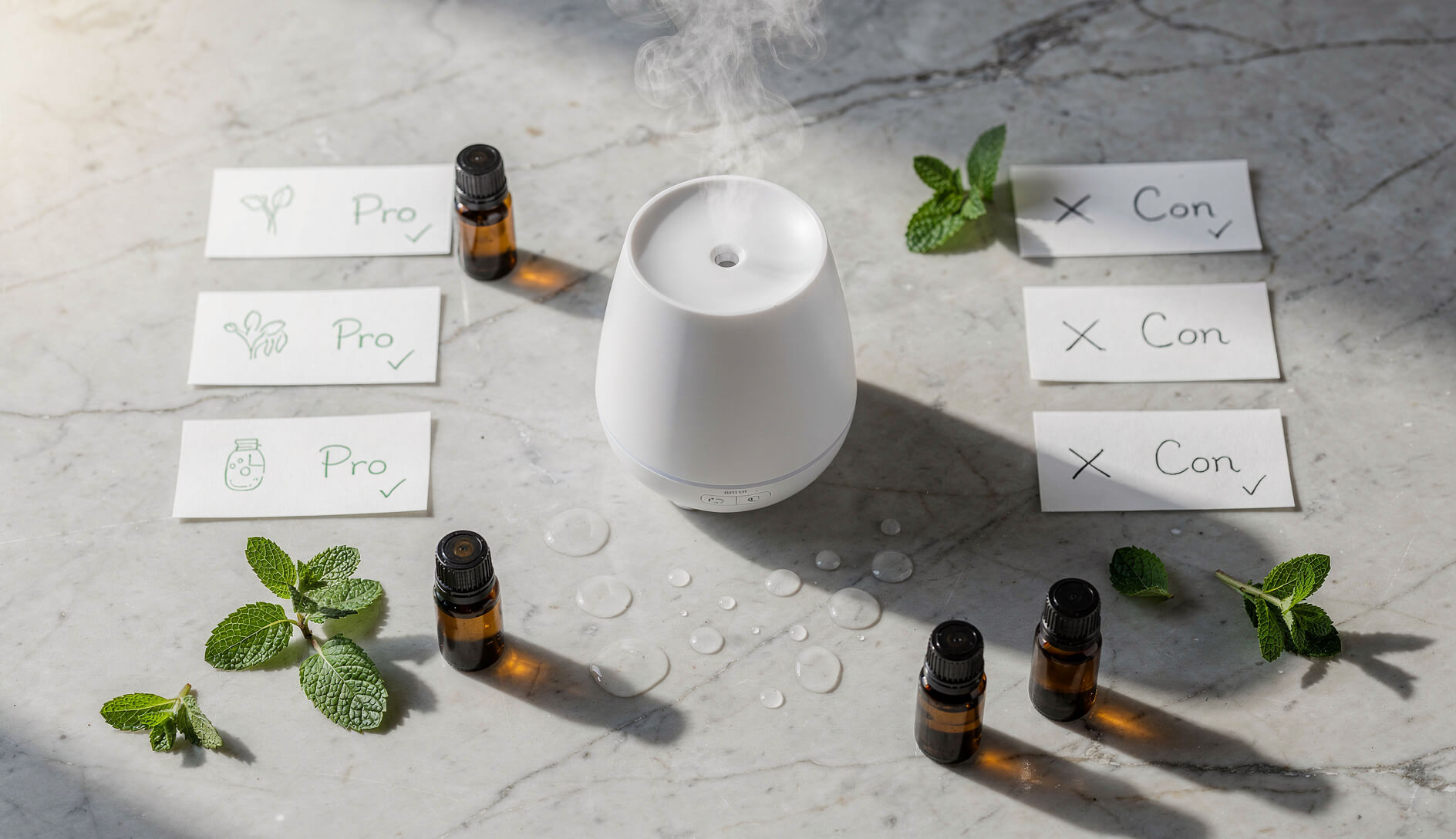
Every diffusion technology involves trade-offs. An ultrasonic diffuser earns its popularity honestly, but a clear-eyed look at both sides will save you disappointment — and money.
Benefits of Ultrasonic Diffusers
- Low upfront cost. Most units run $20 to $60, making them an easy entry point into aromatherapy.
- Added humidity. Because the mist is water-based, it gently humidifies dry rooms — a genuine bonus in winter or air-conditioned spaces.
- Cool, no-heat operation. Nothing is warmed, so the oil is not chemically altered by heat and the device is safe around curious hands.
- Gentle, ambient scent. The diluted output is subtle, which many people prefer for a soft background aroma.
- Extras. Color-changing LEDs, timers, and auto shut-off are common at this price point.
Drawbacks of Ultrasonic Diffusers
- Heavy dilution. A few drops of oil are dispersed through 100 to 500 ml of water, so the aromatic concentration reaching the air is a fraction of the oil’s true potential.
- Short scent throw. Water-carried aroma tends to fill small-to-medium rooms only; large or open spaces overwhelm it.
- Frequent cleaning. Standing water plus oil residue invites biofilm and mineral scale. Skipping cleanings means diffusing whatever is growing in the tank.
- Hard-water “white dust.” Minerals in tap water get atomized right alongside the mist, settling as a fine film on furniture.
- Plastic construction. Most reservoirs are plastic, which can absorb and hold onto strong oils like citrus or peppermint over time.
Join Now and Get a Coupon for 10% Off!
How to Use an Ultrasonic Diffuser with Essential Oils
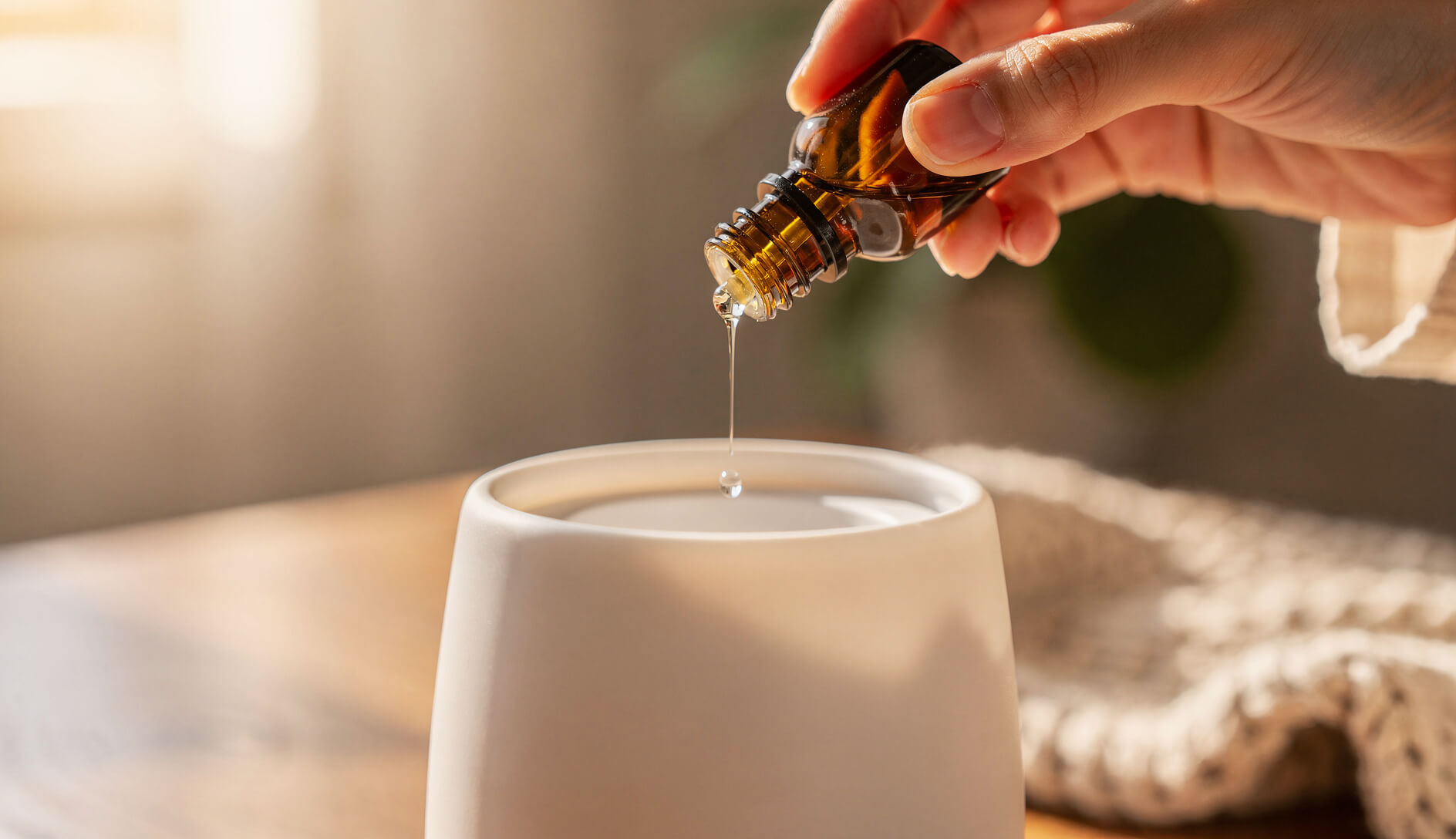
Getting the most from an ultrasonic diffuser comes down to a handful of habits most owners never learn:
- Use the right water. Room-temperature tap water is fine, but distilled or filtered water dramatically reduces white dust and scale buildup.
- Fill to the line, not over it. Overfilling floods the transducer and produces a weak, sputtering mist.
- Add 3 to 6 drops of oil per 100 ml of water. More is not better — excess oil pools and coats the disc, cutting output.
- Run intermittent cycles. A 30-minutes-on, 30-off timer keeps the scent fresh; continuous running causes nose fatigue, so you stop noticing the aroma.
- Empty and wipe after every session. Never let water and oil sit overnight.
- Deep-clean weekly with a splash of white vinegar and a cotton swab on the disc.
The cleaning step is the one people skip, and it is the one that ruins devices fastest. If residue has already built up, our walkthrough on how to clean an essential oil diffuser covers the water-based method most guides gloss over.
Best Essential Oils for Your Diffuser
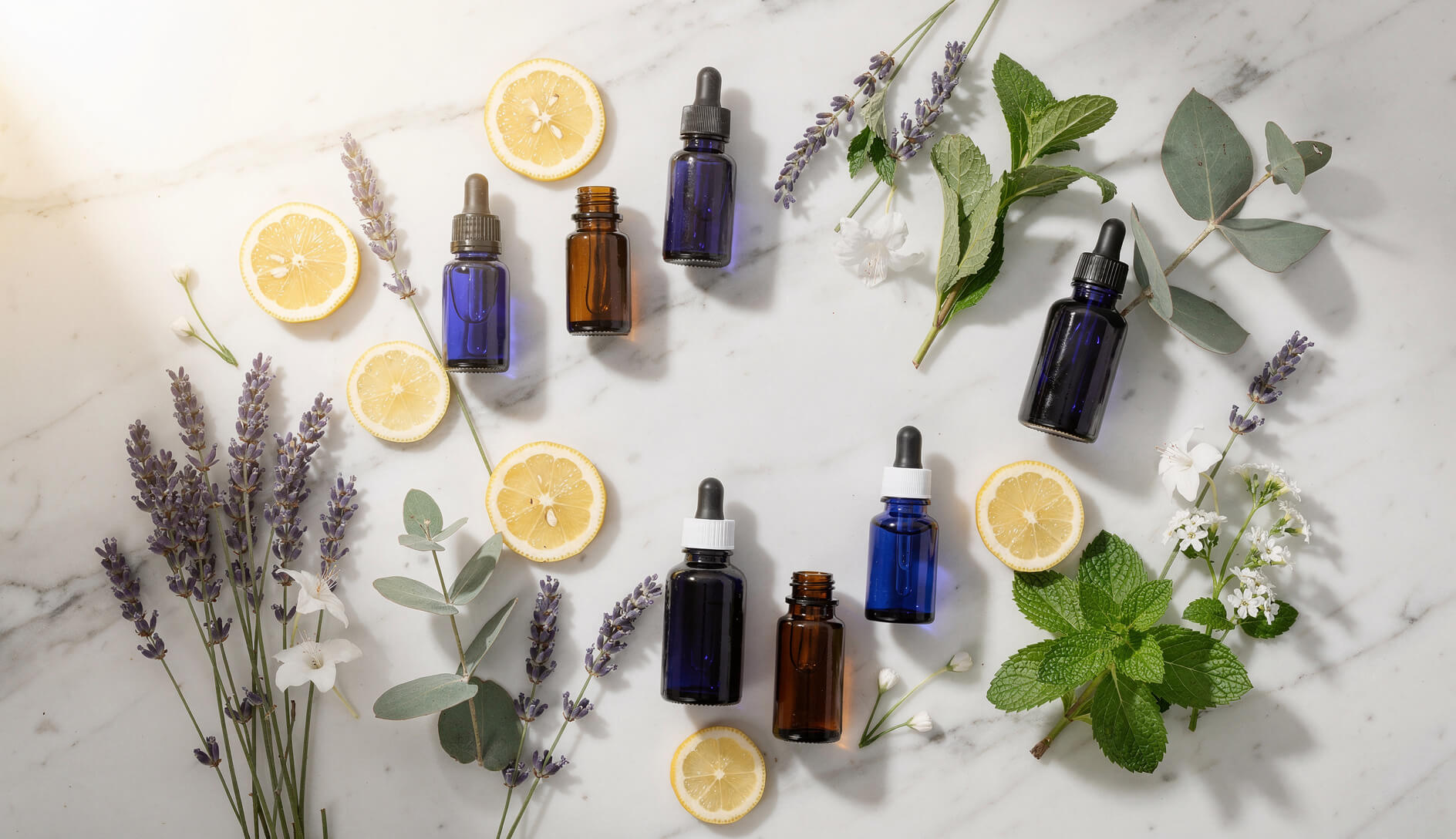
The oils below perform beautifully in an ultrasonic diffuser and even better in a waterless one, because their signature molecules survive dispersion intact:
- Lavender — the classic for a calming, restful atmosphere. Its value lives in the ratio of linalool to linalyl acetate, and how that ratio is preserved matters. See our deep dive on the linalool–linalyl acetate ratio that decides whether lavender actually helps you wind down.
- Eucalyptus — bright, camphoraceous, and ideal for an invigorating, clear-feeling room during cold-weather months.
- Peppermint — cooling and sharp; a small amount goes a long way and lends a focused, alert mood to a workspace.
- Sweet orange & lemon — cheerful citrus notes that lift a space instantly. Note that citrus oils are volatile and fade fastest in water-based mist.
- Frankincense — grounding and resinous, wonderful for a meditation or yoga corner.
A simple blending principle helps here: pair one bright top note (citrus, peppermint, eucalyptus) with one grounding base note (frankincense, cedarwood, patchouli) and, if you like, a floral or herbaceous middle note (lavender, geranium) to bridge them. A classic evening blend is three drops lavender, two drops sweet orange, and one drop frankincense — calming without being sleepy-heavy. For mornings, try two drops peppermint with three drops lemon for a clean, focused lift. Because these ratios are so small, an ultrasonic diffuser dilutes them further in its water tank, which is exactly why the same blend often reads as bolder and more true-to-bottle in a waterless device.
A quick reality check on citrus and other delicate top notes: the more you dilute and disperse them in water, the faster their brightest molecules dissipate. That is why the same bottle of bergamot can smell vivid in one device and flat in another. If you want a full map of scent families and blending logic, our complete guide to essential oils for aromatherapy is the place to start.
Sign Up to Get Your FREE
e-Book Here…
Ultrasonic Diffuser vs. Nebulizing Diffuser®: Key Differences
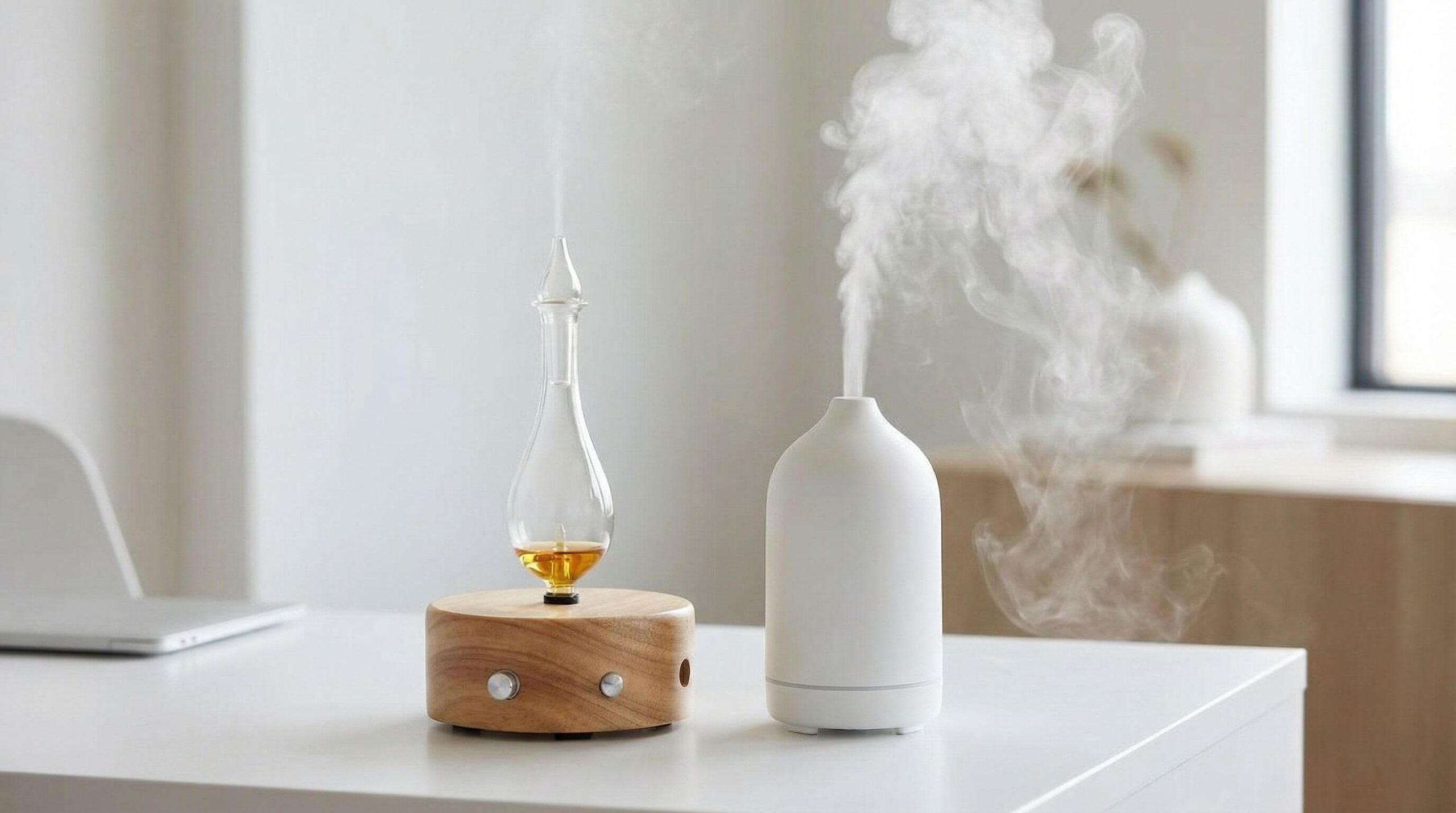
This is where the two technologies part ways completely. An ultrasonic diffuser scents water and then mists the water. A Nebulizing Diffuser® skips water entirely and atomizes pure, undiluted essential oil. The mechanism is elegant: a stream of pressurized air passes across the mouth of a glass tube, and by Bernoulli’s Principle, that fast-moving air creates a low-pressure zone that draws neat oil up the tube and shatters it into a fine cloud of 1-to-3-micron particles. No water, no heat, nothing between you and the oil.
| Feature | Ultrasonic Diffuser | Nebulizing Diffuser® |
|---|---|---|
| What it disperses | A few drops of oil in 100–500 ml water | 100% pure, undiluted essential oil |
| Mechanism | Piezoelectric disc vibrating ~2 million times/sec | Pressurized air + Bernoulli’s Principle |
| Heat or water | Water-based cool mist | No water, no heat |
| Aromatic strength | Diluted — gentle, short throw | Concentrated — fills large rooms |
| Added humidity | Yes | No |
| Materials | Mostly plastic | Real wood + medical-grade Pyrex glass |
| Oil integrity | Delicate notes diluted in water vapor | Full molecular profile preserved |
| Cleaning | After each use; scale & biofilm risk | Periodic oil-residue rinse |
Neither is objectively “bad.” If you want gentle background scent plus a little humidity for under $50, the ultrasonic route makes sense. If you want the truest, strongest expression of a premium oil in a device built to last, the difference is night and day.
Why Nebulizing Diffusers® Deliver Superior Aromatherapy
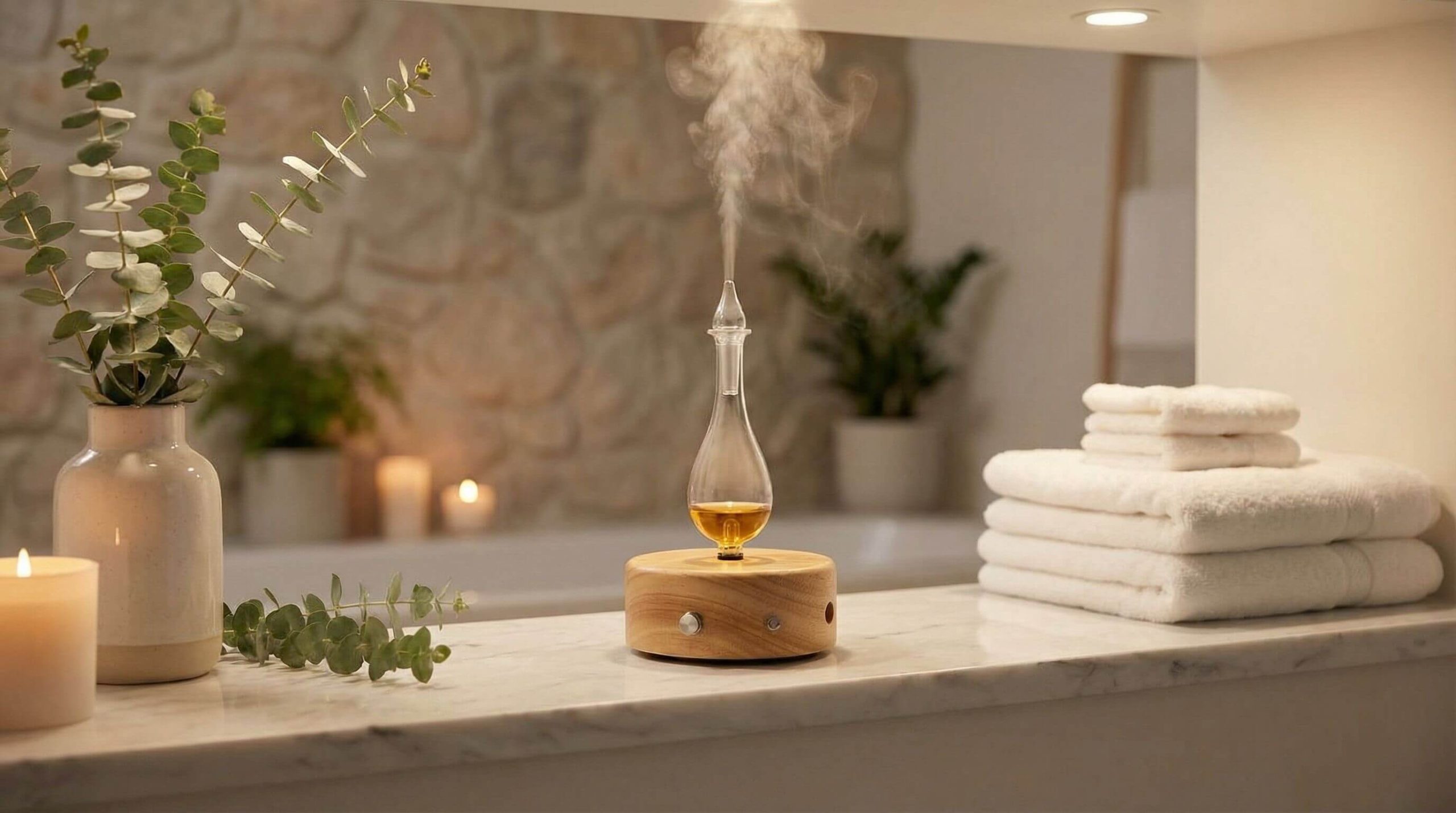
When you diffuse an oil neat, nothing dilutes or masks it. The full spectrum of aromatic molecules — from the fleeting top notes to the deep base notes — reaches your senses in the proportions nature and the distiller intended. Water-based misting, by contrast, carries only whatever fraction of oil managed to leave the tank surface, heavily thinned by humidity.
There is a practical durability story too. Because there is no standing water, a Nebulizing Diffuser® never grows the biofilm or mineral scale that plagues water tanks — and when it does need attention, our step-by-step cleaning guide takes only a few minutes. Organic Aromas builds each unit from real wood and medical-grade Pyrex glass rather than plastic — materials that will not absorb oils or leach anything into your air, and that look at home in a spa, studio, or living room rather than on a clearance shelf.
The whisper-quiet operation is a bonus for anyone diffusing in a bedroom or meditation space. Where a water-based unit hums audibly from its fan and vibration, a nebulizer runs on a soft air pump. If you are curious how this fits a calm-down or bedtime routine, our bedtime protocol for essential oils shows how to time diffusion for a restful evening atmosphere.
How to Choose the Right Essential Oil Diffuser for Your Needs
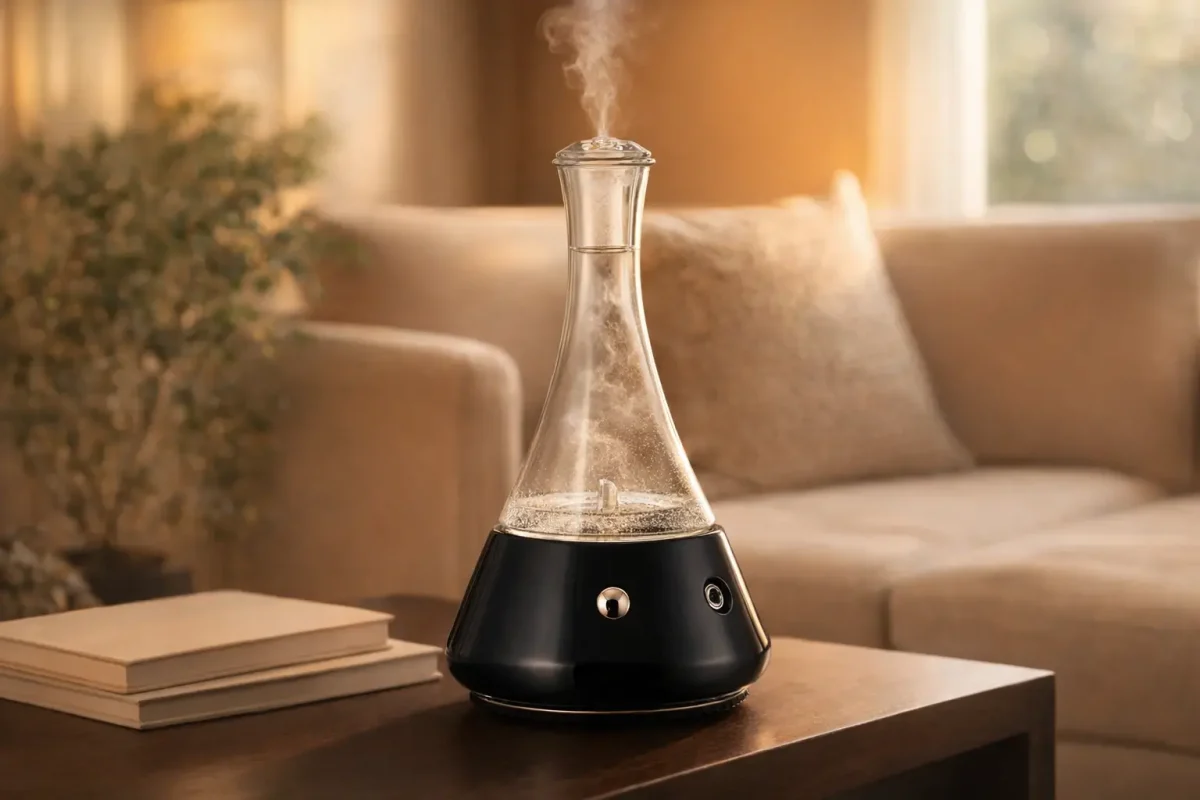
Rather than asking which device is “best,” ask which one matches how you actually live. If you are still new to the practice, our primer on what aromatherapy is and how it supports wellbeing is a helpful backdrop. Then run through these questions:
- How big is the room? Small bedroom or desk → ultrasonic is plenty. Open-plan living area, studio, or retail space → a Nebulizing Diffuser® carries far better.
- Do you want humidity? Dry climate or winter heating → the water mist of an ultrasonic is a genuine plus. Humid climate → skip the added moisture and go waterless.
- How much do your oils matter? Everyday budget blends → ultrasonic. Precious single-origin or therapeutic-grade oils you want to experience fully → nebulizing.
- How much cleaning will you realistically do? If nightly emptying sounds unlikely, a waterless device is far more forgiving.
- Noise sensitivity? For a silent bedroom, a nebulizer’s soft pump beats a fan hum.
Many aromatherapy lovers end up owning both: an ultrasonic unit for casual daytime humidity and scent, and a Nebulizing Diffuser® for the moments when the oil itself is the point. You can explore the handcrafted range in the Nebulizing Diffuser® collection.

Join Our Exclusive Member Club to get Big Discounts!
Frequently Asked Questions About Ultrasonic Diffusers
Can you put pure essential oil in an ultrasonic diffuser without water?
No. An ultrasonic diffuser needs water to function — the transducer atomizes the water surface, not the oil directly. Running it dry can burn out the disc. If you want to diffuse oil neat, that is precisely what a Nebulizing Diffuser® is designed to do.
How many drops of essential oil should I use in an ultrasonic diffuser?
Aim for 3 to 6 drops per 100 ml of water. Adding more does not make the scent noticeably stronger; it just pools oil on the disc and can shorten the device’s life.
Why does my ultrasonic diffuser leave white dust?
That dust is dissolved minerals from tap water being atomized along with the mist. Switching to distilled or filtered water removes almost all of it.
Is an ultrasonic diffuser or a nebulizing diffuser better for strong aromatherapy?
For the strongest, purest aroma, a Nebulizing Diffuser® wins because it disperses undiluted oil rather than a few drops thinned through a tank of water. For gentle background scent plus humidity on a budget, an ultrasonic diffuser is a fine choice.
How long can I run an ultrasonic diffuser at a time?
Most units run 4 to 10 hours on a full tank, but your nose adapts to a constant scent within minutes. Intermittent cycles — roughly 30 minutes on, 30 off — keep the aroma perceptible and stretch both your oil and your device.
Can an ultrasonic diffuser cause mold?
It can if you leave water and oil standing in the tank between uses. That residue is an ideal home for biofilm. Empty the reservoir after every session, wipe it dry, and deep-clean weekly to keep the mist — and your air — clean.
Your Aromatherapy Journey, Made Simple
The ultrasonic diffuser for essential oils opened aromatherapy to millions, and for casual, everyday scenting it does the job well. But once you understand that it disperses a whisper of oil through a tank of water — while a Nebulizing Diffuser® delivers the oil pure and whole — the choice comes down to how much the aroma itself matters to you. If you are ready to experience essential oils at full strength, explore the handcrafted Nebulizing Diffuser® collection and see what waterless, heatless diffusion really smells like.
Experience Pure, Undiluted Aromatherapy
No water. No heat. Just real wood, medical-grade Pyrex glass, and 100% pure essential oil misted at full strength. Discover why 200,000+ aromatherapy lovers made the switch.