

Lemongrass Essential Oil Benefits: The Bright, Grassy-Citrus Diffuser Oil for a Fresh Home
The real lemongrass essential oil benefits that most people never hear about have nothing to do with a supplement bottle and everything to do with the air in your home. Cold-pressed from the tall, blade-like grass Cymbopogon, lemongrass oil is one of the brightest, most instantly recognizable scents in aromatherapy — a clean, grassy-citrus lift that can make a kitchen smell freshly wiped-down and a stuffy entryway feel like a window just opened. Yet nearly every guide online treats it as a clinical ingredient and skips the one thing you actually want to know: how to make it smell wonderful in a room, and how to keep it there.
That gap is what this guide fills. We will get into what lemongrass genuinely smells like (and how to dodge the “bug spray” association), the citral chemistry that explains why it fades so fast, three diffuser blends engineered to make it last, and how to buy and store a citrus oil that is more fragile than it looks. Everything here is framed for scent and home ambiance — no medical claims, just an aromatherapist’s take on getting the most out of a beautiful, underrated oil.
What Lemongrass Essential Oil Actually Smells Like (Bright Citrus, No “Bug Spray” Vibe)
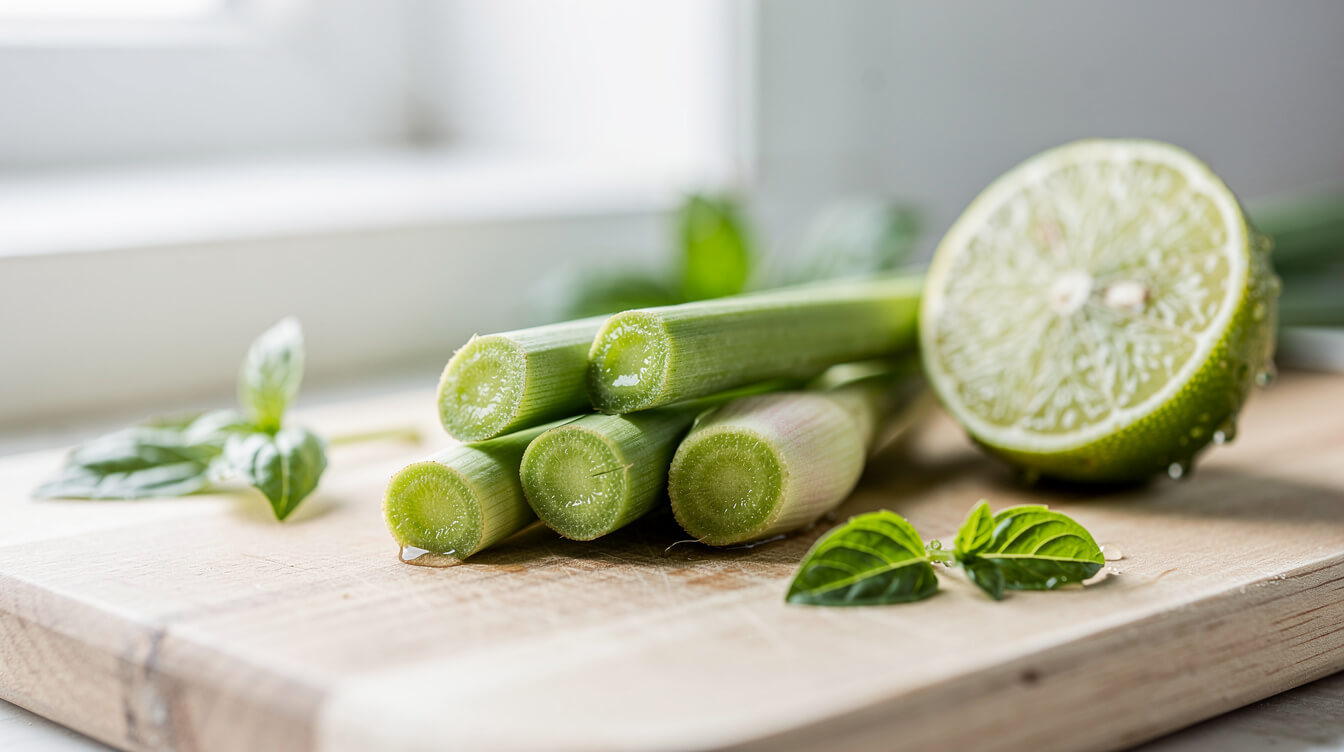
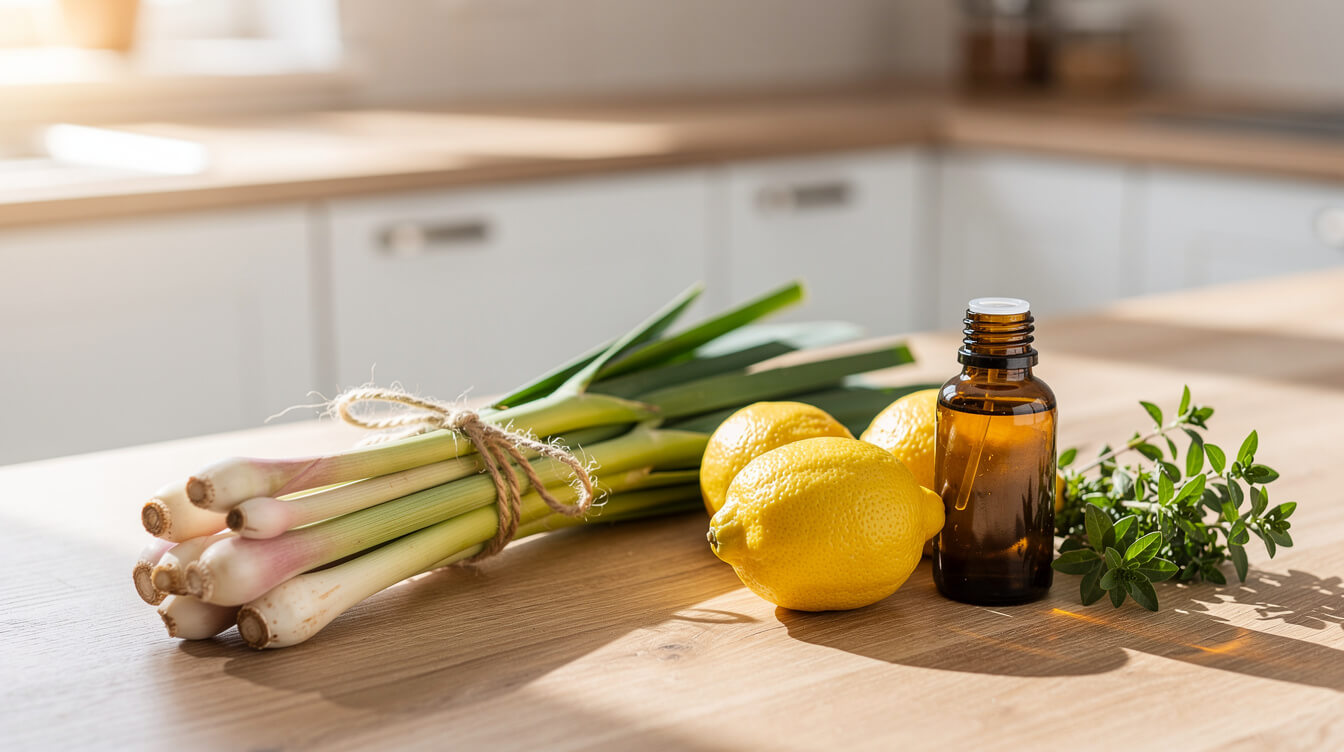
Open a bottle of true lemongrass and the first impression is a sharp, sherbet-lemon brightness — but underneath the citrus there is something green and hay-like, almost like crushed grass on a summer afternoon. That grassy backbone is what separates lemongrass from lemon or bergamot. Lemon oil is all rind and zing; lemongrass has body. It reads fresh and slightly herbal at the same time, which is exactly why it works so well as a household scent rather than just a perfume note.
So where does the “citronella candle” reputation come from? The two oils are botanical cousins — both come from Cymbopogon grasses and both are citral-rich — and cheaply blended products often lean on that shared lemony edge. But true lemongrass, diffused at a sensible strength, is rounder and sweeter than citronella’s sharper, more medicinal profile. If you have only ever met lemongrass through an outdoor patio coil, a few drops of the pure oil in a quiet room is a genuinely different experience. (For the contrast, our roundup of citronella essential oil is a useful companion read.)
It helps to know what you are actually smelling. Lemongrass is steam-distilled from the fast-growing tropical grass Cymbopogon, and two types dominate the market: Cymbopogon flexuosus (East Indian), which tends to be a touch more intense and lemony, and Cymbopogon citratus (West Indian), which often reads a little softer and greener. Neither is “better” — but if a blend feels too sharp, trying the other chemotype can be the whole fix. Most of the character in both comes down to a single family of molecules, which is where we head next.
The trick to keeping lemongrass on the “fresh and inviting” side of the line is restraint and pairing. On its own and overdosed, that citral punch can tip into cleaning-product territory. Softened with a floral or grounded with wood, it becomes something far more sophisticated — more spa, less spray. We will build exactly those blends below.
The Citral Story: Why Lemongrass Punches, Then Fades
Here is the jewel almost no roundup gives you. Lemongrass oil is dominated by citral — a pair of closely related aldehydes called geranial and neral — and citral typically makes up somewhere between 70% and 80% of the whole oil. That single fact explains almost everything about how lemongrass behaves in a room. Citral is the source of the intense lemony sweetness, and it is also a very light, volatile molecule, which is why lemongrass hits hard in the first few minutes and then seems to vanish.
In perfumery language, lemongrass is almost entirely a top note. Top notes are the fastest to evaporate; they are the sparkle at the opening of a scent, not the part that lingers. Diffuse lemongrass by itself and you get a brilliant thirty-minute flash followed by a curiously empty room. The oil has not “run out” — the citral has simply flashed off, and there is nothing heavier left behind to hold the scent in the air.
The fix is not more lemongrass — it is anchoring. Pair that volatile citrus with a slow, heavy base note (think cedarwood, vetiver, patchouli, or sandalwood) and the base acts like a fixative, slowing the overall evaporation so the lemongrass reads for hours instead of minutes. A middle note such as lavender or geranium bridges the two. This is the note-pyramid principle, and it is the reason a well-built blend outperforms a single oil every time. If you want the fundamentals of how oils behave before you combine them, our guide to choosing diffuser scents by mood lays the groundwork.
One more consequence of all that citral: because these aldehydes are reactive and light, lemongrass is also one of the quicker oils to oxidize on the shelf — which is why storage (covered near the end) matters more here than it does for a sturdy wood oil.

Sign Up to Get Your FREE Essential Oils e-Book Here
Lemongrass as a Natural Air Freshener for Kitchens and Entryways

Lemongrass earns its keep in the two rooms where scent works hardest: the kitchen and the entryway. Kitchens accumulate lingering food smells — fried onions, fish, yesterday’s garlic — and lemongrass’s clean, grassy-citrus profile cuts through that heaviness in a way sweet or floral scents cannot. It does not so much cover odors as reset the room toward “fresh.” An entryway is the first thing guests breathe, and a bright citrus note there signals a cared-for, welcoming home before anyone reaches the living room.
This is also where the difference between “natural-smelling” and genuinely pure matters. Plenty of products marketed as natural air fresheners are synthetic fragrance oils built to mimic citrus — they smell flat and one-dimensional because they lack the dozens of trace compounds that give real lemongrass its depth. We wrote a whole piece on why “natural” air fresheners are not always pure, and lemongrass is a perfect example: the real oil has a living, green complexity a lab-made “lemongrass fragrance” simply cannot fake.
Because kitchens and entryways are transit spaces — you pass through, you do not sit and marinate — they are ideal for a punchy top-note oil. You want an immediate hit of freshness on entry, not an all-day cloud. For room-by-room strategy beyond lemongrass, our guide to essential oils for air freshening maps which scents suit which spaces.
Three Diffuser Blends That Make Lemongrass Last
Each of these is built as a note pyramid: a base to anchor, a middle to bridge, and lemongrass as the bright top. Drop counts assume a waterless Nebulizing Diffuser®, which disperses neat (undiluted) oil — so you need far fewer drops than a water-based unit, and the ratios below are what actually hold their shape in cold diffusion. For a broader library, see our ranked essential oil recipes for the diffuser.
1. Fresh & Grounded (Kitchen Reset)
- 3 drops lemongrass (top — the citrus lift)
- 2 drops cedarwood (base — anchors and softens)
- 1 drop lavender (middle — rounds the sharp edge)
The cedarwood is the whole point: it slows the citral flash and keeps the blend reading long after a solo lemongrass would have gone silent. This is your everyday, cut-through-the-cooking blend.
2. Spa Morning (Bright but Calm)
- 3 drops lemongrass
- 2 drops geranium (floral middle — turns citrus into “spa”)
- 2 drops bergamot (a second, softer citrus for depth)
Geranium is the secret weapon here — it takes lemongrass from “clean” to “luxurious” and gives the blend a rosy warmth that feels expensive.
3. Green Focus (Desk & Study)
- 3 drops lemongrass
- 2 drops rosemary (herbaceous, clarifying middle)
- 2 drops vetiver (deep, earthy base for staying power)
Vetiver is one of the heaviest, slowest oils in the kit, so it dramatically extends run time — ideal when you want the fresh, alert quality of lemongrass to stay present through a long work block. When you are ready to move the diffuser into the living room for company, our diffuser blends for entertaining take the same layering logic into crowd-pleasing territory.
A word on drop discipline. Lemongrass is potent, so more is not better — overdosing is the single fastest way to push it from “fresh” into “furniture polish.” Start on the low end of each recipe, run a short cycle, and add a drop only if the room genuinely needs it. Keeping lemongrass to roughly a third of the blend (with the rest split between a middle and a base note) is a reliable rule of thumb that stops the citrus from bulldozing everything else.
A note on delivery: these anchoring ratios were tuned for the pure, cold dispersion of a Nebulizing Diffuser® such as the handcrafted Raindrop Smart Nebulizing Diffuser® — no water to dilute the citral, no heat to scorch the top notes. In a water-based unit you would need more drops and still lose much of the brightness to the steam.

Sign Up to Get Your FREE
e-Book Here…
Best Rooms, Seasons, and Times to Diffuse It

Rooms. Lemongrass is a daytime, active-space oil. Kitchens, entryways, home offices, bathrooms, and laundry rooms all suit its crisp energy. It is less at home in a bedroom, where you usually want a soft, sedating base note rather than a wake-up citrus — save lemongrass for the rooms where you want to feel alert and the air to feel scrubbed clean.
Seasons. This is a spring and summer hero. Its cool, green freshness is the aromatic equivalent of an open window, and it pairs naturally with the season’s lighter mood. In autumn and winter you can still use it, but blend it with warmer partners — a little ginger or a woodier base — so it does not feel out of step with the colder light.
Times. Reach for lemongrass in the morning and early afternoon — on entry after being out, while cooking, or at the start of a focused work session. Because it is a fast top note, short, intentional sessions beat all-day running: a 15–30 minute burst delivers that fresh hit without fatiguing your nose (scent habituation means a constant smell fades from your awareness anyway). A waterless nebulizing setup is perfect for this rhythm — its intermittent on/off cycling gives you the punch, then a rest, then the punch again.
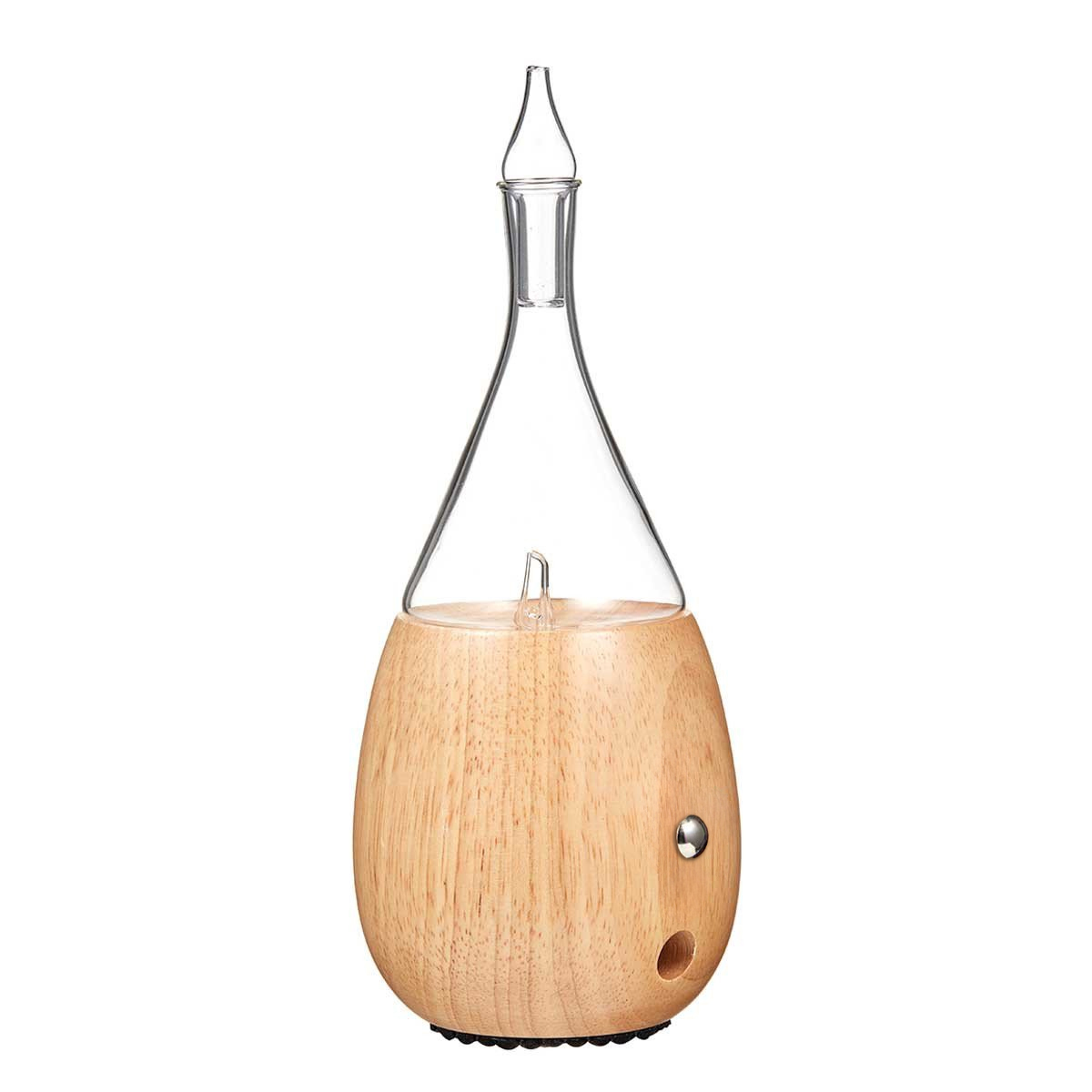
Let Lemongrass Bloom — Undiluted, No Water, No Heat
Volatile citrus oils like lemongrass shine when they are dispersed cold and pure. The handcrafted Raindrop Smart Nebulizing Diffuser® atomizes neat essential oil into a fine, dry mist — no water to dull the citral, no heat to flatten the top notes.
Buying Quality Lemongrass Essential Oil (and Storing a Volatile Citrus)
Because so much of lemongrass’s appeal lives in fragile citral, quality and freshness matter more than with a rugged oil. When you shop, look for the Latin name on the label — Cymbopogon flexuosus (East Indian) or Cymbopogon citratus (West Indian) — plus the country of origin and, ideally, a batch or GC/MS reference. A bottle that just says “lemongrass fragrance” or “aroma oil” is almost certainly synthetic and will smell flat and sharp compared with the real thing.
Packaging tells you a lot too. Citrus-type oils should always be sold in dark amber or cobalt glass, never clear glass and never plastic, because light and certain plastics accelerate the breakdown of citral. A responsible seller ships lemongrass in tinted glass for exactly this reason.
Storing it so it lasts
- Keep the cap tight — oxygen is citral’s enemy, and every open-and-sniff lets a little more in.
- Store somewhere cool and dark: a cupboard or drawer, away from windows, stovetops, and radiators. Some people keep citrus oils in the refrigerator.
- Use it within about 1–2 years of opening. Lemongrass oxidizes faster than woods or resins, and an old bottle turns sharp and “off.”
- Buy a size you will realistically finish — a smaller bottle you use up beats a bargain jug that oxidizes half-full.
Treat lemongrass like fresh produce rather than a pantry staple and it will reward you with that bright, living citrus every time you diffuse it.

Join Our Exclusive Member Club to get Big Discounts!
Lemongrass Essential Oil Benefits: Quick Answers
Does lemongrass oil really work as a natural air freshener?
As a scent, yes — its bright, grassy-citrus profile is excellent at making a kitchen or entryway feel fresh and clean, especially against lingering food odors. Diffused pure through a Nebulizing Diffuser®, it delivers that freshness without the flat, one-note quality of synthetic “citrus” fragrance sprays.
Why does my lemongrass scent disappear so quickly?
Because the oil is roughly 70–80% citral, a very volatile top note that evaporates fast. On its own it flashes and fades. Anchor it with a heavy base note — cedarwood, vetiver, sandalwood — and it will read for hours instead of minutes.
Is lemongrass the same as citronella?
No, though they are botanical cousins in the Cymbopogon family and share that lemony citral character. True lemongrass is rounder and sweeter; citronella is sharper and more medicinal. Diffused pure and at a gentle strength, lemongrass reads far more “fresh home” than “patio coil.”
Can I diffuse lemongrass around pets?
Aromatic oils affect animals more strongly than people, so use common sense: diffuse in open, well-ventilated rooms, keep sessions short, and always leave a door open so pets can walk away if they choose. Cats in particular are sensitive to strong essential-oil aromatics. This is a home-ambiance decision, not a health treatment — if you have any concern about a specific pet, check with your veterinarian first.
Is lemongrass a phototoxic citrus oil?
Lemongrass is a grass rather than a citrus fruit, and it is not typically flagged as phototoxic the way expressed citrus rinds (bergamot, lime) can be. If you are curious about the sun-and-citrus chemistry generally, our guide to phototoxic essential oils explains which oils to watch. As always, we are talking about diffusing for ambiance, not applying to skin.
Final Thoughts: A Bright Oil That Rewards a Little Craft
The most useful of all the lemongrass essential oil benefits is the simplest one: it makes your home smell genuinely, cleanly fresh. The catch — and the thing the clinical roundups miss entirely — is that its citral-heavy chemistry means it needs a little help to last. Anchor it, diffuse it pure and cold, and reach for it in the bright, active rooms where its energy belongs, and this humble grass becomes one of the most rewarding oils in your collection. Fill the room, let it rest, and let that first breath of green citrus do its quiet, welcoming work.