

Patchouli Essential Oil Uses: The Complete 2026 Guide
Patchouli essential oil uses reach far beyond the incense-clouded cliché most people picture. Distilled from the fermented, sun-dried leaves of Pogostemon cablin — a member of the mint family, despite its deep, woody-sweet scent — patchouli is one of aromatherapy’s most versatile grounding oils. Its earthy character comes from a family of heavy sesquiterpene molecules, chiefly patchoulol (also called patchouli alcohol), which give the oil its calming, centering signature. In this guide we go past the surface-level lists to show you exactly how to use patchouli for mood and atmosphere, skincare and haircare, blending, and diffusion — plus the one quirk that makes patchouli behave differently from almost every other oil in your collection.
What Is Patchouli Essential Oil?
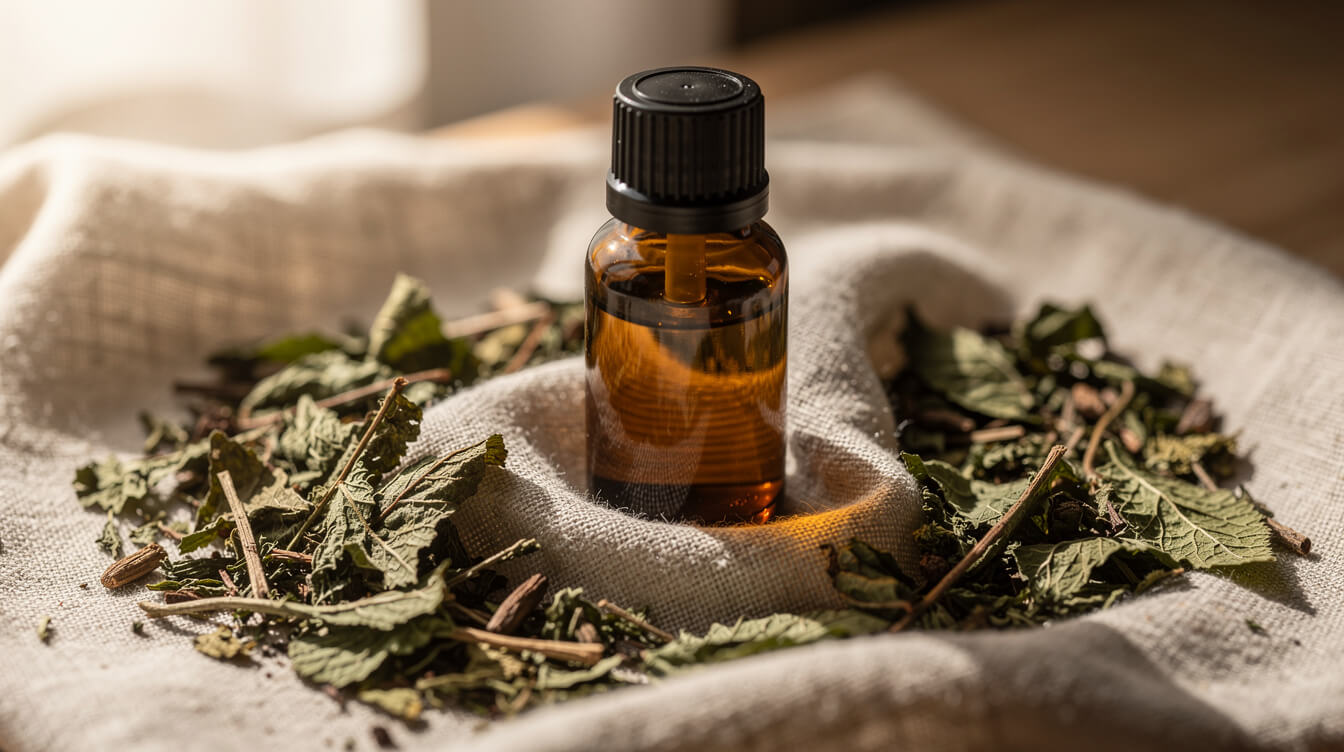
Patchouli oil is steam-distilled (and sometimes CO₂-extracted) from the leaves of Pogostemon cablin, a bushy tropical herb native to Southeast Asia. Unlike bright citrus or floral oils, patchouli is a true base note — the slow, tenacious foundation that anchors a scent long after the top notes fade. That is why perfumers have leaned on it for centuries as a natural fixative, and why it pairs so naturally with other grounding oils like vetiver.
The oil’s aroma is built from its chemistry. Gas-chromatography breakdowns of good-quality patchouli typically show patchoulol as the dominant constituent (often 28–35%), alongside α-bulnesene, α-guaiene, seychellene, and pogostol. A trace compound called norpatchoulenol punches far above its concentration — it is one of the main molecules the human nose registers as “patchouli.” Understanding that the scent is base-note heavy explains most of what follows: why a little goes a long way, why it lingers, and why it needs the right delivery method to shine.
A scent that once verified the real thing
Patchouli’s history is a small jewel in its own right. In the 18th and 19th centuries, prized cashmere and paisley shawls were packed with dried patchouli leaves for the long sea voyage from India to Europe, because the aroma repelled moths and other pests during transit. The scent clung to the fabric so reliably that European buyers came to treat it as a mark of authenticity — a genuine Indian shawl smelled of patchouli. When French and English mills began weaving imitations, they discovered they had to perfume their copies with patchouli too, or customers rejected them as fakes. That trade quietly seeded patchouli into Western perfumery, where it remains a backbone base note to this day.
The one quirk: patchouli improves with age
Here is the counterintuitive part most articles skip. Nearly every essential oil is best used fresh, and most degrade with time. Patchouli is the rare exception — it is often called the “fine wine” of essential oils because it mellows and deepens with age. A well-stored bottle loses the sharp, sometimes green edge of fresh distillate and develops a smoother, rounder, sweeter body over months and years. If you have ever wondered why aged patchouli commands a premium, this is why. Store it in a cool, dark place and let time do the work.
Patchouli Essential Oil Uses for Mind and Mood
The most popular patchouli essential oil uses center on atmosphere and emotional grounding. In aromatherapy terms, patchouli is prized for creating a sense of calm, stability, and sensory warmth — the olfactory equivalent of putting your bare feet on the earth. Diffused into a room, it slows the pace of a space, which makes it a favorite for meditation corners, evening wind-downs, and yoga or breathwork practice.
A simple grounding ritual: at the end of the day, start a short session of patchouli (on its own or under a citrus top note), dim the lights, and let the scent build for a few minutes before you settle into reading, stretching, or a warm bath. Because patchouli is so tenacious, the aroma stays with the room long after the session ends — a lingering cue that this is downtime, not work time. Scent-anchoring a nightly wind-down this way can make the transition into rest feel more automatic over time, much as a familiar piece of music can shift your mood in seconds.
Because it is grounding rather than sedating, patchouli plays well with brighter oils that lift the mood. A drop of patchouli under bergamot or sweet orange keeps a citrus blend from feeling thin and fleeting; the patchouli holds the composition together and extends its life on the air. This “anchor plus lift” logic is the heart of good blending — we break it down further in our guide to essential oil blends for the diffuser. For ambience, patchouli helps create a warm, welcoming, spa-like mood without the synthetic edge of a plug-in air freshener.
Sign Up to Get Your FREE
e-Book Here…
Patchouli Essential Oil Uses in Skincare and Haircare
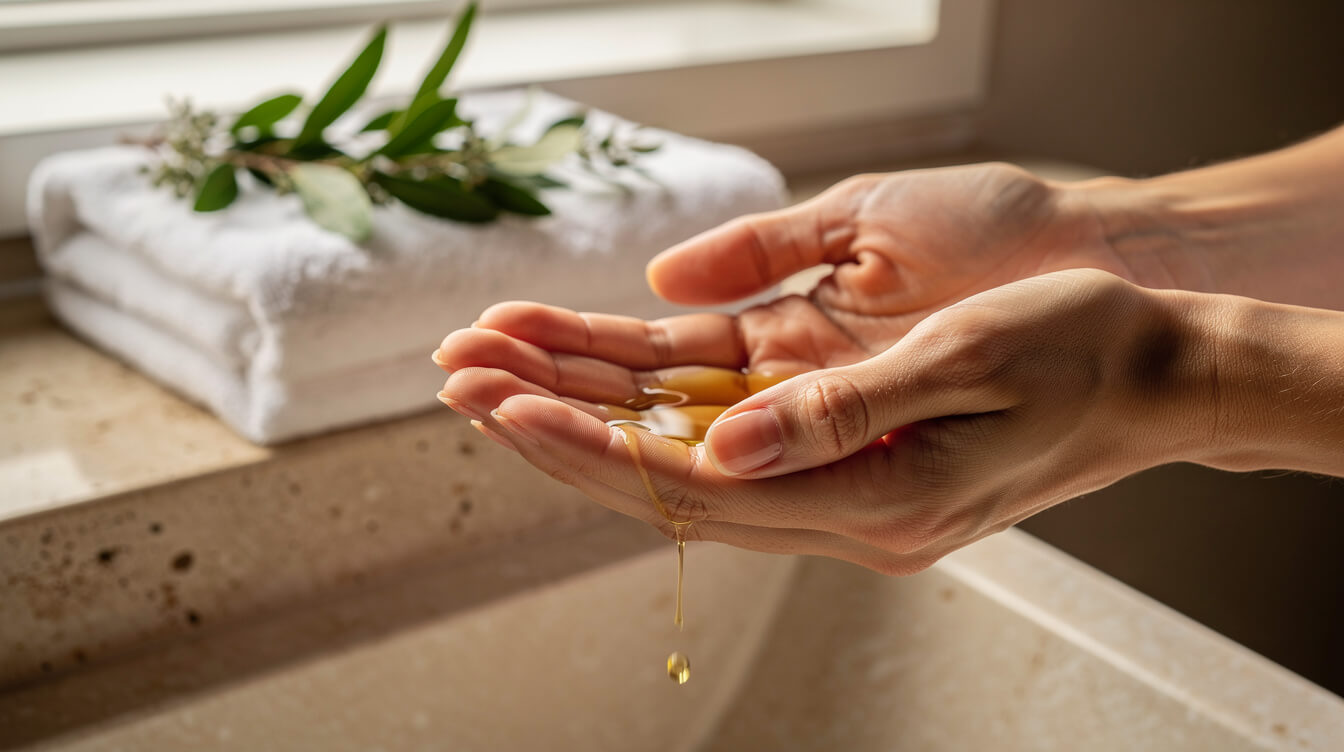
Patchouli has a long history in natural beauty, and here the uses become hands-on. Properly diluted in a carrier oil, patchouli is a traditional ingredient for supporting the look of mature, dry, or rough skin — think winter hands, elbows, and cuticles. Its rich, resinous character also makes it a natural fit for beard oils, grounding body blends, and hair-conditioning treatments where a small amount adds warmth and scent longevity.
Why the skincare tradition? Patchouli’s heavy sesquiterpene molecules give it a rich, occlusive, almost balm-like quality in a blend, which is part of why it has been folded into salves and body oils for generations — especially for skin that reads as dry, weathered, or lackluster. It also carries scent beautifully at low doses, so a beauty blend can smell luxurious without a heavy hand. Think of patchouli as the finishing note that makes a homemade body oil feel like a spa product rather than a science project.
A few reliable ways to work patchouli into a routine:
- Dry-skin body oil: add 6 drops patchouli + 6 drops frankincense to 30 ml (1 oz) of jojoba or sweet almond oil (a gentle 2% dilution).
- Hair and scalp finish: a single drop rubbed between the palms and smoothed over the ends of dry hair adds shine and a lingering earthy scent.
- Grounding roller: patchouli with a touch of cedarwood in a carrier makes a portable scent for the wrists and neck.
Always dilute. Patchouli is potent and long-lasting on skin, so more is rarely better. Keep topical blends at or below a 2–3% dilution for body use, and patch-test any new blend on the inner forearm first. If you are pregnant, nursing, or using patchouli around children or pets, check current safety guidance before applying — our essential oil safety guide for animals is a good starting point for pet-friendly households.
Patchouli Blend Recipes That Actually Work
Patchouli is famously polarizing on its own, but it is a phenomenal blender — it is the oil that makes other oils smell more expensive. As a base note it slows evaporation and rounds out sharp edges. Here are three tested-style starting points you can adjust to taste.
Grounding evening blend (for a waterless Nebulizing Diffuser® reservoir)
Because a Nebulizing Diffuser® runs on neat, undiluted oil, you build the blend right in the glass reservoir. A classic base-forward grounding recipe: 15 drops sweet orange, 10 drops cedarwood, 5 drops patchouli. The orange lifts, the cedarwood adds a dry woody spine, and the patchouli anchors everything so the aroma unfolds slowly instead of vanishing.
Warm linen and room spray
In a 60 ml spray bottle, combine 2 tablespoons of witch hazel (or high-proof alcohol) with 10 drops sandalwood, 8 drops bergamot, and 7 drops patchouli, then top with distilled water and shake before each use. Mist lightly over linens or into the air for a cozy, restful mood. (Inspiration credit: this base structure echoes the classic sandalwood-patchouli-citrus “romance” sprays popular in the aromatherapy community.)
Meditation and focus roller
For a portable blend, add 4 drops patchouli, 4 drops frankincense, and 4 drops sweet orange to a 10 ml roller filled with jojoba. It is grounding without being heavy — ideal before a breathwork or journaling session. For the theory behind why these top/heart/base combinations hold together, see the note-frequency method.

Sign Up to Get Your FREE Essential Oils e-Book Here
How to Diffuse Patchouli Oil at Home
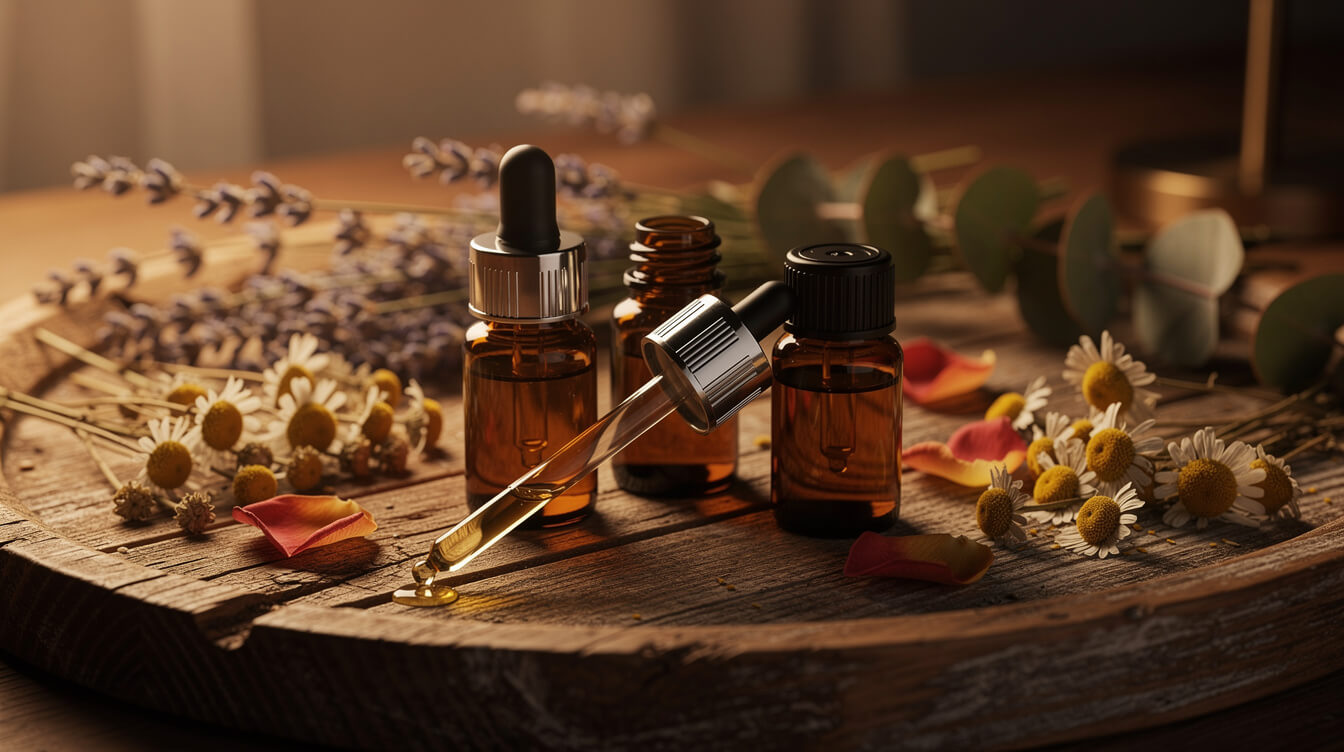
This is where patchouli’s chemistry has a real, practical consequence — and where most guides go quiet. Patchouli is one of the most viscous essential oils you can buy. Those heavy sesquiterpene molecules that make it smell so rich also make it thick and slow-moving, closer to a light syrup than to watery citrus oil. That viscosity matters enormously for how you disperse it.
In a water-based ultrasonic unit, thick oils like patchouli, sandalwood, and vetiver tend to sink, streak, and gum up the works — you get a faint scent and a sticky reservoir. Heat-based diffusers are worse, because warming degrades the delicate aromatic compounds you paid for. A Nebulizing Diffuser® sidesteps both problems: it uses Bernoulli’s Principle to atomize pure, undiluted oil into a fine cold mist — no water, no heat, no dilution. That means patchouli’s full molecular profile actually reaches the air, at full strength.
A practical tip for thick oils: because patchouli is so tenacious, run your nebulizer on shorter intervals (for example, a few minutes on, longer off) — a little fills a room and lingers. If flow ever slows, patchouli residue is a common culprit; our walkthrough on what to do when a nebulizing diffuser stops misting covers the quick clean-out. Ready to give patchouli the delivery it deserves? Explore the Nebulizing Diffuser® collection, or see our roundup of the best nebulizing diffusers for 2026.
Buying, Storing, and Using Patchouli Oil Safely
Quality varies widely, so buy with intention. Look for the botanical name Pogostemon cablin on the label, a country of origin (Indonesia and India are classic sources), and ideally batch or GC/MS information. Good patchouli is dark amber, thick, and deeply earthy — not thin, sharp, or perfumey. And remember the aging quirk: unlike most oils, patchouli only gets better with careful storage.
“Dark” vs “light” patchouli — a sourcing detail worth knowing
Here is a nuance most buying guides miss. Traditionally, patchouli was distilled in iron vessels, and trace iron gave the oil its characteristic deep, dark color and heavier, sweeter aroma — what the trade calls “dark patchouli.” Modern stainless-steel stills produce a paler, lighter, sometimes greener oil (“light patchouli”). Neither is inherently better, but they smell noticeably different: dark patchouli is rounder and more classically “incense-like,” while light patchouli is fresher and brighter. If a sample surprises you one way or the other, distillation style is often the reason — and it is worth matching the grade to the mood you want to create.
- Store in a tightly closed amber-glass bottle, away from heat and light. Patchouli’s long shelf life makes it forgiving.
- Dilute for all skin use (2–3% for body); never apply neat.
- Patch-test new blends and introduce one oil at a time.
- Keep out of reach of children and pets, and diffuse in ventilated, intermittent sessions rather than continuously.
As with any potent botanical, a grounded, honest approach beats hype. If you want a model for reading side effects and contraindications the right way, our honest lavender safety guide shows the level of care worth bringing to every oil in your cabinet, patchouli included.

Join Our Exclusive Member Club to get Big Discounts!
Give Patchouli the Diffusion It Deserves
No water, no heat, no dilution — just pure, undiluted essential oil atomized into a fine cold mist. The handcrafted Nebulizing Diffuser® is built for rich, viscous oils like patchouli, sandalwood, and vetiver.
Patchouli Essential Oil FAQ
What is patchouli essential oil used for?
Its most common uses are grounding and calming a space through diffusion, adding warmth and longevity to essential oil blends, supporting the look of dry or mature skin when diluted, and acting as a natural fixative in DIY perfumes and room sprays.
Does patchouli oil really get better with age?
Yes — patchouli is the notable exception to the “use it fresh” rule. Stored in a cool, dark place, it mellows and sweetens over months and years, losing the sharp green edge of fresh distillate.
Why does patchouli struggle in some diffusers?
Patchouli is one of the most viscous essential oils. In water-based ultrasonic units it tends to sink and gum up; heat degrades its aromatic compounds. A waterless Nebulizing Diffuser® atomizes the neat oil directly, so thick oils disperse cleanly.
Can I put patchouli oil directly on my skin?
No — always dilute it in a carrier oil first (around 2–3% for body use) and patch-test. Patchouli is potent and long-lasting, so a small amount goes a long way.
What oils blend well with patchouli?
Bergamot, sweet orange, sandalwood, cedarwood, vetiver, lavender, frankincense, and rose all pair beautifully. Patchouli anchors lighter top notes and makes citrus and floral blends last longer.
Final Thoughts: Making the Most of Patchouli
The best patchouli essential oil uses share a common thread: they lean into what makes the oil distinctive — its base-note depth, its longevity, and its remarkable ability to improve with age. Treat it as an anchor rather than a soloist, dilute it for skin, respect its viscosity when you diffuse it, and store it patiently. Do that, and this humble mint-family leaf will quietly become one of the most rewarding oils in your collection — grounding your blends, your space, and your daily rituals with a warmth nothing synthetic can imitate.