

How to Use an Aromatherapy Oil Diffuser: Nebulizing vs Ultrasonic Complete Guide
Most guides on how to use an aromatherapy oil diffuser assume you own one specific kind: the plastic tank humidifier-style unit that ships with a water reservoir and a bag of “5-7 drops per fill” instructions. If you own a Nebulizing Diffuser® instead, those instructions are worse than useless — follow them and you will pour water into a device that was never built to hold any, and wonder why nothing happens. The truth is there are two fundamentally different diffusion technologies on the market, they are not interchangeable, and almost nothing published online explains how to actually operate the waterless kind.
This guide walks through both methods step by step — how to use a nebulizing diffuser correctly (no water, ever), how the traditional ultrasonic method works and where it falls short, how to size your diffuser to your room, the timing protocol that keeps your nose from tuning a scent out, how cleaning differs completely between the two designs, and which oils to reach for first.
Two Types of Aromatherapy Diffusers and Why They Work Differently
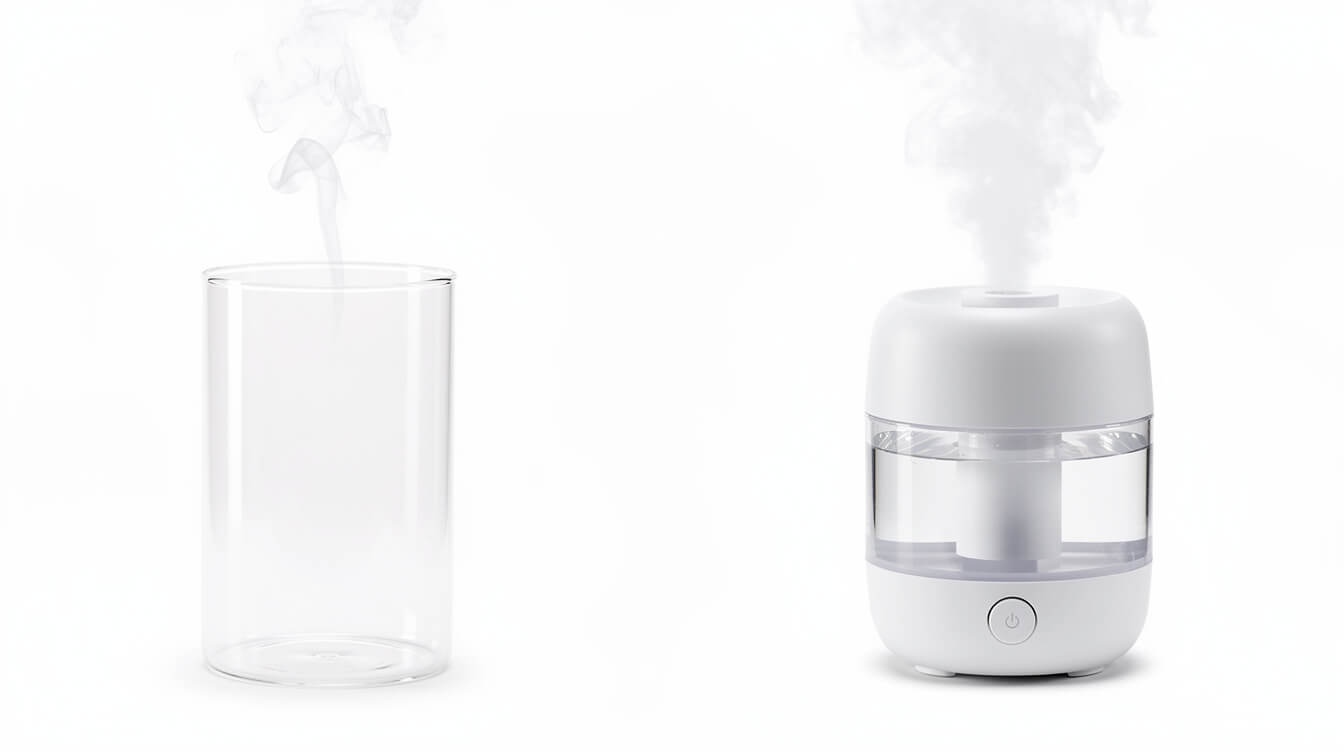
Every aromatherapy diffuser on the market falls into one of two camps, and the difference is not cosmetic — it changes what you put inside the device and what comes out of it.
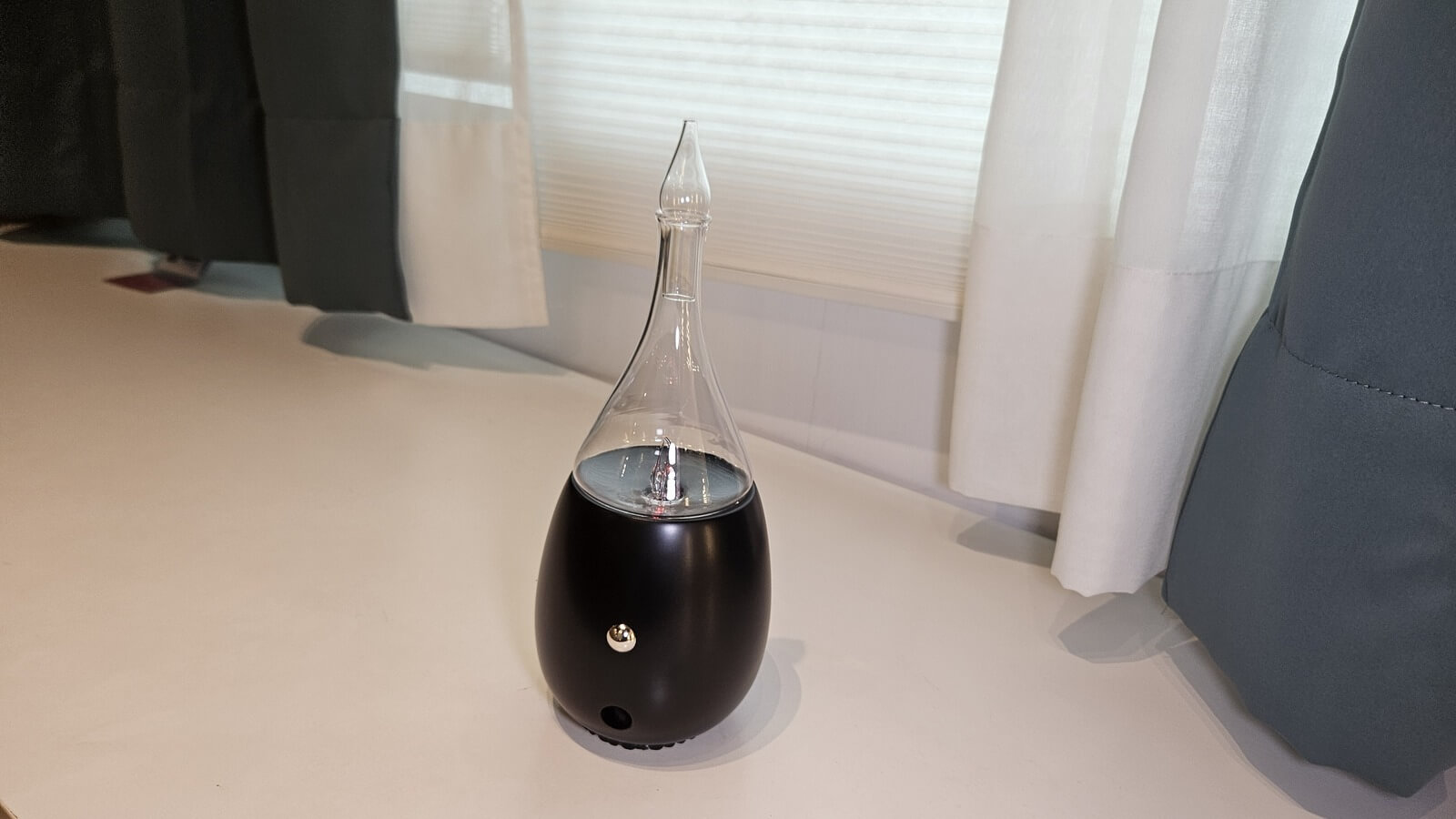
- Nebulizing diffusers use a fast, targeted air stream, drawn through a narrow glass tube, to create a venturi effect — the same physics (Bernoulli’s Principle) that lets a perfume atomizer work without a battery-powered mister. The moving air lowers pressure right at the tube’s opening, pulling pure essential oil up from the glass reservoir and shattering it into a fine, dry aromatic mist. No water touches the oil at any point.
- Ultrasonic diffusers use a small piezoelectric disc vibrating at high frequency underneath a water-filled tank. The vibration creates micro-cavitation at the surface, flinging up a cool water vapor that carries a small amount of diluted essential oil along with it.
The practical consequence is what almost no ultrasonic-focused guide mentions: essential oils are complex mixtures of dozens of aromatic compounds with very different volatility and water-solubility. Bright top notes like lemon or bergamot mix into water and mist off readily. Heavier, oil-soluble compounds — the sesquiterpenes in cedarwood, patchouli, or vetiver — resist mixing into water at all and tend to sink and coat the tank instead of misting out evenly. A Nebulizing Diffuser® skips that problem entirely because there is no water for the oil to separate from in the first place.
Heat is the other variable most instructions never mention. Some plug-in and candle-style diffusers rely on gentle warming to speed up evaporation. Heat accelerates oxidation in delicate aromatic molecules — the same way warming a bottle of wine too fast flattens its character. Monoterpenes like limonene and linalool, common in citrus and lavender oils, are especially heat-sensitive; a few minutes over a warm plate can measurably shift the scent profile toward something flatter and less complex than what left the bottle. Because a Nebulizing Diffuser® uses only room-temperature air pressure, nothing in the process ever heats the oil, which is part of why the aroma reads as truer to the bottle than either heat-based or ultrasonic alternatives.
How to Use a Nebulizing Diffuser — Step-by-Step (No Water, Pure Essential Oil)

Sign Up to Get Your FREE
e-Book Here…
If you’ve only ever used a water-based unit, the biggest adjustment is psychological: you have to resist the urge to add water. Here is the actual process:
- Check the glass reservoir is clean and dry. Any leftover residue from a previous oil can mix unpredictably with a new one.
- Add pure essential oil directly to the glass bottle or reservoir — typically 10-15 drops for a full session, no carrier oil, no water, no dilution of any kind. A Nebulizing Diffuser® is designed for 100% pure oil; a carrier-diluted or “diffuser blend” oil with a fatty base can gum up the narrow glass tube over time.
- For thick resins like benzoin, myrrh, or vetiver, pre-thin the first few drops with a small amount of a very thin oil (such as sweet orange or lemon) in the reservoir itself — this reduces clog risk without introducing water.
- Set your session length. Most units offer timed intervals; start with a 10-15 minute session in a closed room and gauge scent strength before extending it.
- Power on and let the air pump do the work. You’ll see a visible, dry aromatic mist rise from the glass tube within seconds — there is no warm-up period the way there is with heat-based methods.
Because nebulizing output is concentrated and undiluted, it’s easy to over-diffuse a small room on your first try. If the scent feels overwhelming within a few minutes, that’s a sign to shorten the session rather than reduce drop count — which brings up the timing protocol covered further down.
One detail that trips up first-time nebulizing users: oil viscosity varies a lot between families, and the narrow glass tube is sensitive to it. Thin oils — citrus, most florals, eucalyptus — nebulize instantly with no adjustment. Thicker single oils and resins, plus any blend containing vanilla absolute or benzoin, nebulize more slowly and are the most common cause of a clogged tube. If output seems weak with a viscous oil, that’s a viscosity issue, not a mechanical fault; switching to a thinner oil or lightly pre-thinning (as described above) almost always resolves it without needing to disassemble anything.
How to Use an Ultrasonic Diffuser — The Traditional Method
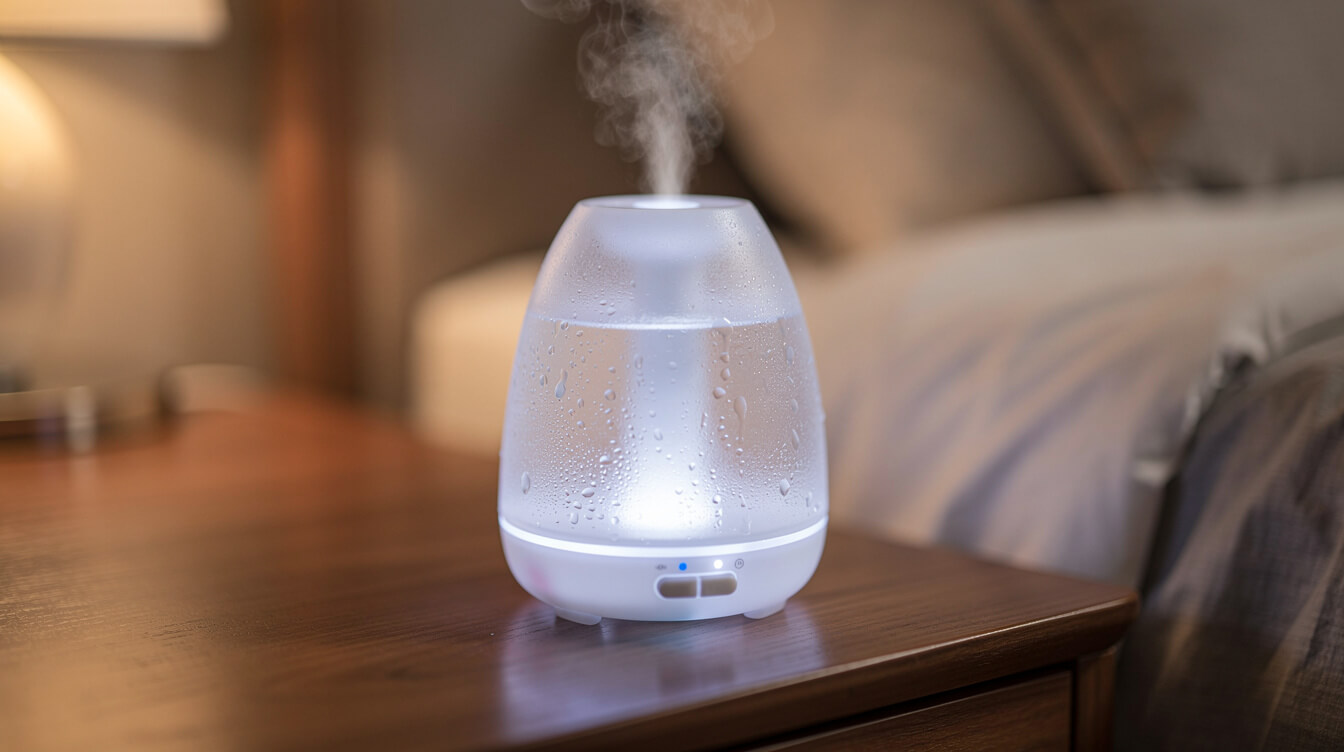
If your device has a visible water fill-line marked on the inside of a plastic tank, you have an ultrasonic diffuser, and the process is genuinely different:
- Fill the tank with clean, room-temperature water up to the marked fill line — overfilling is the single most common cause of leaking and unit failure.
- Add 3-7 drops of essential oil directly to the water, depending on tank size and manufacturer guidance.
- Power on. The piezoelectric disc vibrates, producing a cool, visible water-vapor mist within moments.
- Expect the scent to fade unevenly over the session as lighter top notes mist off first, leaving heavier base notes behind in the tank water.
- Empty and dry the tank after every use. Standing water plus organic oil residue is a reliable recipe for mold and biofilm if left sitting.
Ultrasonic diffusion is a reasonable, low-cost entry point, and it remains the right tool if you specifically want ambient humidity alongside scent (dry climates, winter heating season). What it cannot do is deliver an undiluted, whole-spectrum aroma the way a nebulizing diffuser does — the water is doing real chemical work on the oil before it ever reaches your nose.
Water hardness is a variable most instructions skip entirely. Tap water high in dissolved minerals leaves a fine white dust on nearby surfaces after extended ultrasonic use — the same mineral residue you’d see in a kettle, just aerosolized. Manufacturers that mention this at all usually recommend distilled or filtered water specifically to reduce it, which is one more small maintenance step a nebulizing setup never requires, since there’s no water in the system to mineralize in the first place.
Room Sizing: How Many Diffusers Do You Need for Your Space

Join Now and Get a Coupon for 10% Off!
Coverage is one of the most commonly guessed-at numbers in aromatherapy content, so here are OA’s actual manufacturer specs rather than a rounded-off estimate:
- Raindrop Nebulizing Diffuser: rated for 500-800 sq ft — suited to open-plan living rooms, larger bedrooms, or small studio offices.
- Grand Nebulizing Diffuser: rated for 300-500 sq ft — a better match for a standard bedroom, home office, or single large room with a door you can close.
Two sizing mistakes are worth calling out. First, running a diffuser sized for 300 sq ft in a 900 sq ft open-plan space will feel underwhelming no matter how many drops you add — the fix is a second unit or a larger model, not more oil. Second, oversizing for a small closed room does the opposite: it saturates the air fast and can read as overpowering within minutes. Match the unit to the room, and use the exact drop counts in our essential oil drops-by-room-size chart as your starting point rather than eyeballing it.
Ceiling height and airflow matter almost as much as square footage, and neither shows up on a spec sheet. A 500 sq ft room with 12-foot ceilings has roughly 50% more air volume than the same footprint at 8 feet, which thins out concentration and calls for either a longer session or a unit rated toward the top of its range. Rooms with strong cross-ventilation — near an open window, a running HVAC vent, or a ceiling fan on high — will also read weaker than a sealed room of identical size, simply because the aromatic mist is being diluted with moving outside air faster than it can build up.
The Intermittent Diffusion Protocol: 2 Minutes On, 1 Minute Off (and Why It Works)
One instruction almost every diffuser manual buries in fine print, and almost every blog post skips entirely, is timing. Running any diffuser continuously for hours causes olfactory adaptation — your nose’s receptors genuinely stop registering a constant, unchanging scent within about 20-30 minutes, a well-documented sensory phenomenon separate from the oil “running out.” You end up burning through oil for a scent you can no longer consciously smell, while everyone who just walked into the room can smell it clearly.
The fix is a 2-minutes-on, 1-minute-off intermittent cycle, which most nebulizing units support natively through a built-in timer setting. The brief pause is long enough to let your olfactory receptors partially reset before the next burst, so the room reads as consistently scented to you, not just to new arrivals. This is also gentler on oil consumption than continuous operation, since nebulizing output is already concentrated. If your unit lacks a built-in intermittent setting, a simple plug-in mechanical timer achieves the same cycle. For the mechanics of why nebulizing mist behaves this way in the first place, see how a Nebulizing Diffuser® actually works.
The same intermittent logic applies to ultrasonic units, though the mechanism differs slightly: because ultrasonic mist is water-diluted rather than concentrated, olfactory fatigue sets in a bit more slowly, but the tank still empties on a fixed schedule regardless of whether anyone is actually smelling the room. Pairing an ultrasonic unit with its own auto shut-off timer avoids both wasted water and wasted oil once the tank runs dry and the disc continues vibrating against an empty reservoir — a common cause of premature disc wear that most manuals bury in a single line of the warranty section.
Cleaning Your Diffuser — Nebulizing vs Ultrasonic Are Completely Different

Join Our Exclusive Member Club to get Big Discounts!
Cleaning cadence is where the two technologies diverge most sharply, and using the wrong routine on either one causes real problems.
- Nebulizing diffusers need light, infrequent maintenance: roughly 1-2 drops of isopropyl alcohol run through the glass tube every two weeks clears oil residue before it hardens. Because there’s no standing water, there’s no mold or biofilm risk to manage.
- Ultrasonic diffusers need daily attention: empty and wipe the tank after every use, and do a deeper weekly clean with a diluted white-vinegar rinse to break down the oil-and-mineral film that builds up on the piezoelectric disc. Skipping this is the single most common reason ultrasonic units lose mist output after a few months.
Treating a nebulizing unit like an ultrasonic one (regular water rinses) risks moisture reaching electronics that were never sealed for it. Treating an ultrasonic tank like a nebulizing reservoir (letting it sit for weeks) is how you end up with a musty smell replacing your essential oil scent entirely. Our full diffuser cleaning walkthrough covers the complete isopropyl routine step by step, including how often to fully disassemble the glass components.
A quick way to tell which routine your unit needs, if you’re not sure which type you own: unplug it and look inside. A visible metal or ceramic disc sitting under a fill line means ultrasonic — follow the water-and-vinegar routine. A narrow glass tube descending into a bottle or reservoir with no fill markings means nebulizing — follow the isopropyl routine instead. Using the wrong one isn’t usually dangerous, but it does shorten the life of the unit and can leave a lingering off-scent that no amount of fresh oil fully covers up.
Best Essential Oils to Start With in Your Diffuser (Beginner Guide)
If you’re setting up a diffuser for the first time, start with oils that are forgiving in both technologies and easy to judge by scent strength alone:
- Sweet orange or bergamot — bright, low-risk of overpowering a room, and a good way to learn your unit’s output at a given drop count.
- Cedarwood — a heavier base note that makes the nebulizing-vs-ultrasonic difference obvious immediately; see our full cedarwood essential oil guide for blend ratios.
- Cinnamon bark or leaf — potent and best started at the low end of any drop range; our cinnamon diffusion guide covers safe ratios in detail.
For a broader shortlist beyond these three, our guide to the best aromatherapy oils for a diffuser ranks options specifically by how well they perform in pure-oil nebulizing versus water-based ultrasonic units.
Quick FAQ
Can I put water in a Nebulizing Diffuser®?
No. It’s designed to draw pure oil through a narrow glass tube using air pressure alone; water doesn’t belong in the reservoir at any point.
Why does my ultrasonic diffuser stop misting after a while?
Usually mineral or oil buildup on the piezoelectric disc. A weekly vinegar-rinse clean, as described above, generally restores output.
Do I need different oils for each diffuser type?
No, but pure, undiluted oils are required for nebulizing units, while ultrasonic units work with the same pure oils added directly to water.
Learning how to use an aromatherapy oil diffuser really comes down to matching the method to the machine: water and drops for an ultrasonic tank, pure oil and patience for a nebulizing reservoir. Get the basics right — correct fill method, right-sized unit for your room, an intermittent timer cycle, and cleaning that matches the technology — and either device will reward you with a consistently pleasant room for years.
Ready to experience pure-oil diffusion for yourself? Explore the full range of Nebulizing Diffusers®, built to run water-free from the very first use.