

Best Aromatherapy Oils for a Diffuser: Chosen by How They Actually Perform
Search “best aromatherapy oils for a diffuser” and you get the same thing every time: a grid of product photos and a bulleted list of the ten most popular bottles, ranked by nothing more than how often they sell. Nobody tells you why an oil belongs on the list, and—more importantly—nobody tells you whether it will actually perform in your diffuser. That is the gap this guide fills.
At Organic Aromas, we have spent more than twelve years watching which oils delight our customers and which ones quietly disappoint them. The pattern is clear: the “best” oil is not the trendiest scent—it is the one whose chemistry matches the way your machine turns liquid into aroma. A citrus oil that erupts into a bright, room-filling cloud in a waterless Nebulizing Diffuser® behaves completely differently in a warm ultrasonic mister. So before we hand you a shortlist, we are going to explain the one thing the popularity lists skip entirely: the mechanics of delivery. Get that right and every oil you own works harder.
Pure Essential Oil vs. “Diffuser Oil”: Why the Label Decides Everything
Walk any online marketplace and you will find bottles labeled “diffuser oil,” “fragrance oil,” or “aroma oil” sitting right beside true essential oils, often at a fraction of the price. They are not the same product. A pure essential oil is the volatile aromatic fraction distilled or expressed directly from a plant—nothing added, nothing synthesized. A “diffuser oil” is frequently a synthetic fragrance compound, sometimes pre-diluted in a carrier or a solvent like dipropylene glycol, engineered to smell a certain way at the lowest possible cost.
Why does the distinction matter so much for a diffuser? Two reasons. First, synthetic fragrance oils are formulated for candles and reed diffusers, not for cold atomization—drop them into a waterless nebulizer and the heavier synthetic base can leave a sticky residue on the glass. Second, if your goal is a genuine aromatherapy experience, you want the plant’s real chemistry: the linalool in lavender, the limonene in sweet orange, the 1,8-cineole in eucalyptus. Those are the naturally occurring compounds that give each oil its character. A synthetic “lavender” fragrance may smell floral, but it does not carry the same botanical profile.
Our rule of thumb is simple: read the label for a single Latin botanical name (for example, Lavandula angustifolia) and the word “100% pure essential oil.” If the bottle lists “fragrance” or a proprietary “blend of aroma compounds,” it is not what you want for aromatherapy. If you prefer certified sourcing, our guide to choosing organic essential oils for your diffuser walks through what the certifications actually mean.
How a Nebulizing Diffuser® Changes Which Oils Shine
Here is the mechanism the popularity lists never explain. A Nebulizing Diffuser® uses no water and no heat. Instead, it relies on Bernoulli’s Principle: a fast-moving stream of air passing over a small glass tube creates a pressure drop that pulls neat essential oil up the tube and shears it into an ultra-fine mist of roughly one-to-five-micron droplets. That cold, undiluted micro-mist is why nebulizing diffusion smells so vivid—you are breathing the oil itself, not a heat-degraded version of it. If the physics fascinates you, we break it down fully in our explainer on how Bernoulli’s Principle delivers pure aroma.
Because there is no water to carry the scent and no heat to force it into the air, the oil has to do all the work on its own—and that is where viscosity and volatility take over. Two physical properties decide how well an oil performs:
Volatility — how eagerly the oil evaporates
Oils rich in light monoterpenes—the citruses, eucalyptus, peppermint, tea tree, pine—are highly volatile. They flash into vapor readily, so they atomize into a bright, fast, room-filling cloud. Perfumers call these “top notes,” and a nebulizer showcases them beautifully.
Viscosity — how thick and slow the oil flows
Oils dominated by heavy sesquiterpenes, resins, and absolutes—vetiver, sandalwood, myrrh, patchouli—are thick and slow. In a Nebulizing Diffuser®, that thickness is a problem: a viscous oil struggles to climb the glass tube and can pool or clog it rather than atomize cleanly. These are the “base notes,” and they need help (we cover exactly how in the blending section below).
This is also the core reason a nebulizer and an ultrasonic mister reward different oils. An ultrasonic unit suspends any oil—thick or thin—in a water bath, so viscosity matters less, but the trade-off is a weaker, more diluted scent. A nebulizer delivers a far more intense aroma but is pickier about what you feed it. We compare the two head-to-head in our honest nebulizing versus ultrasonic breakdown. If you want the purest possible delivery, a waterless Nebulizing Diffuser® from our collection is the method we recommend—just choose your oils with the two properties above in mind.
Sign Up to Get Your FREE
e-Book Here…
The Best Aromatherapy Oils for a Diffuser: Energy & Focus
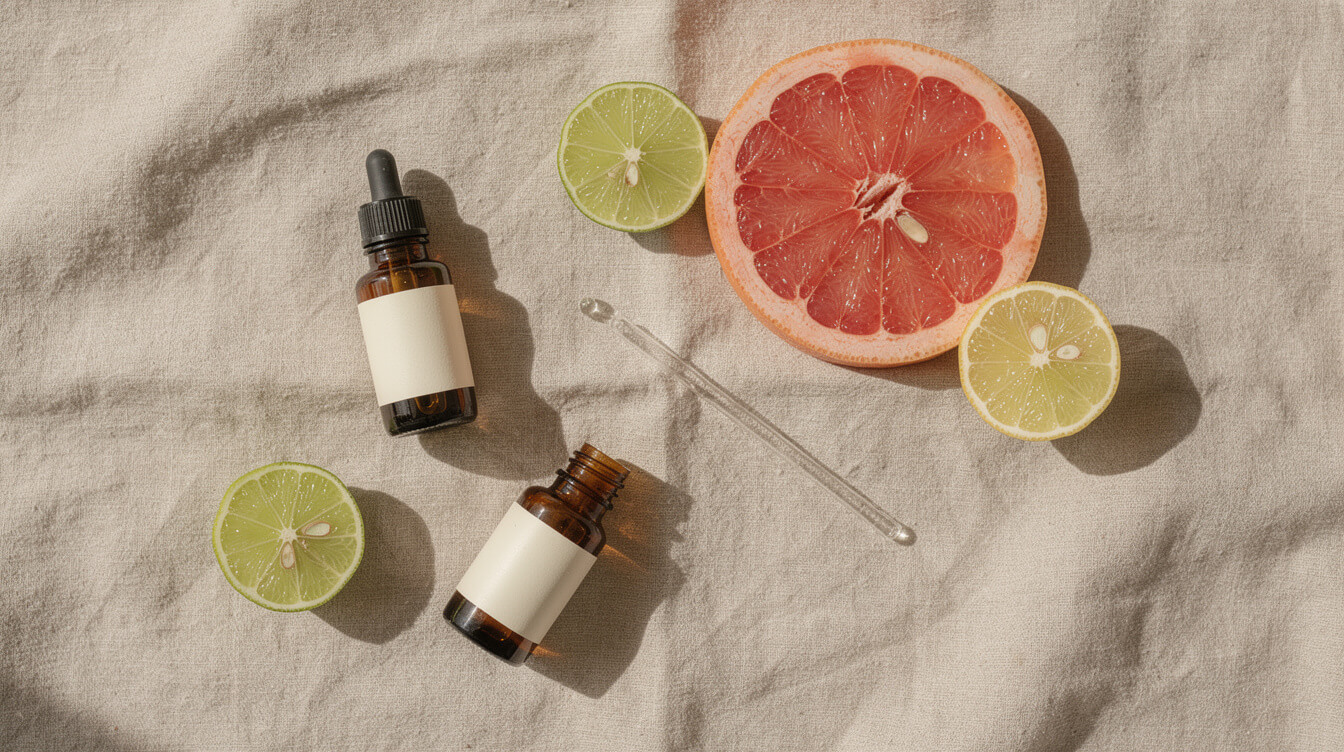
If you want a morning lift or a mid-afternoon reset at your desk, reach for the bright, high-volatility oils. They atomize instantly in a nebulizer and fill a room with a crisp, wide-awake character.
Sweet Orange, Lemon & Grapefruit
The cold-pressed citruses are the easiest, most crowd-pleasing oils to diffuse. Their high limonene content makes them extremely volatile, so they nebulize into a clean, sunny cloud with almost no fuss. They are also inexpensive, which makes them perfect for daily use. One practical note: expressed citrus oils oxidize faster than most, so store them cool and dark and enjoy them within a year or two of opening. Grapefruit leans slightly sharper and drier than sweet orange, while lemon sits crisp and clean in the middle—keep all three on hand and you can fine-tune the mood of a room by the season.
Bergamot
Bergamot deserves its own mention because it bridges the gap between a bright citrus and a soft floral—green and sunny on top, gently sweet underneath. That complexity makes it one of the most versatile oils you can own: it lifts a morning blend and softens an evening one. It nebulizes cleanly on its own, and because you are diffusing it rather than applying it to skin, you sidestep the phototoxicity concerns that come with topical citrus use entirely.
Peppermint
Peppermint’s menthol and menthone give it a sharp, cooling brightness that many people find helpful for a sense of alertness and clear-headedness. It is potent, so a nebulizer’s intensity means you need very little run time. Pair a drop-lean approach with short cycles; our guide to using peppermint in your diffuser gives specific timing and blend ideas.
Rosemary
Rosemary (especially the 1,8-cineole chemotype) brings a green, herbaceous sharpness that pairs naturally with citrus for a focused, study-friendly atmosphere. A classic daytime blend in our customer data is three parts sweet orange to one part rosemary to one part peppermint—bright on top, grounded underneath, and effortless to nebulize.
The Best Oils for Calm & an Evening Wind-Down
As the day ends, switch to softer, rounder oils. These still atomize well in a nebulizer, and their aromatic profiles are the ones most associated with a restful, settled atmosphere.
Lavender
Lavender is the most-diffused oil in the world for good reason. What matters is the chemistry: a high-quality Lavandula angustifolia carries a generous share of linalool and linalyl acetate—the two esters most linked to its calming, relaxing character. Because nebulizing diffusion is cold and waterless, it preserves that delicate linalool/linalyl-acetate balance instead of cooking it off with heat, so you get the true, soft profile of the flower. We go deep on this in our look at lavender’s role in a calming bedtime routine.
Cedarwood
Cedarwood is a warm, woody, grounding oil whose cedrol content gives it a soft, dry sweetness. It is thicker than lavender but still thin enough to nebulize well on its own, and it anchors a blend without overpowering it. A simple evening pairing is four parts lavender to two parts cedarwood.
Ylang Ylang
Ylang ylang is lush, floral, and slightly sweet—a little goes a very long way. Because it is richer and heavier, use it as an accent (one part to several parts lavender) so it rounds the blend rather than dominating the room. Think of it as the velvet trim, not the whole coat.
Diffusing before bed is about setting a mood and a routine—a calm, consistent signal that the day is winding down. It supports relaxation and a peaceful atmosphere; it is not a treatment for any medical condition.

Join Now and Get a Coupon for 10% Off!
The Best Oils for a Fresh, Clean-Smelling Home
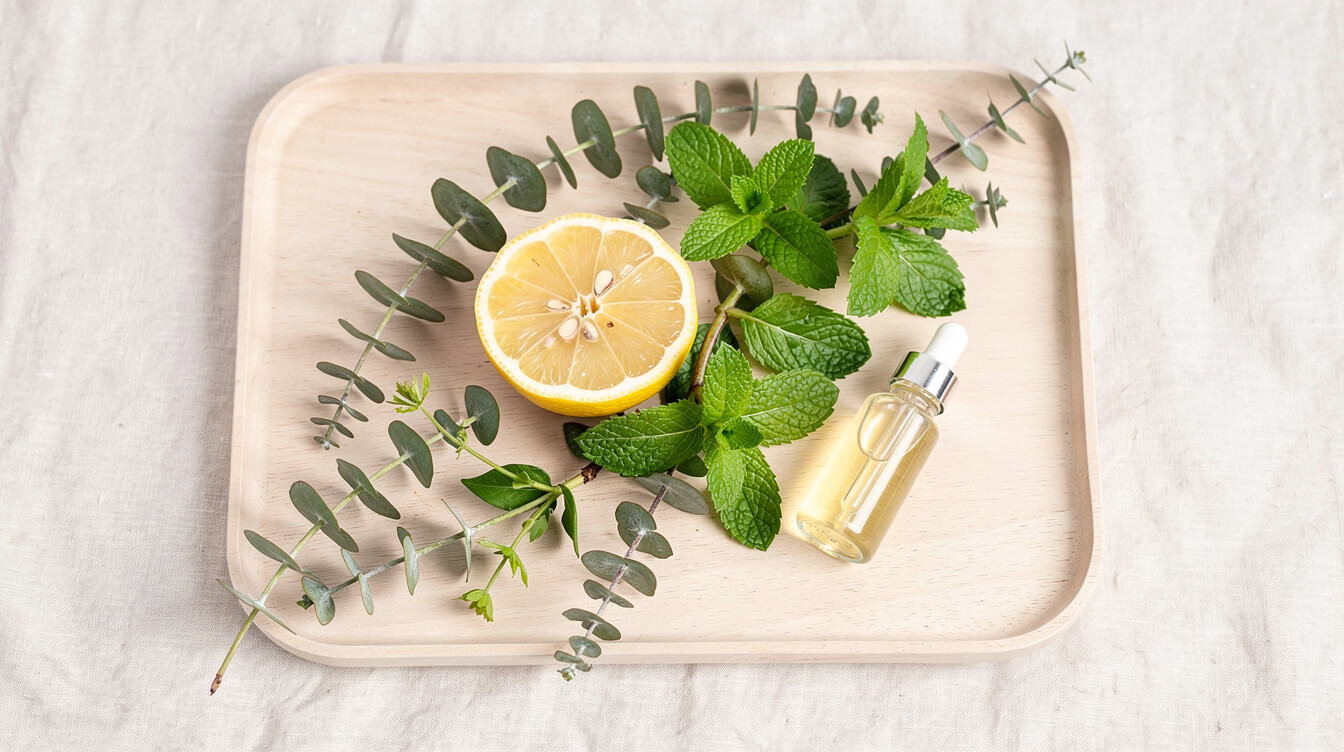
Some oils simply make a space smell clean, bright, and cared-for. These are terrific for kitchens, bathrooms, entryways, and that stuffy afternoon slump when a room needs waking up. (A quick, honest note: we are talking about scent and atmosphere here—creating a fresh, pleasant environment—not disinfecting the air.)
Eucalyptus
Eucalyptus is the definition of a fresh, invigorating aroma. Its signature 1,8-cineole gives it that clean, camphoraceous lift, and it is thin and volatile, so it nebulizes effortlessly. It is a natural partner for lemon and peppermint—a trio many of our customers keep on hand year-round. For the full profile, see our complete guide to eucalyptus.
Lemongrass
Lemongrass brings a bright, grassy-citrus snap thanks to its high citral content. It is bold—use it sparingly—but a whisper of it makes a whole room feel freshly rinsed. It blends beautifully with any of the citruses for a lively, summery character.
Tea Tree
Tea tree’s crisp, medicinal-green scent reads as “fresh and tidy” to most noses. It is thin, highly volatile, and nebulizes cleanly. Pair it with lemon or eucalyptus when you want a space to smell purposeful and awake rather than sweet.
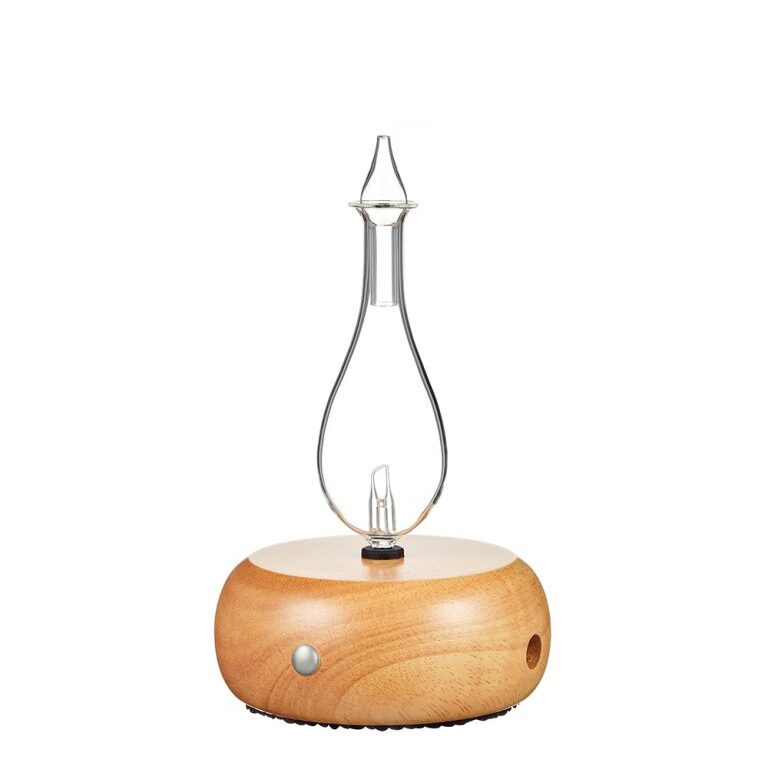
Let Your Oils Perform at Their Best
Every oil in this guide is chosen to shine in a waterless, no-heat Nebulizing Diffuser® — pure essential oil, atomized cold, exactly as nature intended. Handcrafted from real wood and medical-grade Pyrex glass.
Thick Oils That Clog Nebulizers — and How to Blend Them So They Don’t
Now for the failure mode nobody warns you about. If you have ever dropped pure sandalwood, vetiver, patchouli, or myrrh into a Nebulizing Diffuser® and gotten a weak output—or a gummy tube—you did nothing wrong. Those oils are simply too viscous to climb the glass and shear into mist on their own. They are gorgeous base notes, but they need a partner.
Here is the jewel most guides get dangerously wrong: the fix is not to dilute a thick oil with a fatty carrier oil like jojoba or fractionated coconut. Carrier oils are wonderful for skin, but they are non-volatile and greasy—pour them into a nebulizer and they will coat the glass, choke the airflow, and gum up the machine. A nebulizer is built for neat essential oil only.
The correct fix is to blend a thick oil with a thin, highly volatile essential oil—not a carrier. A ratio drawn from years of our own blending notes: combine one part of your thick base note (sandalwood, vetiver, patchouli) with three to four parts of a thin, fast-flowing oil (sweet orange, bergamot, or fir). The thin oil lowers the overall viscosity of the mixture just enough for the whole blend to travel up the tube and atomize, carrying the deep base note along with it. You get the richness of sandalwood and a clean, strong output.
Two more practical safeguards. First, run thick-oil blends in shorter cycles and give the glass condenser a wipe afterward. Second, clean regularly—residue from heavier oils is the number-one cause of weak nebulizer output. Our step-by-step walkthrough on how to clean your Nebulizing Diffuser® takes about two minutes and restores full performance.

Join Our Exclusive Member Club to get Big Discounts!
How to Pick Your Oils by Room, Mood, and Time of Day
Put it all together and choosing oils stops feeling like guesswork. Match the oil’s chemistry to the moment, and match the moment to the room:
Morning & workspaces: lead with the bright, volatile top notes—sweet orange, lemon, peppermint, rosemary—for a crisp, focused atmosphere. These are the easiest oils to nebulize and the most forgiving for a new diffuser owner.
Kitchen, bath & entryways: reach for eucalyptus, lemongrass, and tea tree when you want a space to simply smell fresh and cared-for.
Evening & bedrooms: shift to lavender, cedarwood, and a whisper of ylang ylang to set a calm, wind-down mood.
Special-occasion depth: when you want a warm, luxurious base note, blend your sandalwood or vetiver three-to-one with a thin citrus so it nebulizes cleanly—never a carrier oil.
The final variable is the machine itself. The oils above will smell their absolute best in a cold, waterless Nebulizing Diffuser® that atomizes pure essential oil without diluting or heating it. If you are still deciding on hardware, our buyer’s framework for choosing the right diffuser and our overview of how to choose a waterless diffuser will point you to the right fit.
How Much Oil to Use — and How Long to Run Your Diffuser
One of the most common reasons people think an oil “isn’t working” is simply that they are running their diffuser the wrong way. Because a Nebulizing Diffuser® delivers pure, undiluted oil, it is dramatically more concentrated than a water-based mister—so less is more. You do not need to fill the glass reservoir. A small pool of oil covering the bottom of the tube is plenty; many of our customers use just fifteen to twenty-five drops and let the machine work.
Timing matters even more than volume. Instead of running a nebulizer continuously, use short intervals: a common, comfortable rhythm is roughly two minutes on and thirty minutes off, or a fifteen-to-thirty-minute session when you first enter a room. This does three things at once—it keeps the scent from becoming overwhelming, it conserves your oil, and it works with a phenomenon called olfactory adaptation, where your nose stops registering a constant smell after a few minutes. Intermittent diffusion keeps the aroma feeling fresh and noticeable. Most Smart Nebulizing Diffusers® have this interval timing built in, so you can set it once and forget it.
A good starting point: begin with the shortest interval and the fewest drops, then scale up only if you want more. It is far easier—and cheaper—to add intensity than to air out an over-scented room.
Frequently Asked Questions About the Best Oils for a Diffuser
Can I mix different essential oils in one diffuser?
Absolutely—blending is half the fun. The reliable formula is to combine a bright top note (citrus, peppermint), a balancing middle note (lavender, rosemary, geranium), and a small amount of a grounding base note (cedarwood, and thicker oils only when pre-blended with a thin oil). Start with a simple two-oil pairing before you build three- and four-oil blends.
Do I need to dilute essential oils before putting them in a nebulizing diffuser?
No. A Nebulizing Diffuser® is designed for neat, undiluted essential oil—that is the entire point of waterless diffusion. Never add water, and never add a fatty carrier oil like jojoba or coconut, which will clog the glass. The only “dilution” that belongs in a nebulizer is blending a thick oil with a thinner essential oil, as described above.
Which oils are best for beginners?
Start with sweet orange, lemon, lavender, and eucalyptus. They are inexpensive, widely loved, highly volatile (so they atomize easily), and forgiving. Once you are comfortable, branch into peppermint, cedarwood, bergamot, and lemongrass.
Why does my diffuser output seem weak?
The two usual culprits are residue and viscosity. Heavier oils leave a film that restricts airflow, so a quick cleaning often restores full output instantly. If you are trying to diffuse a thick oil like sandalwood or vetiver on its own, blend it with a thin citrus first. Choose pure oils, respect viscosity and volatility, keep the glass clean, and every bottle in your collection will finally perform the way it was meant to.