

Geranium Essential Oil Benefits: The Citronellol-Geraniol Chemistry Nobody Explains
Search for geranium essential oil benefits and you will find the same dozen claims repeated on page after page: balancing, uplifting, good for skin, good for mood. What almost none of those pages tell you is that the bottle on your shelf probably is not botanically “geranium” at all, that its scent profile can shift noticeably depending on where the plant was grown, and that the chemistry behind its reputation is a lot more specific — and a lot more honest — than “it balances hormones.”
This guide breaks geranium down the way a formulator would: what plant it actually comes from, the specific aromatic compounds responsible for its rose-like scent, how growing origin changes those ratios, a couple of tested blend ideas, honest skin-use guidance, and why the delivery method you diffuse it with matters as much as the oil itself. No disease claims, no “cures” — just the chemistry and how to use it well.
What Is Geranium Essential Oil, Really?
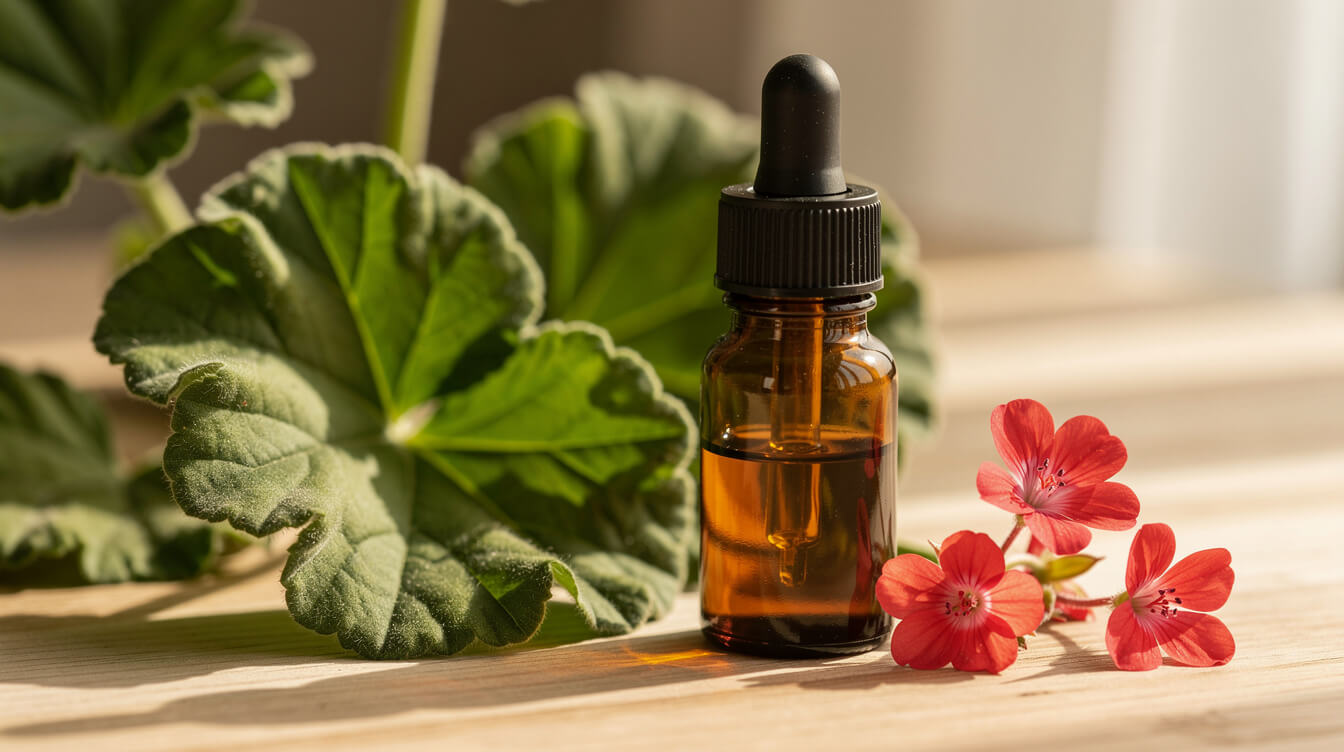
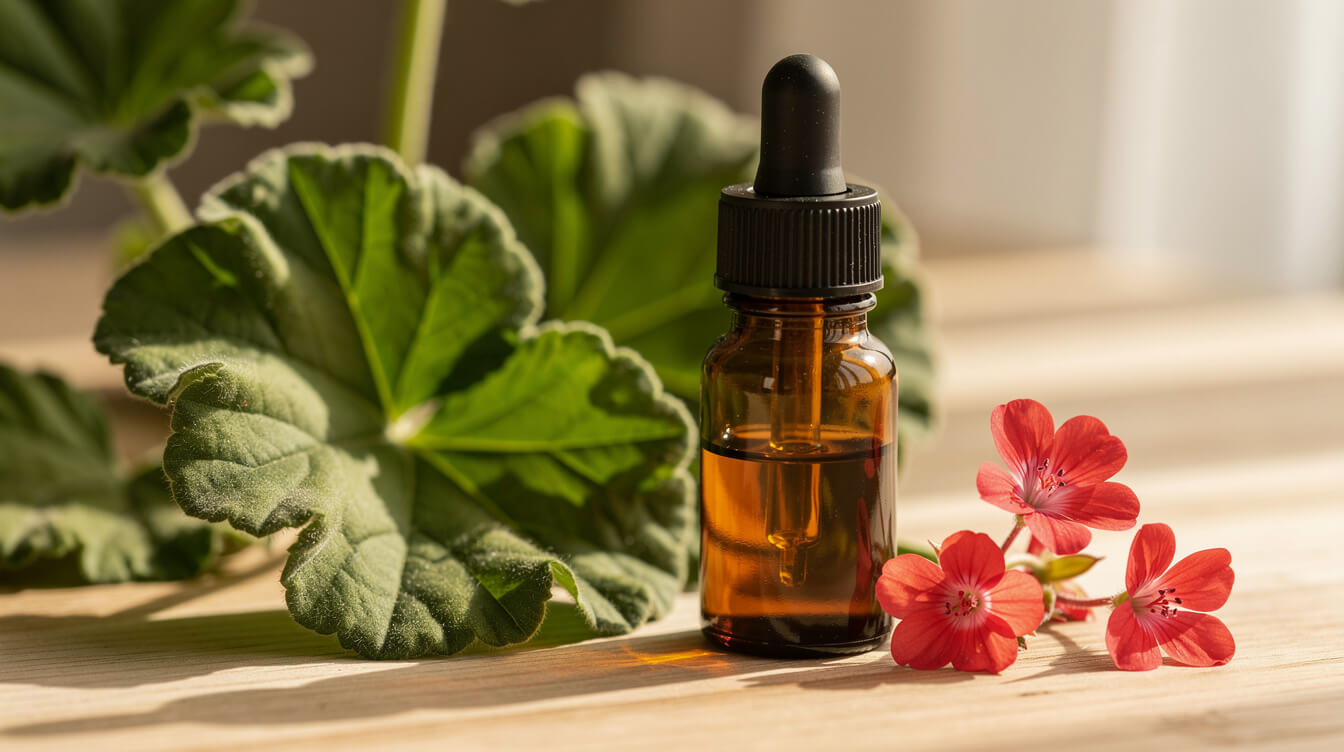
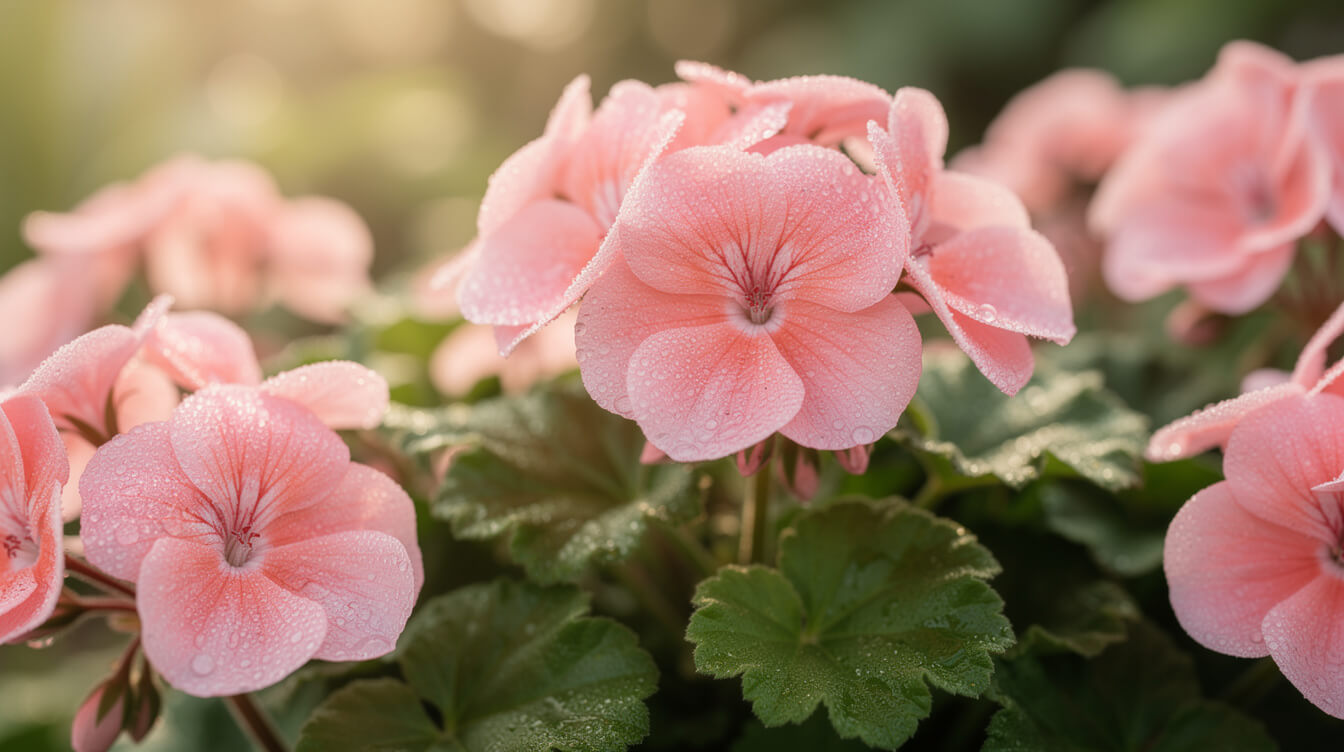
Here is the detail almost every listicle skips: the “geranium” sold as essential oil is not distilled from the true Geranium genus (the cranesbills you may recognize from a garden border). It is almost universally distilled from Pelargonium graveolens or its hybrid Pelargonium × asperum — a related but botanically distinct plant commonly called rose geranium. True cranesbill geraniums yield essentially no usable oil, so commercially there is no real alternative. This is exactly why our own bottle is named Rose Geranium Essential Oil rather than simply “geranium” — it is a more accurate name for what is actually in the bottle, even though most shoppers search for the shorter term.
The payoff of that naming accuracy is practical, not pedantic. Rose geranium earned its nickname because its aroma profile genuinely mirrors rose otto in several respects — floral, slightly minty-green, with a rosy sweetness — at a fraction of rose oil’s cost. Rose otto itself can run well over $200 for a single 5ml bottle because it takes roughly 60,000 rose blossoms, hand-harvested at dawn before the heat degrades their oils, to distill that amount. Geranium delivers a convincing echo of that scent profile from a far more efficient, far more affordable crop, which is exactly why perfumers have used it as a rose “extender” for well over a century. Our Monday Oil of the Day piece on geranium touches on that rose-like character; this guide goes deeper into why it smells that way at a molecular level.
The Citronellol-Geraniol Chemistry Behind Its Scent (and Why Origin Changes the Ratio)
Two monoterpene alcohols do most of the work in geranium’s scent: citronellol, which brings a soft, slightly sweet rose-citronella note, and geraniol, which leans more purely rosy and a little sweeter still. GC/MS profiling cited in standard aromatherapy chemistry references like Tisserand and Young’s Essential Oil Safety typically shows citronellol in the roughly 20-30% range and geraniol around 10-20%, alongside smaller amounts of citronellyl formate, linalool, and isomenthone. It is the ratio between citronellol and geraniol — not either compound alone — that determines whether a given bottle smells crisper and more citronella-like or rounder and more rose-like.
That ratio is not fixed — it shifts with growing origin, harvest timing, and distillation practice. Oil grown on Réunion Island (historically marketed as “Bourbon geranium”) has long been considered the benchmark grade, prized for a higher ester content that rounds out the sharper alcohol notes into something softer and more rose-like. Egyptian and Chinese-grown material, the two most common commercial sources today, tend to run a touch sharper and greener, with a citronellol-forward profile that reads less “rose” and more “green floral.” Neither is wrong — they are simply different expressions of the same plant, the way a Sauvignon Blanc from the Loire tastes different from one grown in Marlborough. None of this is marketing — it is the same kind of origin-driven variation wine or coffee buyers take for granted, and it is the real answer to “why does my geranium oil smell different from the last bottle I bought.” For a broader look at how aromatic compounds interact across a blend, see our essential oil blending chart.
That same citronellol-geraniol chemistry is also why geranium shows up on more adulteration watch-lists than most florals. Because palmarosa oil and lab-synthesized geraniol share so much molecular overlap with genuine geranium, they are the two most common agents used to stretch a batch without the swap being obvious by smell alone. A reputable supplier should be able to confirm GC/MS testing on request — it is one of the few reliable ways to verify what you are actually buying beyond trusting the label.
Sign Up to Get Your FREE Essential Oils e-Book Here
Why People Reach for Geranium to Feel Balanced (an Honest, Non-Medical Look)

Geranium is one of the most frequently described “balancing” oils in aromatherapy circles, and you will see older sites state outright that it “relieves anxiety and depression” or “balances hormones.” We will not repeat that here, because it is not something diffusing an essential oil can be shown to do. There is no clinical evidence that inhaling an essential oil changes hormone levels in the body. What is real, and worth being honest about instead, is the sensory and mood association: a rounded, rose-like floral scent is something many people genuinely find emotionally grounding, the same way a favorite song or a familiar room can shift your mood without doing anything measurably “medical.”
That honest framing is also simply more useful. If you are drawn to geranium because the scent itself feels calming to you, that is reason enough to build it into an evening wind-down — the same way our clary sage essential oil guide approaches its own “calming” reputation: real, but sensory and personal, not clinical. Pair the scent with a consistent routine — same time, same room, same ritual — and the mood association tends to strengthen on its own through simple, well-documented conditioning: your brain learns to connect the scent with the feeling of winding down, the same way the smell of a particular coffee can trigger “morning mode” within a second or two, long before the caffeine itself takes effect.
Tested Evening Blend Ratios for Diffusing Geranium
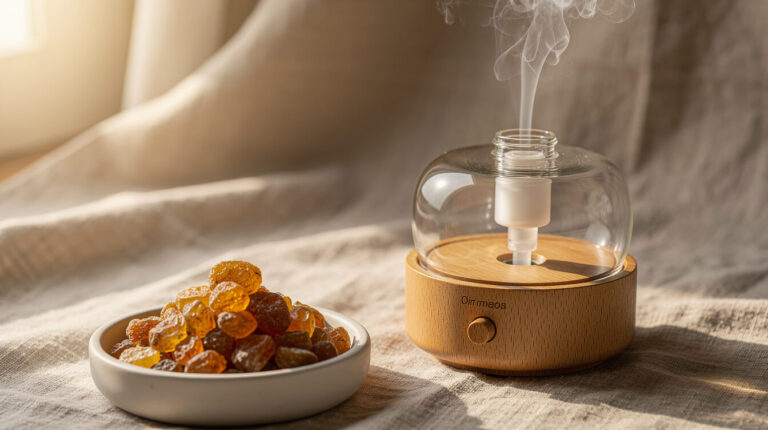
Because geranium’s rose-citronella note is fairly assertive on its own, aromatherapists typically treat it as a heart note and build the rest of the blend around it rather than letting it stand alone. These ratios are written for a waterless Nebulizing Diffuser®, which uses undiluted oil, so scale up if you are diffusing into water.
Evening Wind-Down Blend
Blend: Geranium 3 drops, bergamot 2, clary sage 1.
Why it works: Bergamot’s bright citrus lifts geranium’s rose-citronella note so it reads fresh rather than heavy, while a single drop of clary sage’s musky, slightly herbal base rounds the whole blend out. This is a classic three-oil structure — bright top, floral heart, soft base — scaled down to where geranium does not overpower the other two.
Rose Garden Blend
Blend: Geranium 3 drops, palmarosa 2, sweet orange 1.
Why it works: Palmarosa shares some of the same geraniol chemistry as geranium, so the two reinforce each other’s rosy character instead of competing, while sweet orange keeps the combination from feeling heavy or old-fashioned. Try this one if you want a true “rose, but modern” effect without reaching for actual rose oil’s price tag.
Grounded Focus Blend
Blend: Geranium 2 drops, cedarwood 2, lavender 2.
Why it works: Cedarwood’s dry, woody base note anchors geranium’s floral brightness so the blend feels composed rather than perfumey, and lavender’s familiar softness bridges the two. This combination suits a home office or reading nook better than the bedroom-leaning blends above — floral enough to feel intentional, grounded enough not to distract.
If you want to try geranium for yourself, our Rose Geranium Essential Oil is bottled at 100% purity, with nothing diluted or synthetically reconstructed — worth knowing given the adulteration risk covered above. For more pairing ideas by note structure, our bergamot diffuser benefits guide covers the citrus side of blends like these in more depth.
Sign Up to Get Your FREE
e-Book Here…
Using Geranium on Skin: Dilution Guidance That Actually Protects You
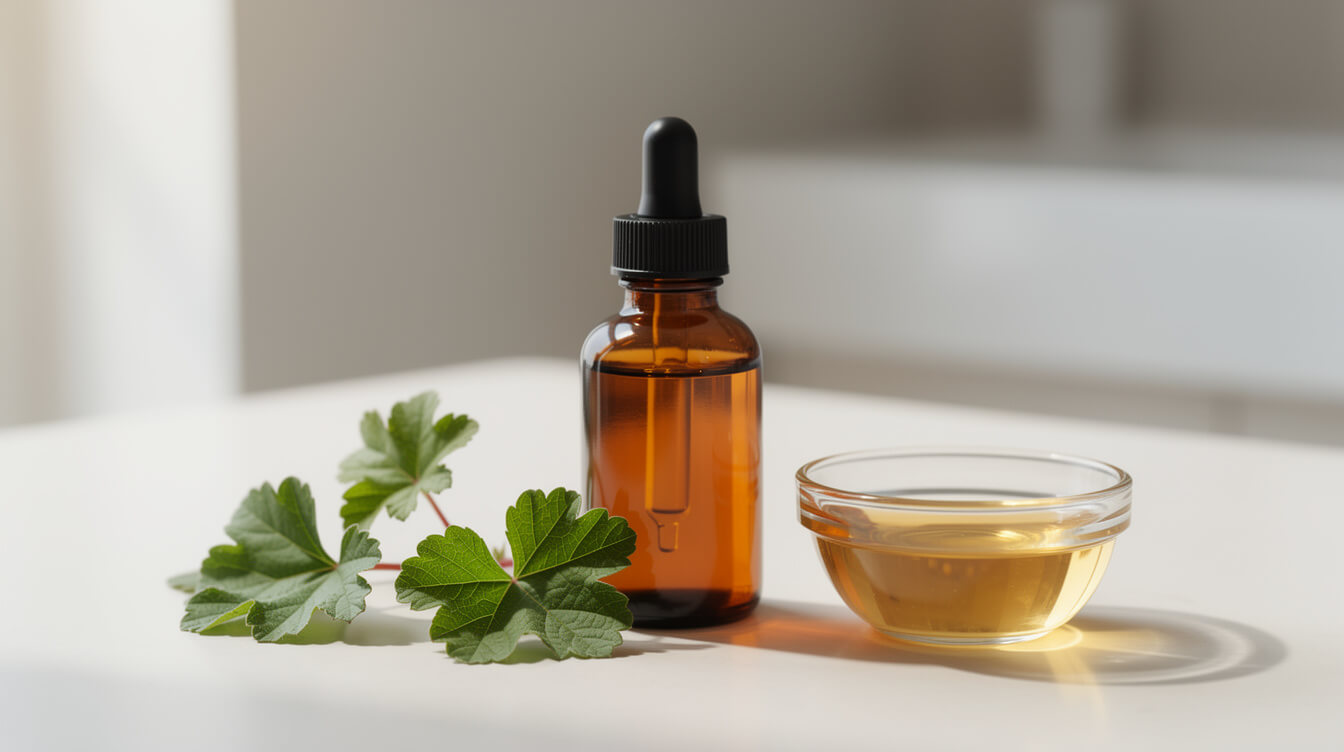
Geranium is frequently described as an astringent, toning addition to a skincare routine, and its rose-like scent makes it a popular choice in facial oil blends. We will not claim it treats any skin condition — it does not — but we can be specific about how to use it safely if you want to try it topically. Essential oils, geranium included, should never be applied undiluted to skin. A commonly cited starting point for facial use is a 1-2% dilution, which works out to roughly 6-12 drops of essential oil per 30ml (1 fl oz) of a carrier oil such as jojoba or sweet almond oil. For a body oil rather than a facial blend, you can go slightly higher, up to around 2-3%.
Always patch-test on your inner forearm 24 hours before applying anywhere near your face, and stop immediately if you notice irritation. Pregnant individuals and anyone on hormone-sensitive medication should check with a healthcare provider before topical use, simply as a matter of caution rather than any established risk specific to geranium. A diluted geranium facial oil also makes a pleasant addition to a bedtime routine beyond its scent alone — a few drops massaged in after cleansing is simply a nice sensory ritual to close out the day. If topical use is not your interest and you would rather experience the aroma purely through scent, diffusing avoids the dilution question entirely — which brings us to the delivery method itself.
Why Pure Geranium Needs a Nebulizing Diffuser®, Not Water or Heat
Remember citronellyl formate from earlier — one of the minor compounds that gives Bourbon-grade geranium its rounder, more rose-like character? Esters like that one are relatively fragile. They are more prone to breaking down under heat and prolonged water exposure than the sturdier alcohols that make up the bulk of the oil. An ultrasonic diffuser runs geranium through water for hours at a time; a candle or heat-based warmer pushes it well past the gentle range esters tolerate. Either way, the subtle rosy edge that makes geranium smell expensive instead of just “green and citronella-like” is the first thing to go.
A Nebulizing Diffuser® sidesteps the problem by never introducing water or heat in the first place. Using Bernoulli’s principle, it draws oil up a micro-tube and atomizes it into a fine mist mechanically, with nothing diluted and nothing warmed, so the full constituent profile — citronellol, geraniol, and those more delicate esters alike — reaches your room intact. Our waterless diffuser guide walks through the mechanics in more detail if you want the full picture. And because geranium oil is genuinely among the more expensive bottles in a typical collection, getting the full aroma out of every drop rather than diluting half of it into a water tank is not a small thing. Keep your unit clean, too — geranium’s ester content means slightly more residue over time than a cleaner top-note oil, and our cleaning guide covers the quick maintenance routine that keeps performance consistent.

Join Our Exclusive Member Club to get Big Discounts!
Geranium rewards a little chemistry literacy. Know that you are buying rose geranium, not true geranium; know that origin shifts the citronellol-to-geraniol balance toward sharper or rounder depending on where it was grown; know the adulteration risk and ask suppliers for GC/MS testing when it matters to you; and know that how you diffuse it determines whether you get the full rose-like complexity or just the greener, more one-note version. Treat the scent as what it honestly is — a genuinely lovely, well-documented floral aroma — and it earns its place in a rotation without needing to borrow any medical claims to justify it.