

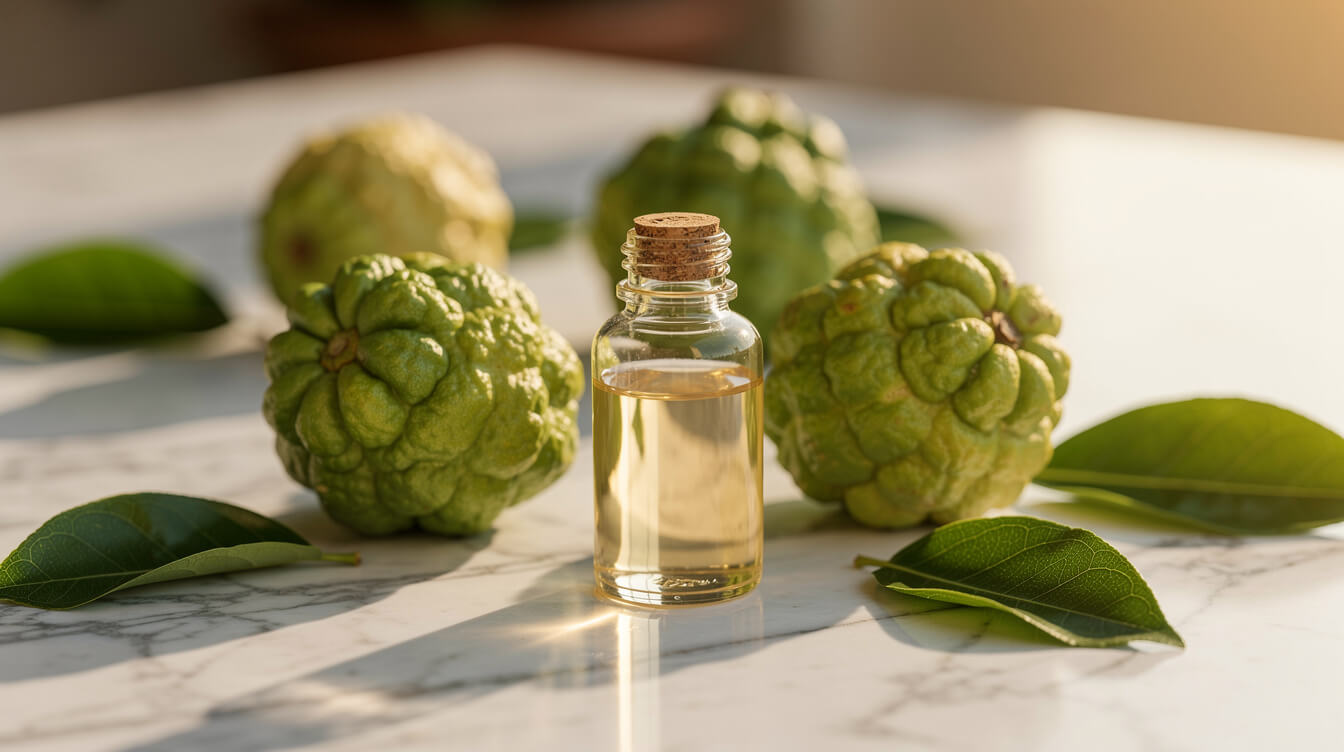
Bergamot Essential Oil Benefits: Why Diffusing It (Instead of Applying to Skin) Unlocks the Aroma Safely
Bergamot essential oil benefits begin the moment you uncap the bottle — that bright, citrus-floral complexity that smells simultaneously of Earl Grey tea, Mediterranean lemon groves, and a sun-warmed garden. But bergamot is one of the most misunderstood essential oils in home aromatherapy, because almost every conversation about it starts in the wrong place: skin application.
This guide repositions the question. Bergamot on skin comes with a well-documented complication — phototoxicity — that changes everything about how and where you should use it. But bergamot diffused through a cold-air Nebulizing Diffuser® carries zero phototoxic risk and delivers its full aromatic character, bergapten and all, into the ambient air. The science behind that distinction is not well-covered in the top Google results. It is, however, exactly the kind of knowledge that separates confident aromatherapy practice from occasional uncertainty.
What Bergamot Smells Like — and Why Perfumers Have Always Used It
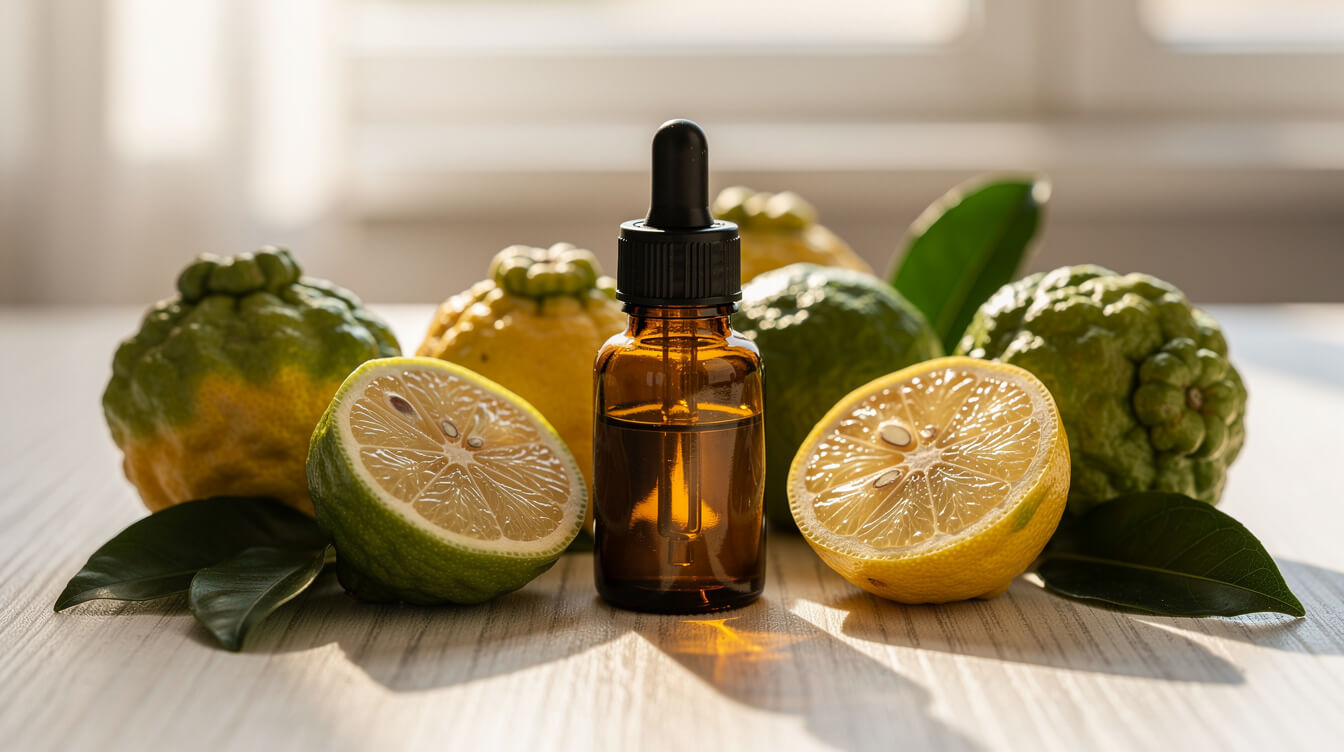
Bergamot (Citrus bergamia) is a small, pear-shaped citrus fruit native to the Calabrian coast of southern Italy, grown in a microclimate so specific that genuine Italian bergamot remains one of the most geographically protected agricultural products in the world. Cold-pressed from the peel — the same extraction method used for all citrus essential oils — bergamot oil captures a fragrance profile that is unlike any other in the citrus family.
It smells of lemon, but not quite lemon. There is a floral sweetness beneath the bright top note — a combination of linalool (the same terpene alcohol that defines lavender’s character) and limonene that produces something perfumers describe as “luminous.” Earl Grey tea is scented with bergamot oil, which is how most people in the world first encounter it, even if they don’t know it. That recognition — “wait, I know this smell” — makes bergamot one of the most immediately accessible essential oils for new aromatherapy users.
Bergamot’s aromatic structure breaks into three distinct layers:
- Top note: Bright, sparkling citrus — limonene (30–40% of total composition) and linalyl acetate (15–20%) are the dominant compounds
- Heart note: Floral softness — linalool (10–20%), the same compound shared with lavender and neroli, provides the link between citrus and floral families
- Dry-down: Slightly resinous, powdery depth from bergapten (0.5–1%) and other furanocoumarins that give bergamot its characteristic tenacity
That last component — bergapten — is the source of bergamot’s unique challenge and, as you will see, its most interesting aromatherapy opportunity.
Perfumers have used bergamot as a top-note brightener for centuries. It opens formulations, bridges citrus and floral families, and adds complexity to what would otherwise be one-dimensional compositions. In the fragrance world, Eau de Cologne — the template for every fresh, light fragrance since the 18th century — relies on bergamot as its defining top note. For home diffusion, those same properties make it an exceptional blending oil: one that lifts and integrates heavier notes without overpowering them.
The Phototoxicity Question: Bergapten, FCF Oil, and What Non-FCF Changes About the Aroma
Sign Up to Get Your FREE
e-Book Here…
Here is the chemistry most bergamot articles summarize in a single cautionary sentence: bergamot contains bergapten (5-methoxypsoralen), a furanocoumarin compound. Furanocoumarins are photosensitizing molecules — when they contact skin and are then exposed to UV light (including UVA, which penetrates glass and clouds), they catalyze a reaction that can cause burns, blistering, and long-lasting hyperpigmentation.
This is not theoretical. It is why dermatologists and sports medicine clinics occasionally treat bergamot-related phototoxic reactions from users who applied the oil topically, then went outdoors or sat near a sunny window. The EU’s Scientific Committee on Consumer Safety (SCCS) has established maximum allowable concentrations of 0.4% bergapten in rinse-off products and 0.001% in leave-on products applied to sun-exposed skin. This is real regulatory concern, not scare-mongering from overly cautious wellness writers.
FCF (Furanocoumarin-Free) bergamot is bergamot oil that has been further processed — typically by vacuum distillation or hexane extraction of the bergapten fraction — to remove the photosensitizing furanocoumarins. The result is an oil that can be applied to skin without phototoxic risk. Many skincare formulations and cosmetic products that use bergamot specify FCF on the label.
The trade-off that few guides mention: bergapten contributes to bergamot’s aromatic profile. At 0.5–1% of total composition, it participates in the dry-down resinous character that distinguishes bergamot from straight citrus. FCF bergamot oils often smell slightly cleaner and more citrus-forward, but lose a subtle layer of complexity in the base. Perfumers working at haute parfumerie level debate this difference meaningfully. For most home aromatherapy users, it is not decisive — but it is worth knowing.
What almost no guide covers: this entire FCF vs. non-FCF distinction is largely irrelevant for diffusion users. That is the starting point for the next section, and it changes the bergamot purchase decision completely.
Why Diffusing Bergamot Removes the Phototoxic Risk Entirely
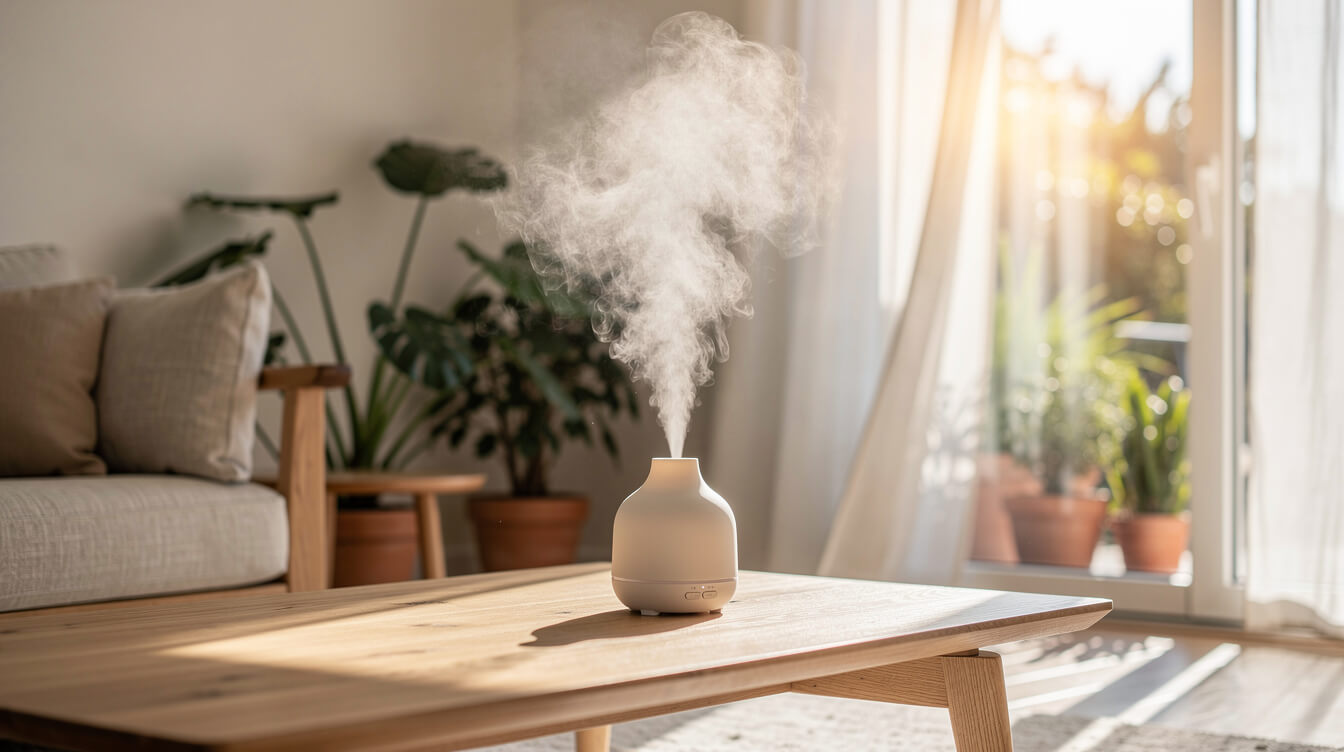
The phototoxicity mechanism requires two things to occur simultaneously: furanocoumarin contact with skin AND UV light exposure. Remove either element, and the reaction cannot happen. When you diffuse bergamot oil through a cold-air Nebulizing Diffuser®, the oil is converted into a fine ambient mist of aromatic molecules that disperses throughout the room. It contacts the mucous membranes of the respiratory tract — nose, sinuses, lungs — where it is processed aromatically. It does not contact the skin in any concentration capable of triggering a phototoxic response.
This is not a technicality. It is the fundamental physics of how diffusion works: you are breathing the aroma, not wearing it. The bergapten in the ambient air is orders of magnitude more diluted than any topical application, and it reaches the body through the olfactory system rather than the dermis.
The practical implications are significant:
- You can diffuse standard (non-FCF) bergamot. No modification needed. The full aromatic profile — including the bergapten-contributed dry-down complexity — reaches you intact.
- You can diffuse in the morning without any concern about phototoxic risk from subsequent sun exposure.
- You can use bergamot freely in diffuser blend recipes without consulting the FCF designation on the label.
- You get the more complete aroma. Non-FCF bergamot carries the full compositional profile; diffusion delivers it without any topical risk.
This is why the delivery method changes the bergamot conversation entirely. Unlike topical aromatherapy, where bergapten content matters enormously, or even ultrasonic diffusion where water dilution alters the aromatic composition, cold-air nebulizing diffusion atomizes the full volatile profile without any skin-contact intermediary. Our guide to choosing aromatherapy oils for your diffuser covers how diffusion physics affects citrus oils more broadly.
For context on the broader category of phototoxic essential oils — bergamot is not alone; lemongrass essential oil and cold-pressed lime carry phototoxic compounds as well — our essential oils and UV sun protection guide explores how furanocoumarin compounds interact with UVA exposure in detail.
Bergamot as the Top-Note Architect: Blend Ratios That Actually Work
Sign Up to Get Your FREE Essential Oils e-Book Here
In diffuser blend construction, bergamot plays a specific architectural role: it is a top-note brightener and a structural bridge between citrus and floral or green families. Understanding where it fits — and which ratios produce coherent results — is what separates intentional blending from guesswork. Twelve-plus years of customer blend feedback at Organic Aromas points to clear patterns that hold across thousands of home diffuser users.
Top-note function in practice: Bergamot’s limonene and linalyl acetate structure volatilizes quickly — it is the first compound you smell when you open the diffuser reservoir, and the first to dissipate as a session progresses. Used correctly, bergamot makes heavy oils like ylang ylang or cedarwood smell approachable rather than overwhelming. Without a brightening top note, dense base oils can read as heavy or airless in the opening minutes of diffusion.
Ratio rule of thumb: Bergamot rarely needs to exceed 35–40% of a blend by drop count. Its high volatility means it reads louder than its drop count suggests. A 4-drop addition to an 8-drop blend delivers full aromatic presence without dominating the middle and base notes that follow.
These four blend ratios consistently produce results:
Morning Clarity (for 60-90 minute focused work sessions)
- Bergamot: 4 drops
- Peppermint: 2 drops
- Rosemary: 2 drops
The bergamot top note bridges peppermint’s sharp opening with rosemary’s herbal warmth, creating an alert but not agitated atmosphere. The linalyl acetate in bergamot softens the peppermint’s initial sharpness in the first minutes of diffusion.
Evening Calm (pre-sleep diffusion, 30-45 minutes)
- Bergamot: 3 drops
- Lavender: 3 drops
- Frankincense: 2 drops
One of the most consistent combinations across OA customer feedback. The linalool in bergamot and lavender creates a compound effect — the lavender extends into the floral heart of bergamot rather than competing with it. Frankincense anchors the base and extends the diffusion duration. Begin 60-90 minutes before sleep; set the Nebulizing Diffuser® to the intermittent cycle if available.
Citrus Bloom (social and living room settings)
- Bergamot: 4 drops
- Sweet Orange: 2 drops
- Geranium: 2 drops
- Ylang Ylang: 1 drop
Geranium and ylang ylang anchor the citrus notes while bergamot provides the floral bridge. The ylang ylang single drop is critical — more and it becomes cloying; one drop adds a creamy depth that rounds the blend considerably.
Grounded Focus (for deep work or meditation)
- Bergamot: 3 drops
- Vetiver: 2 drops
- Sandalwood: 3 drops
This combination sounds counterintuitive — bright citrus over deeply grounding vetiver and sandalwood — but bergamot’s top note prevents the base oils from feeling oppressive in the first minutes of diffusion. The result is grounded without being sedating; focused without the edginess of mint-dominant blends. One of the most consistent blends for extended creative or analytical work sessions.
The Best Moods and Settings for Bergamot Aromatherapy
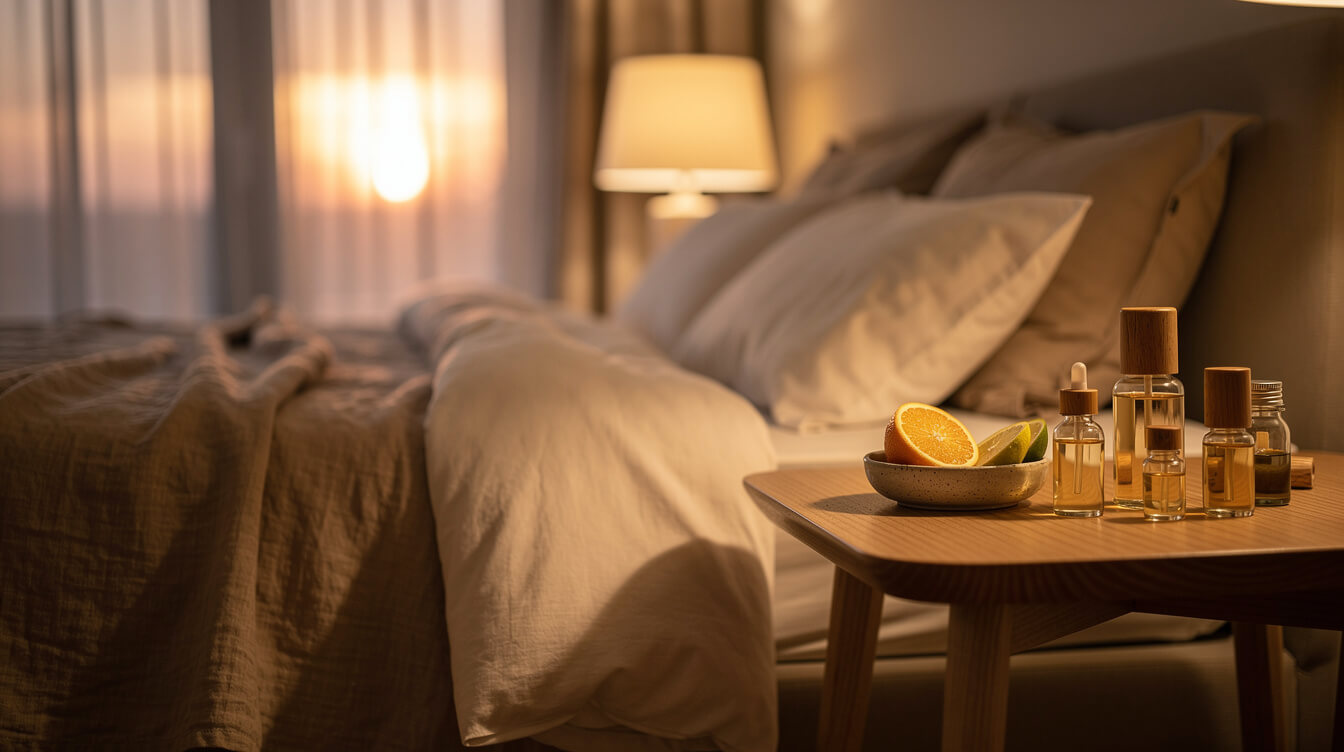
Bergamot’s aromatic character maps well to specific psychological states and environmental contexts. Understanding this alignment helps you choose when to diffuse it intentionally rather than rotating it randomly through your collection. The oil’s linalool content — shared with lavender — and its bright citrus-floral profile make it well-suited to transition moments: the shift from active to restful, from solo focus to social engagement, from the effort of the day to the ease of the evening.
Psychological contexts that respond well to bergamot:
- Stress release after the workday ends. The linalool-linalyl acetate combination supports the olfactory conditions for relaxation without inducing the sleepiness that heavier base-note oils can produce. Bergamot is best described as “calm but present” — it creates space for the nervous system to shift registers without putting it to sleep.
- Mood brightening on grey or flat days. Bergamot’s bright, citrus-floral character has been used in fragrance applications specifically for its association with uplifting ambiance. A room that smells of bergamot simply feels more welcoming — a small but real environmental shift.
- Creative and focused sessions. The morning clarity blend above positions bergamot in an activating context. The floral bridge quality means it does not create the mental “buzz” that sharp mint-dominant blends can produce — it supports attention without agitation.
- Social settings. Bergamot’s Earl Grey familiarity makes it one of the few essential oils that reads as universally pleasant, even to guests who are not aromatherapy enthusiasts. It does not require an acquired taste.
Room and timing recommendations:
- Home office, mornings: Morning Clarity blend for the focused work block. Start the Nebulizing Diffuser® 5 minutes before sitting down; allow the aroma to establish before the session begins.
- Living room, early evenings: Citrus Bloom blend — welcoming to guests, not intrusive, transitions the space from daytime to social hours.
- Bedroom, pre-wind-down: Evening Calm blend, beginning 60-90 minutes before sleep. Set the diffuser to the intermittent cycle (2 minutes on, 30 minutes off) to maintain ambient presence without over-saturation of the space.
- Yoga and meditation spaces: Low-ratio bergamot anchoring frankincense and sandalwood. The citrus opening clears the olfactory palette; the base notes sustain the atmosphere through a 45-60 minute session without the aroma becoming fatiguing.
Bergamot is one of the few essential oils that works across all three aromatherapy contexts — morning activation, daytime focus, and evening transition — simply by changing the blend partners. This versatility is part of why it belongs in almost every home aromatherapy collection. Browse our selection of Nebulizing Diffusers® and pure essential oils to find the delivery method that preserves bergamot’s full volatile profile.
Buying and Storing Bergamot So It Doesn’t Oxidize
Join Our Exclusive Member Club to get Big Discounts!
Bergamot essential oil has a shorter shelf life than many aromatherapy staples, and the reason is chemical: the high limonene content (30-40% of total composition) makes bergamot particularly vulnerable to oxidation. Exposure to oxygen, heat, and light gradually converts limonene into peroxides that both degrade the aroma and, in topical applications, can become skin-sensitizing even in oils that were originally safe. For diffusion-only users this sensitization risk is negligible — but the aroma degradation is very real and worth avoiding.
What to look for when buying:
- Botanical name on label: Citrus bergamia — not “bergamot fragrance,” “bergamot blend,” or unlabeled “citrus.” Fragrance-grade bergamot is synthetic and lacks the full aromatic profile.
- Country of origin: Calabria, Italy is the benchmark growing region for bergamot. The protected designation of origin (PDO) for Italian bergamot covers the Calabrian province specifically. Other growing regions can produce quality oil, but Italian origin is the established quality reference.
- Extraction method: Cold-pressed from peel. Steam-distilled bergamot exists but has a different aromatic profile and is less common in the essential oil market.
- FCF designation: Relevant only if you plan topical use. For diffusion-only applications, FCF status is functionally irrelevant — and non-FCF bergamot carries the more complete aroma.
- Packaging: Dark glass (amber or cobalt) over clear glass or plastic. UV light accelerates limonene oxidation; dark glass provides meaningful protection.
Storage protocol:
- Temperature: Store below 25°C (77°F). Refrigeration (5–8°C) extends citrus oil shelf life significantly — bergamot can last 12–18 months refrigerated versus 6–12 months at room temperature. Allow the bottle to warm to room temperature before opening to prevent condensation.
- Oxygen exposure: Keep lids tight. As the bottle empties, transfer to a smaller bottle to reduce headspace. The ratio of air to oil in the bottle is the primary driver of oxidation rate once the seal is broken.
- Light: Store away from direct sunlight and fluorescent lighting, even in dark glass. A drawer or cabinet is ideal.
When to replace: Oxidized bergamot smells flat, faintly chemical, or “old citrus” — it loses the immediate upward-leaning brightness that defines fresh bergamot. If a sniff does not produce that characteristic lift, the oil has likely oxidized past its useful aromatic life. Fresh bergamot should smell almost effervescent; aged bergamot never quite does.
This same storage guidance applies to other citrus oils in your aromatherapy collection. Lemongrass essential oil, which carries aldehyde compounds in addition to limonene, oxidizes even faster than bergamot and should be treated with the same storage care on a shorter timeline.
Bergamot is the oil that demystifies itself the moment you understand its chemistry. It is phototoxic on skin — that is real and worth knowing. It carries zero phototoxic risk when diffused — that is equally real and dramatically underreported. The full aromatic profile, bergapten included, reaches you through cold-air diffusion without any of the complications that may have made you hesitate about applying it topically.
If you have avoided bergamot because of the phototoxicity warnings, diffusion changes the calculation entirely. Start with the Evening Calm blend — bergamot, lavender, frankincense — run it for 30 minutes during your wind-down hour, and let bergamot do what it has been doing for perfumers for centuries: lift, bridge, and make everything around it smell better. Explore the full range of Nebulizing Diffusers® and pure essential oils at Organic Aromas to find the tools that deliver bergamot’s full potential.