


Best Sexual Massage Oils: Safe Dilution, Top Blends & the Rule Most Guides Skip
Most guides to sexual massage oils read like a shopping list: five bottles, five one-line descriptions, done. What they skip is the part that actually determines whether your evening ends in a rash or a good memory — the carrier oil’s comedogenic rating, the exact dilution percentage that keeps essential oils safe on sensitive skin, and the one detail almost nobody mentions: oil-based blends and latex condoms do not mix. This guide covers all three, plus the real chemistry behind why certain scents read as “sensual” in the first place.
Massage has used oil as its medium for thousands of years for a simple mechanical reason: oil reduces friction between skin and hand, letting a masseuse’s touch glide instead of drag. Add essential oils to that base and you introduce a second layer — scent molecules that travel from the nose directly to the brain’s limbic system, the same region that processes emotion and memory, without passing through the more analytical prefrontal cortex first. That’s the real mechanism behind “mood-setting” scent, and it’s worth understanding before you start mixing bottles.
What Actually Makes Sexual Massage Oils Feel Sensual?
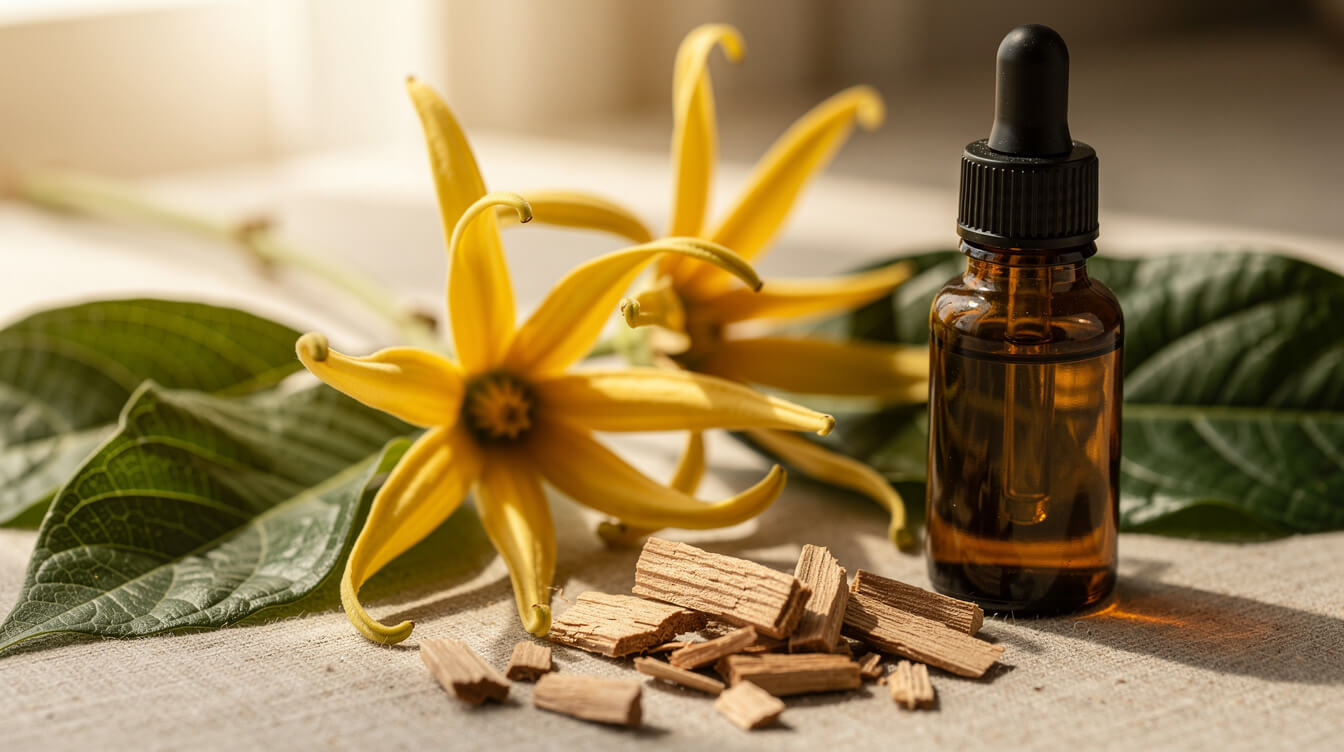
“Aphrodisiac” is a folklore label, not a chemistry term, and it gets applied loosely across the wellness internet. What’s measurable is molecular weight and evaporation rate. Bright, light monoterpenes — citrus, mint, most florals — evaporate fast and read as energizing top notes. Heavier sesquiterpene alcohols, the class of molecules found in sandalwood, patchouli, and vetiver, evaporate slowly and sit close to the skin for hours, which is exactly why perfumers use them as a base rather than a burst. That slow-release quality is what gives “warm,” “grounding,” or “sensual” oils their staying power in a room or on skin — not any special hormonal effect, despite what some retail copy implies.
One oil earns its aphrodisiac reputation on slightly firmer scientific ground: clary sage. It contains sclareol, a diterpene alcohol with a mild estrogenic-like structure that has been studied for its calming, mood-lifting effect, historically used to ease tension around labor and menstruation. That’s a real, named compound — not vague marketing language — and it’s a useful example of why reading past the word “aromatherapy” into the actual chemistry changes what you buy. For a broader rundown of which oils pair well for this purpose, see our guide to the best essential oils for sex.
The Carrier Oil Matters More Than the Scent
Essential oils are never applied to skin undiluted — they’re potent enough to irritate even at a few drops, and that risk climbs on the thinner, more sensitive skin used in massage. A carrier oil dilutes the essential oil and delivers it to skin, but not all carriers behave the same way once they’re on you for an extended massage session. The variable that matters most and gets skipped almost everywhere: comedogenic rating, a 0–5 dermatology scale (originally developed by Dr. James Fulton) that measures how likely an oil is to clog pores.
- Grapeseed oil — comedogenic rating 1. Light, fast-absorbing, high in antioxidant polyphenols. The safest all-purpose choice for sensitive or acne-prone skin.
- Jojoba oil — comedogenic rating 2. Technically a liquid wax that closely mimics human sebum, so skin absorbs it efficiently without a greasy residue.
- Sweet almond oil — comedogenic rating 3. A classic massage base with a light, silky glide, though slightly more pore-clogging than jojoba or grapeseed.
- Avocado oil — comedogenic rating 3. Thicker and richer, better suited to dry or mature skin than for use on already oily areas.
- Coconut oil — comedogenic rating 4. The most popular massage-oil recommendation online, and counterintuitively one of the more pore-clogging choices on this list. Fine for a back or shoulder massage; a poor pick for smaller, sensitive areas.
The takeaway competitors skip: reach for grapeseed or jojoba, not coconut, for anywhere skin is thin or breakout-prone. OA’s All-Purpose Blended Carrier Oil is formulated at a low comedogenic profile specifically so it’s ready to dilute any of the essential oils below without a separate carrier-shopping trip.
Sign Up to Get Your FREE Essential Oils e-Book Here
The Best Essential Oils to Blend Into Sexual Massage Oils
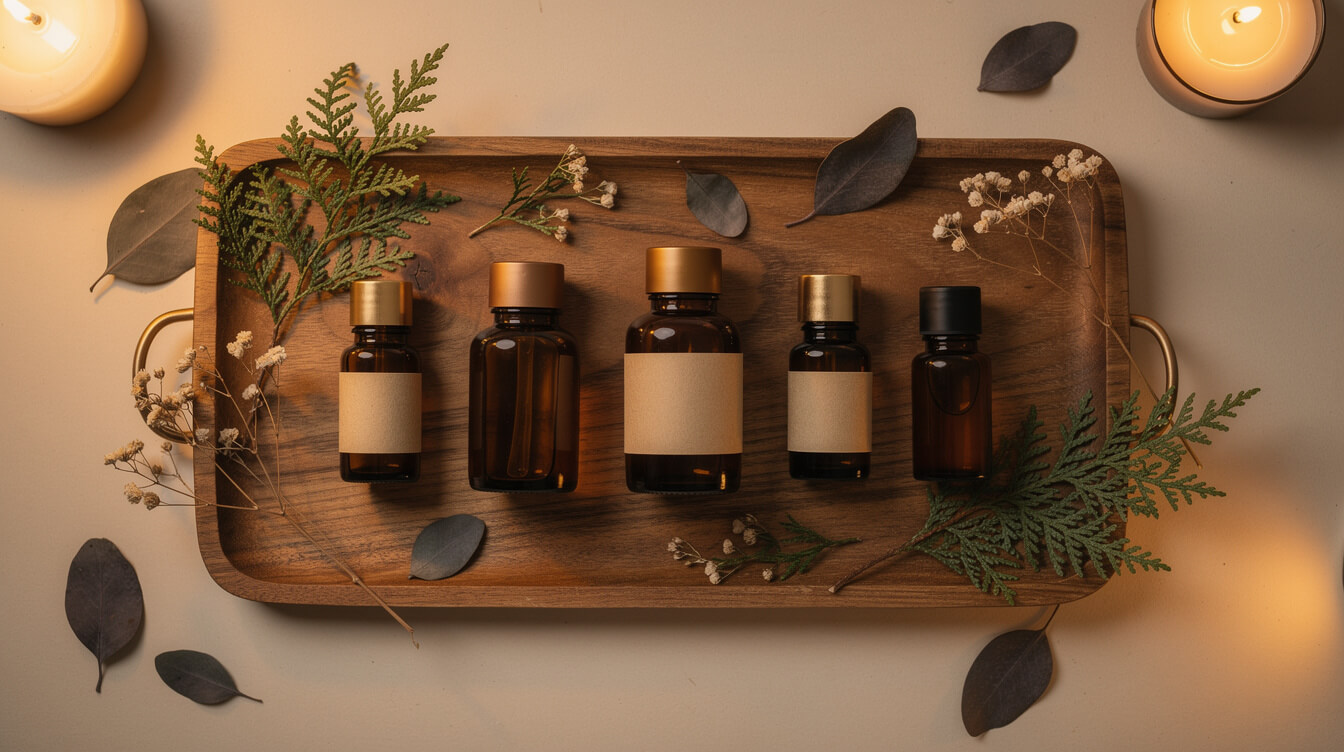
Once you’ve picked a low-comedogenic carrier, here are five essential oils worth blending into it, each chosen for a distinct chemical role rather than just a pleasant smell:
- Ylang ylang — a rich, heady floral historically used in Indonesian wedding-night traditions. Use sparingly (1–2 drops per blend); it’s potent enough to become cloying past that.
- Sandalwood — a heavy, creamy base note (see the sesquiterpene explanation above). Look for Australian Santalum spicatum for a sustainably farmed option.
- Clary sage — the sclareol-bearing oil discussed above; herbaceous, slightly musky, and grounding rather than sweet.
- Patchouli — earthy and warm, and one of the few oils that genuinely improves with age as it oxidizes, deepening rather than fading.
- Cedarwood — a woody, low-cost anchor note that rounds out sharper florals and helps the blend last longer on skin.
A simple starting ratio: 2 drops ylang ylang, 2 drops sandalwood, 1 drop clary sage, blended into 1 fluid ounce (30 ml) of carrier oil. That lands at roughly a 2% dilution — appropriate for adult body massage — and gives you a floral-woody blend without any one note overpowering the others. Adjust proportions to taste once you know how your skin and nose respond.
How to Blend and Dilute Safely
Dilution percentage is simple math, but it’s the single most skipped safety detail in massage-oil content. The standard aromatherapy ranges:
- 1% dilution (about 6 drops per 1 fl oz / 30 ml carrier) — facial skin, or anyone with sensitive skin.
- 2–3% dilution (about 12–18 drops per 1 fl oz / 30 ml carrier) — standard adult body massage.
- Never undiluted, and never near mucous membranes. Essential oils should not contact genital, anal, or other mucosal tissue directly, diluted or not — that skin is thinner and more permeable than the rest of the body and absorbs irritants far more readily. Keep blends to the back, shoulders, arms, and legs.
Always patch-test a new blend on the inner forearm and wait 24 hours before a full massage — this applies even to oils you’ve used before, since sensitization can develop over repeated exposure. Pregnant readers should check with an OB-GYN before using clary sage or any oil in this list; several are traditionally avoided in pregnancy.
One more detail that essential-oil content almost universally skips: oil-based massage blends are not compatible with latex condoms. Oil degrades latex on contact, causing microscopic tears within minutes — this is the same reason public-health guidance pairs latex condoms only with water- or silicone-based lubricants, never oil. If a massage is likely to lead somewhere further and latex protection is part of the plan, use a separate water-based product for that purpose, or switch to polyurethane condoms, which are oil-compatible.
If you’d rather skip precise drop-counting, our AromaCurious™ Starter Kit lets you sample five pure oils in small 2ml sizes before committing to full bottles, and our All-Purpose Blended Carrier Oil is pre-diluted to a safe massage-ready base — just add your chosen essential oils to it directly.
Join Now and Get a Coupon for 10% Off!
Setting the Mood Beyond the Massage Table
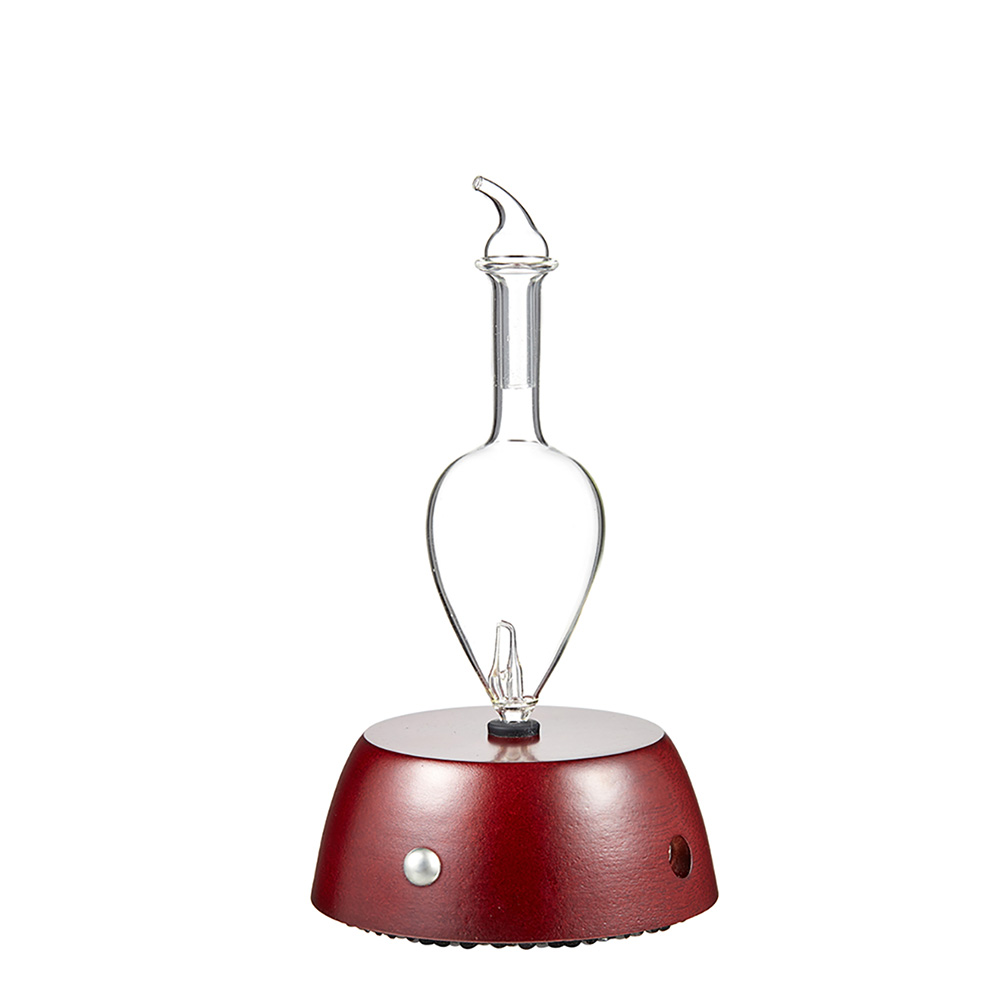
A massage blend scents the skin, but it can’t fill a room the way an aerosolized oil does. Pairing your massage oil with a matching aroma in the air — via a Nebulizing Diffuser® running the same or a complementary note (sandalwood, ylang ylang, or cedarwood work well solo in the Nebulizing Diffuser®) — creates a layered scent experience without adding a single extra drop to skin. Because a Nebulizing Diffuser® atomizes pure, undiluted essential oil with no water and no heat, the same heavier sesquiterpene molecules discussed above — the ones that barely evaporate from an open massage-oil bottle — actually make it into the air intact, rather than degrading against heat the way a candle warmer or reed diffuser would treat them.
For more on layering scent throughout a space rather than just on skin, see our guide to filling a room with a romantic DIY blend, and our complete guide to aromatherapy massage for full-body technique beyond what fits in this post.
Fill the Room, Not Just the Skin
The Elegance Smart Nebulizing Diffuser® atomizes pure essential oil with no water and no heat, so heavier base notes like sandalwood and ylang ylang travel intact through the whole room.
Frequently Asked Questions
Can I use essential oils as a lubricant?
No. Essential oils are not formulated for mucosal tissue, even heavily diluted, and oil-based blends break down latex condoms within minutes. Keep massage blends to non-mucosal skin and use a dedicated water- or silicone-based lubricant for anything else.
Which carrier oil should I start with if I don’t know my skin type?
Jojoba (comedogenic rating 2) is the safest general-purpose starting point — it mimics natural skin sebum and rarely causes breakouts, even for oily or acne-prone skin.
Is it safe to use these oils while pregnant?
Several oils on this list, including clary sage, are traditionally avoided during pregnancy. Check with an OB-GYN before use, and consider skipping essential oils in massage oil entirely until after delivery.
How long does a blended massage oil last?
Most carrier-oil blends stay fresh for 6–12 months if stored in a dark glass bottle away from heat and light. Discard sooner if the blend smells rancid or “off” — that’s oxidized carrier oil, not the essential oil.
Sign Up to Get Your FREE
e-Book Here…
Final Thoughts
The best sexual massage oils aren’t the ones with the most romantic label copy — they’re a low-comedogenic carrier, a correct 2–3% dilution, and one or two well-chosen essential oils layered with intention. Get the carrier and the math right first; the scent is the easy part. Pair the blend with scent in the air rather than only on skin, keep it off mucosal tissue and away from latex, and you’ve got a ritual that’s genuinely safer and more effective than most of what ranks for this search.




Good to know I had no clue these oils had such affects.
Never knew oils had these effects before.
Great information. I will have to check these oils out.
happy to learn about the many different oils and benefits of them
this is awesome.. learned a lot
This is very informative
Very helpful
Great information, thank you!
Haven’t thought about sandalwood being used in this way
Clary Sage – the essential oil cannabis equivalent 👍😁
I can’t wait to try this with my partner.
thanks
I’m going to have to have my husband oil me up and then I can return the favor!! A massage sounds great!
Interesting and useful
The oils mentioned smell wonderful.
Interesting. Need to be careful of some of those oils though.
Ooo la la
good info
perfect article in honor of Valentine’s Day~!
great info, thanks!
Some interesting oils in there, I’m more used to using avocado oil for cooking, a massage version of the oil must be quite different? The sort used for cooking doesn’t have a very attractive odor, lol
Very informative article!
Great piece! Perfect for Valentine’s Day! And I really need to get some Clary Sage. I’ve read that it can also help with menstrual cramps. All of these tips are incredible! Thanks and have a great day!
Thanks for the information but not my cup of tea
Nice info
Lots of options so much better and cheaper than buying premade stuff.
Good to know.
Interesting information.
Awesome!
thank you – intersting
Love this
Great article will be trying different oils in the furure
Good ideas Great article
thanks for the info
Sounds like great ideas to try
Oils sound great . Willing to try
Great info! Always good to know
Really want to try the Sweet Almond Oil!
Another great blog post – lots of interesting information to think about!
There are some good scents you mentioned.
Ok
Very interesting and detailed blog post – thanks for sharing!
Jasmine and Sandalwood are two of my favorites, they are beautiful scents.
Not working for me at this time.
Interesting. Grapeseed and almond oil are my favorite carrier oils. Couldn’t figure out why I felt so complete when adding these oils
Nice!
Good and useful information.
Had no idea – some seem kind odd
No Comment !!
Ok so where was this info when I was younger? Seriously though great blog with solid concise advice.
Interesting article.I need to find the ylang Ylang oil now . I will save this article just in case i can come back and try the other oils mentioned!
Very comprehensive. Thank you!
Thank you for your information and generosity.
Thanks, this was very informative!
Good read.
Great
Great information. Thank you so much!!
Very Interesting!
I had informations some of them but thanks for sharing !
love this informative article.
Wow, great information! I’m definitely getting that rose oil for some dopamine and I already use Clary sage, it does help with stress. Your blog is my go to for EO info.
Great Article!
🙂
Loving natural oils to ensure pleasure with my partner.
Nice information
Thanks for sharing! Was a very interesting read!
We’ve tried most of these.
Thank you for the examples of carrier / massage oils.
Heard of all the oils but never knew about clary sage. Thanks for the info.
Rose and Jasmine are favorite scents of mine.
I need to use these with my wife!
I like the heavy scented ones!
I would like totry rose oil with lodging in it
Very helpful, thanks!
My husband is 81. What type of massage oil would be best to use on him?
Very interesting
Had no idea how much essential oils would enhance libido and knowing this is so helpful
Probably not working with severe depression and anxiety
Okay.
Not something right now I would try.
Love the coconut oil the most however I’ve never really tried any other kinds so I’ll have to experiment a little! Thanks for the tips!
That’s amazing
Cool.
Well, didn’t things get a little steamy in here? lol Essential Oils can really play a part in so many situations in life. Nice read!
will have to give these a try
Great
Interesting
Great information thanks!
Informative!
Information!
Great info! Always good to know!
Nice!
Very interesting
We thank you so very much!
very interesting did not know this
It is a good way to enjoy sensuality with stimuli
I have always found the ylang ylang oil very stimulating 🙂
A must read. There is truth and help in this article.
Coconut oil is my go to..
Those are some great scents. I love the sweet almond oil myself.
Thanks for the info we just got Jasmine to try.
Thank you for the great information!
Will have to try!
Wow
That’s a lot of different oils, I’ve heard that coconut oil is among the most popular.
Very interesting.
What else can this be used for sexually?
Testing the oil before intimate use is crucial. You don’t want to create an irritation that ruins your passionate interlude. You may find using a diffuser is helpful in creating the ideal romantic moment and allows you to use less of the essential oil in the massage.
Thanks for the informative article. Testing the oil first is definitely an important tip.