

When the Lavender Is Cut: Why Late June Decides How It Smells
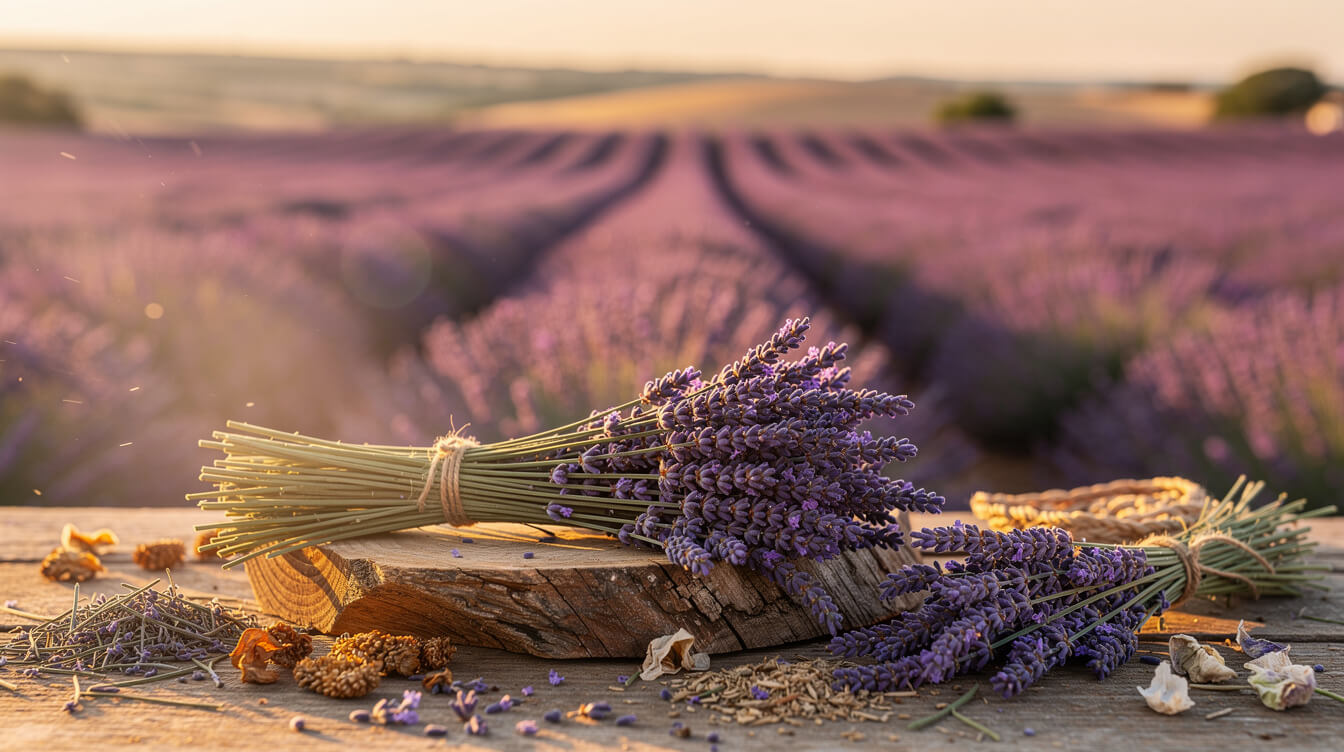
Somewhere on the high plateaus of Provence this week, the lavender is being cut. Picture the rows running violet to the horizon, the air thick and warm, the whole hillside humming with bees.
The Week the Lavender Is Cut
Late June into July is harvest season for true lavender, Lavandula angustifolia, the fine high-altitude variety that gives the softest, sweetest oil. The growers who care most are watching the calendar by the hour, because lavender does not smell the same on Tuesday as it did the Saturday before.
Here is the jewel most articles skip. What gives true lavender its round, calming sweetness is a pair of molecules: linalool and its gentle ester, linalyl acetate. That ester reaches its peak when roughly half the tiny florets on each spike have opened, usually in the dry heat of early afternoon once the morning dew has burned off. Cut too early and the oil is thin. Wait a week too long and the esters fade while sharper, camphor-like notes climb, and the whole bottle turns brisk instead of soft. The difference between a lavender that settles a room and one that merely smells clean is often just a few days in late June.
You can notice that timing at home. A truly well-harvested lavender is sweet and almost fruity at the top, never medicinal. Because a Nebulizing Diffuser® uses no water and no heat, it lifts that fragile ester into the air exactly as the distiller captured it, undiluted and uncooked. Try three or four drops on their own in the late afternoon, the same hour the fields are cut, and notice how the sweetness arrives first. If you want to learn how to spot a real one on the shelf, our note on judging essential oil purity is a good place to start.
Sign Up to Get Your FREE
e-Book Here…
This weekend, somewhere far from your kitchen, someone is bending into a purple row in the heat. A little of that hour is in every bottle. Breathe slow.
Chad, Organic Aromas