

Natural Car Air Freshener: Why Felt Fresheners Smell Great for 20 Minutes, and the Pure-Oil Alternative
You buy a natural car air freshener hoping for two things: a cabin that smells like something real, and a scent that lasts longer than the drive to the grocery store. The cardboard tree, the felt vent clip, the little gel cup. They all smell wonderful for the first few minutes, then fade into a faint memory by the time you hit the highway. Worse, many of them are not actually natural at all.
This guide explains the part almost no one covers: why those fresheners quit so fast (it is physics, not a defective product), why a hot parked car works against every one of them, and how pure essential oil dispersed without water or heat finally gives you a clean scent that holds. Twelve-plus years of customer blending feedback sit behind the car recipes near the end.
What Makes a Car Air Freshener Actually Natural (and Why Most Are Not)
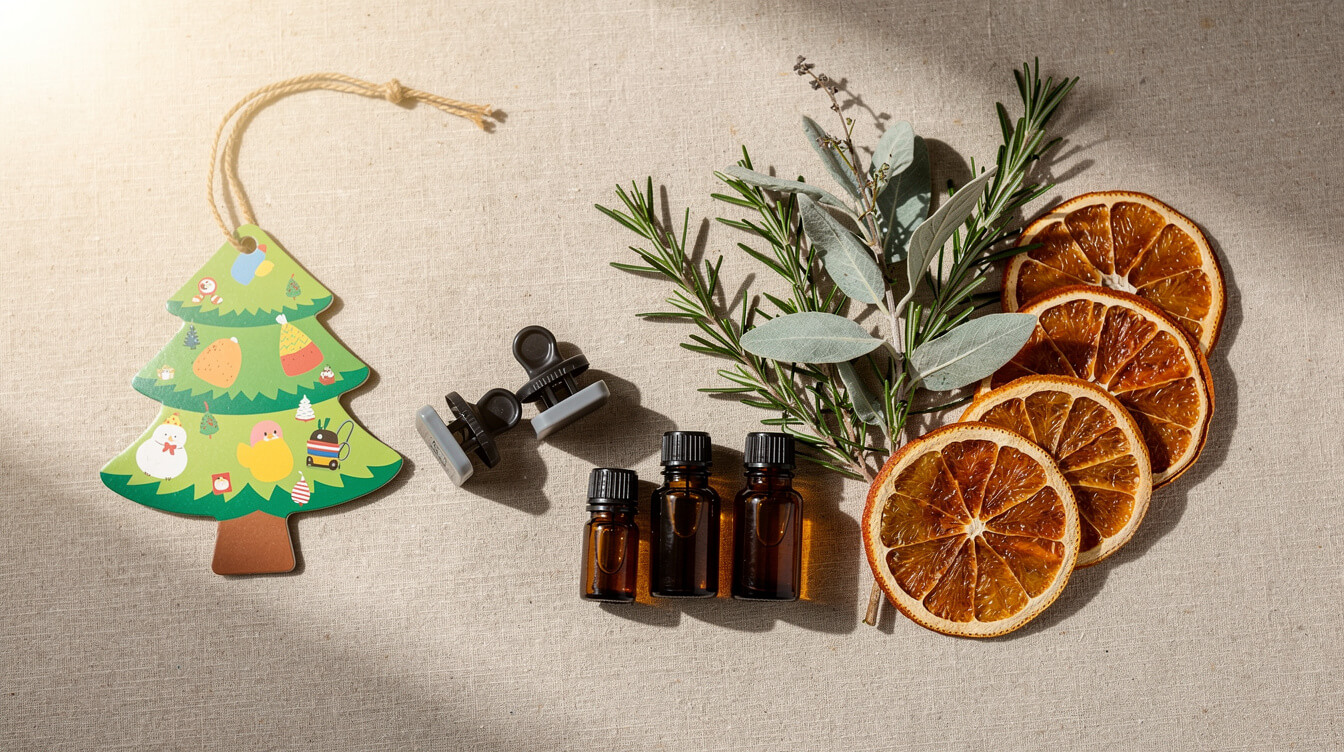
A genuine natural car air freshener should mean one thing: the scent comes from real plant material, with nothing synthetic added. In practice, “natural” is one of the least regulated words on a household label. There is no enforced legal definition for it on air-care products, so a vent clip can carry the word and still be built almost entirely on synthetic fragrance oil.
The bigger loophole is the word fragrance itself. Under United States labeling rules, a single line reading “fragrance” or “parfum” can stand in for dozens of undisclosed ingredients, because fragrance formulas are protected as trade secrets. So a product can advertise “essential oils” on the front and list “fragrance” on the back, and you have no way to know how much of the scent is plant-derived. Our guide to choosing non-toxic essential oils walks through exactly what that catch-all term hides.
This matters for more than purity. A University of Washington analysis of common fragranced consumer products found that each one emitted, on average, more than a dozen volatile organic compounds, several of them classified as hazardous, and almost none of those compounds were listed on the label. A car is the smallest room you spend time in, often sealed and recirculating its own air, which concentrates whatever the freshener is giving off. If the goal is genuinely cleaner air in that small space, the synthetic route quietly works against you. The same purity problem shows up at home, which we cover in our breakdown of what “natural” air fresheners really contain.
The reliable signal is never a marketing word. It is the ingredient itself. A pure essential oil is a single botanical, steam-distilled or cold-pressed, and named as such: Citrus sinensis for sweet orange, not “orange fragrance.” A trustworthy product shows you the botanical name and does not lean on the word “fragrance” at all.
Why Your Felt Freshener Smells Great for 20 Minutes, Then Quits
Here is the mechanism the listicles skip. A cardboard tree, a felt clip, or a gel cup is a passive evaporator. It just sits there and lets scent molecules drift off the surface on their own. Nothing pushes them. And scent molecules do not all leave at the same speed.
Sign Up to Get Your FREE
e-Book Here…
Every aroma is a mix of top notes, middle notes, and base notes, defined by how volatile each molecule is. Top notes, the bright citrus and minty compounds like limonene, are the lightest and most volatile, so they flash off first and fastest. That burst is exactly what you smell in the first twenty minutes. Once those light molecules are gone, you are left with the slower, heavier base notes, which are fainter and far less lifted. The freshener is not broken. It has simply exhausted its volatile top layer, and a passive evaporator has no way to meter the rest out evenly.
Cheap fresheners also load up on those volatile top notes on purpose, because the strong opening sells the product on the shelf. The result is a scent engineered to bloom and then collapse. If you have ever watched the same thing happen indoors and wondered why, we explain the identical physics in our note on why diffuser scent fades and the 30-second fix. The cure is the same in both places: stop relying on passive evaporation.
The Heat Problem: What a Parked Car Does to Scent and to Oils
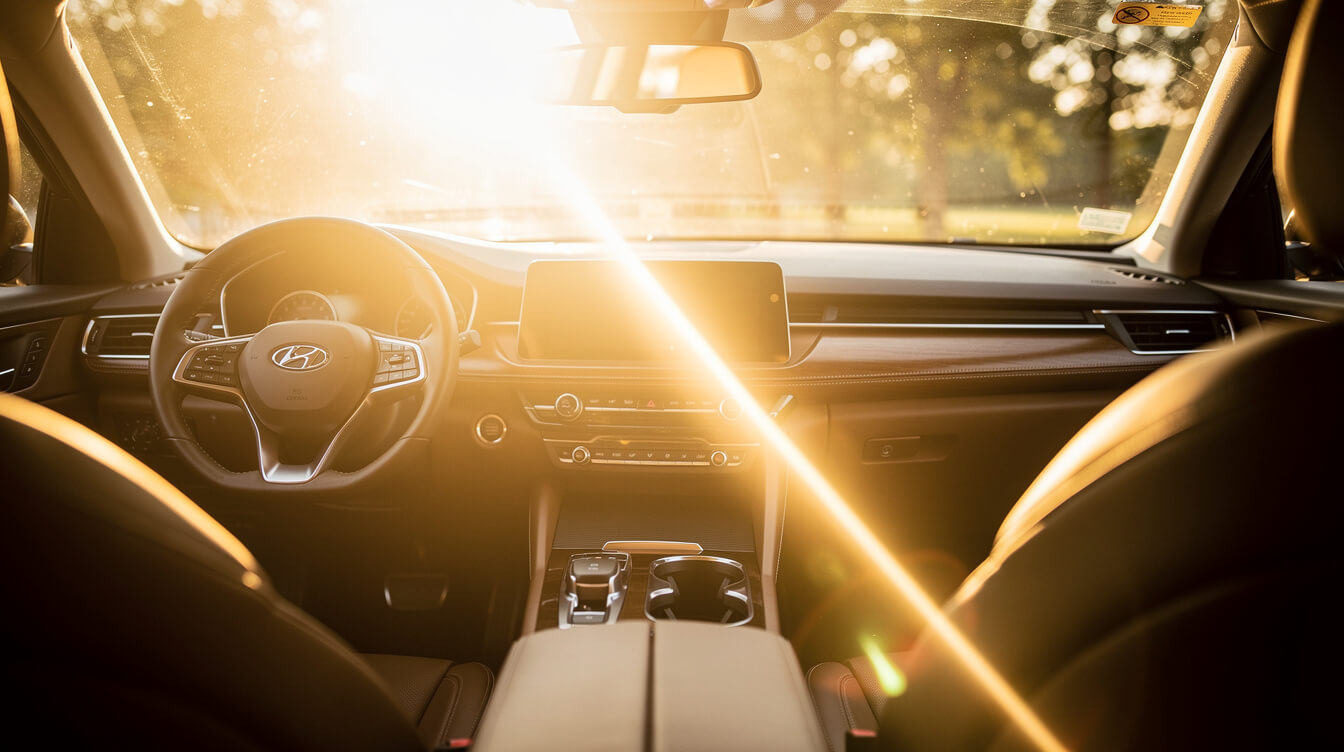
Now add the variable that is unique to cars: heat. A parked car in the sun is brutal on any aromatic. Studies of vehicle interiors have found that on a mild day around the mid-70s Fahrenheit, the cabin can climb past 47°C (roughly 116°F) within an hour, and a sun-baked dashboard can reach 150 to 190°F. Your vent clip lives right in that zone.
Heat does two things, both bad. First, it accelerates evaporation, so a freshener that was supposed to last for weeks blows through its volatile top notes in a single afternoon. You come back to a car that already smells flat. Second, heat and light oxidize essential oils and fragrance compounds, breaking them down into duller, sometimes sharper-smelling byproducts. Citrus oils are especially prone to this. That faint stale-perfume note in an old freshener is partly oxidation.
This is why “just use more oil” is not the answer for a car, and why a thoughtfully built pure essential oil blend still needs the right delivery method to survive the environment. A passive product that bakes on the dash is fighting a losing battle against thermodynamics. What you want is a method that disperses oil actively, on demand, only when you are in the car, instead of slowly cooking it all day.
The Pure-Oil Alternative: Nebulizing Diffusion on the Road
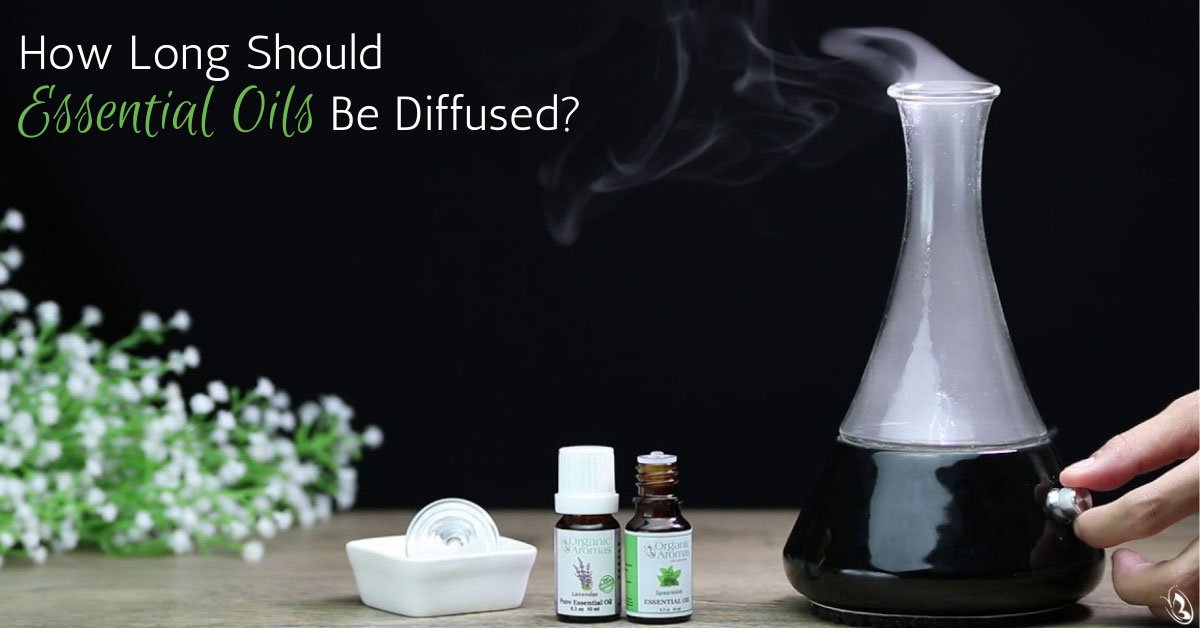
A Nebulizing Diffuser® solves both problems at once, because it does not rely on passive evaporation or heat. It uses a stream of moving air and Bernoulli’s Principle to pull pure essential oil up a glass tube and shear it into an ultra-fine mist of micro-droplets. No water to dilute the aroma, no heat to degrade it, no synthetic carrier. Just 100% pure oil, atomized and delivered the instant you want it. We break down the airflow physics in detail in our guide to how Bernoulli’s Principle powers waterless diffusion.

Join Now and Get a Coupon for 10% Off!
That “on demand” part is what makes it right for a car. Instead of a clip slowly cooking on the dash from 8 a.m., a portable Nebulizing Diffuser® runs only during your drive, in short bursts, then stops. The scent is fresh every time because the oil is sealed and cool until the moment it is misted. It also throws far more aroma than a passive evaporator, so a few minutes is enough to refresh the whole cabin. If you are weighing this against the misting type you may already own at home, our comparison of nebulizing versus ultrasonic diffusion explains why water-based units are a poor fit for a hot car in the first place.
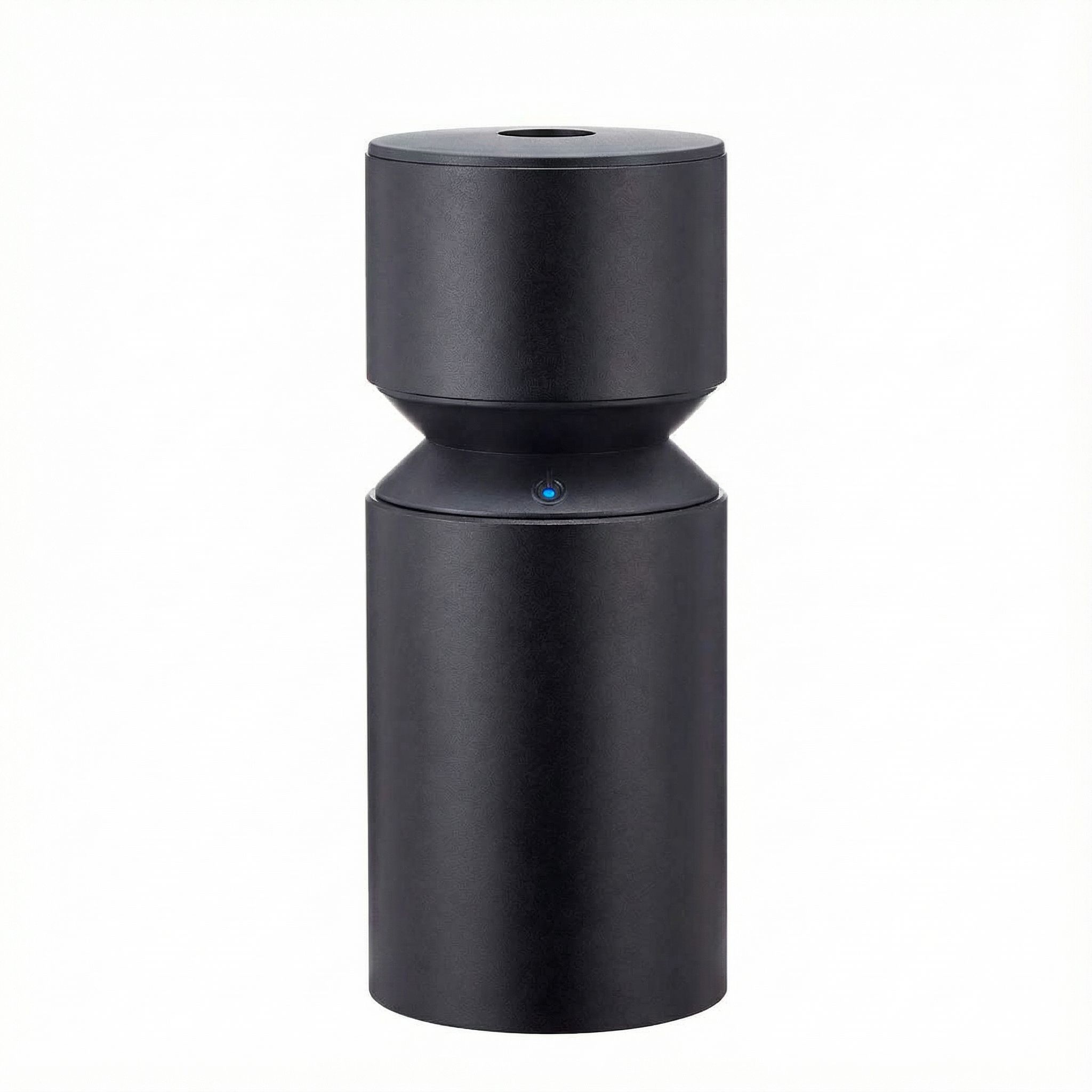
For the car specifically, a compact rechargeable unit like the Smart Mobile Mini Nebulizing Diffuser® is the natural choice: it is cordless, runs on intermittent timed cycles so it is never overwhelming, and uses pure oil with no water tank to spill on a corner. Run it for a few minutes at the start of a drive and let the cabin hold the scent.
A Natural Car Air Freshener That Actually Lasts
The Smart Mobile Mini Nebulizing Diffuser® is cordless, rechargeable, and built for the road. It mists 100% pure essential oil in timed bursts. No water, no heat, no synthetic fragrance. Clean botanical scent, fresh every drive.
The Best Essential Oils for a Natural Car Air Freshener
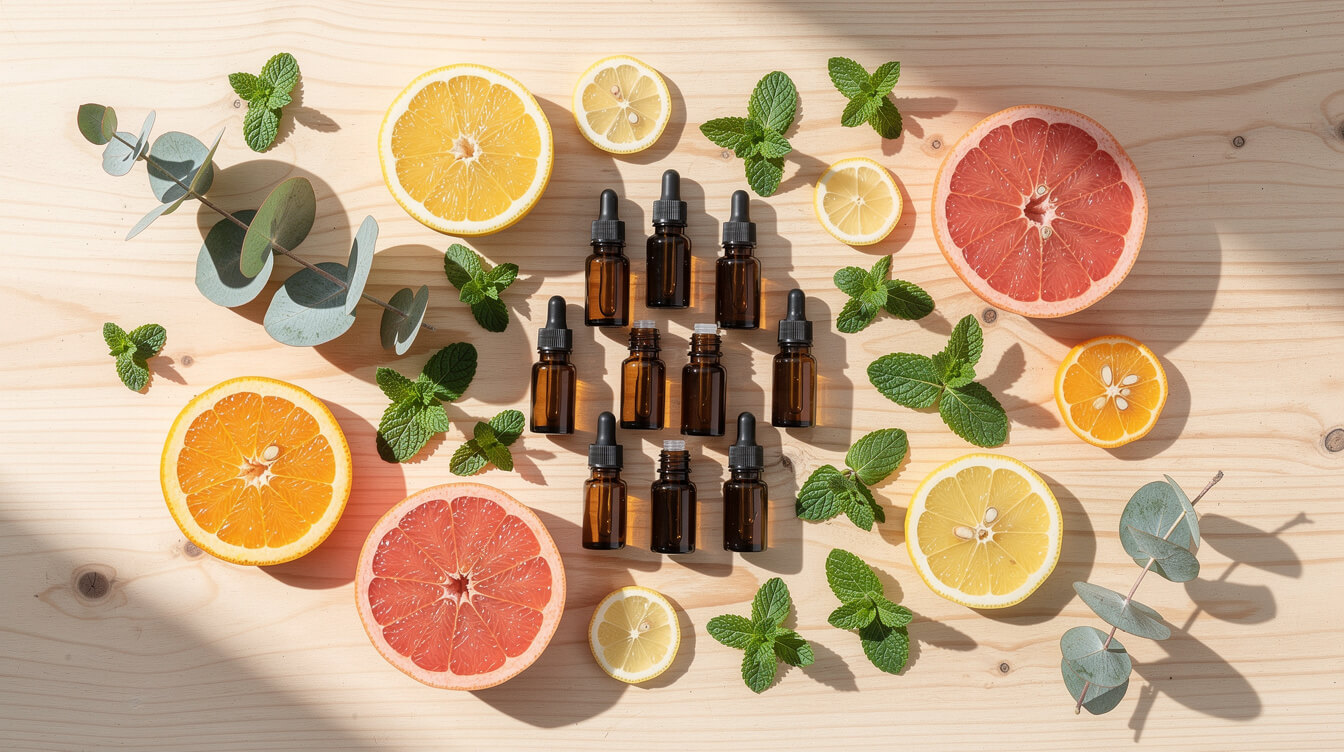
Not every oil belongs in a car, and the reason is safety, not just scent. The cabin is a place where you need to stay alert, so the smart move is to lean on oils associated with focus and freshness, and to go easy on the deeply sedating ones while you are actually driving. Across twelve-plus years of OA customer blending feedback, the car favorites cluster into a few reliable families.
Bright and alerting, great for driving
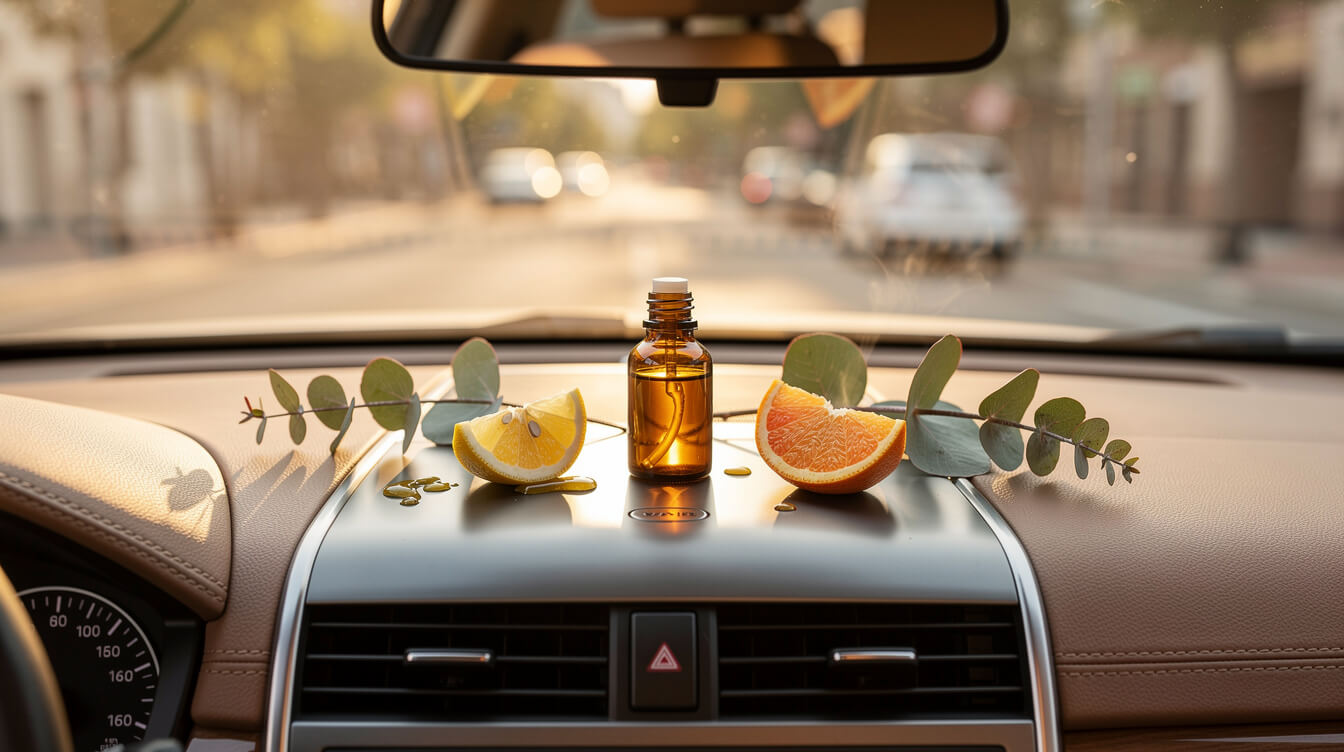
Citrus oils (sweet orange, grapefruit, lemon, bergamot) are the crowd favorite for cars: clean, universally liked, and uplifting. Peppermint and spearmint are the alertness all-stars. In research on driver mood, the scent of peppermint has been linked to lower rated fatigue and frustration behind the wheel, which is exactly what you want on a long stretch. Eucalyptus and rosemary read as crisp and clearing. These same alerting oils carry over to study and work, which we cover in our roundup of essential oils for focus.
Use sparingly while the car is moving
Lavender, Roman chamomile, marjoram, and valerian are wonderful for winding down, which is precisely why you do not want a heavy dose of them filling the cabin on the freeway. Save the deeply relaxing blends for a parked car, a passenger seat, or the driveway at the end of the day. This is a comfort-and-focus guideline, not a medical claim, but it is the single most useful rule for car aromatherapy, and almost no guide mentions it.
How to Make Your Car Smell Good Naturally, Step by Step
A natural car air freshener works best as a two-part habit: remove the bad smell at the source, then add a clean one actively. Skipping the first step is why so many fresheners just become a perfume layered over gym bag.

Sign Up to Get Your FREE Essential Oils e-Book Here
Start by clearing the source. Take out the trash and old cups, vacuum the seats and mats, and wipe down surfaces. For stubborn odors, set an open dish of baking soda in the footwell overnight to absorb what scent alone would only mask. Crack the windows for two minutes at the start of a drive to flush stale air before you add anything new.
Then add pure oil actively. With a portable Nebulizing Diffuser®, run it in short timed bursts rather than continuously, so the aroma stays in the pleasant background instead of overwhelming the small space. Begin with a single oil, then graduate to simple two or three oil blends once you know what you like. Three car blends our customers come back to:
Morning Commute: 3 drops sweet orange, 2 drops peppermint. Bright, clean, and alerting.
Long Highway Drive: 2 drops grapefruit, 2 drops rosemary, 1 drop lemon. Crisp and focusing without being sharp.
Errand Run Reset: 3 drops bergamot, 1 drop eucalyptus. Uplifting and fresh. For the method behind building your own, see our note-frequency approach to diffuser blends.
Natural Car Air Freshener: Frequently Asked Questions
What is the longest-lasting natural car air freshener?
No passive freshener lasts long in a hot car, because heat speeds evaporation. The longest-lasting approach is an active one: a rechargeable Nebulizing Diffuser® that mists pure essential oil only while you drive, so the oil stays sealed and fresh between uses instead of cooking on the dashboard all day.
Are essential oils safe to use while driving?
Used sensibly, yes. Favor bright, alerting oils like citrus and peppermint, keep the concentration light with short timed bursts, and go easy on heavily sedating oils like lavender or valerian while you are actually driving. Keep the bottle out of direct sun, and never let strong aroma distract you from the road.
Why does my car air freshener stop smelling after a few days?
Two reasons stack up. The volatile top notes that give the first strong burst flash off quickly and are gone, and the heat in a parked car accelerates the whole process while oxidizing what is left. A passive evaporator has no way to slow that down, so the scent peaks early and fades fast.
Can I just put essential oil on a felt clip or cotton ball?
You can, and it will smell nice for a short while, but it is still passive evaporation in a hot environment, so expect the same fast fade. It also wastes oil to the parked-car heat all day. An active, on-demand misting method gives you far more scent from far less oil, exactly when you want it.
A truly natural car air freshener is not a product you hang and forget. It is a simple system: clean the source, then add pure plant oil actively, in light bursts, with the right oils for staying alert. Do that, and your car smells genuinely fresh every time you get in, with nothing synthetic baking on the dash.