

Essential Oil Blends for Fall: 7 Cozy Diffuser Recipes (and the Nebulizing Ratios Nobody Gives You)
The best essential oil blends for fall aren’t just cinnamon dumped into whatever machine you own. Autumn scent is a craft: warm spice, ripe citrus, and grounding wood, layered so the room smells like a cider mill at golden hour instead of a candle aisle. Below are seven cozy diffuser recipes, each built as a note pyramid so it holds its shape from the first breath to the last. And because how you diffuse matters as much as what you diffuse, you’ll also get the neat-oil ratios for a waterless Nebulizing Diffuser® that almost no fall roundup bothers to give you.
If you have spent past autumns disappointed that your “pumpkin spice” blend went flat in twenty minutes or turned harsh and medicinal, this guide fixes both. We will cover why certain fall oils clog diffusers, how long to actually run a spice-heavy blend, and the one ratio rule that keeps clove from bulldozing everything else in the bottle.
What Actually Makes a Scent Feel Like Fall
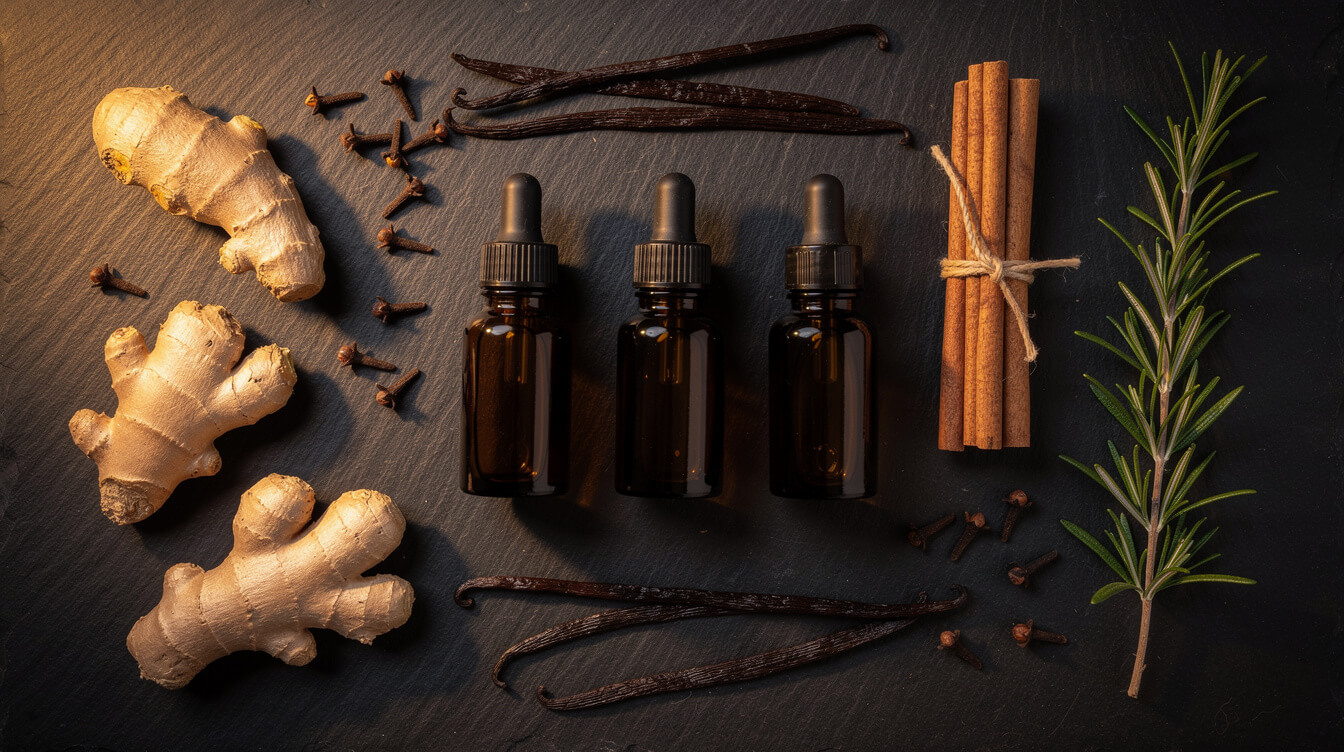
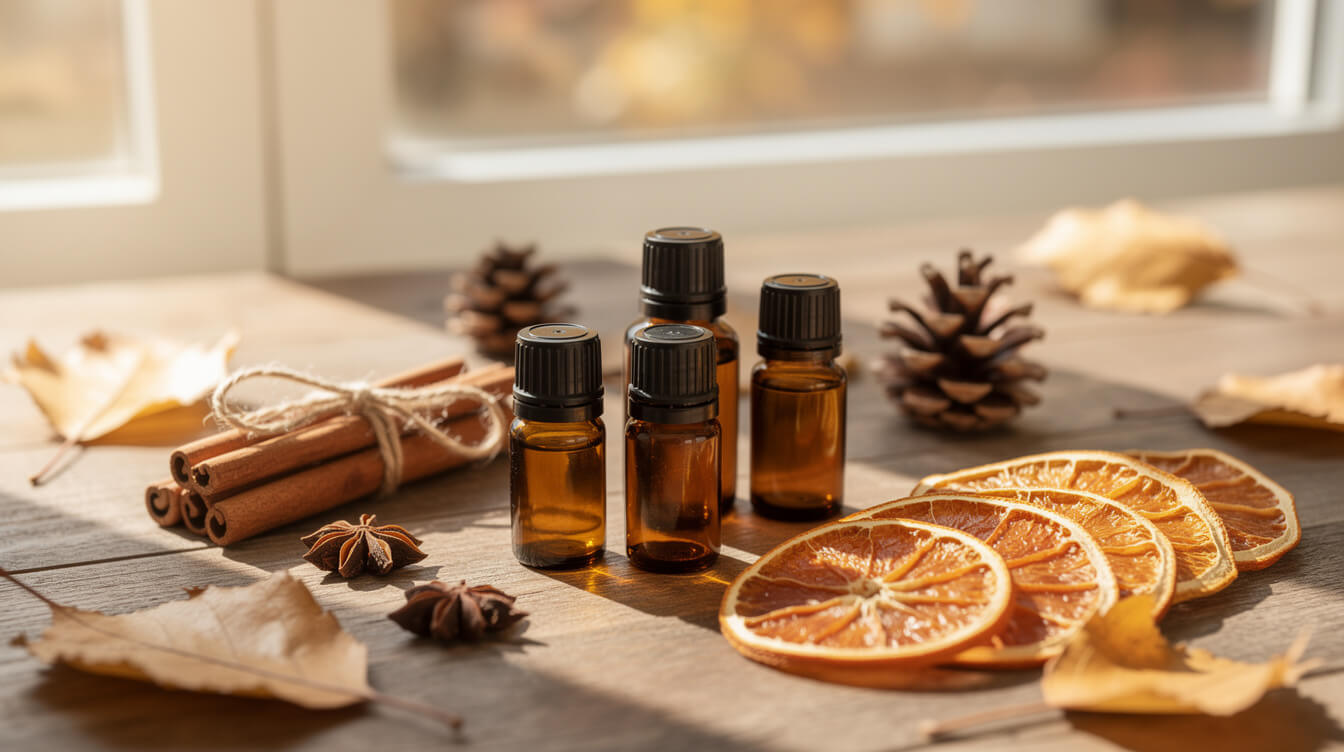
Summer scent is bright and fast — think lemon, peppermint, eucalyptus. Fall is the opposite: slow, round, and warm. Three aroma families do the heavy lifting. Warm spice oils (cinnamon bark, clove bud, ginger, cardamom, nutmeg) supply the “baked goods” heart. Ripe citrus (sweet orange, bergamot, mandarin) adds the lift that keeps spice from feeling heavy. And grounding wood and resin (cedarwood, patchouli, frankincense, vetiver) gives the whole thing a cozy floor to stand on.
The secret is the note pyramid. Every good blend has a top note (the first thing you smell, usually citrus — it evaporates fastest), a middle note (the spice heart that defines the character), and a base note (the wood or resin that lingers and anchors the rest). Get the pyramid right and a blend unfolds over an hour. Get it wrong — all citrus, or all base — and it either vanishes or sits there like a brick. If you want to understand how individual oils behave before you combine them, our guide to choosing diffuser scents by mood is a useful primer.
One number worth knowing: clove bud is roughly 80–90% eugenol, one of the most potent aromatic compounds in the fall palette. That is why a single drop can dominate a five-drop blend. Treat the spice oils as seasoning, not the main dish.
7 Cozy Fall Essential Oil Blends (With Note Structure)
Each recipe below lists parts by drop, arranged top → middle → base. For a water-based ultrasonic unit, use the drop counts as written in a full tank. For a Nebulizing Diffuser®, mix the same ratio into a small stock bottle first — the next section explains exactly how. These are among the most reliable essential oil blends for fall we have tested across twelve-plus years of customer feedback.
1. Apple Pie à la Mode
Buttery, sweet, and unmistakably dessert. The vanilla rounds off the cinnamon’s edge.
- Top: 3 drops sweet orange
- Middle: 1 drop cinnamon bark
- Base: 1 drop vanilla (CO₂ or oleoresin)
2. Sweater Weather
Crisp, forest-cool, and cozy — the smell of a porch on the first cold morning.
- Top: 1 drop cinnamon bark
- Middle: 3 drops Douglas fir or Siberian fir
- Base: 2 drops cedarwood
3. Chai Morning
Milky spice without the sugar. Cardamom is the star that most fall blends forget.
- Top: 3 drops sweet orange
- Middle: 2 drops cardamom + 2 drops ginger
- Base: 1 drop clove bud
4. Harvest Hearth
The classic mulling-spice bowl. Keep the orange high so it reads warm, not sharp.
- Top: 4 drops sweet orange
- Middle: 2 drops cinnamon bark
- Base: 1 drop clove bud
5. Falling Leaves
Earthy and grown-up. Patchouli is polarizing — used at one part it reads like damp forest floor, not incense shop.
- Top: 2 drops bergamot
- Middle: 1 drop nutmeg
- Base: 3 drops cedarwood + 1 drop patchouli
6. Golden Hour
Bright resin. Frankincense gives citrus a meditative, almost cathedral quality.
- Top: 3 drops bergamot
- Middle: 2 drops sweet orange
- Base: 2 drops frankincense
7. First Frost
Clean, quiet, and calming for the end of the day.
- Top: 2 drops mandarin
- Middle: 1 drop clary sage
- Base: 2 drops cedarwood + 1 drop vetiver
A few of these lean on single oils worth knowing on their own — if bergamot keeps showing up in your favorites, our deep dive on bergamot essential oil benefits explains why that bright-but-grounding citrus plays so well with resin. Vanilla lovers should read why true vanilla behaves differently from the synthetic version in most “fall” candles.

Sign Up to Get Your FREE Essential Oils e-Book Here
The Nebulizing Ratios Nobody Gives You

Here is the gap in every fall blend roundup: they assume you are dropping oil into water. A nebulizing diffuser works completely differently — no water, no heat. It uses an air jet (Bernoulli’s principle) to atomize pure, undiluted oil into a fine mist. That means the “5 drops in a tank” math above does not translate directly. Pour a full recipe of neat oil into the glass reservoir and you will burn through oil fast and overwhelm the room.
The translation: mix your chosen recipe as a stock blend first. Multiply the drop ratio by five or ten and combine into a small 5–10 mL amber bottle — so “Harvest Hearth” becomes 20 drops sweet orange, 10 cinnamon, 5 clove. Cap it, roll it between your palms to marry the notes, and let it rest a few hours if you can. Then load just 15–25 drops of the finished stock into the nebulizer reservoir at a time. You get the exact ratio, none of the water, and a scent that fills the room in minutes.
Because a nebulizer delivers oil at full strength, the quality of that oil is everything — there is nothing to dilute a cheap, adulterated blend. A precision unit like the Magnificent – Smart Nebulizing Diffuser® is built for exactly this: cordless, app-controlled timing, and a medical-grade Pyrex glass reservoir that shows off a well-made autumn stock blend. If you are new to waterless diffusion, our complete guide to nebulizing aromatherapy walks through the basics.
The Viscosity Trap: Why Fall Oils Clog Diffusers
This is the failure mode nobody warns you about, and fall is when it bites. The signature autumn base notes — vanilla oleoresin, patchouli, myrrh, sandalwood, and vetiver — are thick, sticky, and resinous. In a nebulizing diffuser, that viscosity fights the air jet: the neck narrows, the mist sputters, and eventually the unit stalls. In an ultrasonic diffuser, the residue films over the transducer disc and kills the mist.
Ranked worst to mildest for clogging, the usual fall culprits are: vanilla oleoresin (essentially syrup), myrrh and raw frankincense resinoid, patchouli, then sandalwood and vetiver. Cinnamon, clove, citrus, and the fir and cedar oils are thin and flow freely — they are almost never the problem. So when a blend stalls, look straight at the base note.
The fix is a ratio rule and a maintenance habit. Keep thick base oils at or below one part in five (roughly 20% of the blend) — notice every recipe above obeys this. Warm the stock bottle in your hand before loading it so the oil flows. Run shorter cycles rather than marathons. And flush the glass weekly with a few drops of high-proof, unaged grain alcohol, swirled and poured out. Our step-by-step on how to clean a Nebulizing Diffuser® covers the resin-buildup routine in detail.
One more trick for resins: if you love the meditative depth of frankincense or myrrh but hate the clogging, reach for a properly steam-distilled frankincense essential oil rather than a raw resinoid. The distilled version carries the aroma with far less of the sticky heavy fraction that gums up the works.
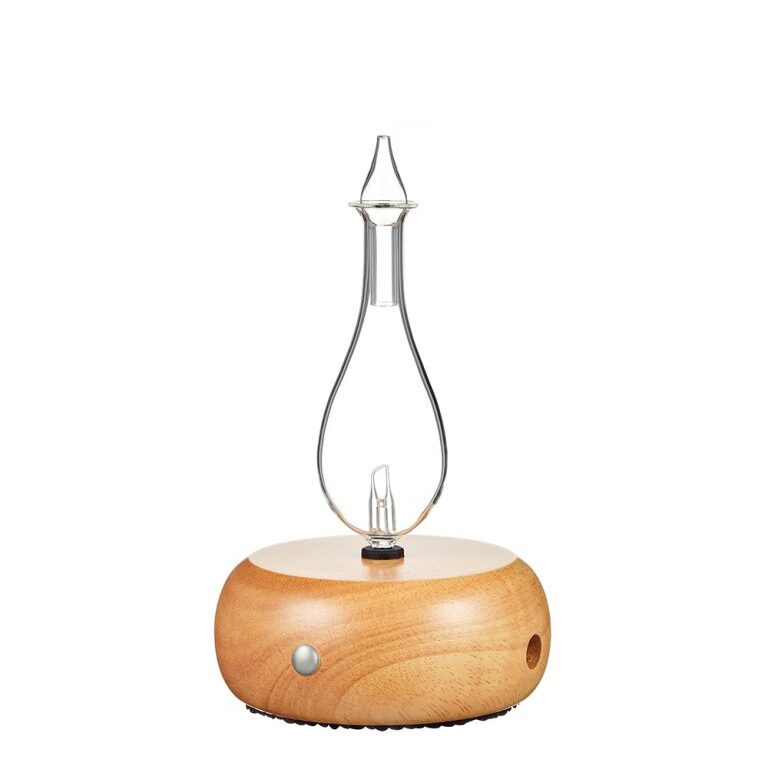
Diffuse Fall the Waterless Way
Pure, undiluted autumn blends — no water, no heat, no plastic. Cordless and app-controlled, with a medical-grade Pyrex reservoir built to handle rich seasonal oils.

Join Now and Get a Coupon for 10% Off!
How Long to Actually Run a Fall Blend
Spice-forward fall blends punch above their weight, so the instinct to “run it all evening” backfires. Two things happen: your nose adapts and stops registering the scent (olfactory fatigue), and the potent compounds — cinnamaldehyde in cinnamon, eugenol in clove — build up to a level that reads harsh rather than cozy. More is not better.
The rule for nebulizing: run intermittently. Two minutes on, then thirty to sixty minutes off, is plenty to keep a room gently scented. Most quality diffusers have a timer or interval mode for exactly this — set it and forget it. For a large open-plan space, lean toward the longer off-interval, not a longer on-interval. Start with the citrus-forward blends (Harvest Hearth, Golden Hour) if you are scent-sensitive, and save the resin-heavy ones (Falling Leaves, First Frost) for smaller, cozier rooms.
Ventilation matters too. A completely sealed room concentrates aroma fast; crack a door so the scent moves and refreshes. And keep spice-heavy diffusion out of rooms where pets sleep — strong, undiluted aromatics are best enjoyed in shared living spaces with airflow, not confined pet areas.
Timing also shapes the mood. A bright citrus-forward blend in the morning wakes a kitchen; a grounding cedar-and-vetiver blend in the evening signals the day is winding down. Because a Nebulizing Diffuser® reaches full scent in a minute or two, you can change the character of a room on demand rather than waiting for a tank to heat up — one more reason waterless diffusion suits the fast-changing rhythms of fall.
Fall Diffuser Blends: Frequently Asked Questions
What are the best essential oils for fall?
The core autumn palette is warm spice (cinnamon bark, clove bud, ginger, cardamom, nutmeg), ripe citrus (sweet orange, bergamot, mandarin), and grounding wood and resin (cedarwood, patchouli, frankincense, vetiver). The magic is in combining one from each group in a top-middle-base structure rather than relying on a single note.
How many drops of a fall blend go in a nebulizing diffuser?
Mix your recipe into a stock blend first, then load just 15–25 drops of the finished neat blend into the glass reservoir at a time. Because a nebulizer atomizes pure oil, you need far less than a water diffuser and should refill in small amounts.
Why does my fall blend smell flat after a while?
Usually one of two reasons: the blend is too base-heavy (all wood and resin, no citrus lift), or your nose has simply adapted. Add a citrus top note for brightness, and run the diffuser intermittently — two minutes on, then a long pause — so your sense of smell resets.
Can I use these blends in an ultrasonic or reed diffuser?
Yes. Use the drop counts as written in an ultrasonic water tank. For reed diffusers, combine the same ratio into a carrier base. Just remember that thick oils like vanilla and patchouli can film over an ultrasonic transducer, so clean it regularly.
Are cinnamon and clove blends safe to diffuse around pets?
Strong spice oils are potent and best used in well-ventilated shared spaces, not in enclosed rooms where pets rest. Keep concentrations light, provide airflow, and give animals the option to leave the room. When in doubt, favor the gentler citrus-and-wood blends.
Sign Up to Get Your FREE
e-Book Here…
Bringing the Season Home
Fall scent rewards a little craft. Build on the note pyramid, keep the thick base oils to a fifth of the blend, translate the ratio into a proper stock for waterless diffusion, and run it in short, intermittent bursts. Do that and every one of these seven essential oil blends for fall will fill your home with the warm, layered, unmistakably autumn aroma that a single stick of cinnamon never quite manages. Pick one recipe, mix a small stock tonight, and let the season in.