


Is It Safe to Use Essential Oils Around Birds? The Honest Answer
Is it safe to use essential oils around birds? The honest answer is no, not in the air your bird breathes. You can still enjoy essential oils in a home with birds, but only with some distance, a closed door and fresh air between the scent and the cage. Birds take in airborne compounds far more efficiently than we do, and no essential oil has been tested and shown to be safe for them to inhale.
Most guides stop at a one-line warning, or hand you a list of “bird-safe” oils that no study supports. An older version of this page did the second, and we’ve rewritten it. Below you’ll find what makes a bird’s lungs different, why heat matters so much, the exposure route almost nobody mentions (feathers), some simple math on how long scent lingers after you switch off, and a routine that lets you enjoy pure aromatherapy without putting your bird at risk.
Is It Safe to Use Essential Oils Around Birds? The Short Answer
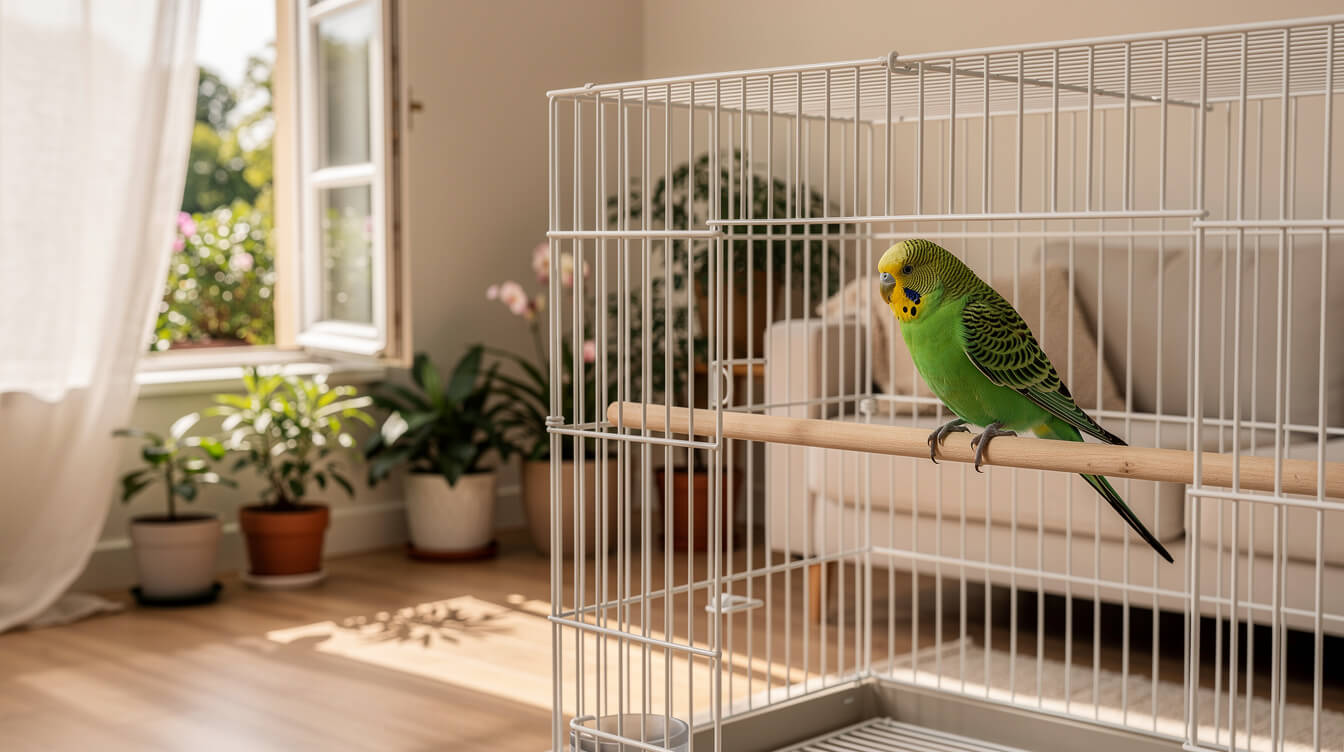
Veterinary sources broadly agree. The ASPCA Animal Poison Control Center says it’s best to avoid using an essential oil diffuser in your house if you have birds, because their respiratory tracts are very sensitive. Avian veterinarians answering owners’ questions say much the same: don’t use essential oils in the same room as a parakeet or any other bird. Bird clubs go further and treat any perfume-like smell in the bird room as a warning sign.
That sounds absolute, and for the bird’s own room it should be. In practice it comes down to three things you control:
Shared air. If your bird can breathe the scented air, your bird is exposed. A bird can’t leave the cage to get away from a smell that bothers it the way a dog or cat can.
Heat. Warming oil (burners, wax melts, plug-ins, candles) adds oxidation products and a steady, all-day release to the air.
Time. Scent lingers long after you switch off. The bird should come back only when the air has truly cleared, not just when you’ve stopped noticing the smell.
The rest of this guide explains each of these, because once you understand why, the safe routine becomes obvious. If you also share your home with cats or dogs, our broader guide to essential oils and pets covers how their risks differ.
Why Birds Breathe Differently: Air Sacs, One-Way Airflow and the Canary
A bird’s respiratory system works nothing like ours. Our lungs are bellows. Air goes in, mixes with the stale air already there, and goes out the same way. Birds have small, rigid lungs connected to a series of thin-walled air sacs that reach into the body cavity and even into some bones.
The numbers that matter
About one-fifth of the body. An average bird devotes roughly 20% of its body volume to its respiratory system. An average mammal devotes about 5%. In some species the air sacs alone account for up to a quarter of body volume.
Air flows one way. Inside the gas-exchange tubes of the lung (the parabronchi), air moves in a single direction, back to front, on both the in-breath and the out-breath. Each breath of air takes two full breathing cycles to pass through the whole system.
Gas exchange never pauses. Because fresh air crosses the exchange surface on both halves of the cycle, a bird pulls far more out of every breath than we do.
That design is how a small parrot can fly, sing and keep up a fast metabolism. It also means a bird absorbs airborne compounds more efficiently than a mammal and can reach a harmful level faster. Researchers use birds as sensitive monitors of air quality for exactly this reason.
The canary was a working air sensor
The physiologist John Scott Haldane proposed taking canaries into coal mines because they showed the effects of carbon monoxide well before the miners did. They might fall from the perch or stop singing. British mines kept the practice going for about 70 years. It formally ended on 30 December 1986, when electronic gas detectors took over. Your budgie or cockatiel has the same respiratory system. When you diffuse in the bird’s room, you’re making it the canary for your blend.
Sign Up to Get Your FREE Pets
e-Book ($9.99 Value)
Feathers and Preening: The Exposure Route Most Guides Miss
Breathing is only half the story. Every method that puts essential oil into the air as a mist, rather than letting it evaporate, releases tiny droplets. Ultrasonic units release droplets of oil carried in water, room sprays release droplets of oil in alcohol or water, and a nebulizer releases droplets of pure oil. Some of those droplets settle on nearby surfaces, including perches, cage bars, food dishes and feathers.
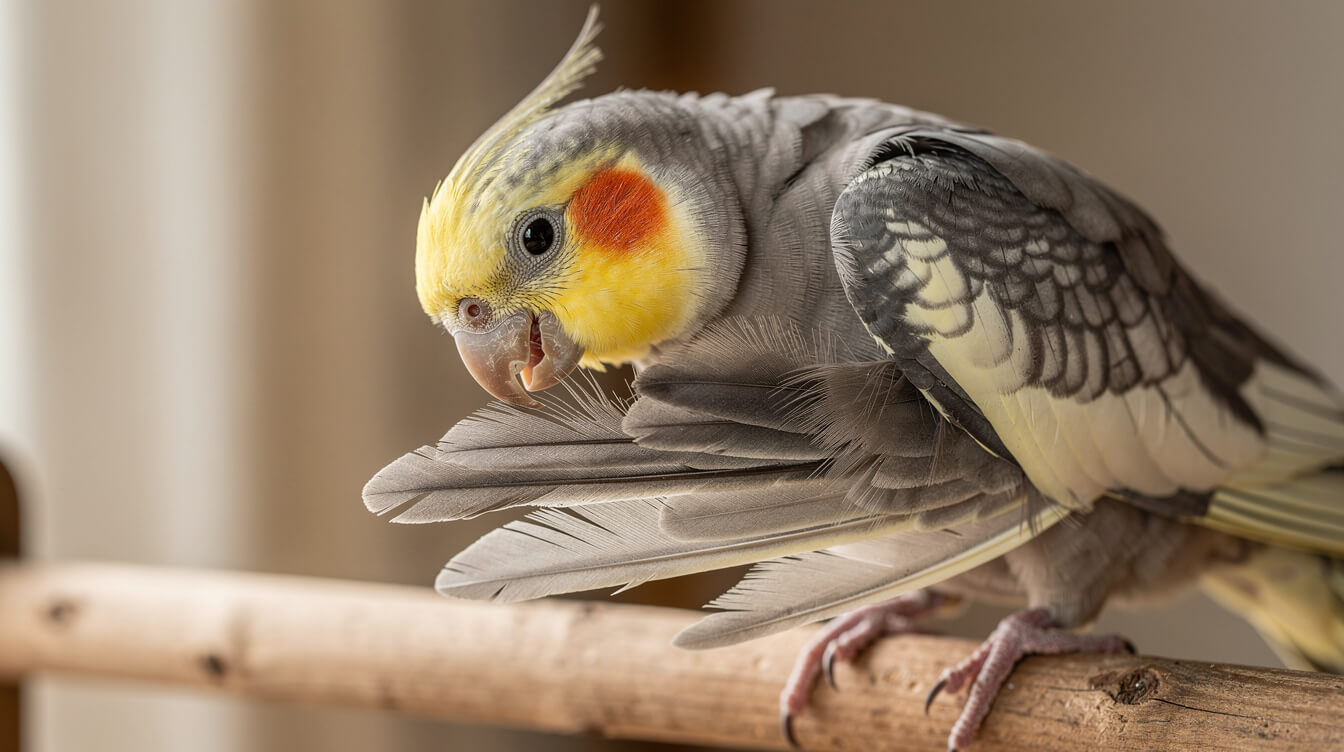
Birds preen for long stretches every day, drawing each feather through the beak to clean it and spread oil from the preen gland. Anything sitting on the feathers ends up in the mouth. A dog licks droplets off its fur (we cover this in our guide to essential oils and dogs), but a bird grooms far more often and is far smaller. A dose that would mean nothing to a 30 kg Labrador is a much bigger share of the body weight of a 35 g budgie.
Oil also changes the feathers themselves. Feathers keep a bird warm and dry because their tiny barbs lock together like Velcro. Any oil that coats them, whether it’s crude oil on a seabird or a film of fragrance on a cockatiel, clumps the barbs and spoils that structure. A bird with an oily film on its feathers will usually preen it obsessively, so it swallows even more.
Why we’re especially direct about this
We make Nebulizing Diffusers®, so here is the part a company that sells them could easily leave out. A Nebulizing Diffuser® uses Bernoulli’s Principle to turn pure, undiluted essential oil into a fine dry mist, with no water and no heat. That’s what gives it a true, full-strength aroma, and it also makes it the most concentrated way to scent a room. An ultrasonic unit is mostly water. Ours is 100% oil. For a person, that’s the point. For a bird sharing the room, it’s the reason the Nebulizing Diffuser® belongs somewhere else entirely.
Heat Is the Biggest Multiplier: Burners, Wax Melts and the Nonstick-Pan Lesson
If there’s one rule to take away for a bird home, it’s this: never heat oils or fragrance anywhere your bird shares the air.
What the nonstick-pan cases show
Avian vets know this best from PTFE toxicosis, the poisoning caused by overheated nonstick cookware. The Merck Veterinary Manual lists it as a common household poisoning in pet birds kept in or near kitchens. Toxic gases start to form when a PTFE coating reaches about 280°C (536°F), and ultra-fine particles appear at around 290°C (554°F). The lowest temperature linked to a pet bird death in the published reports is about 202°C (396°F), and a frying pan left empty on a burner can get that hot in a few minutes. In one well-known case, five cockatiels died within 30 minutes of a pan accidentally overheating.
Essential oils aren’t PTFE, and diffused lavender isn’t nonstick-pan fumes. The lesson is about what heat does. It changes the chemistry of whatever is being warmed, it keeps pushing that material into the air for as long as the heat is on, and a bird’s one-way lungs concentrate whatever arrives.
Where heat hides in home fragrance
Tea-light oil burners and wax warmers hold oil or wax at high temperatures for hours. Heating speeds up oxidation, so the air carries changed, harsher compounds as well as the original oil.
Plug-in air fresheners use a small heater to keep fragrance evaporating around the clock. Bird clubs have long reported deaths linked to them.
Candles and incense add soot and combustion by-products on top of the fragrance. We compare these in Nebulizing Diffuser® vs candle.
Simmer pots are gentler, but they sit on the stove, so they bring your bird into the kitchen where the pan risk lives.
Cold-air nebulizing removes the heat problem entirely, and that’s a real advantage in any home. It doesn’t solve the shared-air problem, though. Even with heat out of the picture, the bird should never share the air while you diffuse. For more on how oil behaves near heat, see are essential oils flammable?.
Sign Up to Get Your FREE
e-Book ($9.99 Value)
The Clear-Air Math: How Long Scent Lingers After You Switch Off
“Diffuse in another room” is good advice, but it leaves out the question owners actually ask: how long until the bird can come back? You can estimate it with the same simple formula ventilation engineers use.
Air changes per hour
Every room slowly swaps its air with the outdoors. That rate is measured in air changes per hour (ACH). With well-mixed air, whatever is airborne falls away exponentially. The share left after t hours is roughly e−ACH × t. A closed-up modern home in cool weather often sits somewhere around 0.3 to 0.5 ACH. Opening a window and running a fan can push a single room into the 2 to 5 ACH range or higher.
Closed room, about 0.5 ACH: after 1 hour roughly 61% of the airborne oil is still there. After 3 hours it’s about 22%, and after 6 hours about 5%.
Window cracked, about 2 ACH: after 1 hour about 14% is left, and after 2 hours about 2%.
Window open plus a fan, about 5 ACH: after 1 hour less than 1% is left.
These are estimates, and real rooms clear more slowly than the formula suggests. Soft furnishings, curtains and carpets absorb aromatic molecules and release them again for hours. That’s why a room you diffused in yesterday can still smell faintly of it today. Treat the numbers as a minimum and let your nose make the final call.
The two-door rule
In practice, that means keeping at least two barriers between the scent and your bird: a closed door, plus either distance or a second closed door. Afterwards, ventilate hard with a window open and a fan pointing out, for at least an hour. The bird comes back only when you walk in from fresh air and can’t smell the oil at all. If you can smell it, your bird is breathing it. A closed-room session with no ventilation afterwards can take most of a day to clear, which is why simply “switching it off before the bird comes in” isn’t enough.
Oils Most Often Flagged for Birds, and Why There’s No “Safe List”
You’ll find plenty of lists of “bird-safe” essential oils online. Our earlier version of this page had one, putting citrus, florals and frankincense in the safe column. We removed it. No controlled studies have tested inhaled essential oils in pet birds, so a safe list is a guess presented as fact. The honest version is a list of oils with the clearest reasons for concern, plus a reminder that every oil on the market is a concentrated mix of volatile compounds.
The oils with the clearest red flags
Tea tree (melaleuca). This is the oil bird clubs single out by name as dangerous on or near birds. In cats and dogs, the ASPCA notes that problems can start from just seven or eight drops of concentrated oil.
“Hot” phenolic oils: clove (eugenol), cinnamon (cinnamaldehyde), oregano and thyme (carvacrol and thymol). These are strong irritants to skin and mucous membranes, even in people.
Cooling, high-cineole and camphor oils: eucalyptus, rosemary, camphor, and the menthol in peppermint. They’re sharp and penetrating to us and much more so in a small airway.
Pine and fir needle oils. They’re rich in pinenes, which oxidize into irritating compounds as the oil ages.
Citronella. It’s often burned outdoors in candles, which combines a strong oil with combustion.
Why the “gentle” oils still don’t make a safe list
Lavender, citrus and frankincense have a reputation for being mild because they’re mild for people. Citrus oils are mostly limonene. Indoors, limonene reacts with everyday ozone to form fine particles and small amounts of formaldehyde, which we cover in our guide to non-toxic home fragrance. Old or badly stored oils of any kind oxidize into more irritating compounds. “Gentle” describes how an oil smells to us. It says nothing about how a bird’s lungs will handle it.
Quality still matters, just not in the way the old safe lists suggest. Synthetic fragrance oils and adulterated “essential oils” add unknown ingredients, so a pure, single-origin oil is always the better choice for your sessions in a bird-free room. Pure doesn’t mean safe for the bird, though.

Join Our Exclusive Member Club to get Big Discounts!
Signs of Trouble, and What to Do Right Away
Birds are prey animals and hide weakness well, so changes can be subtle. Watch your bird closely after any scent, cleaning-product or cooking-fume exposure, and look for:
Tail bobbing in time with each breath
Breathing with the beak open, or clicking and wheezing sounds
Sitting fluffed up, quiet or low on the perch, or on the cage floor
A changed voice, or a normally chatty bird going silent
Unsteadiness, or falling from the perch
If you see any of these: move your bird to fresh, scent-free air straight away, away from the kitchen. Then call your avian veterinarian or the ASPCA Animal Poison Control Center on (888) 426-4435 (a consultation fee may apply). Tell them which oil or product was used, how it was used and for how long. Don’t wait to see whether it passes, because breathing problems in birds can get worse quickly.
Most of these signs are the same for fumes from any source, whether that’s an air freshener, an aerosol cleaner, a self-cleaning oven cycle or a scorched pan. A home that’s safe for essential oils around birds is really a home that keeps all fumes out of the bird’s air.
A Bird-Safer Aromatherapy Routine with a Nebulizing Diffuser®
None of this means giving up aromatherapy. It means planning around your bird’s air. Here’s the routine we recommend to customers with birds.
1. Choose a bird-free room. Pick a bedroom, a home office or a bathroom with a window, in a room your bird never visits. It should be on the far side of the house from the cage and never the kitchen.
2. Close the door and add a second barrier. That second barrier can be distance down a hallway or another closed door.
3. Keep sessions short. Run your Nebulizing Diffuser® for 15 to 30 minutes on a low setting with an on/off cycle. Your nose adapts within minutes anyway, so longer sessions mostly just add more oil to the air. Our guide on how to use a Nebulizing Diffuser® explains the dial and cycle settings.
4. Ventilate before you open the door. Open the window and run a fan blowing outward for at least an hour.
5. Use the fresh-air sniff test. Step outside or into a scent-free room for a few minutes, then walk back in. If you can still smell the oil, keep the door closed and keep airing.
Smart models help with the timing. The Elegance Smart Nebulizing Diffuser® is app-controlled and rechargeable, so you can schedule a short session in your bedroom while your bird is settled at the other end of the house, or move the Nebulizing Diffuser® between rooms without hunting for an outlet. Because there’s no water tank to clean and no heat, it starts and stops instantly. Your scent stays in the room you chose.
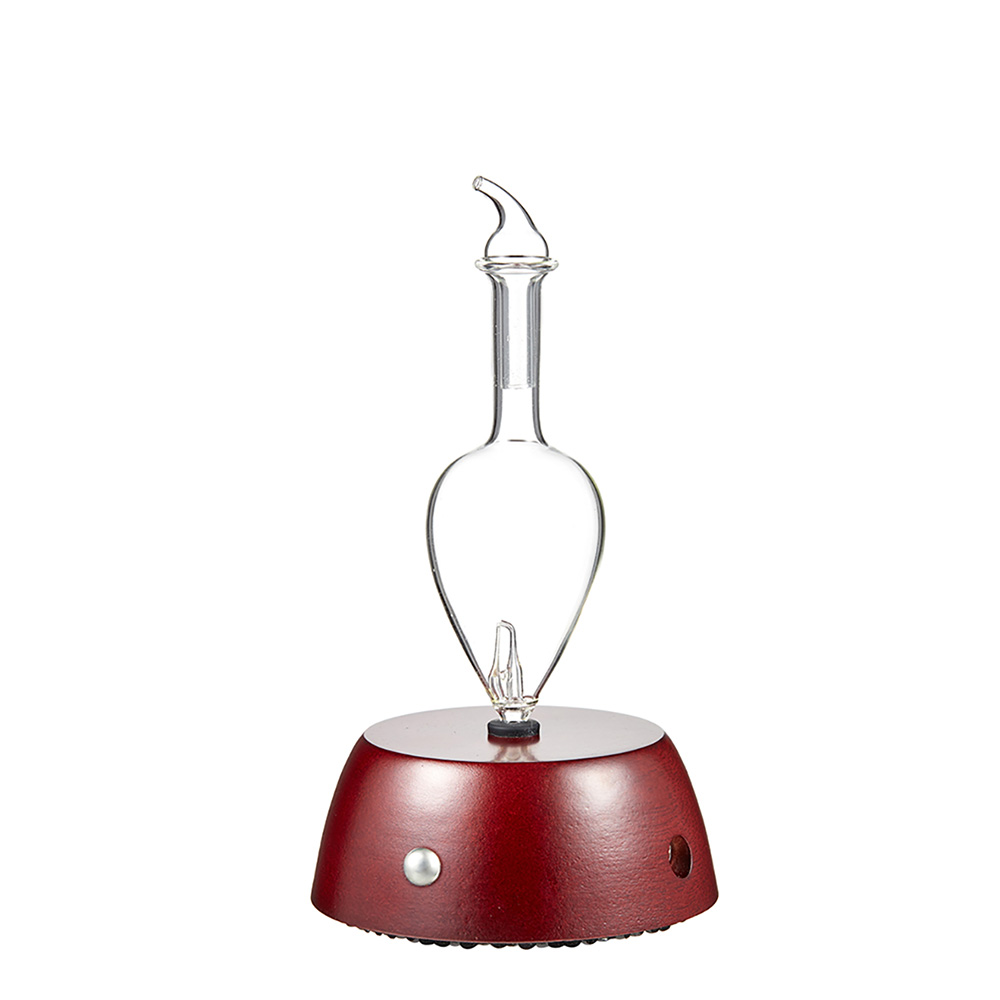
Pure Aromatherapy, in the Room You Choose
Handcrafted from real wood and medical-grade Pyrex glass, the Nebulizing Diffuser® diffuses pure essential oil with no water and no heat. It starts and stops instantly, and Smart models can be scheduled from your phone.
Want a gentle hint of scent in the bird’s room itself? Skip oils entirely. A bowl of fresh herbs, citrus peel or a few sprigs of lavender on a high shelf, well away from the cage, gives a soft natural fragrance with nothing aerosolized and nothing heated. Our guide to pet-safe air fresheners covers odor control that doesn’t rely on fragrance at all.
Essential Oils Around Birds: Frequently Asked Questions
Is it safe to use essential oils around birds?
Not in the air your bird breathes. Birds have a one-way, air-sac respiratory system that takes in airborne compounds far more efficiently than ours, and no essential oil has been shown to be safe for them to inhale. Use essential oils only in a separate, closed room your bird never enters, then ventilate thoroughly before the bird comes back.
Which essential oils are safe for birds?
No essential oil has been proven safe for birds to inhale, so there is no reliable safe list. Tea tree is the oil most often singled out as dangerous, followed by hot phenolic oils (clove, cinnamon, oregano, thyme), eucalyptus, camphor, peppermint, pine and citronella. Milder-smelling oils like lavender and citrus still belong in a bird-free room.
Can I use a diffuser in another room if I have a bird?
Yes, with care. Use a closed room on the far side of the house from the cage, keep sessions to 15 to 30 minutes, then open a window and run a fan for at least an hour. Only let the bird near that air when you can walk in from fresh air and smell nothing.
Is a nebulizing diffuser safer for birds than an ultrasonic one?
It removes heat and water from the picture, which helps in any home, but it is not safer for a bird sharing the room. A Nebulizing Diffuser® releases pure oil rather than oil diluted in water, so its output is more concentrated. Around birds, every type of diffuser belongs in a separate, ventilated room.
Are oil burners, wax melts and scented candles safe around birds?
No. Heated fragrance keeps releasing oxidized compounds for as long as it’s warm, and candles add combustion by-products. Avian vets already see heat-related fume poisoning from overheated nonstick cookware, so keep every heated scent out of the air your bird breathes.
What should I do if my bird was exposed to essential oils?
Move your bird to fresh, scent-free air immediately. Then call your avian veterinarian or the ASPCA Animal Poison Control Center on (888) 426-4435. Watch for tail bobbing, open-beak breathing, fluffed-up sitting, a changed voice or unsteadiness, and don’t wait for symptoms to pass.
The bottom line on essential oils around birds: your bird’s lungs are built to catch everything in the air, so make sure there’s nothing in it. Scent a different room, keep heat out of the picture, air the room out completely, and you and your bird can both enjoy a home that smells wonderful. For more household safety reading, see what oil does to plastic versus glass.






In my opinion you have misled.
I would like to know more about what u do with birds if u dont mind thank you so much
I want to deter rats from my bird feeding station. Which essential oils spray can I use? I read rats hare mint and citronella?
ii have the same problem. Any solutions??
I have a mist essential oil diffuser that i want to use. but my question is can I use it in the same room as my cockatiel if it is at least 15 feet away from and the room is about 25 by 25
can i use the aromatherapy oil on a parrot SANDALWOOD
I have love birds at home, I just stopped using essential oils, are they safe?
No, not without knowing EXACTLY what’s in the oil (real, artificial? base oils?) and knowing if your birds species as well as your particular bird has a sensitivity to it.
To say ANY essential oil is SAFE is wreckless. Tho all birds may appear the same to some people there are vast differences between species! What may not hurt a Macaw may send a Cockatoo into seizures. What might not affect a Brush-tongue Lori may cause a Budgie to develope tumors.
Each bird is as different as you and I as well. They may have latent heart or respiratory issues that could be triggered by essential oils.
Most Avian vets have had limited training with birds at school. Their expertise comes from where they ‘intern’. All Vets are not ‘created equal’. Just because one tells you something is ‘Safe’ (especially if they are profiting by it) does not make it so.
Think of it like this.. is your birds life worth having a specific scent in a room??
I’m using lemon essential oil on will dryer balls. When not in use on the dryer, I leave them in the kitchen or living area just for the citrus smell. I have a parakeet and researched EO first.
I accidentally discovered using lavender oil for caterpillars with stinging outer skin like full of prickly hairs and they make your skin go rashy and itchy severely – from now on I bring my lavender oil when I go camping or areas with bushes and heavy forests….
It also erased my scars ….just my personal discovery anyway
It’s also important to know that Birds absorb things through their skin, including their feet, so it’s imperative that we not have our Birds stand anywhere on our skin if we’ve put essential oils (even if they’re “okay” we don’t know what they’ve been adulterated with that’s not on the label), sunscreen, or to be safe anything on our skin. Even humans’ skin is sensitive. I’ll never forget my Botany Professor in college telling our class that the Ortho brand of pesticide is diluted to 1 drop of orthophospate within 10,000 drops of water and if one undiluted droplet—not even an entire eyedropperful—of orthophosphate were to be applied anywhere on our skin we would be dead within two minutes. Never forget that your skin is also an organ. And with Bird’s metabolisms being about 98% efficient (meaning they absorb toxins much more readily than we do) and ours being about 86% they are much more fragile than we are in addition to being much smaller. For example, if you overheat a teflon (or Silverstone or by any other brand name coated kitchenware) pan on the stove, the neurotoxins, albeit invisible and odorless, will kill your Parrot within seconds.
My brother has a big macaw so I will share this information with him
Very interesting article. I knew somethings were really unsafe to use around birds but had no idea that some oils were safe for them.
I honestly never thought about using essential oils on my pets but that’s a great idea! Interesting info!
I don’t have a bird, but my grandkids do. They don’t know anything about oils. I pinned this so I can explain to them how to keep their feathered friend happy and healthy! Thank you for sharing!
I use my oils around my 3 year old cat and 10 month old puppy and haven’t ever noticed a problem. But, I never thought about birds. Good Information to know about it! Thanks for sharing!!
I dont have a bird but this is very interesting info
Thanks for sharing this wonderful information. I had recently talked with a friend about essential oils around my pets, including treating them.
Good info
It’s amazing that educate people about the impact of oils to animals
Great read – was unsure
Great useful information! Thank you
I have a macaw, and I did not know this information about EO use around them. I’m happy to learn this before I start using oils around him.
Very useful information. I do not know how important and dangerous essential oils are for animals.
It is a shame that so many people avoid EO’s around their non-human family members. With some careful research on which ones to avoid, EO’s can have a huge positive impact on them. Thanks for helping to provide info to this end.
Thanks for this info!
Thanks so much for the info. I love my babies too much to take a chance!
its nice to know you can safely use this around birds and other animals.
Very interesting. Thank you!
interesting article
Good luck on tbe giveaway
Lots of good info
Good to know.
Helpful if you have birds.
It’s very important that your oils are high quality. There are a lot of bad mixtures on the market.
thanks for the info
thanks for the info
No birds here, but I have used oils with my cats (as per instructions from my holistic vet).
Thank you for the info I worried about my birds when I use mine.
Essential Oils are beneficial you your overall health!
Thank you for this awesome post about using EOs to help our feathered friends safely. How wonderful!
Thanks for the info
good to know!
thanks for the great info!
Helpful information
Thanks for your articles – they’re consistently interesting and informing.
This is great information to have , thank you
i really want to try this for our room
It’s nice to know
The information on the page is a joy. thank you.
Wow. I never would have thought. Lots of amazing info
Interesting information. Glad to know I can diffuse around cats but in moderation. I’ve always heard essential oils and birds were a no-no.
That is so good to know. I have 6 cats
Fantastica página, muchas gracias por esta oportunidad.
I had often wondered if the use of the oils were safe around pets. Thank you for this informative blog.