

Essential Oils for Bug Repellent: 10 Natural Oils That Keep Bugs Away
intro-placeholder
If you have ever swatted away mosquitoes at a summer barbecue or watched ants march across your kitchen counter, you know the frustration of dealing with unwanted bugs. While chemical sprays promise quick results, many contain harsh synthetic compounds like DEET that raise concerns about long-term health effects and environmental impact. The good news? Nature offers a powerful alternative. Essential oils for bug repellent harness the same defense mechanisms that plants have used for millions of years to ward off hungry insects — and they work remarkably well.
Research published in the National Institutes of Health confirms that plant-based essential oils contain bioactive compounds capable of repelling a wide range of arthropods, from mosquitoes and ticks to flies and ants. In this comprehensive guide, we explore the ten most effective essential oils for bug repellent, share DIY recipes you can make at home, and reveal a hands-free method for keeping your entire living space bug-free using a nebulizing diffuser.

Why Essential Oils Work as Natural Bug Repellents

Plants produce essential oils as part of their natural defense system. These volatile organic compounds serve as chemical shields, deterring herbivorous insects that would otherwise feast on leaves, stems, and flowers. When we extract and concentrate these oils, we tap into millions of years of botanical evolution.
The key compounds responsible for insect repellent activity include citronellal (found in citronella and lemon eucalyptus), menthol (in peppermint), eugenol (in clove and cinnamon), and PMD (p-menthane-3,8-diol, found in lemon eucalyptus). These molecules interfere with the sensory receptors insects use to locate hosts, effectively masking the carbon dioxide and body heat signals that attract biting bugs.
What makes essential oils particularly appealing is their safety profile. Unlike DEET and permethrin, plant-based repellents break down naturally in the environment and — when used correctly — pose minimal risk to humans. The U.S. Environmental Protection Agency has recognized several essential oil ingredients as minimum-risk pesticides, meaning they can be used without formal registration due to their low toxicity.
The 10 Best Essential Oils for Bug Repellent
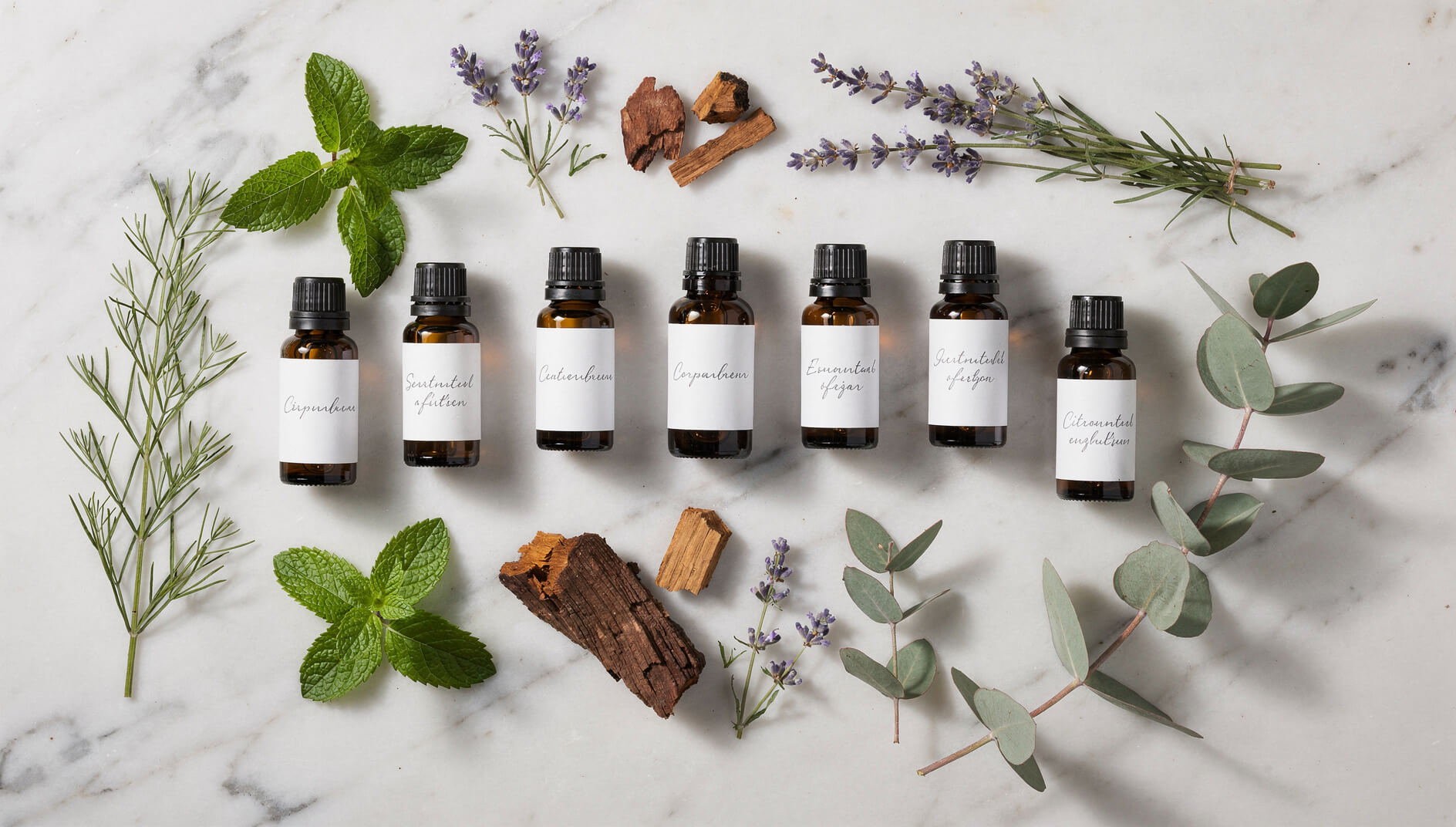
Not all essential oils repel bugs equally. Based on scientific research and practical testing, these ten oils deliver the strongest repellent results:
1. Citronella — The gold standard of natural insect repellents, registered with the EPA since 1948. Its high citronellal content masks human scent signals, making it particularly effective against mosquitoes and gnats. Citronella works best when diffused continuously or applied as a spray. Learn more about citronella’s remarkable benefits.
2. Lemon Eucalyptus — Contains PMD, the only plant-based compound recommended by the CDC for mosquito-borne disease prevention. Studies show it can rival DEET in effectiveness for up to six hours when applied topically.
3. Peppermint — The menthol in peppermint creates a cooling sensation that humans enjoy but insects despise. Research has found it functions as both a repellent and a natural insecticide, particularly effective against mosquitoes, ants, and spiders.
4. Lavender — Beyond its famous calming aroma, lavender contains linalool and linalyl acetate — compounds that repel mosquitoes, moths, and fleas. Its gentle profile makes it one of the safest options for use around children and in bedrooms. Discover whether lavender truly repels mosquitoes.
5. Cedarwood — A powerhouse against moths, ticks, and fleas. The cedrol compound disrupts the pheromone signaling insects rely on for navigation. Cedarwood has been used in closets and storage chests for centuries to protect fabrics from moth damage.
6. Lemongrass — Rich in citral, an aldehyde compound that repels flies, mosquitoes, and gnats. Lemongrass oil also shows antifungal and antibacterial properties, making it a versatile addition to any natural wellness kit.
7. Tea Tree — This Australian native oil contains terpinen-4-ol, which repels flies, mosquitoes, and biting midges. Tea tree also offers antiseptic benefits if you do get bitten, helping soothe irritated skin.
8. Thyme — A 2005 study found that thyme oil is one of the most effective natural insecticides against houseflies. Its thymol compound also deters mosquitoes, ticks, and chiggers.
9. Rosemary — Contains camphor and 1,8-cineole, making it effective against mosquitoes and various garden pests. Rosemary oil is also gentle enough for use in plant sprays to protect your herb and vegetable gardens.
10. Cinnamon — The eugenol in cinnamon bark oil is a potent insect deterrent, particularly effective against ants, cockroaches, and mosquito larvae. A few drops near entry points can help create a natural barrier that keeps crawling insects at bay.

Sign Up to Get Your FREE Essential Oils e-Book Here
How to Use Essential Oils for Bug Repellent
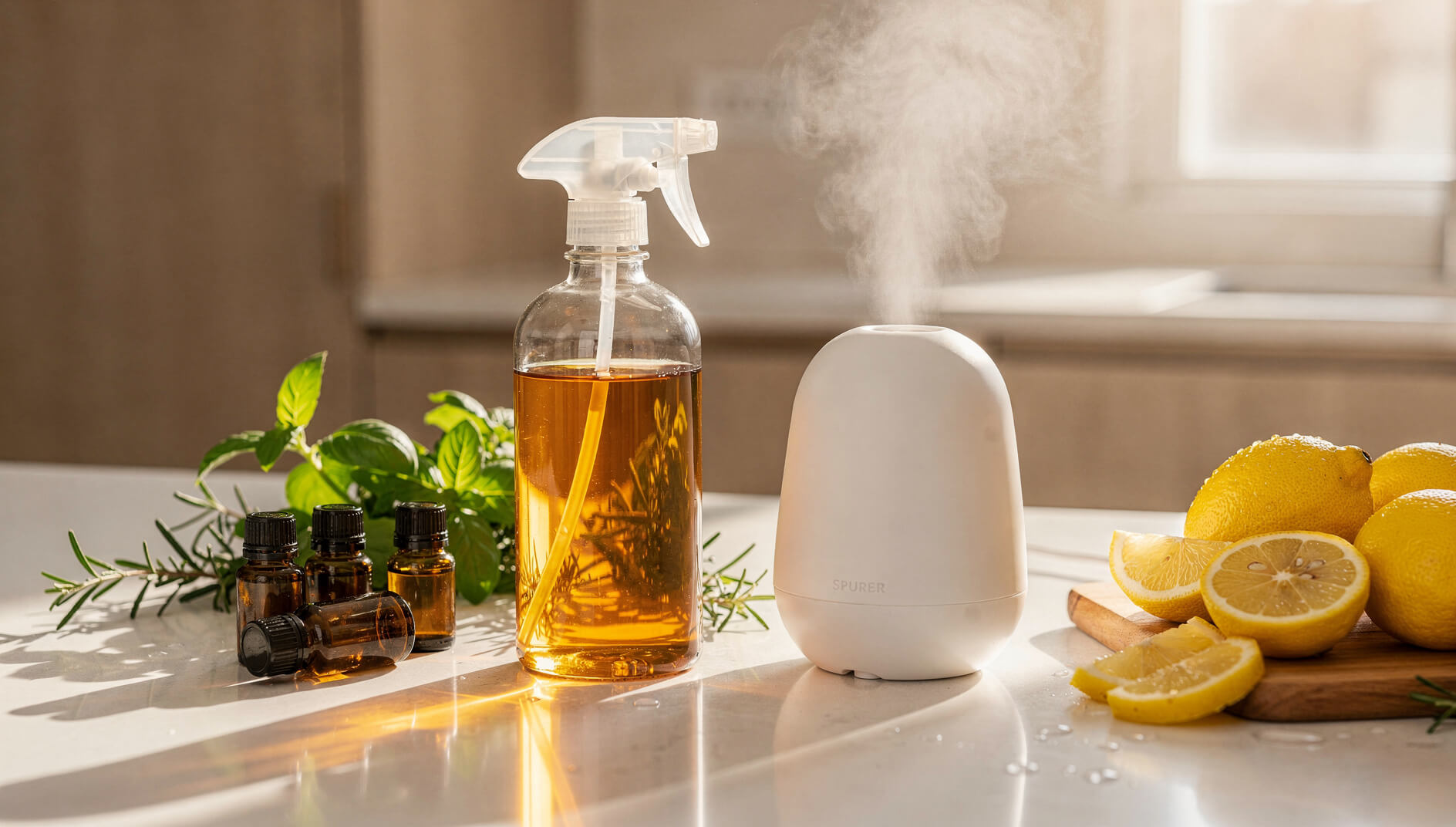
There are three primary methods for using essential oils as bug repellent, each with distinct advantages depending on your situation.
Nebulizing Diffuser Method (Best for Indoor Protection)
This is the most effective hands-free approach for keeping bugs out of your living spaces. A nebulizing diffuser like the Raindrop 3.0 breaks pure essential oil into micro-fine particles and disperses them into the air without water or heat. Because the oil is not diluted, the air carries a higher concentration of the actual repellent compounds — citronellal, menthol, and other active molecules — compared to ultrasonic diffusers that mix oil with water vapor.
Simply add your chosen bug-repellent essential oil to the glass reservoir and let the diffuser run. You get continuous, passive protection without needing to reapply anything to your skin. This is especially valuable in bedrooms at night, nurseries, and kitchens where you want to avoid chemical sprays near food and sleeping areas.
DIY Spray Method (Best for On-the-Go)
Mix essential oils with witch hazel and distilled water in a glass spray bottle for a portable repellent. Apply to exposed skin (avoiding eyes and mouth), clothing, and outdoor furniture. Reapply every two to three hours for best results, since essential oils are volatile and evaporate faster than synthetic alternatives. Check out our complete DIY natural insect repellent guide for more formulations.
Topical Application (Targeted Protection)
Dilute essential oils in a carrier oil (such as jojoba or fractionated coconut oil) at a 2-5% concentration and apply to pulse points — wrists, ankles, and behind the ears. This method provides targeted protection for outdoor activities. Always perform a patch test first, and follow proper essential oil dilution guidelines to avoid skin irritation.
4 DIY Bug Repellent Recipes
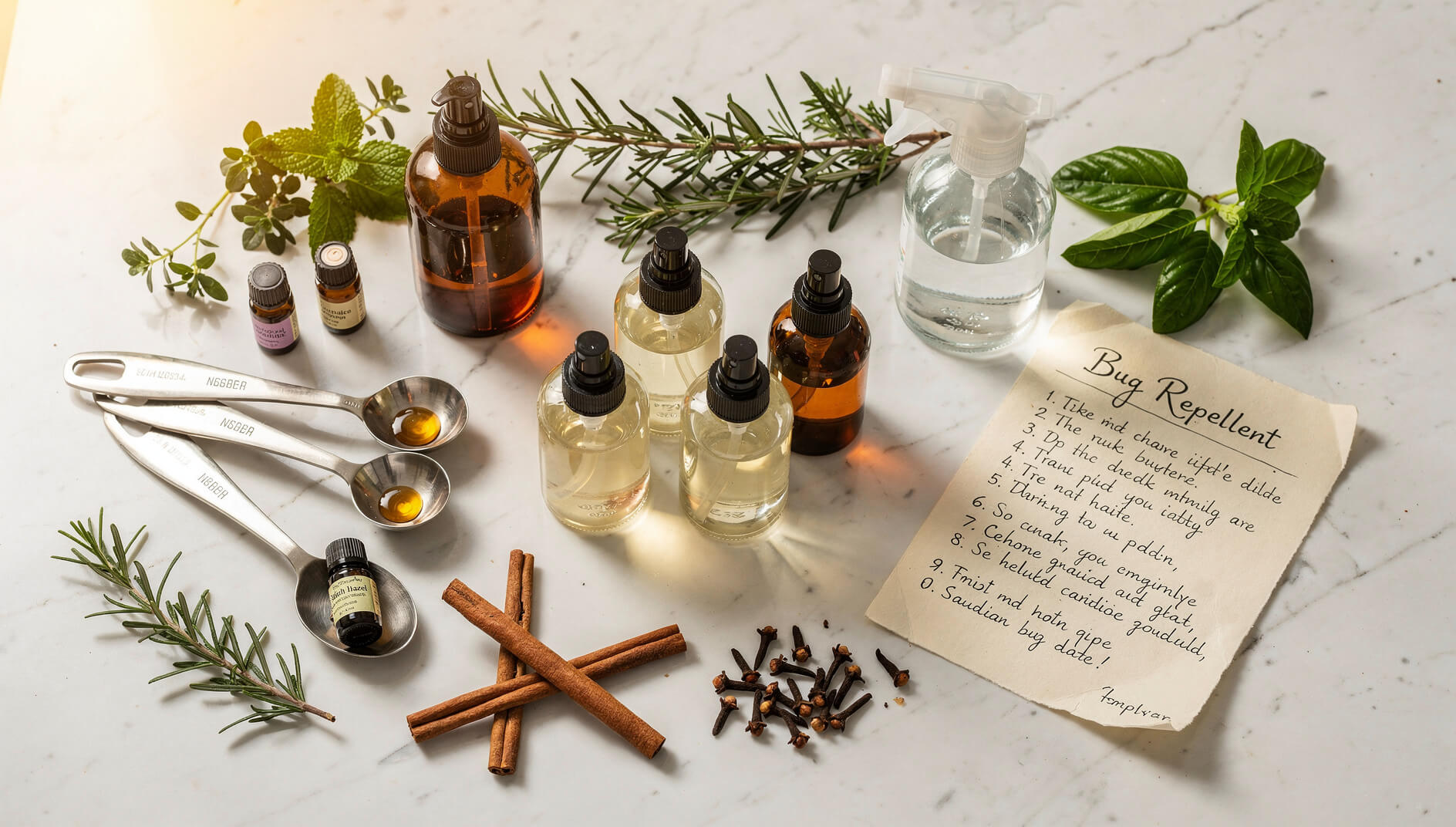
All-Purpose Bug Repellent Spray
This versatile spray works against mosquitoes, flies, ants, and gnats.
Ingredients:
2 oz distilled water
1.5 oz witch hazel
0.5 oz fractionated coconut oil (optional, for skin application)
20 drops citronella essential oil
15 drops peppermint essential oil
10 drops lemongrass essential oil
5 drops tea tree essential oil
Combine all ingredients in a 4 oz glass spray bottle. Shake well before each use. Apply to skin, clothing, or spray around doorways and windows. Reapply every 2-3 hours outdoors.
Mosquito Shield Diffuser Blend
Add this blend to your Radiance nebulizing diffuser for continuous mosquito protection in living rooms and bedrooms.
Blend:
5 drops citronella
3 drops lemon eucalyptus
3 drops lavender
2 drops cedarwood
Ant Barrier Diffuser Blend
Perfect for kitchens and pantry areas where ants tend to gather.
Blend:
5 drops peppermint
4 drops tea tree
3 drops cinnamon
2 drops clove
Fly-Free Kitchen Blend
Keep house flies and fruit flies out of your kitchen with this fresh, clean-smelling blend. Explore more tips on using essential oils against insects.
Blend:
4 drops lemongrass
4 drops rosemary
3 drops thyme
2 drops peppermint
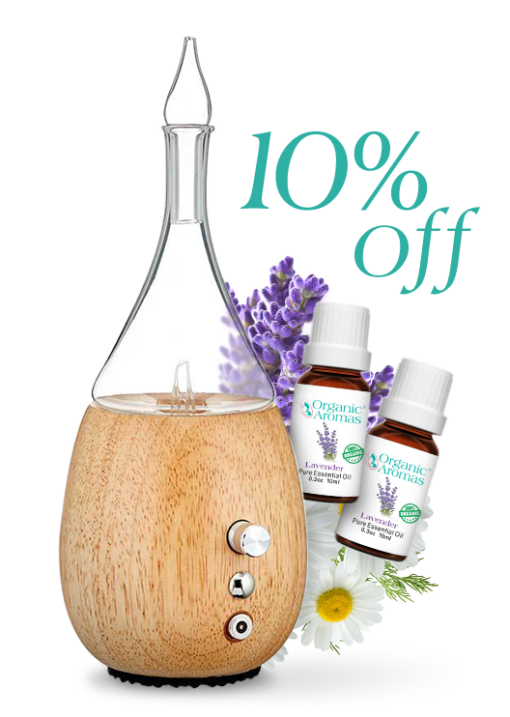
Join Now and Get a Coupon for 10% Off!
Room-by-Room Indoor Bug Defense Plan

One of the smartest strategies for keeping bugs out of your home is to position a nebulizing diffuser in key rooms, each loaded with an oil blend that targets the pests most common to that area. Here is a room-by-room guide:
Entryway & Mudroom: Peppermint + lemongrass. These two powerhouses create a strong scent barrier at the most common entry point for ants, spiders, and flies. A compact diffuser like the Mobile Mini fits perfectly on a hall table.
Kitchen: Citronella + cinnamon + rosemary. The kitchen attracts fruit flies, ants, and pantry moths. These oils deter all three while leaving your kitchen smelling warm and inviting rather than like a chemical factory.
Bedroom: Lavender + cedarwood + lemon eucalyptus. This soothing combination repels mosquitoes and moths while promoting restful sleep — a dual benefit no chemical spray can offer. The Tranquility diffuser is ideal for the nightstand with its whisper-quiet operation.
Living Room: Lemongrass + lavender + tea tree. A broad-spectrum blend that keeps the space comfortable for family while discouraging flies, mosquitoes, and gnats from settling in.
Screened Porch or Patio: Citronella + cedarwood + thyme. For semi-outdoor spaces, use a stronger concentration and combine diffusing with strategically placed spray applications around the perimeter. Read our detailed guide on DIY natural mosquito repellent for outdoor spaces.
Seasonal Bug Repellent Calendar

Different bugs emerge at different times of the year. Rotating your essential oil selection with the seasons ensures you always have the right defense in place.
Spring (March-May): As temperatures rise, mosquitoes and ants wake up. Focus on citronella and lemon eucalyptus for mosquitoes, and peppermint and cinnamon for ants. Learn more about natural recipes to get rid of ants.
Summer (June-August): Peak insect season calls for maximum coverage. Use broad-spectrum blends combining citronella, lemongrass, peppermint, and thyme. This is the time for all-day diffuser use and frequent spray reapplication during outdoor activities.
Fall (September-November): Spiders and stink bugs move indoors seeking warmth. Peppermint and cedarwood are your best allies. Place a few drops of peppermint oil on cotton balls near windows and doorways for extra protection.
Winter (December-February): Pantry moths and overwintering insects are the primary concerns. Cedarwood, clove, and thyme provide excellent protection for closets, pantries, and stored linens. Sachets made with dried lavender and a few drops of cedarwood oil placed in drawers and storage bins work wonders year-round.

Join Our Exclusive Member Club to get Big Discounts!
Safety Guide: Using Essential Oils Around Children, Pets, and Sensitive Skin

While essential oils are a natural alternative to chemical repellents, they still require responsible use — especially around vulnerable family members.
Children: Avoid topical application of essential oils on children under two years old. For older children, use a maximum 1-2% dilution (6-12 drops per ounce of carrier oil). Diffusing is generally the safest method for children — keep the diffuser running for 30-60 minutes at a time with breaks in between. Lavender, cedarwood, and citronella are among the gentlest options for child-friendly spaces.
Pets: Cats are particularly sensitive to essential oils because they lack a key liver enzyme needed to metabolize certain compounds. Avoid using tea tree, citrus oils, cinnamon, and peppermint around cats. For dog-safe options, lavender and cedarwood are generally well-tolerated. Always ensure pets can leave the room where a diffuser is running. Read our comprehensive guide to essential oil safety for animals.
Sensitive Skin: Always perform a patch test before topical application. Apply a diluted drop to the inside of your forearm and wait 24 hours. If any redness or irritation occurs, discontinue use. Pregnant women should consult a healthcare provider before using essential oils topically or inhaling them in concentrated form.
General precautions: Never apply undiluted essential oils directly to skin. Keep all oils out of reach of children. Avoid contact with eyes and mucous membranes. If you experience any adverse reaction, discontinue use and seek medical advice.
Protect Your Home Naturally
Essential oils for bug repellent offer a proven, plant-powered approach to keeping your home and family protected from unwanted insects — without the harsh chemicals found in conventional sprays. From citronella and lemon eucalyptus to peppermint and cedarwood, nature provides a rich toolkit for every bug and every season.
For the most effortless protection, a nebulizing diffuser transforms any room into a bug-free sanctuary. Because nebulizing technology disperses pure, undiluted essential oil — with no water or heat — the air fills with the exact bioactive compounds that insects avoid. It is hands-free, silent, and doubles as gorgeous home decor.
Ready to experience the difference? Explore our collection of handcrafted nebulizing diffusers designed to deliver pure essential oils at their full aromatic potency — and browse our curated selection of 100% pure essential oils to find the perfect bug-repellent blend for your home.