


Best Essential Oils for Protection Against Evil Energies (2026 Guide)
Looking for essential oils for protection? Long before “energy hygiene” became a wellness buzzword, people across every inhabited continent reached for aromatic plants to guard a doorway, cleanse a room, and settle a restless mind. This guide goes past the usual list of five oils to explain why certain aromas earned a protective reputation — the specific compounds inside them, the cultures that burned them for millennia, and the practical, non-woo way to bring them into your home. You will learn the nine best essential oils for protection against negative energy, three tested diffusion blends with exact drop ratios, and why the method of diffusion decides whether you smell the whole plant or a watered-down fraction of it.
Essential Oils vs. Evil: The Ancient Logic of Protective Scent
The idea of using scent for protection is not a modern invention dressed in crystals and sage bundles. It is one of the oldest continuous human practices on record. Frankincense and myrrh moved along the 1,200-mile Incense Route from southern Arabia to the Mediterranean for over a thousand years, valued as highly as gold precisely because temples, tombs, and sickrooms were never without them. What every one of these traditions shares is a bet that a clean, resinous, or herbaceous aroma changes the feeling of a space — and modern aroma science gives us a grounded reason why.
- Aromatic plants used for spiritual protection — frankincense, myrrh, cedarwood, sage, and lavender — are dominated by monoterpenes and sesquiterpenes, the same grounding, air-freshening molecules that give a pine forest or a cedar chest its unmistakable “clean” character.
- Scent is the only sense wired directly into the limbic system, the brain’s seat of emotion and memory, which is why a protective aroma can shift your state before a single conscious thought forms.
- A pure, undiluted aroma delivered by a Nebulizing Diffuser® preserves that full molecular fingerprint — no water, no heat, nothing to dilute the very compounds tradition prized.
In other words, “protection” is not superstition doing all the work. It is a real shift in the emotional weather of a room, produced by real plant chemistry, layered with thousands of years of ritual meaning. Both halves matter, and this guide honors both.
Understanding Essential Oils and Their Protective Chemistry
An essential oil is the volatile, aromatic fraction of a plant, captured through steam distillation, hydrodistillation, or cold CO₂ extraction. “Volatile” simply means the molecules readily leave the liquid and travel through the air to your nose — which is exactly what makes an oil useful for filling and “clearing” a space. The oils most associated with protection tend to be rich in a handful of specific compounds worth knowing by name, because the name tells you what the oil actually does.
- Linalool & linalyl acetate (lavender): the calming duo behind lavender’s ability to soften a tense atmosphere. Our deeper look at the science of lavender oil breaks down why the ratio between them matters.
- α-Pinene (frankincense, cedarwood, cypress, pine): a bright, forest-clean monoterpene linked in diffusion studies to feelings of alertness and spatial “freshness.”
- Cedrol (cedarwood): a warm, grounding sesquiterpene that anchors a blend and gives cedar its long-lasting, protective base note.
- Menthol (peppermint): the sharp, clarifying molecule that reads to the brain as “awake, alert, boundaried.”
Understanding the chemistry is what separates a genuinely useful protection ritual from an expensive-smelling placebo. When you know that frankincense owes its grounding character to α-pinene and boswellic constituents, you can choose it deliberately rather than by folklore alone.
Extraction method matters here too. Steam distillation captures the lighter, brighter top notes; CO₂ extraction pulls a fuller, more resin-true profile from woods and gums like frankincense and myrrh. Neither is “better” universally, but it explains why two bottles of the same oil can smell noticeably different — and why sourcing pure, single-origin oils rather than synthetic “fragrance” versions is non-negotiable if you want the real protective chemistry rather than a perfume approximation of it.
Sign Up to Get Your FREE
e-Book Here…
Mythical and Historical Contexts
Nearly every culture that had access to aromatic plants built a protection practice around them, and the overlap is striking. Ancient Egyptians blended kyphi, a temple incense of up to sixteen ingredients including frankincense and myrrh, burned at dusk to guard the transition into night. Cedar of Lebanon was so prized for purification that it lined temples and sarcophagi. In the Mediterranean and later across Europe, bundles of dried herbs — rosemary, bay, sage — were burned to “clear” a home after illness or misfortune, a practice whose logic survives in the modern smoke ceremony.
The through-line is not that these people were naive. It is that they noticed something reproducible: certain scents reliably changed how a room felt and how people behaved inside it. Cedarwood shows up again and again for the same reason it shows up in modern grounding evening blends — it smells stable, dry, and reassuring, the olfactory equivalent of solid ground.
The Science Behind “Protective” Aromas
You do not have to believe in literal evil spirits to get real value from these oils. The measurable mechanism is psychological and physiological, and it is well documented. Scent enters through the olfactory bulb and connects, within a fraction of a second, to the amygdala and hippocampus — the brain regions that govern emotional response and memory. This is why a familiar protective aroma can produce an almost instant sense of safety: you are not imagining the calm, you are triggering it.
- Controlled aromatherapy research has repeatedly associated inhaled lavender with lower self-reported tension and a calmer autonomic state — the physiological signature of feeling “safe.”
- Citrus and mint aromas such as lemon and peppermint are consistently rated as brightening and clarity-promoting, which is the felt sense people describe as “clearing” a heavy room. Our guide to bright, cleansing citrus and grass oils explores this family in depth.
- Frankincense has a long research and traditional-use record as a grounding, breath-slowing aroma — see our detailed look at frankincense essential oil.
The honest framing: essential oils do not cast out demons, and we make no claim that they treat or prevent any condition. What they do — measurably — is reshape your emotional environment, and a calmer, more grounded nervous system is exactly what most people mean when they say they feel “protected.”

Sign Up to Get Your FREE Essential Oils e-Book Here
Top Essential Oils for Protection Against Evil Energies
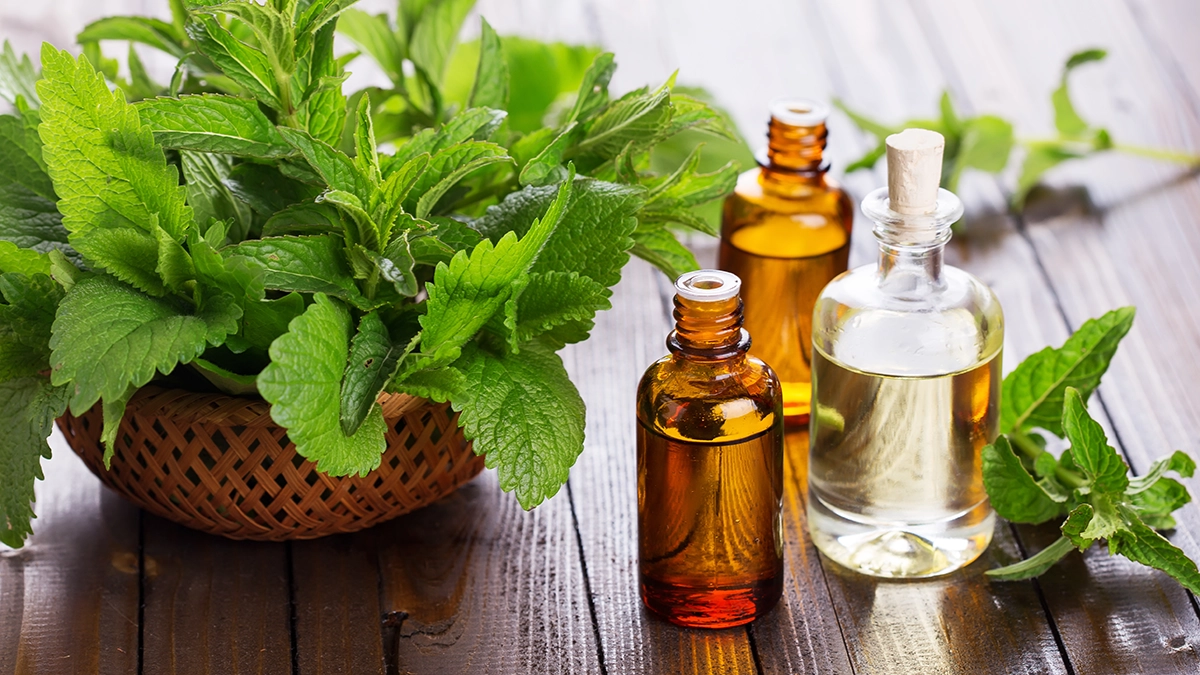
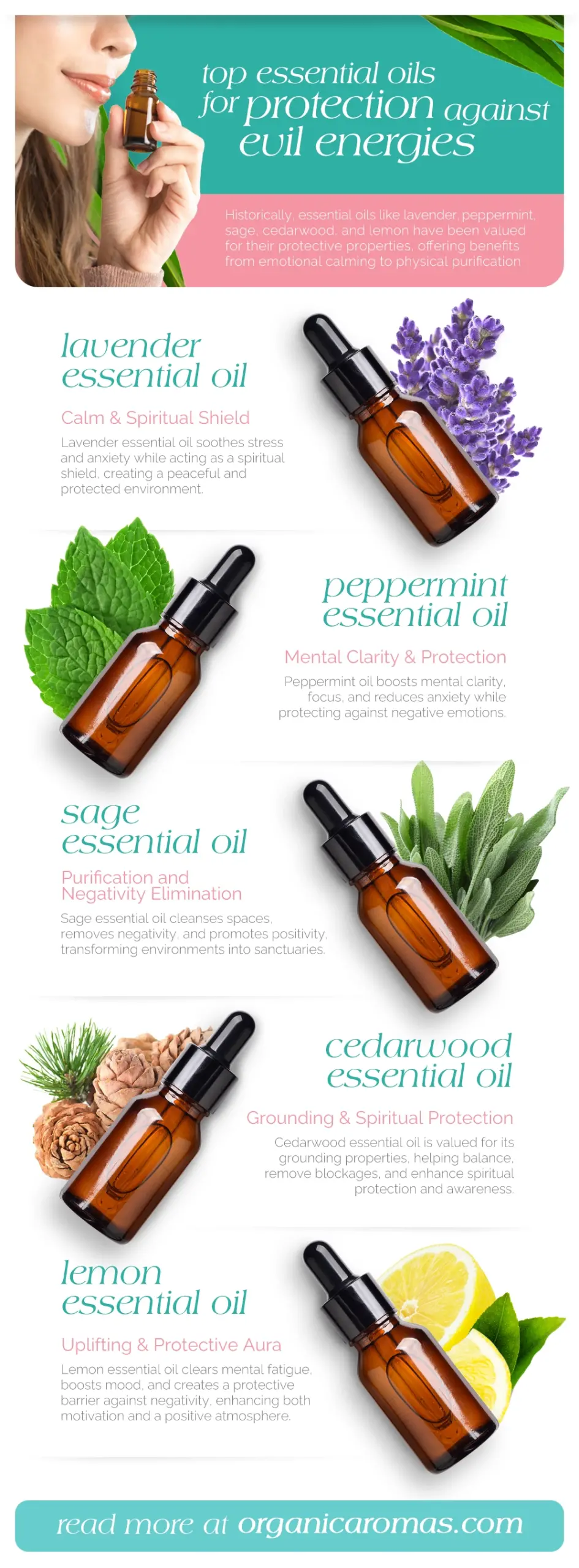
Here are the nine oils that earn their place in a protection toolkit — each with the compound that drives it and the mood it creates. The first five are the classic core; the last four are the resinous, historical heavyweights most “top five” lists leave out.
- Lavender — the peacemaker. High in linalool; softens tension and creates a sense of safe retreat.
- Sage (clary or common) — the purifier. Herbaceous and clearing; the aromatic heart of the smoke-cleansing tradition. Note: keep sage oils for diffusion and topical dilution, not ingestion.
- Cedarwood — the anchor. Cedrol-rich; grounding, stabilizing, and long-lasting as a base note.
- Peppermint — the sentinel. Menthol-sharp; promotes alertness and a sense of drawn boundaries.
- Lemon — the brightener. Limonene-forward; lifts and “opens” a stagnant-feeling room.
- Frankincense — the temple resin. α-pinene and boswellic constituents; the definitive grounding, breath-deepening aroma of sacred spaces for 5,000 years.
- Myrrh — frankincense’s ancient companion. Warm, earthy, resinous; traditionally paired with frankincense for a complete protective smoke.
- Rosemary — the guardian herb. Camphoraceous and clarifying; burned across Europe to cleanse homes after illness.
- Vetiver — the deep root. Heavy, smoky, and profoundly grounding; a single drop tethers an entire blend.
Think of these nine in two tiers. The classic five — lavender, sage, cedarwood, peppermint, and lemon — are the everyday workhorses: widely available, easy to blend, and gentle enough to diffuse daily. The four resins and roots — frankincense, myrrh, rosemary, and vetiver — are the heavyweights history leaned on hardest, deeper and more tenacious in a blend, and the ones that turn a pleasant room scent into something that feels genuinely ceremonial. A well-built protection blend almost always pairs a bright top note from the first tier with a grounding base from the second.
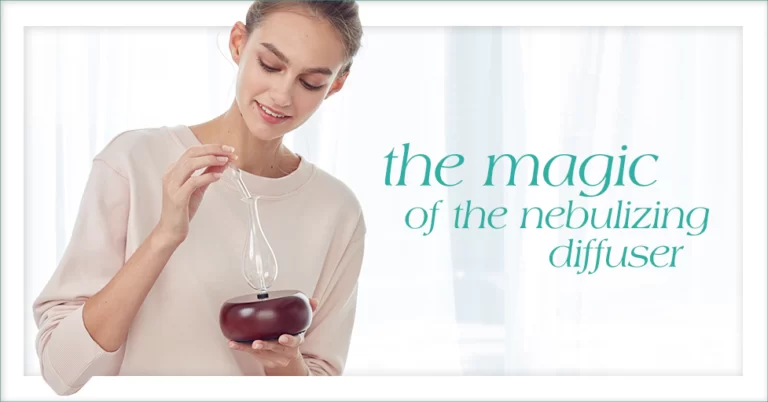
The catch that folklore never mentions: the delivery method decides how much of this chemistry you actually experience. Heat-based burners and water-based ultrasonic units alter or dilute the aroma. A Nebulizing Diffuser® uses only pressurized air and Bernoulli’s Principle to atomize pure, undiluted oil into a fine mist — no water, no heat — so the frankincense you smell is the whole frankincense, monoterpenes intact. If you want these oils to perform the way tradition intended, explore the handcrafted Nebulizing Diffuser® Collection built from real wood and medical-grade Pyrex glass.
How to Use Essential Oils for Protection
There are three reliable ways to put these oils to work, from most to least aromatic reach. For a “protective” atmosphere that fills a whole room, diffusion is unmatched — and a waterless Nebulizing Diffuser® gives the strongest, purest projection because it disperses neat oil rather than a heavily diluted water vapor. For a full comparison of methods, see our cold-air diffusion buyer’s guide.
- Diffusion — the room-clearing default. Run a Nebulizing Diffuser® in intervals (a few minutes on, several off) so the scent stays present without becoming overwhelming.
- Roll-on blends — personal protection you carry. Dilute to roughly 2–3% (about 12–18 drops per 10 mL of carrier oil) for pulse points.
- Room & linen mists — a quick reset. Distilled water, a splash of witch hazel, and 15–20 drops of your blend per 100 mL.
Three tested protection blends (by drop ratio)
- The Threshold (doorways, entryways): 3 drops frankincense + 2 drops cedarwood + 1 drop lemon. Grounding with a clean, bright lift.
- The Clearing (after conflict or illness): 3 drops sage + 2 drops rosemary + 1 drop peppermint. Herbaceous and decisively fresh.
- The Sanctuary (bedroom, meditation corner): 3 drops lavender + 2 drops cedarwood + 1 drop vetiver. Deep, calm, and enveloping.
Start with the total drop count your device recommends and adjust to taste — these ratios scale cleanly up or down while keeping their character. A useful rule: build every blend as roughly three parts base or grounding oil, two parts middle, one part bright top note. That 3-2-1 skeleton keeps a protection blend from smelling either too sharp or too heavy, and it is the same proportional logic professional perfumers use to make a scent feel “finished.”

Join Our Exclusive Member Club to get Big Discounts!
Combining Essential Oils with Other Spiritual Practices
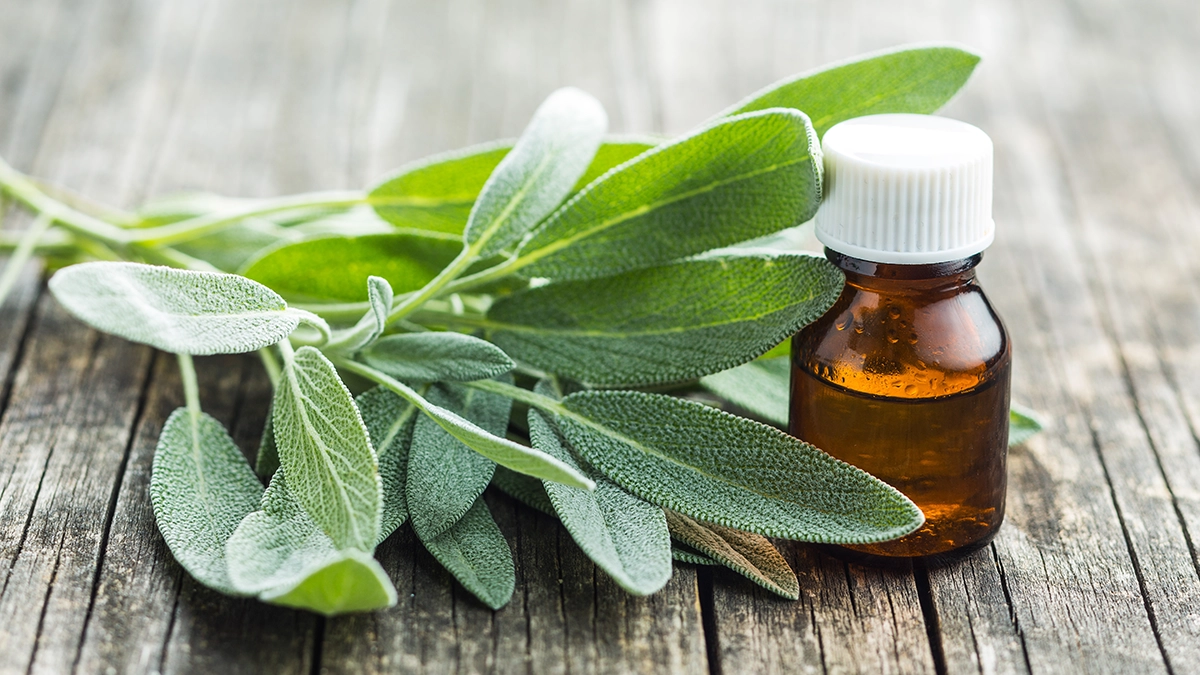
Essential oils rarely work alone in a protection practice — they are the aromatic layer of a larger ritual, and that layering is part of why they feel effective. Pairing a scent with a deliberate action gives your nervous system two reinforcing signals at once: the aroma and the intention behind it.
- Meditation & breathwork — diffuse frankincense or vetiver while you settle; the grounding aroma becomes an anchor your breath returns to.
- Aromatherapy massage — a diluted protective blend turns bodywork into a full reset. See our complete guide to aromatherapy massage.
- Intention-setting & journaling — run a signature blend only during this practice so the scent itself becomes a cue for a protected, focused state.
Sage Smudging Ceremony — and a Cleaner Modern Alternative
The smoke ceremony — burning dried herbs to “clear” a space — is the most recognizable protection ritual in the Western world, and it carries deep cultural weight, particularly in Indigenous traditions where it should be approached with respect and never appropriated casually. The practical downside is real, though: combustion produces particulate smoke, lingering residue, and a smoke-alarm-triggering haze many households and rentals simply cannot use.
This is where diffused sage essential oil offers a gentler, smoke-free way to invoke the same clearing intention. Instead of setting a bundle alight, you disperse pure clary or common sage oil through a Nebulizing Diffuser® — the herbaceous, purifying aroma without the ash, the fire risk, or the alarm. It is not a replacement for the ceremony’s cultural meaning, but for everyday “reset the room” purposes, it is cleaner, safer, and endlessly repeatable.
Holistic Approaches to Spiritual Protection
The most resilient sense of protection rarely comes from one object or oil. It comes from an environment you have deliberately tended — light, sound, scent, and habit working together. Essential oils are the aromatic thread that ties the others together, but they are strongest inside a broader routine.
- Light — warm, low lighting at day’s end signals safety to the nervous system and pairs naturally with a grounding diffusion.
- Sound — a bell, chime, or simple silence to mark a transition; scent makes the shift multisensory.
- Scent — a consistent protective aroma becomes a learned cue. Over weeks, the smell alone can summon the calm.
- Habit — the same short ritual, repeated, is what turns a pleasant scent into a genuine anchor.
For the scent layer to do its job, purity and consistency matter — which is where the app-controlled Smart Nebulizing Diffuser® earns its place, letting you schedule gentle, waterless diffusion so your protective aroma is present the moment you need it.

Join Now and Get a Coupon for 10% Off!
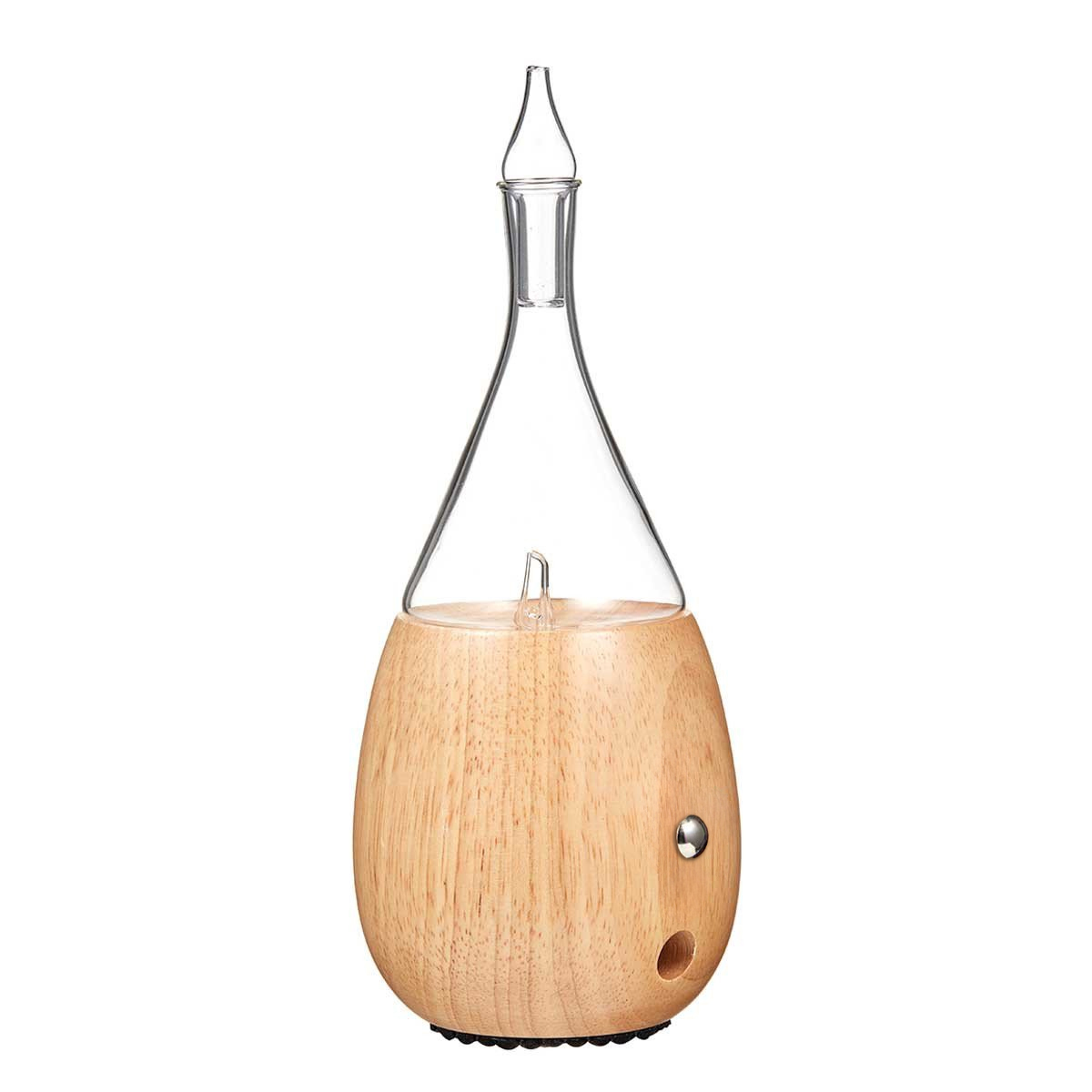
Diffuse Pure, Undiluted Protection
Deliver frankincense, cedarwood, and sage exactly as tradition intended — no water, no heat, no dilution. Handcrafted from real wood and medical-grade Pyrex glass.
Common Mistakes When Using Essential Oils for Protection (and the Fixes)
After years of customer questions, the same handful of missteps come up again and again. Each one quietly undercuts the very effect people are chasing — and each has a simple fix.
- Mistake: buying “fragrance oil” instead of essential oil. Synthetic fragrance oils mimic the smell but contain none of the plant compounds behind the grounding or clearing effect. Fix: look for a Latin botanical name and “100% pure essential oil” on the label.
- Mistake: diffusing continuously all day. Olfactory fatigue sets in within about 15–20 minutes — you stop consciously smelling the aroma, then overcompensate by adding more oil. Fix: diffuse in intervals. A Nebulizing Diffuser® with a built-in on/off cycle keeps the scent perceptible without waste.
- Mistake: heating the oil. Candle burners and warmer plates degrade the lighter monoterpenes first — exactly the α-pinene and citrus notes that read as “clearing.” Fix: choose a no-heat, waterless method that atomizes oil cold.
- Mistake: over-diluting in a water-based unit. Ultrasonic diffusers disperse a few drops in a large water reservoir, so the actual oil concentration reaching you is tiny. Fix: for a genuinely protective, room-filling aroma, use neat oil in a nebulizing unit.
- Mistake: ignoring pets and sensitive housemates. Some oils are not suitable around cats, dogs, or during pregnancy. Fix: ventilate, diffuse intermittently, and research any oil before using it around vulnerable household members.
None of these are exotic problems — they are the ordinary reasons a protection ritual feels underwhelming. Correct them and the oils finally do what tradition promised.
Guard Against Evil Using Essential Oils
Protection, in the end, is less about banishing something out there and more about deliberately cultivating a space — and a state of mind — that feels safe, clear, and yours. The nine oils in this guide have earned their reputation across thousands of years and, increasingly, across the aroma-science literature, not because they perform magic but because they reliably reshape how a room feels. Choose the oils whose chemistry matches the mood you want, blend them with intention, and diffuse them purely with a Nebulizing Diffuser® so nothing is lost between the plant and your breath. Do that consistently, and you will have built something more durable than any single ritual: an environment that steadies you every time you walk into it.
Frequently Asked Questions
What is the most powerful healing oil?
There is no single “most powerful” oil — power depends on your goal. For grounding and a sense of protected calm, frankincense is the traditional heavyweight thanks to its α-pinene content and 5,000-year record of ritual use. For softening tension, lavender is unmatched. We avoid framing any oil as a medical treatment; their strength is in shaping mood and atmosphere, especially when diffused purely and undiluted.
What are essential oils?
Essential oils are the concentrated, volatile aromatic compounds captured from plants through steam distillation, hydrodistillation, or cold CO₂ extraction. Because these molecules readily disperse into the air, they are ideally suited to diffusion — filling a room with the plant’s full aromatic character.
How do essential oils protect against negative energies?
They work by reshaping your emotional environment. Aroma molecules travel straight to the limbic system, the brain’s emotion and memory center, so a grounding or clearing scent can shift a room’s felt atmosphere and your own sense of calm within seconds. That shift — not any supernatural claim — is what most people experience as “protection.”
What are some effective ways to use essential oils for protection?
Diffusion through a waterless Nebulizing Diffuser® is the most effective for whole-room atmosphere, because it disperses pure undiluted oil rather than diluted water vapor. Roll-on blends (diluted to 2–3% in a carrier oil) offer personal, portable protection, and room-and-linen mists provide a quick reset.
Can essential oils be combined with other spiritual practices?
Absolutely — and they are most effective when they are. Pairing a signature protective aroma with meditation, breathwork, intention-setting, or a cleansing routine gives your nervous system reinforcing cues, so over time the scent itself becomes an instant anchor for a grounded, protected state.






Very interesting