

Cold Air Diffuser: The Buyer’s Guide to Pure-Oil Aromatherapy (and Why Material Matters)
Walk into a high-end spa, a boutique hotel lobby, or a yoga studio that gets the details right, and the first thing you notice is the air itself. Not perfume. Not laundry detergent. Just a quiet, clean wave of something botanical that does not announce itself. Nine times out of ten the device responsible is a cold air diffuser: a small machine that disperses essential oils without heat and without water, using nothing but moving air. Cold air diffusion is the format the wellness industry has quietly settled on for the simple reason that everything else, ultrasonic mist, scented warmers, candle plug-ins, alters the oil before it ever reaches your nose.
That is the broad story. The specifics are where the category fractures. “Cold air diffuser” describes a method, not a product, and the spectrum runs from $40 plug-in fragrance pumps that use synthetic blends, all the way to handcrafted Nebulizing Diffusers® that atomize 100% pure essential oil into 1 to 3 micron particles. Same category label. Two very different machines. Two very different chemistries hitting your lungs.
This guide is the one we wish existed when we started building cold air diffusion technology for Organic Aromas more than twelve years ago. We will explain the actual mechanism (with the physics in plain English), separate the marketing categories from the engineering categories, and give you a checklist for buying one that lasts a decade rather than a season. We will also be honest about where the trade-offs live, because they do exist, and a $200 device deserves an honest review more than a glowing one.
What a Cold Air Diffuser Actually Is (The Mechanism in Plain English)
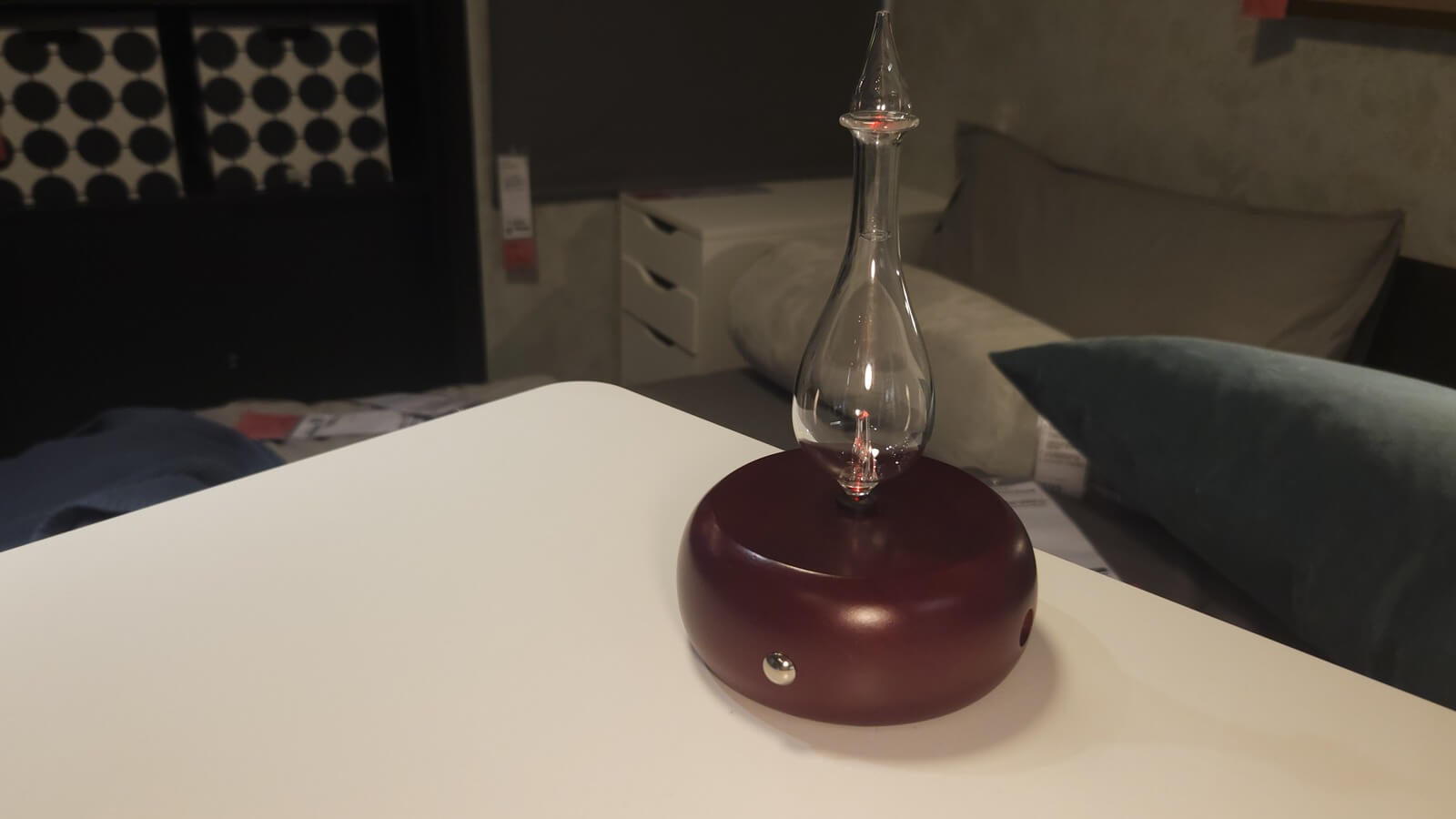
A cold air diffuser is any device that disperses essential oil into the room through air pressure alone. There is no heating element. There is no water tank, no ultrasonic plate, no wick. A small electric pump pushes air, and that moving air picks up oil and shears it into a fine aerosol. The “cold” in cold air diffuser is not a setting; it is the design philosophy. Nothing in the machine ever warms the oil. Essential oils are volatile organic compounds, meaning their aromatic molecules evaporate at fairly low temperatures, and many of those molecules degrade chemically when heated even modestly. A cold air system uses kinetic energy, the motion of air, instead of thermal energy. The chemistry of the oil that leaves the device is the same chemistry that went in.
Within the cold air family, there are two real engineering subtypes. The first is a pump-and-cartridge system, which a lot of commercial scenting brands use. Air from a small compressor flows past a sealed cartridge of pre-blended fragrance, picking up molecules of scent as it passes. These systems handle large square footage and are easy to install, but the “oils” inside the cartridges are typically perfumer-crafted blends, sometimes with synthetic notes, designed for ambient scent rather than therapeutic use. The second subtype is a nebulizing diffuser, which uses an entirely different physics principle to atomize 100% pure essential oil directly, with no carrier and no blend. Both qualify as cold air diffusers. Only the second delivers true, unadulterated aromatherapy. We will get to that distinction in the section below on the Nebulizing Diffuser® and what makes it different.
There is a third group floating around the marketplace that we should mention so you can recognize it: portable battery-powered “cold air” sticks that look like vape pens. These are usually closer to passive evaporators than true cold air pumps, and they tend to be the lowest-performing category. They work for a desk drawer, not a room.
Why “No Heat, No Water” Actually Matters for Your Oils
The reason cold air diffusion exists as a category at all comes down to two boring-sounding chemistry facts that turn out to matter a lot in practice. The first is that heat changes essential oils. The second is that water dilutes them.
Take lavender, the most-bought aromatherapy oil in the world. Its therapeutic signature is a specific ratio of two molecules, linalool and linalyl acetate, which together account for roughly 60 to 80% of a quality lavender oil. Linalyl acetate is an ester, and esters hydrolyze (break apart) in the presence of water and heat. Put lavender oil on a heated wax warmer and within an hour you have lost most of your linalyl acetate to oxidation. What you smell after that point is a more acrid, less rounded version of the same plant, because the oil’s molecular profile has shifted. The same warmer that releases the scent also wrecks it. (For a deeper dive on the lavender chemistry specifically, our linalool to linalyl acetate ratio piece goes into the numbers.)
Water dilution is a softer problem but a real one. In an ultrasonic device, you drop five to ten drops of oil onto a tank of water. The oil floats on the surface (oils and water do not mix). Every time the ultrasonic plate vibrates, it throws a mist of mostly water carrying trace oil into the air. You get a visible cloud, but the dose of actual essential oil reaching your nose is small relative to what is in the tank, and the oil sitting on the surface oxidizes much faster than it would in a sealed reservoir. You also add humidity to the room, which is a feature for dry climates and a bug for tropical ones.
Cold air diffusion sidesteps both problems. No heat, so no degradation. No water, so no dilution and no humidity. What leaves the device is essentially identical to what you put in. For someone using essential oils for any therapeutic purpose, that purity is the entire reason the format exists.
Sign Up to Get Your FREE
e-Book Here…
The Nebulizing Diffuser®: The Gold Standard of Cold Air Diffusion
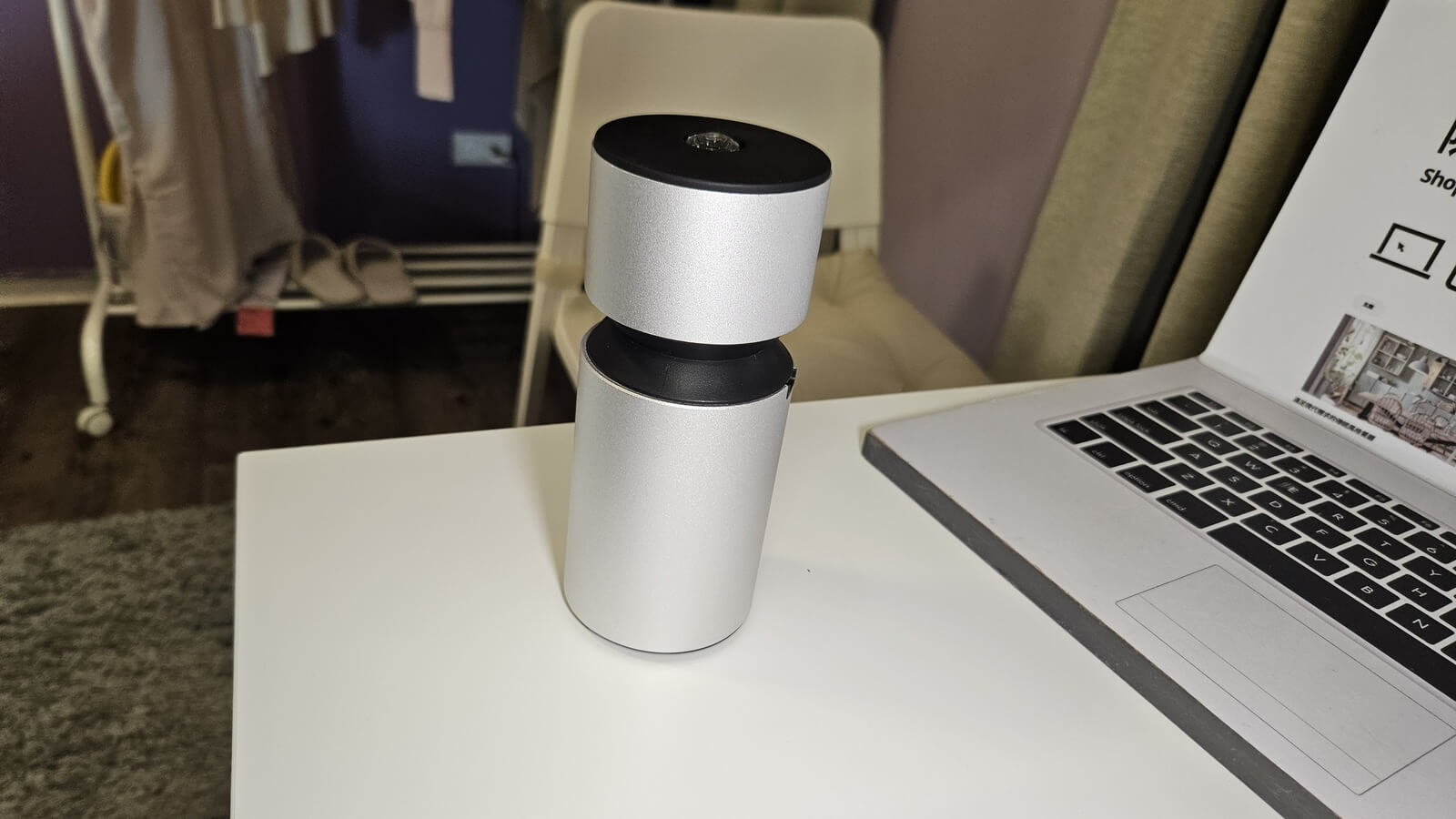
If cold air diffusion is the category, the Nebulizing Diffuser® is the cleanest expression of it. The mechanism is named after the 18th century Swiss mathematician Daniel Bernoulli, whose work on fluid dynamics describes what happens when air moves through a constriction. Push air fast enough through a narrow channel and the pressure inside that channel drops. A second channel sitting in a reservoir of oil, opening into the same low-pressure zone, will pull oil up by suction alone. When the two streams meet at the nozzle, the high-velocity air shears the oil into a fine aerosol. That is the entire trick. No heating element, no water, no wick, no electronics in contact with the oil.
Inside an Organic Aromas Nebulizing Diffuser, a small pump pushes air through a hand-blown glass venturi at roughly 8 to 12 meters per second. The venturi sits inside a sealed Pyrex reservoir holding 5 to 10 ml of pure essential oil. The pressure drop at the nozzle pulls oil up a second glass channel and atomizes it on contact with the airflow. The resulting particles measure about 1 to 3 microns in diameter, small enough to stay airborne on convection currents for hours and small enough that when inhaled they travel deeper into the respiratory tract than the 30 to 50 micron droplets a water-based diffuser throws out.
The single most important consequence of this mechanism, the one that separates it from every pump-and-cartridge cold air system on the market, is that it uses 100% pure essential oil. No perfumer-crafted blend. No fragrance carrier. No glycol. Just the oil. Lavender goes in, lavender comes out. That matters for the same reason it matters for any therapeutic product: you are dosing yourself with a specific phytochemistry, and adding a synthetic carrier or a marketing blend changes both what you breathe in and what your body does with it. (We wrote a piece on the Bernoulli’s Principle mechanism in more depth if you want the airflow physics with diagrams.)
The trade-off, because there is always one, is consumption. A nebulizing system uses more oil per session than a misting system, because every drop is being aerosolized rather than diluted in a tank of water. The honest math: a quality Nebulizing Diffuser run at moderate intermittent settings (3 minutes on, 7 minutes off) consumes roughly 1 to 2 ml of oil per hour. That is real money over time, which is why the smart engineering choice is intermittent run cycles rather than continuous output, and why oil selection actually matters more for a nebulizer owner than for an ultrasonic owner.
Cold Air vs Ultrasonic vs Heat vs Reed: The Honest Comparison
The four most common diffusion formats in homes today each work on a different principle. Each has a legitimate use case. The honest comparison is the one most product pages will not give you.
Ultrasonic mist diffusers
A ceramic disc vibrates at roughly 2 million times per second beneath a tank of water with a few drops of essential oil on top. The vibration breaks surface tension and tosses a cool, visible mist into the air. Good for small to medium rooms. Adds humidity, which is a feature in dry climates. Caveat: the oil sits on the water surface for hours and oxidizes faster than it would in a sealed reservoir, the mist is mostly water with trace oil, and over time the tank picks up a sticky residue that has to be cleaned weekly. Best entry-level option for someone who wants light scent and does not need therapeutic-grade delivery. See our deeper write-up on the nebulizing vs ultrasonic comparison if you want the side-by-side.
Heat diffusers and wax warmers
A heating element warms a small dish of oil (sometimes mixed with wax). Scent fills a small space quickly. Cheap, simple, and the worst option if you care about oil chemistry. Heat denatures the volatile compounds in essential oil, so what you smell after thirty minutes is the heavier base notes of the oil with the brighter top notes burned off. Aromatherapeutically, you are smelling a damaged version of the oil. Useful for ambient scent in a powder room. Not useful for anything more serious.
Reed diffusers
Passive. No electricity. Reeds sit in a bottle of oil mixed with a carrier solvent (usually a glycol). Capillary action pulls oil up the reeds and it evaporates from the tops. Pleasant in a closet or a powder room. Output is unregulated, fades slowly over weeks, and the carrier solvent is almost always non-aromatic, which is to say the scent strength per ml of product is much lower than any electric format. Aesthetic object more than diffusion device.
Cold air pump-and-cartridge systems
Commercial scenting brands like Aroma360 and AromaTech use this format. Air is pumped past a sealed cartridge of pre-blended fragrance. Coverage is large (500 to 10,000 square feet), the mist is dry and residue-free, and they integrate cleanly with HVAC. The trade-off is the cartridges, which are perfumer-crafted blends, sometimes with synthetic notes added for “longevity,” not pure single-source essential oils. Excellent for branding a hotel lobby. Wrong tool if you want pure aromatherapy with a single oil you trust.
Nebulizing cold air diffusers
The purest format. 100% pure essential oil, atomized cold, 1 to 3 micron particles, no carrier. Best therapeutic delivery per ml of oil. Higher consumption rate. Smaller per-unit coverage than commercial cold air systems (a Nebulizing Diffuser handles 400 to 800 square feet, not 5,000). The right tool for a bedroom, a meditation room, an office, or any space where the goal is the oil itself rather than ambient branding.
Join Now and Get a Coupon for 10% Off!
What to Look for in a Premium Cold Air Diffuser
Most cold air diffuser buying guides are product roundups. This is not one of them. The checklist below is the one you would actually use if you were buying a device that you expected to keep for a decade.
Material in contact with the oil
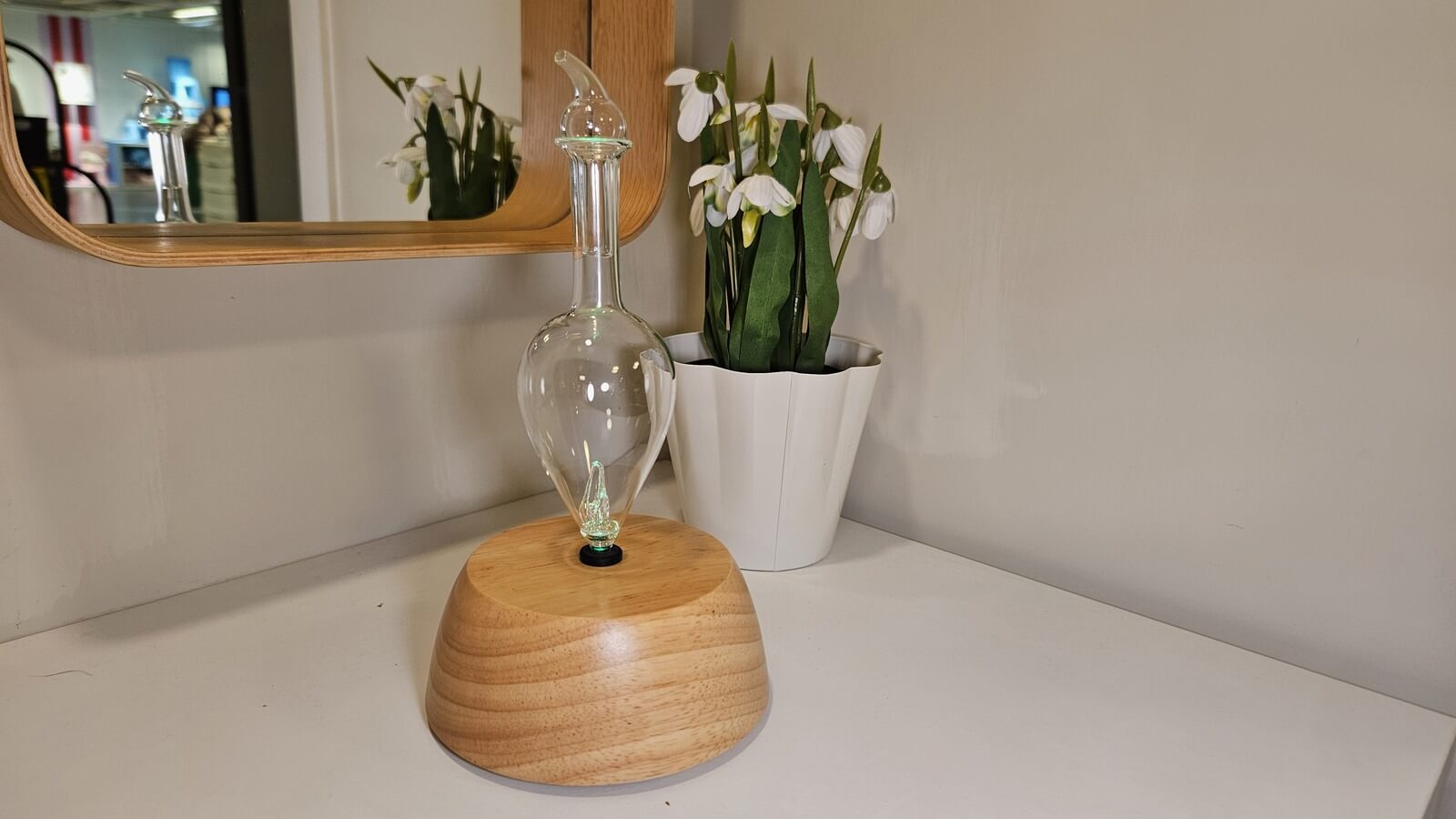
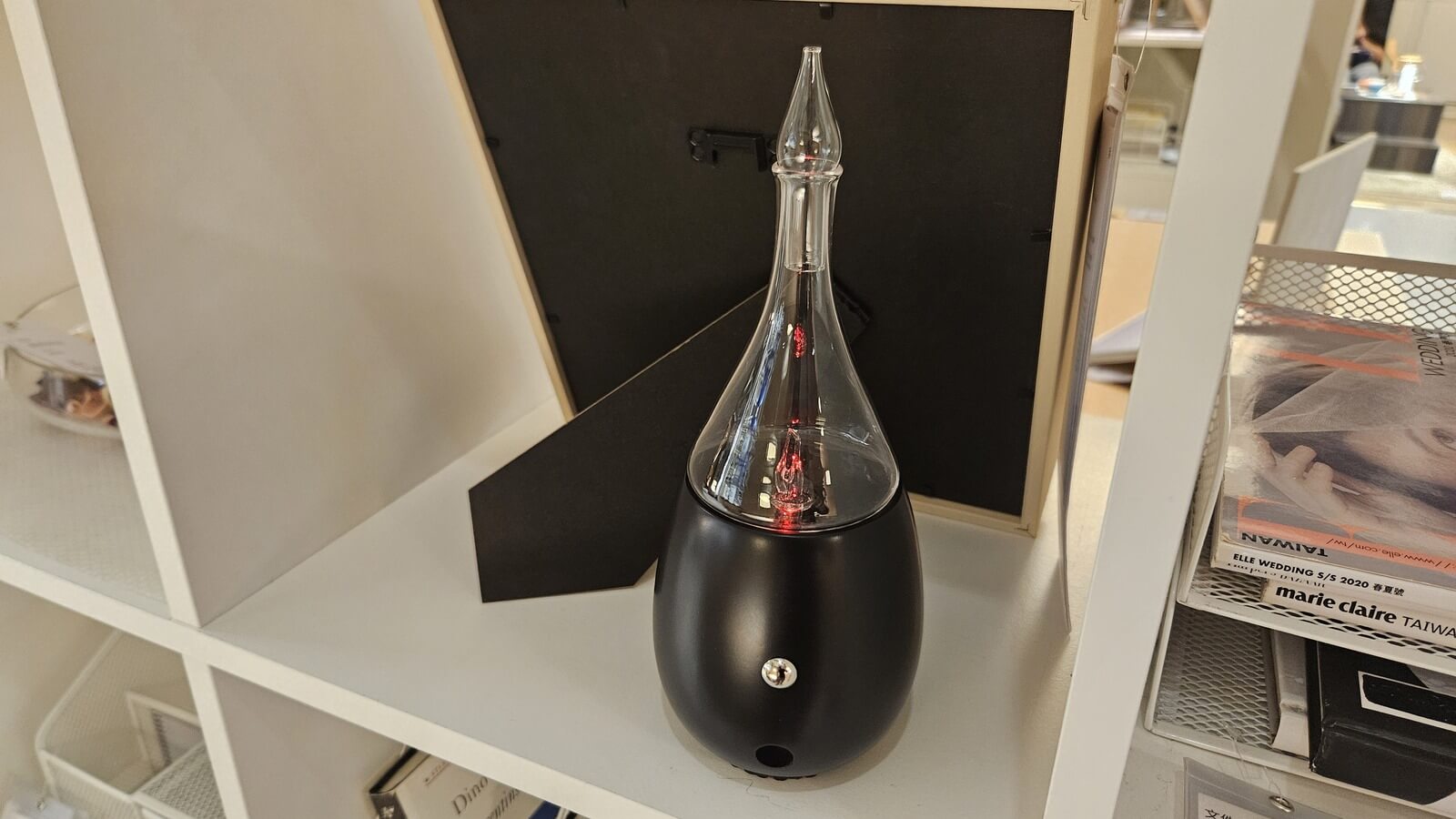
This is the single most overlooked factor. Essential oils are powerful natural solvents. Many of them, citrus oils, peppermint, eucalyptus, contain terpenes (limonene, linalool, menthol) that are aggressive enough to degrade most plastics over time. A cold air diffuser built from plastic in the oil-contact zone will leach plasticizers into your oil and into the air, and the device itself will go cloudy, brittle, or warped within a year or two. The right materials are inert: real hardwood for the base (visually warm, naturally antimicrobial, and unaffected by the oils that splash onto it during a refill) and medical-grade Pyrex glass for the reservoir and venturi (chemically inert, thermally stable, and easy to clean with alcohol). If the spec sheet does not tell you what the oil touches, assume plastic and walk away.
Coverage area, honestly stated
Industry “coverage” claims tend to be optimistic. A useful rule of thumb: a Nebulizing Diffuser noticeably scents a 400 to 800 square foot space at moderate intermittent settings. Commercial pump-and-cartridge systems do larger areas because they run continuously and use blended fragrance designed for ambient diffusion. If a device claims 2,000 square feet for a single-oil nebulizer, it is overpromising.
Noise level
The pump matters more than people realize. A whisper-quiet diffuser sitting on a nightstand is a different product than a fan-driven unit you can hear from the kitchen. Look for spec sheets that publish dB ratings. Anything under 30 dB is bedroom-safe.
Intermittent cycle control
A good cold air diffuser runs in pulses, not continuously. The standard is 3 minutes on, 7 minutes off, which lets the scent saturate the room and your olfactory system reset between bursts. (Without the reset, your nose adapts to the scent within minutes and you stop noticing it at all.) Look for at least two timer modes.
Cleanability
You will need to clean the reservoir regularly. Pyrex glass cleans in two minutes with rubbing alcohol and a swab. Plastic does not, because the alcohol degrades the plastic over time. Easy maintenance is a downstream benefit of choosing inert materials.
Warranty and service
A real warranty (12 months or longer) signals that the manufacturer has confidence in the design. Cheap diffusers tend to come with 30-day returns and no warranty, which is its own form of disclosure. For context, our roundup of the six Nebulizing Diffusers we make walks through which model fits which space and use case.
Best Essential Oils to Use in a Cold Air Diffuser
Because a cold air diffuser, and especially a nebulizing one, dispenses pure undiluted oil at therapeutic concentrations, the oils you choose matter more than they do with any other diffusion format. A short list of reliable single oils and pairings, drawn from twelve years of customer feedback on what people actually keep buying.
Solo stars
- Lavender (Lavandula angustifolia). The most-asked-for oil in our shop. Roughly 35 to 45% linalool, 30 to 45% linalyl acetate. Supports calm and restful sleep. The default choice for bedrooms and the second-to-last oil before you turn the lights off.
- Bergamot (Citrus bergamia). Bright, slightly floral citrus. High in limonene and linalyl acetate. Excellent for an early evening wind-down where you want lift without stimulation.
- Frankincense (Boswellia carterii). Resinous, grounded, slightly sweet. Pairs with breathwork and meditation. Long-burning in a nebulizer because the heavier resin compounds keep diffusing after the top notes fade.
- Sweet orange (Citrus sinensis). The most universally liked oil we sell. High in limonene. Pair this with a difficult morning and a quiet room.
- Eucalyptus globulus. Use sparingly in a nebulizer. The 1,8-cineole content is therapeutic in small doses and overwhelming in large ones. A single 30-second burst is usually enough.
Reliable pairings
- Lavender + bergamot (3:2). Evening wind-down classic. The bergamot keeps the lavender from feeling sleepy too early.
- Frankincense + sweet orange (1:2). Grounded but bright. Excellent for a Sunday afternoon or a meditation space.
- Eucalyptus + peppermint (1:3). Use only briefly. A clean, brisk pairing for a stuffy room or a focus session. Avoid in bedrooms.
- Cedarwood + lavender (2:3). Warmer and woodier than lavender alone. Good for autumn evenings.
For more pairing ideas at therapeutic ratios, our immune-supportive blend and our four-stage bedtime protocol for sleep walk through specific recipes by use case.

Join Our Exclusive Member Club to get Big Discounts!
Frequently Asked Questions About Cold Air Diffusers
Is a cold air diffuser the same as a nebulizer?
A nebulizer is a subset of cold air diffusers. All nebulizers are cold air diffusers, but not all cold air diffusers are nebulizers. The category “cold air diffuser” includes pump-and-cartridge commercial scenting systems (which use blended fragrance) and nebulizing diffusers (which use 100% pure essential oil). If purity matters to you, a Nebulizing Diffuser is the version you want.
Does a cold air diffuser leave residue on furniture?
A well-designed one does not. The aerosol particles are small enough (1 to 3 microns for a nebulizer) that they stay suspended in air and dissipate without settling on surfaces. The exception is over-dosing the room: if you run a nebulizer continuously instead of in cycles, oil density rises and you can get a faint film on glass and mirrors. Intermittent cycling solves this.
Can you use any essential oil in a cold air diffuser?
In a nebulizing diffuser, yes, with one caveat: very thick or resin-heavy oils (myrrh, vetiver, sandalwood) can clog the narrow glass channels over time. Diluting them with a thinner carrier oil is the usual fix, or running a quick alcohol clean between sessions. In a pump-and-cartridge cold air system, no, because those systems are designed for proprietary cartridges.
How long should you run a cold air diffuser?
For a nebulizing format, 15 to 30 minutes in intermittent mode (3 on, 7 off) is plenty for an average bedroom or living room. Your olfactory system adapts within minutes anyway, so longer runs deliver diminishing returns. Save the oil.
Is a cold air diffuser safe around children and pets?
Cold air diffusion is mechanically safe (no heat, no water spillage). The chemistry is the variable. A handful of essential oils are not appropriate around small children or pets, and pets in particular have very different metabolic responses to certain oils than humans do. Use diluted single oils, run shorter sessions, and ventilate the room. When in doubt, default to mild oils like lavender, frankincense, and sweet orange, and avoid stronger oils like tea tree, eucalyptus, and peppermint around very young children or any pet.
Final Thoughts: Buying One You Will Keep for a Decade
Cold air diffusion is the right category for anyone serious about essential oils. Within it, the choice that matters most is purity. A pump-and-cartridge system is a fragrance machine. A Nebulizing Diffuser is an aromatherapy device. They share a mechanism but not a purpose.
If you remember three things from this guide, remember these. Choose materials that will not degrade in contact with concentrated oils (real wood, medical-grade Pyrex glass, no plastic in the oil-contact zone). Choose intermittent cycle control over raw output. And choose pure single oils you can trace to a species and a country of origin, because the format only delivers what you put in it. The best cold air diffuser is the one that respects the oils you put in it and lasts long enough to become part of how your home actually smells.