


Essential Oils Safe for Pregnant Women: A Method-First Aromatherapy Guide
If you are expecting and wondering which essential oils safe for pregnant women actually means in practice, the honest answer is that no oil carries a blanket guarantee, and the smartest place to start is a conversation with your own obstetrician or midwife. This guide is general aromatherapy education, not medical advice. It is written to help you ask better questions, understand why certain oils raise concern, and use scent in your home in the most conservative way possible.
Here is the part most articles skip: with pregnancy, the single biggest safety lever is usually not which oil you reach for, it is how you use it. Swallowing an oil, applying it undiluted to skin, and enjoying a faint ambient scent in a ventilated room are three completely different exposures. Throughout this guide we lean on what the published toxicology literature actually says, and we keep returning to one rule: when in doubt, ask your provider first. For a practitioner-informed companion piece, see our round-up of expert perspectives on essential oils and pregnancy.
Two things set this guide apart from the usual checklist. First, when we say an oil is one to avoid, we tell you the exact constituent and the percentage range driving the concern, sourced from the peer-reviewed toxicology literature, so you can reason about oils you encounter that are not on any list. Second, we treat delivery method as a first-class safety decision rather than an afterthought, because for ambient use it often is the decision.
Why Essential Oil Safety Is Different When You’re Pregnant

Essential oils are not gentle dilutions. They are some of the most concentrated plant chemistry you can buy. A single drop can represent the volatile compounds of a surprising amount of plant material, which is exactly why they smell so vivid and why caution scales up during pregnancy. “Natural” is not a synonym for “risk free.” Many of the compounds discussed later in this guide are entirely plant derived and still appear in the reproductive toxicology literature.
Pregnancy changes the equation in three concrete ways. First, your sense of smell often sharpens dramatically, a phenomenon called hyperosmia. A scent you adored last month can suddenly trigger queasiness, and that aversion is meaningful information, not fussiness. Second, your body is doing the extraordinary work of building another human, and the developing fetus does not metabolize compounds the way an adult does. Third, the placenta is selective but not an absolute barrier, so the precautionary principle is the right default.
Hyperosmia deserves a closer look because it is so practical. Shifting hormone levels in early pregnancy are widely linked to a heightened, sometimes unpredictable sense of smell, and one long-standing hypothesis frames this as protective: a sharper nose may steer an expectant mother away from things her body would rather she avoid. You do not need to settle the science to use the takeaway. If a diffused oil that you have always loved suddenly smells wrong, the correct response is to stop and ventilate, not to push through. Your scent preferences during pregnancy are a usable safety instrument.
None of this means you must banish scent from your home for nine months. It means the bar for care is higher, and that informed, modest use beats both fear and carelessness. If you want a broader walkthrough of practical do’s and don’ts, our guide to using essential oils during pregnancy pairs well with the chemistry focus below. Above all, treat the advice here as a starting point for a discussion with the professional who knows your specific pregnancy.
Why the Method Matters More Than the Oil
Most of the alarming case reports in the scientific literature involve ingestion, swallowing essential oils, often in meaningful amounts. Pregnancy is never the time to take oils internally without direct medical supervision. The next riskiest route is undiluted or heavy topical application, because skin absorbs lipophilic compounds efficiently and pregnancy can make skin more reactive. Ambient inhalation of a faint scent in a ventilated room sits at the conservative end of that spectrum, which is why it is the method most aromatherapy educators discuss first for expectant mothers.
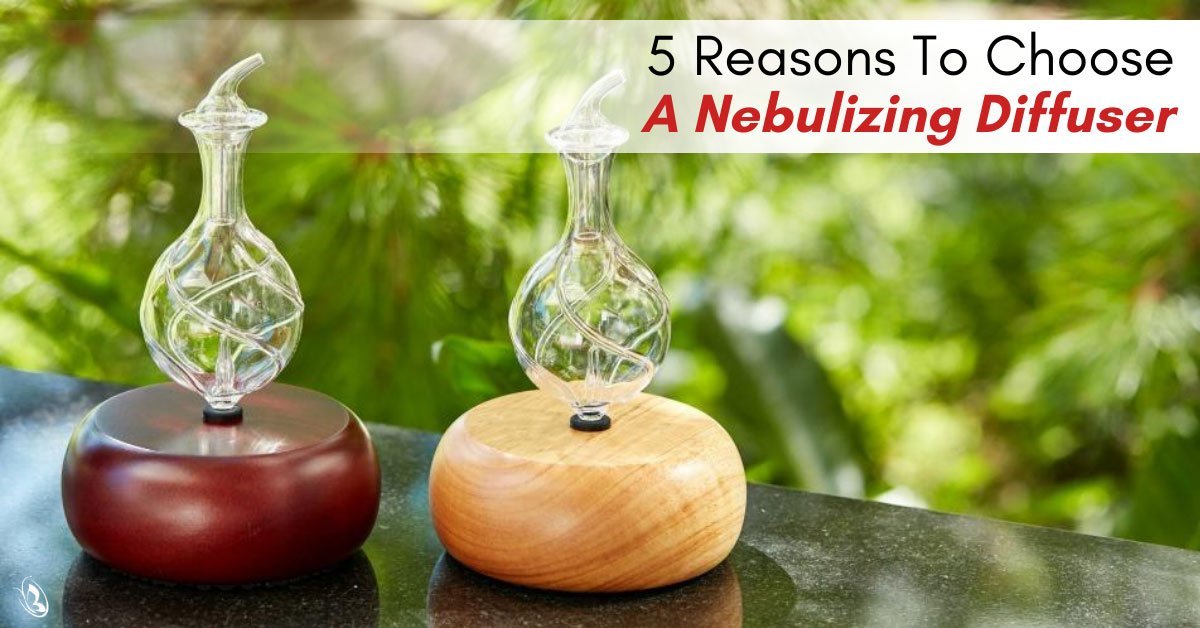
This is where delivery technology genuinely matters. A Nebulizing Diffuser® uses Bernoulli’s principle to atomize pure oil into a fine micro-mist using only a stream of air. No water, no heat. That is not a marketing flourish, it has two safety-relevant consequences. Heat-based units can degrade delicate oil constituents and change what you are actually inhaling, and water-based ultrasonic units add humidity and can disperse a heavier, less controllable load. We break the physics down in detail in our explainer on how Bernoulli’s principle delivers pure essential oils without heat or water.
The practical advantage for pregnancy is control. Because nebulizing output is potent, you need very little, and a short burst followed by a long pause keeps the ambient concentration low and easy to clear by opening a window. Compare that to a heated or ultrasonic unit left running for hours in a closed room, which is the opposite of conservative. For the full picture of how this category works, our complete guide to nebulizing diffusion is a good next read once you have provider sign-off.
It is worth being precise about why heat and water are not neutral choices here. Warming an oil can shift its volatile profile, so the blend you carefully selected is not necessarily the blend you end up inhaling. Ultrasonic units suspend oil in a water mist, which raises room humidity and tends to deliver a heavier, harder-to-titrate load that lingers. Neither is automatically dangerous in a ventilated room, but pregnancy is exactly the situation where you want the most predictable, lowest, most easily stopped exposure. Atomizing pure oil with air, then cycling it off, gives you that predictability. Dose, in other words, is not a vague idea. It is the concentration in the air multiplied by the minutes you breathe it, and both factors are things you should be able to keep small on purpose.
Sign Up to Get Your FREE
e-Book Here…
Essential Oils Safe for Pregnant Women: The Generally Gentle List

No reputable source can hand you a list of oils that are guaranteed safe for every pregnancy. What aromatherapy literature does offer is a set of oils that are more commonly considered gentle for brief, well-ventilated ambient diffusion, used sparingly, and only with your provider’s blessing. Treat this as a shortlist to discuss, not a permission slip:
- Lavender (true lavender, Lavandula angustifolia)
- Sweet orange, mandarin, and tangerine
- Lemon
- Ginger
- German or Roman chamomile
- Frankincense
- Neroli and petitgrain
- Sandalwood
- Ylang ylang (use lightly, the aroma is intense)
- Cardamom
A note on the evidence, because it is often overstated. Mayo Clinic Health System points out that lavender and rose oils have been studied for relaxation during labor, where a familiar calming scent can help a person recall a relaxed state. That is a narrow, supervised context. It is not the same as a claim that diffusing these oils treats any pregnancy symptom, and we are not making that claim. Many expectant mothers simply enjoy a softly scented, calm room, which is reason enough. If lavender is your choice, our piece on the real science behind lavender oil explains why source quality and delivery change the result.
Single oils beat blends here. A blend stacks several constituent profiles on top of each other and makes it far harder to identify what your body reacted to if something feels off. One well-tolerated oil, used faintly, keeps the variables countable. Before a first session, it is reasonable to do a brief scent check: pass the closed bottle near your nose for a moment rather than diffusing a whole room, and notice your honest reaction before committing to it.
Two caveats matter more than the list itself. Trimester first: many practitioners avoid all essential oils during the first trimester, the organogenesis window when fetal organs are forming, and reintroduce only gentle oils later with approval. Individual variation second: your pregnancy, history, and sensitivities are unique, so an oil that is fine for a friend may not be right for you. The list above is a conversation starter for your obstetrician or midwife, nothing more.
The Oils to Avoid, and the Chemistry Behind Why
Most articles give you an “avoid” list with no reasoning. The reason is worth knowing, because it is specific molecules, not the plant’s reputation, that drive the concern. A 2021 review by Dosoky and Setzer in the International Journal of Molecular Sciences (“Maternal Reproductive Toxicity of Some Essential Oils”) maps the main offenders. Here is the constituent-level picture competitors hand-wave past:
- Pennyroyal: dominated by pulegone, roughly 61 to 82 percent in North American pennyroyal. A classic, well-documented abortifacient. Avoid entirely.
- Wintergreen: almost entirely methyl salicylate, around 97 to 99.5 percent in some species. High doses are flagged as teratogenic.
- Sweet birch: roughly 90 percent methyl salicylate, classed as reproductively toxic for the same chemical reason as wintergreen.
- Sage (Dalmatian): camphor (about 7 to 50 percent) plus alpha-thujone (about 13 to 48 percent), an embryotoxic combination.
- Tansy, wormwood, and mugwort: thujone rich, with wormwood also carrying sabinyl acetate. Described as neurotoxic and embryo-fetotoxic, wormwood as an abortifacient.
- Parsley seed: apiole, reported as high as 11 to 67 percent depending on source, with abortifacient activity.
- Basil (estragole chemotype): estragole at roughly 73 to 87 percent, flagged as potentially carcinogenic.
- Nutmeg: safrole, methyleugenol, and myristicin, associated with reduced fertility and potential toxicity.
- Aniseed: high (E)-anethole, noted for reproductive hormone modulation.
- Camphor-rich oils generally (feverfew, ho leaf camphor chemotype, Spanish lavender, white wormwood): camphor is neurotoxic at sufficient exposure.
Standard practitioner avoid lists extend the same logic to clary sage, rosemary, cinnamon bark, clove, hyssop, rue, thuja, tarragon, and, on many lists, peppermint, because of similar reactive or stimulant constituents. The point is not to memorize botany. It is that “plant derived” tells you nothing about reproductive safety, the specific chemistry does, and that chemistry is exactly why ingestion and undiluted skin contact are off the table during pregnancy. Our broader essential oil diffuser safety primer covers the household side of the same caution. When a constituent appears on a toxicology list, the safe move is simple: leave that oil out and ask your provider before reconsidering.
One more thing the lists never tell you: what to do if you have already used one of these. Try not to spiral. A brief, incidental ambient exposure is a very different situation from repeated ingestion or undiluted skin use, which is what most concerning case reports involve. The constructive steps are the same regardless: stop using the oil now, air out the space, write down what it was and roughly how and how much you used, and tell your obstetrician or midwife so they can advise on your specific situation. Honest information helps your provider far more than guilt does.

Join Our Exclusive Member Club to get Big Discounts!
A Conservative Diffusion Routine for Pregnancy

Assuming your provider has signed off on a specific gentle oil, the routine below is built to keep ambient exposure as low and controllable as possible. The guiding idea is low and slow, never continuous and concentrated:
- Get explicit provider approval for the specific oil first, every time.
- Use one well-tolerated single oil, not a heavy multi-oil blend.
- Diffuse only in a well-ventilated room, never a small closed space, and never enclosed in a car.
- Keep sessions short. Many practitioners suggest brief bursts of roughly 10 to 15 minutes with the room aired out, followed by a long pause, rather than hours of continuous output.
- Do not run continuous diffusion overnight in a closed bedroom.
- Use the lowest output setting your device allows.
- Stop immediately at any aversion, headache, or nausea. Pregnancy hyperosmia means a once-loved scent can suddenly repel you. That is your body talking, listen to it.
- Never ingest oils, and avoid undiluted skin application, during pregnancy.
This is precisely where a Nebulizing Diffuser® with smart, scheduled control earns its place. Because you can program short, intermittent cycles instead of a constant stream, the low-and-slow rule stops depending on willpower and becomes the default. The Raindrop Smart Nebulizing Diffuser® runs pure oil with no water and no heat and lets you set brief timed intervals, which is exactly the conservative pattern this section describes. If you would rather compare the full handcrafted range first, our overview of the handcrafted Nebulizing Diffusers® we make lays them side by side. Whatever device you use, the routine, not the gadget, is what keeps exposure modest.
Think a little past the bump, too. Other people share your air, so check that a partner or household member is comfortable with a scent before you run it, and keep diffusion out of shared spaces if anyone objects. After the birth, the calculus shifts again: newborns and young infants are far more sensitive than adults, and the common guidance is to keep essential oil diffusion well away from the nursery and to revisit the whole topic with your pediatrician. The conservative habits you build now translate directly into that next stage.
Essential Oils Safe for Pregnant Women: Quick Answers
Are any essential oils completely safe during pregnancy?
No source can promise that. The responsible framing is that some oils are more commonly considered gentle for brief, ventilated ambient diffusion, used sparingly, and only with provider approval. Method and dose matter as much as the oil itself.
Is diffusing essential oils safe while pregnant?
Ambient inhalation is the most conservative route compared with ingestion or undiluted skin use, but it is still not automatically fine. Keep it faint, brief, ventilated, intermittent, and provider approved.
Which essential oils should I avoid during pregnancy?
Pennyroyal, wintergreen, sweet birch, sage, tansy, wormwood, mugwort, parsley seed, the estragole chemotype of basil, nutmeg, and aniseed are commonly flagged, along with clary sage, rosemary, cinnamon bark, clove, hyssop, rue, and often peppermint, due to specific reactive constituents.
Can I diffuse lavender while pregnant?
Lavender is among the oils most often described as gentle, and it has been studied for relaxation around labor. That is not a treatment claim. Use it lightly, briefly, ventilated, and only after your provider agrees.
What about the first trimester?
The first trimester is the most cautious window because fetal organs are forming. Many practitioners avoid all essential oils during this period and reintroduce only gentle options later with approval. Ask your provider before using anything.
Why does a scent I loved suddenly bother me?
Pregnancy commonly heightens the sense of smell, called hyperosmia. A previously pleasant aroma can become unpleasant or nauseating. Treat that reaction as a clear signal to stop and ventilate the room.
Are “pregnancy safe” blends sold online actually safe?
A label is not a clearance. Some marketed blends still contain constituents on caution lists, and labels rarely disclose chemotype or percentages. Read the full botanical ingredient list, compare it against the oils to avoid above, and confirm with your provider rather than trusting the marketing.
Is it safe to diffuse around my newborn after birth?
Newborns and young infants are considerably more sensitive than adults. The common guidance is to keep essential oil diffusion away from the nursery and infant sleep areas entirely and to raise any aromatherapy plans with your pediatrician first.

Join Now and Get a Coupon for 10% Off!
The Bottom Line
The phrase essential oils safe for pregnant women is best understood as a process, not a list. There is no universally safe oil, but there is a clearly safer approach: defer to your obstetrician or midwife, favor faint ambient scent over ingestion or undiluted skin contact, respect the chemistry that puts certain oils off limits, and keep every session brief, ventilated, and intermittent. Used that way, a softly scented home can stay part of your comfort through pregnancy without guesswork.
If you do choose to diffuse with provider approval, the delivery method is part of the safety story. A no-water, no-heat Nebulizing Diffuser® with scheduled intermittent cycling makes the conservative routine the path of least resistance, which is exactly what you want when the stakes are this high.
Keep the through-line in mind: provider first, method second, oil third, and your own nose as the final check at every session. Get those in order and the question of essential oils safe for pregnant women stops being a source of anxiety and becomes a short, manageable set of habits.
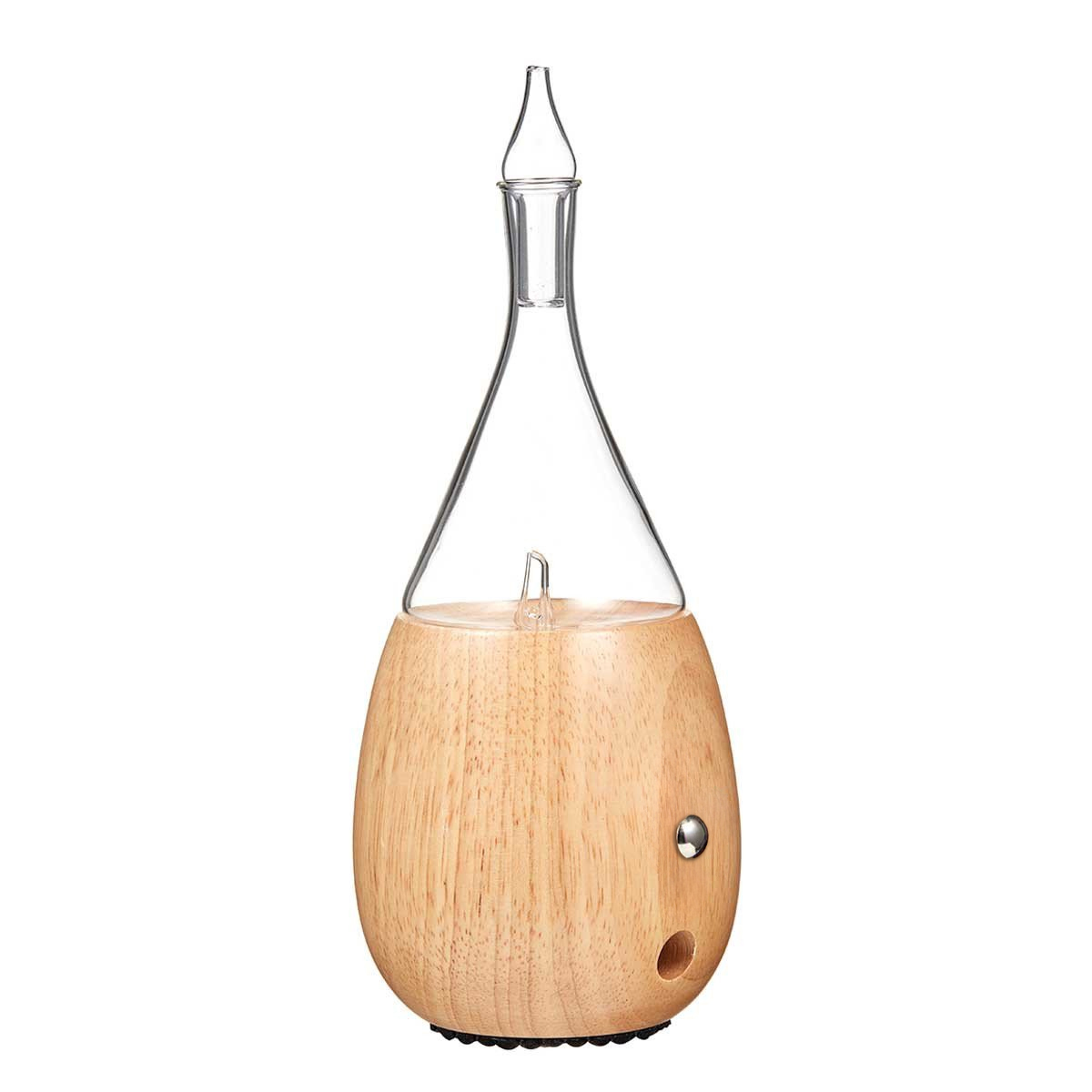
Diffuse Pure Oil, the Conservative Way
No water. No heat. Just pure essential oil and air, with scheduled intermittent cycles that make brief, low-dose ambient diffusion effortless. Handcrafted from real wood and medical-grade Pyrex glass.