

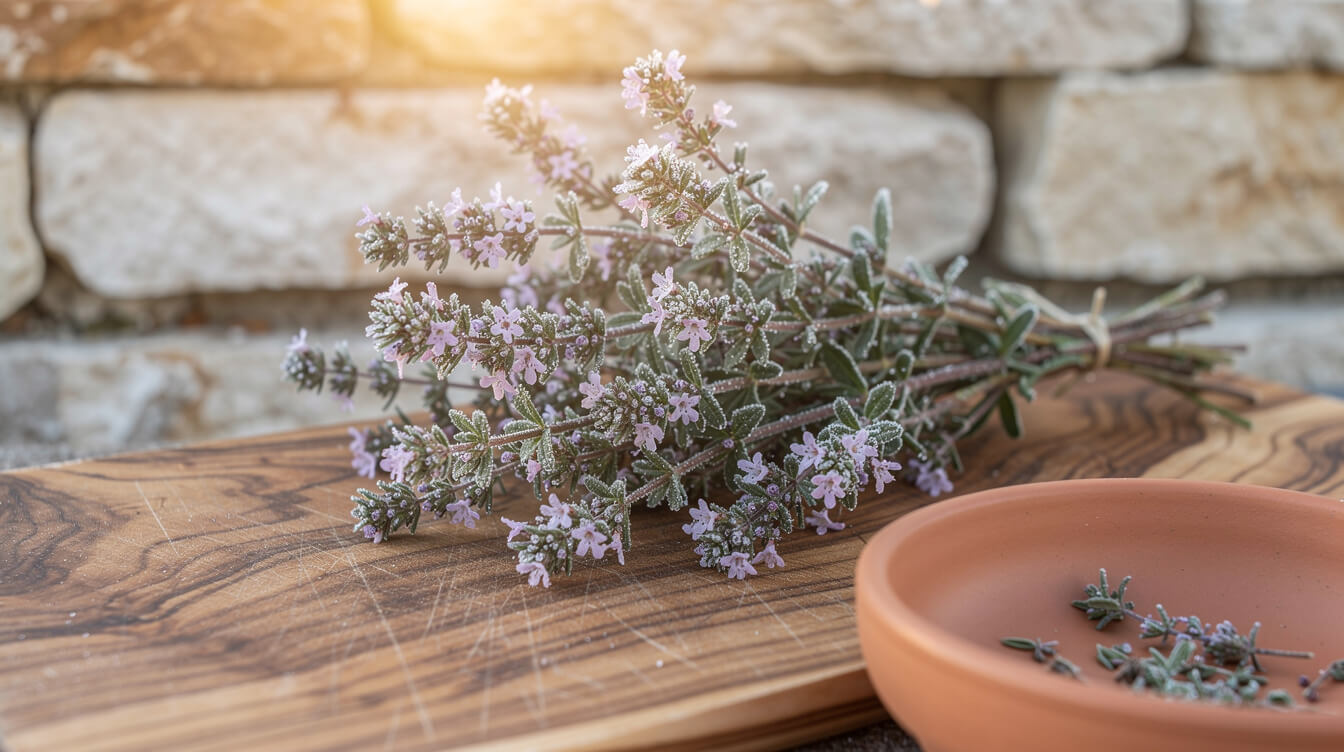
Monday Oil of the Day: Thyme — The Herb That Reads the Frost
Rub a sprig of thyme between your thumb and finger on a cold morning and the warmth arrives before the green does: sun-baked stone, a little pepper, and a faint clean edge you might remember from an old-fashioned amber mouthwash. It’s a whole Mediterranean hillside folded into one small leaf.
Monday Oil of the Day: Thyme
Our thyme oil is steam-distilled from the leaves and flowering tops of Thymus vulgaris, the low, woody herb that grows wild across the garrigue scrublands of southern France and Spain, a hillside neighbor of our Bay Laurel. Its scent is bold and warm: herbaceous, a touch spicy, with a dry, almost toasted finish. Most of that character comes from thymol, the molecule the German apothecary Caspar Neumann first crystallized out of thyme oil in 1719. It’s the same molecule that still gives a classic amber mouthwash its “clean” note.
The jewel: thyme reads the frost. Thymus vulgaris is one of the most chemically varied herbs in Europe. Around the Saint-Martin-de-Londres basin, a frost hollow north of Montpellier, ecologists have mapped six thyme “chemotypes” growing within a few kilometres of each other: thymol, carvacrol, linalool, geraniol, α-terpineol and thujanol types. The plants look identical, but they don’t live in the same places. A 2005 study in Ecology Letters from Montpellier’s CEFE lab found that the sharp, phenolic types (thymol and carvacrol) are the most frost-tender, so they gather on the milder slopes outside the basin. Inside, where winter nights bite hardest, the softer non-phenolic types take over. The warm, spicy thymol note in your bottle is quite literally the smell of a plant that grew where the sun was kinder.
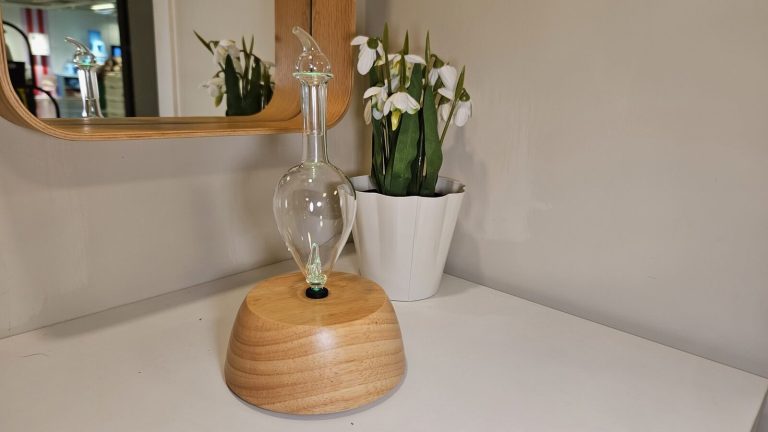
This morning’s ritual: thymol is a strong, phenolic oil, so treat it like a spice, not a perfume. Put just 5–6 drops of thyme alone in your Nebulizing Diffuser®, set it to low and intermittent, crack a window, and run it for ten minutes in the kitchen or entryway while the kettle heats and the first coats come off the hooks. Cold-air nebulizing carries the oil whole, with no water and no heat, so you get that toasted-herb warmth without the edge building up in the room. If it still feels too bold, add 4 drops of lemon to brighten it, or 4 of lavender to round it off.
One gentle note: phenol-rich oils like thyme are best kept to short sessions in adult spaces, away from little ones and especially cats. Our pet diffusing guide explains why.
Sign Up to Get Your FREE
e-Book Here…
Here’s to a Monday with a little sun-warmed stone in it. If you’d like to meet this hillside herb, it’s right here. — Chad