

Essential Oils Safe for Pets: A Diffusion Safety Guide
If you are searching for essential oils safe for pets, you have probably noticed that most guides hand you two lists, one labeled “safe” and one labeled “toxic,” and then move on. They rarely explain the part that actually matters: why a cat reacts to a compound that a person walks past without a second thought, why a bird in the next room can be in danger before you smell anything, and how the way you diffuse changes the risk far more than the name of the oil. The word “natural” is doing a lot of quiet work in those lists, and it is misleading.
This guide goes deeper. We start with the biology that makes cats and birds uniquely vulnerable, name the oils veterinary toxicologists flag most often, and finish with a room-by-room protocol you can follow tonight. One note before we begin: nothing here treats, cures, or prevents any condition in you or your animals, and none of it replaces your veterinarian. It is about reducing avoidable risk so that the calm, scented home you want does not come at your pet’s expense.
Why “Natural” Does Not Mean Safe for Pets
An essential oil is not a gentle whiff of a plant. It is the plant’s volatile chemistry concentrated many times over. A single small bottle can hold the aromatic compounds of dozens of pounds of botanical material, which is exactly why pure oils are so effective and exactly why they deserve respect. Those same compounds, monoterpenes, phenols, esters, and aldehydes, are biologically active. That is the whole point of aromatherapy. It is also the reason “it came from a plant” tells you nothing about whether it is safe for the animal sharing your floor.
Then there is scale of perception. A dog’s sense of smell is widely estimated to be tens of thousands of times more sensitive than ours, and a cat’s is far keener than a human’s as well. An aroma that reads as pleasant and faint to you can be overwhelming to them. The practical takeaway is simple and worth repeating: if a scent is noticeable to you, it is intense to your pet. Concentration, not the label on the bottle, is the thing to manage. For the broader question of what makes any oil clean enough to bring indoors in the first place, our guide to choosing non-toxic essential oils is a useful companion read.
Why Cats Are Different: The Liver Enzyme Most Guides Skip
Here is the fact that explains nearly every “cats are especially sensitive” warning you have ever read, and that almost no roundup bothers to state. Cats are missing functional glucuronidation. In most mammals, the liver neutralizes many plant compounds by attaching them to a sugar acid through a family of enzymes called UDP-glucuronosyltransferases, then flushing the result out. Cats carry far fewer working versions of these enzymes. One of the key genes, UGT1A6, is effectively a non-functional pseudogene in cats. The compound does not get tagged for removal efficiently, so it lingers and can build up.
This is not an aromatherapy quirk. It is the same reason a single regular-strength acetaminophen tablet can be lethal to a cat. The compounds that depend most on this pathway include the phenols, eugenol in clove, thymol in thyme, and carvacrol in oregano, along with many of the monoterpenes that make up oils like tea tree. A person clears these in hours. A cat may not, which means a “small, occasional” exposure does not reset the way you would expect. It can stack.
Cats add a second risk that dogs do not share to the same degree: grooming. Any aerosol that settles on a cat’s coat is later licked off and swallowed, turning an inhalation exposure into an oral one. That combination, slow metabolism plus self-ingestion, is why the most cautious answer for a cat household is often to skip diffusing entirely, and why we keep a separate, deeper resource on essential oils and cats for anyone who lives with felines.
Sign Up to Get Your FREE Pets
e-Book Here…
Birds and Small Pets: The Respiratory Risk Few Guides Mention
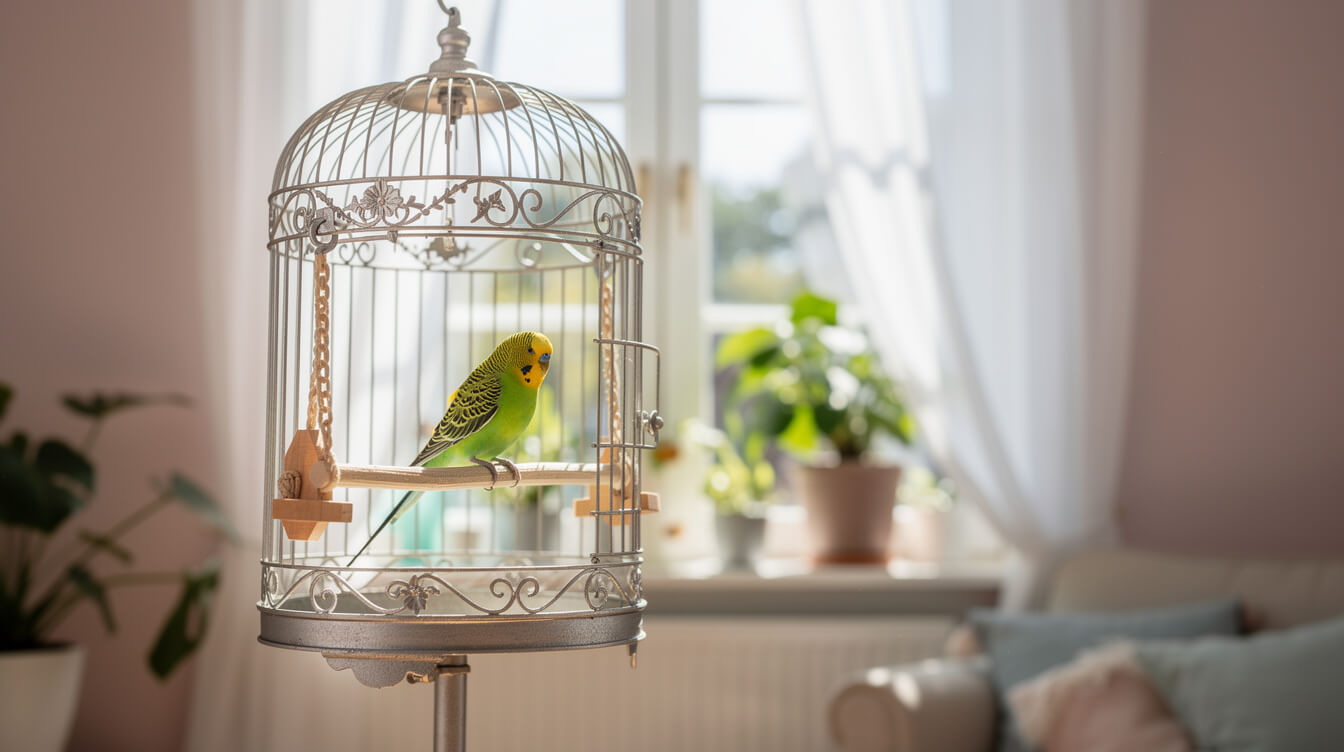
If you keep birds, the rule is simpler and stricter: do not diffuse essential oils in air a bird shares. Birds breathe through a flow-through system of lungs and air sacs that is extraordinarily efficient at extracting whatever is in the air, which is the same reason canaries once warned miners of gas. That efficiency cuts both ways. Airborne compounds that merely bother a person can trigger acute respiratory distress in a bird. The well-documented sensitivity of birds to fumes from overheated nonstick cookware is the clearest illustration of how little it takes, and aerosolized oils belong in the same category of caution.
Small mammals deserve the same care for a different reason: surface area. Rabbits, guinea pigs, ferrets, hamsters, and rats have small bodies, fast breathing rates, and enclosures they cannot leave. A scent level that a roaming dog could walk away from becomes a fixed condition for a caged animal. Reptiles are less studied but warrant the same conservative default. For every pet that lives in a cage, tank, or hutch, the single most important fact is that they have no exit, so the burden of restraint falls entirely on you.
Essential Oils Toxic to Pets, and a “Safer” Short List
Across veterinary toxicology sources, the same offenders appear again and again. Treat these as oils to keep away from dogs and cats, whether diffused heavily, applied to fur, or left where they can be knocked over and licked: tea tree (melaleuca), wintergreen, pennyroyal, pine, cinnamon, clove, oregano, thyme, peppermint, and the citrus oils. Several earn their place for specific reasons worth knowing. Wintergreen is rich in methyl salicylate, chemically close to aspirin. Pennyroyal contains pulegone, which is hard on the liver. Citrus oils are heavy in d-limonene, the very compound that caused poisonings when it was used in old citrus-based flea products for cats.
A handful of oils are generally considered better tolerated by dogs when used at very low levels and with veterinary guidance: lavender, chamomile, frankincense, ginger, and myrrh. Read that sentence carefully. “Better tolerated by dogs” is not “safe for all pets,” and it certainly is not “safe for cats or birds.” Even these belong in a well-ventilated space, briefly, never applied to the coat, and never if your animal shows the slightest aversion. If you want to understand the dilution thinking behind safe use in general, our essential oil dilution chart and safety guide lays out the ratios, and it underlines a point that matters here: with pets, less is not a compromise. It is the goal.
Sign Up to Get Your FREE
e-Book Here…
The Room Protocol: How to Diffuse Responsibly Around Pets
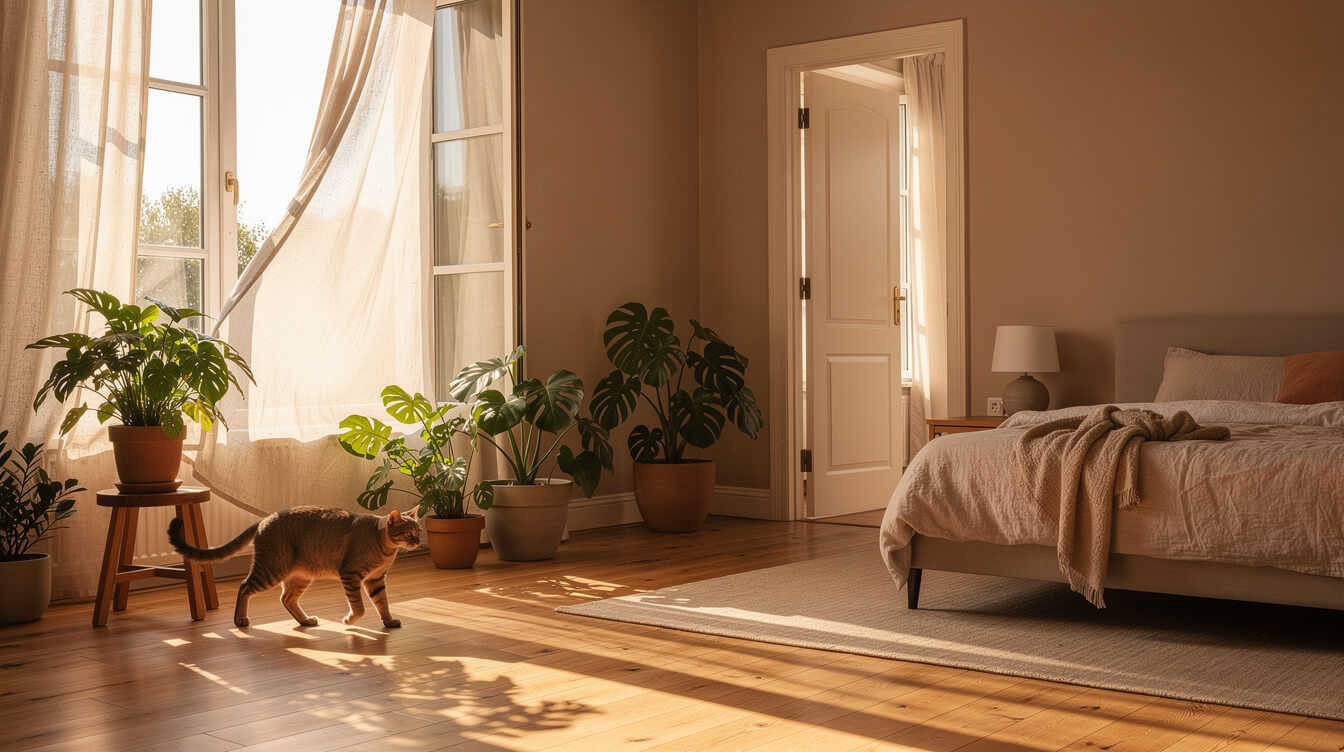
If you share your home only with dogs, and you choose to diffuse, the goal is a light, optional scent the animal can walk away from, never a saturated room it is trapped in. Five rules cover almost every situation. First, ventilate: diffuse in an open room with airflow, never in a closed bedroom, bathroom, or car. Second, leave the door open so your pet can choose to leave, and watch whether it does. Third, keep it brief and intermittent rather than running for hours. Fourth, place the unit high and out of reach so it cannot be tipped over and the undiluted oil cannot be licked. Fifth, never diffuse in or near the room that holds a cat, a bird, a cage, or an aquarium.
This is where the method of diffusion does real work, because intermittent and controllable beats constant and saturating every time. A water-and-heat unit dilutes oil into a continuous mist and runs until the tank empties, which is the opposite of what a pet home needs. A Nebulizing Diffuser® uses pressurized air to disperse pure oil in short bursts with no water and no heat, so you can run it for a few minutes and then let the room clear. The app-controlled Smart Nebulizing Diffuser® takes that further, letting you set short intervals and automatic shut-off so a scent never becomes a fixed condition your animal cannot escape. If you want the full picture of how this technology compares to misting units, see our breakdown of the nebulizing versus ultrasonic diffuser question and the longer complete guide to nebulizing diffusion.
To be completely honest about it: control reduces risk, but it does not make any oil “pet-safe,” and around cats and birds the responsible default is still not to diffuse at all. Where a nebulizing approach earns its place is in a dog-friendly household that wants pure aromatherapy without filling a room. If that is you, the Smart Nebulizing Diffuser® collection is built for exactly this kind of measured, intermittent use, with the precise on-off control a pet home calls for.

Join Our Exclusive Member Club to get Big Discounts!
Signs of Essential Oil Poisoning in Pets, and What to Do
Knowing the warning signs lets you act in minutes instead of hours, and with essential oil exposure minutes matter. Watch for drooling or pawing at the mouth and face, vomiting, wobbliness or an unsteady walk, tremors or muscle weakness, unusual lethargy, a low body temperature, difficulty breathing or panting, and redness or chemical burns where oil touched skin, gums, or eyes. A scent of the oil on the breath, fur, or vomit is a strong clue. Cats may simply go quiet and withdraw, which is easy to miss, so a sudden behavior change after any exposure deserves attention.
If you suspect exposure, move the animal to fresh air immediately and remove the source. Do not induce vomiting, since these oils can cause further harm on the way back up, and do not try to wash the mouth out forcefully. If oil is on the coat or skin, wash it gently with a mild dish soap and lukewarm water. Then call for expert guidance right away. In the United States, the ASPCA Animal Poison Control Center is reachable at 888-426-4435 and the Pet Poison Helpline at 855-764-7661, both staffed around the clock. Bring the bottle, or a photo of the label, to your veterinarian so they know exactly which compounds they are dealing with.
Frequently Asked Questions
Is it safe to diffuse essential oils around my dog?
It can be reasonable with care. Use a well-ventilated room, keep sessions short and intermittent, leave a clear exit, avoid the toxic oils listed above, and stop at the first sign your dog dislikes it. Avoid applying anything to the coat. When in doubt, check with your veterinarian before introducing a new oil.
Which essential oils are safe for pets in a multi-pet home?
In a home that includes a cat or a bird, the safest answer is to hold the whole household to the strictest standard, which usually means not diffusing in shared air. A few oils such as lavender and chamomile are better tolerated by dogs at low levels, but there is no oil that is universally safe for every species at once, so plan around your most sensitive resident.
Can I diffuse essential oils if I have a cat in another room?
Air moves between rooms, and a cat’s slow metabolism plus grooming behavior make low-level, repeated exposure the real concern rather than a single big dose. If you live with a cat and still want to diffuse, keep it to a closed-off zone the cat never enters, with strong ventilation, and watch your cat closely. Many cat owners decide the simplest path is to enjoy scent through other means instead.
What can I use instead if I cannot diffuse around my cat or bird?
You have gentler options. Hydrosols, the lightly aromatic waters left over from steam distillation, carry only a tiny fraction of the active compounds found in a concentrated oil, which makes them a far softer way to add a hint of botanical scent to a room, though birds still warrant caution and a vet’s input. Good old-fashioned ventilation, fresh flowers, simmering culinary herbs like rosemary on the stove, and keeping the litter and cage areas clean do more for how a home smells than most people expect. And if you truly want to diffuse pure oil, reserve it for a separate space the cat or bird never enters, with the door closed and a window open, then air the room out fully before they return.
Final Thoughts: Scent and Animals Can Share a Home
The honest version of “essential oils safe for pets” is not a tidy list of green-light oils. It is an understanding of who lives in your home and how their bodies handle concentrated plant chemistry. Cats cannot clear these compounds the way you do. Birds and caged animals cannot leave the air you scent. Dogs have the most leeway, and even then the wins come from restraint: fewer oils, lower concentration, shorter sessions, and a room your pet is free to leave. Get those right and you protect your animals while still enjoying a beautifully scented space.
If your household is dog-friendly and you want pure aromatherapy with the control a pet home needs, no water, no heat, and precise intermittent diffusion you can start and stop in seconds, the Smart Nebulizing Diffuser® was made for exactly this kind of mindful use.
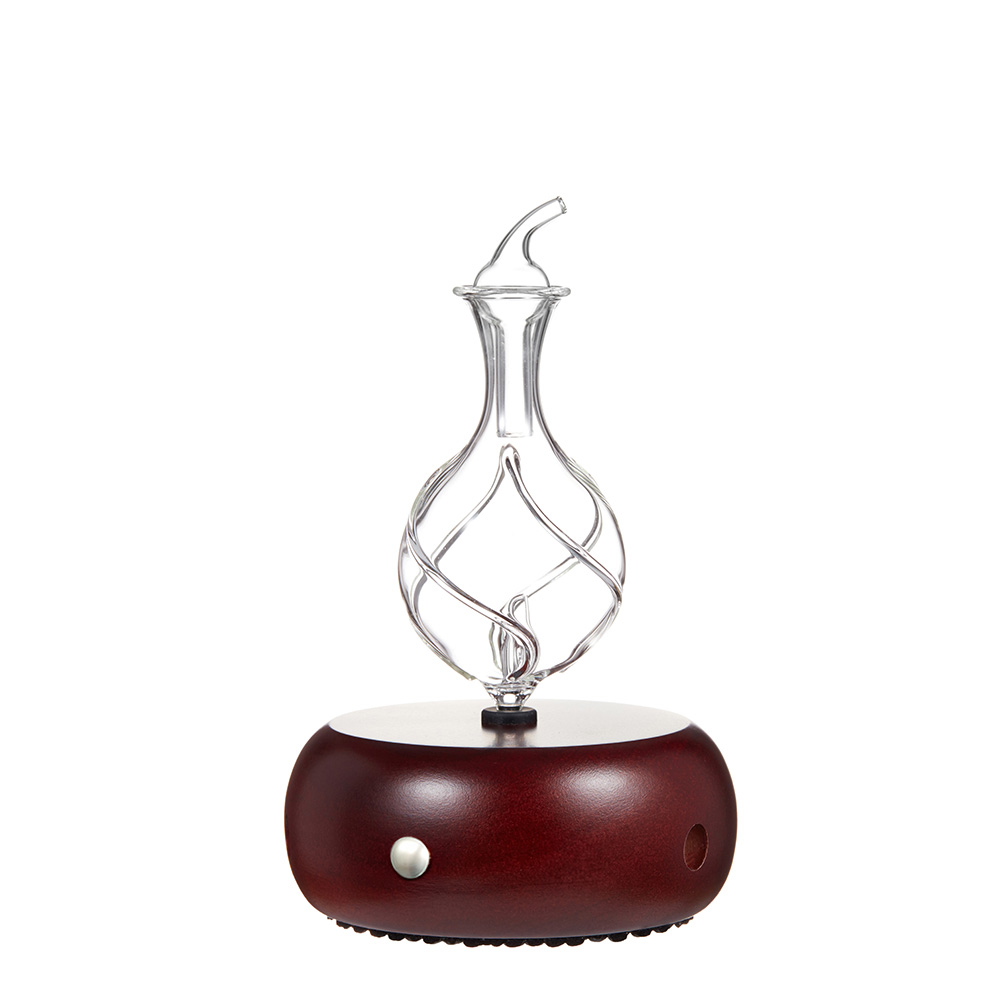
Pure Aromatherapy, On Your Terms
No water, no heat, no constant mist. The Smart Nebulizing Diffuser® disperses pure essential oil in short, app-controlled bursts, so a dog-friendly home gets real scent with real control.