

Are Essential Oils Flammable? 5 Fire Safety Tips You Should Know
Are essential oils flammable? Yes — but not in the way most safety roundups make it sound. Essential oils are volatile, terpene-rich plant extracts, and like any organic compound with a flash point, they can ignite under the right (or wrong) conditions. The good news: once you know the actual numbers and the one mechanical choice that removes the ignition risk entirely, keeping your aromatherapy routine safe is straightforward.
Below, we cover exactly which oils carry the highest fire risk, what OSHA’s own flammable-liquid classification says about where essential oils actually fall on that scale (a detail almost no other article checks), how to store and handle oils safely, five practical fire-safety tips for your Nebulizing Diffuser® or any other diffusion method, and what to do if an oil-related fire or burn happens.
Are Essential Oils Flammable? The Short Answer
Essential oils are volatile plant extracts (plant extracts that easily turn into vapor) full of combustible organic compounds. At their flash point — the lowest temperature at which enough vapor forms to ignite near an open flame or spark — they can flare up. Most common essential oils have flash points between roughly 37°C and 93°C (99–199°F).
Here are some common oils and their approximate flash points:
- Lavender oil: about 70°C (158°F)
- Tea Tree oil: about 56°C (133°F)
- Eucalyptus oil: about 49°C (120°F)
- Lemon oil: about 48°C (118°F)
That range matters more than it looks. As you’ll see in the next section, it puts nearly every common essential oil in a specific, regulated fire-hazard category — and it’s not the one most people assume.
Key Factors Influencing Essential Oil Flammability (and Where Oils Actually Rank)
A few chemical traits decide how easily an oil’s vapor ignites. Here are the key factors:
| Factor | What You Need to Know |
|---|---|
| Flash Point (lowest temp where vapors ignite with a spark) | The minimum heat needed for oil vapors to burst into flame near a spark |
| Evaporation Rate (how fast oil turns to vapor) | Speed at which the oil mist forms in the air |
| Auto-Ignition Temperature (heat level where vapors light up without a spark) | Temperature at which vapors spontaneously catch fire |
| Viscosity / Distillation Method (thickness and how oil was extracted) | Thinner, steam-distilled oils often ignite more readily |
Here’s the detail almost no other “are essential oils flammable” article checks: OSHA’s flammable-and-combustible-liquid standard (29 CFR 1910.106) sorts liquids into hazard classes by flash point, not by a vague “flammable / not flammable” label:
| OSHA Class | Flash Point Range | Example Liquid |
|---|---|---|
| Class IB/IC Flammable | Below 37.8°C (100°F) | Gasoline, acetone |
| Class II Combustible | 37.8–60°C (100–140°F) | Diesel fuel — and most citrus, herb & spice essential oils |
| Class IIIA Combustible | 60–93°C (140–200°F) | Motor oil — and lavender, floral oils |
| Class IIIB Combustible | Above 93°C (200°F) | Sandalwood, heavy resins |
In other words: by OSHA’s own definitions, none of the common essential oils in this article are Class I flammable liquids at all — they’re Class II or Class IIIA combustible liquids, the same regulatory category as diesel fuel and motor oil, not gasoline or rubbing alcohol. That doesn’t mean carefree; combustible liquids still ignite given enough heat, which is exactly why the storage and diffusion habits below matter. But it does mean the “my essential oils are basically gasoline” fear that drives a lot of the search traffic to this topic is not accurate.
Most and Least Flammable Essential Oils
Here’s a side-by-side look at flash points across commonly diffused oils, from most to least combustible:
| Essential Oil | Flash Point (°C) | OSHA Class |
|---|---|---|
| Thyme | 42 | Class II |
| Clove | 45 | Class II |
| Lemongrass | 48 | Class II |
| Lemon | 48 | Class II |
| Eucalyptus | 49 | Class II |
| Pine | 52 | Class II |
| Tea Tree | 56 | Class II |
| Cinnamon Bark | 59 | Class II |
| Lavender | 70 | Class IIIA |
| Sandalwood | >93 | Class IIIB |
Oils with flash points under 50°C send off more vapor at room temperature and deserve extra caution near candles or a hot stovetop — that means Thyme, Clove, Lemongrass, Lemon and Eucalyptus. Lavender and Sandalwood sit at the higher, more forgiving end of the range, but “more forgiving” is not the same as fireproof — every oil on this list can still ignite given a strong enough heat source.
Safe Storage and Handling of Essential Oils
Here’s how to store your combustible essential oils so they stay safe and fragrant:
Dark-glass, airtight bottles
Use amber or cobalt blue glass. It blocks light and seals in aroma vapors.Cool spot under 25°C (77°F)
Heat speeds evaporation and effectively lowers how much heat is needed to reach the flash point.Away from sunlight or heat sources
Don’t set bottles on windowsills, radiators, or near stoves. Heat also breaks oils down chemically over time.Small batch storage
Only keep a few bottles per shelf. A dense cluster of open bottles raises the local vapor concentration.Label bottles clearly
Note the oil and date so nothing sits open or forgotten near a heat source.Weekly leak checks
Inspect caps and bottles for drips. Wipe up spills right away to stop oil pooling near sparks.
Do a quick inventory every month: check dates, spot any broken or cloudy bottles, and rotate older oils forward.
Sign Up to Get Your FREE
e-Book Here…
5 Fire Safety Tips for Diffusing Essential Oils
Every diffusion method has a different relationship to flash point — and that relationship is the real safety variable, more than the oil itself.
The mechanism that matters most: heat-based diffusion (candle warmers, some ultrasonic units that heat the reservoir, and open burners) actively pushes the oil toward its flash point. A Nebulizing Diffuser® works differently: it uses Bernoulli’s principle — a fast stream of room-temperature air passing over a glass tube — to pull neat essential oil up and atomize it into a fine mist mechanically, with no heating element and no water bath involved at all. The oil itself never gets warmer than the room it’s in, so it never approaches its flash point during normal use. If you’re specifically shopping for a lower fire-risk way to diffuse, that’s the detail to look for in a Nebulizing Diffuser®’s spec sheet, not just the marketing copy.
With that in mind, here are five practical fire-safety tips that apply no matter which diffusion method you use:
Choose a cold-air method — a Nebulizing Diffuser® or a genuinely unheated ultrasonic unit — over any heat-powered warmer or open burner. Check out our full guide to essential oil diffusion safety for a rundown of which methods run cool.
If you use a Nebulizing Diffuser®, make sure the glass atomizer (the part that breaks oil into tiny droplets) sits in a clear, well-ventilated spot, away from curtains or paper. That way oils won’t pool and vapors won’t hang in the air.
Run any diffuser in 15–30 minute on/off cycles rather than leaving it going indefinitely in a warm room. Vapor can build up in poorly ventilated spaces over long runs, raising the chance of ignition if a hidden heat source is nearby.
Keep any diffuser at least three feet from curtains, lamps, stoves or open flames. Even gentle ambient warmth can push vapors closer to a flammable mix near the appliance.
Wipe up any spills right away and dry the surface before restarting the unit. Oil puddles can gather heat under lamps or near pilot lights and ignite unexpectedly.
Keep these five habits in mind and your aromatherapy routine stays both fragrant and fire-safe.
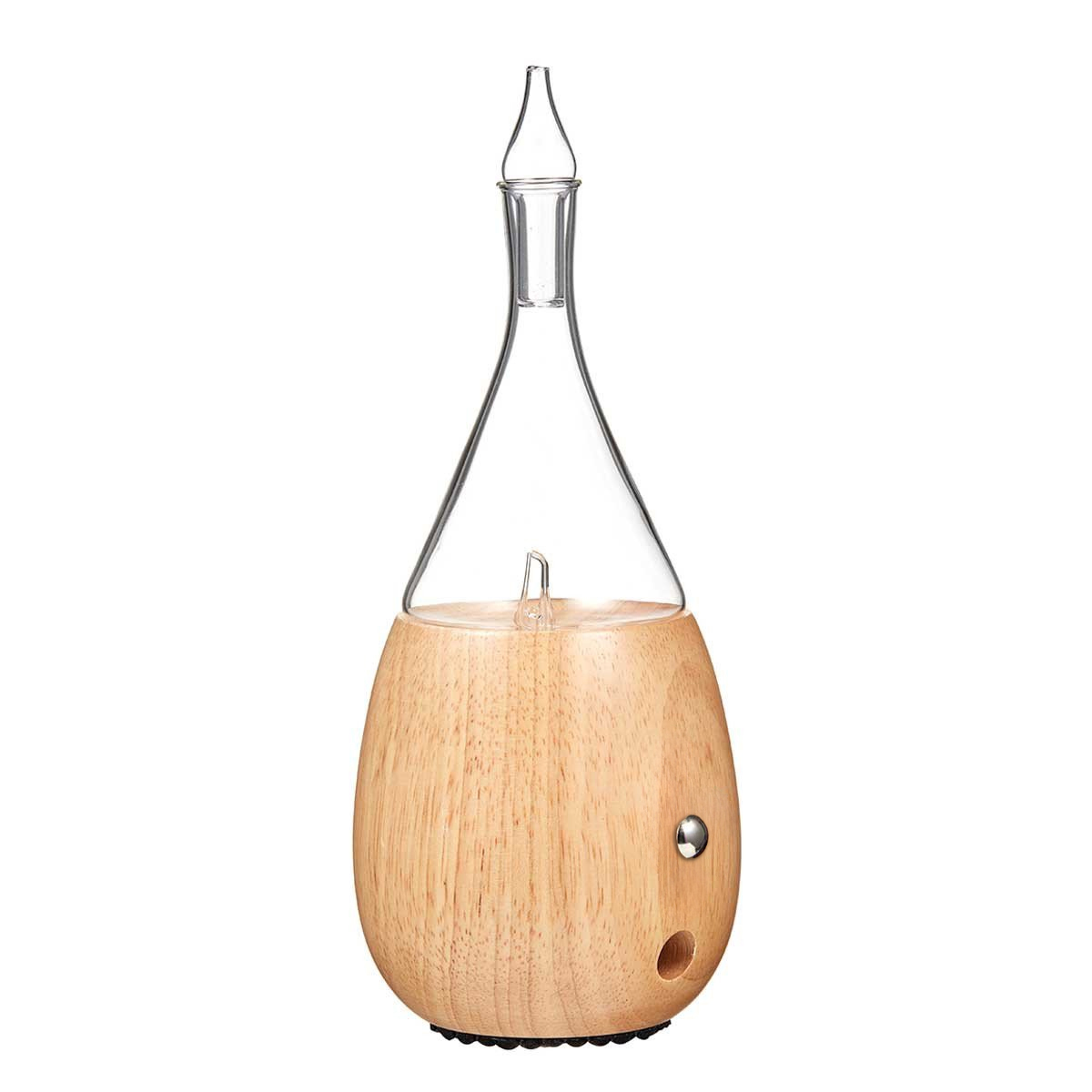
No Heat, No Flash-Point Risk
The Raindrop – Smart Nebulizing Diffuser® atomizes pure essential oil with room-temperature airflow, not heat or water — so the oil never climbs toward its flash point during normal use. Wireless, rechargeable, app-controlled.
Fire Response and First Aid for Essential Oil Incidents
An oil-related flare-up is rare, but it’s worth knowing exactly what to do if one happens.
Step 1: Move everyone out and call 911
Get at least 50 feet away from the burning oil, then call 911 so firefighters arrive before the fire spreads. Guide kids, pets, or anyone who needs help with mobility out first.
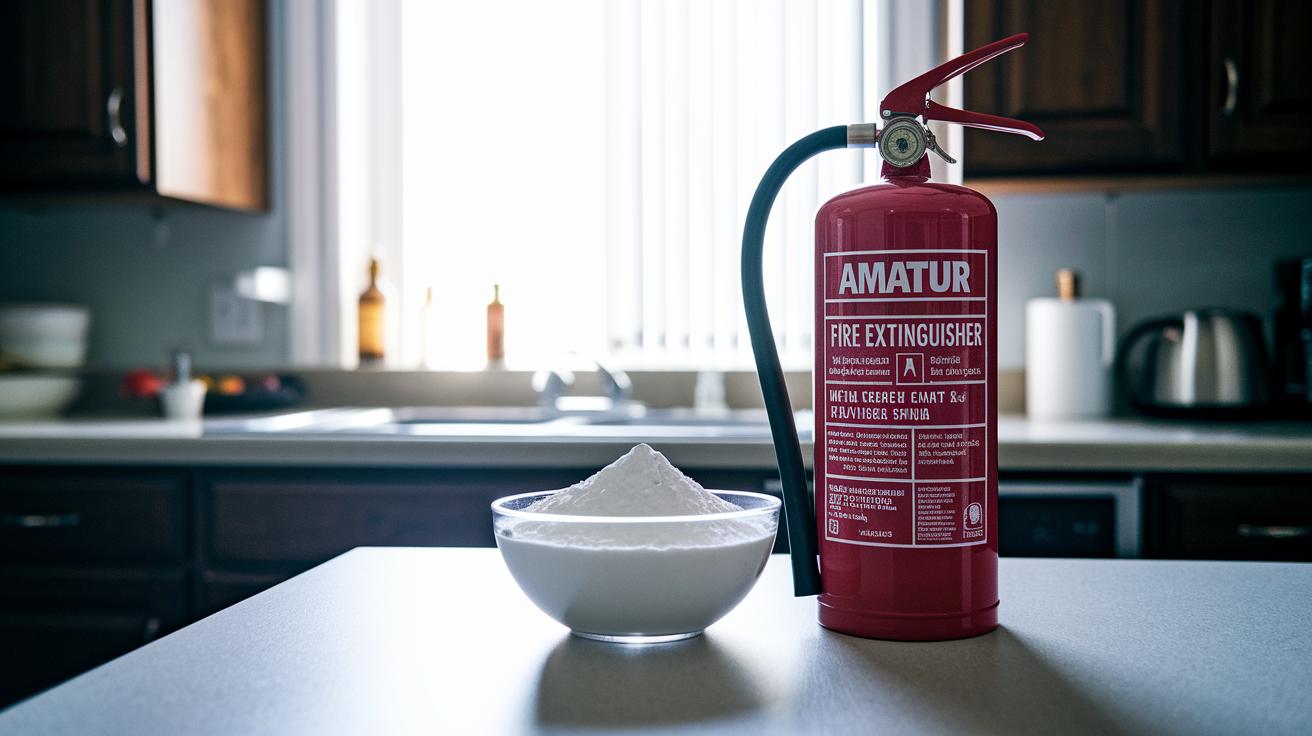
Step 2: Smother flames with a Class B fire extinguisher or baking soda. Grab a Class B fire extinguisher (a device that sprays chemicals to put out flammable-liquid fires) and aim low at the base of the flames. Water spreads burning oil rather than putting it out — never use it. For a small spot fire, sprinkle baking soda to help smother it.
Step 3: Cool and cover any oil burns
Rinse the burned area under cool, running water for about 10 minutes. Then pat dry and cover with a sterile, nonstick dressing. Watch for redness or oozing that could signal infection.
Step 4: Check in with a medical professional
Even a mild burn from essential oils can go deeper than it looks. A doctor or nurse can assess the burn’s depth and advise on next steps.
Keep a Class B extinguisher, baking soda, and a basic first aid kit within reach of wherever you store or diffuse oils.

Join Now and Get a Coupon for 10% Off!
Final Words: Are Essential Oils Flammable?
Yes — essential oils are combustible, but by OSHA’s own flash-point classification, common diffusing oils sit in the same Class II–IIIA category as diesel fuel and motor oil, not gasoline. Flash point measures when an oil can ignite, and the oils to watch most closely (Thyme, Clove, Lemongrass, Lemon, Eucalyptus) simply need the same commonsense precautions as any combustible liquid in your home: cool storage, distance from open flame, and a diffusion method that doesn’t add extra heat.
Store oils sealed, cool and away from heat sources. Choose a cold-air diffusion method — like a Nebulizing Diffuser® — over heat-powered warmers, and you remove the flash-point risk from the equation almost entirely. Trust the numbers, not the fear: that’s how you keep your aromatherapy routine both fragrant and genuinely safe.

Join Our Exclusive Member Club to get Big Discounts!
FAQ
Are essential oils flammable?
Essential oils are volatile plant extracts made of combustible organic compounds. Their flash points range from roughly 37–93°C, so they can ignite if exposed to an open flame or spark — but by OSHA’s classification, that puts most common oils in the Class II–IIIA combustible category, the same range as diesel fuel and motor oil, not gasoline.
Are essential oils flammable in a Nebulizing Diffuser®?
A Nebulizing Diffuser® atomizes oil using room-temperature airflow, not heat, so the oil never approaches its flash point during normal operation. The oil itself is still combustible in storage; the diffusion method just removes the added-heat variable.
Are essential oils flammable in candles or dryers?
Essential oils can ignite in candles or dryers when heat exceeds their flash points. Avoid adding oils to candle wax near the wick and don’t apply them inside dryer drums.
What essential oils are most and least flammable?
Oils with lower flash points — like thyme, clove, lemongrass and citrus oils — carry relatively higher fire risk. Higher flash-point oils such as lavender and sandalwood are more forgiving, though still combustible.
Is lavender essential oil flammable?
Lavender essential oil has a flash point of about 70°C, placing it in OSHA’s Class IIIA combustible range. Keep it away from open flames and heat sources for safety.
Is peppermint essential oil flammable?
Peppermint essential oil’s flash point sits near 50°C, in the Class II combustible range. Diffuse or store it with the same caution as any combustible liquid, away from open flame.
Are carrier oils like olive and coconut oil flammable?
Olive and coconut oils aren’t essential oils. They smoke above roughly 160°C and can ignite if overheated near an open flame, but they’re far less volatile than essential oils.
Are essential oils allowed on planes?
Essential oils are permitted on planes under TSA rules. Each bottle must be 3.4 ounces (100 ml) or smaller and fit inside your clear quart-size liquids bag in carry-on luggage.