

Benefits of Lavender Oil: What the Science Actually Says (and Why Your Diffuser Decides the Outcome)
Search “benefits of lavender oil” and you will find the same six bullet points repeated across every top result: it helps you relax, it eases stress, it supports sleep, it soothes minor burns, it calms irritated skin, it dulls a tension headache. All of that is broadly true. None of it is the whole story.
Every one of those benefits traces back to a small handful of molecules, principally linalool and linalyl acetate, with cameos from camphor, 1,8-cineole, and a constellation of minor terpenes. The plant matters. The species matters. The country of origin, the harvest year, the distillation method, and, crucially, the way you put the oil into the air all decide whether you actually inhale a therapeutic dose of those compounds or just a pleasant scent. Most articles skip this entire layer.
This guide doesn’t. We cover what lavender oil really does, which species and which delivery method give you the studied effect, and how to read a bottle label well enough that you stop paying premium prices for the wrong plant. Twelve years of customer feedback from 200,000+ Organic Aromas users sit in the background of the practical recommendations.
The Active Compounds: Linalool, Linalyl Acetate, and the Lesser-Known Players

A bottle of true lavender essential oil is, chemically, a mixture of roughly 40 to 50 different volatile compounds. Two of them do most of the heavy lifting that researchers care about: linalool (a monoterpene alcohol) and linalyl acetate (its ester form). In a high-quality Lavandula angustifolia oil, these two typically make up 60% to 80% of the total composition together, with linalool usually running 25% to 45% and linalyl acetate 25% to 45%.
Why do these two molecules carry the story? Linalool is the compound most consistently linked in lab and human trials to the relaxation response. It binds to the GABA-A receptor, the same neural site that benzodiazepines like Valium and Xanax act on, though far more gently and through different mechanisms. Inhaled linalool has been shown in controlled studies to reduce self-reported tension scores and lower measured cortisol, the primary stress hormone. Linalyl acetate is sweeter and more floral on the nose, and it appears to act synergistically with linalool, smoothing the overall profile and extending the perceived calming effect.
Then there are the supporting cast. A trace of 1,8-cineole (eucalyptol) at 1% to 3% gives a faint herbal lift. Small amounts of beta-caryophyllene contribute a peppery note and engage the CB2 cannabinoid receptor in the body, with downstream effects on the inflammatory response. A whisper of terpinen-4-ol, the same molecule that drives tea tree oil’s antimicrobial reputation, gives lavender oil real surface-level cleansing properties at higher concentrations.
What you do not want, in meaningful quantity, is camphor. In a proper L. angustifolia oil it sits below 1%. Above that, the oil starts shifting from relaxing toward stimulating, and the entire benefit profile inverts. (More on that in the next section.) Reputable suppliers will publish a Gas Chromatography-Mass Spectrometry, or GC/MS, report for each batch. That report is the only way to actually verify what is in the bottle.
Lavandula angustifolia vs Lavandin: Why Cheap Lavender Oil Is Often a Different Plant
Here is the open secret of the lavender market. The plant studied in nearly every clinical trial on lavender oil is Lavandula angustifolia, often called true lavender, English lavender, or fine lavender. It is a small, cold-tolerant species native to the higher elevations of Provence and the Mediterranean basin. It produces a low yield of fragrant, calming oil per acre, which is why true lavender oil is moderately expensive.
The plant that fills the cheap bottles you see in supermarkets is usually a different species: Lavandula x intermedia, commonly called lavandin. Lavandin is a sterile hybrid of true lavender and spike lavender (Lavandula latifolia). It grows at lower elevations, yields three to five times more oil per acre, and smells very lavender-like to the untrained nose. The economic incentive to substitute lavandin for true lavender is enormous, and many supermarket brands and unscrupulous suppliers do exactly that, often without labeling the species at all.
Here is the chemistry that matters. Lavandin oil can contain up to 12% camphor, compared with under 1% in true lavender. It also tends to carry less linalool, more 1,8-cineole, and a different balance of esters. The result is an oil that smells brighter and more medicinal, lifts you up rather than settles you down, and is genuinely useful in different ways. Lavandin is a fine choice for clearing the head, for muscle rubs after a workout, or for cleaning sprays. It is not the oil studied for sleep, relaxation, or anxiolytic effect. If a recipe calls for “lavender” to help you wind down, lavandin will quietly underperform.
The fix is easy: read the Latin name. A real lavender oil intended for relaxation will be clearly labeled Lavandula angustifolia (or sometimes L. officinalis, an older synonym for the same plant). If the label only says “lavender” or “lavender essential oil” with no Latin binomial, assume it is lavandin or a blend, and assume the relaxing effect will be muted. Our deeper guide to oil purity standards walks through the broader rules for spotting adulteration.
Sign Up to Get Your FREE
e-Book Here…
Benefit 1: Sleep and Relaxation (and the Receptor It Targets)

The best-studied benefit of Lavandula angustifolia oil is its calming effect on the nervous system and the downstream support it offers for restful sleep. The mechanism is at this point reasonably well mapped. Inhaled linalool reaches the bloodstream within minutes through the rich capillary bed of the olfactory mucosa. From there it crosses the blood-brain barrier and acts as a positive allosteric modulator of the GABA-A receptor, the brain’s main inhibitory channel.
Translated out of pharmacology jargon, GABA is the neurotransmitter that tells active neurons to settle down. When the GABA-A receptor is engaged, the brain shifts from “vigilant and reactive” toward “calm and recoverable.” Benzodiazepines hit this receptor with a sledgehammer. Inhaled linalool taps it with a feather. The effect is gentle, dose-dependent, and reversible, which is exactly what you want for an evening wind-down ritual rather than a pharmaceutical knockout.
Customer reports across our 12+ years of feedback line up neatly with what the trials show. The single most consistent pattern is this: lavender oil works best for sleep onset (the period between getting into bed and actually falling asleep) and less reliably for deep-stage maintenance through the night. If you struggle to fall asleep, lavender is likely your oil. If your problem is waking at 3 a.m. and not getting back, you may need a different terpene profile (think vetiver or sandalwood for their N3-deep-sleep-supportive cedrol), and our linalool-linalyl-acetate ratio deep-dive for sleep explains how to layer them.
Practical pattern from the OA archive: a 30-minute pre-sleep diffusion of pure L. angustifolia, started about 20 minutes before lights out, is the most-cited routine in our customer-feedback corpus. For step-by-step ritual notes, our how to use lavender for sleep guide walks through dose, timing, and bedroom setup.
Benefit 2: Stress, Mood Regulation, and the Calm Reset
Outside of sleep, the second-most-studied use for true lavender oil is daytime stress and mood support. The pharmacology is essentially the same GABA-A pathway, but the use case is different. Instead of a 30-minute wind-down, this is a short, situational reset. Five to ten minutes of inhalation before a difficult conversation, after a meeting that ran long, during the midafternoon energy dip, or as a transition between work-from-home and evening hours.
There is a useful nuance here that almost no SERP result covers. Linalool’s calming effect appears to be most pronounced in people whose baseline stress response is elevated. In people who are already relaxed, the effect is smaller and harder to measure. Translated: lavender will not sedate you when you do not need sedating. It nudges an over-revved nervous system back toward baseline. That makes it well suited for the high-cortisol moments of a normal day, and a poor substitute for a nap when you are simply tired.
The customer pattern that repeats most often in our archive is what we call the two-bottle desk routine. One small bottle of L. angustifolia for stress moments. One small bottle of an uplifting citrus like lemon or sweet orange for the post-lunch energy slump. Used as needed, switched by mood rather than by clock. Most customers settle into this pattern within two to three weeks of getting their first Nebulizing Diffuser®.
One word of caution. Lavender oil is not a treatment for any clinical condition. The research supports its use as a wellness-supporting aromatic, not as a medication. If you are managing a diagnosed stress, mood, or sleep disorder, your aromatherapy ritual is best treated as a supportive practice alongside, not in place of, professional care.
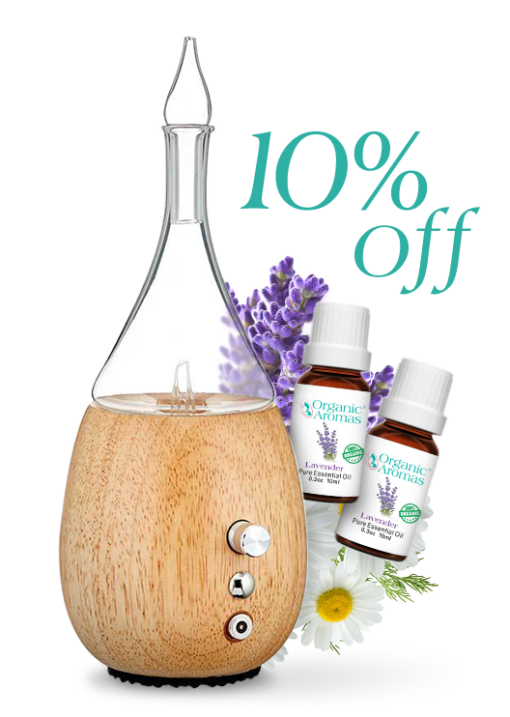
Join Now and Get a Coupon for 10% Off!
Benefit 3: Skin Healing, Burns, and Insect Bites
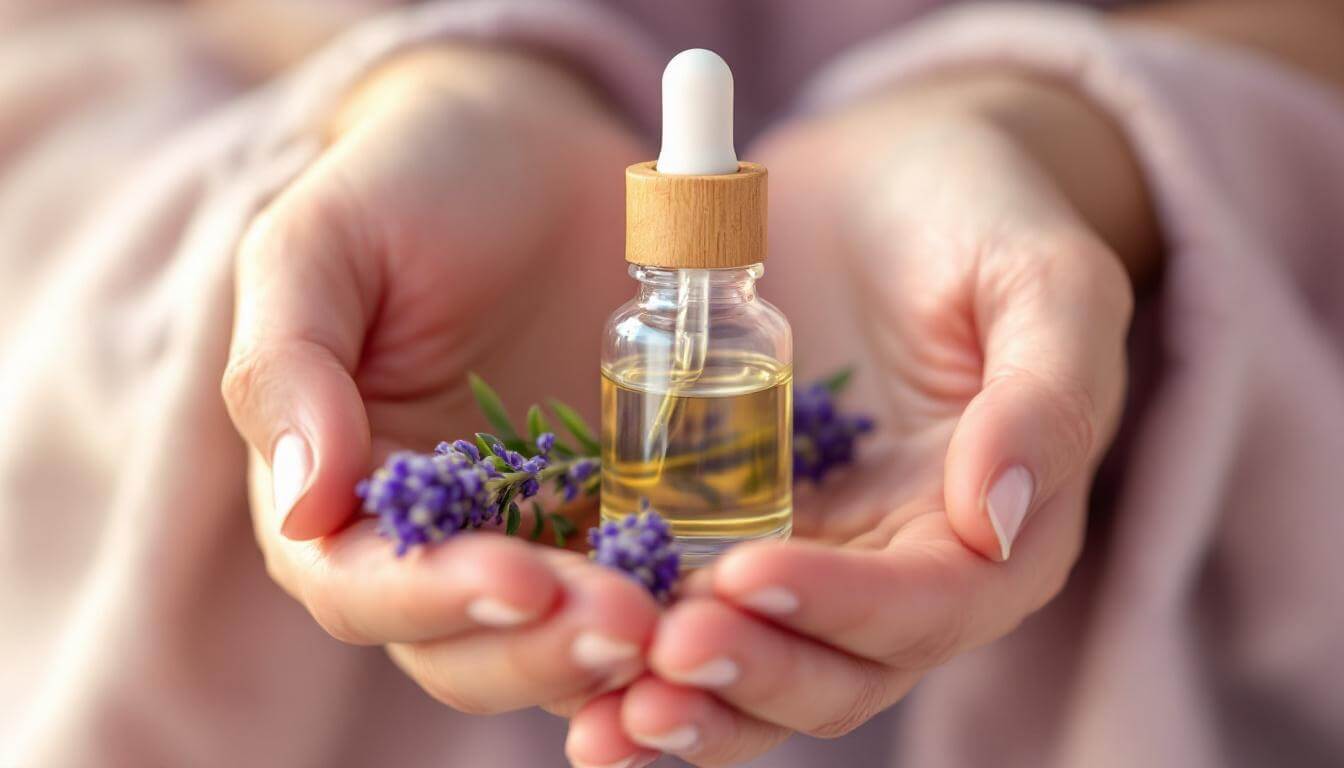
Lavender oil’s reputation for skin care has a single, almost cinematic origin story. In 1910, the French chemist René-Maurice Gattefossé burned his hand badly in a laboratory accident and plunged it into the nearest vat of liquid, which happened to be lavender oil. He observed that the burn healed unusually quickly and with minimal scarring. He spent the rest of his career studying essential oils, and the modern field of aromatherapy traces its name and much of its founding lore to that one moment.
The skin science behind the story is decent, if more modest than internet folklore suggests. Lavender oil has documented mild antimicrobial activity (largely from terpinen-4-ol and linalool), modest anti-inflammatory action, and an analgesic profile that can take the edge off the sting of minor burns and insect bites. It is not a substitute for proper first aid on serious burns, and it should never be applied neat (undiluted) to broken or burned skin in any meaningful quantity. The safe pattern is one to two drops in a teaspoon of cold-pressed carrier oil (jojoba, sweet almond, or fractionated coconut), applied gently after the area has been cleaned and cooled.
The same dilution principle applies to insect bites, where lavender oil’s appeal is the cooling, anti-itch effect of the terpene blend rather than any miracle healing. For acne-prone skin, a 0.5% to 1% dilution (one drop in two teaspoons of carrier) used as a localized spot treatment is the most-reported pattern in our customer archive. Higher concentrations are not better. They are simply more likely to cause contact sensitization over time. Our guide to lavender oil side effects covers the full safety picture, including the hormonal-disruption questions that occasionally surface in the news cycle.
And, as always, the skin benefits depend on the species. Lavandin’s higher camphor content makes it more irritating to sensitive skin and a poorer choice for burns or broken skin. True Lavandula angustifolia is gentler and the species used in the relevant safety studies.
Benefit 4: Headaches and Tension Pain
The fourth well-cited use case is tension-type headache and the related territory of jaw clenching, shoulder tightness, and the kind of low-grade tension pain that builds over a stressful afternoon. The evidence here is more modest than for sleep or stress, but it is consistent enough that lavender oil deserves a place in the toolkit.
The mechanism, again, runs through the GABA-A pathway and the parasympathetic nervous system. When the body shifts out of fight-or-flight, the small muscles of the scalp, jaw, and upper neck release some of their resting tension, and the headache that those muscles were driving softens. This is not a pharmacological pain blocker. It is a downstream effect of the nervous system standing down.
The customer pattern most often reported for tension headaches uses inhalation rather than topical application. Two to four drops in a Nebulizing Diffuser®, run for 15 to 20 minutes in a quiet room, frequently with the lights dimmed and the eyes closed. For migraine-type headaches the picture is more mixed. Some users find lavender helpful in the prodromal phase before a migraine takes hold. Once a migraine is in full swing, strong scents can be triggering rather than soothing for many people, and the right call is usually to lean toward unscented quiet and conventional migraine care.
For chronic, recurring tension headaches that trace back to obvious stress patterns, a daily preventive diffusion ritual (one of the two-bottle desk routines from the previous section) tends to outperform reactive use, in the same way that daily movement outperforms reactive stretching for a sore back.

Join Our Exclusive Member Club to get Big Discounts!
Benefit 5: A Cleaner-Smelling, Calmer Home (Without Synthetic Fragrance)
The fifth benefit is the one that does not show up on medical sites but accounts for an enormous share of why people actually buy lavender essential oil. They want their home to smell good, and they want it to smell good without the synthetic fragrances that dominate candles, plug-ins, and most household air fresheners.
This is more meaningful than the surface description suggests. Synthetic fragrance compounds are a complex topic, but the short version is that they are usually petroleum-derived, often allergenic, and rarely fully disclosed on labels. Pure Lavandula angustifolia oil is a single, transparent ingredient. You know exactly what is in the air. For households with children, pets, or anyone with fragrance sensitivities, that transparency is the point.
The practical use cases are broad. A 30-minute pre-guest diffusion before someone arrives. A 10-minute post-cooking session to reset the kitchen. A bedside Nebulizing Diffuser® run for 20 minutes during the bedtime wind-down. A laundry trick that uses two or three drops on a wool dryer ball. None of these are medical applications. All of them are real, daily-life reasons that lavender oil is the single best-selling essential oil in the world.
One note on pets. Lavender is generally considered one of the safer essential oils around cats and dogs, but no oil is risk-free for pets. Always diffuse in well-ventilated spaces, never spray on a pet’s fur or bedding, and check our essential oil safety for animals guide for the species-specific rules.
Delivery Method Decides the Outcome: Topical, Steam, Ultrasonic, or Nebulizing
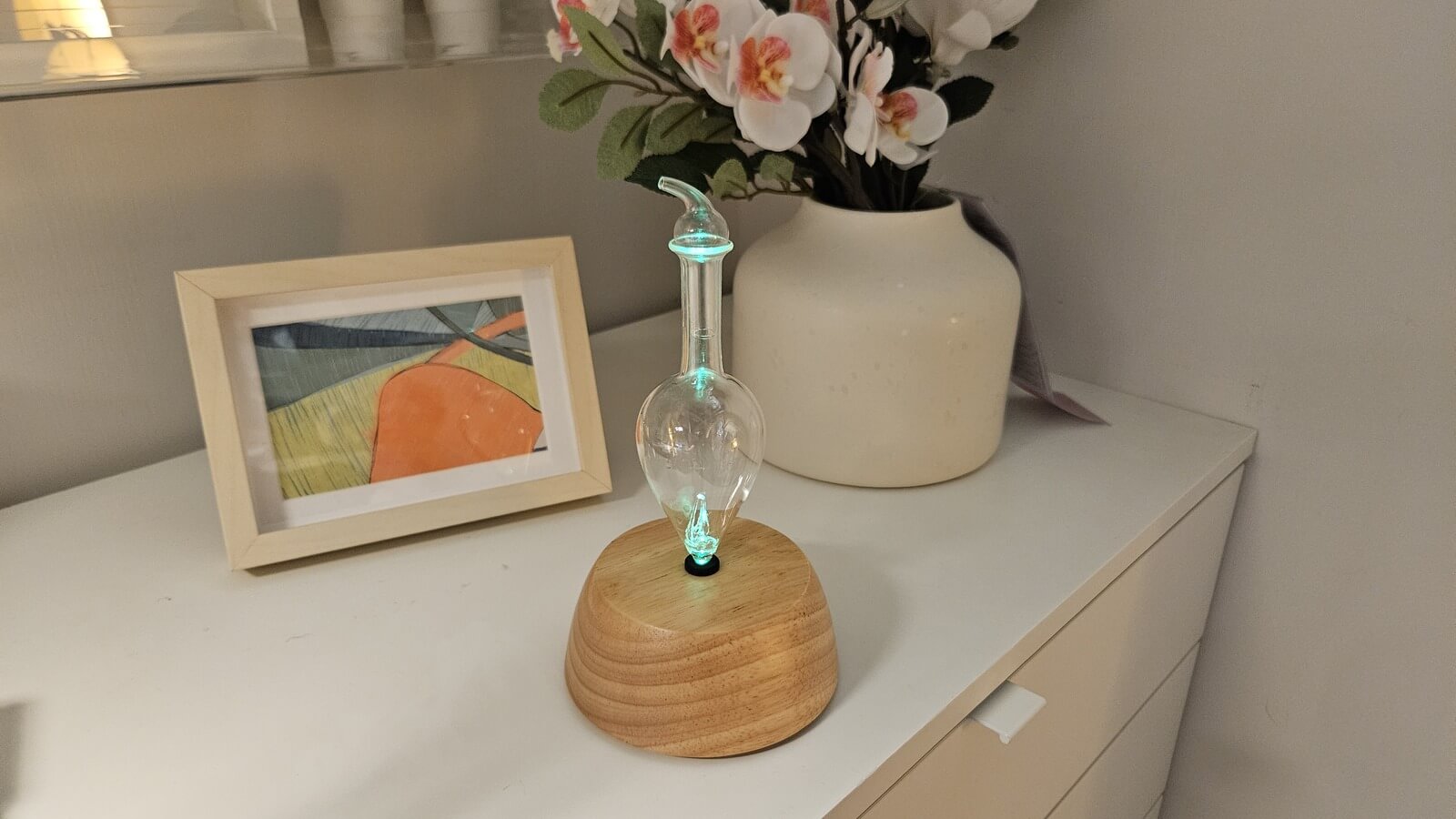
This is the section the SERP keeps missing. Every benefit covered above depends on getting an effective dose of the active compounds into your body. The delivery method you use decides whether that happens. Four common methods, four very different outcomes.
Topical application works for skin-level benefits (burns, bites, localized tension) and for slow systemic absorption via the bloodstream. Dilution rules apply. Linalool and linalyl acetate are skin-friendly at low concentrations. Camphor and 1,8-cineole, particularly in lavandin, are more irritating. This is the right delivery method for the skin and headache benefits, and a poor delivery method for the sleep and stress benefits, where olfactory uptake is faster and more reliable.
Steam inhalation (a bowl of hot water with a few drops, towel over the head) is a centuries-old method that still works, particularly for sinus and chest applications. The downside is that the heat actively oxidizes the more delicate terpenes. Linalool, in particular, is heat-sensitive and converts to linalool oxide above roughly 60 degrees Celsius, which is below the temperature of a fresh bowl of steaming water. You still get a meaningful dose, but the most therapeutic molecules are being degraded as you inhale them.
Ultrasonic diffusion (the most common consumer diffuser type) uses a high-frequency vibrating plate to mist a water-and-oil mixture into the air. It is quiet, inexpensive, and gentle. It is also, for the purposes of this article, the weakest delivery method. The mist is mostly water by volume, the oil is diluted to a tiny fraction of the airborne particle load, and the ultrasonic agitation itself can break down some terpenes. You smell lavender. You inhale a fraction of what you would from a more concentrated method.
Nebulizing diffusion uses cold-air dispersion via Bernoulli’s Principle (a fast moving air stream creates a pressure drop that pulls oil up a small glass tube and breaks it into a fine mist) to atomize pure essential oil with no water, no heat, and no plastic. The result is a denser concentration of intact aromatic molecules in the air. No oxidation. No dilution. No carrier interference. This is the delivery method most aligned with how the original benefit studies actually dosed the oil. Our deeper guide to Bernoulli-driven cold-air dispersion walks through the physics. Our Best Nebulizing Diffusers (2026) overview lists the six handcrafted models we make.
The short version: if you are spending real money on a true Lavandula angustifolia oil, putting it through an ultrasonic diffuser is the equivalent of buying a single-origin specialty coffee and brewing it through a tea bag. You will get some of the experience. You will not get the experience you paid for.
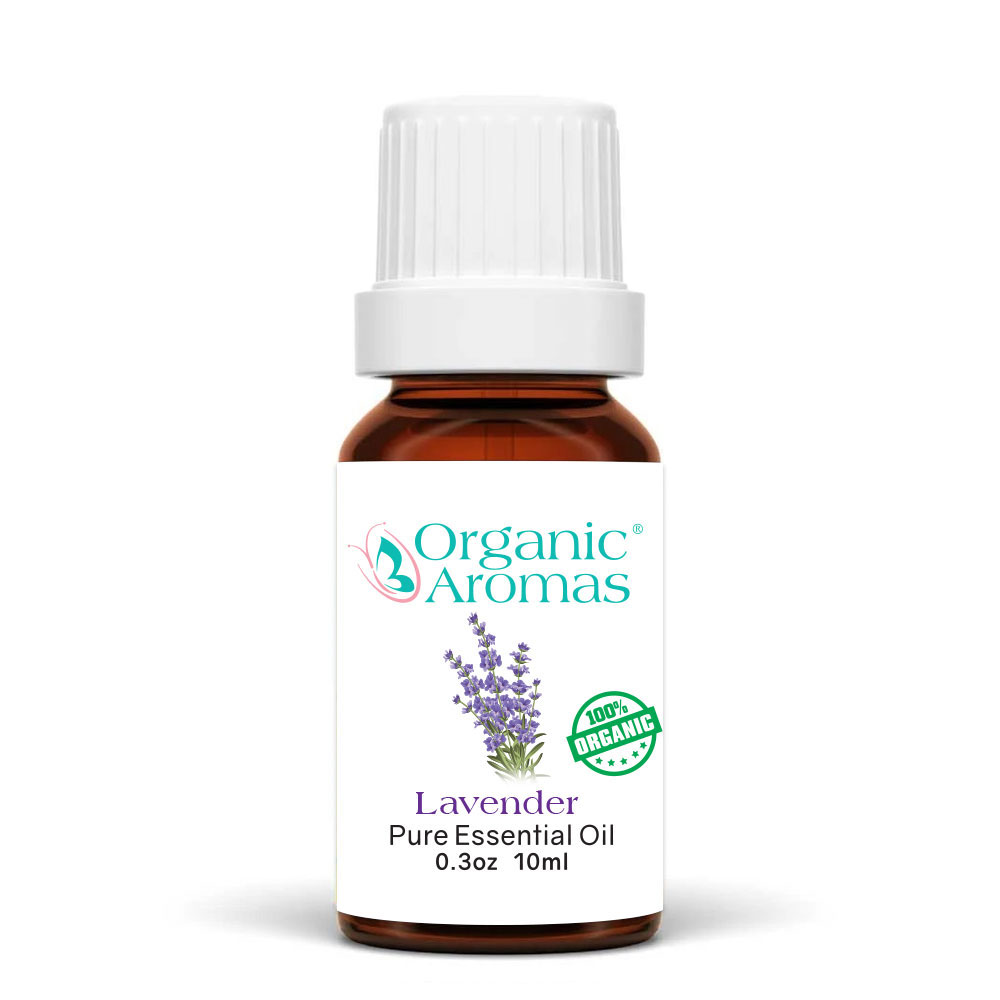
True Lavandula angustifolia, GC/MS Verified
Our certified-organic Lavandula angustifolia with the chromatogram on file. Pair it with a handcrafted Nebulizing Diffuser® for the delivery method that actually preserves linalool and linalyl acetate. Shop the Nebulizing Diffuser® Collection alongside the oil for a complete bedtime kit.
How to Read a Lavender Oil Label (Latin Name, GC/MS, Country of Origin)
Before you buy the next bottle, here is the short checklist that separates a working oil from a pretty bottle. Run any candidate against these five questions.
1. Is the Latin name printed? A serious supplier prints Lavandula angustifolia (or L. officinalis) clearly on the label. If the label only says “lavender,” you are almost certainly looking at lavandin or a blend. Skip it for sleep and stress applications.
2. Is there a GC/MS report available? Gas Chromatography-Mass Spectrometry breaks the oil down into its individual compounds and reports the percentage of each. A reputable supplier publishes this per batch and links to it from the product page or includes a QR code on the bottle. If the company will not show you the chromatogram, they probably do not want you to see what is in the oil.
3. Is the country of origin disclosed? The classic high-elevation L. angustifolia growing regions are Bulgaria’s Rose Valley, the Haute-Provence in France, and a handful of high-altitude plantations in places like Tasmania, New Zealand, and the western United States. None of these are secret. A blank “imported” or “blend of origins” label is a yellow flag.
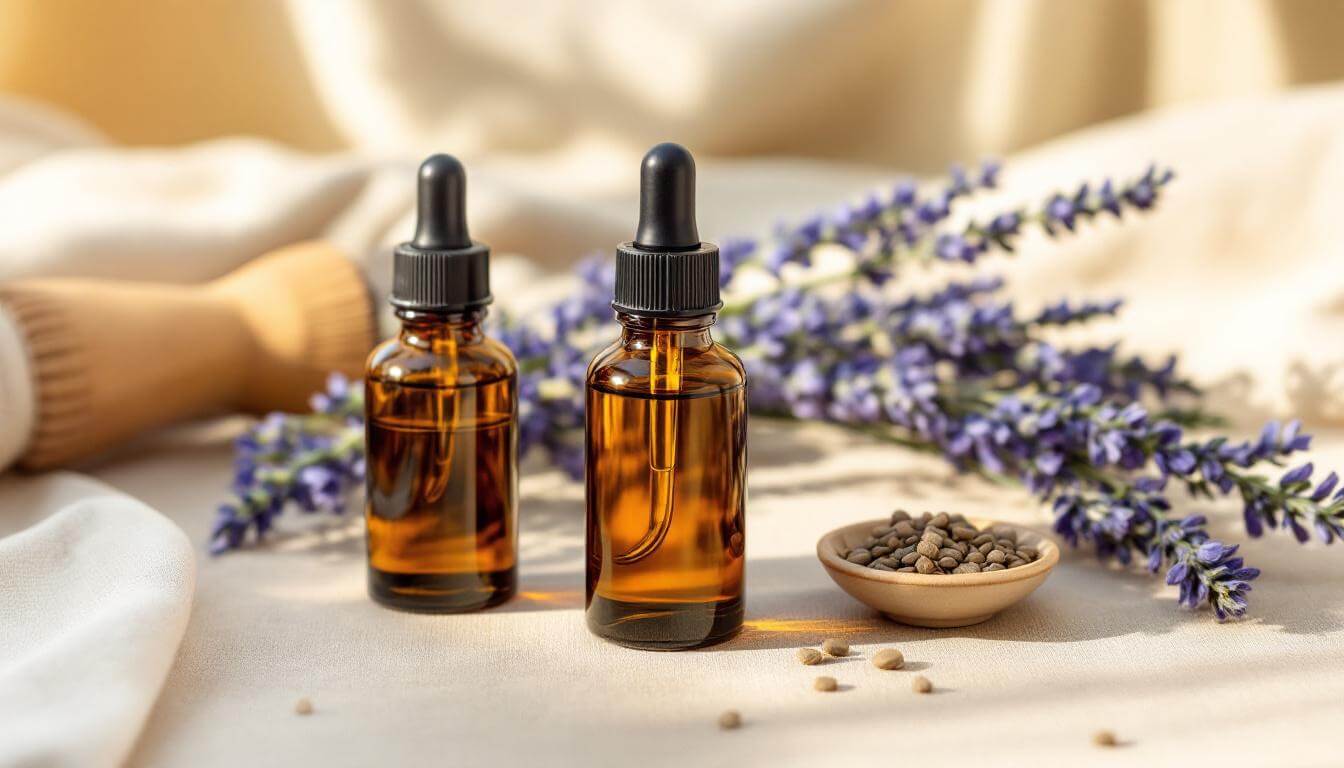
4. Is the bottle dark glass? Volatile aromatic compounds break down on exposure to UV light. Amber or cobalt glass slows that degradation considerably. Clear glass is fine for short retail-shelf life but unsuitable for a bottle you plan to keep open for six months.
5. Is the price plausible? True L. angustifolia oil from a quality supplier typically runs $12 to $25 per 10 mL bottle, sometimes more for organic or single-estate harvests. A 30 mL bottle for $5 is, almost without exception, lavandin or a synthetic blend mislabeled as lavender. The economics simply do not support a true-lavender bottle at that price point.
If you want a shortcut, our own Lavender Essential Oil 100% Pure Organic is the same true L. angustifolia we use in our customer-recommended blends, with the GC/MS report available and a labeled origin. The same principles apply when you buy from anyone else. Latin name, chromatogram, country, dark glass, plausible price.
Frequently Asked Questions About Lavender Oil Benefits
How long does it take to feel the calming effect of lavender oil? Inhaled linalool reaches the bloodstream within two to five minutes and crosses into the brain shortly after. Most users report a noticeable settling effect within 10 to 15 minutes of starting a diffusion. The effect builds over 20 to 30 minutes and tapers within an hour of stopping.
Can lavender oil be used during pregnancy? The published guidance is conservative. Most aromatherapy practitioners avoid all essential oils in the first trimester and use only modest, well-ventilated diffusion in the second and third. Topical use should be limited and at lower dilutions than usual. Always consult your obstetrician.
Can children use lavender oil? Children over two years of age can generally tolerate well-ventilated lavender diffusion in small amounts. Topical use should be at half the adult dilution (so 0.25% to 0.5% rather than 0.5% to 1%) and only on intact skin. Infants under two should not be exposed to direct essential oil diffusion.
Does lavender oil expire? Yes. Once the bottle is opened, oxidation begins. A well-stored L. angustifolia oil (cool, dark, dry, tightly capped) holds its therapeutic profile for roughly 12 to 24 months. After that the linalool content drops and the oil becomes more of a fragrance than a working aromatherapy oil.
Is lavender oil safe for pets? Lavender is considered one of the safer essential oils around dogs and cats, but no oil is risk-free. Always diffuse in well-ventilated rooms, never apply directly to a pet’s body, and never leave a pet in a closed room with active diffusion. Some cats are particularly sensitive to many essential oils and should not be in the room during diffusion at all.
What is the difference between lavender essential oil and lavender fragrance oil? Essential oil is a single-ingredient, steam-distilled or cold-pressed extract of the actual lavender plant. Fragrance oil is a synthetic blend of aromatic chemicals designed to smell like lavender. Only the essential oil contains linalool, linalyl acetate, and the rest of the active compounds. Fragrance oil offers no therapeutic effect and frequently contains undisclosed allergens.
Final Thoughts: What Lavender Oil Actually Does for You
Lavender oil deserves its reputation. It is one of the most thoroughly studied essential oils, with real, repeatable effects on the nervous system, on skin healing, and on the simple lived experience of a home that smells calm rather than chemical. The reputation gets oversold when articles list it as a cure-all and undersold when skeptics dismiss it as placebo. The truth sits cleanly in the middle. It is a working aromatic with a well-mapped chemistry and a clear benefit profile, provided you use the right species and the right delivery method.
If you take one thing from this guide: read the Latin name on the bottle, demand a GC/MS report, and put a quality Lavandula angustifolia through a delivery method that preserves its volatile compounds. Skip those three steps and any benefits you experience will be a fraction of what the plant is capable of. Honor them, and lavender becomes the foundation of an aromatherapy practice that you will use, on purpose, for decades.
For practical next steps, our broader complete guide to aromatherapy essential oils places lavender alongside the other foundational oils worth keeping in a home collection.