

How Many Drops of Essential Oil in a Diffuser? Chart by Room Size
Search “how many drops of essential oil in a diffuser” and every guide hands you the same tidy number: three to five drops per 100 milliliters of water. It sounds authoritative. It is also close to useless on its own, because that rule quietly assumes you own one specific kind of machine, and it ignores the three things that actually decide whether your room smells wonderful or gives you a headache by lunchtime. The honest answer to how many drops of essential oil in a diffuser you should use is that it depends on your device, the size of your room, and the oil itself.
The good news is that once you understand those three levers, you stop guessing forever. This guide walks through the real dosing math, why the “drops per 100 mL” formula only applies to water-based misters, why adding more oil usually makes things worse rather than stronger, and how the number changes completely when you switch to a waterless Nebulizing Diffuser® that uses no water at all.
How Many Drops of Essential Oil in a Diffuser? Start Low, Then Read the Room
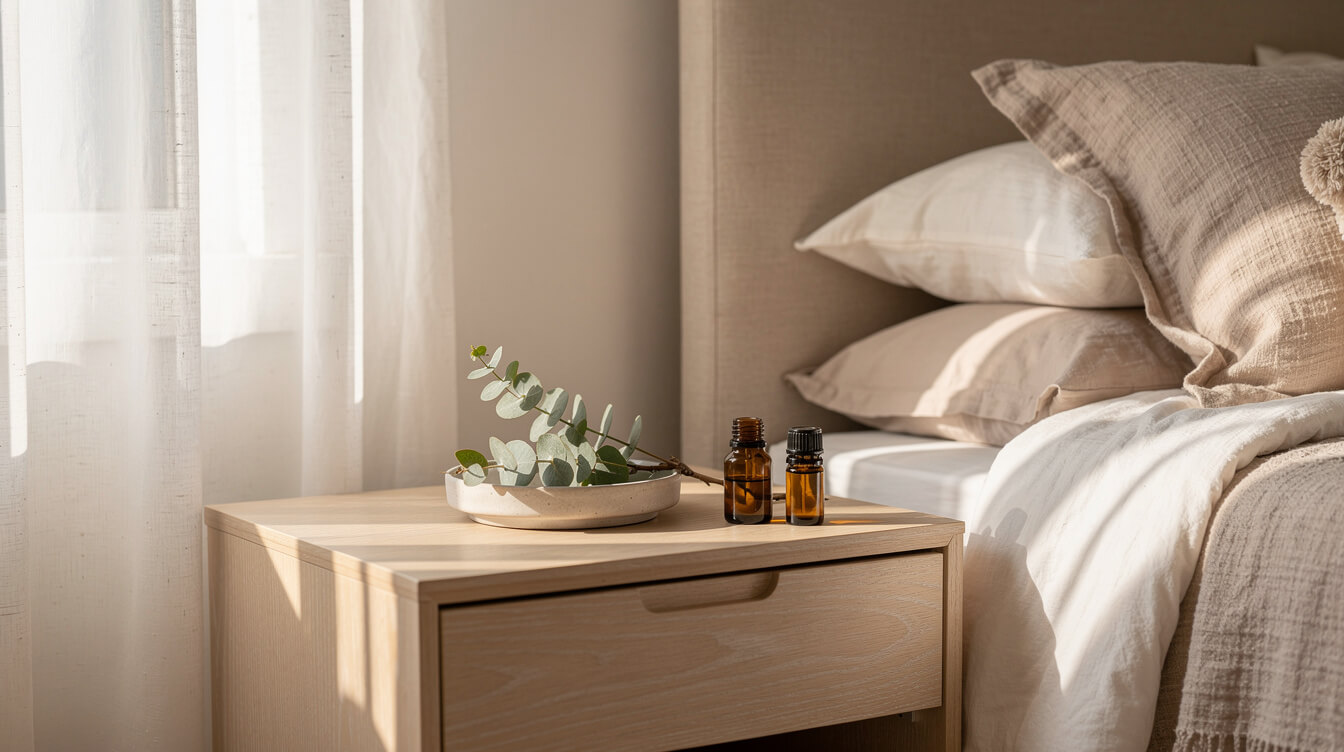
If you use a standard water-based ultrasonic diffuser, a sensible starting point is 3 to 5 drops for every 100 mL of water in the tank. Most small ultrasonic units hold between 100 and 300 mL, so that translates to roughly 3 to 5 drops for a compact 100 mL bedside model, and about 9 to 15 drops for a larger 300 mL unit. Those are starting points, not targets. The single best habit you can build is to begin at the low end of that range, run the device, and only add more on your next fill if the scent genuinely felt too faint.
Why start low? Because scent is not like volume on a speaker, where more input reliably means more output. Your sense of smell adapts to a constant aroma within minutes, so the person who dumps in fifteen drops does not experience a stronger scent an hour later. They simply saturate the room, coat the diffuser in residue, and burn through expensive oil faster. Starting low and adjusting up is the whole game, and it is the opposite of what most people do on their first week with a diffuser.
Why the “Drops Per 100 mL” Rule Only Applies to Water Diffusers
Here is the part almost every article skips. The drops-per-100-mL formula is a dilution ratio, and a dilution ratio only means something when you are diluting the oil into water. Ultrasonic diffusers work by vibrating a small disc thousands of times per second, breaking a water-and-oil mixture into a cool mist. The water is the carrier. The oil is a passenger, present in tiny amounts, riding along on the vapor. That is why the number is expressed per 100 mL of water and not as an absolute quantity.
The moment you use a diffusion method that does not involve water, the entire formula stops applying. A reed diffuser measures oil by the bottle. An aroma inhaler uses a couple of drops on a wick. And a waterless Nebulizing Diffuser®, which atomizes pure undiluted essential oil into a fine mist with no water and no heat, is not measured in drops-per-water at all. It is measured by how much neat oil you place in the glass reservoir and how long you let it run. If you want the full mechanism behind waterless diffusion, our cold air diffuser guide breaks down exactly how it delivers scent without a drop of water. Confusing these two methods is the root cause of most “how many drops” confusion online.
Sign Up to Get Your FREE
e-Book Here…
The Real Variable Is Room Volume, Not a Fixed Number
A single drop of essential oil has to perfume a certain volume of air, and volume is the number that most drop-count advice forgets entirely. A room is not measured by its floor area alone. A 150 square foot bedroom with an eight foot ceiling holds about 1,200 cubic feet of air. Give that same footprint a vaulted twelve foot ceiling and you are suddenly asking the same few drops to scent 1,800 cubic feet, fifty percent more air, with no change in dose. This is why the identical setting feels perfect in one room and barely noticeable in another.
Ceiling height, open doorways, ventilation, and airflow all pull scent molecules away from your nose and thin them across a bigger space. A closed 100 square foot office concentrates aroma quickly, so you dose down. An open-plan living-kitchen with the ceiling fan running dilutes it fast, so you either dose up or, better, move to a diffuser built for the volume. We cover the coverage math for big spaces in detail in our guide to choosing an essential oil diffuser for a large room. The practical takeaway is simple: think in cubic feet of air, not just drop counts, and match the machine to the space before you touch the oil.
Drops by Room Size and Tank Size: The Reference Chart
Enough theory. Here are the numbers in one place. The first chart is the tank-size dilution reference for water-based ultrasonic units, the version of “how many drops of essential oil in a diffuser” that nearly every guide online answers. The second is the one almost nobody publishes: a room-size chart that accounts for the actual volume of air your scent has to fill, plus the run-time setting to use if you have switched to a waterless Nebulizing Diffuser®. Treat every number as a starting point and begin at the low end.
Water diffuser: drops by tank size
| Water tank size | Starting drops | Typical device |
|---|---|---|
| 100 mL | 3–5 drops | Compact bedside / desk unit |
| 200 mL | 6–9 drops | Standard bedroom unit |
| 300 mL | 9–12 drops | Living-room ultrasonic |
| 400 mL | 12–15 drops | Large-tank ultrasonic |
| 500 mL | 15–18 drops | Whole-room / commercial mister |
This is simply the 3 to 5 drops per 100 mL ratio scaled up, held to the lower end on purpose. Bigger tanks tempt people to keep pouring, but the goal is never to fill the water with oil, it is to perfume the air in the room, and that is a different measurement entirely.
Room size: drops and run time by space
| Room size (8 ft ceiling) | Approx. air volume | Water diffuser (start) | Nebulizing Diffuser® timer |
|---|---|---|---|
| Up to 100 sq ft (bathroom, office nook) | ~800 cu ft | 3–4 drops | 1–2 min on / 30 min off |
| 100–200 sq ft (bedroom) | ~1,200 cu ft | 4–6 drops | 2 min on / 30–60 min off |
| 200–350 sq ft (living room) | ~2,400 cu ft | 6–10 drops | 3–4 min on / 30 min off |
| 350–600 sq ft (open plan) | ~4,000 cu ft | 10–15 drops (or two units) | 5 min on / 20 min off |
| 600+ sq ft or vaulted ceiling | 5,000+ cu ft | Size up the machine, not the dose | 5+ min on / 15–20 min off |
Two rooms with the same floor area can need very different doses the moment ceiling height, open doorways, or a running fan enter the picture. If your space sits at the top of a bracket, or the air moves a lot, step up to the next row rather than drowning a small tank in oil. And remember the waterless column exists because a Nebulizing Diffuser® is dosed by time, not drop count, so scaling to a bigger room means a slightly longer on-cycle, not a heavier pour.
More Drops Backfire: Olfactory Fatigue and the Over-Diffusing Trap
Across more than a decade of customer feedback, the most common diffusing mistake we see is not using too little oil. It is using far too much. People report that a blend smelled amazing for the first ten minutes and then seemed to vanish, so they added more drops, and more again, until the room felt heavy and someone got a headache. The oil was never the problem. The nose was simply doing its job.
This is olfactory fatigue, sometimes called olfactory habituation, and it is a well documented feature of how smell works. Your olfactory receptors stop firing at a constant stimulus within roughly fifteen to twenty minutes, which is why you cannot smell your own home when you walk in but a visitor can. Piling on more drops does not defeat this adaptation. It just wastes oil and over-saturates the space for anyone who arrives later. The real fix is not more oil, it is intermittent diffusion: run the device for fifteen to thirty minutes, then let it rest for thirty to sixty. The pause lets your receptors reset, so a fresh short burst reads as vivid again. If you want blends built to shine in short cycles, our essential oil recipes for a diffuser are a good place to start.
Join Now and Get a Coupon for 10% Off!
Not All Oils Diffuse the Same: Volatility and Drop Count
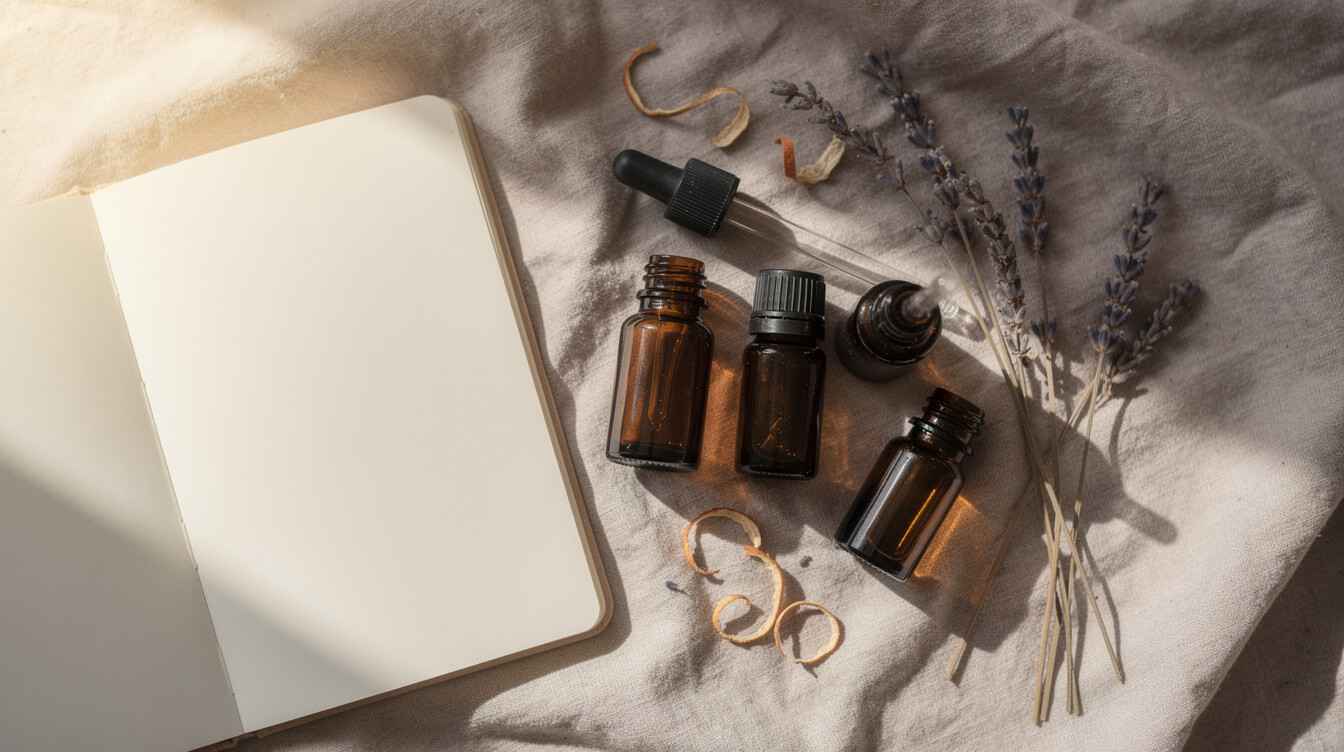
Two oils, same drop count, wildly different results. That is because essential oils differ in volatility, which is how quickly their aroma molecules evaporate into the air. Perfumers sort oils into top, middle, and base notes for exactly this reason, and the category tells you how to dose.
Top notes like sweet orange, lemon, eucalyptus, and peppermint are light and volatile. They flash into the room fast and fade first, so people tend to over-add them chasing a scent that was always going to be fleeting. Middle notes such as lavender, geranium, and rosemary are the balanced heart of most blends. Base notes like patchouli, vetiver, cedarwood, and sandalwood are heavy and slow. They linger for hours and can dominate a blend from just a drop or two, so they need a lighter hand, not a heavier one. A useful rule of thumb: if a blend leans on citrus, you can be a touch more generous, but if it contains any base note, cut back. Our list of essential oils and their uses notes which oils sit where, so you can dose by character rather than by habit.
How Many Drops in a Waterless Nebulizing Diffuser®?
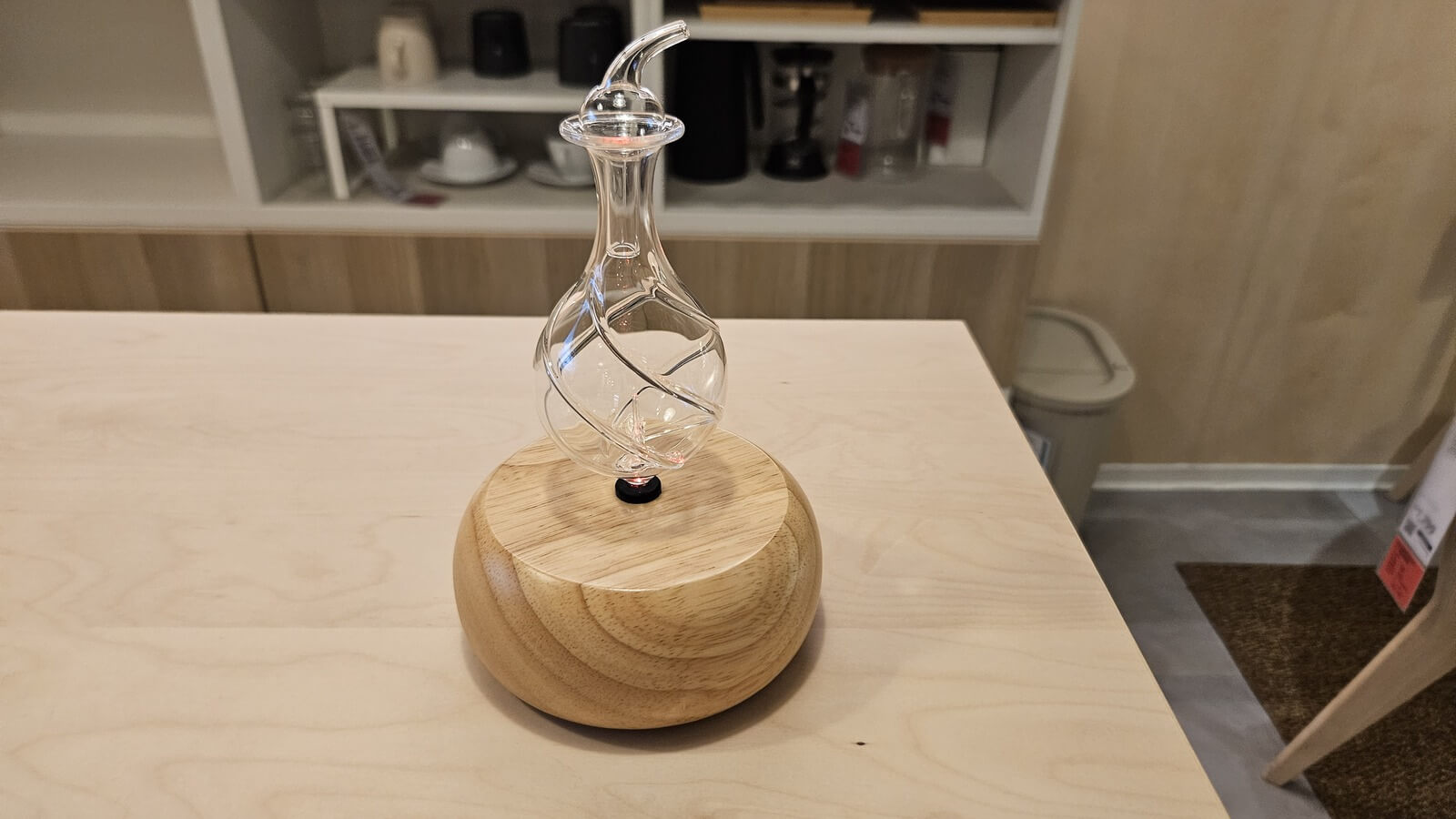
With a Nebulizing Diffuser® the question changes shape. There is no water to dilute into, so you are not counting drops per 100 mL. Instead, you add pure undiluted essential oil directly into the glass reservoir, usually somewhere between fifteen and twenty-five drops to coat the base of the glass, and then you control intensity with time rather than quantity. The built-in timer and intermittent cycling do the dosing work that drop-counting does in a water unit. Because nothing is wasted carrying water, a small amount of oil goes a surprisingly long way, and the scent that reaches you is the true, full-strength aroma of the botanical rather than a trace riding on vapor.
This is also why a waterless unit sidesteps the humidity and residue issues of misters, a point we unpack in our comparison of a diffuser versus a humidifier. If you are deciding between formats in the first place, the best diffuser for essential oils buyer’s framework ranks them by mechanism, not price. For pure, waterless diffusion with app-controlled timing, the Raindrop Smart Nebulizing Diffuser® lets you set short cycles and forget the drop math entirely.
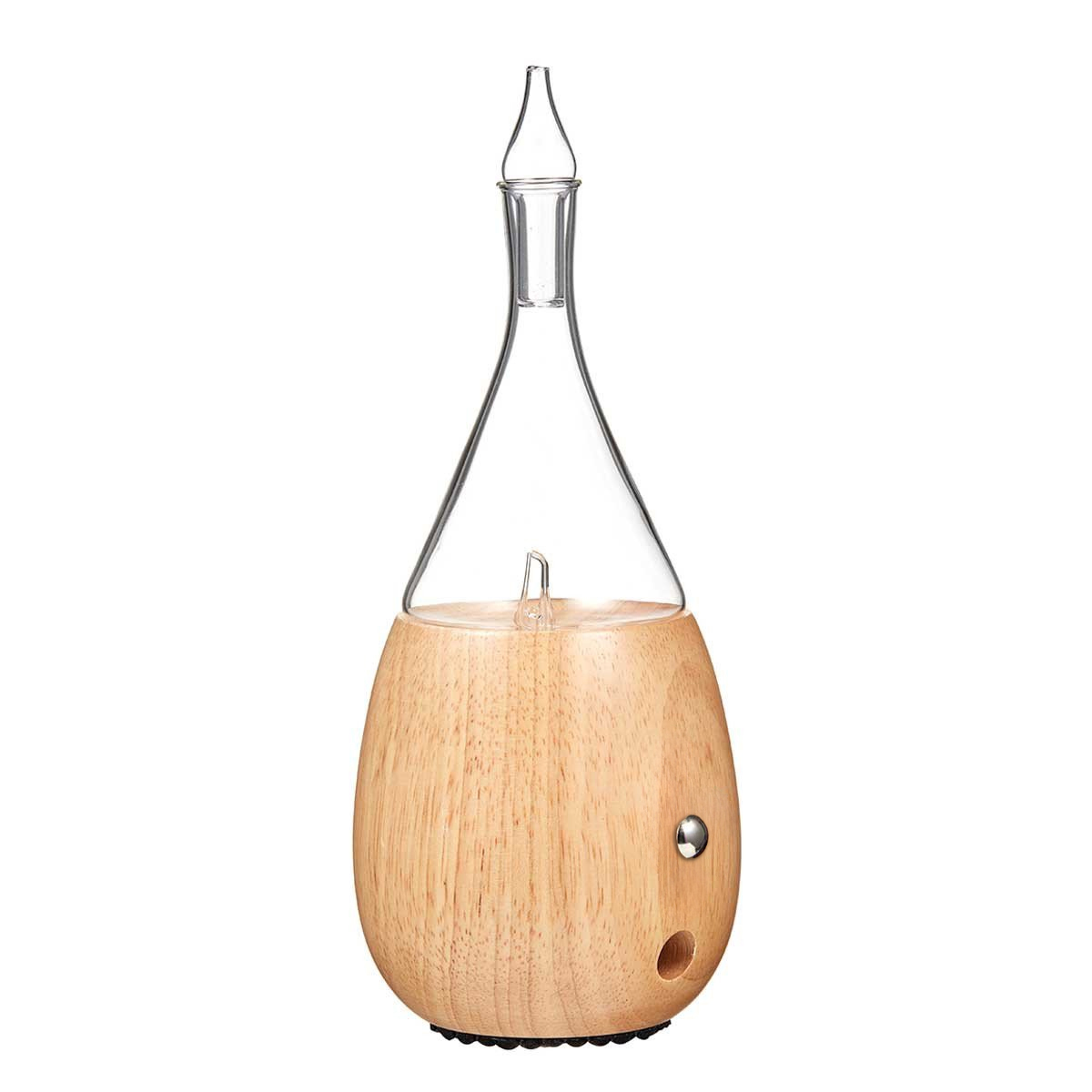
Stop Counting Drops. Start Setting Timers.
The Raindrop Smart Nebulizing Diffuser® delivers pure, undiluted essential oil with no water and no heat. Set an intermittent cycle from your phone and let the scent stay vivid without over-diffusing.
Diffusing Safely: Dosing Down for Sleep, Kids, and Pets
The right number of drops also depends on who is in the room. For sleep, less is genuinely more. A light dose on a short cycle before bed creates a calming atmosphere without leaving the air heavy overnight, and running any diffuser continuously while you sleep is unnecessary. Set it to shut off after thirty to sixty minutes and let the lingering scent carry you the rest of the way. This supports relaxation and a restful wind-down without over-saturating the bedroom.
Around infants, young children, and pets, dose down further and prioritize ventilation. Animals, cats especially, process compounds differently than people do, so a gentle amount in a well-aired, open space is the sensible approach, and pets should always be able to leave the room. Keep undiluted oils out of reach, wipe up spills, and clean the reservoir regularly so old residue does not sour the scent. Our guides on whether essential oil diffusers are safe and how to clean an essential oil diffuser go deeper on both points. When in doubt, use fewer drops and more fresh air.

Join Our Exclusive Member Club to get Big Discounts!
Frequently Asked Questions
How many drops of essential oil for a 300 mL diffuser? For a water-based 300 mL ultrasonic tank, start around 9 to 12 drops, which is roughly the 3 to 5 drops per 100 mL guideline scaled up. Begin at the lower end, then adjust on your next fill based on how the room actually felt.
Can you put too much essential oil in a diffuser? Yes. Beyond wasting oil, over-dosing saturates the room, can trigger headaches for sensitive people, and leaves residue that gums up the device. Because your nose adapts to constant scent within minutes, extra drops rarely make the aroma feel stronger anyway. Less oil on a shorter cycle almost always performs better.
How many drops of essential oil without water? In a waterless Nebulizing Diffuser® you add neat oil straight to the glass reservoir, commonly fifteen to twenty-five drops to coat the base, and then control strength with run time and intermittent cycling rather than a dilution ratio. There is no water, so the drops-per-100-mL rule does not apply.
Why can I not smell my diffuser anymore? Almost always olfactory fatigue, not an empty tank. Your receptors have adapted to the constant scent. Turn the diffuser off for thirty to sixty minutes and the next short burst will read as fresh and vivid again. Adding more drops does not solve it.
How many drops of essential oil for a 500 mL diffuser? Start at about 15 drops for a 500 mL water tank and go no higher than 18. A tank that large is usually meant for a sizeable room, so the limiting factor is the air volume, not the water. If 18 drops still feels faint in an open space, the honest fix is a second unit or a diffuser built for the square footage rather than a heavier pour.
How many drops of essential oil per 100 mL of water? Three to five drops per 100 mL is the base ratio every larger figure is scaled from. It applies only to water-based ultrasonic and evaporative diffusers, because it is a dilution ratio into the water. Waterless nebulizing units do not use it at all.
How many drops of essential oil in a car diffuser? Car diffusers are tiny and usually scent a felt pad or a small vent clip rather than a water tank, so 2 to 3 drops is plenty. The enclosed cabin concentrates aroma fast, and refreshing the pad every few days beats over-soaking it, which can linger unpleasantly on a hot day.
How often should a diffuser run? Intermittent cycles beat continuous operation for both scent quality and oil economy. A common rhythm is fifteen to thirty minutes on, followed by thirty to sixty minutes off. Many nebulizing units and smart diffusers automate this so you never have to think about it.
Final Thoughts: The Right Number Is the Smallest One That Works
There is no universal answer to how many drops of essential oil in a diffuser you should use, and any guide that gives you a single number without asking about your device, your room, and your oil is guessing. The formula worth remembering is the reasoning, not the digit: start low, think in cubic feet of air rather than drop counts, respect that heavier oils need a lighter hand, and lean on intermittent diffusion instead of piling on more oil to chase a scent your nose has simply adapted to.
Do that and you use less oil, avoid the heavy over-diffused rooms and headaches, and get a cleaner, truer aroma. And if you would rather stop counting drops altogether, a waterless Nebulizing Diffuser® quietly removes the whole problem, delivering pure, full-strength scent on a timer, no water math required. The best dose is always the smallest one that fills your space beautifully, and now you know how to find it.