

List of Essential Oils and Their Uses: A Practical Reference by Effect
If you have ever typed “list of essential oils and their uses” into a search bar, you already know the problem with most of the results. They hand you an alphabetical wall of names, each with a vague promise or two, and leave you to guess which oil actually fits the moment in front of you. This reference is built the other way around. Instead of sorting by the first letter of a plant, we sort by what you are trying to create in your space: rest, focus, an emotional lift, a sense of calm, or fresh-smelling air. Along the way we name the actual aroma compounds doing the work, because “lavender is relaxing” is where most guides stop, and it is exactly where the useful part begins.
One thing to hold onto before you scroll: an essential oil is not a fixed experience. The same bottle of lavender can read soft and sleepy or thin and sharp depending on how you release it into the air. That is why the last third of this guide covers the delivery method, blending, and safety. Treat the effect-based sections below as your working list, then use the mechanics at the end to get the most out of every drop.
Essential Oils for Restful Sleep and Winding Down
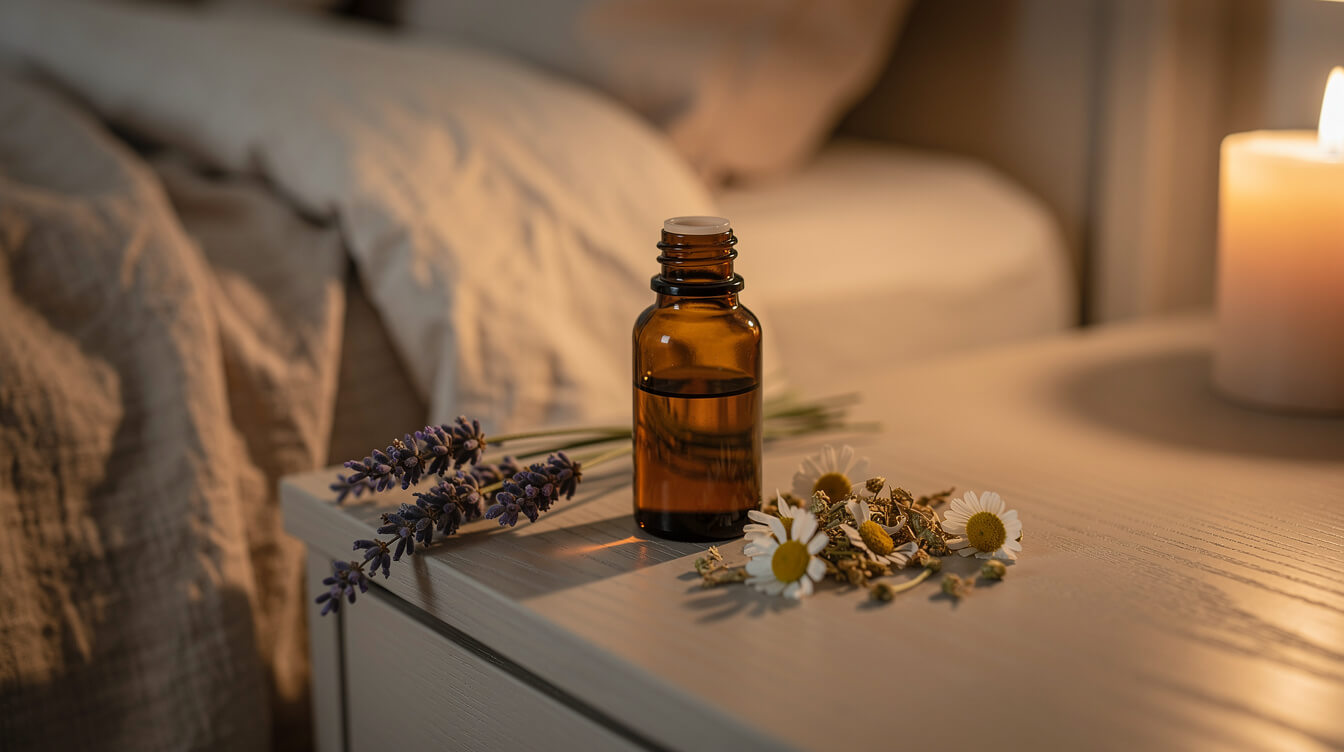
The evening oils share a chemical family: esters and linalool, the gentle, floral-soft molecules that give a scent its “settle in” quality. Lavender is the headline act because it is unusually rich in linalool and linalyl acetate, the two constituents most associated with a calming, atmosphere-softening aroma. If you want the deeper chemistry, our breakdown of lavender and the linalool-linalyl acetate pairing goes further than a list ever could.
Here are the oils people reach for most when they want the room to feel like the end of the day:
- Lavender:the classic bedtime aroma; soft, herbaceous, and floral. A calming, familiar scent that suits almost any evening blend.
- Roman Chamomile:apple-sweet and warm, high in esters. Quieter and rounder than lavender, lovely for a nursery-calm mood (used with care around young children).
- Cedarwood:dry, woody, and grounding thanks to cedrol. A base note that anchors a blend and keeps it from smelling sharp.
- Vetiver:deep, earthy, almost smoky. A little goes a long way; it adds a heavy, tranquil floor to a sleep blend.
- Sweet Marjoram:warm and slightly spicy-herbal, a comforting counterpart to lavender.
A reliable evening pairing across our customer feedback is lavender with a touch of cedarwood: the lavender carries the aroma, the cedarwood makes it last. For a full routine rather than a single scent, our guide to building a bedtime aromatherapy protocol walks through timing and dose.
Essential Oils for Focus, Clarity, and Morning Energy
Where the sleep oils are soft esters, the focus oils are bright, cool, and camphoraceous. These are the molecules that read as “awake”: menthol, 1,8-cineole, and the crisp monoterpenes of citrus peels. They give a scent its snap.
- Peppermint:roughly 35 to 45 percent menthol, which is why a single drop reads so cold and sharp. Use it sparingly; peppermint dominates a blend fast. See our notes on peppermint drop counts and pairings.
- Rosemary:herbal and pine-like, carried by 1,8-cineole and camphor. A brisk, study-desk kind of aroma.
- Lemon:clean and zesty, up to about 70 percent limonene. The classic “clear the head” citrus.
- Eucalyptus:high in 1,8-cineole (often 70 to 85 percent in Eucalyptus globulus). Fresh, cool, and unmistakable.
- Basil (linalool type):sweet-green and lifting, a less obvious focus oil that pairs beautifully with citrus.
Because top notes like peppermint and lemon evaporate quickly, a focus blend is often at its best in the first hour. If you want that bright morning aroma to hold longer, anchor it with a small amount of a woodier oil, a trick we return to in the delivery section below.
Sign Up to Get Your FREE
e-Book Here…
Essential Oils for Mood and Emotional Uplift
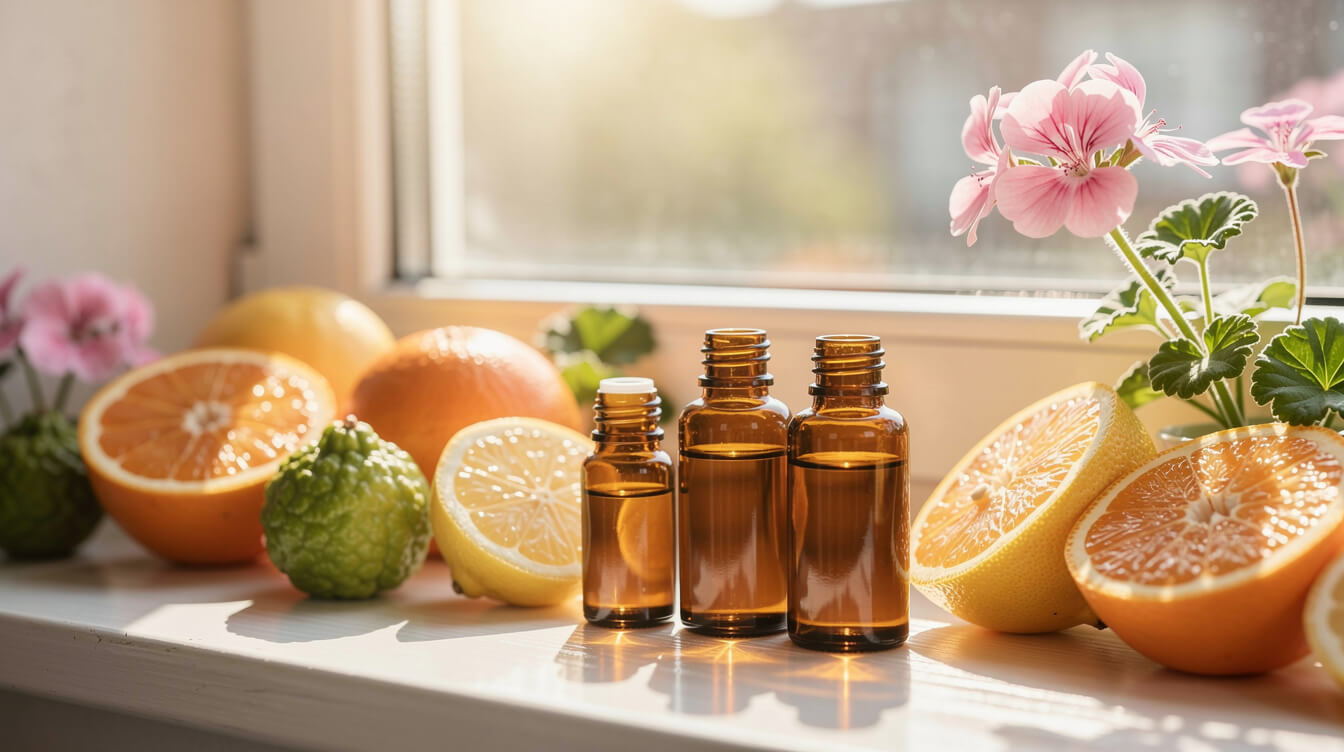
The uplifting oils lean sweet, sunny, and floral. Many are citrus-forward and rich in limonene, the compound most tied to a bright, cheerful impression. Others are heady florals that add depth so the blend feels rich rather than simply sharp.
- Sweet Orange:the most crowd-pleasing citrus; round, juicy, and warm. Nearly universal in feel-good blends.
- Bergamot:citrus with a floral, almost tea-like edge from its linalyl acetate. Sophisticated and calming-bright at once. (An important safety note on bergamot appears in the safety section.)
- Ylang Ylang:intensely sweet, exotic floral. Use a light hand; it can overwhelm a blend quickly.
- Geranium:rosy and green, a floral that bridges citrus and heavier blooms.
- Jasmine (absolute):deep, honeyed, and luxurious; a small accent that makes a blend feel special.
These are the oils that make a living room feel welcoming for guests. For ready-made combinations, our library of essential oil blends built on note structure gives you starting recipes you can adjust by drop.
Essential Oils for Calm and Quiet Focus
There is a difference between “sleepy” and “settled.” The calming oils in this group help a space feel unhurried without necessarily pulling you toward bed. They are the oils to reach for during a slow afternoon, a yoga session, or a stretch of focused reading.
- Frankincense:resinous, warm, and slightly citrus-pine from its alpha-pinene and monoterpenes. A meditative, centering aroma with real staying power.
- Clary Sage:herbal, nutty-sweet, and softly euphoric, carried by linalyl acetate and sclareol.
- Sandalwood:creamy, soft, and deeply woody. One of the great base notes; grounding and quietly luxurious.
- Neroli:orange-blossom floral, delicate and uplifting-calm at the same time.
- Lavender:it earns a second appearance here because its versatility bridges calm and sleep effortlessly.
Frankincense and sandalwood are the anchors of this category: slow to evaporate, long to linger, and forgiving in a blend. If a bright blend feels a little frantic, one drop of either will round it out. For dedicated calming blends and how they are structured, we keep a separate deep-dive.

Sign Up to Get Your FREE Essential Oils e-Book Here
Essential Oils for Fresh, Clean-Smelling Air
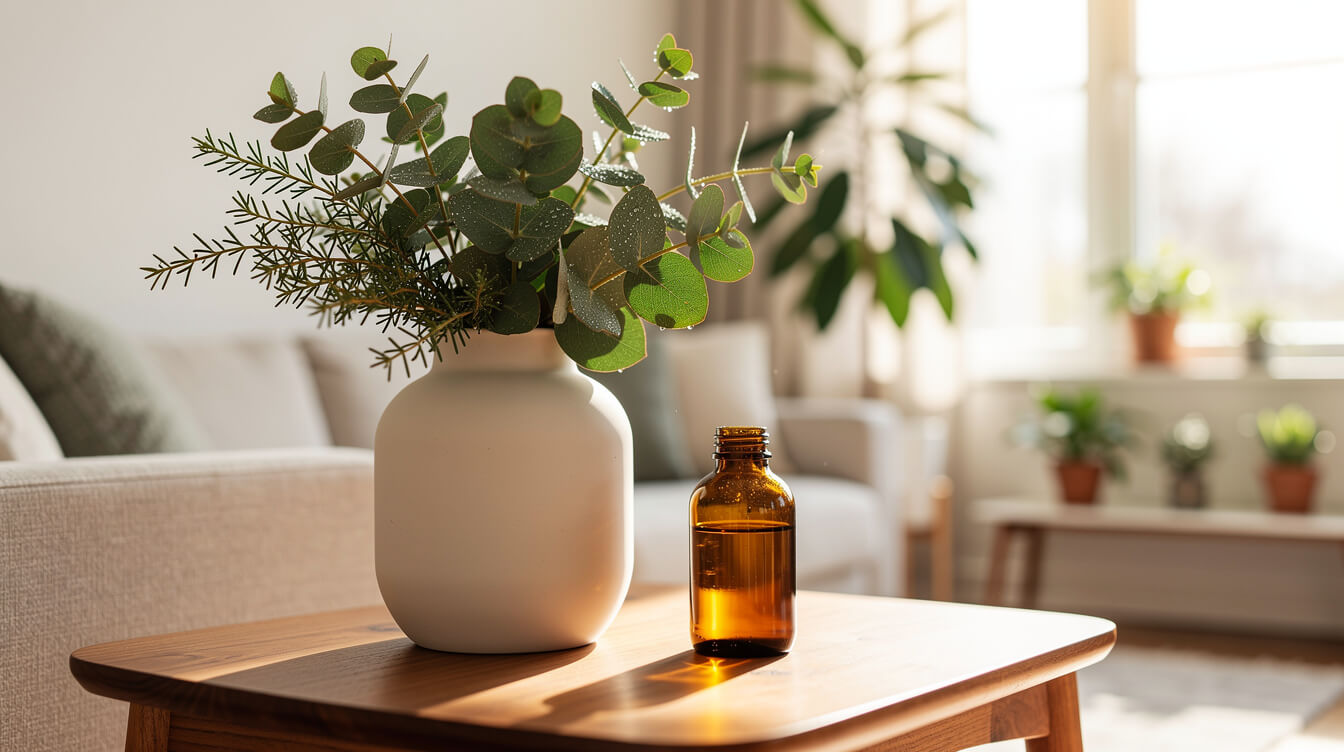
This group is about the feeling of an open window: crisp, green, and clean. These oils are popular through the cooler months and in any room that could use a lift. They are led by the same cooling 1,8-cineole and green terpinen-4-ol molecules that read as “just cleaned.”
- Eucalyptus:the definitive fresh-air aroma; cool, sharp, and invigorating.
- Tea Tree:medicinal-green and brisk, high in terpinen-4-ol. A little sharp on its own; pairs well with citrus.
- Lemon:bright and clean, it makes any room smell tidier.
- Pine or Fir:forest-fresh and resinous, evoking cool outdoor air.
- Ravintsara:softer and rounder than eucalyptus but similarly fresh, gentle enough for everyday diffusing.
A note on expectations: aromatherapy makes air smell fresh and pleasant; it is not a substitute for ventilation or cleaning. Diffuse for the atmosphere, open a window for the air itself. If you are weighing how and when diffusing fits your home, our honest look at whether essential oil diffusing is safe is worth a read.
Why the Botanical Name on the Label Matters
Two bottles can both say “lavender” and smell nothing alike, because the common name hides the actual plant. True lavender is Lavandula angustifolia, the linalool-rich oil behind everything we described in the sleep section. Spike lavender is Lavandula latifolia, a close cousin loaded with camphor and 1,8-cineole; it smells sharp and medicinal, closer to rosemary than to a calming bedtime scent. Neither is wrong, but they are not interchangeable, and only the Latin binomial tells you which one you are buying.
This is the quiet reason a “list of essential oils and their uses” can only take you so far without the chemistry underneath. The same species can even vary by chemotype, meaning plants of one species grown in different conditions produce different dominant compounds. Rosemary, for instance, comes in cineole, camphor, and verbenone chemotypes, each with a distinct aroma and best use. When an oil matters to you, read past the marketing name to the botanical name and, ideally, the constituent breakdown. It is the difference between guessing and knowing.
Why the Delivery Method Changes What You Get
Here is the part almost every list skips, and it is the single most useful thing on this page. The oils above are only half the equation. How you release them into the air changes the aroma, the intensity, and how long it lasts. The same lavender can feel like a luxury spa or a faint whisper depending on the machine.
There are three common ways to get oil into the air, and they are not equivalent:
- Nebulizing diffusion:a stream of air draws neat, undiluted oil up a small glass tube and atomizes it into an ultra-fine mist. There is no water and no heat. Because nothing dilutes or cooks the oil, the full spectrum of volatile compounds, from the lightest citrus top note to the heaviest wood base note, disperses intact. This is the principle a Nebulizing Diffuser® is built on, and it is why the aroma reads as full and true.
- Ultrasonic diffusion:a plate vibrates oil suspended in a tank of water, producing a cool fog. It is quiet and adds humidity, but the water dilutes the concentration and the lightest top notes behave differently once mixed with water.
- Heat (candle or electric warmers):warming a blend is simple and inexpensive, but heat can alter the most delicate, heat-sensitive constituents, so the scent you smell is not quite the scent in the bottle.
This is also where perfumery note structure becomes practical rather than poetic. Top notes (citrus, peppermint, eucalyptus) are the smallest, lightest molecules; they hit first and fade within an hour or two. Middle notes (lavender, geranium, rosemary) form the body of a blend and hold for a few hours. Base notes (cedarwood, sandalwood, vetiver, frankincense) are heavy and slow, lingering the longest and anchoring everything above them. A satisfying blend usually spans all three, and a classic starting ratio is roughly 30 percent top, 50 percent middle, and 20 percent base by drop count. Because a nebulizer works with neat oil, those proportions come through exactly as you mixed them.
If pure, undiluted aroma is the goal, this is where the hardware matters. You can explore the full Nebulizing Diffuser® collection to see the waterless, heatless approach in person, and our companion guide to choosing organic essential oils for your diffuser pairs nicely with it. For the broader picture, our complete guide to essential oils for aromatherapy ties the whole practice together.
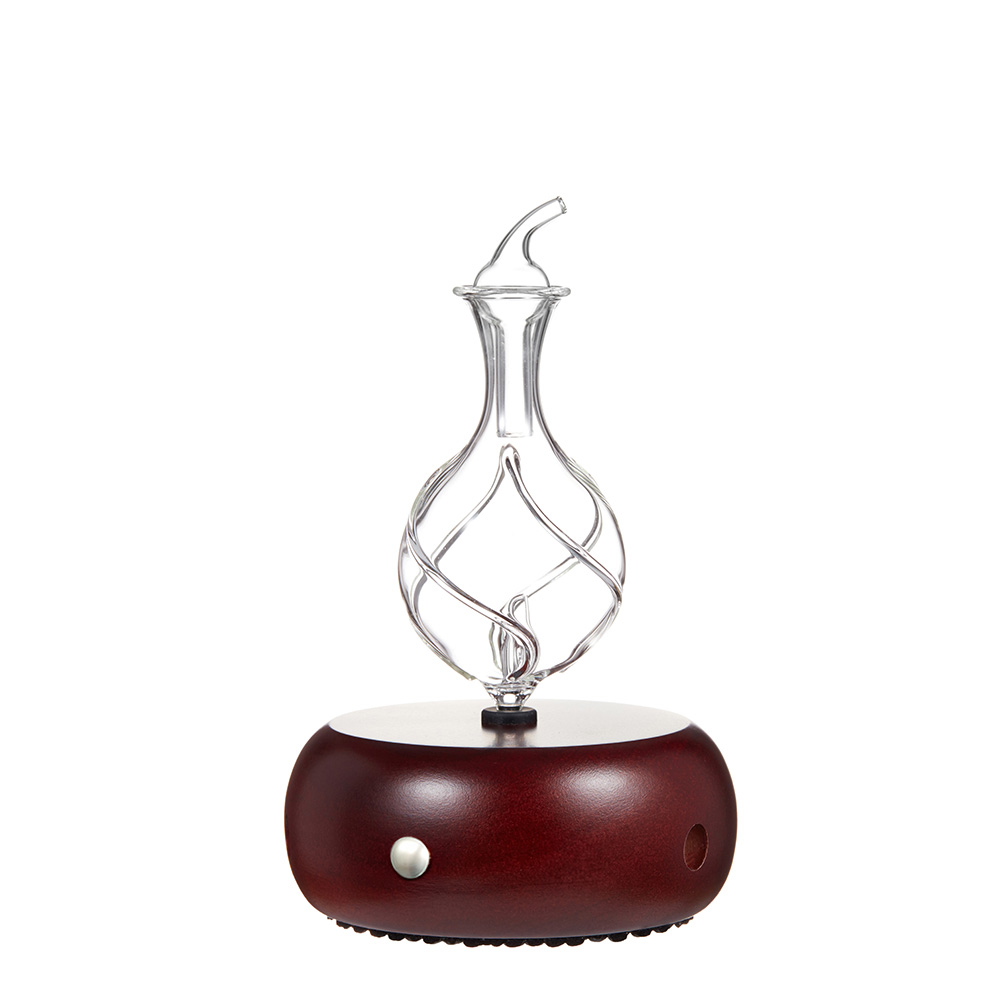
Experience Your Oils, Undiluted
The Radiance Smart Nebulizing Diffuser® uses no water and no heat, so every oil on this list disperses in its full, true form. Handcrafted with real wood and medical-grade Pyrex glass.
How to Use This List Safely
Natural does not automatically mean risk-free, and the oils with the strongest aromas often deserve the most respect. A few practical rules turn this list into a safe, long-lived reference.
The citrus photosensitivity catch
Expressed citrus oils, especially bergamot, lemon, lime, and grapefruit, contain furocoumarins such as bergapten. Applied to skin and then exposed to sunlight, they can cause burns and dark patches. The good news for aromatherapy fans: this is a topical concern, not an airborne one, so diffusing citrus is not the issue. Just keep undiluted citrus off bare skin before you head into the sun, or choose a bergamot labeled FCF (bergapten-free) for skin blends.
Dilution and skin contact
If you ever move from diffusing to topical use, dilute. A common starting range is 1 to 2 percent essential oil in a carrier oil for adults, and always run a small patch test first. Keep oils away from eyes, inner ears, and broken skin, and treat “more drops” as rarely better.
Pets, children, and shared rooms
Cats in particular lack certain liver enzymes that help metabolize compounds found in tea tree, citrus, peppermint, and eucalyptus, and birds have delicate respiratory systems. Diffuse in ventilated spaces, give pets a way to leave the room, and avoid running a diffuser continuously in a small closed space. Around pregnancy and young children, err toward gentler oils and shorter sessions; our guide to essential oils and pregnancy covers this in depth.
Storage that protects your investment
Light, heat, and oxygen degrade essential oils. Keep them in amber glass, tightly capped, somewhere cool and dark. Citrus oils oxidize fastest, often within a year of opening, and oxidized oils are more likely to irritate skin, so buy citrus in sizes you will actually use. For more on judging quality in the first place, see our take on how to spot genuinely pure oils.
Frequently Asked Questions
How many essential oils do I actually need to start?
Three well-chosen oils cover most moods: lavender for calm and sleep, sweet orange or lemon for uplift, and eucalyptus or peppermint for a fresh, focused feel. From that trio you can build dozens of blends before you ever buy a fourth bottle.
Which essential oils blend well together?
The easy rule is to blend within a note family or bridge families with a shared molecule. Citrus oils blend with almost anything. Lavender is a natural connector between florals and woods. Woods and resins like cedarwood, sandalwood, and frankincense anchor brighter oils and keep a blend from smelling one-dimensional.
Can I put any oil on this list into a nebulizing diffuser?
Nebulizing diffusion works best with pure, single or blended essential oils and not with thick absolutes or oils cut with a carrier, which can be too viscous to atomize cleanly. Thin, true essential oils are ideal, which is one more reason purity matters.
How long should I diffuse at a time?
Short, intermittent sessions usually beat running a diffuser for hours. Your nose adapts quickly, so a 15 to 30 minute burst often delivers a stronger, fresher impression than continuous diffusing, and it is gentler on the room and any pets in it.
Are essential oils and fragrance oils the same thing?
No, and the difference matters for this list. Essential oils are volatile compounds distilled or pressed straight from plants, which is exactly why they carry the constituents we have been naming. Fragrance oils are synthetic or blended scent products designed to smell a certain way; they may smell pleasant, but they are not the aromatic plant chemistry aromatherapy is built on, and heavier fragrance oils can gum up a Nebulizing Diffuser®. When you want the effects described here, reach for pure essential oils.
Your Working List, From Here
The most useful list of essential oils and their uses is not the longest one; it is the one organized around how you actually live. Start from the effect you want, pick an oil or two from that group, mind the note structure so your blend lasts, and let the delivery method carry the aroma in its truest form. Do that, and a handful of bottles will serve you better than a cabinet full of oils you never quite understood. Come back to this page whenever you are building a new blend, and let your own nose write the final notes.