


Essential Oils for Air Freshener: Room-by-Room Recipes That Last
You spritz a room spray, and for about twenty glorious minutes the kitchen smells like a citrus grove. Then it is gone, and the faint ghost of last night’s fish dinner drifts back in. If you have ever wondered why essential oils for air freshener use seem to promise so much and fade so fast, you are asking the right question, and the answer is more interesting than any label lets on. It comes down to chemistry, delivery, and the quiet difference between evaporating a one-time dose and dispersing pure oil continuously into the air.
This guide goes room by room, kitchen to bedroom to bathroom, with real recipes you can make tonight and the exact oils that neutralize each space’s particular odors. Then we get to the part almost every roundup skips: why your homemade spray fades in half an hour, and the method that keeps a whole home genuinely, evenly fresh for hours. If you want to understand what “natural” really means on an air freshener label before you make or buy another one, start here.
Start in the Kitchen: Why Cooking Odors Beat Most Air Fresheners
The kitchen is the hardest room in the house to keep fresh, and it is the best place to understand why so many air fresheners lose. Cooking odors are not a thin film sitting on the air; they are a constant stream of new molecules, fat particles from frying, sulfur compounds from onions and garlic, and moisture that carries all of it into curtains and cabinets. A single spray of scent cannot out-argue a source that keeps producing.
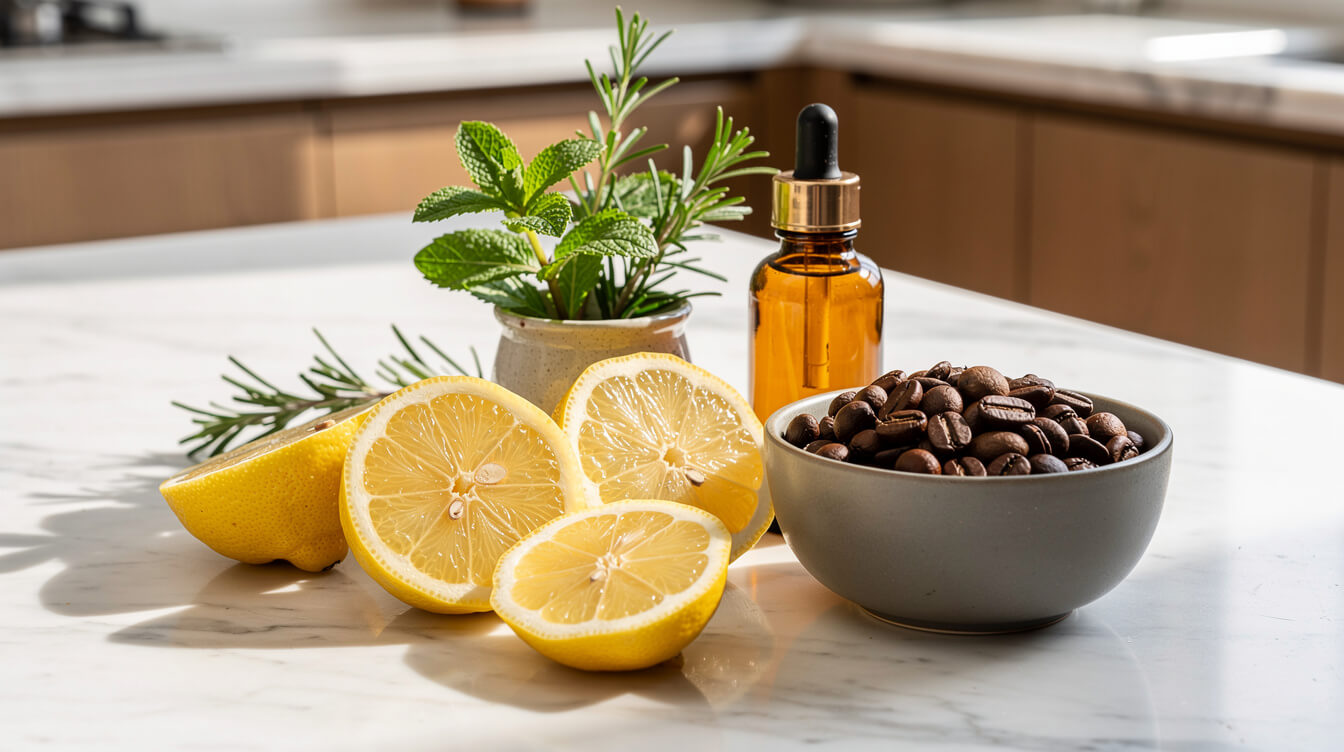
Certain essential oils are genuinely well suited to this fight, not because they mask odors but because their brightness reads as “clean” to the human nose and they pair naturally with a wiped-down surface. The kitchen team:
- Lemon — sharp, degreasing brightness that cuts through fried-food heaviness.
- Sweet orange — rounder and warmer than lemon, friendly in a busy family kitchen.
- Lemongrass — grassy-citrus and surprisingly persistent, excellent over lingering garlic.
- Rosemary — herbaceous and savory, it belongs in a kitchen and quietly balances sweet citrus.
- Peppermint — a small amount adds a cool, awake edge that makes a space feel scrubbed.
A practical kitchen approach is to fight odor at the source first, then freshen. Simmer a small pot of water with citrus peels while you cook, keep an open jar of baking soda scented with a few drops of lemon near the trash, and reserve your best diffusing for after the meal, when the source has stopped. If you are also tackling stubborn residues, a few of these same oils feature in a natural cleaning routine that treats the surfaces the smell clings to. And for the toughest cases, like clearing lingering smoke smells, source removal plus continuous fresh scent matters far more than a quick spritz.
The Science of Lasting Scent: Top, Middle, and Base Notes
Here is the jewel almost no air-freshener article explains, and once you know it, every fading spray suddenly makes sense. Essential oils are not single smells; each one is a blend of dozens of aromatic molecules with different weights and evaporation speeds. Perfumers sort them into three tiers, and the same ladder governs whether your room stays fresh or goes flat.
- Top notes (citrus, peppermint, eucalyptus) are the lightest and most volatile. They hit first and vanish first, often within fifteen to forty minutes.
- Middle notes (lavender, rosemary, geranium) form the heart of the scent and hold for a few hours.
- Base notes (cedarwood, patchouli, vetiver) are heavy, slow, and grounding; they linger longest and anchor everything above them.
Now picture a DIY room spray. You pump a fixed dose into the air, and it evaporates in the order above: the bright top notes flash off almost immediately, the middle notes follow, and within an hour you are left with a faint base-note whisper or nothing at all. There is no more oil coming, because a spray delivers its entire payload at once. That is not a flaw in your recipe; it is physics. The only way to keep a room truly fresh is to keep introducing oil, which is exactly where continuous diffusion changes the game later in this guide.
Understanding the note ladder also helps you blend smarter. If you want a scent that greets guests and still holds an hour later, you pair a top note for the first impression with a base note for staying power, say sweet orange over cedarwood. This is also why oil quality matters so much for air freshening: a diluted or adulterated oil is often missing the very base notes that give a scent its longevity, which is one more reason to prioritize choosing genuinely non-toxic, pure oils over bargain blends.

Sign Up to Get Your FREE Essential Oils e-Book Here
The Bedroom: A Clean-Linen Calm for Restful Nights
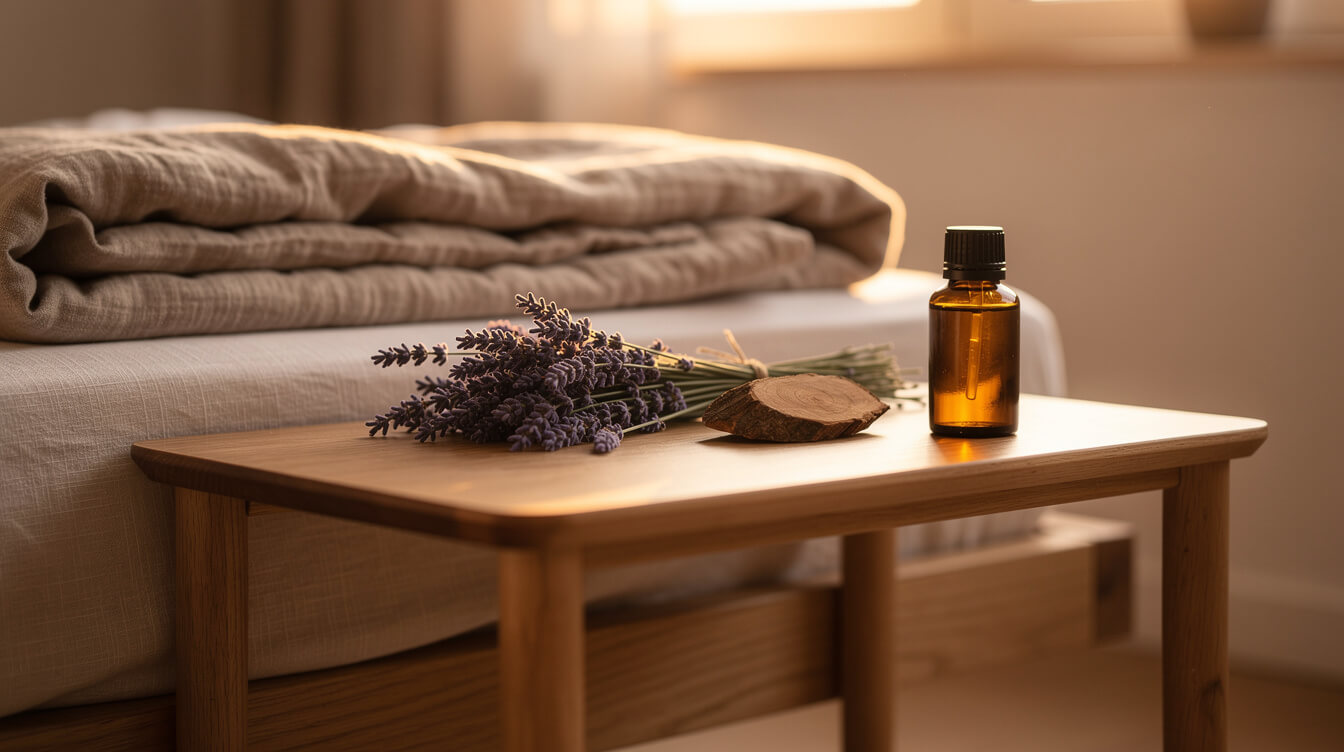
A bedroom does not need the degreasing punch of a kitchen; it needs an atmosphere. The goal here is a soft, clean-linen freshness that helps the room feel like a place to unwind. Reach for oils with a calming, cocooning profile rather than sharp brighteners:
- Lavender — the classic for a reason; soft, floral, and widely loved for creating a restful mood.
- Cedarwood — a warm, woody base note that grounds a blend and lingers beautifully overnight.
- Bergamot — citrus with a floral softness, uplifting without being loud.
- Roman chamomile — gentle, sweet, and comforting for a wind-down routine.
A favorite bedroom blend is three drops of lavender to two drops of cedarwood to one drop of bergamot, a top-middle-base combination that follows the note ladder for a scent that greets you at bedtime and is still faintly present in the morning. Lavender’s reputation is well earned, and if you are curious about the actual chemistry behind it, our deep dive into lavender’s calming profile explains what the research does and does not say. Used this way, a fresh bedroom is about ambiance and comfort, supporting relaxation rather than promising to fix anything.
One caution for the bedroom: avoid heavy, sweet synthetic plug-ins overnight. Part of the appeal of pure essential oils here is that you control exactly what enters the air, with no undisclosed fragrance chemicals filling a room where you spend a third of your life.
The two rooms most people forget deserve a quick mention, because they shape a home’s whole impression. The living room is where you want a welcoming, sociable scent that is not too food-like or too clinical, so reach for bergamot, sweet orange, or a soft geranium-cedarwood pairing that feels warm without shouting. The entryway is the room a visitor smells first and the one that sets the tone, so keep it bright and confident with rosemary, a touch of peppermint, or a citrus blend that says the space is cared for. Because these are your largest and most-traveled areas, they are precisely where a spray struggles most and where continuous, even coverage earns its keep.
DIY Air Freshener Recipes You Can Make Tonight
These recipes use ingredients you likely already have. They are genuinely useful for spot-freshening and small spaces, and knowing their strengths and limits helps you choose the right tool for each job. A quick note on all of them: shake before use, store away from direct sun, and remember the note-ladder lesson, these deliver a burst, not an all-day baseline.
The everyday room spray
In a small spray bottle, combine one cup of distilled water, one tablespoon of witch hazel or high-proof alcohol (this helps the oil disperse instead of floating), and fifteen to twenty drops of essential oil. Try eight drops sweet orange, six drops lemongrass, and four drops rosemary for a bright, kitchen-friendly mist. The alcohol is what keeps it from separating into an oily slick.
The reusable reed setup
Fill a narrow-necked bottle with a quarter cup of a light carrier oil (fractionated coconut works well), add two tablespoons of alcohol and twenty to twenty-five drops of essential oil, then insert rattan reeds. Flip the reeds every few days. This offers a gentle, passive scent for a bathroom or entryway, though its reach is limited to a small radius around the bottle.
The baking-soda odor jar
Half-fill a small jar with baking soda, add ten to fifteen drops of oil, and cover with a breathable cloth or a perforated lid. Baking soda absorbs odors while the oil freshens, a great combination for a trash-can corner, a closet, or a car. Speaking of which, the same principle scales to your vehicle; here is a dedicated guide to a DIY car freshener with essential oils when you want to freshen your commute too.
The stovetop simmer
Simmer a pot of water with citrus slices, a cinnamon stick, and a few drops of clove or orange oil for seasonal warmth. Wonderful while it lasts and lovely when guests arrive, but it stops the moment you turn off the heat and demands you never let the pot run dry.
Every recipe above shares one honest limitation: they are episodic. They freshen a moment, not a day. For a gathering, that may be exactly enough, and you can lean into it with crowd-pleasing blends for when guests come over. But if you want a home that simply stays fresh, you need a different mechanism entirely.
Sign Up to Get Your FREE
e-Book Here…
The Bathroom: Fresh Without the Chemical Cloud
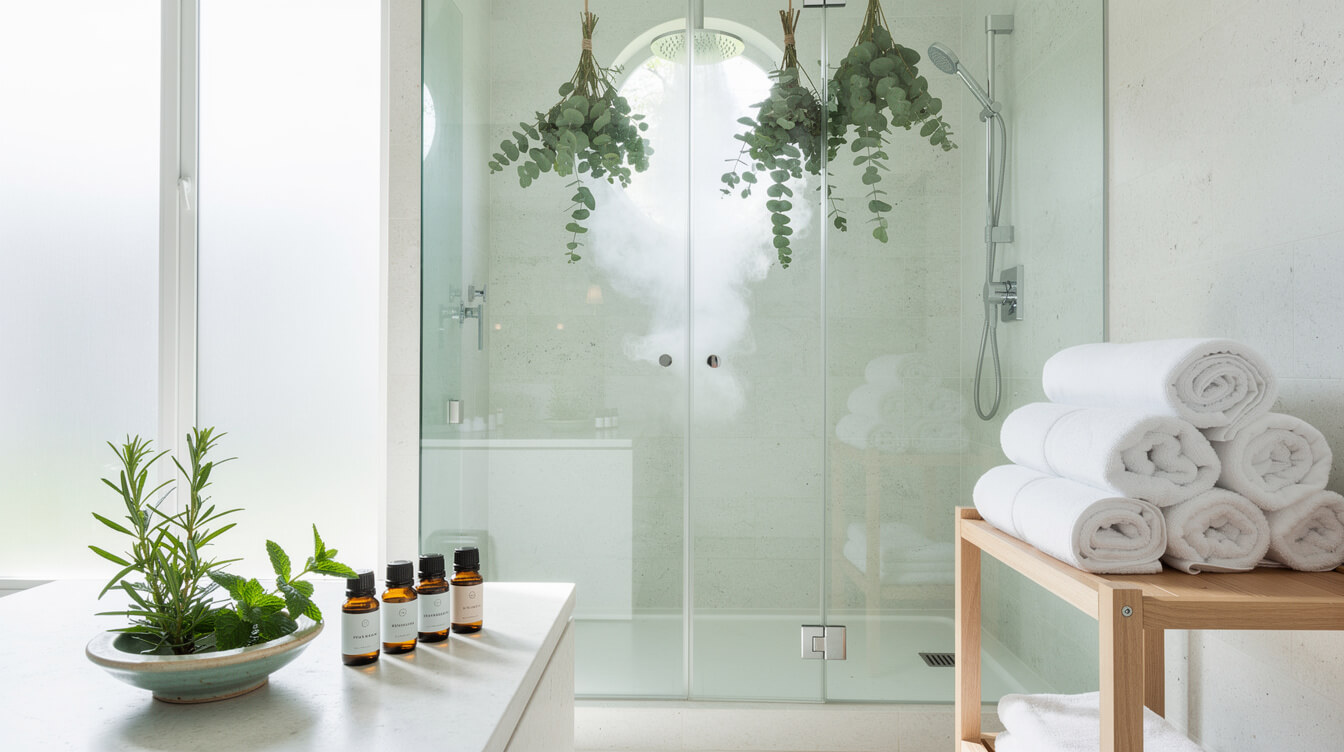
The bathroom asks for two things at once: fast odor knockdown and a clean, spa-like finish. This is where crisp, slightly medicinal oils shine, the kind that read as hygienic and cut through humidity:
- Eucalyptus — camphorous and clearing; hang a bundle in the shower and the steam releases it beautifully.
- Tea tree — sharp and clean, long associated with a fresh, just-cleaned impression.
- Peppermint — cooling and bright, a tiny amount refreshes the whole room.
- Pine or fir — forest-fresh base support that keeps the crisp notes from disappearing too quickly.
For a bathroom, a small reed setup handles day-to-day background scent, while a quick spray of a eucalyptus-peppermint-tea-tree blend delivers instant freshness for guests. The steam trick is the standout: eucalyptus branches tied to the showerhead release their aroma every time hot water runs, a passive, self-renewing burst that lasts a week or two. Even so, the moment the branch dries out, the freshness fades, the same episodic limit we keep bumping into.
The Upgrade: Continuous Nebulizing Diffusion vs. Every DIY Trick
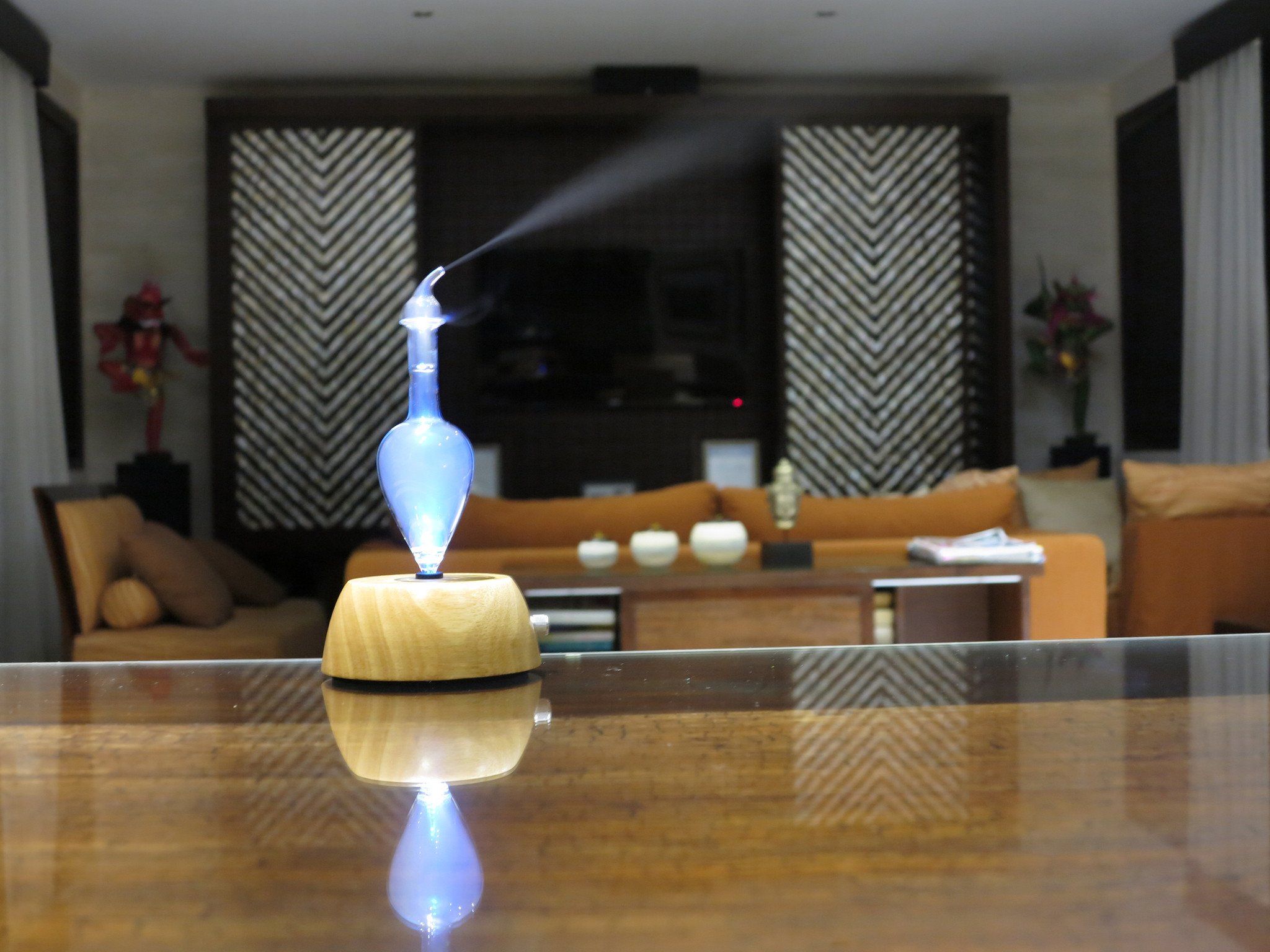
Everything so far has quietly pointed to a single conclusion: sprays, reeds, jars, and simmers all deliver scent in bursts, and burst freshness fades on the note ladder’s schedule. The way to a home that stays evenly fresh is not a stronger burst; it is a steady, controllable stream of pure oil into the air. That is precisely what a Nebulizing Diffuser® does, and the mechanism is worth understanding because it explains the difference you can actually smell.
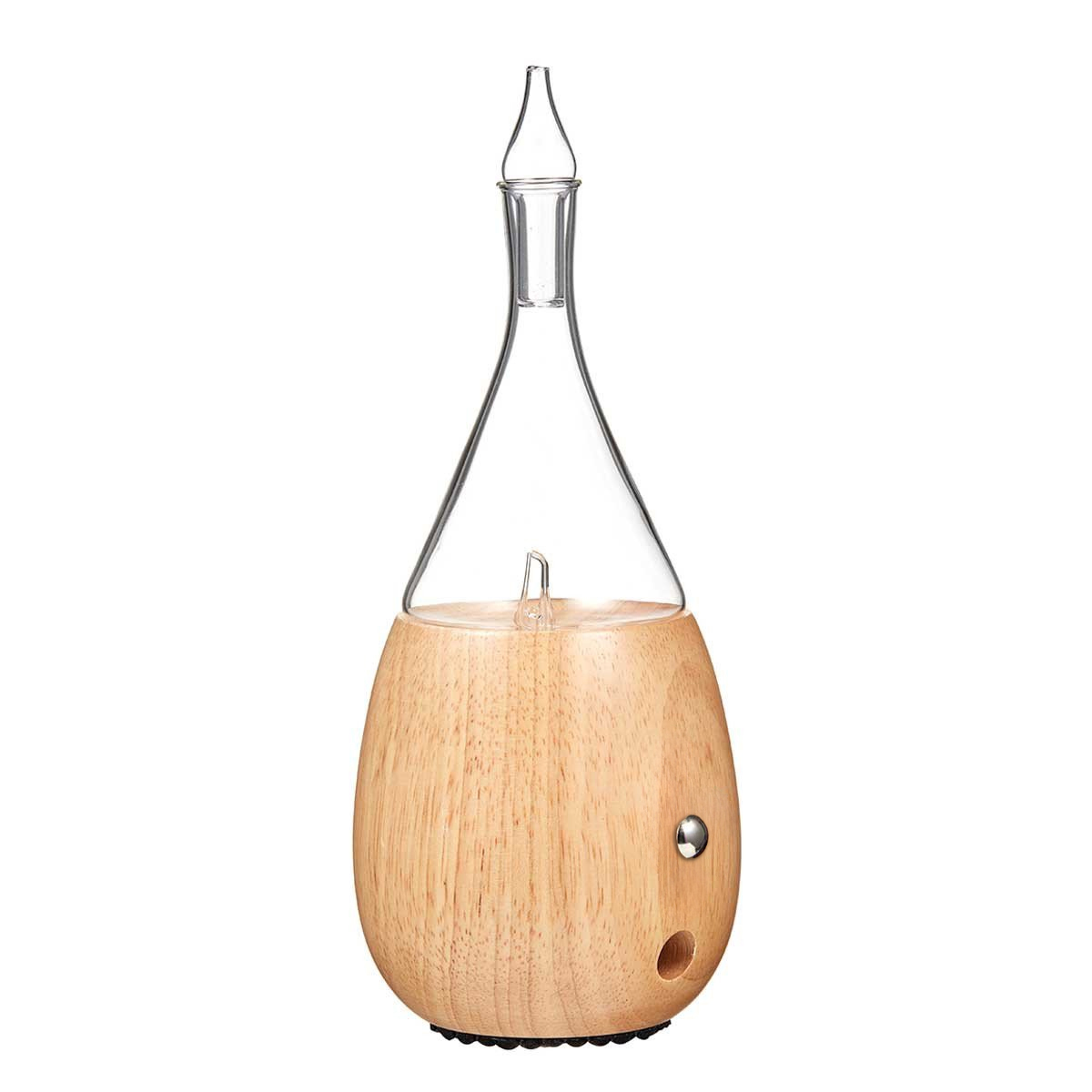
A Nebulizing Diffuser uses Bernoulli’s Principle: a stream of air passing over a small glass tube creates a pressure drop that draws pure essential oil up and atomizes it into an ultra-fine mist of microscopic droplets, no water and no heat involved. Two details make this matter for air freshening. First, because the oil is never diluted with water or altered by heat, the full spectrum of aromatic molecules, top, middle, and base notes alike, reaches the air intact, so the scent smells true rather than thin or cooked. Second, because the device meters and repeats, it can keep a room fresh continuously instead of in a single fading pump.
The specifics are the part no DIY method can match. A quality Nebulizing Diffuser runs on a gentle cycle, roughly two minutes on and one minute off, which keeps a fresh baseline in the air without ever overwhelming the room or burning through your oils, and many models shut off automatically after about 120 minutes. A single unit can cover up to 800 square feet under the right conditions, enough for an open-plan living and kitchen space that no spray could hold. That is the leap from freshening a moment to freshening a home.
If you have loved the recipes above but felt them fade too fast, this is the missing piece. The Raindrop – Smart Nebulizing Diffuser® delivers pure, undiluted oil on that steady cycle, with app control and a rechargeable, cordless design so you can move whole-home freshness from the kitchen counter to the bedroom nightstand without hunting for an outlet.
Freshen Your Whole Home, Not Just a Moment
Pure, undiluted essential oil on a steady cycle — no water, no heat, no fading. Discover handcrafted, waterless freshness that fills a room and keeps it that way.
Frequently Asked Questions About Essential Oils for Air Freshener
Which essential oils work best as an air freshener?
Match the oil to the room. Citrus oils like lemon and sweet orange, plus lemongrass and rosemary, excel in kitchens; lavender, cedarwood, and bergamot suit bedrooms; eucalyptus, tea tree, and peppermint are ideal for bathrooms. For lasting scent, pair a bright top note with a grounding base note like cedarwood.
Why does my DIY essential oil air freshener fade so quickly?
A spray or simmer delivers a single dose of oil that evaporates from lightest to heaviest molecules, so the bright top notes disappear within fifteen to forty minutes and there is no more oil coming. Continuous methods like nebulizing diffusion keep introducing fresh oil, which is why they hold a room’s scent far longer.
Are essential oils a safer air freshener than store-bought sprays?
Pure essential oils let you control exactly what enters your air, with no undisclosed synthetic fragrance chemicals. That transparency is a big part of their appeal, though “natural” still means using them sensibly, in ventilated spaces and with care around pets and young children.
How many drops of essential oil do I need to freshen a room?
For a room spray, fifteen to twenty drops per cup of water is a good baseline. For continuous nebulizing diffusion, far less oil is needed because the device atomizes it efficiently and cycles on and off, delivering steady scent from just a small amount over hours.

Join Now and Get a Coupon for 10% Off!
Final Thoughts
Freshening your home with essential oils is genuinely rewarding, but the secret is not just which oil you pick; it is how you deliver it. Sprays, reeds, jars, and simmers each earn a place for quick, targeted freshness, and the room-by-room recipes here will serve you well tonight. Just remember the note ladder: a burst fades on a schedule you cannot argue with.
When you want a home that simply stays fresh, kitchen to bedroom to bath, the answer is a steady, undiluted stream of pure oil rather than a stronger spritz. Pair the oils you love with continuous nebulizing diffusion, and you finally get air freshening the way the chemistry intended: true to the oil, even across a room, and lasting as long as you like.
Get Fresh-Home Tips in Your Inbox
Join our community for tested blends, seasonal recipes, and honest aromatherapy guidance, plus early access to new Nebulizing Diffuser® releases.