

Frankincense Aromatherapy Oil: How to Diffuse the Resin the Right Way
Search “frankincense aromatherapy oil” and you get two kinds of pages: shops selling you a bottle, and health sites listing conditions it might treat. Almost nobody answers the question an aromatherapy lover actually has — how do you diffuse this ancient resin so its warm, balsamic, meditative aroma fills a room without gumming up your device or getting cooked into something flat?
That gap matters, because frankincense is not an ordinary oil. It is distilled from hardened tree resin, it is unusually thick, and its most prized aromatic molecules are fragile in the face of heat and water. Get the delivery method right and you unlock the grounding, incense-like scent that has anchored meditation and ritual for millennia. Get it wrong and you waste a genuinely expensive oil. This is the honest, mechanism-first guide to buying and diffusing frankincense as an aromatherapy oil — species and extraction decoded, blend ratios that actually work, and how to keep a resinous oil flowing beautifully through a Nebulizing Diffuser®.
What Makes Frankincense an Aromatherapy Oil (Not a Supplement)
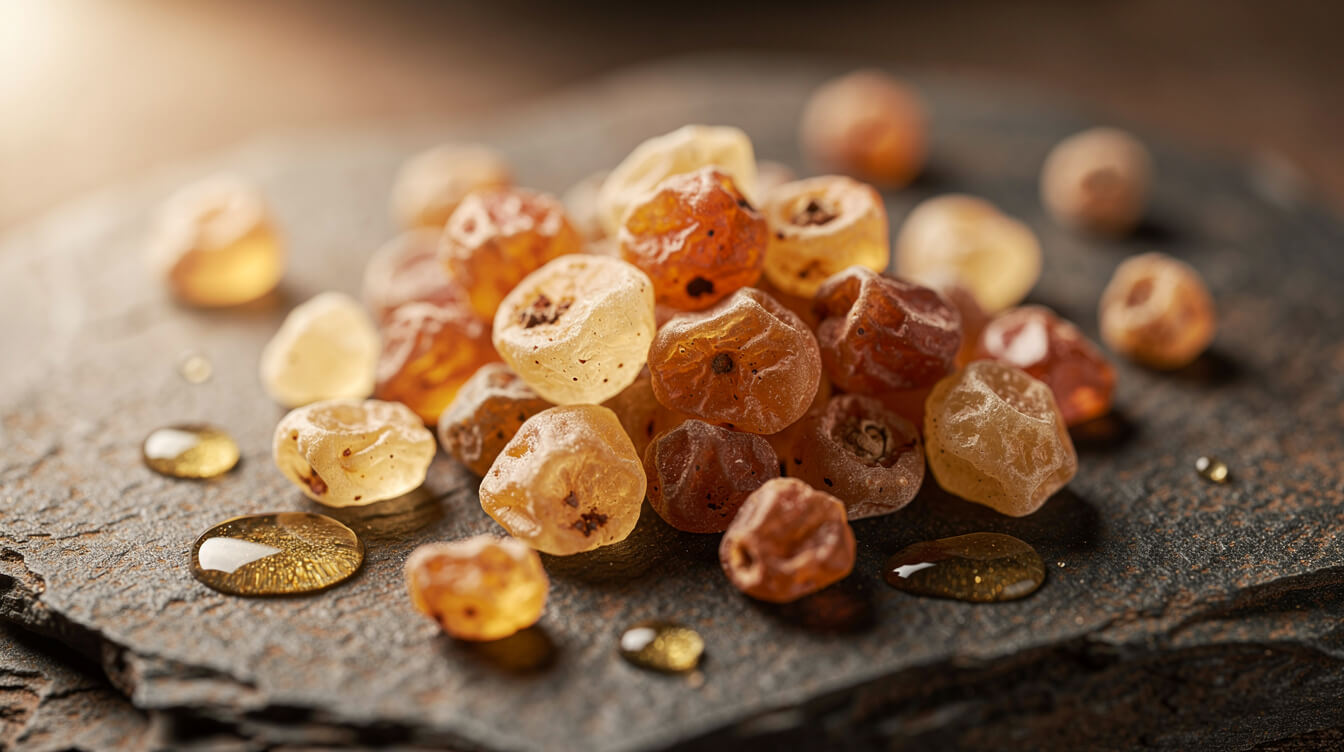
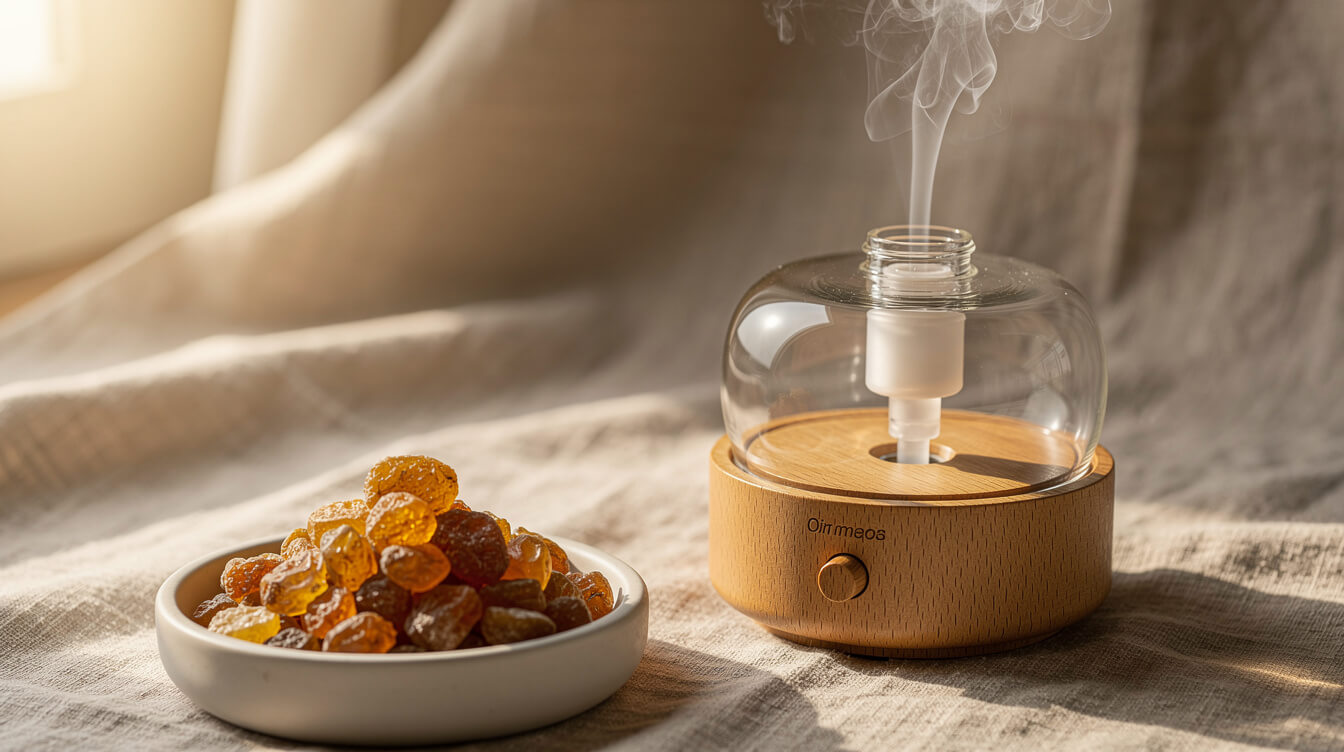
Frankincense begins as sap. Harvesters score the bark of the gnarled Boswellia tree, and the milky resin that weeps out hardens in the desert air into pale, caramel-colored beads called “tears.” Those tears are then steam- or hydro-distilled into the essential oil you diffuse. The name itself comes from the Old French franc encens — “high-quality incense” — which tells you exactly what this oil was always for: scent and ceremony.
Here is the distinction that most articles blur, and it is the single most useful thing to understand about a frankincense aromatherapy oil. The compounds that dominate the health-supplement conversation — boswellic acids — are large, heavy molecules that live in the raw resin. They are far too heavy to carry over in steam distillation, so they are essentially absent from the distilled essential oil. When you diffuse frankincense, you are not inhaling the resin’s boswellic acids at all.
The essential oil and the resin extract are two different products. Steam-distilled frankincense oil is an aromatic material — built from light, volatile terpenes you can smell — not a boswellic-acid supplement. That is precisely why it belongs in your diffuser and in a mood-and-ritual conversation, not a medical one.
What you do get is a beautifully complex bouquet led by alpha-pinene (fresh, piney, resinous), limonene (a soft citrus lift), and trace incensole acetate — the warm, ambery, distinctly “incense” note that makes frankincense feel grounding. These are the molecules aromatherapy is about: their aroma, the atmosphere they create, and the calm, centered headspace people reach for during meditation. Framed that way, frankincense is one of the most rewarding oils you can diffuse — as long as you respect its resinous nature.
Boswellia Decoded: Carterii, Sacra, Serrata & Frereana
“Frankincense” is not one plant. It is the resin of several Boswellia species, and each has a genuinely different aroma. If you have only ever smelled one, you have not really met frankincense. Here is how the four you will actually encounter differ:
- Boswellia carterii (Somalia/Somaliland) — the everyday workhorse and the most widely sold. Balsamic, warm, pine-citrus with a clean resinous heart. If a bottle just says “frankincense,” it is almost always carterii. The most reliable all-rounder for diffusing.
- Boswellia sacra (Oman/Yemen) — often labeled “Royal Hojari” or “sacred frankincense.” Brighter, more lemony and crystalline up top, with a refined finish. Prized (and priced) for meditation.
- Boswellia serrata (India) — more herbaceous and turpentine-like, sometimes sharper. It is the species behind most resin supplements, but as a distilled oil for diffusing it is the least refined of the four. Usually the cheapest.
- Boswellia frereana (Somalia) — “Maydi,” the frankincense traditionally chewed as gum. Fresh, green, pine-and-citrus with almost no boswellic acids even in the resin. Bright and uplifting rather than heavy.
There is a sustainability angle here too, and it should shape your buying. Several Boswellia populations — sacra especially — are under real pressure from over-tapping, because a tree that is bled too hard produces fewer viable seeds. Frereana and responsibly wild-harvested carterii tend to be the easier-conscience choices, and the best distillers publish their harvesting practices. Buying a named species from a transparent source is not just about aroma; it is what keeps these slow-growing desert trees standing.
For a first bottle, buy carterii; for meditation once you are hooked, try sacra from a supplier that names its harvesting standards. The practical takeaway: species belongs on the label. A jar that says only “frankincense oil” with no Boswellia species named is telling you the seller either does not know or does not want you to — and that is your first quality flag, which the next sections build on.
Sign Up to Get Your FREE
e-Book Here…
Steam-Distilled vs. CO2-Extracted: Which Frankincense to Diffuse

Once you have chosen a species, the extraction method decides how the oil behaves in your device and how it smells. There are two you will see:
Steam- or Hydro-Distilled
The traditional route. Steam carries the light, volatile terpenes out of the resin, leaving the heavy molecules behind. The result is a brighter, cleaner, thinner oil dominated by alpha-pinene and limonene. Because it is less viscous, it flows more easily through fine tubing — the better default for nebulizing. This is what most reputable aromatherapy suppliers sell.
CO2-Extracted (Select or Total)
Pressurized carbon dioxide pulls a fuller spectrum from the resin, including heavier, warmer, more balsamic molecules that steam leaves behind. A CO2 frankincense smells richer and more resinous — closer to burning the actual tears. The trade-off: it is noticeably thicker and more viscous, which makes it more demanding on any diffuser and a genuine clog risk for cheap ones.
Rule of thumb: reach for steam-distilled frankincense for effortless daily diffusing, and keep a CO2 select on hand for slow, intentional meditation sessions when you want that deep, smoky-ambery base — and are ready to thin it into a blend.
Whichever you choose, the enemy is the same: heat and water. Warm-plate and reed methods flash off the delicate top notes and can dull the ambery incensole character, while water-based ultrasonic diffusers suspend oil in a cool fog that thick resin oils resist emulsifying into — leaving residue and a weaker scent. Which is exactly why the delivery method in the next section matters so much for this particular oil.
Why a Waterless Nebulizing Diffuser® Suits Resinous Oils
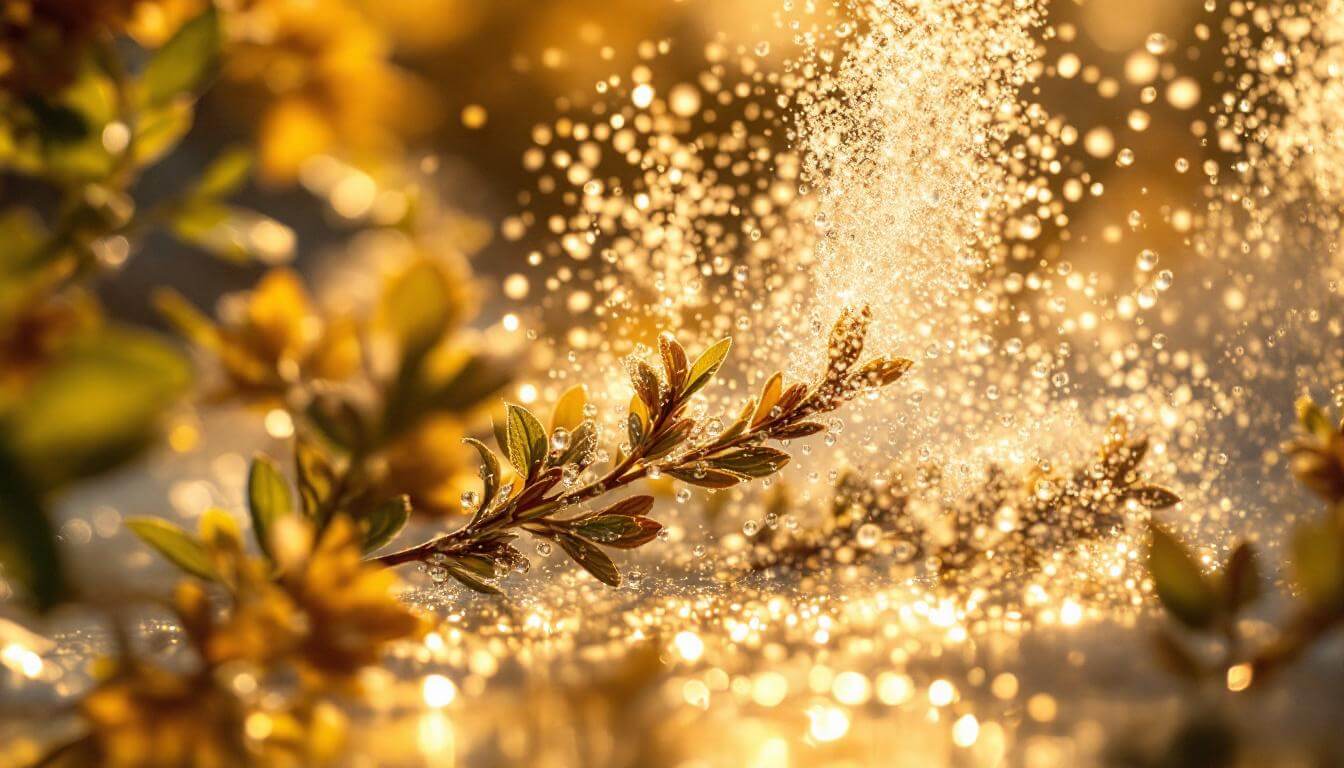
A Nebulizing Diffuser® is almost purpose-built for an oil like frankincense. It uses no water and no heat. A small pump pushes a fast jet of air across the mouth of a narrow glass tube standing in a pool of your neat oil. That rushing air drops the pressure at the tube’s opening — Bernoulli’s Principle — and siphons the oil upward, shattering it into a dry cloud of roughly one-to-three-micron droplets. Pure oil, aerosolized cold, exactly as the distiller intended.
For frankincense specifically, three things fall into place. First, because nothing is heated, the fragile incensole and citrus top notes survive intact — you smell the full resin, not a cooked shadow of it. Second, because there is no water, the thick oil never has to emulsify into a fog it doesn’t want to join; it is atomized directly. Third, the fluid path is medical-grade Pyrex glass, which resists the sticky, varnish-like film that oxidized resin oils leave on plastic — the film that quietly kills airflow in lesser devices.
Droplet size is the quiet hero of that experience. Nebulized frankincense leaves the glass as a dry aerosol of roughly one-to-three-micron particles — small enough to stay suspended in the air and drift across a whole room rather than falling out as a damp film near the device. That is why a nebulizer’s frankincense seems to “fill” a space and hold, where a heated or watered-down version fades within arm’s reach. For a base-note resin whose entire appeal is atmosphere and lingering presence, fine, even atomization is exactly what you want.
There is an honest caveat, and it is the whole reason this article exists: frankincense is viscous, so it asks a little more of the machine than a thin oil like lemon. A quality glass nebulizer handles it gracefully; a cheap plastic one will gum up fast. If you are choosing a device for resinous oils, this is the moment to invest in real glass. Shop the Nebulizing Diffuser® Collection — the classic wood-and-Pyrex nebulizers are built precisely for undiluted oils like this one.

Sign Up to Get Your FREE Essential Oils e-Book Here
Frankincense Blends for Meditation, Grounding & Evening Calm
Frankincense is a superb base note — it lingers, and it anchors brighter oils that would otherwise flash off. Because a nebulizer runs neat oil, you blend by total drops in the glass reservoir, not by percentage in water. These are tested starting ratios; nudge them to taste, and thin any CO2 frankincense with a lighter oil so it flows.
The Grounding Meditation Blend
- 6 drops frankincense (carterii or sacra)
- 3 drops sandalwood
- 2 drops cedarwood
- 1 drop bergamot (a whisper of lift)
Deep, resinous, and centering — ideal for a seated practice or breath work. The woods hold frankincense down; the single drop of bergamot keeps it from turning heavy.
The Evening Wind-Down Blend
- 5 drops frankincense
- 4 drops lavender
- 2 drops sweet orange
Softer and warmer, this is a bedroom-at-dusk blend. Lavender rounds the resin; orange adds a gentle golden sweetness. A calming atmosphere for the last hour of the day.
The Bright Focus Blend
- 5 drops frankincense
- 3 drops lemon
- 2 drops rosemary
Frankincense’s pine-resin backbone plus citrus and herb makes a clean, alert scent for a desk or studio — grounding without being sleepy. Want more starting points? Our library of essential oil recipes for your diffuser has dozens more base-note pairings.
Two habits make these blends sing. First, treat frankincense as a fixative: because it lingers, a little anchors and extends the brighter oils, so you rarely need more than five or six drops of it in a ten-to-twelve-drop reservoir. Second, run short, intentional sessions. Frankincense rewards a focused 15-to-20-minute burst — long enough to fill the room and settle the mind — far more than an all-day drone that simply desensitizes your nose and empties the bottle. A nebulizer’s intermittent timer (a minute on, a couple off) stretches a precious oil while keeping the aroma vivid.
How to Spot Adulterated or Diluted Frankincense
Frankincense is one of the most commonly stretched oils on the market, for a simple reason: real resin is scarce, several Boswellia species are on sustainability watch lists because of over-tapping, and genuine oil is expensive. Certified-organic, wild-harvested carterii runs roughly $4–$5 per milliliter (about $22 for a 5 mL bottle) from honest suppliers. When you see “frankincense” at a fraction of that, something has been added or swapped.
The usual tricks:
- Copal or cheaper resins distilled and sold as frankincense — similar-ish, but not the same aroma or chemistry.
- Turpentine or pine fractions added to fake the alpha-pinene note cheaply — it can smell “sharp” and solvent-like rather than warm.
- Odorless carrier oil quietly diluting the bottle so you pay essential-oil prices for mostly filler — a giveaway is an oily residue and a scent that fades in minutes.
- No species, no origin, no batch — missing provenance is the loudest red flag of all.
The only true proof of purity is a GC/MS report (gas chromatography–mass spectrometry) with a batch number you can match to your bottle. A serious supplier publishes or provides one on request. “Therapeutic grade” is a marketing phrase with no governing body behind it — ignore it and ask for the chromatogram.
If you want a framework for judging any bottle before it reaches your diffuser, see our guides to telling pure oil from synthetic blends and the essential oil brands worth trusting. A pure oil is the whole point of a waterless diffuser — there is nothing to hide behind.

Join Our Exclusive Member Club to get Big Discounts!
Caring for Your Nebulizing Diffuser® When Diffusing Thick Resin Oils
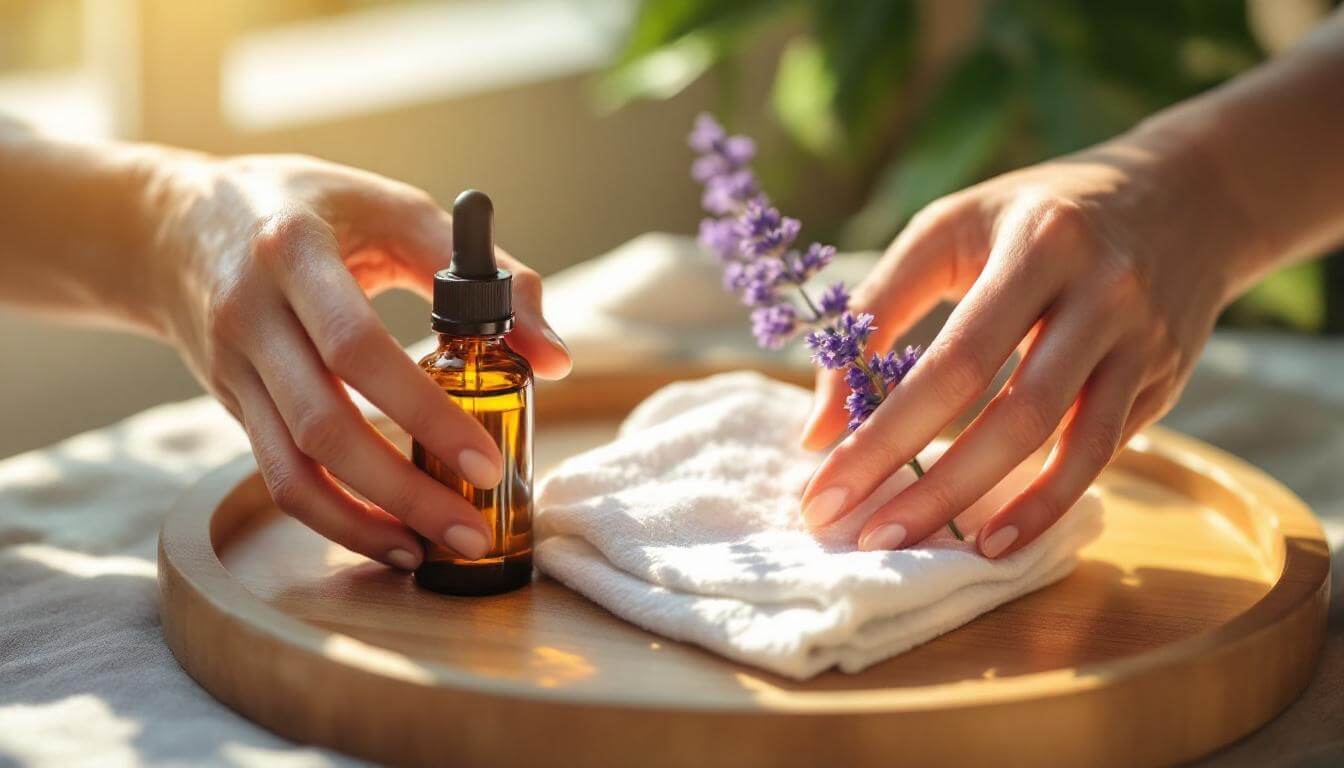
Resinous oils are the most rewarding to diffuse and the most demanding to maintain — frankincense, myrrh, sandalwood, and vetiver all leave more residue than a thin citrus. The fix is not to avoid them; it is to clean a little more often. A few habits keep the mist bright:
- Rinse between resin sessions. Do not leave frankincense sitting in the glass for days — as it oxidizes it thickens toward a varnish that narrows the micro-tubes.
- Flush with 70–95% isopropyl alcohol. A few millilitres swirled through the glass, then pushed through the fine tube with a pipette five or six times, dissolves resin film that water alone will not touch.
- Thin CO2 or very thick oils with a lighter oil (lemon, bergamot) in the blend so the fluid path stays clear.
- Air-dry fully before the next blend so no alcohol scent carries over.
None of this is hard — it is a two-minute rinse, not a chore. For the full walkthrough, alcohol ratios, and a maintenance schedule matched to the oils you run, follow our step-by-step guide to cleaning a Nebulizing Diffuser®. Keep the glass clear and frankincense will diffuse as brilliantly on its hundredth session as its first.
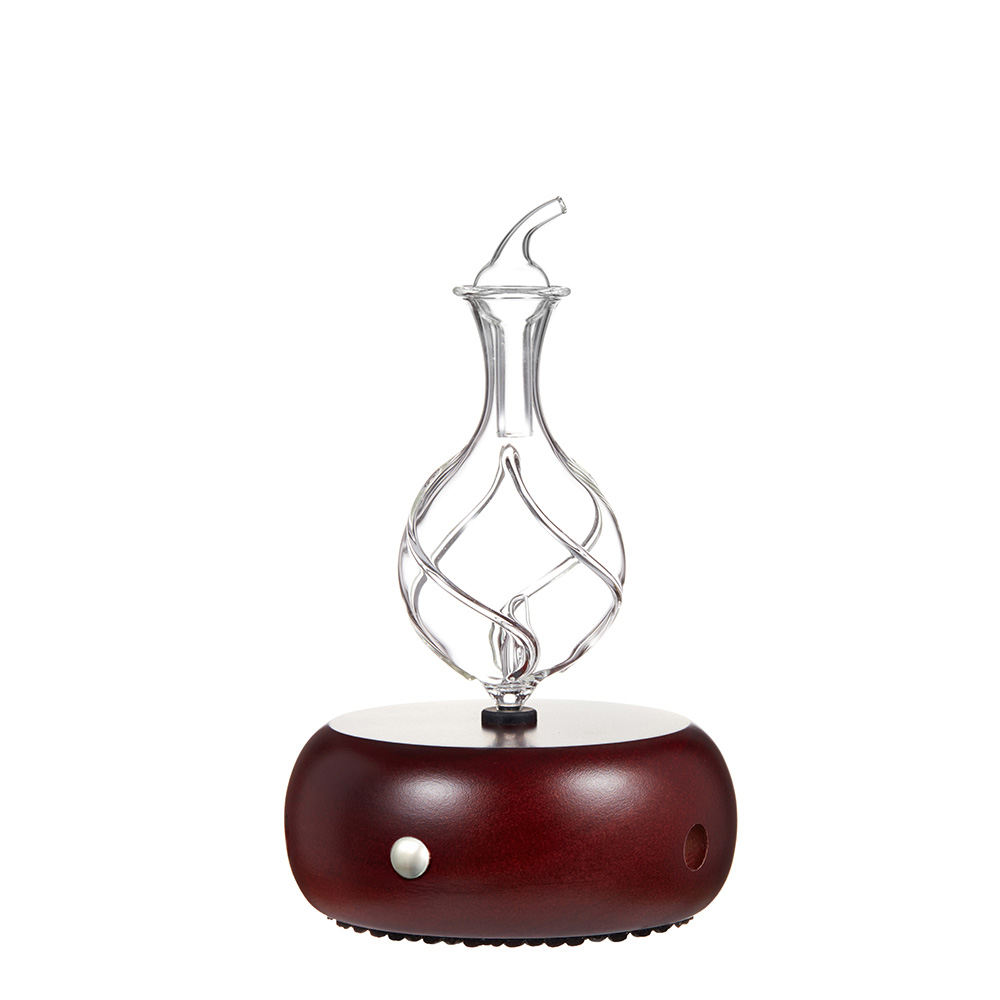
Diffuse Frankincense the Way It Deserves
No water, no heat, no plastic to gum up — just handcrafted wood and medical-grade Pyrex glass built for undiluted, resinous oils. Fill a room with the true aroma of the tears.
Final Thoughts: Treat Frankincense Like the Ancient Aroma It Is
Frankincense has been burned in temples for three thousand years because of one thing: the way it smells and the stillness that scent invites. A modern aromatherapy oil honors that only if the delivery method preserves the aroma instead of cooking or diluting it. Choose your species, favor a steam-distilled oil (or thin your CO2), verify purity with a GC/MS report, and let a waterless Nebulizing Diffuser® atomize it cold and neat. Do that, and a frankincense aromatherapy oil stops being a mysterious, expensive bottle on the shelf and becomes the grounding centerpiece of your evening ritual — exactly what it was always meant to be.
Frequently Asked Questions
Is frankincense aromatherapy oil the same as frankincense supplements?
No. Supplements are made from the raw resin and contain boswellic acids — heavy molecules that do not survive steam distillation. The aromatherapy oil is a volatile, aromatic material you diffuse for its scent and the calm, grounded atmosphere it creates, not a boswellic-acid product.
Can I put thick frankincense oil straight into a nebulizing diffuser?
Yes for most steam-distilled carterii, which flows well neat. Very thick CO2 extracts are better thinned into a blend with a lighter oil (lemon, bergamot) so the fluid path stays clear. Either way, rinse the glass between resin sessions.
Which frankincense species is best for beginners?
Boswellia carterii. It is the most widely available, the most balanced in aroma, and the most forgiving to diffuse. Once you love it, try Boswellia sacra (“sacred” frankincense) for a brighter, more refined meditation scent.
Why does frankincense smell weak in my ultrasonic or heat diffuser?
Heat flashes off the delicate top notes, and water-based ultrasonic fog struggles to carry a thick resin oil, so it under-disperses and leaves residue. A waterless nebulizer atomizes the neat oil cold, which is why the aroma comes through fuller and truer.
How can I tell if my frankincense is real?
Look for the named Boswellia species, country of origin, a batch number, and ideally a GC/MS report. Be suspicious of prices far below about $4 per millilitre, missing provenance, and the empty phrase “therapeutic grade.”
Similar Posts
Relaxing Essential Oils for Diffuser: A 3-Blend Evening Wind Down Sequence Timed to Your Cortisol Curve
Three Nebulizing Diffuser® blends, ratios, and rituals timed to the 6pm to 11pm cortisol drop. 12 years of customer feedback, the chemistry behind the calming molecules, and a 7-day trial protocol.
7 Benefits of Lavender Essential Oil
In the world of essential oils, lavender is far and away one of the most popular across the globe. While lavender essential oil smells great, and works well to freshen the home in a nebulizing diffuser, it can do a whole lot more than…
How Many Drops of Essential Oil in a Diffuser? Chart by Room Size
Search “how many drops of essential oil in a diffuser” and every guide hands you the same tidy number: three to five drops per 100 milliliters of water. It sounds authoritative. It is also close to useless on its own, because that rule quietly assumes you own one specific kind of machine, and it ignores…
7 Top Happiness-Inducing Essential Oils
One of the best and positive ways to induce this great feeling is through essential oils. Research has proven that these aromas can boost your mood while…
Friday Mini-FAQ: Why Does My Citrus Blend Fade So Fast?
Citrus fades fast because limonene is a light, high-volatility top note—anchor it with one drop of vetiver and diffuse in short cycles to make it last.
What a Nebulizing Diffuser and Essential Oil Can Do For You
With the hectic lives we all lead, we could all use a little help every now and then. Wouldn’t it be great, though, if we had that help constantly permeating throughout our homes? With Organic Aromas’ essential oils, you can! Our essential oils, when paired with our essential oil diffusers, can help you get that boost that you need to get you through the day.