

Essential Oil Diffuser for Car: What Actually Works, What Heat Does to Your Oils, and the Alertness Rule Nobody Mentions
Why Your Car Is One of the Worst Environments for Essential Oils — and How to Change That
The Temperature Problem No One Warns You About
Pull up any car diffuser product page and you’ll get a quick rundown of how many drops to use, which scents are “energizing,” and maybe a note about USB power. What you won’t find: a frank conversation about what sitting in a sealed car for four hours at 130°F does to the very compounds that make essential oils worth diffusing in the first place.
A 2005 Stanford University study measured interior car temperatures over a 60-day period and found that on a warm day, a closed car’s interior temperature climbs by an average of 40°F within an hour — seats and dashboards routinely surpass 180°F (82°C). Your essential oils — stored in a vent clip or left uncapped in a cupholder — are sitting inside a continuous low-grade oven.
This matters because the aromatic compounds that give essential oils their character and wellness properties — monoterpene hydrocarbons like limonene (in citrus oils), alpha-pinene (in rosemary and pine), and the prized linalool-linalyl acetate pair in lavender — begin oxidizing at temperatures above 95°F (35°C). By the time your car interior hits peak summer temperature, you’re not diffusing pure oil. You’re diffusing a cocktail of oxidized compounds with degraded aroma and diminished potency.
The solution isn’t to avoid aromatherapy in your car. It’s to use a diffusion method that doesn’t rely on heat, and to store your oils properly. Here’s everything you need to know.
The 4 Types of Essential Oil Diffuser for Car Use — Which One Actually Works

Join Now and Get a Coupon for 10% Off!
Walk into any wellness shop and you’ll find a wall of clip-on diffusers, USB ultrasonic models, reed clip-ons, and paper pad diffusers. Most are marketed with vague aromatherapy language. Few are honest about their trade-offs. Here’s the breakdown of each type — what they do well and where they fall short.
1. Vent Clip Diffusers (Passive Evaporation)
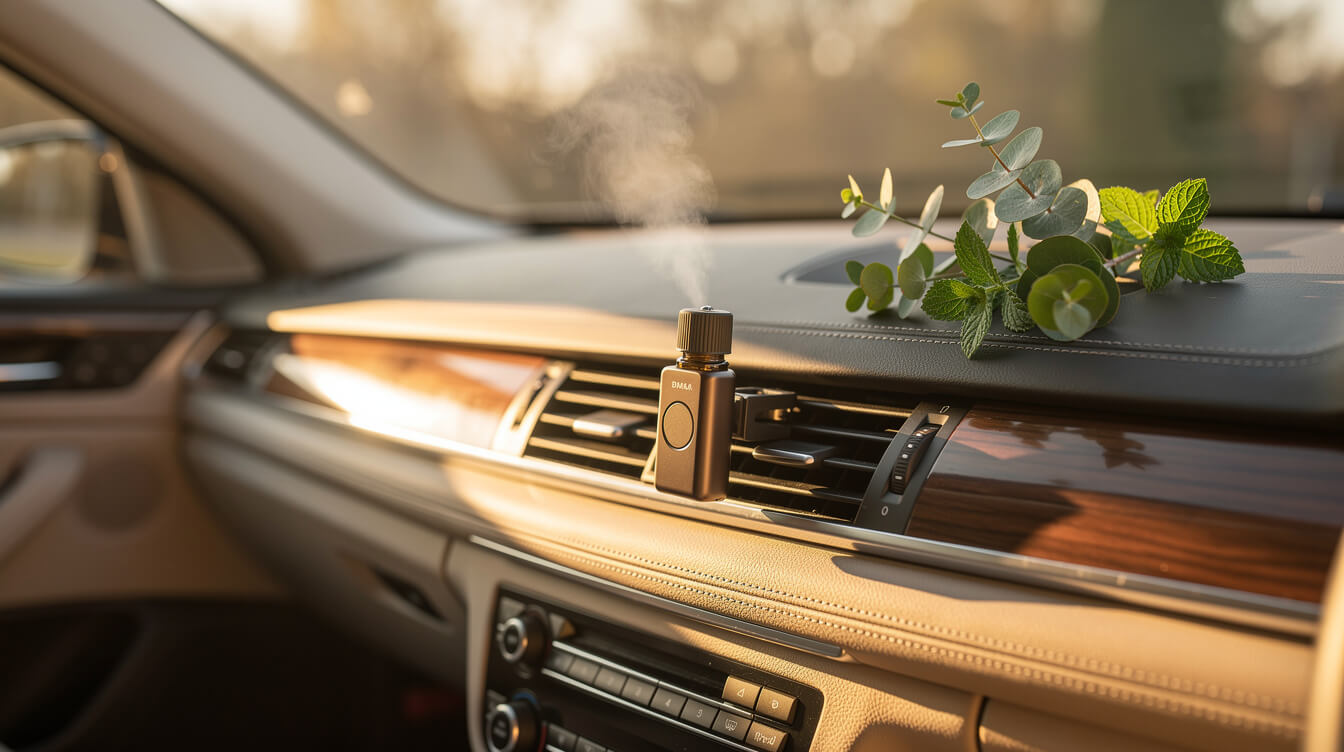
These are the most common car aromatherapy products — a small felt pad or ceramic disc you saturate with oil, then clip onto your dashboard vent. When the fan runs, it carries the scent through the car.
What works: Simple, no electricity required, easy to swap oils. What doesn’t: No airflow, no diffusion. In a parked car or with A/C off, you get nothing. The felt pad absorbs heat from the vent and slowly bakes the oil, delivering degraded compounds over time. Oil longevity: typically 3–5 days before it smells flat or harsh.
2. USB Ultrasonic Car Diffusers
These small plug-in units use ultrasonic vibration to create a fine water-and-oil mist. They draw power from your USB port and hold a small water reservoir.
What works: More consistent diffusion than passive clip-ons, visible mist output, adjustable settings. What doesn’t: The water dilutes your oil significantly — you’re not diffusing pure essential oil, you’re misting water infused with a small amount. The ultrasonic plate can stress certain oil compounds (aldehydes, some phenols) over repeated cycles. They’re also prone to spilling in moving vehicles and require refilling every hour or two. For a comprehensive look at ultrasonic technology’s trade-offs, read our complete guide to ultrasonic diffusers.
3. Paper Pad and Hanging Diffusers
DIY-friendly and zero-cost: a piece of unbleached cardstock, a wooden bead, or a felt pendant saturated with essential oil and hung from the rearview mirror. Passive evaporation, no electricity, infinitely customizable.
What works: The most flexible option for trying different oils and blends. Swap the pad daily if you want variety. Good for short commutes. What doesn’t: Passive evaporation means the scent front-loads — intense for the first 30 minutes, nearly gone by day two. In summer heat, the pad dries fast and the lighter terpenes evaporate first, often leaving a heavier, slightly musky residue.
4. Portable Nebulizing Diffusers® (The Standard for Pure Diffusion)
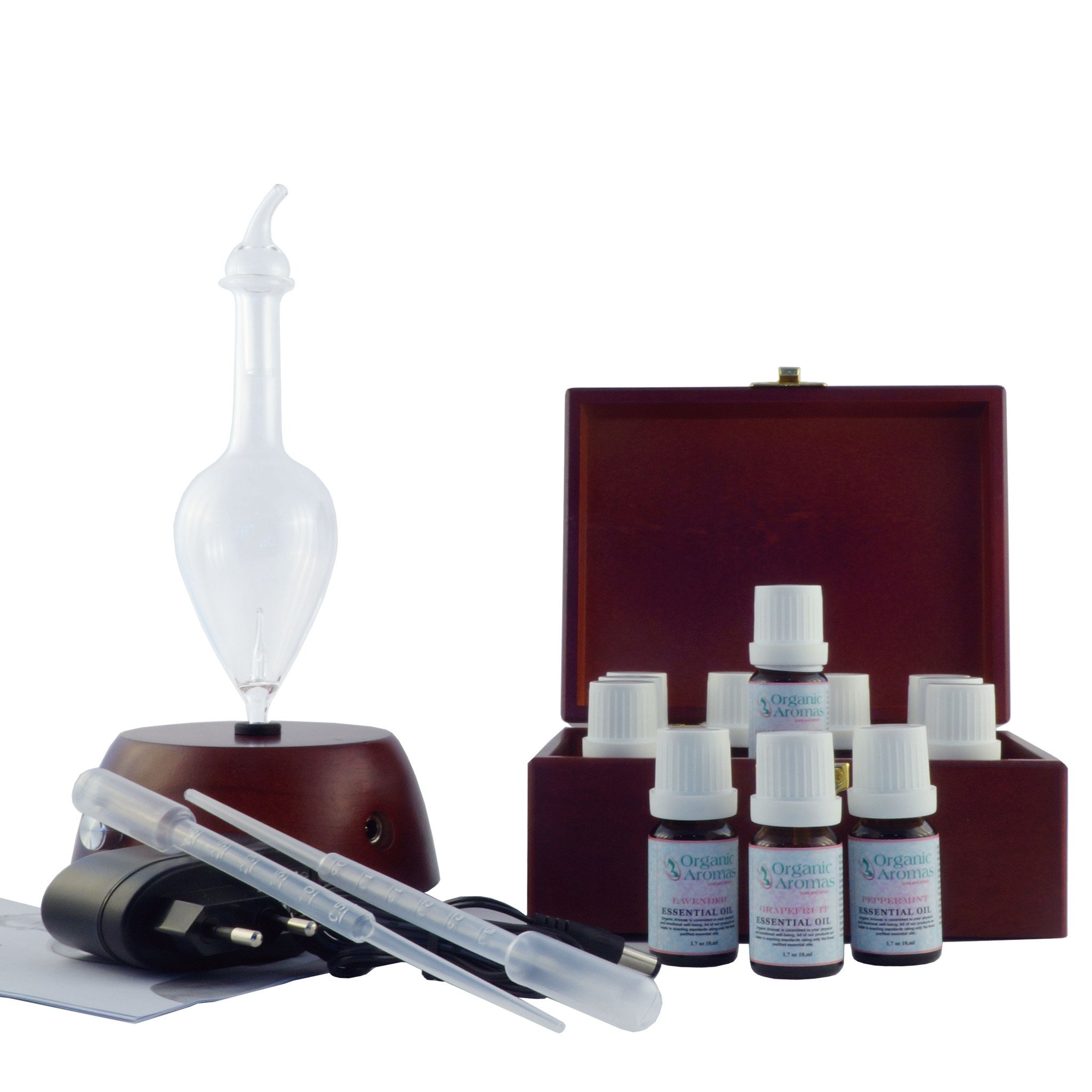
A Nebulizing Diffuser® operates on Bernoulli’s Principle: pressurized air creates a vacuum that draws pure essential oil upward through a micro-tube, breaking it into an ultra-fine mist of full-spectrum aromatic particles — no water, no heat, no dilution. The rechargeable, cordless Smart Nebulizing Diffuser® can sit in a cupholder or console without needing a USB connection, running on its internal battery for extended sessions.
What works: Pure, undiluted oil atomization. No heat degradation. App-controlled volume means you can set a precise, low output appropriate for a small, enclosed car interior. The same oil lasts significantly longer — a 15mL bottle used with intermittent intervals can span weeks of commutes. What doesn’t: Premium price point. In a car, run it on the lowest setting and briefly crack a window: you’re working with much less volume than a living room.
The Best Essential Oils for Car Diffusing — Chosen for the Road, Not the Living Room
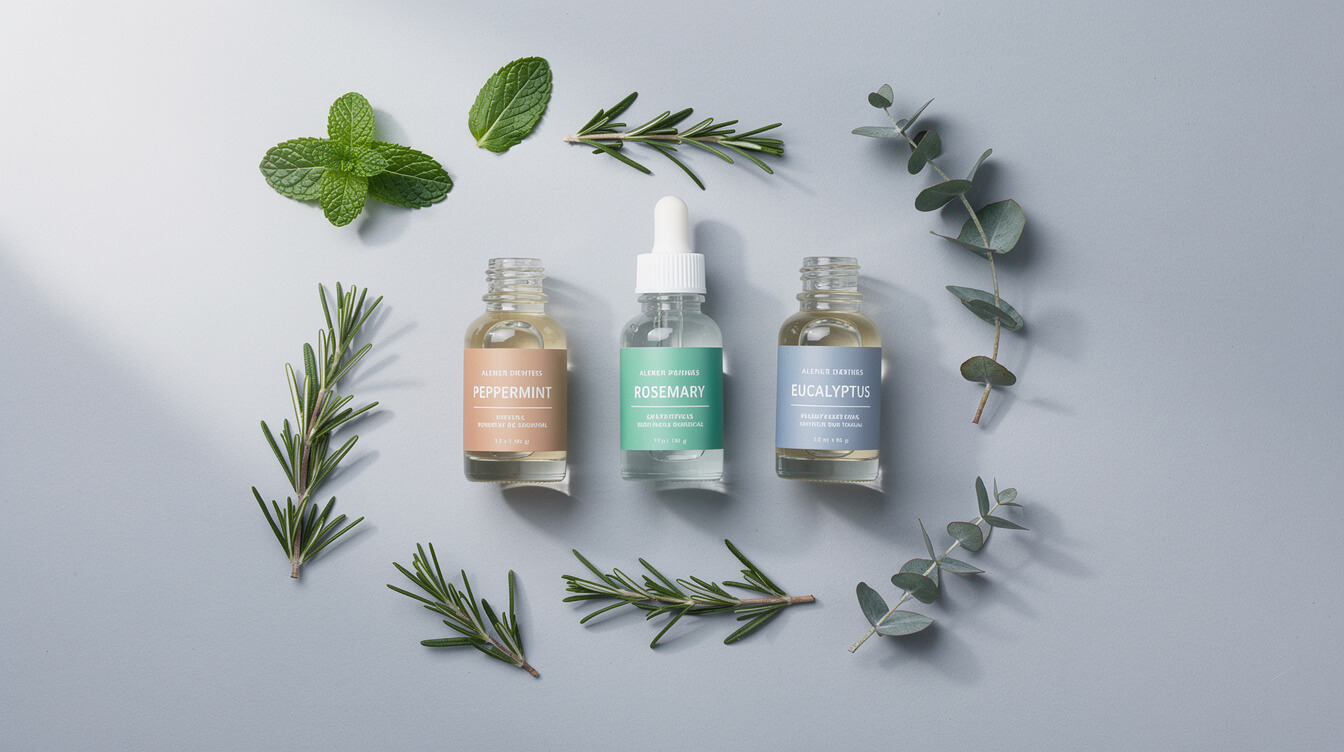
Not all essential oils belong in a moving vehicle. The criteria shift significantly when you’re behind the wheel: oils that create deep relaxation at home can become a liability in traffic. Here’s the road-optimized guide.
The Alertness Tier — Reach for These on Long Drives
- Peppermint (Mentha piperita): The most studied alertness oil for driving. A 2005 study from Wheeling Jesuit University found that peppermint inhalation significantly reduced fatigue, frustration, and anxiety for drivers during simulated road tests. The key compound is menthol — a natural TRPM8 receptor activator that creates a cooling sensation and increases arousal.
- Rosemary (Rosmarinus officinalis): Rich in 1,8-cineole (eucalyptol), rosemary has been shown in multiple studies to support cognitive performance and concentration. A 2012 study at the University of Northumbria (UK) found that participants in rooms diffused with rosemary performed significantly better on speed and accuracy tests. Excellent for morning commutes.
- Spearmint (Mentha spicata): A gentler alternative to peppermint — similar alertness profile with lower menthol content. More subtle scent, easier to tolerate for long durations.
- Eucalyptus (Eucalyptus globulus): Another high-cineole oil with a crisp, clearing effect on mental clarity. Pairs well with peppermint for a “fresh mountain air” commute blend.
- Lemon (Citrus limon): Bright, elevating, and emotionally uplifting. Limonene-dominant oils like lemon, grapefruit, and sweet orange support a positive, alert mood. Keep oils stored cool — limonene oxidizes quickly in heat.
For a deeper exploration of focus-supporting oils and the research behind them, visit our guide to essential oils for focus and alertness.
The Light-Commute Tier — Short Trips and Variety
- Bergamot (Citrus bergamia): Uplifting and supportive of a positive mood without being deeply sedating. Good for shorter commutes in traffic.
- Grapefruit (Citrus paradisi): Energizing, cheerful, and mood-brightening. A natural morning-commute companion.
- Black pepper (Piper nigrum): Surprisingly effective for maintaining alertness and a sense of circulation and warmth. Use 1–2 drops maximum — it’s potent and can be intense in concentration.
The Alertness Rule: Why Your Oil Choice Behind the Wheel Is a Genuine Safety Consideration
Sign Up to Get Your FREE
e-Book Here…
Here’s the rule you won’t find on any vent clip package insert: some of the most popular essential oils — the ones people instinctively reach for when they want to “relax” — are not appropriate for use while driving.
Lavender is the world’s best-selling essential oil. It’s also among the most studied for its calming, sleep-supporting properties. Linalool and linalyl acetate — the two dominant bioactive compounds in high-quality lavender — are calming in their mechanism. Multiple clinical studies (including a 2015 review in Evidence-Based Complementary and Alternative Medicine) confirm that lavender inhalation reduces sympathetic nervous system activity, slows heart rate, and promotes the parasympathetic “rest and digest” state. That’s ideal for a wind-down bath ritual. It’s the opposite of what you want at 70 mph on the interstate.
The same consideration applies to these popular oils:
- Chamomile (Roman or German): Deeply calming, potentially sedating in higher concentrations
- Vetiver (Vetiveria zizanioides): Grounding, earthy, and profoundly relaxing — a wonderful oil for evenings, not commutes
- Clary sage (Salvia sclarea): Contains linalool acetate at high ratios; well-documented calming and muscle-relaxant effects
- Ylang ylang (Cananga odorata): Can create a dreamy, disconnected atmosphere in larger quantities
- Frankincense (Boswellia sacra): Deeply meditative — excellent for breathing practices, less ideal for peak-hour traffic
This isn’t about fear — it’s about matching the oil’s character to the context. The same intelligence you apply when choosing to diffuse lavender at bedtime should guide your car diffuser choices. If the oil creates deep relaxation, save it for home.
Our full selection of best aromatherapy oils for diffusing includes context notes for each oil — a useful companion when building your car aromatherapy kit.
How to Use Your Car Diffuser Safely: Volume, Ventilation, and Oil Storage
A car is a small, enclosed space — typically 80–120 cubic feet of air volume, compared to 1,000+ cubic feet in a bedroom. This means essential oil concentration builds rapidly. What feels like a pleasant dose after five minutes of diffusing can become overwhelming after twenty, especially for passengers who didn’t choose the scent.
Volume Rule: Start Lower Than You Think You Need
For vent clip diffusers: 2–3 drops per pad session. For USB ultrasonic: 2–3 drops in the water reservoir. For a Nebulizing Diffuser® in a car: use the lowest-volume setting with an intermittent 10-minutes-on, 20-minutes-off cycle. App-controlled models like the Smart Nebulizing Diffuser® make this easy to configure precisely before you leave the driveway.
Ventilation: Always Crack a Window
Fresh air exchange prevents concentration buildup. Even 1–2 inches of window opening provides meaningful air movement, especially at highway speeds. Never diffuse with all windows fully closed for extended periods. Turn off recirculation mode on your A/C while diffusing — recirculation traps air inside the car and prevents natural exhaust of accumulated volatile compounds.
Storing Essential Oils in Your Car: What Survives and What Doesn’t
Never leave essential oils in a hot car. Monoterpene-dominant oils (citrus especially) oxidize fastest — limonene’s half-life drops significantly above 95°F. Stored in a glove box on a summer day, your lemon oil can degrade to a rough, bitter-smelling shadow of itself within days.
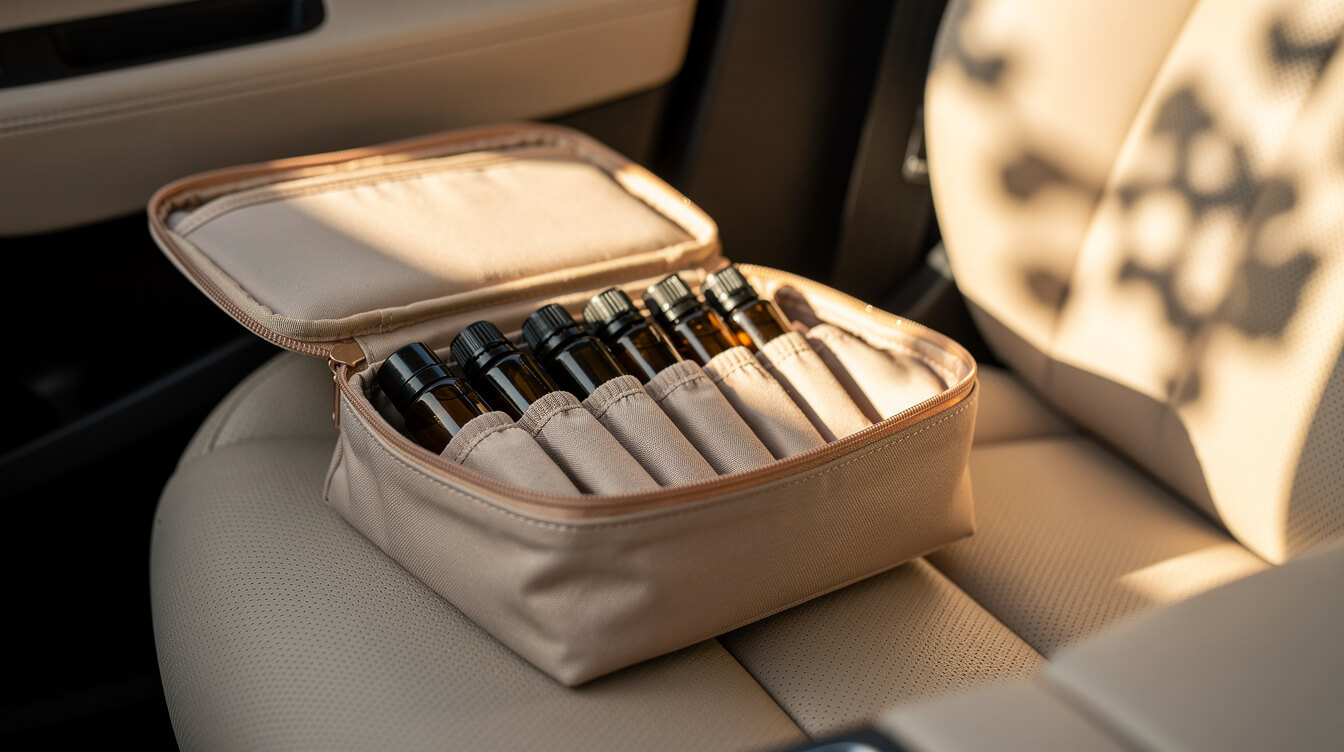
The practical solution: keep a small insulated pouch or mini cooler bag in your car. Slip your travel-size bottles in there, away from direct sun. Oils stored in the 60–75°F range maintain their aromatic profile for their full shelf life. For oils you use regularly in the car, decant into a 5mL dark glass roll-on to limit air exposure — each application uses only a drop or two.
The Smart Nebulizing Diffuser® from Organic Aromas is rechargeable and cordless — an ideal companion for long drives when you want pure, app-controlled aromatherapy without water, heat, or USB cables. Its glass nebulizer reservoir seals cleanly between sessions, protecting your oil between uses. For more on how pure aromatherapy supports a fresh, clean environment, see our guide on essential oils and clean air.
Frequently Asked Questions About the Essential Oil Diffuser for Car

Join Our Exclusive Member Club to get Big Discounts!
Can I use an essential oil diffuser in my car every day?
Yes — with appropriate oil selection and volume. Stick to alertness-supporting oils (peppermint, rosemary, citrus) for daily commutes, use low volume settings, and briefly air out the car when you arrive. Reserve calming oils like lavender and chamomile for at-home diffusing.
Is it safe to have passengers (including children) while diffusing?
For children under 2: avoid essential oils in enclosed spaces. For ages 2–10: use no more than 1 drop in a passive pad diffuser with windows slightly open, and avoid eucalyptus, peppermint, and rosemary (high cineole and menthol can be intense for young airways). For adults and older children: standard low-volume guidelines apply. Always ask passengers before diffusing — sensitivities and fragrance preferences vary widely.
Will essential oils damage my car’s interior?
Pure essential oils in normal diffusion quantities don’t damage car interiors. The risk comes from direct application — spilling undiluted oil on leather or vinyl can cause discoloration. Keep bottles capped in a secure cupholder, and if you drip, wipe immediately with a dry cloth. Don’t use essential oils as a DIY leather conditioner or fabric freshener spray.
What’s the best essential oil blend for a long road trip?
The Road Trip Blend: 2 drops peppermint + 2 drops rosemary + 1 drop black pepper. Refreshing, mentally clarifying, and sustained over long stretches. For late-afternoon drives when mental fatigue sets in: 2 drops spearmint + 2 drops grapefruit + 1 drop cardamom. Explore more blend ideas in our guide on calming essential oil recipes.
How long do essential oils last in a car diffuser?
For vent clips and paper pads: 3–5 days with 2–3 drops before the scent fades. For USB ultrasonic models: 1–2 hours per water refill. For a Nebulizing Diffuser® on intermittent low settings: a 5mL bottle can last 3–4 weeks of daily commuting — because pure oil diffused without water dilution goes much further per drop. Visit our comparison of best Nebulizing Diffusers® to see the full cost-per-use breakdown.
Final Thoughts: Match Your Diffuser and Your Oils to the Road Ahead
Car aromatherapy is one of those topics where the internet gives you a thousand “best car diffuser” product lists and almost nothing on the chemistry, the safety logic, or the real difference between diffusion methods. The result: many people buy vent clip diffusers, add six drops of lavender, and wonder why they feel sleepy in traffic.
The short version of everything above: use heat-free diffusion to protect your oil’s aromatic integrity, choose oils that match the alertness demands of driving, keep volume low in a small enclosed space, and store your oils somewhere cool so they’re still at their best next week.
Done right, aromatherapy in your car isn’t just pleasant — it’s a practical tool for more focused, present driving. For exploring the full range of oils suited to focus and alertness, see our guide to essential oils for focus and the Organic Aromas shop for pure essential oils and the Smart Nebulizing Diffuser®.