

Antibacterial Essential Oils: The Active Compounds, the Science, and Why Delivery Method Matters
Most conversations about essential oils and bacteria jump straight to a list of oils and a vague claim that they’re “naturally antibacterial.” That’s the floor, not the ceiling. The real story — grounded in nearly four decades of phytochemical research — is about specific compounds: why thymol works differently than terpinen-4-ol, why heat destroys the very molecules that carry antimicrobial activity, and why how you diffuse essential oils for antibacterial purposes matters as much as which oils you choose. This guide covers all of it.
We’ll walk through the biochemistry behind antimicrobial essential oils, rank the seven most researched options by their active compound profile, and explain the critical — and almost universally ignored — connection between diffusion method and compound integrity. By the end, you’ll know exactly which oils to reach for, how to blend them, and how to get the most from every drop.
Why Essential Oils Have Antibacterial Properties — The Phytochemical Story
Plants don’t have immune systems. What they do have is an extraordinarily sophisticated chemical defense network — a library of volatile organic compounds produced to deter pathogens, fungi, insects, and competing vegetation. When we distill plant material to extract essential oils, we’re concentrating exactly these defensive phytochemicals into liquid form.
The antimicrobial activity of essential oils comes primarily from three compound classes:
Phenols (thymol, carvacrol, eugenol): The most potent class by minimum inhibitory concentration (MIC). Phenols disrupt bacterial cell membrane integrity, causing cytoplasmic leakage and, at sufficient concentration, cell death. A 2019 review in Antibiotics identified thymol (found in thyme essential oil) as exhibiting MIC values as low as 0.125 mg/mL against Staphylococcus aureus in vitro — a concentration achievable through concentrated diffusion in enclosed spaces.
Monoterpene alcohols (terpinen-4-ol, linalool, geraniol): More gentle than phenols but still meaningfully active. Terpinen-4-ol — the primary bioactive compound in tea tree oil — has been extensively studied for its action against gram-positive and gram-negative bacteria, as well as fungi. A landmark 2000 study published in Journal of Applied Microbiology identified terpinen-4-ol as the key molecule responsible for tea tree oil’s broad-spectrum activity.
Oxides and monoterpene hydrocarbons (1,8-cineole, alpha-pinene, limonene): These compounds contribute synergistically. 1,8-cineole — the dominant constituent of eucalyptus essential oil — has demonstrated bacterial cell membrane disruption in studies, though at higher concentrations than phenols. Importantly, these terpene hydrocarbons are among the most heat-sensitive compounds in any essential oil, beginning to oxidize and degrade at temperatures above 95°F (35°C).
The research is unambiguous that essential oils contain genuine antimicrobial compounds. Where the conversation gets interesting — and where most guides stop short — is in how these compounds are activated, preserved, and delivered. For a deeper look at oils specifically studied for home use, see our guide to essential oils for bacterial environments at home.
The 7 Most Potent Antibacterial Essential Oils and the Exact Compounds Behind Them
Understanding which compound does the work in each oil helps you build blends with complementary mechanisms — phenols and terpene alcohols together produce broader-spectrum activity than either class alone, which is why classic “immune support” blends work as well as they do.
1. Tea Tree (Melaleuca alternifolia) — Terpinen-4-ol: 30–48%
Tea tree is the most studied antibacterial essential oil in the scientific literature — over 300 peer-reviewed papers as of 2024. Its primary bioactive compound, terpinen-4-ol, works by altering bacterial cell membrane permeability and disrupting the electron transport chain. A quality tea tree oil should test at 30–48% terpinen-4-ol per ISO 4730 standards; lower-grade oils fall short. Diffusing tea tree supports fresh, clean-smelling air environments that complement regular home hygiene routines.
2. Thyme (Thymus vulgaris, thymol chemotype) — Thymol: 40–55%
Thyme’s power comes from thymol — a phenolic compound that is among the most antimicrobially active natural molecules known. In multiple laboratory studies, thyme essential oil has demonstrated effectiveness at low concentrations. The thymol chemotype (as opposed to linalool or geraniol chemotypes) is the one with the strongest antimicrobial profile. The tradeoff: thymol is also a skin sensitizer, making thyme an oil better suited for diffusion than topical application in concentrated form.
3. Oregano (Origanum vulgare) — Carvacrol: 60–80%
Oregano essential oil is dominated by carvacrol — the isomer of thymol with a nearly identical antimicrobial mechanism. At 60–80% carvacrol content, oregano oil is one of the most potent options in this category. It’s also one of the most aggressive: the aroma is sharp and medicinal, making blending essential for pleasant home diffusion. Combine with citrus oils (lemon, bergamot) at a ratio of no more than 10% oregano to soften the intensity while preserving the antimicrobial compound load.
4. Eucalyptus (Eucalyptus globulus) — 1,8-Cineole: 60–85%
Eucalyptus globulus — the camphor-sharp variety most commonly found in essential oil collections — carries 60–85% 1,8-cineole (eucalyptol). Research has documented its activity against a wide range of environmental bacteria in aerosolized form. The compound is remarkably volatile, which is an advantage for diffusion: it readily enters the vapor phase and disperses throughout a room. This same volatility also makes it exceptionally sensitive to heat degradation — which is why cold-air diffusion is the preferred delivery for eucalyptus oil.
5. Lavender (Lavandula angustifolia) — Linalool + Linalyl Acetate: 50–80%
Lavender’s antimicrobial action is gentler than phenol-dominant oils, but its dual-compound profile (linalool at roughly 25–45%, linalyl acetate at 25–45%) creates synergistic action that laboratory studies confirm against several common environmental bacteria. Its versatility — calming aroma, gentle on most skin types, compatible with nearly any blend — makes it the natural anchor for home diffusion formulas where pleasant fragrance and environmental freshness are both priorities. It’s also the most forgiving of the antibacterial oils when it comes to heat tolerance, though cold diffusion still preserves linalyl acetate best.
6. Lemongrass (Cymbopogon citratus) — Citral: 65–85%
Citral — the aldehyde responsible for lemongrass oil’s sharp, citrusy brightness — has demonstrated significant antimicrobial activity in laboratory settings, particularly against gram-positive organisms. Lemongrass diffuses beautifully, filling a room with an uplifting green-citrus scent while contributing its aldehyde compounds to the air. For more on this versatile oil’s broader benefits, see our guide to lemongrass essential oil benefits.
7. Clove (Syzygium aromaticum) — Eugenol: 72–90%
Clove bud essential oil is eugenol-dense — among the highest natural concentrations of any phenolic essential oil. Multiple in vitro studies rank clove among the most potent antibacterial oils tested. The caveat for home diffusion: eugenol at high concentrations is a mucous membrane irritant, so clove should be used at low percentages (5–10% of a blend) rather than diffused neat. Combined with lighter, softer oils like bergamot or lavender, clove adds depth, a warm spiced character, and a genuine antimicrobial compound boost to any diffusion formula.
Sign Up to Get Your FREE
e-Book Here…
Tea Tree and Eucalyptus — High-Terpene Oils for a Fresh Home Environment
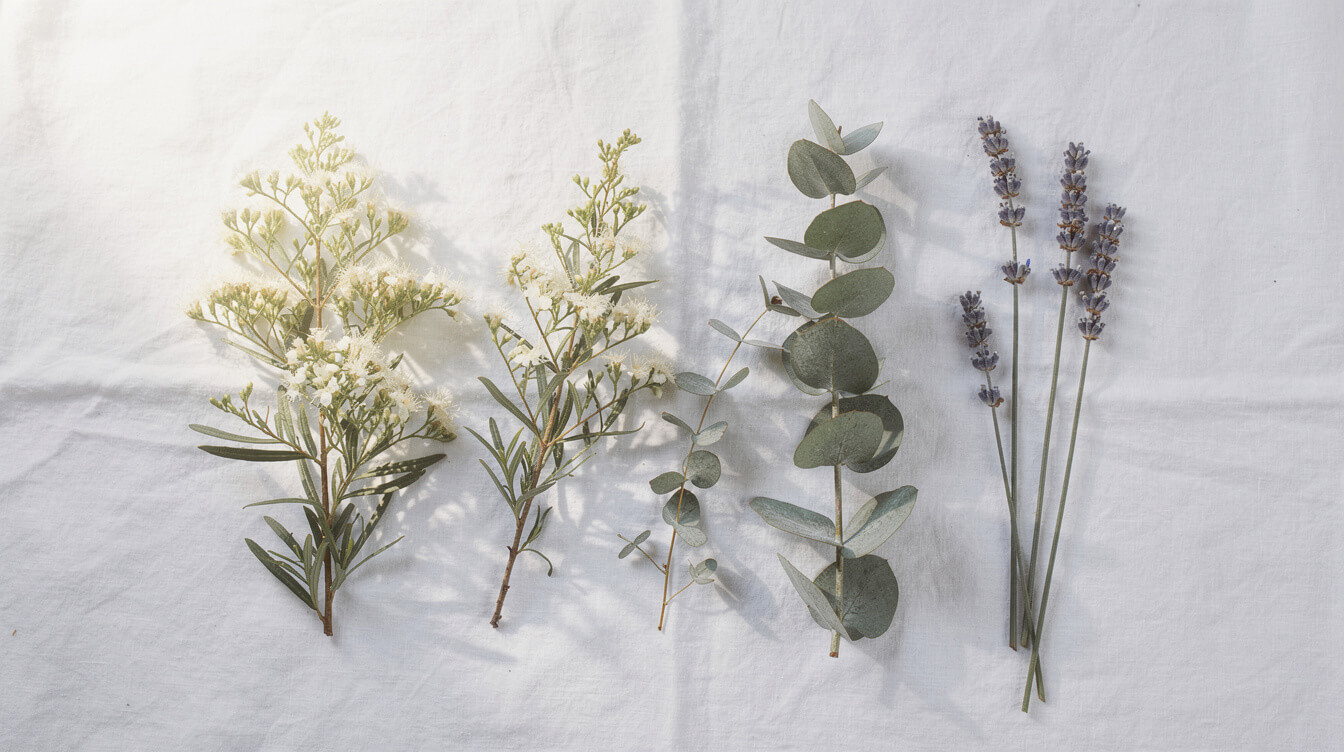
Tea tree and eucalyptus are the most natural pairing in this category — not just because they share a similar clean, fresh aromatic profile, but because their primary compounds (terpinen-4-ol and 1,8-cineole) work through complementary mechanisms. Together, they create a layered aromatic environment that smells unmistakably crisp and purposeful.
The Quality Variable That Most Guides Skip
Not all tea tree oils are created equal. ISO 4730:2017 — the international standard for Melaleuca alternifolia leaf oil — specifies that terpinen-4-ol must constitute at least 30% of the oil, and that 1,8-cineole must stay below 15% (high cineole content indicates adulteration or incorrect species). When you buy a discount tea tree oil and find it lacks the characteristic potency, low terpinen-4-ol content is almost certainly the cause.
For eucalyptus, the species matters significantly. Eucalyptus globulus is the high-cineole workhorse (60–85% 1,8-cineole) most associated with the classic eucalyptus scent and the most studied for environmental freshness applications. Eucalyptus radiata is milder and better for sensitive environments — still antimicrobially active but with a softer aromatic footprint. For home diffusion with antibacterial intent, globulus is the preferred species.
Diffusing Tea Tree and Eucalyptus: Practical Ratios
Both oils are assertive in a room. For a 300–500 sq ft space, use 4–6 drops total per diffusion session. A 1:1 blend (2 drops tea tree, 2 drops eucalyptus) creates a clean, spa-adjacent environment. For a softer result, add 2 drops of lavender to round the edges — the linalool from lavender creates a calmer aromatic texture while adding its own gentle antimicrobial contribution.
One thing both oils share: they are among the most heat-sensitive in an essential oil collection. The volatile terpenes that carry their activity evaporate rapidly at elevated temperatures, leaving a flat, degraded aroma behind — and significantly reduced compound integrity. This brings us to a topic most aromatherapy guides skip entirely. For a broader look at which oils perform best in a diffuser, see our guide to the best aromatherapy oils for diffusers.
Thyme, Oregano, Cinnamon, and Clove — The Phenol Oils and Why They Need Careful Handling
Phenol-dominant essential oils are, by a meaningful margin, the most potent in the antibacterial category. Thymol, carvacrol, cinnamaldehyde, and eugenol appear consistently in laboratory research as the compounds with the lowest minimum inhibitory concentrations — meaning they require less material to produce the same effect as terpene-based oils.
But potency cuts both ways. These same phenols are dermal sensitizers and mucous membrane irritants at high concentrations, which creates a practical challenge for home diffusion. Here’s how to work with each one responsibly:
Thyme: The 10% Rule
Thyme essential oil (thymol chemotype) should be used at no more than 10% of any diffusion blend — roughly 1 drop per 10 drops of total formula. At this level, the thymol content is effective for environmental freshness without the sharp, medicinal intensity that makes neat thyme oil uncomfortable to breathe. Pair it with lavender and lemon: the linalool and limonene complement the thymol both aromatically and functionally.
Oregano: Even More Potent, Even More Caution Required
Oregano essential oil’s carvacrol content makes it more potent than thyme — and demands the same caution. Use at 5–10% maximum in any blend. At this ratio, the characteristic pizza-herb sharpness recedes into a warm, earthy background note while the carvacrol remains active in the vapor. In a 6-drop total blend, 1 drop of oregano is the right starting point. Do not diffuse oregano neat — the concentrated carvacrol vapor is irritating to airways, particularly for children, elderly adults, or anyone with respiratory sensitivity.
Cinnamon and Clove: Use Sparingly, Blend Thoughtfully
Cinnamon bark oil (cinnamaldehyde-dominant, 60–80%) and clove bud oil (eugenol-dominant, 72–90%) are perhaps the most powerful essential oils for antibacterial activity by compound concentration — and among the most hazardous to use without care. For diffusion, keep either below 10% of any blend. Their warm, spiced aromas blend beautifully with orange, bergamot, and frankincense for an autumn-spice formula that delivers genuine phenol activity in a home-friendly package.
One note on cinnamon leaf vs. bark oil: cinnamon leaf (eugenol-dominant) is significantly milder and more suitable for home diffusion than cinnamon bark (cinnamaldehyde-dominant), which carries higher sensitization risk. Always check which plant part your oil is distilled from before purchasing.
Join Now and Get a Coupon for 10% Off!
Why Delivery Method Changes Everything — Nebulizing Diffusion and Antimicrobial Compound Integrity
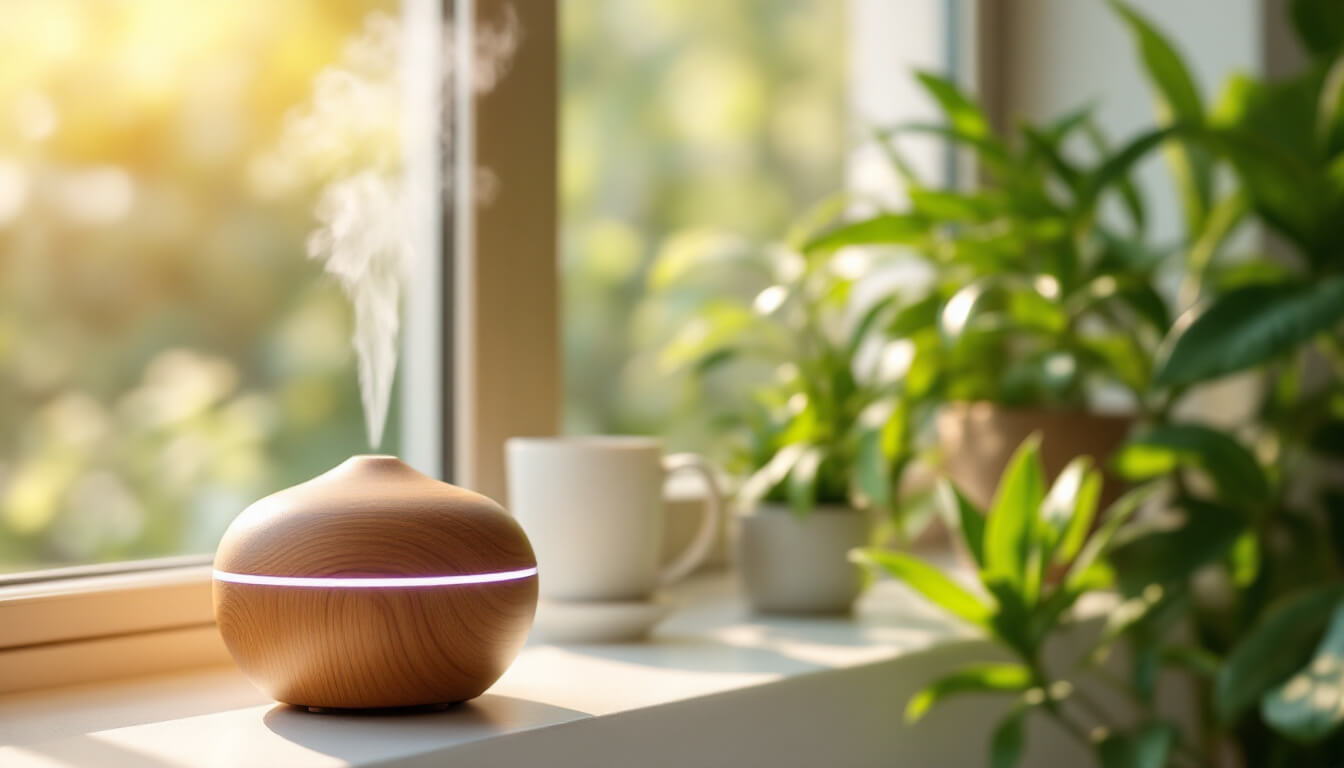
Here’s the gap almost every guide on antibacterial essential oils leaves unfilled: even if you buy the highest-quality thyme, tea tree, or eucalyptus oil available, the way you diffuse it determines how much of the active compound actually reaches the air intact. And most diffusion methods actively destroy the very molecules you’re trying to deploy.
What Heat and Water Do to Antimicrobial Compounds
Ultrasonic diffusers use a water reservoir and high-frequency vibration to create a cool mist — which sounds gentle. The problem is twofold. First, diluting oil in water before diffusing it dilutes the compound concentration in the vapor by the same ratio. If you add 5 drops of tea tree to 200ml of water, the terpinen-4-ol in the vapor is proportionally diluted — you’re getting a fraction of the compound per cubic meter of air compared to diffusing neat oil. Second, many ultrasonic reservoirs allow water to sit at room temperature for hours, which creates its own environment of concern while degrading the lighter terpene fractions.
Candle and electric heat diffusers are worse. Most antimicrobial terpenes have relatively low thermal degradation thresholds. The phenols (thymol, carvacrol) are more stable than the terpene alcohols and monoterpenes, but heating any essential oil introduces oxidation reactions that alter the molecular structure of its active compounds. A candle diffuser warming thyme oil to 160°F is not delivering the same molecular profile as cold-air diffusion of the same oil.
How Cold-Air Nebulizing Diffusion Preserves the Compound Profile
A Nebulizing Diffuser® operates on Bernoulli’s Principle: a pressurized air stream passes over a tube immersed in pure, undiluted essential oil, pulling the oil upward and breaking it into micro-particles without any heat or water. The compound profile of the oil reaches the air intact — every terpene, phenol, and monoterpene alcohol in the same ratio it existed in the bottle. No dilution, no thermal degradation, no oxidation from heat exposure.
This matters practically in two ways. First, the concentration of active compounds per cubic meter of diffused air is higher — you’re working with the full compound load. Second, the micro-particle size produced by nebulizing diffusion tends to be smaller than the mist droplets from ultrasonic diffusers, which means the aerosolized compounds remain suspended in the air longer rather than settling quickly onto surfaces.
For anyone using essential oils for antibacterial home freshness purposes, the delivery mechanism isn’t a footnote — it’s central to the result. For a direct comparison between nebulizing and ultrasonic diffusion, see our detailed breakdown of nebulizing diffuser vs. ultrasonic diffuser. If you’re ready to upgrade your setup, our roundup of the best Nebulizing Diffusers® covers the options worth considering.
For the purest essential oil diffusion experience, the Organic Aromas Nebulizing Diffuser® Collection — handcrafted from real wood and medical-grade Pyrex glass, no plastic, no water, no heat — is purpose-built for delivering pure essential oils at full compound concentration. Shop the Nebulizing Diffuser® Collection and experience the difference cold-air diffusion makes with every oil in your collection.
Two Antibacterial Blending Recipes Worth Keeping in Rotation
Effective antibacterial blends work across two axes: compound diversity (phenols, terpene alcohols, and monoterpenes together create broader coverage than any single class) and aromatic wearability (a blend you don’t want to smell won’t get diffused consistently). These two recipes balance both.
Clean Environment Blend (Daily Use)
3 drops eucalyptus globulus / 2 drops lavender / 1 drop lemon
A gentle, daily-wearable blend that covers 1,8-cineole (eucalyptus), linalool (lavender), and limonene (lemon) — three different compound classes, three complementary aromatic notes. The result smells like a clean, airy spa. Suitable for living rooms, kitchens, and home offices. Run for 30–60 minutes per session.
Deep Purify Blend (Occasional Use)
2 drops tea tree / 1 drop thyme (thymol) / 1 drop clove bud / 2 drops sweet orange
This is the high-compound-load blend — terpinen-4-ol, thymol, and eugenol together, softened by the limonene in sweet orange. The aroma reads as warm, spiced citrus with an underlying clean sharpness. Use this blend for 20–30 minutes maximum per session, and avoid using it around pets, young children, or anyone with respiratory sensitivities. For environments where you’re looking to support freshness after a period of heavy use — kitchens after cooking, bathrooms — this blend delivers the broadest compound coverage. Related reading: our guide to essential oils for mold and fungal environments explores how these same compound classes apply to antifungal challenges.
Storage note: Phenol-dominant blends (thyme, oregano, clove) oxidize faster than terpene-only blends. Store pre-mixed blends in dark glass, refrigerated, and use within three months. Oxidized phenols can be skin sensitizers even at previously safe dilution levels.
Sign Up to Get Your FREE Essential Oils e-Book Here
Frequently Asked Questions About Antibacterial Essential Oils
Are all essential oils antibacterial?
No. While many essential oils contain some degree of antimicrobial compounds, the activity varies enormously by oil and by the specific bacteria or organism tested. Phenol-dominant oils (thyme, oregano, clove) consistently show the strongest laboratory profiles. Delicate florals like rose absolute or jasmine have minimal documented antimicrobial activity. The oils covered in this guide — tea tree, thyme, oregano, eucalyptus, lavender, lemongrass, and clove — are the ones with the most consistent research support.
Can I use antibacterial essential oils around pets?
With significant caution. Tea tree oil in particular is documented as toxic to cats and dogs at even small ingested amounts, and cats are especially sensitive due to their limited metabolic capacity for phenols and terpenes. For home diffusion around pets, use well-ventilated spaces, keep sessions short (15–20 minutes), and ensure pets can leave the room. Lavender at low concentrations is generally the safest option in a pet-present household. Always consult a veterinarian if you’re uncertain. See our guide on essential oils for natural home pest management for approaches that address household challenges while accounting for pet safety.
Is diffusing essential oils for antibacterial purposes a substitute for cleaning?
No, and this distinction matters. Essential oil diffusion creates an aromatic environment and may support a fresher home atmosphere, but it is not a replacement for conventional cleaning, disinfecting surfaces, or personal hygiene practices. The research on essential oils is conducted primarily in laboratory conditions with controlled concentrations — real-world diffusion is considerably more variable. Think of aromatherapy with antibacterial oils as a complementary layer in your home environment approach, not a standalone intervention.
How do I know if my essential oil has genuine antibacterial compound content?
Request a GC/MS (gas chromatography/mass spectrometry) report from your supplier. Reputable essential oil companies publish these for each batch, and they’ll show you the exact compound percentages in your bottle. For tea tree, you’re looking for terpinen-4-ol above 30% and 1,8-cineole below 15% per ISO 4730. For thyme, thymol above 40% indicates the thymol chemotype. If a supplier doesn’t provide GC/MS data, that’s your cue to look elsewhere for oils you intend to use for environmental freshness purposes.
The science behind antibacterial essential oils is more compelling than the wellness marketing that usually surrounds the topic — and more nuanced than the generic listicles that dominate search results. What makes thymol different from terpinen-4-ol, why phenol oils demand careful handling, and why your diffuser type matters more than most guides admit — these are the details that separate a genuinely effective home aromatherapy practice from wishful thinking. Start with tea tree and lavender if you’re new to this category, add eucalyptus for the classic clean-air character, and work up to the phenol oils gradually once you’ve calibrated your diffusion setup. For the fullest compound delivery from any of these oils, explore the Nebulizing Diffuser® Collection at Organic Aromas — no heat, no water, no plastic, no compromise on compound integrity.