


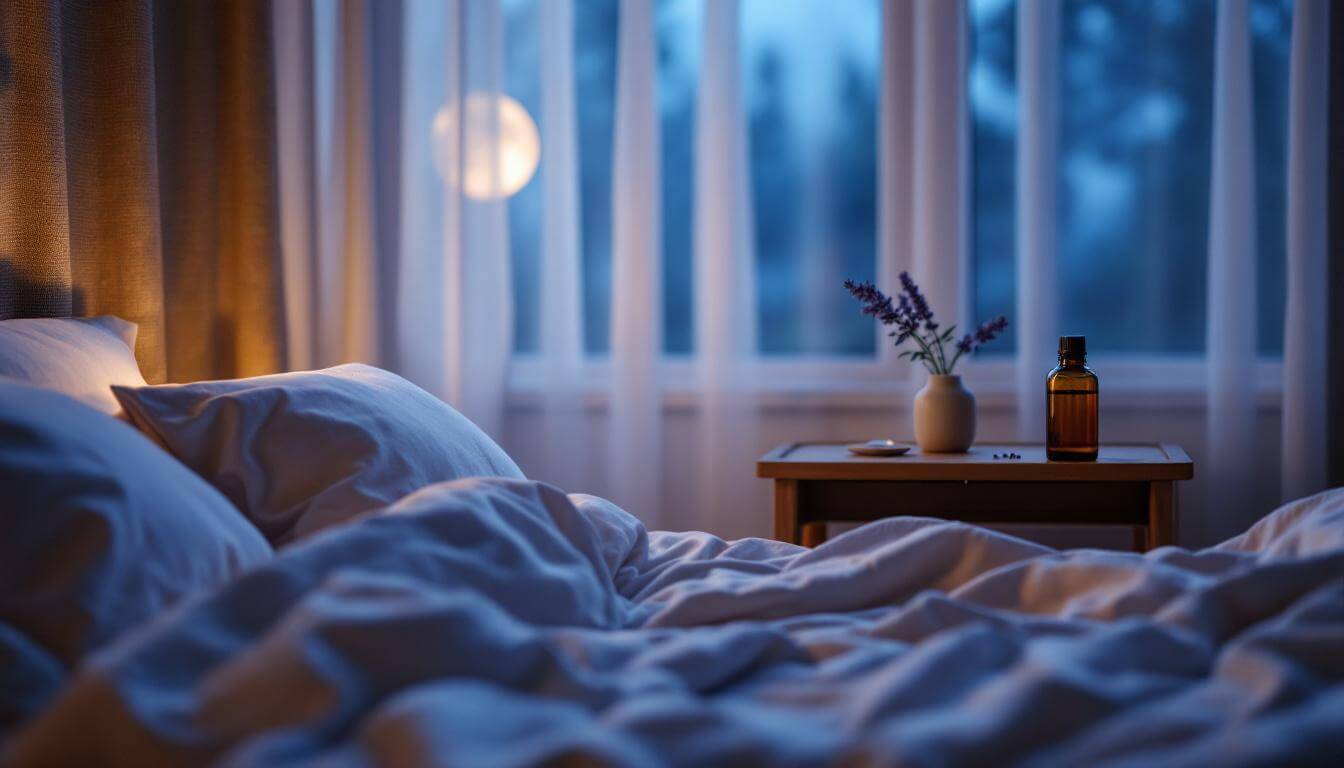
Essential Oils for Sleep: The 4-Stage Bedtime Protocol Built on Sleep Stage Pharmacology
Almost every guide to essential oils for sleep makes the same hidden mistake. It treats sleep as a single switch: you are awake, or you are asleep, and the right oil flips the switch. Sleep does not work that way. A night of sleep is four distinct stages, each with its own brain chemistry, and the plant compounds that ease you into sleep are not the same compounds that deepen the restorative middle of the night or protect dreaming sleep toward morning.
This guide rebuilds the topic from the biology up. You will learn the four stages of sleep architecture, which terpene profiles match the neurochemistry of each stage, the delivery mistake that quietly cancels out a good oil, and a practical bedtime protocol that maps scent to the sleep cycle instead of hoping one drop does everything.
Why Most Essential Oils for Sleep Lists Quietly Fail

Open the top results for sleep oils and you will see the same pattern. A ranked list of plants, a sentence on why each is calming, a study citation or two, and a generic instruction to put a few drops on a cotton ball or run a device. The lists are not wrong. Lavender, cedarwood, bergamot, chamomile, and clary sage genuinely belong in the conversation. The problem is what they leave out.
None of them explain that falling asleep and staying in deep sleep are two different pharmacological problems. The compounds that calm a racing mind at lights-out work primarily on sympathetic arousal and the GABA system. The compounds associated with deeper, slower brain rhythms later in the night behave differently. Treating them as interchangeable is why people try a famous oil, feel pleasantly relaxed for twenty minutes, then still wake at 3 a.m. and conclude that aromatherapy does not work for them.
It can work, but only if the scent is matched to the stage and delivered in a way that survives the night. Our deep dive on lavender essential oils for sleep showed how a single oil’s effect rises or falls on one chemical ratio. This guide widens that lens to the whole night and every stage in it.
Sleep Is Four Stages, Not One: A 90-Second Primer
Healthy sleep moves through repeating cycles of roughly 90 minutes, and most adults run four to six of these cycles a night. Inside each cycle, your brain passes through four stages, and the balance between them shifts as the night goes on.
Stage N1 (transition). The brief drift from wake into sleep, usually only a few minutes. Light, easily interrupted, and dominated by a quieting of the alert, sympathetic nervous system.
Stage N2 (light sleep). The largest share of the night, often around 45 to 55 percent. Heart rate and core temperature fall, and the brain produces sleep spindles that help gate out disturbances. This is where a stable, low background cue matters most.
Stage N3 (deep slow-wave sleep). The physically restorative stage, richest in the first half of the night. Slow delta waves dominate, growth and tissue repair peak, and the parasympathetic nervous system is firmly in charge. This is the hardest stage to protect and the one most guides ignore entirely.
REM (dreaming sleep). Rich, vivid brain activity that grows longer with each cycle, so most REM sits in the final third of the night, closer to waking. REM supports memory consolidation and emotional processing, and it is surprisingly easy to disturb with the wrong scent at the wrong intensity.
Hold onto one idea: deep N3 is front-loaded into the early night, and REM is back-loaded toward morning. A scent strategy that only addresses sleep onset abandons you for the two stages that decide how rested you feel. If you are new to the wider subject, our complete guide to aromatherapy essential oils covers the fundamentals this protocol builds on.
Sign Up to Get Your FREE
e-Book Here…
Stages 1 and 2: The Linalool Window for Falling Asleep

The job at lights-out is not sedation. It is lowering arousal so the N1 to N2 transition can happen without your mind fighting it. The terpene that does this best is linalool, the alcohol that gives lavender, bergamot, and clary sage their soft, slightly sweet character.
Linalool and its companion ester linalyl acetate are associated with a shift away from sympathetic dominance: slower breathing, a gentler heart rate, and a calmer subjective state. In lavender, the ratio of these two molecules is so decisive that we devoted an entire article to what the science actually says about lavender oil. The short version: a true Lavandula angustifolia high in linalyl acetate behaves very differently from a cheap, camphor-heavy hybrid sold under the same name.
Bergamot adds limonene and linalyl acetate, which many people find lifts the low-grade tension that keeps them scrolling instead of settling. Clary sage is the quiet workhorse here, ester-rich and grounding without the citrus brightness. These are the same calming chemistries we mapped in our piece on aromatherapy oils for anxiety, which makes sense: the barrier to falling asleep is usually arousal, not a lack of tiredness.
Dose is part of the chemistry. A light, ambient presence in the room reads as calming. The exact same oil pushed too strong reads as intrusive and can keep you alert, because scent intensity has a biphasic effect on arousal. Subtle wins this stage every time.
Stage 3: Deep Slow-Wave Sleep and the Sedative Terpenes
Here is where most sleep-oil advice goes silent. Once you are asleep, the goal changes. You want long, uninterrupted N3, the slow-wave stage that drives physical recovery. The standout compound for this part of the night is cedrol, a sesquiterpene alcohol found in cedarwood, and also in vetiver and cypress.
In a frequently cited study of older adults in dementia care, essential oils that included Virginian cedarwood, Japanese cypress, cypress, and pine were placed on towels near pillows every night for 20 days. Total sleep time lengthened and early-morning waking decreased during the cedrol-containing period. Cedrol is associated with a rise in parasympathetic activity, which is exactly the autonomic state that sustains deep sleep rather than just initiates it.
Sandalwood works on a similar register through its santalol content, contributing a warm, heavy base that does not brighten or stimulate. Vetiver, dense and earthy, is one of the most grounding oils in the catalog. Valerian, while not to everyone’s taste aromatically, carries valerenic acid, which interacts with the same GABA system that governs how readily the brain stays in slow-wave territory.
The practical lesson: the early-night, post-onset window wants base notes, not the bright top notes that helped you fall asleep. A light, woody, resinous background through the first one to three sleep cycles supports the stage your body cannot make up later.

Join Now and Get a Coupon for 10% Off!
REM Sleep: The Stage Most Sleep Oils Quietly Sabotage

This is the counterintuitive part. The last third of the night is REM-heavy, and REM is fragile. Two mistakes wreck it.
Mistake one: the wrong molecule. Oils high in 1,8-cineole, the eucalyptol found in eucalyptus, rosemary, and many camphoraceous oils, are associated in research with increased alertness and faster reaction times. Excellent for a morning workspace, the opposite of what you want drifting over you at 4 a.m. The same caution applies to high-menthol peppermint and to heavy doses of bright citrus, which can tip from pleasant to activating.
Mistake two: too much of a good oil. Essential oil effects are dose dependent and biphasic. A low ambient level of a relaxing oil supports calm. The identical oil at high concentration can become a stimulus the brain keeps tracking, fragmenting REM even though the oil is famous for sleep. Over-diffusing is the single most common reason a quality oil disappoints.
REM-gentle choices are soft and low. Roman chamomile, rich in calming esters, and German chamomile with its bisabolol are about as non-provocative as aromatics get. Frankincense, used sparingly, deepens the breath without sharp edges. The instruction for this stage is less an oil list and more a volume knob: keep it quiet, keep it warm, keep it minimal.
The Delivery Problem Nobody Mentions: Olfactory Habituation
Suppose you choose perfect oils for every stage. There is still a failure point almost no article mentions: olfactory habituation. Your sense of smell adapts to a constant odor within minutes. A steady, unchanging scent fades from perception fast, which is why you stop noticing your own home’s smell. A device that runs continuously at a fixed output is, neurologically, delivering a cue your brain tunes out long before the night is over.
This reframes the whole question. The aim is not maximum scent. It is a light cue, re-presented across multiple sleep cycles, so the brain keeps registering it through the N3 and REM windows. That argues for intermittent, scheduled delivery rather than a tank emptied in one continuous blast at bedtime.
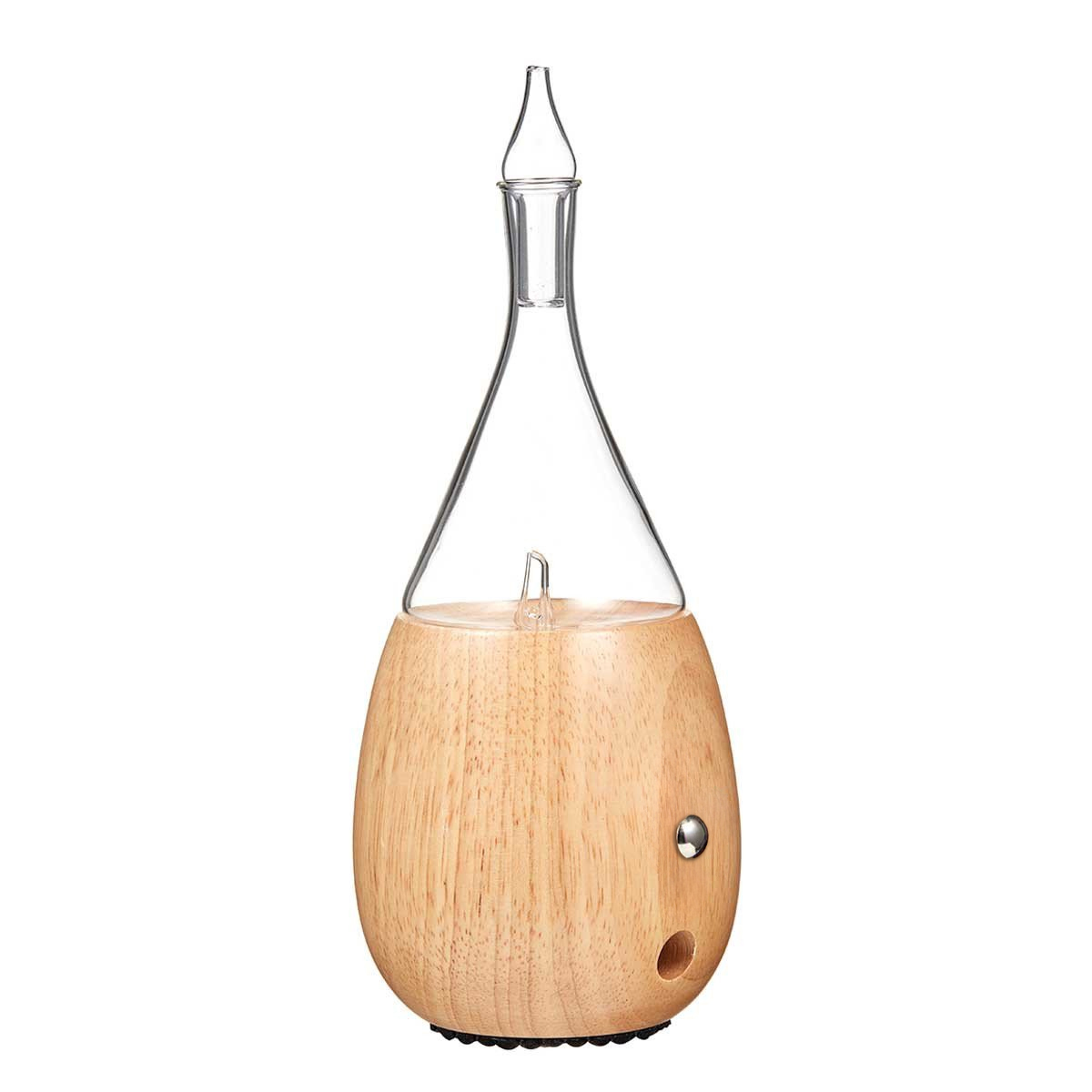
Concentration matters just as much. Ultrasonic units disperse oil suspended in water, so what reaches you is a diluted and variable fraction of the oil you measured. Heat-based devices are worse for sleep chemistry, because warmth drives off the light, volatile top notes first and changes the profile as the night goes on. A waterless Nebulizing Diffuser® uses Bernoulli’s Principle to atomize 100 percent pure, undiluted oil with no water and no heat, so the linalool, cedrol, and ester ratios reaching you actually match the bottle. The mechanism is explained in full in our complete guide to the Nebulizing Diffuser.
The numbers are friendlier than people expect. Roughly 15 to 30 drops runs about 1 to 2 hours on a low setting, and an app-controlled Smart Raindrop Smart Nebulizing Diffuser® can schedule short cyclic bursts through the night instead of one continuous run. Subtle and intermittent beats heavy and continuous, every time, for both your sleep and your oil budget.

Join Our Exclusive Member Club to get Big Discounts!
Your 4-Stage Bedtime Protocol
Here is the framework assembled into a routine. Adjust the oils to your preferences, but keep the timing logic intact, because the timing is what most people get wrong.
Phase 1, about 60 minutes before bed (target: N1 and N2 onset). Linalool-forward blend. A true narrow-leaf lavender as the lead, a touch of bergamot or clary sage. Low output. The goal is a calm room, not a scented room.
Phase 2, lights-out through the first cycle (target: stable N2). Keep the same calming family but drop the intensity further. A short cyclic schedule, for example a brief burst every 20 to 30 minutes, sustains the cue without overwhelming a habituating nose.
Phase 3, first one to three cycles (target: deep N3). Shift toward base notes: cedarwood, sandalwood, or vetiver at a low, woody background level. This is the stretch that decides how physically restored you feel, and it is exactly when most setups have already run dry.
Phase 4, final cycles toward morning (target: protected REM). Minimal and warm. Roman chamomile or a whisper of frankincense, or simply let the room go quiet. Avoid anything cineole-rich or sharply citrus near waking.
Room craft matters too. Keep the space cool and dark, give the air somewhere to move, and treat scent as one input in a larger ritual. For the full sensory version of this, our guide to building an aromatherapy spa experience at home turns the protocol into something you look forward to.
Schedule Scent to Your Sleep Cycle
The Raindrop Smart Nebulizing Diffuser® delivers 100 percent pure, undiluted oil with no water and no heat, and its app-controlled timer runs short cyclic bursts so the scent keeps working through every sleep stage instead of fading by midnight.
Frequently Asked Questions
Do essential oils for sleep actually work, or is it placebo?
Studies consistently show subjective improvement in sleep quality and relaxation with oils like lavender and cedarwood, and some show measurable changes in autonomic markers. Aromatherapy is best understood as a supportive part of good sleep hygiene, not a treatment for a sleep disorder. If sleep problems are persistent, speak with a healthcare professional.
Can I leave a Nebulizing Diffuser running all night?
You can, but you usually should not run it continuously. Because of olfactory habituation, a steady output is wasted within minutes and uses far more oil than needed. Short, scheduled cyclic bursts are more effective and more economical across a full night.
How many drops should I use?
Less than you think. With a waterless Nebulizing Diffuser, roughly 15 to 30 drops on a low setting covers one to two hours. Start at the bottom of that range. You can always add, but an over-scented room works against sleep.
Is one oil enough, or should I blend?
A single well-chosen oil can be plenty for onset. The advantage of the staged approach is matching base notes to deep sleep and keeping things minimal near REM, which a thoughtful, low-dose blend or a phased schedule handles better than one oil run all night.
Are sleep oils safe around children, pregnancy, and pets?
Use extra caution. Not every oil is appropriate during pregnancy or for young children, and some oils are not safe to diffuse around pets, especially cats and birds. Keep diffusion subtle, ensure the room is ventilated and pets can leave, and consult a qualified professional or veterinarian when unsure.
The Takeaway: Making Essential Oils for Sleep Actually Work
The reason a famous oil sometimes fails is rarely the oil. It is a strategy built for a single moment applied to a night that has four. Match linalool-rich oils to onset, woody sedative terpenes to deep slow-wave sleep, and minimal warm aromatics to fragile REM, then deliver all of it as pure, intermittent, low-dose scent that your nose keeps noticing. Do that, and essential oils for sleep stop being a hopeful bedtime ritual and start working with your biology instead of against it.